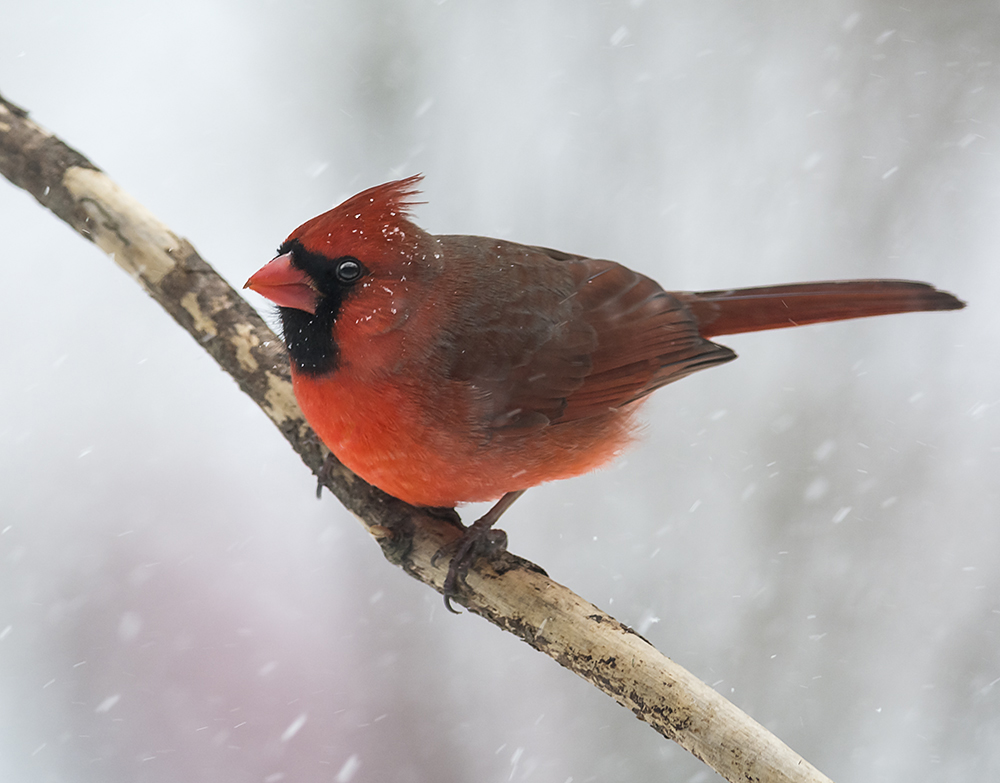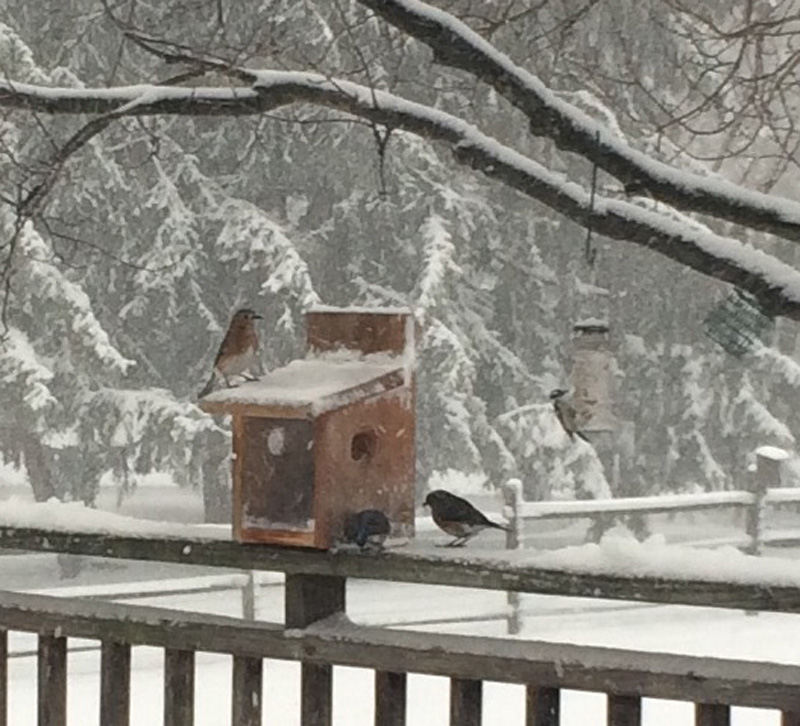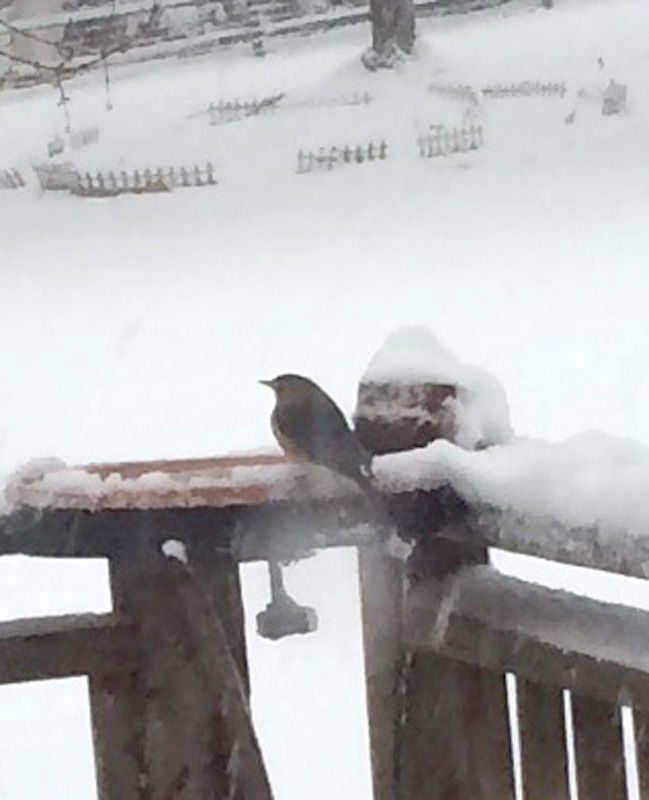
Wood Ducks in the snow

Photo by Chris Bosak Wood Duck drakes swims at Woods Pond in Norwalk, Conn., during an early April snow fall, 2016.

Photo by Chris Bosak
Wood Duck drakes swims at Woods Pond in Norwalk, Conn., during an early April snow fall, 2016.

Another early-morning snow fall swept through parts of New England on Monday morning. Many people, I’m sure, cringed at the sight of more snow. As usual, my thoughts turned to photographing birds in the snow. It was an especially dark morning, but I managed to find and shoot some Wood Ducks at Woods Pond in Norwalk, Conn. Wood Ducks are Continue reading

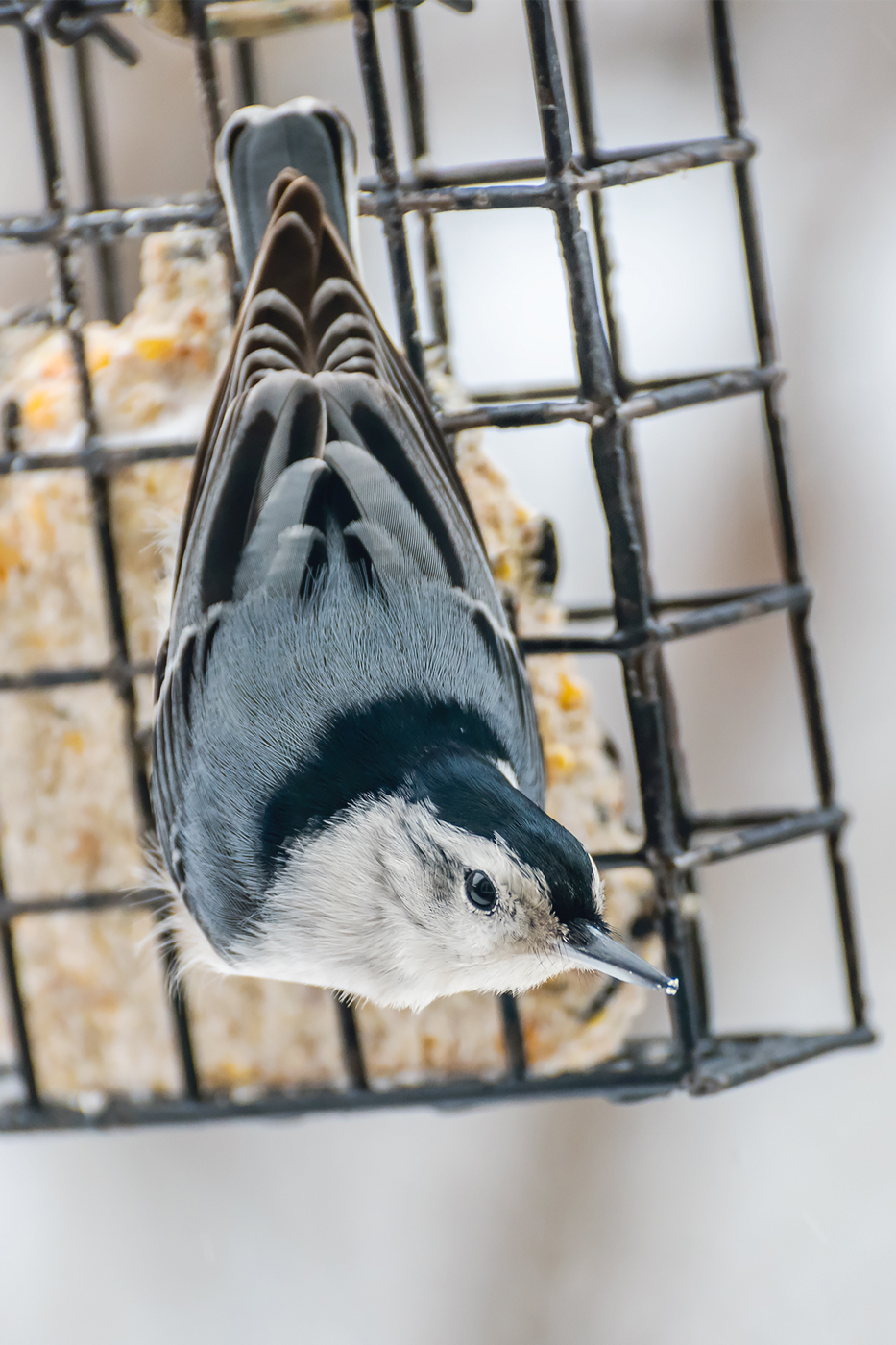
Nuthatch after spring snow in New England

Photo by Chris Bosak A White-breasted Nuthatch takes a peanut from a feeder following a spring snow fall in New England in March 2016.

Photo by Chris Bosak
A White-breasted Nuthatch takes a peanut from a feeder following a spring snow fall in New England in March 2016.

The snow that covered the ground as New Englanders woke up on Monday morning seems like a distant memory. Sunshine and rising temperatures took care of the white stuff by the time afternoon rolled around.

But the morning certainly did look pretty and gave anyone who might be obsessed with photographing birds another chance to “shoot” them with a snowy background. Being of that ilk, I took advantage of the freshly fallen snow in the morning. I didn’t venture far. In fact, I focused on my feeders as they were particularly busy.

Here’s one shot from this morning — a White-breasted Nuthatch at my apple-shaped feeder. More to come, including additional photos of that homemade feeder being used.

Thanks for checking out http://www.birdsofnewengland.com

More photos of the Yellow-bellied Sapsucker

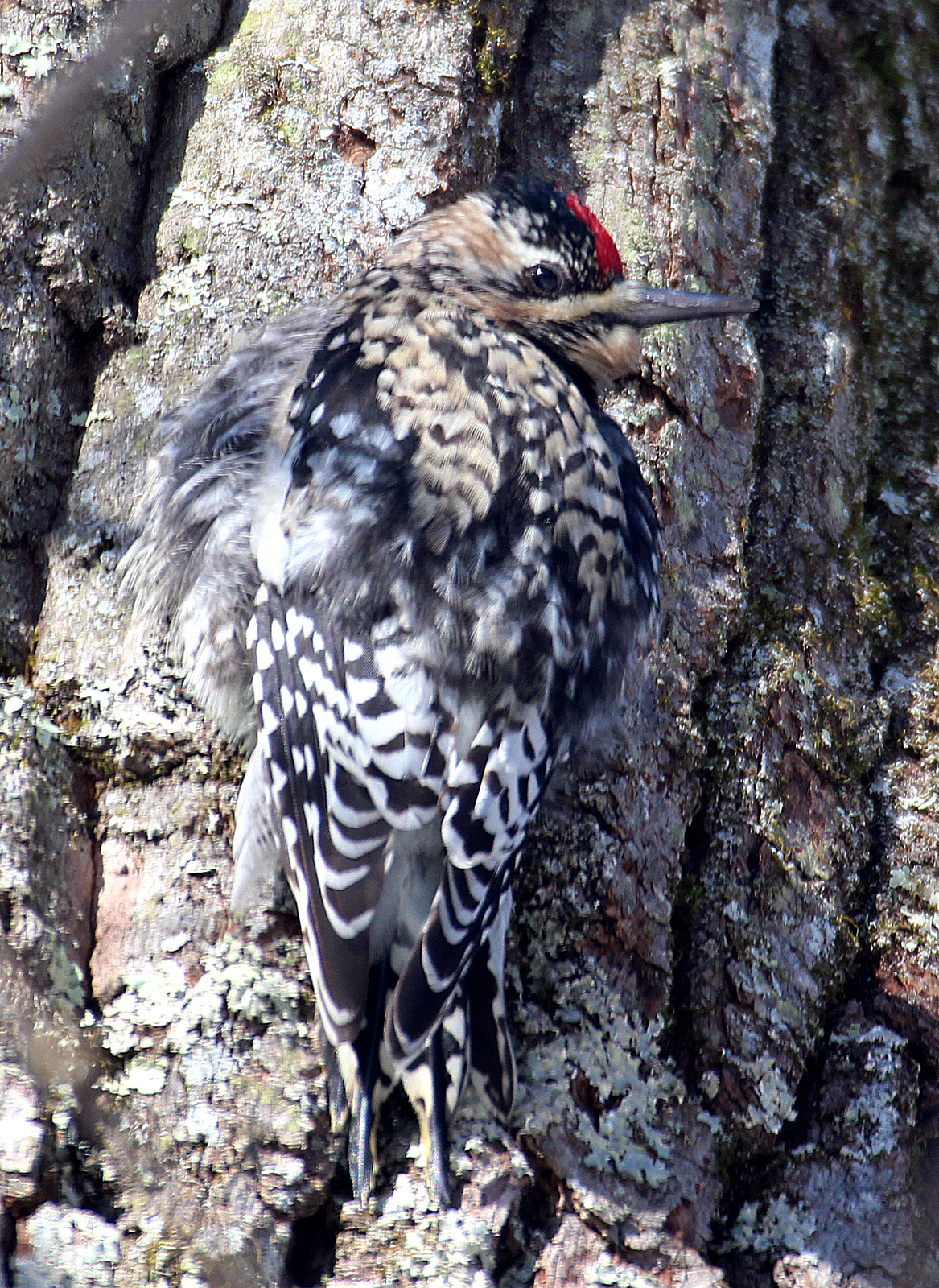
Photo by Chris Bosak A Yellow-bellied Sapsucker clings to a tree during a cold snap in Danbury, Conn., Feb. 2016.

Photo by Chris Bosak
A Yellow-bellied Sapsucker clings to a tree during a cold snap in Danbury, Conn., Feb. 2016.

Yes, the Yellow-bellied Sapsucker is a real bird. And I had one on my suet feeder this weekend during the cold snap in New England.

It was the first time I had ever had a sapsucker on a feeder of mine in about 20 years of birdfeeding. Plenty of other woodpeckers, but never a sapsucker before. I have, however, seen plenty of them in the woods among my wanderings, but never on a feeder before. Here are a few more photos of my visitor, none of Continue reading

More Brown Creeper photos from #GBBC

Photo by Chris Bosak A Brown Creeper finds food at the base of a tree during a cold snap in February 2016, Danbury, Connecticut.

Photo by Chris Bosak
A Brown Creeper finds food at the base of a tree during a cold snap in February 2016, Danbury, Connecticut.

Here are some more shots of the Brown Creeper that visited my yard during the cold snap experienced in New England over the weekend. With temperatures at or even below zero for much of the weekend, it wasn’t easy snapping photos of birds in the yard, but the thrill of seeing these energetic, albeit rather nondescript, birds made me forget about the cold for the time being.

Brown Creepers may not be much to look at with their small size and white and brown coloring, they are a thrill to see nonetheless. They are rather common in New England, but it’s not a bird you see every day, or in great n Continue reading

For the Birds column: Snow is no problem for birds

Photo by Chris Bosak A Tufted Titmouse and White-breasted Nuthatch share a feeder during a snowstorm in Danbury, Conn., Jan. 23, 2016.

Photo by Chris Bosak
A Tufted Titmouse and White-breasted Nuthatch share a feeder during a snowstorm in Danbury, Conn., Jan. 23, 2016.

Here’s the latest For the Birds column, which runs weekly in The Hour (Norwalk, Conn.) and Keene (NH) Sentinel:

One of my favorite times to watch birds is when the snow is falling. Not a driving snow with icy temperatures and high winds, but an otherwise rather pleasant day with frozen crystals falling from the sky and covering everything with a fresh coat of white.

I do not shy away from taking walks to look for birds when the snow is actively falling, in fact I thoroughly enjoy walks at such times. But I also enjoy very much watching the activity at the feeders during snow falls.

As long as the snow is not falling at too fast a rate, the birds will continue coming to feeders. Indeed, during light and moderate snow falls the birds may be seen at higher-than-usual …

Click here for the rest


More “junco in the snow” photos

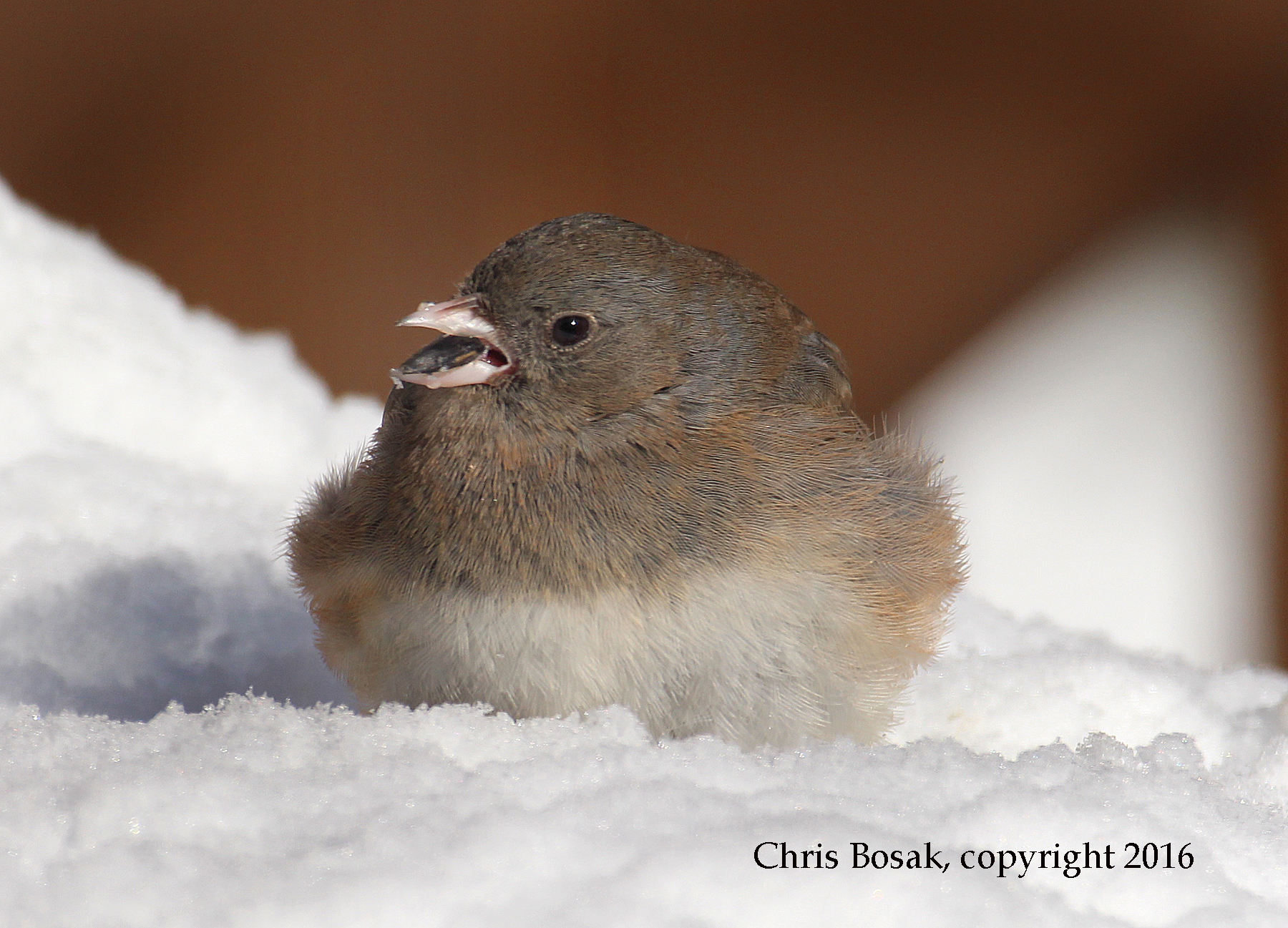
Photo by Chris Bosak A Dark-eyed Junco eats a sunflower seedsthe day following a snow storm in New England, Jan. 2016.

Photo by Chris Bosak
A Dark-eyed Junco eats a sunflower seedsthe day following a snow storm in New England, Jan. 2016.

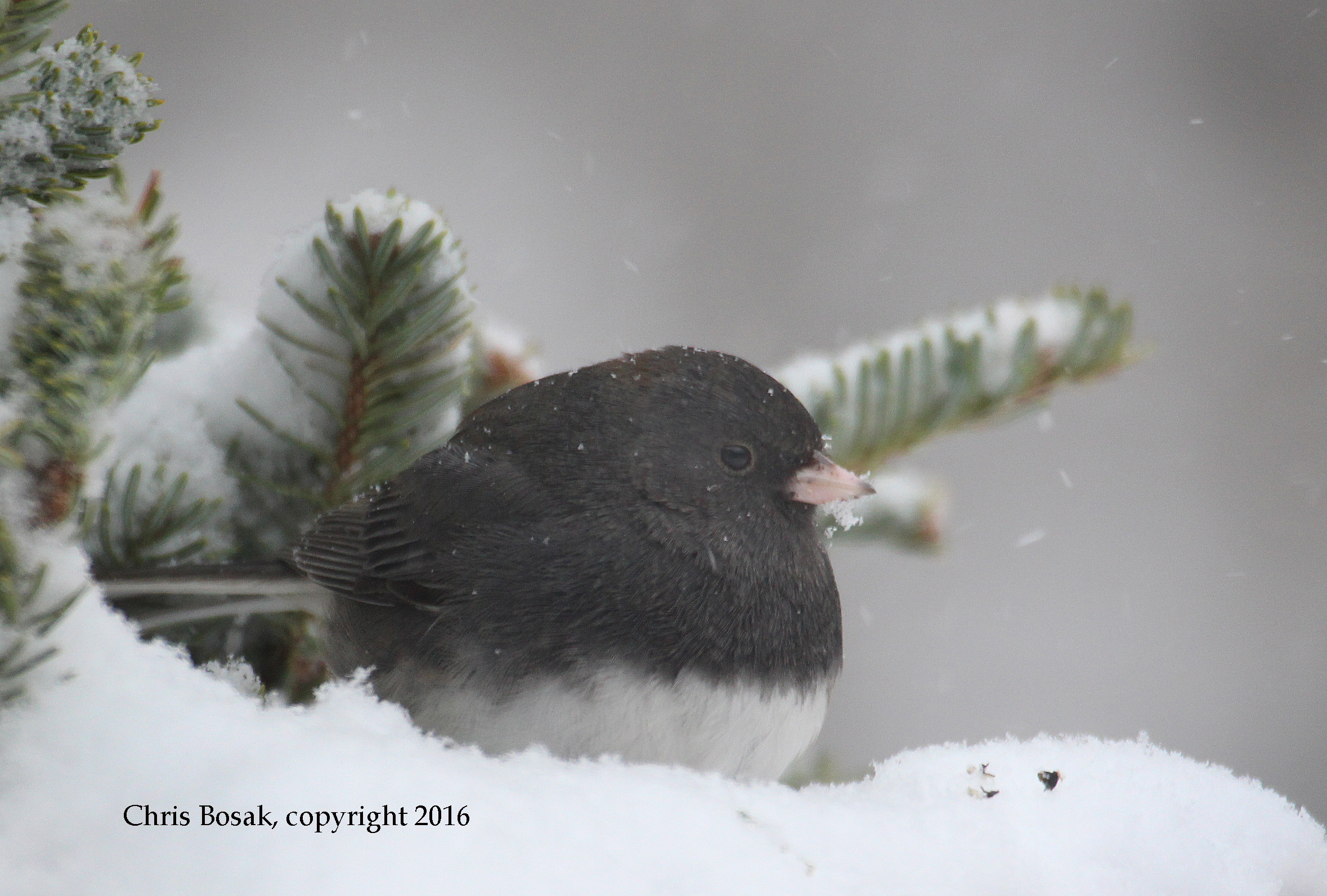
My last posting on this site highlighted the plumage of a Dark-eyed Junco. But why stop at just one photo of a junco in the snow? I can’t think of a reason, so here’s a few more. Juncos mainly show up at our feeders in the winter, so we may as well enjoy these small sparrows while we can. The ones with darker plumage are adult males; the ones with lighter plumage are females or first-year males.

Photo by Chris Bosak A Dark-eyed Junco looks for seeds during a snow storm in New England, Jan. 2016.

Photo by Chris Bosak
A Dark-eyed Junco looks for seeds during a snow storm in New England, Jan. 2016.

Photo by Chris Bosak A Dark-eyed Junco looks for seeds the day following a snow storm in New England, Jan. 2016.

Photo by Chris Bosak
A Dark-eyed Junco looks for seeds the day following a snow storm in New England, Jan. 2016.

Photo by Chris Bosak A Dark-eyed Junco looks for seeds the day following a snow storm in New England, Jan. 2016.

Photo by Chris Bosak
A Dark-eyed Junco looks for seeds the day following a snow storm in New England, Jan. 2016.

Feather layers on a Dark-eyed Junco

Photo by Chris Bosak A Dark-eyed Junco eats sunflowers seeds the day after a snowstorm in Danbury, Conn., Jan. 2016.

Photo by Chris Bosak
A Dark-eyed Junco eats sunflowers seeds the day after a snowstorm in Danbury, Conn., Jan. 2016.

Check out the amazing feathers on this Dark-eyed Junco, seen here eating sunflower seeds the day after last week’s snowstorm.

Now that’s a lot of robins!

Photo by Chris Bosak A flock of American Robins searches through the light snow near a cemetery in southern Connecticut, March 2015.

Photo by Chris Bosak
A flock of American Robins searches through the light snow near a cemetery in southern Connecticut, March 2015.

Early every spring, the robins return in force. Yes, of course many robins remain in New England all winter, but early spring marks the return of many robins that bolted for warmer temps down south.

Nowhere is that more apparent to me than a cemetery and adjacent field at town hall in Darien, CT. I drive past here nearly every day and suddenly one day in late March the fields are filled with American Robins. That day was a few days ago and the robins remain. Soon they will disperse and get down to the serious business of nesting and raising families.

That first robin of the year may not be an accurate harbinger of spring because many are with us all winter, but when the fields are full of robins … now that’s a sign of spring.

(The above photo is admittedly not the greatest, but it gives an idea of how many there are. About 50 are shown in this photo, but the field extends widely to the left and right. In all, there were about 400.)

Junco season winding down

Photo by Chris Bosak A Dark-eyed Junco perches in a tree in New England in March 2015.

Photo by Chris Bosak
A Dark-eyed Junco perches in a tree in New England in March 2015.

We love to see our first Dark-eyed Juncos of the late fall. They remind us that our winter birds have arrived and will be with us for the next several months.

Well, those months are passing by quickly and soon the junco sightings will become scarce again. So here’s a shot I took of a junco the other day. Will it be one of the last— at least until next fall?

Did you know …

• Juncos are members of the sparrow family

• There are several types of juncos in the U.S., including Slate-colored; Oregon; Pink-sided; White-winged; Gray-headed; and Red-backed. Only the Slate-colored is found in New England.


More Carolina Wrens (sorry, I can’t help myself)


Photo by Chris Bosak A Carolina Wren searches on the snow-covered ground for food in New England, Feb. 2015.

Photo by Chris Bosak
A Carolina Wren searches on the snow-covered ground for food in New England, Feb. 2015.

I know I just featured Carolina Wrens in a recent post, but I couldn’t resist posting a few more photos. I’ve seen these beautiful wrens on suet feeders and platform feeders, but I hadn’t seen them looking for food under feeding stations before. Severe weather can cause Continue reading