Photo by Chris Bosak
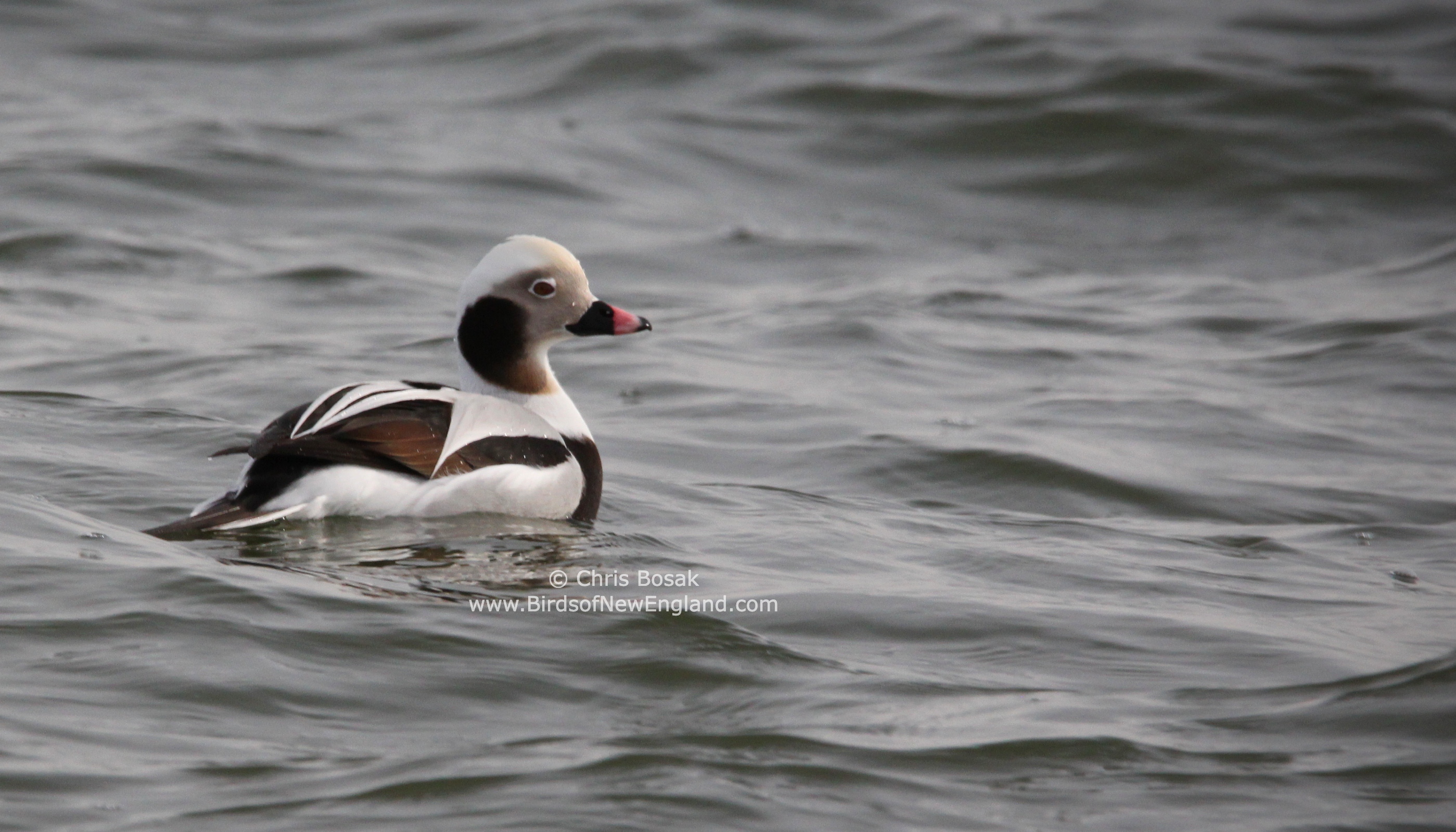
Male long-tailed duck on Long Island Sound, February 2025.
I took a trip to the coast this morning to check out Sherwood Island State Park in southern Connecticut. I have birded there a lot in the past, but it has been several years since I’ve been to the large park on Long Island Sound. I finished the day with 32 species with a good mix of water and land birds. A few photos from the walk are included below.
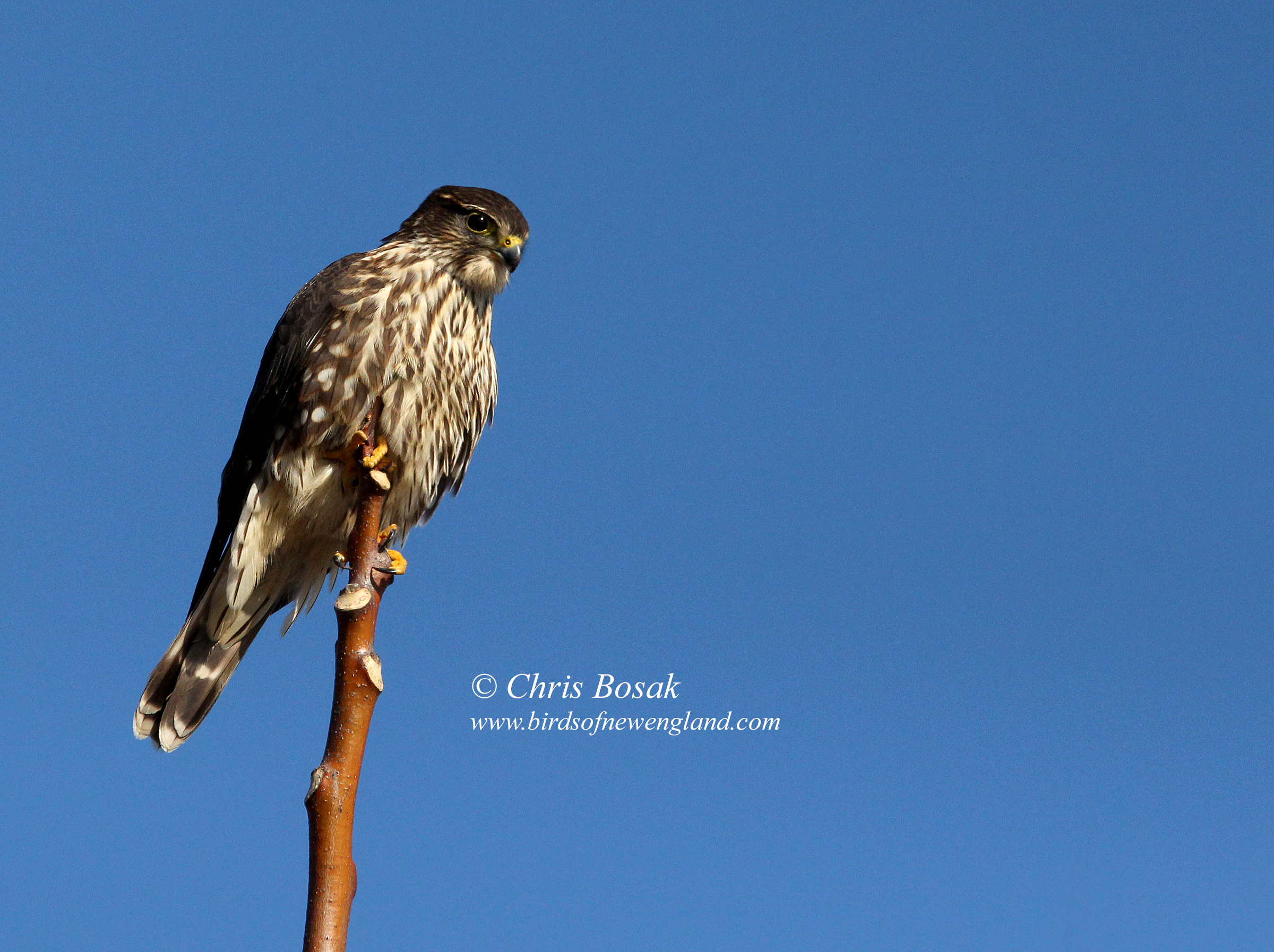
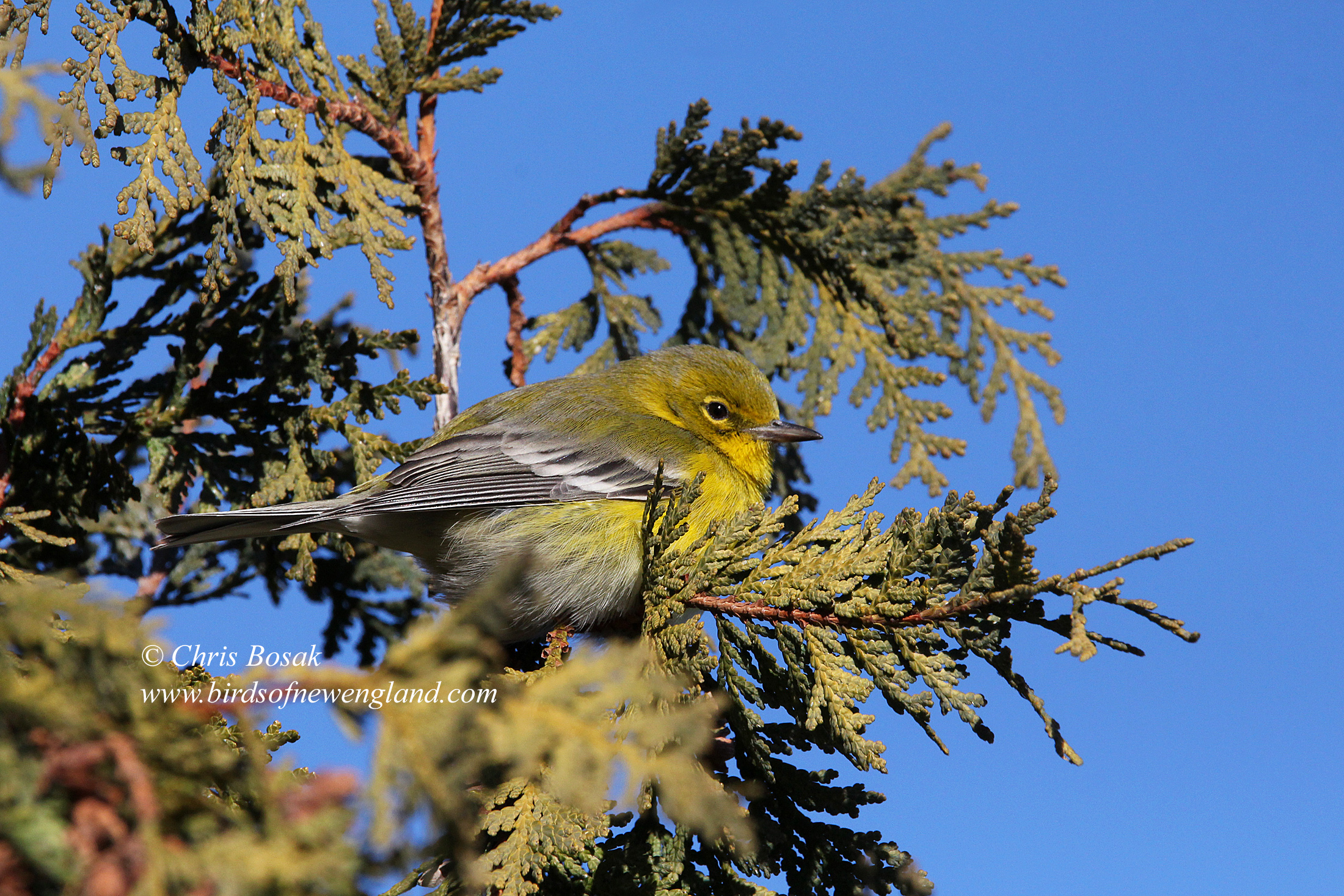
Photo by Chris Bosak – A merlin at Taylor Farm in Norwalk, CT, December 2024.Photo by Chris Bosak – A pine warbler at the esplanade in Norwalk, December 2024.
On Sunday (December 22, 2024), I participated, as usual, in the Christmas Bird Count and covered my usual area of coastal Norwalk (SW Connecticut). Instead of my usual birding partner Frank, I covered the area with Adam and Jo. It was 13 degrees when we started and didn’t seem to get much warmer as the day went on. In fact, the wind picked up and made it seem even colder. The things we do for the birds.
We had a successful day with plenty of highlights, including bald eagle, peregrine falcon, merlin, pipit, pine warbler, yellow-rumped warblerf and both types of kinglet.
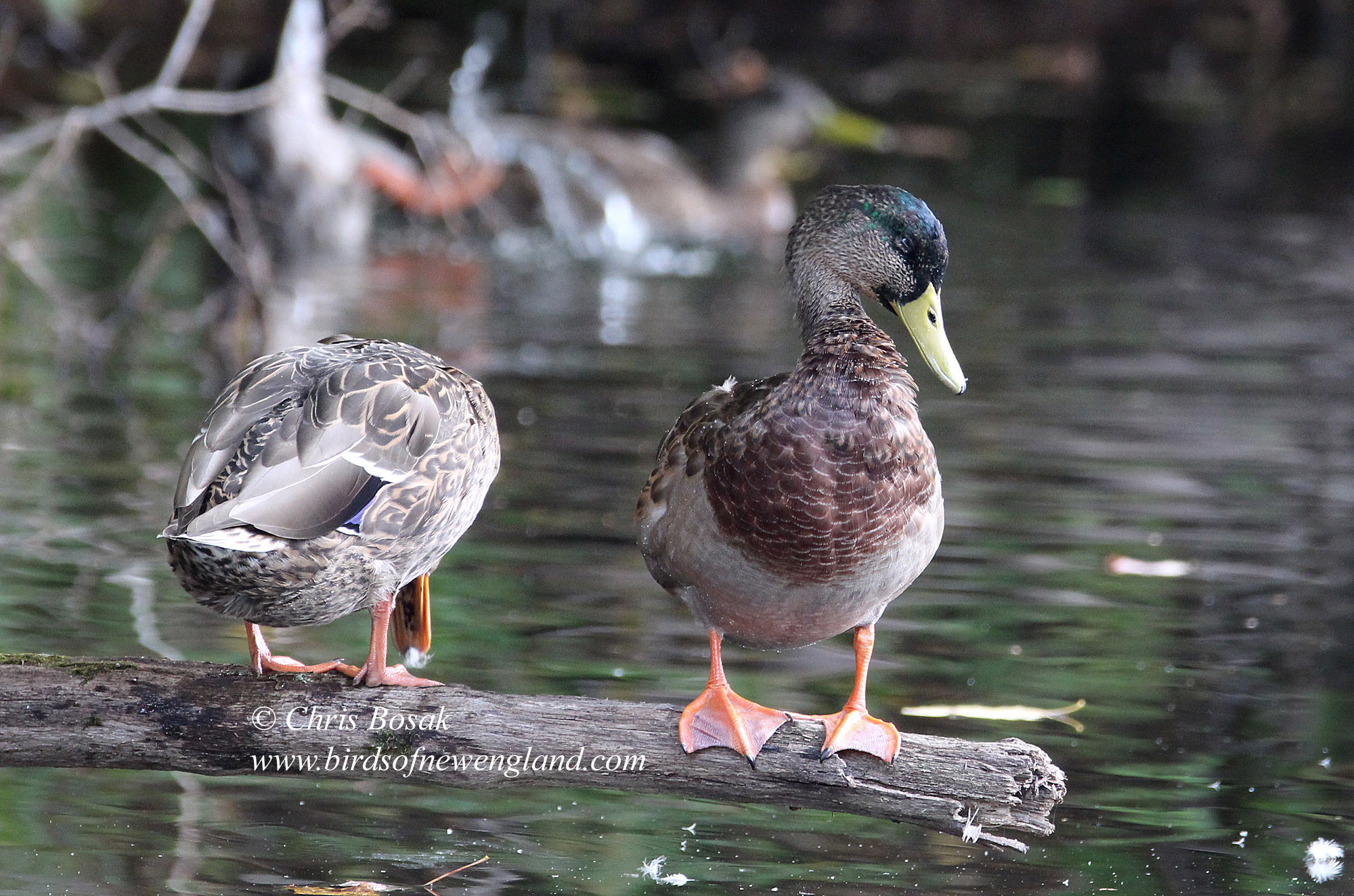
Photo by Chris Bosak – Mallards sit on a log in New England, fall 2024. The mallard on the right is a young male.
Some bird sightings are better than others.
Even if you love all birds and nature, as I do and imagine everyone who reads this column does, you still have your favorites. I don’t know many people who enjoy a house sparrow sighting as much as a bald eagle sighting.
Even a particular bird can be more exciting to see depending on the circumstances. I was struck by this realization during a recent birdwalk.
I was doing an eBird list and wanted to be as thorough as possible, so my senses were carefully attuned to my surroundings. Still, the birding was fairly slow, and my species count was well below what I was expecting. I approached the large pond, or perhaps it’s a small lake, with anticipation as I’ve seen cormorants, wood ducks, black ducks, osprey and a variety of waders there on previous walks.
The weather icons on my iPhone showed rain starting at 8 a.m. I figured that would give me about an hour of dry weather to look for some early spring migrating birds.
No such luck. The rain started even before sunrise so my hour of dry weather wasn’t going to happen. Instead of rolling over and going back to sleep (a very tempting option) or mindlessly scrolling through social media, I decided to head out into the rain anyway. OK, I did take a few minutes to do Wordle quickly before heading out.
The walk started in a light rain, and a lot of birds were out singing. Immediately, I heard robins, cardinals, blue jays, song sparrows and a field sparrow in the distance. Field sparrows have a very distinctive song that sounds like a ping-pong ball bouncing on a table with the time between bounces getting progressively shorter, just like a real ball would do.
As soon as I committed to a trail leading me farther into the woods, the rain picked up. It never turned into a downpour, but it was a good, steady rain. Thankfully, the temperature was a very manageable 55 degrees, so I just got wet instead of wet and cold. I like birdwatching in all types of weather, but a cold rain is probably the worst. Heavy wind is not much fun either, but I would take it over a cold rain.
There is a little pond I drive past on my way to work. By little pond, I mean tiny. Maybe the size of a basketball court. It’s probably man-made and it’s fenced off because it is on the property of a condominium complex.
It is pretty much right along the road, however, so I get a good look at it when I drive by. Usually, there is nothing of note in terms of birds or other wildlife. Every once in a while, a few Canada geese or mallards can be seen swimming along the surface. One day, I saw both Canada geese and mallards. I know, not very exciting.
But the other day I did see something on that tiny pond that made me look a little longer as I drove past. It was a pair of wood ducks effortlessly gliding along the mirror-like surface. The pair swam side-by-side with the male in front of the female – at least from my point of view. During my drive-by, the ducks were near the right edge and swimming toward the middle of the pond. It was like looking at a painting.
Photo by Chris Bosak
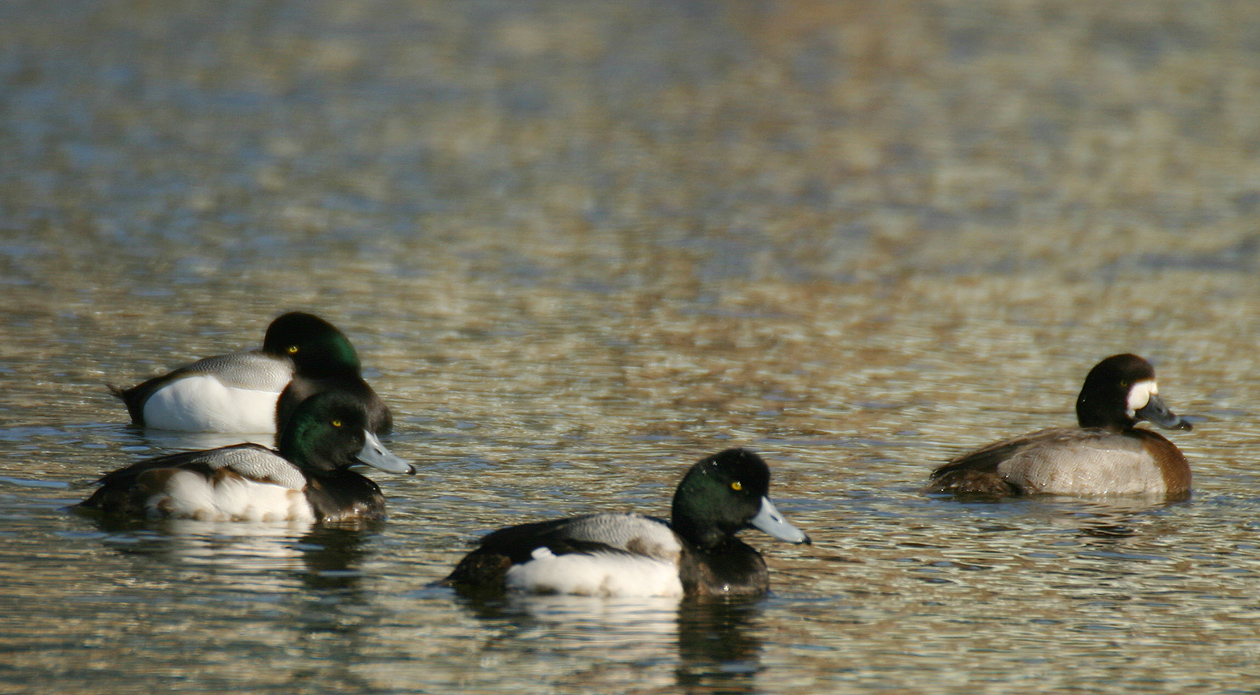
Scaup may be seen in huge numbers on large bodies of water in New England in the winter.
Late February and early March is somewhat of a transition period for birdwatching in New England.
The highly anticipated spring migration, which won’t hit its peak until late April and early May, starts with a trickle around mid-March, most notably with American woodcocks and eastern phoebes. Some consider the early male red-winged blackbirds the start of spring migration, but many of these blackbirds overwinter in New England so it’s tough to say if they are arriving in February or have been here all along.
On the other hand, a lot of the winter birds we have enjoyed seeing over the last few months have either gone further south, returned north, or, unfortunately for some, perished in the cold New England winter. Many birds that try to stick out a New England winter, either due to getting lost on their migration route or opting to forego migration altogether, underestimate the power and longevity of our winters and don’t make it to spring.
Mallards sit on a branch overhanging a pond in New England.
For just a moment, I was in their world.
As I stood there I could see nothing but branches, sticks and stubborn brown leaves that refused to fall off the low trees. Then I crouched like a baseball catcher and there they were: a flock of mallards taking a midday break in the tangled trees growing out of a small pond.
Normally mallards would not make for a memorable birdwatching outing, but this time was different.
A fairly busy road was no more than 50 yards away and my car was about 50 feet away, but I felt as if I were visiting the ducks’ world. The area was thickly wooded and a dark canopy of towering branches hung over the pond’s edge, adding to the feeling of seclusion. It was as if the world was reduced to the woods, the mallards and me.
It was a neat sensation, one that I’ve experience only a handful of times before — usually in extreme northern New Hampshire.
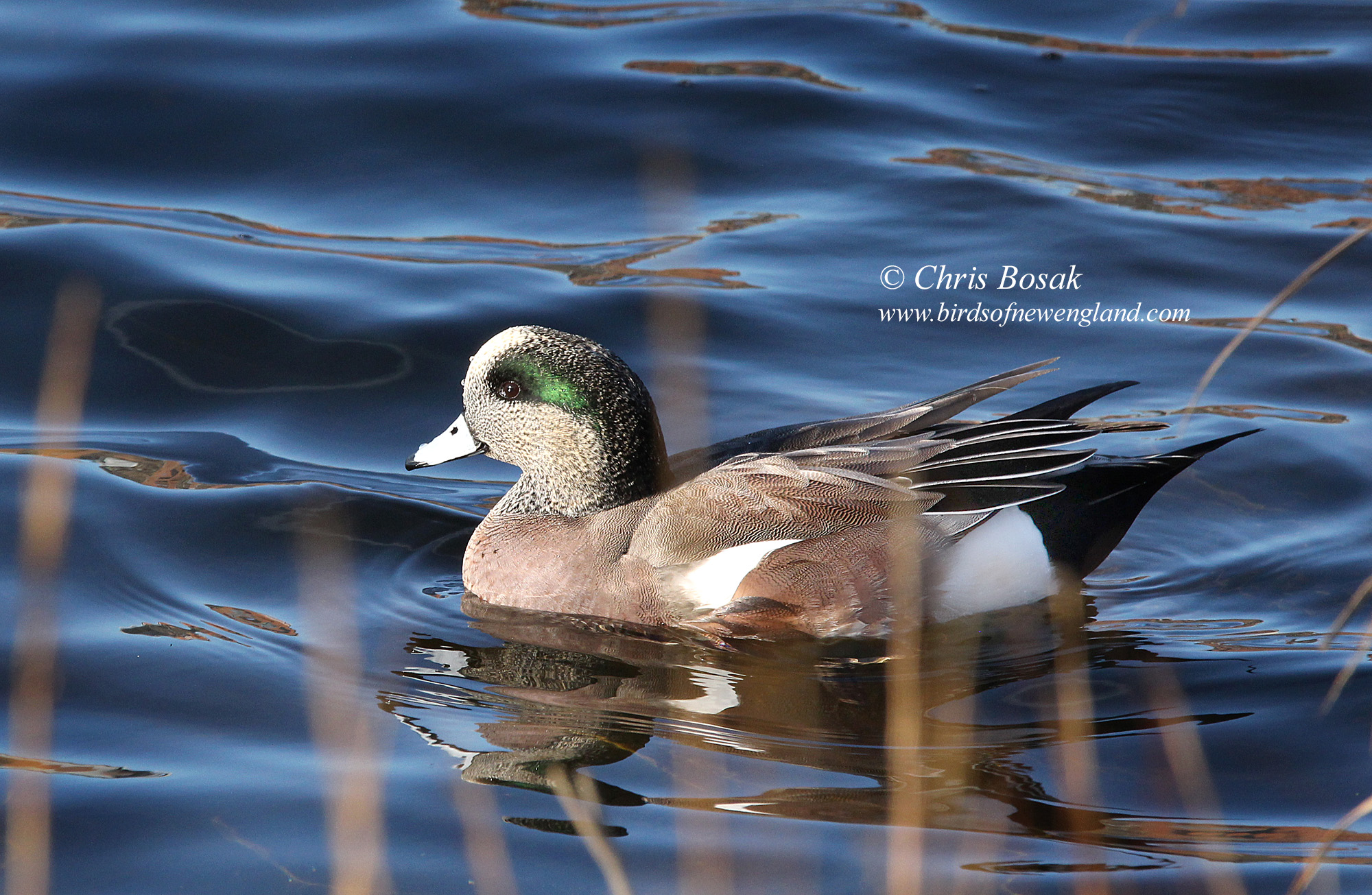
Photo by Chris Bosak — American wigeon, Christmas Bird Count, Westport (CT) Circle, 2022.
It was an abbreviated Christmas Bird Count for me this year due to nagging foot problems and family obligations. I’ll take it, though, as I missed last year completely due to the foot problems. Progress is good.
Frank, Tom and I packed a lot into the time we did have together. Tom and I ducked out early, and Frank birded until dark. I was there for a good cross-section of water and land hot spots. Some highlights included 3 warbler species (pine, yellow-rumped and Nashville), red-breasted nuthatch, American wigeon (close views), common goldeneye, common and red-throated loon, and American pipit.
Click here for more information about the Christmas Bird Count, one of the longest-running wildlife censuses in the world.
Here are a few more photos from the day. It was good to be back out there. Hopefully next year I’ll be back at full strength.
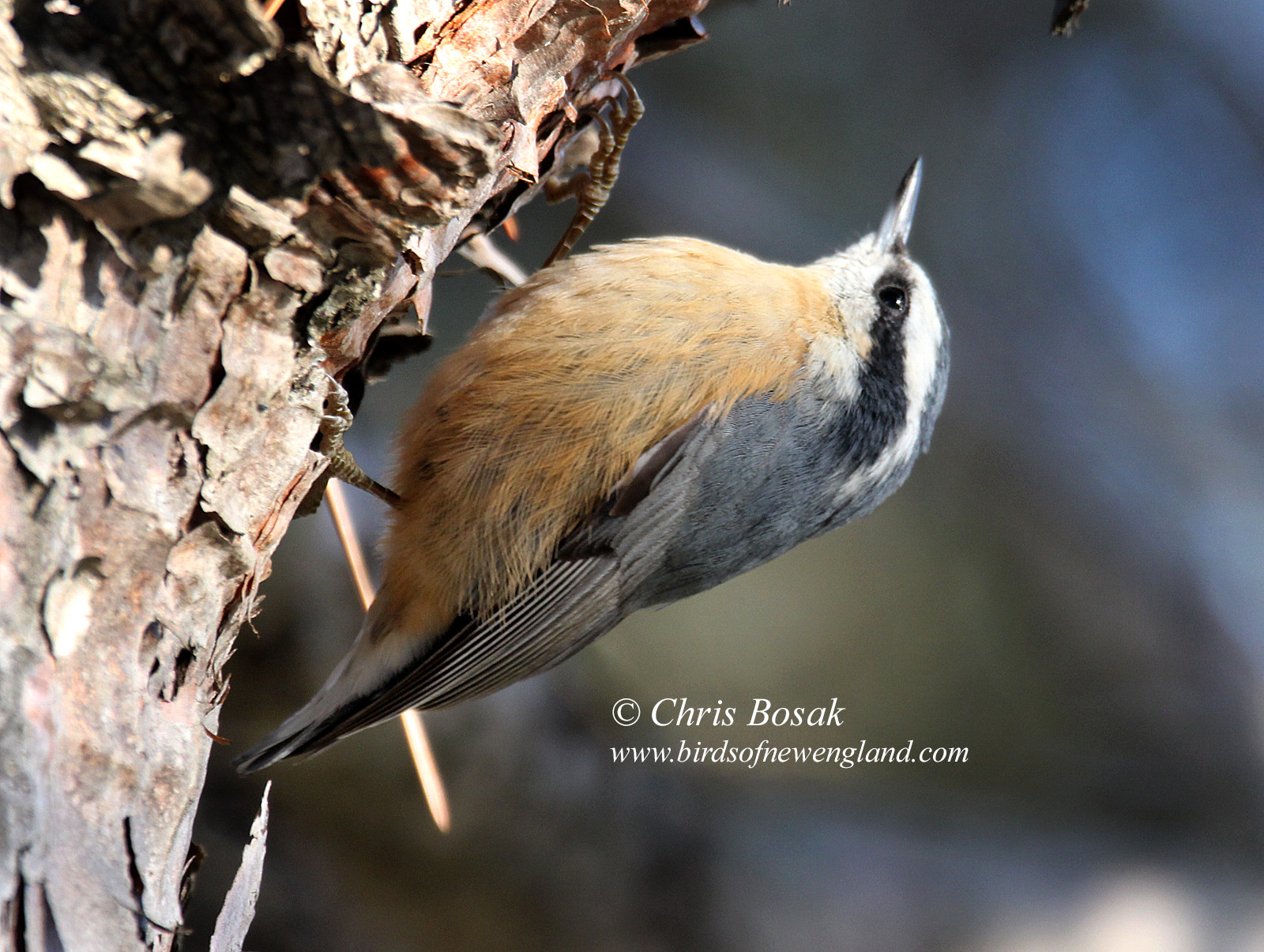
Photo by Chris Bosak — Red-breasted nuthatch, Christmas Bird Count, Westport (CT) Circle, 2022.Photo by Chris Bosak — Red-shouldered hawk, Christmas Bird Count, Westport (CT) Circle, 2022.Photo by Chris Bosak — Hooded mergansers, Christmas Bird Count, Westport (CT) Circle, 2022.
March is a good time to look for ducks, assuming, of course, there is some open water.
I took a short drive the other day to a large reservoir and found that the water was still largely frozen. There were plenty of open spots, however, and one, in particular, caught my attention. I saw mallards from a distance and zeroed in to see if anything else was lurking there.
The mallards I had seen were not mallards at all but a pair of American black ducks. Male and female black ducks resemble female mallards from a distance with their overall bland coloring and similar size and shape. A closer look revealed the black duck’s darker coloration. Male black ducks also have a yellow bill, similar to a male mallard’s bill. The females of both species have duller bills.
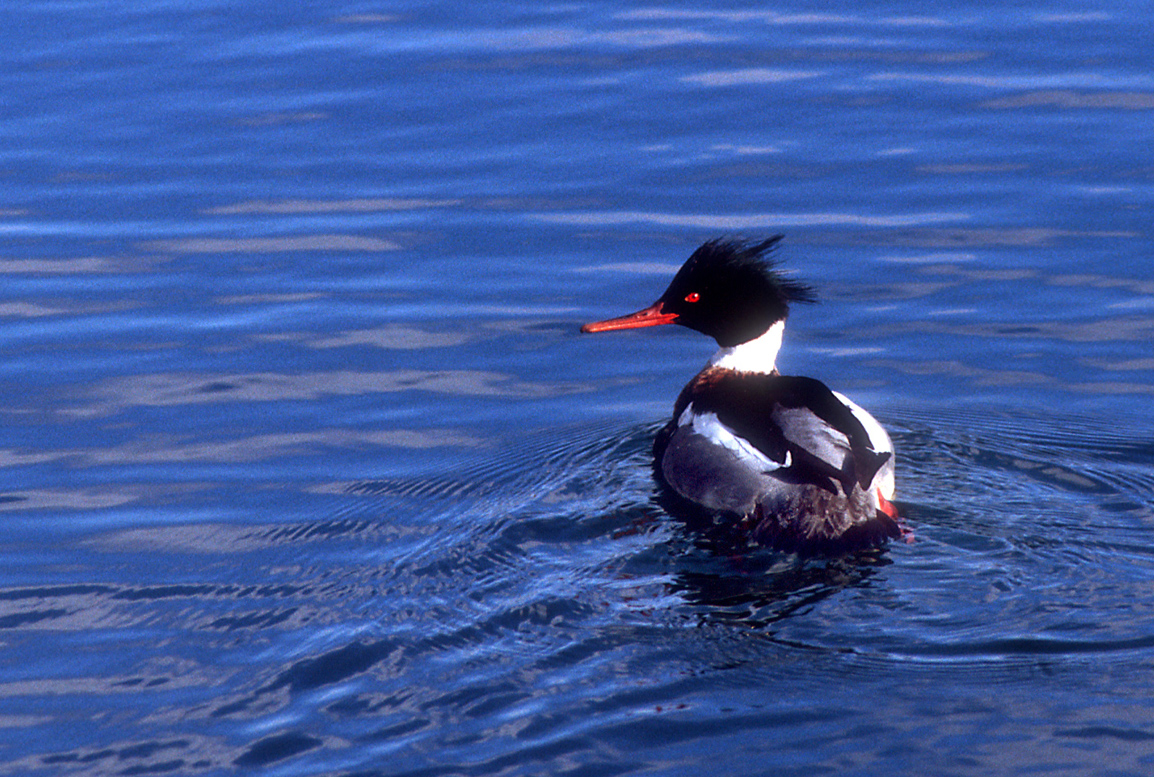
Photo by Chris Bosak Red-breasted mergansers may be seen throughout winter on the ocean or Long Island Sound.
There are always two ways to look at something.
I don’t remember what it was advertising, but I recall an old television commercial wherein one guy says: “Camping? I hate camping. There’s nobody around.”
The next guy on camera, within the same friend group of the first guy but unaware of what he said, says: “Camping? I love camping. There’s nobody around.”
I guess it all depends on your personal preferences and motives.






 Birds of New England.com