For the Birds: Mixing things up

Photo by Chris Bosak Male long-tailed ducks on Long Island Sound, February 2025.

You have to mix it up every once in a while. This goes for most things in life, but certainly for birdwatching.

The other day, I pulled into the parking lot of the state park where I do the majority of my walking and birding. I never got out of the car this time. I had a rare several-hour block to myself, and, as I pondered my options, the siren song of water kept calling me.

While I love walking at my local patch, and I know just where to look and what I might find, I was craving something different on this day. My patch is mostly woods with a few fields, like much of New England. It does have a large pond, but it has been frozen solid since December.

I backed out of the parking lot and headed to a reservoir a relatively short distance away. I knew at least some of the water would be unfrozen and undoubtedly holding some ducks. Open freshwater has been hard to come by this winter.

The reservoir, as it turned out, was mostly frozen as well. A small area near the dam was open, and that’s it. This oasis of unfrozen water was, however, a gathering place for a lot of waterfowl. Canada geese were, by far, the dominant species, along with mallards and mute swans. There were also a few buffleheads and ring-necked ducks, along with a lone male wood duck in his splendid breeding plumage. It had been a while since I had seen a wood duck, so that was the highlight of my visit to the reservoir.

Since I had gone that far already and still had time to spare, I figured I’d keep going and pay a visit to Long Island Sound. It wasn’t terribly far and, even though it’s almost always cold and windy in the winter, I knew a lot of ducks and other fowl would be there.

I arrived at the Connecticut state park, and Long Island Sound did not disappoint. I immediately spotted a huge raft of greater scaup and a few small groups of common goldeneye. The odd common loon popped up here and there as well. Common loons are a blend of dull whites and grays in their winter plumage, unlike their iconic black-and-white spotted summer plumage.

Canada geese were there in large numbers, of course, but a massive flock of brant flew past as well. There were also smaller groups of brant hugging the shoreline.

The highlight for me was the long-tailed ducks. Formerly called oldsquaw, long-tailed ducks are another species that look completely different in the winter than in the summer. Not that I’ve ever seen a long-tailed duck in the summer, as they breed well north of New England, but I’ve seen pictures. The male’s winter plumage is a mix of bright white, black and different shades of brown. The bill is dark with a pink patch in the middle. The female’s plumage is more modest with white and brown.

Many of the long-tailed ducks were relatively close to the shore, offering decent photo opportunities. Unfortunately, it wasn’t a great day for photos as it was very gray. Of course, gray can be good for photography as it eliminates harsh shadows, but this was a dull, dark, color-robbing gray. I did my best with the long-tailed ducks nonetheless.

The inland part of the park was good too, with Savannah sparrows, a northern harrier, fox sparrows and a large group of American tree sparrows.

The next day, I was right back at my patch enjoying a walk in the woods. I guess I needed a little change of pace, if only for one day.

The Atlantic coast is not terribly far for a day trip, and Long Island Sound is not that much farther. If the sea is calling your name and you have the time, pack up and go. Let me know what you see.
Christmas Bird Count 2024 photo highlights

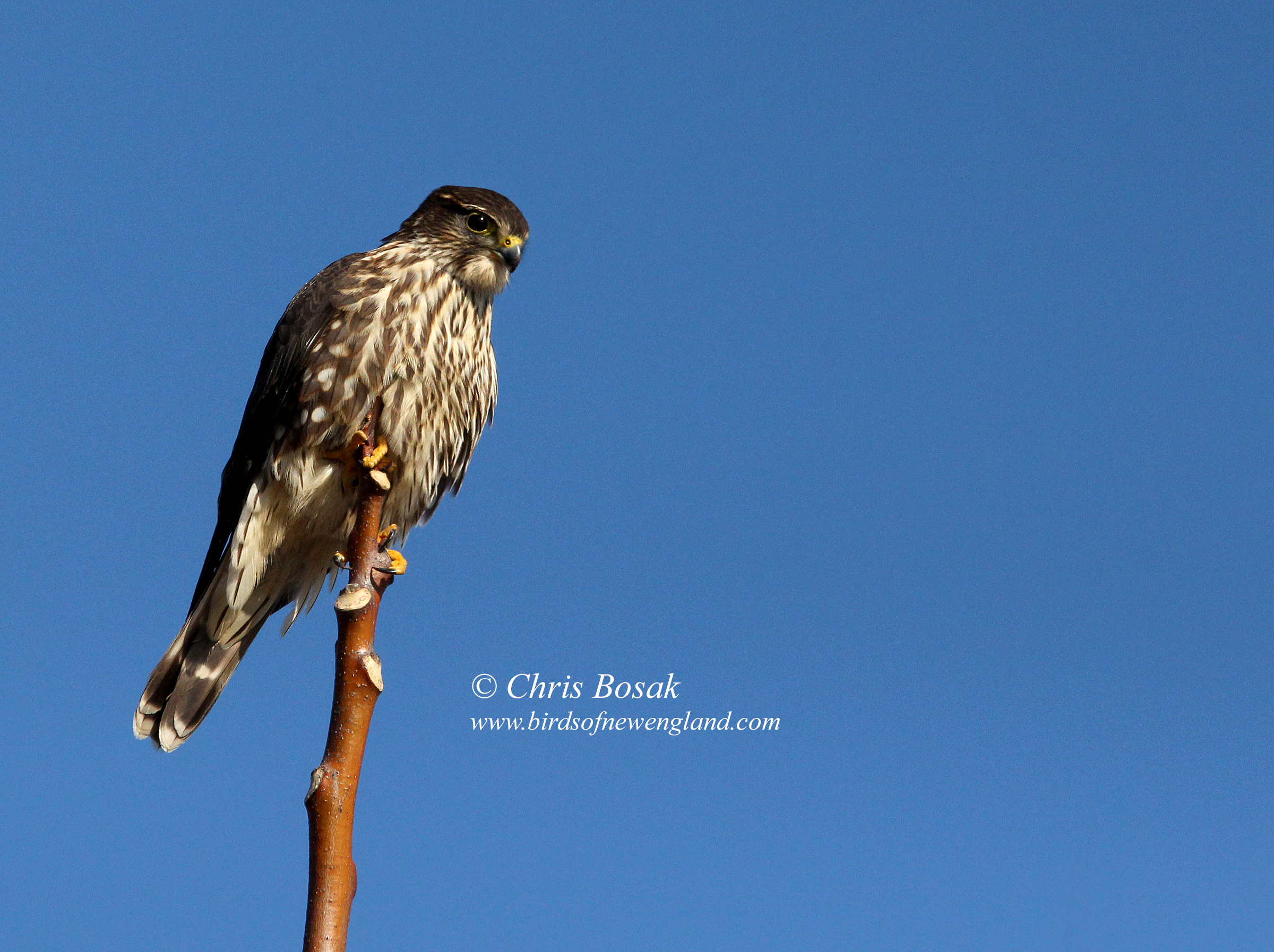
Photo by Chris Bosak – A merlin at Taylor Farm in Norwalk, CT, December 2024.
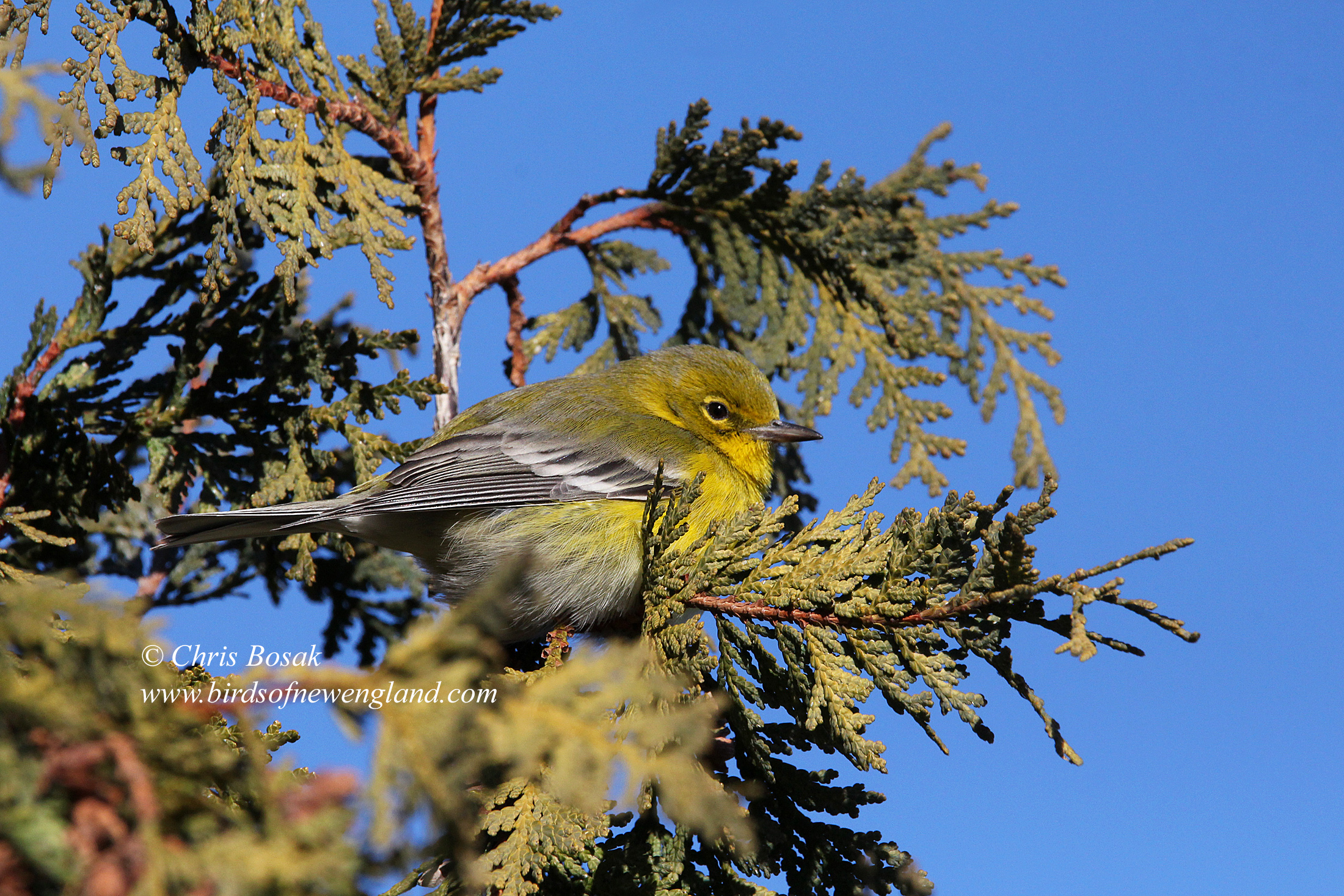
Photo by Chris Bosak – A pine warbler at the esplanade in Norwalk, December 2024.

On Sunday (December 22, 2024), I participated, as usual, in the Christmas Bird Count and covered my usual area of coastal Norwalk (SW Connecticut). Instead of my usual birding partner Frank, I covered the area with Adam and Jo. It was 13 degrees when we started and didn’t seem to get much warmer as the day went on. In fact, the wind picked up and made it seem even colder. The things we do for the birds.

We had a successful day with plenty of highlights, including bald eagle, peregrine falcon, merlin, pipit, pine warbler, yellow-rumped warblerf and both types of kinglet.

Here are some photo highlights of the day:

Continue reading

Long Island Sound VII: Bonus photos

Photo by Chris Bosak
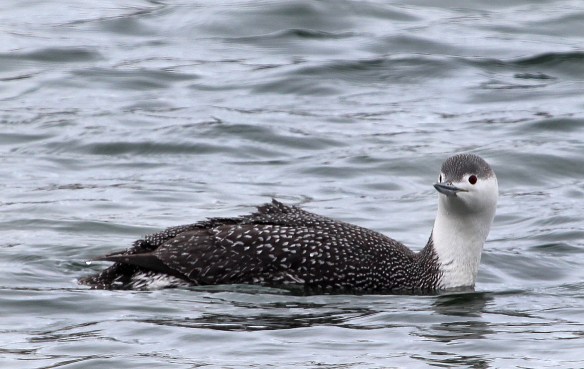
A Red-throated Loon swims in Norwalk Harbor in this March 2014 photo.

As it turns out, a week wasn’t enough to get in all the Long Island Sound shots I wanted in recognition of the Connecticut Audubon Society’s 2019 State of the Birds report. So here are some more. The press release that summarizes the findings may be found here. The full report will be available via PDF on January 1.

Here’s the link to my original posting, which explains why I’m posting so many photos of the Sound.

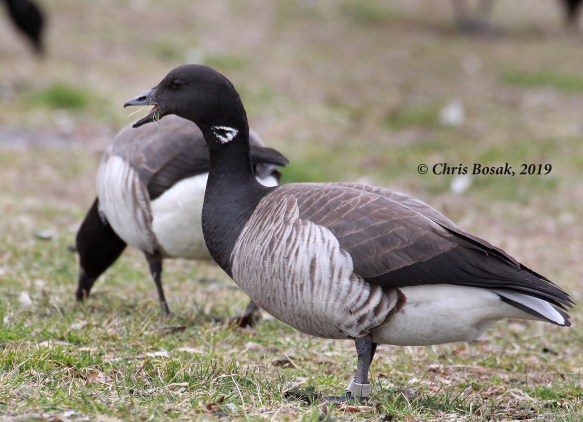
Photo by Chris Bosak Brant at Calf Pasture Beach in Norwalk, Connecticut, 2019.
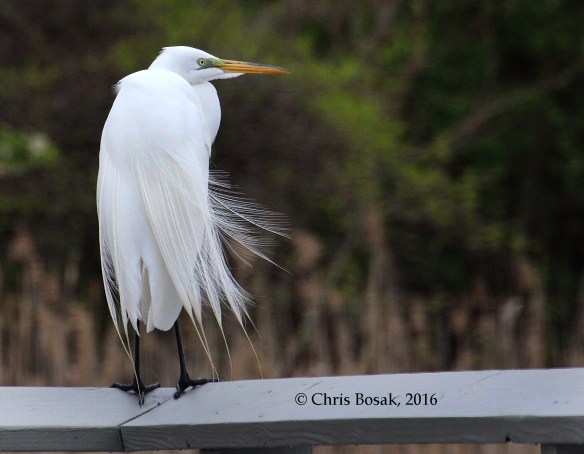
Photo by Chris Bosak A Great Egret stands on a deck railing overlooking the Norwalk River in Norwalk, Conn., April 2016.

Long Island Sound VI

Photo by Chris Bosak A Horned Grebe swims in Long Island Sound off the coast of Darien, Conn., Jan. 2015.

Here’s another shot taken on or near Long Island Sound, in recognition of the Connecticut Audubon Society’s 2019 State of the Birds report. The press release that summarizes the findings may be found here. The full report will be available via PDF on January 1.

Here’s the link to my original posting, which explains why I’m posting so many photos of the Sound.

Long Island Sound V

Photo by Chris Bosak An American Oystercatcher walks along the beach at Milford Point in Connecticut, April 2014.
Photo by Chris Bosak
An American Oystercatcher walks along the beach at Milford Point in Connecticut, April 2014.

Here’s another shot taken on or near Long Island Sound, in recognition of the Connecticut Audubon Society’s 2019 State of the Birds report. The press release that summarizes the findings may be found here. The full report will be available via PDF on January 1.

Here’s the link to my original posting, which explains why I’m posting so many photos of the Sound.

Long Island Sound IV

Photo by Chris Bosak
A Snowy Owl sits on a rock on an island off the coast of Norwalk in November 2008.

Here’s another shot taken on or near Long Island Sound, in recognition of the Connecticut Audubon Society’s 2019 State of the Birds report. The press release that summarizes the findings may be found here. The full report will be available via PDF on January 1.

Here’s the link to my original posting, which explains why I’m posting so many photos of the Sound.

Long Island Sound III

Photo by Chris Bosak
Purple Sandpiper on a rocky island off the coast of Darien, CT. (Dec. 2013)

Here’s another shot taken on or near Long Island Sound, in recognition of the Connecticut Audubon Society’s 2019 State of the Birds report. The press release that summarizes the findings may be found here. The full report will be available via PDF on January 1.

Here’s the link to my original posting, which explains why I’m posting so many photos of the Sound.

Long Island Sound II

Photo by Chrisi Bosak A male Osprey flies above a female Osprey at Veterans Park in Norwalk, Conn., April 29, 2015.
Photo by Chris Bosak
A male Osprey flies above a female Osprey at Veterans Park in Norwalk, Conn., April 29, 2015.

Here’s another shot taken on or near Long Island Sound, in recognition of the Connecticut Audubon Society’s 2019 State of the Birds report. The press release that summarizes the findings may be found here. The full report will be available via PDF on January 1.

Here’s the link to my original posting, which explains why I’m posting so many photos of the Sound.

Photo by Chris Bosak An Osprey flies with a fish in its talons over the Norwalk River in Norwalk, Conn., summer 2015.

Report: Long Island Sound faces uncertain future

Photo by Chris Bosak A Common Loon seen during a recent winter in Long Island Sound off the coast of Norwalk, Conn. Loons feature a more drab plumage in the winter.
Photo by Chris Bosak
A Common Loon seen during a recent winter in Long Island Sound off the coast of Norwalk, Conn. Loons feature a more drab plumage in the winter.

Long Island Sound is a special body of water. The estuary that forms the southern border of Connecticut, the northern border of Long Island (N.Y.), ends up at the East River in NYC to the west and the Atlantic Ocean to the east, is a vital habitat for birds and other wildlife.

I have lived in three cities that border Long Island Sound and have spent countless hours birding the coast and open waters. Each December, I participate in a Christmas Bird Count whose territory includes Long Island Sound. The birdlife is varied and thrilling at all times of the year. The fascinating summer birds are replaced by amazing winter birds.

According to the 2019 State of the Birds report released last week, the Sound is as clean and vibrant as it has been in years. However, it also faces an uncertain future as climate change and rising sea levels threaten to drastically alter its landscape. According to the report, the Sound and its wildlife have already been impacted by changes in climate.

The thoroughly researched and well-written State of the Birds report is issued each year by the Connecticut Audubon Society (@CTAudubon). It includes articles by experts from many other state conservation organizations. When I was a newspaperman, I made it a point to attend the annual release event, at which many of the Report’s authors were present. I still look forward to its release each year.

The press release that summarizes the findings may be found here. The full report will be available via PDF on January 1.

To honor the Sound and, hopefully, draw a little more awareness to the Report and its findings, I will post each day this week a photo I have taken at the Sound over the years.

#CTStateoftheBirds

Photo by Chris Bosak A Common Loon seen during a recent winter in Long Island Sound off the coast of Norwalk, Conn. Loons feature a more drab plumage in the winter.

Sticking to the water theme: Black-crowned Night Heron

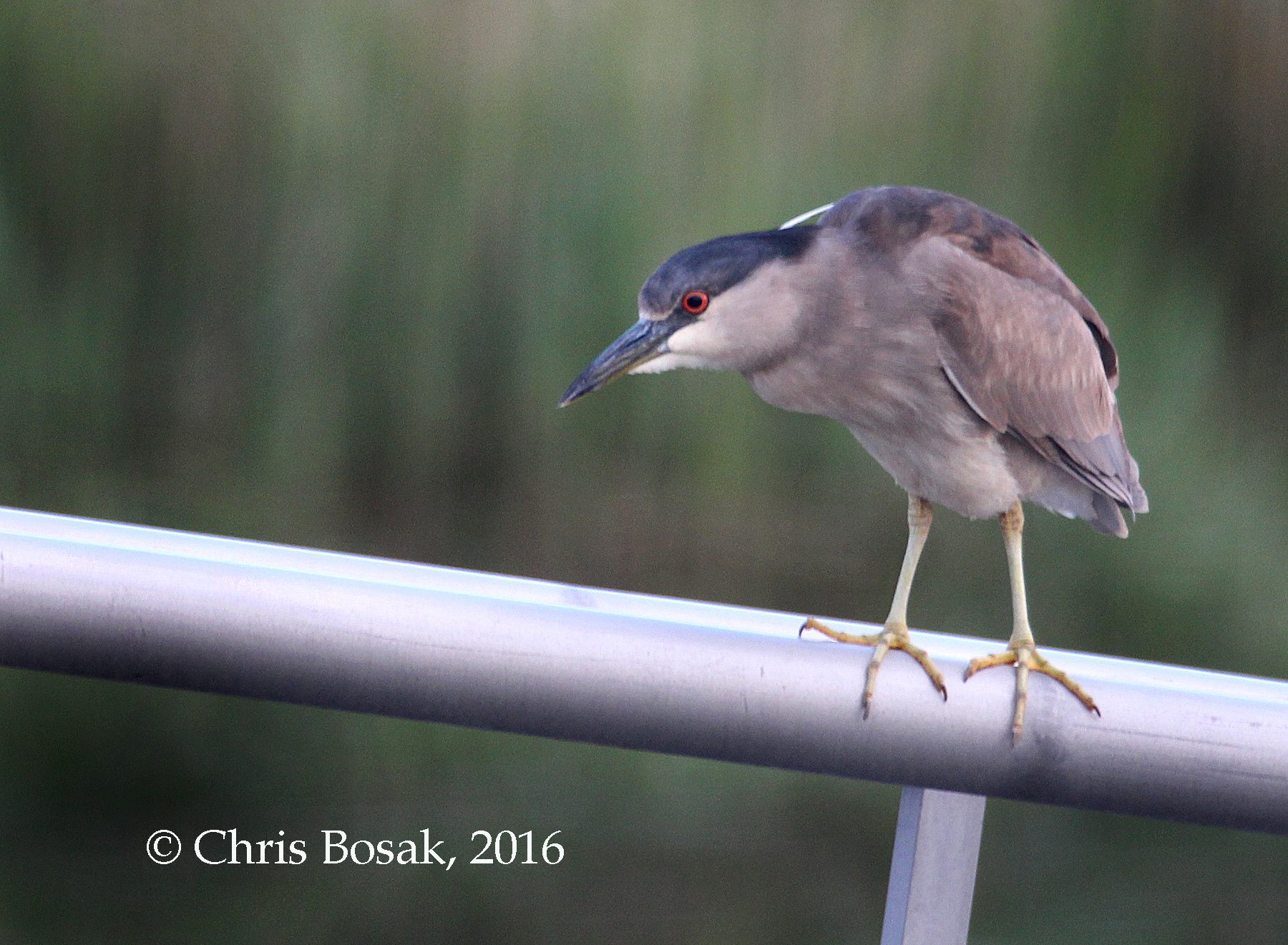
Photo by Chris Bosak A Black-crowned Night Heron perches on a railing at a marina along the Norwalk River, Norwalk, Conn., spring 2016.

Photo by Chris Bosak
A Black-crowned Night Heron perches on a railing at a marina along the Norwalk River, Norwalk, Conn., spring 2016.

My last few posts have been about Wood Ducks. It’s not everyday you come across “brave” female Wood Ducks with babies, so why not get some mileage out of it?

We’ll switch gears a bit for this posting with some photos of a Black-crowned Night Heron I saw while walking into work on day last week along the Norwalk River. Black-crowned Night Herons may be seen throughout New England, both Continue reading