Photo by Chris Bosak
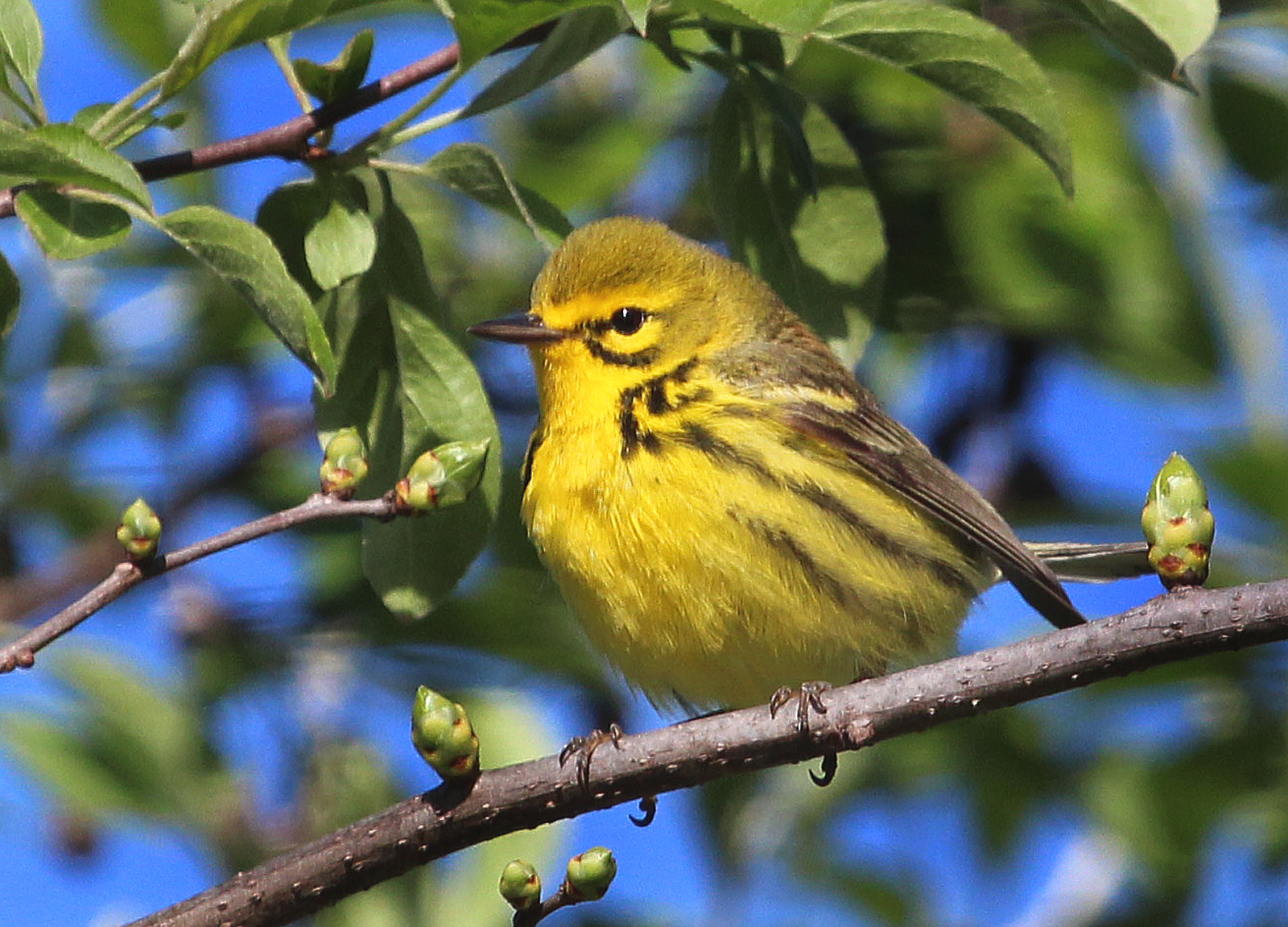
A Prairie Warbler perches in a tree at Selleck’s/Dunlap Woods on May 5, 2014.
I took a quick walk before work this morning. As usual, I was running behind getting my third-grader to school, so I had only about 15 minutes for this walk. But it was enough to know that we are in what many birders consider the most exciting two weeks of the year. The warbler migration started with a trickle a few weeks ago in New England. Based on what I saw on my quick walk this morning, the warbler season is picking up fast. A Prairie Warbler was the first bird I saw — not a bad start to a walk. A few Yellow Warblers darted here and there, too. Yellow Warblers nest at Selleck’s Woods, so hopefully they are looking to set up shop for the summer.
The walk included a few other warbler species as well as the sounds of other colorful songbirds, such as Baltimore Orioles and Blue-gray Gnatcatchers. It’s a great time to be out there. Let me know what you are seeing.
Here’s a post from last year featuring some of the warblers you may see out there this time of year. Click here.


