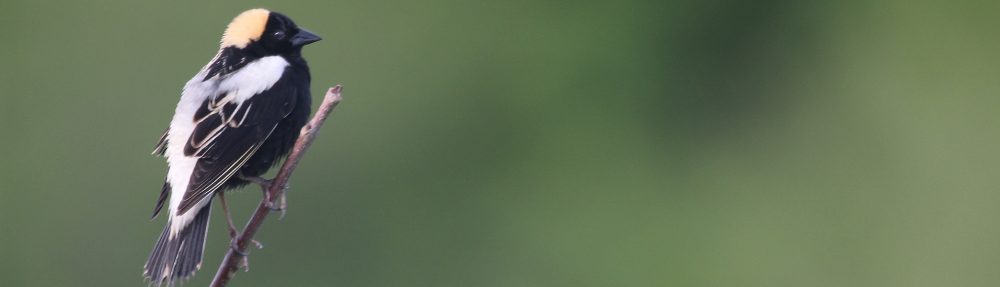
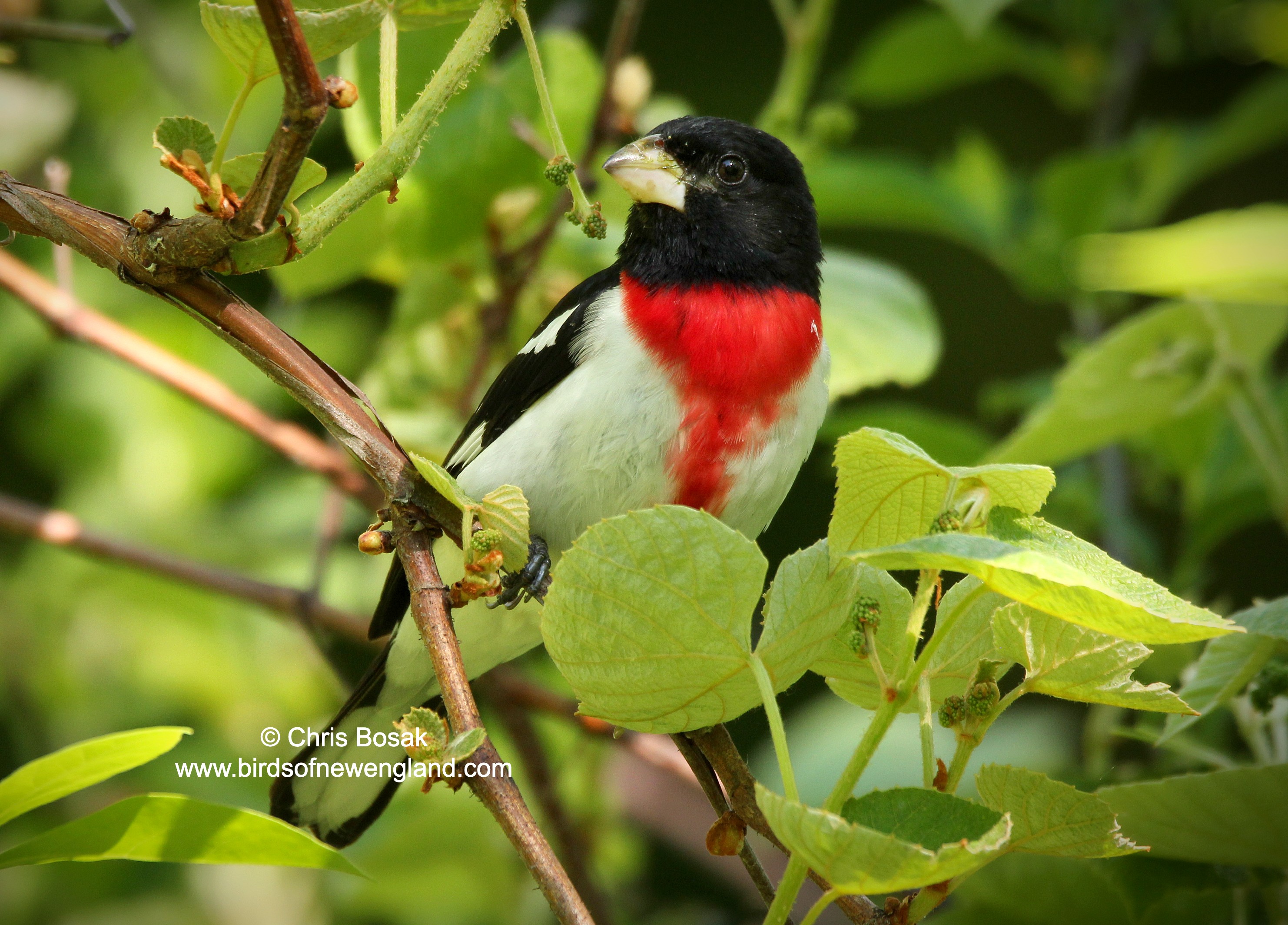
A rose-breasted grosbeak perches in a bush at Huntington State Park in Redding, Connecticut, summer 2026.
One of the main reasons why male birds are often more colorful than females was on full display during a recent bird walk.
As I noted in a recent column, summer is an ideal time for birdwatching and observing parent birds raising their young. Finding a nest is always exciting, but it isn’t necessary to confirm that birds are busy caring for youngsters nearby.
Father birds were particularly on edge during my recent walk. I got about halfway down the path when a male rose-breasted grosbeak darted across the trail in front of my face and landed in a nearby shrub. It was clearly agitated by my presence as it fluffed its feathers and chirped an alarm call.
I didn’t want to linger and fluster the bird even more, so I kept on my way.
Maybe 30 yards farther down the trail, a male American redstart did the same thing. It didn’t fly across the trail like the grosbeak, but it flew out of the woods and landed in a shrub on the edge of the trail. It also seemed agitated, so again, I kept on walking.
The obvious deduction is that the birds had nests with youngsters nearby, and my presence stirred their protective instincts. I can’t blame the birds. There are so many threats out there that they need to be on high alert at all times during the breeding season.
The other day, I saw an eastern kingbird aggressively chasing away a crow that was likely eyeing young kingbirds in a nest. Crows are notorious raiders of nests, but those ranks also include hawks, owls, and blue jays, as well as raccoons, squirrels, cats, and snakes. It’s a tough world for birds out there.
Fortunately, the majority of bird species in New England have males who actively participate in raising their young. Typically, the female stays on the nest while the male brings back food and watches for predators, but they reverse the roles at times as well.
That’s why in species that are sexually dimorphic (males and females look different), the male is almost always the more colorful and flashy one. In New England, this dimorphism is most notable in species such as cardinals, tanagers, grosbeaks, buntings, and many duck species. Other birds have more subtle differences and some have no differences at all.
The brighter colors in males also play a role in attracting a mate and claiming (and protecting) territory.
Males of species that have multiple broods each year, such as robins and bluebirds, are particularly busy. Males will continue to feed youngsters even after they have left the nest, while the female sits on new eggs. Of course, the males continue to protect the area as well.
Summer can be an exciting time for birdwatchers. For the birds themselves, it’s just another challenging time of year in their fight for survival.


My tree swallows are all done with nesting apparently. Their hatchlings fledge better than a week ago and activity at our nest boxes has disappeared…
LikeLiked by 1 person