For the Birds: Studies show conflicting news about barn swallow population

Photo by CHRIS BOSAK Young Barn Swallows look for food from their mother, which is returning to the nest with food.

A new study of global bird populations, based mainly on citizen science databases such as eBird, estimates there are around 50 billion wild birds in the world.

Four species, according to the study, have a population of more than one billion birds. On the other hand, about one-tenth of the bird species in the world have fewer than 5,000 individuals. 

A team of researchers at the University of New South Wales conducted the study, which was published in the “Proceedings of the National Academy of Sciences.” The researchers adjusted the citizen science numbers by modeling and consulting birding experts in specific regions.

So what are the four members of the billion bird club? Two of them are rather obvious: house sparrow and European starling. House sparrows, according to the study, are the world’s most populous bird with 1.6 billion individuals. The other two species were less obvious, to me anyway: ring-billed gull and barn swallow. I see a lot of ring-billed gulls pretty much everywhere I go in New England (inland and shore), but I didn’t realize they had such a global presence as well. 

Barn swallow was the one that really surprised me. Not to be a bird snob, but house sparrows, starlings and ring-billed gulls are not what I would consider to be desirable birds. In the case of house sparrow and starling, they are non-native birds that have thrived in North America at the expense of native birds. Barn swallows, in my estimation, are desirable birds and I enjoy seeing them in the field. It was good news to me that this study put the barn swallow in the billion bird club.

I have no reason to doubt these researchers, but I did want to cross reference that number with other recent similar studies. Determining the global population of 9,700 bird species is a tall task and by no means an exact science. Heck, getting a perfectly accurate count of the birds in your own backyard is pretty much impossible. (Update in April 2024: The World Animal Foundation now estimates the number of bird species to be just over 11,000.)

Past studies have estimated the global bird population to be anywhere from 200 to 400 billion individual birds. That’s a wide range and not even close to the 50 billion birds estimated by this recent study.

I also found that past studies have estimated the global barn swallow population to be somewhere between 100 million and 200 million. BirdNote, the popular radio program and website, included in an episode that the “worldwide population of barn swallows is estimated to be 190 million.” The bird conservation consortium Partners in Flight estimates a breeding population of 120 million barn swallows. 

So what is it? One billion (or more), 190 million (or less), or somewhere in between? It depends on the study, obviously. Either way, it’s good to see that the barn swallow population is thriving. Or is it? 

A 2014 article published by phys.org claims that the barn swallow “has seen a 95 percent drop in numbers across North American in the last 40 years.” The article opens by defining the word “extinction,” and hints that swallows may be heading in that direction. 

One billion individuals or teetering on extinction? That’s a huge difference, but both extremes are reported by seemingly credible sources. I’m sure each research team will vehemently defend their own numbers — at least I hope they would.

A 2019 study of birds in the Western Hemisphere by Cornell Lab of Ornithology, American Bird Conservancy, Smithsonian Conservation Biology Institute and other organizations, garnered a lot of attention and press, and was hailed as a wake-up call to protect birds before they disappear. The study found that one in four birds had disappeared over the last 50 years. This study estimated the barn swallow population in the Western Hemisphere to be around 46 million birds.

The wide-ranging numbers underscore how difficult it is to get an accurate count of global bird populations. Personally, I like to go with the lower estimates. I think there’s no doubt that birds and other wildlife are in decline to some degree. Why not take steps to change that? If we are wrong and the population is thriving, well, then we’d just have more of a good thing. 
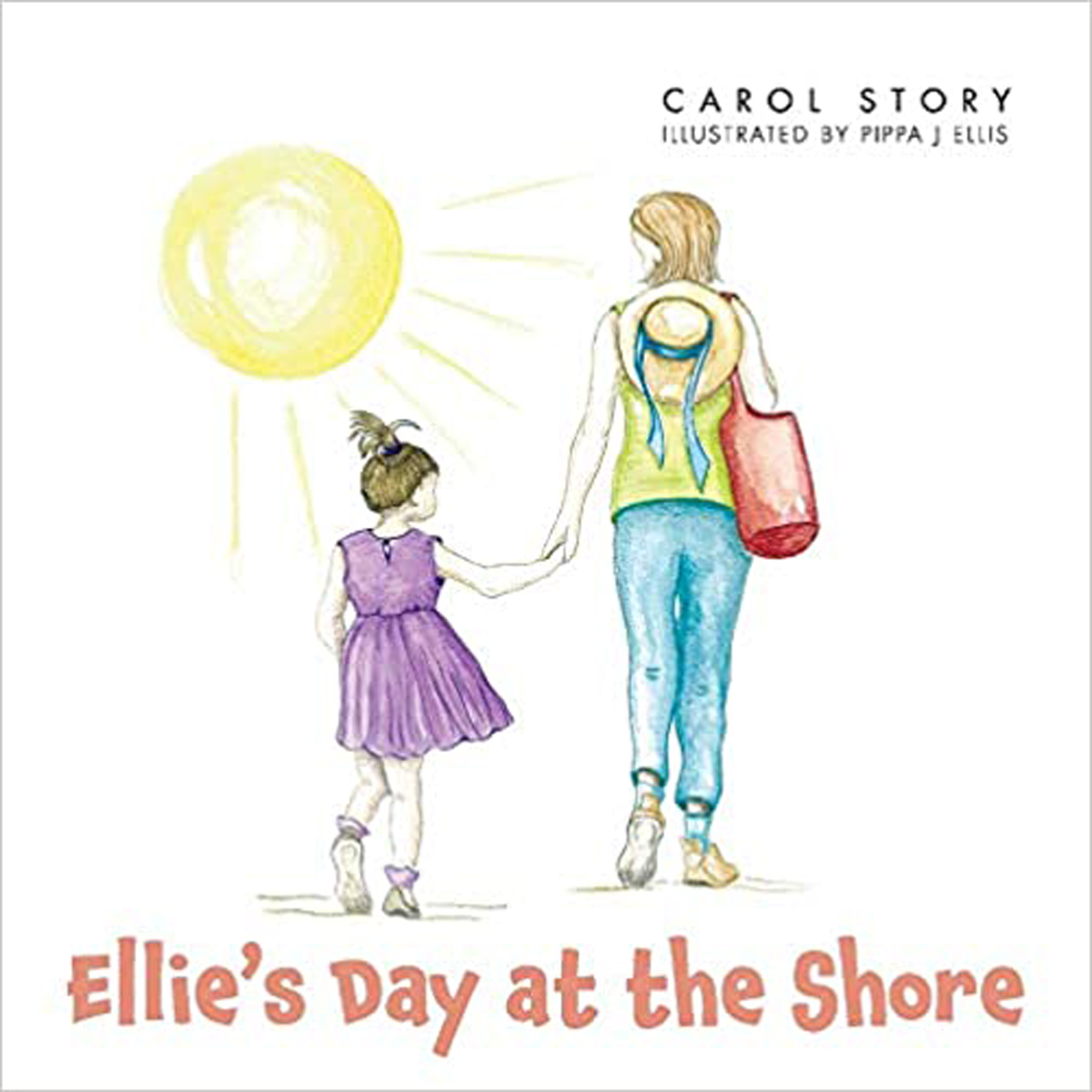
Children’s story by local author makes for good summer read

It’s summer (unofficially anyway) and time to look for a good summer read. Here’s a recommendation for a child (or an adult to read to a youngster) from a New England author. Carol Story from Norwalk, Connecticut, used her quarantine time to write Ellie’s Day at the Shore. I wish I had used my time as wisely.

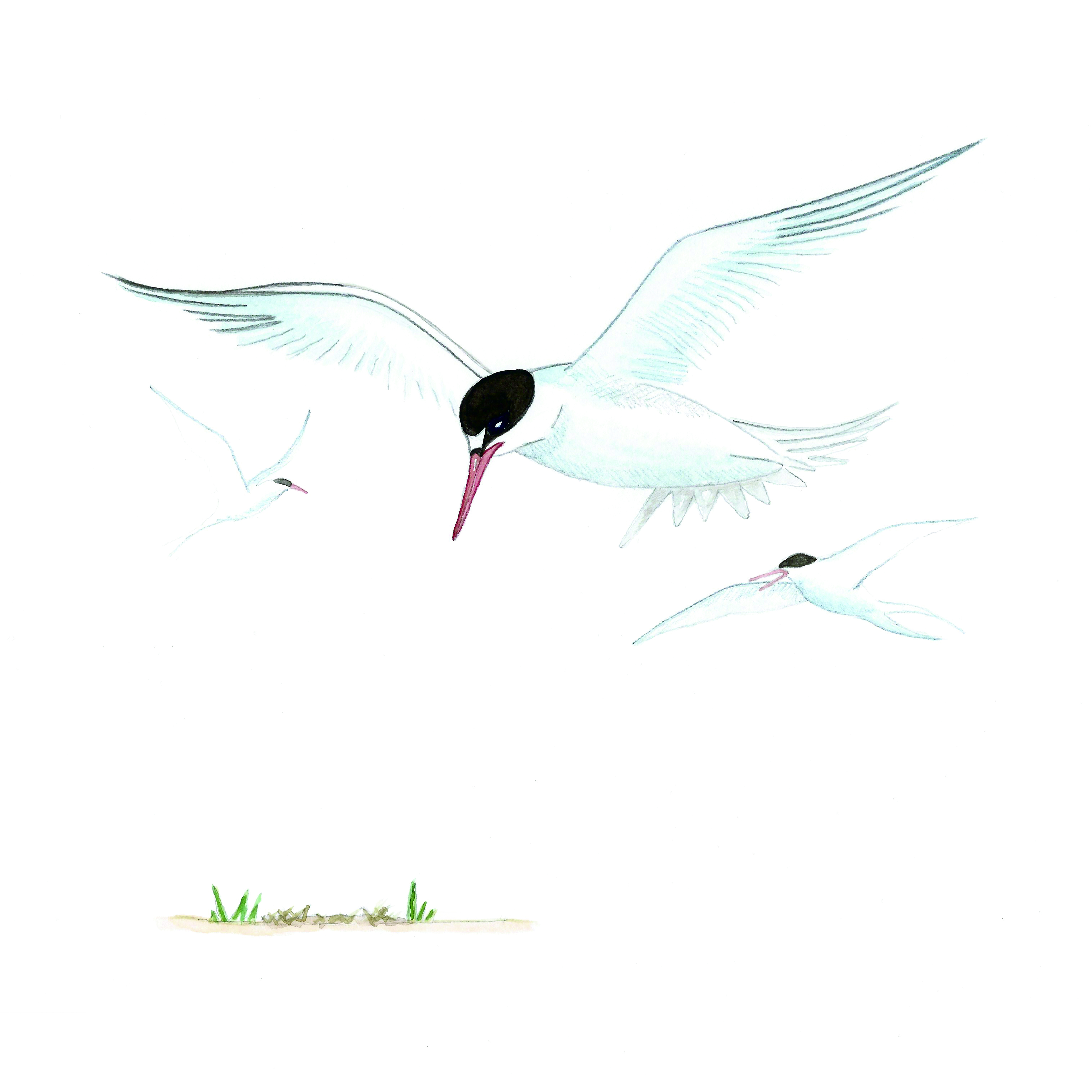
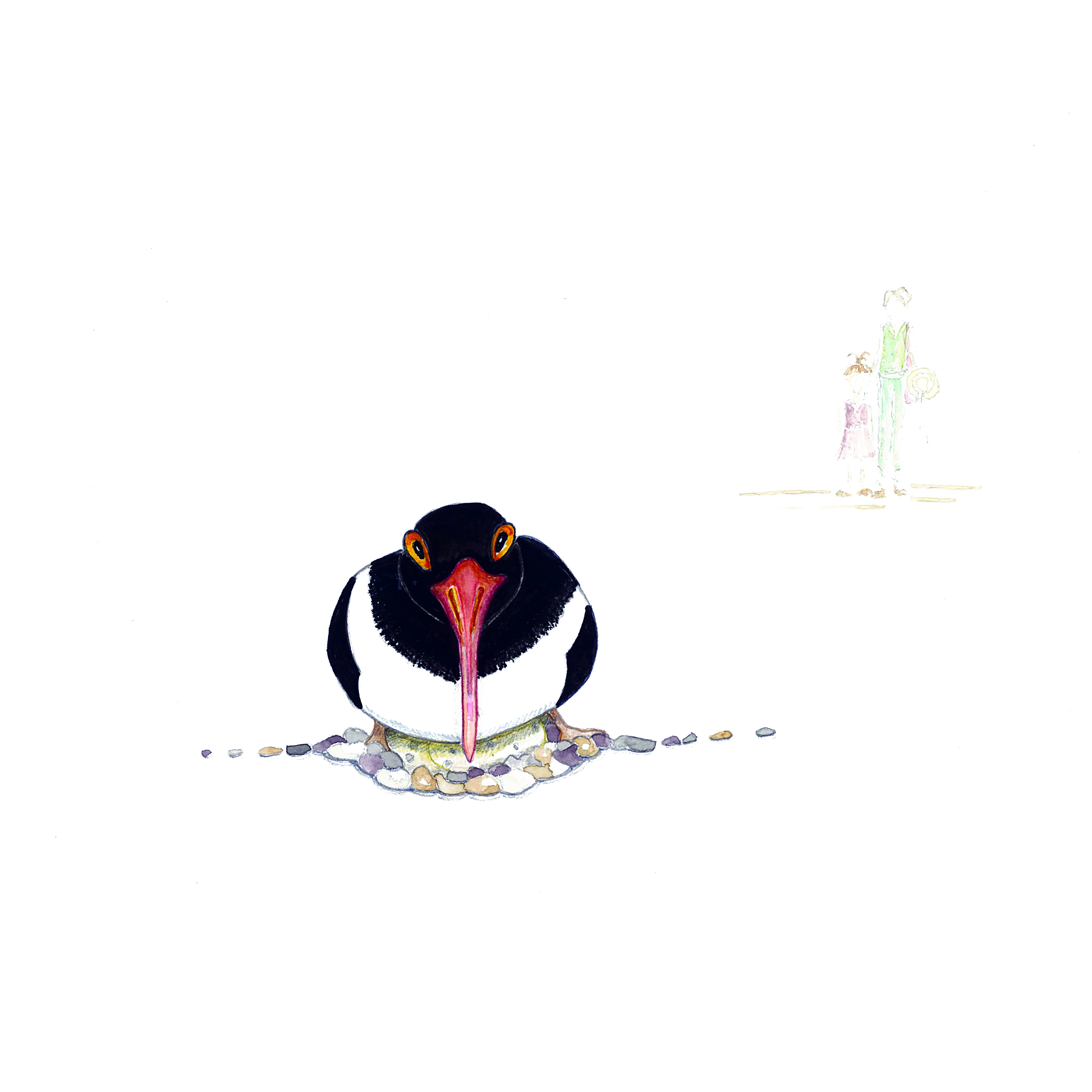
Ellie’s Day at the Shore was inspired by Story’s experience as a volunteer shorebird monitor for the Audubon Alliance for Coastal Waterbirds, whose primary purpose is to monitor nesting activity of piping plovers, American oystercatchers, least terns and other shorebirds along the coast of Long Island Sound. I was a volunteer myself several years ago and it’s a lot of work, but also fun, educational and purposeful.

Ellie’s Day at the Beach tells the story of Carol taking her great niece Ellie to the shore and discovering all sorts of natural goodies, such as horseshoe crabs, terrapins, butterflies and, of course, birds. The book is beautifully illustrated by Story’s friend Pippa J. Ellis.

There is a conservation theme to the story and a portion of the net proceeds will go to conservation charities. Ellie’s Day at the Shore is $12.95 and may be found on Amazon, BarnesandNoble.com and through the publisher.

Why not kick off the summer right and help support a local author and conservation organizations?

More details may be found in this article written by The Hour newspaper in Norwalk, CT.

Here’s another story from the Connecticut Audubon website.

For the Birds: One of those walks

Photo by Chris Bosak A yellow warbler perches in a tree in New England, spring 2021.

It was the type of walk you anticipate for about 11 months.

It started fairly slowly with robins and red-winged blackbirds as my only visible avian companions while a lone song sparrow sang in the distance. Soon enough, I heard a mockingbird going through its repertoire from a nearby shrubby patch. They usually belt out their songs from a fairly obvious perch and this guy was no different as I found him easily at the end of a branch.

As I watched and listened to this talented songster, a female ruby-throated hummingbird entered the scene. It hovered briefly at the honeysuckle but did not stay long as the blossoms were not quite ready to provide nectar.

A familiar song then permeated the area as dueling male yellow warblers proclaimed ownership of their respective patches. I was stuck in the middle of the rivals and enjoyed the sweet music. To us, it’s entertainment. To them, it’s a turf war with much at stake.

Continue reading

For the Birds: Spring wood duck sightings always welcome

Photo by Chris Bosak A wood duck swims in a pond in New England, April 2021.

Only a narrow barrier of reeds separated the fairly busy road from the rain-swelled pool of water bordered by railroad tracks on the backside.

On any other day, this pool of water would be ignored and driven past without a second look. But on this day, something caught my eye and I promptly turned around at the next available safe place to do so. I drove past the water again, this time more slowly, and realized that what had caught my eye was a small group of male wood ducks.

Continue reading

Spring bird feeding basics from Cole’s

Here are some bird feeding tips compliments of Cole’s Wild Bird Products Co.

Photo by Chris Bosak A red-breasted nuthatch grabs a seed from a feeding station in New England last week. (October 2020)

During the global pandemic, and as coronavirus restrictions persist, sales of bird feeders and bird feed continue to skyrocket as people flock to the avian world, right outside their windows where they find the safe and fascinating world of bird watching.

Interest in birding isn’t slowing down; if you haven’t yet tried attracting birds to your backyard, now is a great time to start and for those who are reaping the rewards of watching the birds from home, the experts at Cole’s Wild Bird Products, Co. offer information on bird feed and feeder basics to attract more birds to your backyard this spring.

Continue reading

For the Birds: Surprise and welcomed bobcat sighting

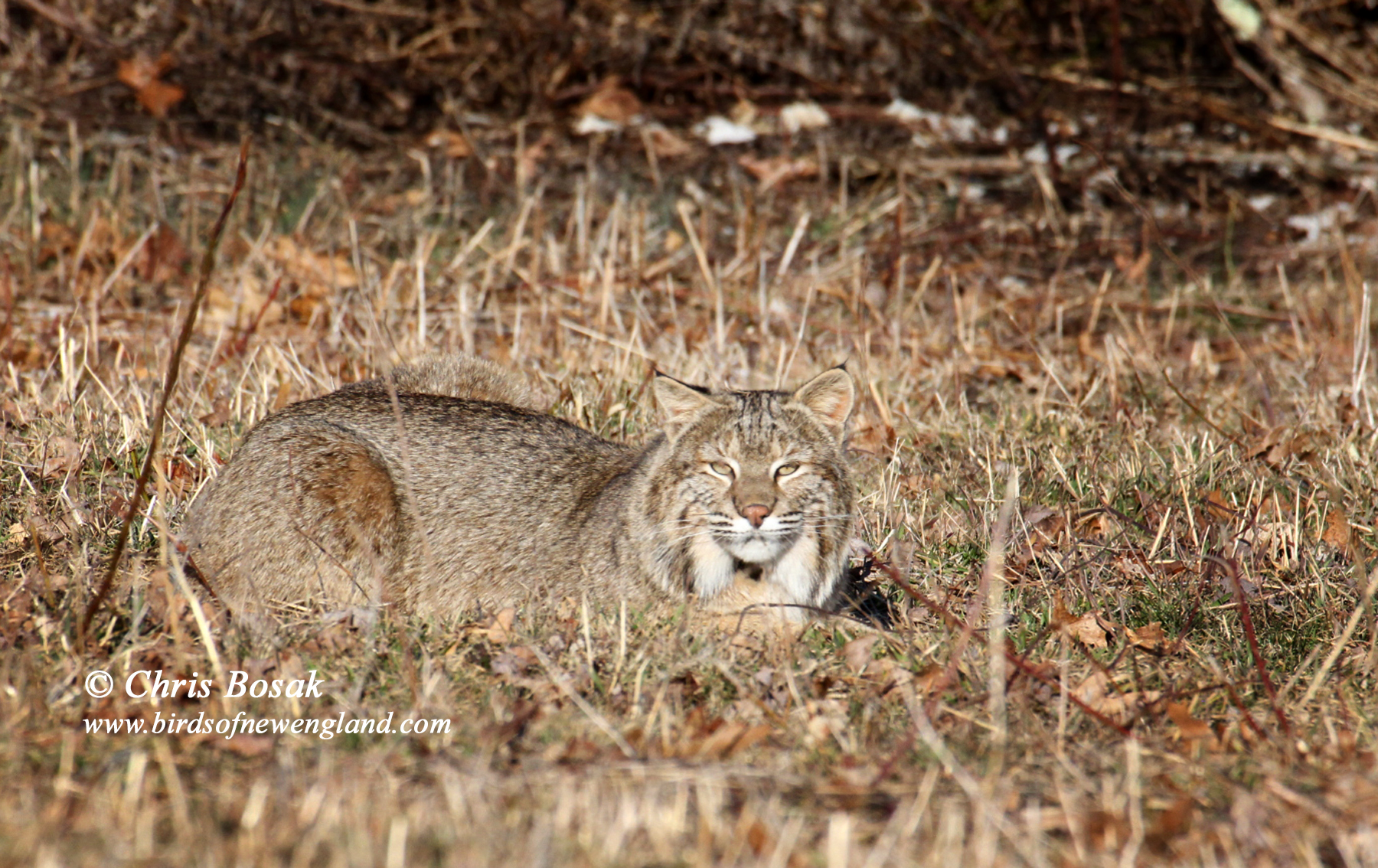
Photo by Chris Bosak A bobcat rests in a field in New England, March 2021. (Huntington State Park)

The large field is bordered by hedgerows on three sides and woods on the fourth. Additional hedgerows divide the field perpendicularly about every 100 yards with small cutouts where the trails pass through.

I emerged from the woods and spotted something large walking along the east hedgerow about 40 yards away from the trail. It was tan, but then again so was everything else around it: the grass, the weeds, the hedgerow. I stopped in my tracks to watch it.

Before my brain fully comprehended the situation, I thought it was either a deer or a mountain lion. I quickly eliminated deer as it was clearly a large cat based on its smooth, stealthy and powerful stride. Can I finally put the mountain lion (or cougar or catamount) debate to rest with solid photos documenting the sighting?

Continue reading

More bobcat photos

Photo by Chris Bosak A bobcat rests in a field in New England, March 2021. (Huntington State Park)

As promised (and expected, I’m sure), here are a few more photos of the bobcat I saw the other day at Huntington State Park in Redding earlier this week. Here’s the original post with more details.

Continue reading

Finally a bobcat sighting

Photo by Chris Bosak A bobcat rests in a field in New England, March 2021. (Huntington State Park)

I came out of the woods and started walking through a field at Huntington State Park in Redding, Connecticut, Monday evening. I noticed something walking through the field parallel to my path about 50 yards to the east. As you can see from the photo, it was a bobcat, a photographic target of mine for years. Finally, I had found one. I can understand why some people mistakenly think they see a mountain lion when, in fact, they see a bobcat. It was much larger than I thought it would be. I’ve heard bobcats described as looking like “large house cats.” I don’t believe that does the bobcat justice. I have a fairly large house cat at home and this bobcat was much, much larger. More photos to come … of course.