A closer look at those damselflies

Photo by Chris Bosak An Azure Damselfly rests on a twig near a pond at Little Merganser Lake in Danbury, Conn., summer 2016.

Photo by Chris Bosak
An Azure Damselfly rests on a twig near a pond at Little Merganser Lake in Danbury, Conn., summer 2016.

The other day I posted a few photos of an Azure Damselfly. Well, here are those photos cropped a little tighter.

Photo by Chris Bosak An Azure Damselfly rests on a twig near a pond at Little Merganser Lake in Danbury, Conn., summer 2016.

Photo by Chris Bosak
An Azure Damselfly rests on a twig near a pond at Little Merganser Lake in Danbury, Conn., summer 2016.

A few neat damselfly photos

Photo by Chris Bosak An Azure Damselfly rests on a twig near a pond at Little Merganser Lake in Danbury, Conn., summer 2016.

Photo by Chris Bosak
An Azure Damselfly rests on a twig near a pond at Little Merganser Lake in Danbury, Conn., summer 2016.

Go to a pond on a summer day and there’s always something interesting to see. Maybe it’s not a bird, or mammal, but something is always around to catch your attention. On this day it was Azure Damselflies, and lots of them.  Here are a photos of these interesting creatures.

Photo by Chris Bosak An Azure Damselfly rests on a twig near a pond at Little Merganser Lake in Danbury, Conn., summer 2016.

Photo by Chris Bosak
An Azure Damselfly rests on a twig near a pond at Little Merganser Lake in Danbury, Conn., summer 2016.

Latest For the Birds column: Up to the roof to get close to a Scarlet Tanager

Photo by Chris Bosak A Scarlet Tanager sings in a tree in Danbury, Conn., July 2016.

Photo by Chris Bosak
A Scarlet Tanager sings in a tree in Danbury, Conn., July 2016.

Here’s the latest For the Birds column, which runs weekly in The Hour (Norwalk, Conn.), The Keene (NH) Sentinel and several Connecticut weekly newspapers.

Thankfully the trees are fully leafed out. My neighbors probably would have started to wonder about me. Of course, that process likely started long ago.

I found myself standing on my roof, camera in hand, keeping an eye on a male scarlet tanager that was singing his heart out among the oaks.

I had noticed the brilliant red-and-black bird a few days before. I was writing at my computer at home when I spied him through the window eating berries from those ubiquitous wild raspberry bushes, which are really invasive wineberries from Asia. The bird was impossible to miss with that beaming red plumage that puts cardinals to shame. (No offense to our beloved cardinals.) The tanager was gone by the time I opened the front door for a better look.

Continue reading

A few Ruby-throated Hummingbird photos

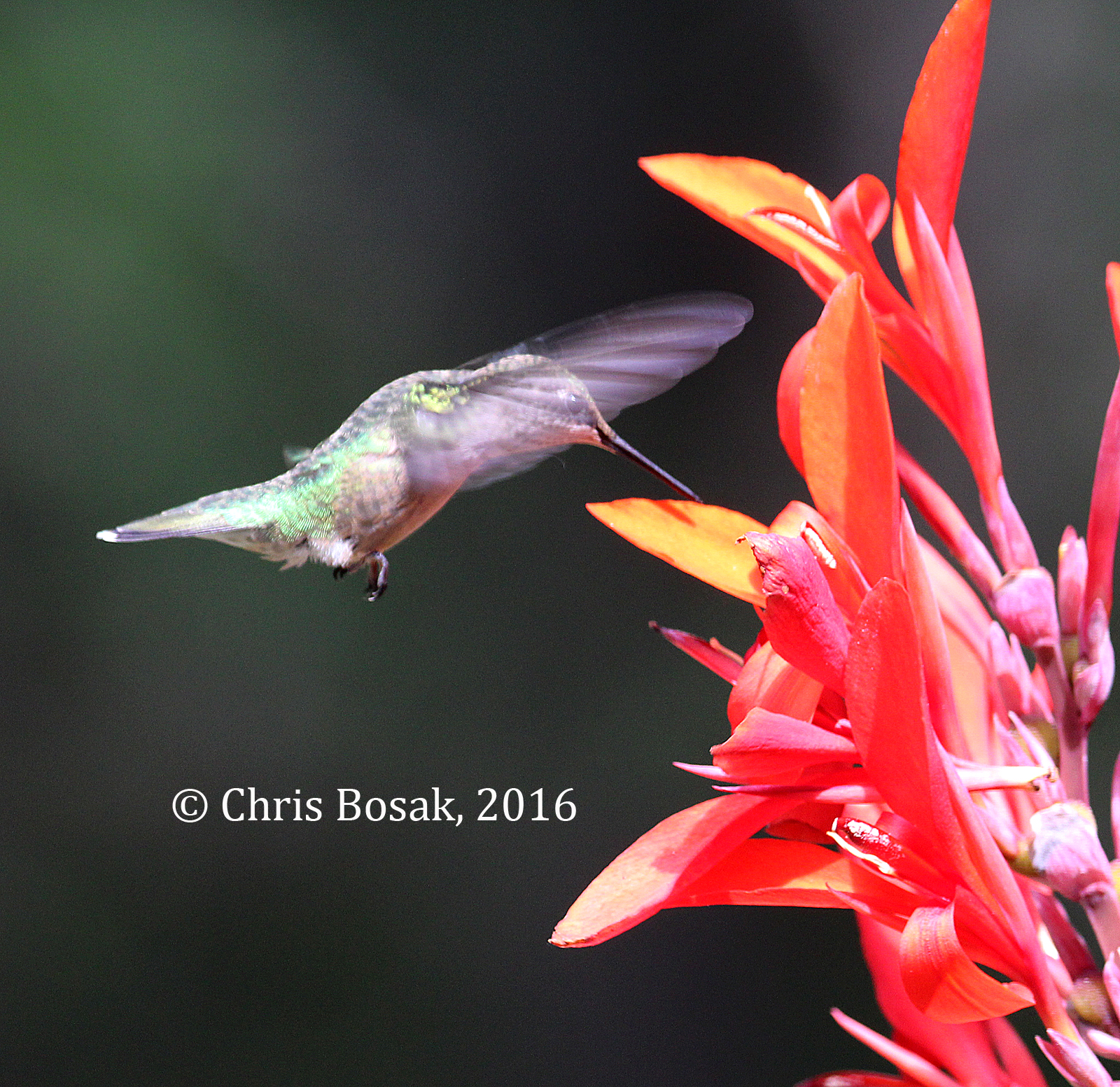
Photo by Chris Bosak A Ruby-throated Hummingbird hovers near a feeder in Danbury, Conn., summer 2016

Photo by Chris Bosak
A Ruby-throated Hummingbird hovers near a feeder in Danbury, Conn., summer 2016

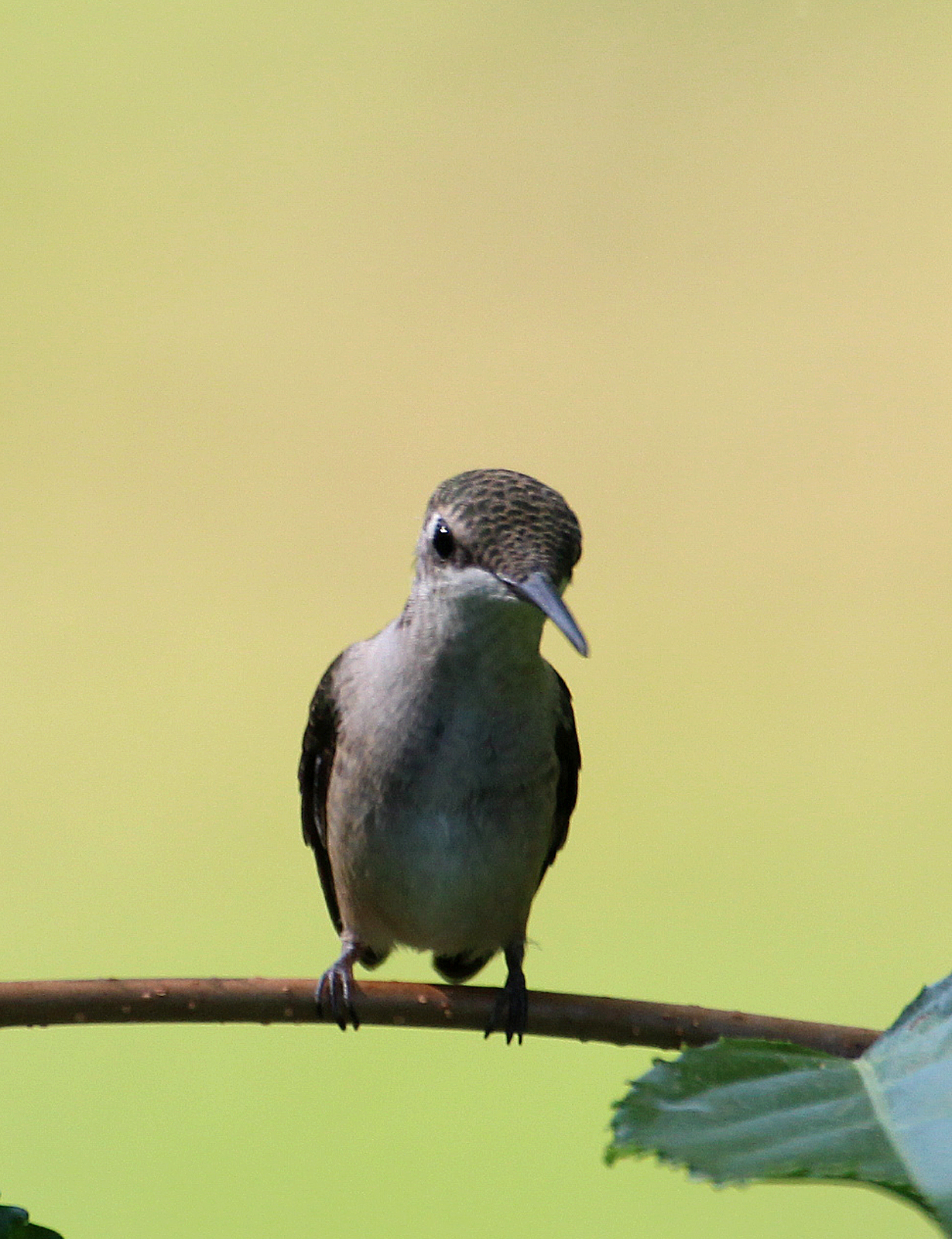
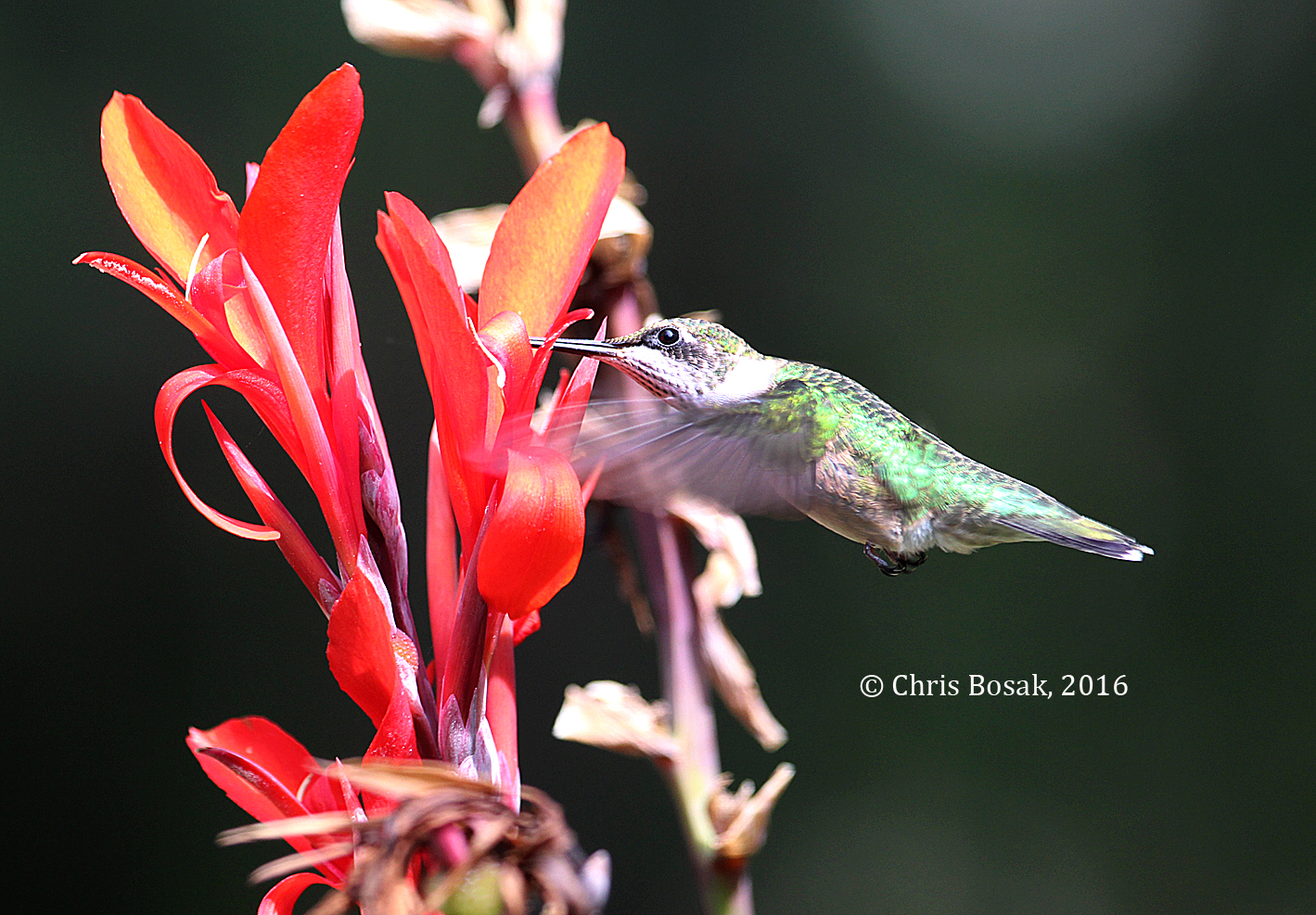
All summer a lone male Ruby-throated Hummingbird has been visiting the feeder in the back yard. This week, however, a female and younger hummingbird showed up as well. Only one eats at a time, however, as the adults are very territorial.

Photo by Chris Bosak A Ruby-throated Hummingbird eats at a feeder in Danbury, Conn., summer 2016

Photo by Chris Bosak
A Ruby-throated Hummingbird eats at a feeder in Danbury, Conn., summer 2016

Scarlet Tanager video

You didn’t really think the Scarlet Tanager posts would stop at two, did you? Here’s a little video I put together on this brilliant New England bird …

Latest For the Birds column: Birding and Pokemon

Photo by Chris Bosak cGreat Egret in Central Park, NYC.

Photo by Chris Bosak
Great Egret in Central Park, NYC.

Here’s the latest For the Birds column, which runs weekly in The Hour (Norwalk, Conn.), The Keene (NH) Sentinel and several Connecticut weekly newspapers.

There I was, taking the train to New York City with the ultimate goal of visiting Central Park. It’s something I used to do fairly often during spring migration.

Central Park is a hub for birds, and therefore birders, in the spring. Only this time I wasn’t going birdwatching — not really anyway — I was looking for Pokémon characters.

Technically I wasn’t the one looking for them. I don’t know the first thing about the game or why it’s the hottest thing since the Hula hoop. I brought my boys down to Central Park as they got caught up in the Pokémon Go hysteria. I was there to keep my eye on them and maybe casually look for some birds along the way.

We arrived at Grand Central and started our walk down Fifth Avenue to Central Park. The excitement around the craze was palpable even as we were still far away from the park. It seemed that about half the people on the sidewalk had their phones in front them and were clearly playing the game. Once we arrived at the golden statue at the entrance to the park, it was clear that this was Pokémon Go central.

We lingered briefly before headed down a trail into the park. As I watched people stopping and pointing and getting excited about their finds it hit me — this craze shares a lot of similarities with birdwatching.

The fact that we were in Central Park, where I had done so much birdwatching before, only solidified my thoughts. Birdwatchers are a tightknit group that seek out rare finds, but also appreciate the common ones. I learned enough about the Pokémon Go game to realize that this is what all these people were doing as well – looking for rare characters, but also capturing ones they had already.

As I had that thought, I looked across “The Pond” and saw a Black-crowned Night Heron land on a fallen tree that was already occupied by a few Double-crested Cormorants. A Solitary Sandpiper hunted along the near shoreline. They were fitting sights to accompany that thought. Here I was getting excited about seeing a cool bird, while thousands of people around me were getting excited with their own finds. We were all outside, we were all walking, and we were all seeking.

I did an Internet search a few days after our trip and noticed that some others have made the same comparison. It is a bit of a stretch, but at the same time not really.

There are some glaring differences, of course, the most obvious and prominent being that the birdwatchers are looking for real, living things, while the Pokémon players are looking for computer generated images that randomly pop up on their phones.

Second, and perhaps most importantly, is the diversity of the people enjoying the hobbies. Pokémon drew literally thousands of people to Central Park and the people doing it were as diverse as the city itself. All ages and ethnicities. Male and female. A lot of families, too. They were all sharing a passion for the same thing.

Sadly, from my experience, birding is not so diverse. It is better than it was and some people are making it their mission to increase diversity in the hobby, but there’s long way to go. I don’t typically see a lot of families out birdwatching together either. I do on occasion, but it is a rate sighting indeed.

Another difference between birdwatching and Pokémon Go is that birding will have much more staying power. I am guessing here of course, but I can see this Pokémon Go craze being just another flash-in-the-pan fad. Birdwatching has been around for hundreds of years and will continue to be around for centuries to come.

Yes, Pokémon is vastly more popular at the moment but how long will it last? These games rarely flourish for the long haul. Remember Angry Birds? Great game, but who plays that anymore?

Years from now, maybe even mere weeks, no one will be talking about Pokémon Go. Birding, however, will be going strong.

Who knows? Maybe now that people are getting reacquainted with the outdoors more and actually discovering how wonderful it is to be outside, perhaps birding will win a few converts. Wouldn’t that be nice?

A few more Scarlet Tanager photos

Photo by Chris Bosak A Scarlet Tanager perches in a tree in Danbury, Conn., July 2016.

Photo by Chris Bosak
A Scarlet Tanager perches in a tree in Danbury, Conn., July 2016.

You had to see this coming. More Scarlet Tanager photos! When you get a cooperative Scarlet Tanager (this was the first one I’ve ever come across) you have to do more than one post about it … Continue reading

Nothing like a Scarlet Tanager sighting when you least expect it

Photo by Chris Bosak A Scarlet Tanager sings in a tree in Danbury, Conn., July 2016.

Photo by Chris Bosak
A Scarlet Tanager sings in a tree in Danbury, Conn., July 2016.

Well, I didn’t expect this guy to show up in the yard in mid-July. Typically I see the spectacular Scarlet Tanager in mid to late May and not again until the fall migration, if I’m lucky, or even next spring. Perhaps this means that it nested nearby. I sure hope so. Or, it could be an early southward migrant, but not likely. At any rate, I was happy to entertain it over the last few days. Hopefully it sticks around.

This is the male Scarlet Tanager. Females are dull yellow. During the fall migration, the males will lose this spectacular plumage and look somewhat similar to females. This guy is just starting to turn … note the yellow spot on its head.

More photos Continue reading

Latest For the Birds column: Gray Catbirds’ time to shine

Photo by Chris Bosak A Gray Catbird perches on a thorny branch in Selleck's/Dunlap Woods in summer 2014.

Photo by Chris Bosak
A Gray Catbird perches on a thorny branch in Selleck’s/Dunlap Woods in summer 2014.

Here’s the latest For the Birds column. Thanks for supporting http://www.BirdsofNewEngland.com

It’s a rare summer that goes by without me writing a column about catbirds.

Aside from robins, they are perhaps the dominant songbird of a New England summer. At my new home, chipping sparrows may give them a run for their money, but gray catbirds are certainly a reliable daily sighting.

Throughout much of the year, I feel, the catbird is overlooked. Of course, they are migratory so we don’t even see them during the colder months. Therefore, it’s understandable that we don’t think too much about them in the winter. I have seen a few over the years on Christmas Bird Counts, but that’s pretty rare.

That leaves spring, summer and fall for us to enjoy the gray catbird. In the spring we are overwhelmed with the number of songbirds passing through. Also, the birds that nest in our area start that process in spring, so that’s another demand on our attention. The catbirds arrive in spring to little fanfare.

Continue reading

New hummingbird video, better close-ups

Here’s another iPhone video of a Ruby-throated Hummingbird. I posted one last fall, too, but this one is much closer. Wait until the end to see the close-up, slo-mo.