
It won’t be long until white-throated sparrows become more scarce as they head north and become less conspicuous for the breeding season. Until then, there are still photo opportunities like this …


It won’t be long until white-throated sparrows become more scarce as they head north and become less conspicuous for the breeding season. Until then, there are still photo opportunities like this …

What started out as a bird walk eventually morphed into a different type of nature walk.
I figured I would head to the nearby park a week before the official start of spring to see if any early spring birds had arrived. My main target, as always in mid-March, was American woodcock. As always, I came up empty in that department.
Other birds were scarce as well. The winter ducks had presumably left the ponds for points north. No other spring birds had arrived yet, at least not that I saw that day. I know that eastern phoebes are around right now, and the other day through my window at work I saw a yellow-rumped warbler. But there was no such luck on this walk.
Continue reading
There is a little pond I drive past on my way to work. By little pond, I mean tiny. Maybe the size of a basketball court. It’s probably man-made and it’s fenced off because it is on the property of a condominium complex.
It is pretty much right along the road, however, so I get a good look at it when I drive by. Usually, there is nothing of note in terms of birds or other wildlife. Every once in a while, a few Canada geese or mallards can be seen swimming along the surface. One day, I saw both Canada geese and mallards. I know, not very exciting.
But the other day I did see something on that tiny pond that made me look a little longer as I drove past. It was a pair of wood ducks effortlessly gliding along the mirror-like surface. The pair swam side-by-side with the male in front of the female – at least from my point of view. During my drive-by, the ducks were near the right edge and swimming toward the middle of the pond. It was like looking at a painting.
Continue reading
The tufted titmouse is one of the most reliable birds to find in New England, regardless of season. The slowest of bird walks are often graced by a tufted titmouse or two.
Even if the bird is not seen, it can usually be heard. Titmice have a big voice that belies their small stature. They are not as surprisingly boisterous as Carolina wrens, but gram-per-gram, titmice are still one of the most vociferous birds.
The bird’s common “peter peter peter” song is one of the first bird songs I learned as a beginning birder way back when. I heard the loud, clear whistles and refused to continue my walk until I found the source. The bird sang over and over as I scanned the area until, finally, I found the titmouse in a nearby tall evergreen. I remember being surprised at how dainty the bird appeared compared to the bravado of the song.
Cardinals also have songs with loud, clear whistles and the titmouse’s song is reminiscent of those. The cardinal’s songs, however, are more melodic and complicated than the simple “peter peter peter” of the titmouse. There are also variations in the titmouse’s song as it can be different in tone or number of syllables.
But that is hardly the only sound a titmouse makes. I have been stumped several times hearing a bird in the woods only to eventually find it was a titmouse. One of their calls sounds a lot like a chickadee and often causes confusion. It’s best to try to spot the bird to ensure which one is calling. To add to the confusion, titmice and chickadees are often found in the same area.
Titmice also have an extremely wide variety of harsh scolding calls, some of which are common and familiar and some that sound completely unfamiliar as they are not heard as often.
Which brings me to the next question about the titmouse. If there is more than one titmouse, are you looking at titmice or titmouses? The short answer is both are acceptable, but titmice is by far the more common usage, even if may not be technically correct. The titmouse (bird) and mouse (rodent) are obviously not related – in taxonomy or etymology — so why is it titmice? I guess it just sounds better and that’s what people have always called it. I’m sure there’s a better explanation, but I don’t know the true history of it.
Every birding organization and every well-known bird author I checked use titmice as the plural, and that includes the Cornell Lab of Ornithology, which I use as my go-to source for birding information. Even the dictionaries I checked use titmice. In fact, you’d be hard-pressed to find a source that uses titmouses. Some language purists may bristle at the term titmice, but it’s here to stay.
Regardless of how you choose to pluralize the word, the titmouse is a New England favorite that entertains us at our feeders and in the woods. Hardly a day goes by, regardless of the time of year, when I don’t see a titmouse, whether I’m actively looking for birds or not. That wasn’t always the case in New England as they were once regarded as a southern bird, but they have slowly and steadily expanded their range throughout New England and into Canada.
It is an energetic bird with a big personality and even bigger voice. Titmice, or titmouses if you prefer, are a welcome addition to the New England biosphere.
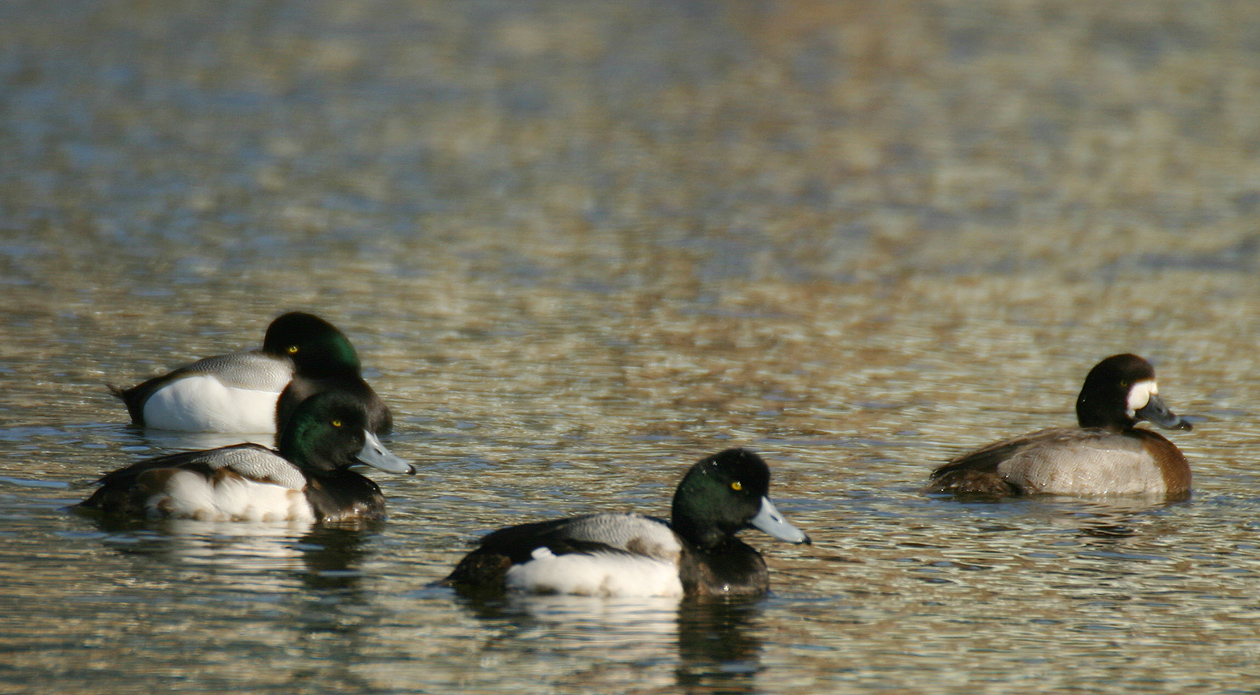
Late February and early March is somewhat of a transition period for birdwatching in New England.
The highly anticipated spring migration, which won’t hit its peak until late April and early May, starts with a trickle around mid-March, most notably with American woodcocks and eastern phoebes. Some consider the early male red-winged blackbirds the start of spring migration, but many of these blackbirds overwinter in New England so it’s tough to say if they are arriving in February or have been here all along.
On the other hand, a lot of the winter birds we have enjoyed seeing over the last few months have either gone further south, returned north, or, unfortunately for some, perished in the cold New England winter. Many birds that try to stick out a New England winter, either due to getting lost on their migration route or opting to forego migration altogether, underestimate the power and longevity of our winters and don’t make it to spring.
Continue reading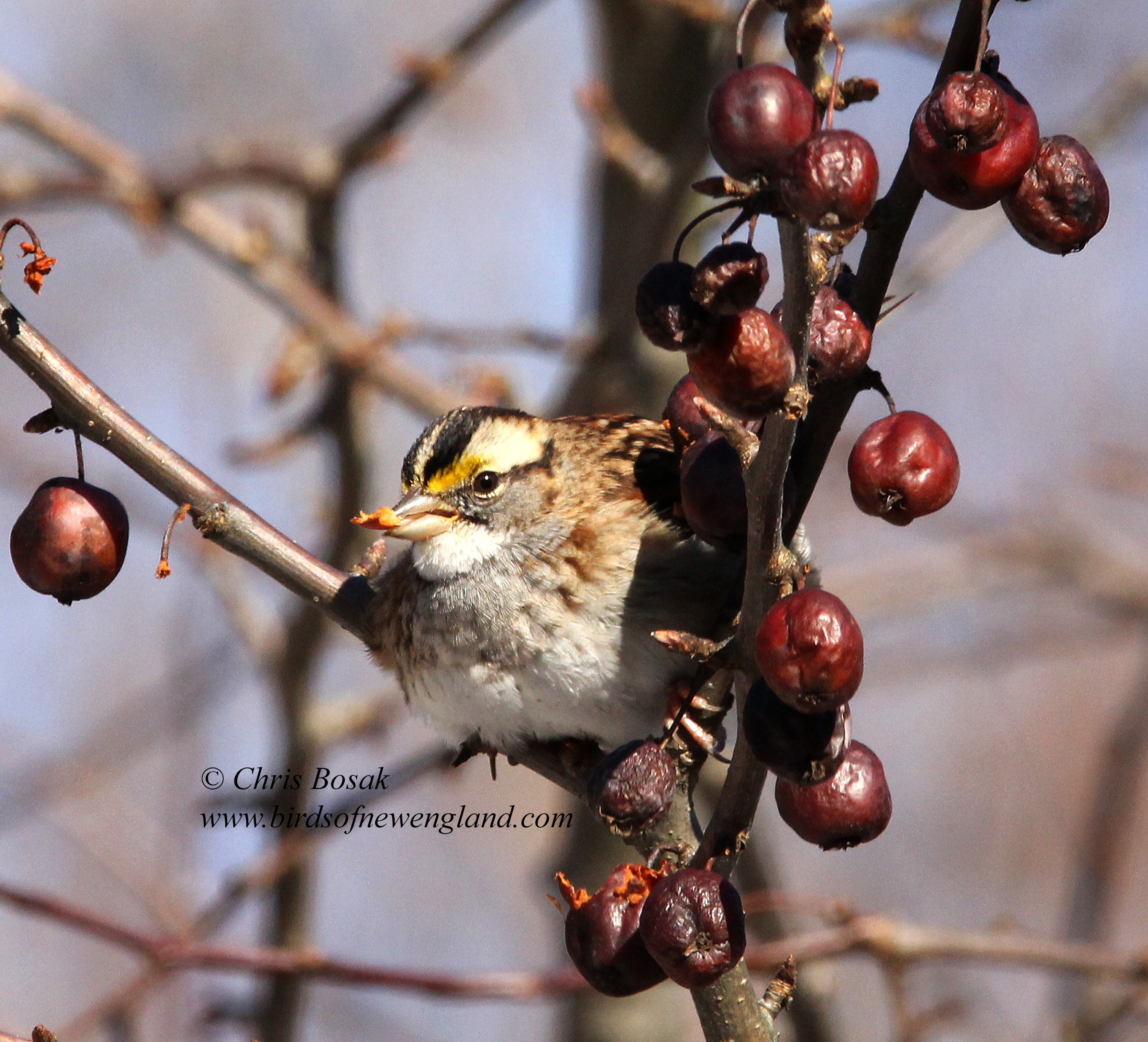
Here are a few more shots of the white-throated sparrow eating crabapples from last month. Here is the original column with the full story.
Continue reading
Perhaps against my better judgment, I am going to move forward with an early signs of spring column.
Even as nearly a foot of snow fell in my area a few short days ago, signs of spring are out there. They may not abound yet, but they are out there.
It started a little over a week ago with one of the typical first signs of spring: snowdrops poking out of the ground and flashing their little white flowers. A day or two later, a flock of turkeys walked past my window at work. It was a good-sized flock of about 15 to 20 birds, and, of course, I had to leave my work area temporarily to check out the action.
As I stepped out of a door a fair distance away from the turkeys so as to not disturb their day, I noticed that several of the males were displaying. No matter how many times you’ve seen it before, it is always an impressive sight to see turkeys displaying. They are large birds to begin with, so when their feathers are displayed to intimidate or impress, the birds appear to be that much larger.
Continue reading
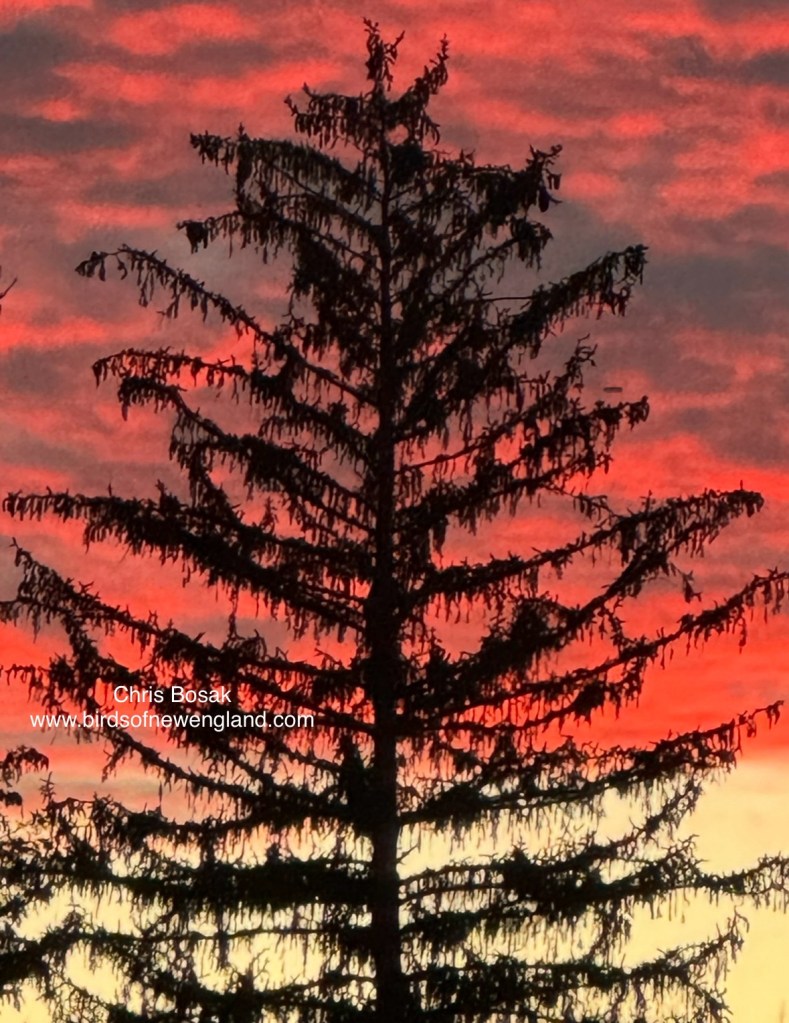
This post doesn’t have anything to do with birds, but I figured I’d share the dusk sky from the other night. It’s amazing how quickly the scene changes at dusk. A matter of minutes is all it takes to miss shots like this.

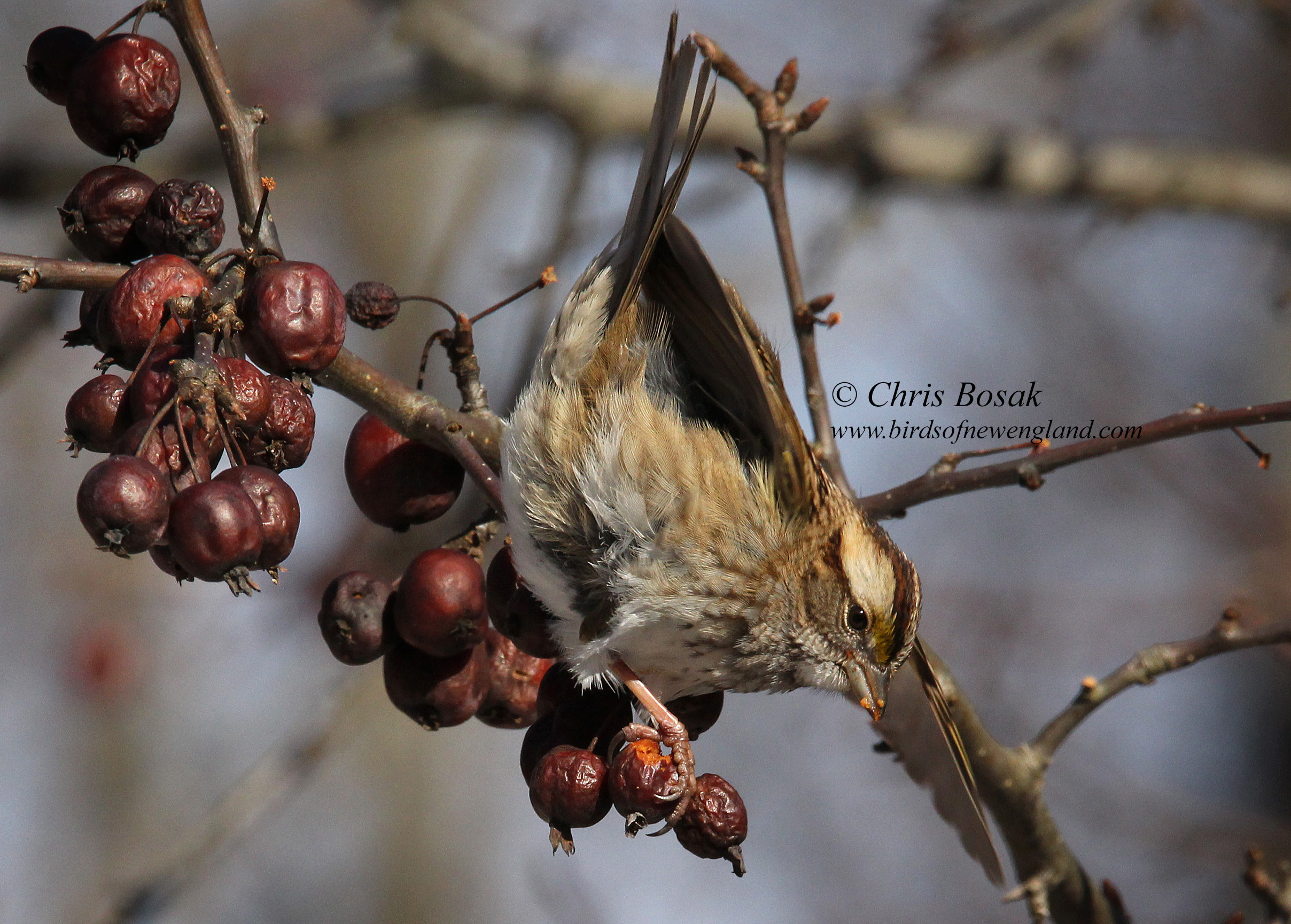
When I was just starting out in the hobby of birdwatching and bird photography, I saw a photo of a bird (I don’t recall the species) eating a berry. It became my mission to get a photo of a bird eating berries. But how would I ever get such a shot, I thought to myself at the time.
In the years that followed, I have had plenty of opportunities to get that coveted shot that once seemed so elusive. I’ve been lucky enough to photograph birds such as yellow-rumped warblers, blackburnian warblers, cedar waxwings, robins, catbirds, hermit thrushes, purple finches, house finches and song sparrows eating berries.
Continue reading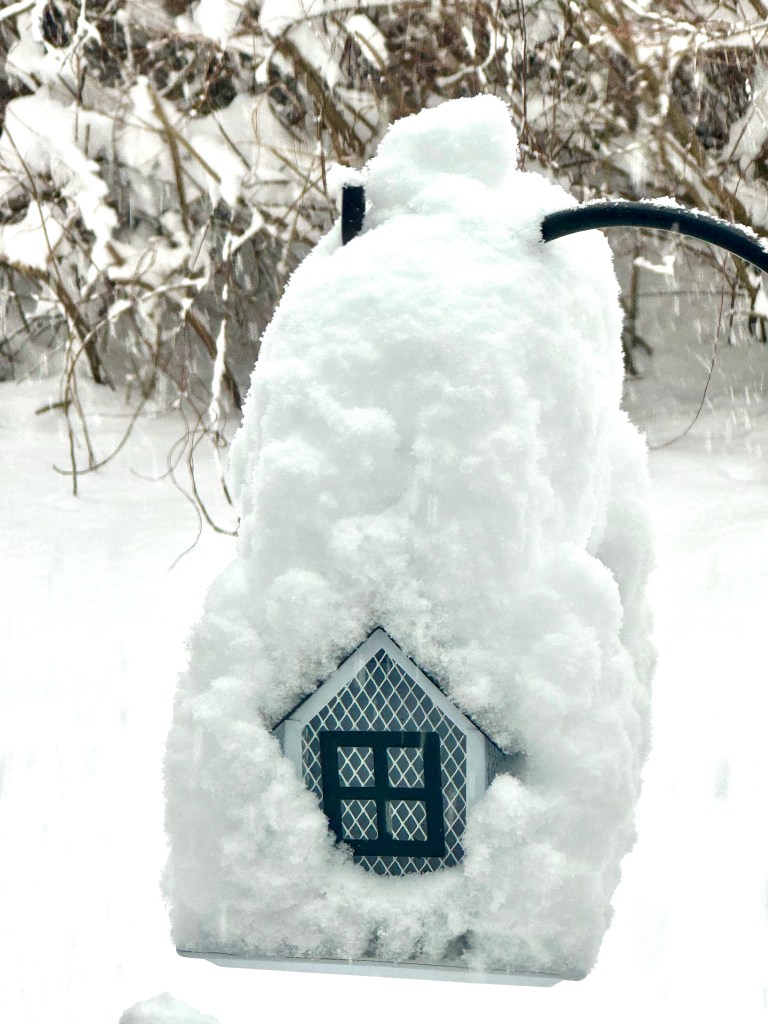
Note to the neighborhood birds: Due to weather conditions, this feeder is temporarily closed. Please visit the adjacent feeder with a cover over it. Thank you for your understanding.
 Birds of New England.com