For the Birds: Warblers in the snow

Photo by Chris Bosak
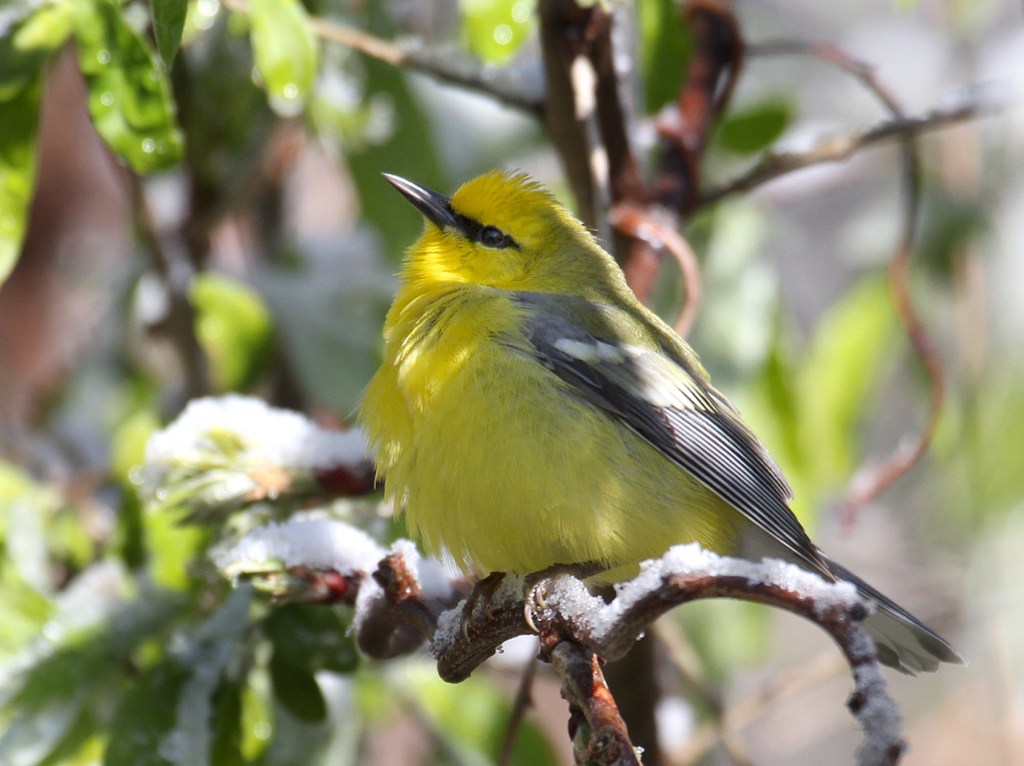
A blue-winged warbler perches on snowy branches at Bennett’s Farm State Park in Connecticut during a rare May snowfall in 2020.

It feels as if it were months ago and the weather has certainly taken a turn for the better, but the May 9 snowfall created some unique opportunities for birdwatchers and photographers.

I mentioned in last week’s column that we rarely see our late migratory birds in the snow. In fact, I can count on one finger the number of times in my memory it has snowed when these migrants were around — and that one time was last week.

The snow was predicted to fall during the night so I was fairly certain it would already be gone by the time I woke up. I got up early and, to my pleasant surprise, snow blanketed all surfaces. I jumped out of bed and headed to the nearest park.

How much snow you got depends on where you are in New England. I had only a slight covering where I am and the morning sun was already rising, so I had to hurry if I wanted to see these birds with a snowy background.

Photo by Chris Bosak
An ovenbird perches on snowy branches at Bennett’s Farm State Park in Connecticut during a rare May snowfall in 2020.

The first bird I was able to see was an ovenbird, a warbler that more resembles a small thrush. He belted out his signature “teacher teacher teacher” call and I stopped in my tracks. The bird flew in for a closer look and perched in a branch right above me. The branch and those around it were covered in about a quarter of an inch of snow and I got my coveted warbler-in-snow photo. Ovenbirds usually arrive In New England during the last week of April or the first week of May, well past what is normally a threat for snow.

I continued along the trail and heard a familiar insect-like buzzing and knew a blue-winged warbler was nearby. I also heard the “witchety witchety witchety” call of a common yellowthroat.

I didn’t have a lot of faith in the yellowthroat making an appearance, as they like to sulk near the ground or in heavy brush. Blue-winged warblers tend to be more curious so I waited out his appearance. After a few minutes, he did indeed appear and gave me some decent photo opps on snowy branches. My guess is that there aren’t too many photos of blue-winged warblers in the snow (even if my photos show minimal snow cover.) Most of the snow in the brushy areas was gone by the time I was done with the blue-winged warbler, so I headed back.

Along the way, I saw a hermit thrush and got some shots of it in the snow, as there were some snowy spots left in the woods. Photos of hermit thrushes in the snow are not as unusual as they tend to migrate out of New England later than a lot of our transient bird species.

Later in the day, another snow squall blanketed the ground and the hummingbirds kept up their busy schedule of visiting the feeders. Never thought I’d see hummingbirds on a snowy day in New England.

Getting shots of late migrants in the snow is a rare opportunity indeed. I’d be OK if the opportunity didn’t come again for a long time.

Moving forward

Photo by Chris Bosak
A ruby-throated hummingbird perches on a rope in New England, May 2020. Merganser Lake.

For the past several weeks I’ve posted a Birds to Brighten Your Day photo, featuring my best shot from the day before. Now that it’s Memorial Day Weekend, states are slowly opening and migration is winding down, it’s a good time to move on from Birds to Brighten Your Day. I hope your days are indeed brightening and you keep on checking out BirdsofNewEngland.com. I still hope to post something every day. It could be my best shot from the day before, or even that day, or one of the many shots I didn’t use over the past several weeks. Of course, I’ll continue to post my latest For the Birds nature column too.

I’ll start off with a ruby-throated hummingbird. I’m not sure how they missed being featured on Birds to Brighten Your Day because they are always a fan favorite. “My” hummingbirds arrived on May 1 (or was it May 2?) and have been buzzing around ever since. For years, I never had luck attracting hummingbirds. Now that I’m several years into getting them I consider them an integral part of summer.

Birds to brighten your day: May 22

Photo by Chris Bosak
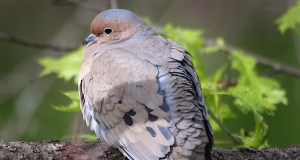
A mourning dove perches on a branch in New England, May 2020. Merganser Lake.

A Day on Merganser Lake

I like this photo as it is a good kickoff to Memorial Day Weekend. We celebrate Memorial Day as the start of the summer season, but its real meaning, of course, is much more important and somber. The name mourning dove itself reflects this reality, but the bird’s pose is also somewhat reflective. Thanks to our fallen heroes.

Have a great Memorial Day Weekend everybody.

(Repeat text for context:  I’m running out of COVID-19 lockdown themes so from now until things get back to some semblance of normalcy, I will simply post my best photo from the previous day. You could say it fits because of its uncertainty and challenge. I’ll call the series “A Day on Merganser Lake,” even though that’s not the real name of the lake I live near in southwestern Connecticut, it’s just a nod to my favorite duck family.)

Photo by Chris Bosak
A mourning dove perches on a branch in New England, May 2020. Merganser Lake.

Birds to brighten your day: May 21

Photo by Chris Bosak
An indigo bunting perches on a branch in New England, May 2020. Merganser Lake.

A Day on Merganser Lake

I was a little late to the indigo bunting party this spring, but I finally got one yesterday. I visited a nearby park and took a trail I usually don’t take. I can get stuck in a routine of walking the same route every time I go to a place I visit frequently. This time I took the path less traveled and it made all the difference. (Corny, I know.)

(Repeat text for context:  I’m running out of COVID-19 lockdown themes so from now until things get back to some semblance of normalcy, I will simply post my best photo from the previous day. You could say it fits because of its uncertainty and challenge. I’ll call the series “A Day on Merganser Lake,” even though that’s not the real name of the lake I live near in southwestern Connecticut, it’s just a nod to my favorite duck family.)

Birds to brighten your day: May 20

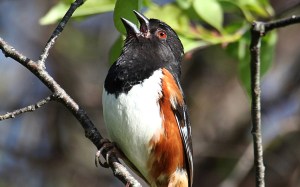
Photo by Chris Bosak An eastern towhee sings from a branch in New England, May 2020. Merganser Lake.

A Day on Merganser Lake

The other day I posted a photo of a chestnut-sided warbler and I remarked how I liked the color chestnut. Today, here’s a rufous-sided towhee. Rufous is a cool color too. Chestnut and rufous sure beat “tan” or “brown.” Of course, it’s not really called rufous-sided towhee anymore. It now goes by the much more boring name eastern towhee. The name changed in 1998 to split it from the spotted towhee of the West.

(Repeat text for context:  I’m running out of COVID-19 lockdown themes so from now until things get back to some semblance of normalcy, I will simply post my best photo from the previous day. You could say it fits because of its uncertainty and challenge. I’ll call the series “A Day on Merganser Lake,” even though that’s not the real name of the lake I live near in southwestern Connecticut, it’s just a nod to my favorite duck family.)

Photo by Chris Bosak An eastern towhee sings from a branch in New England, May 2020. Merganser Lake.

Birds to brighten your day: May 19

Photo by Chris Bosak
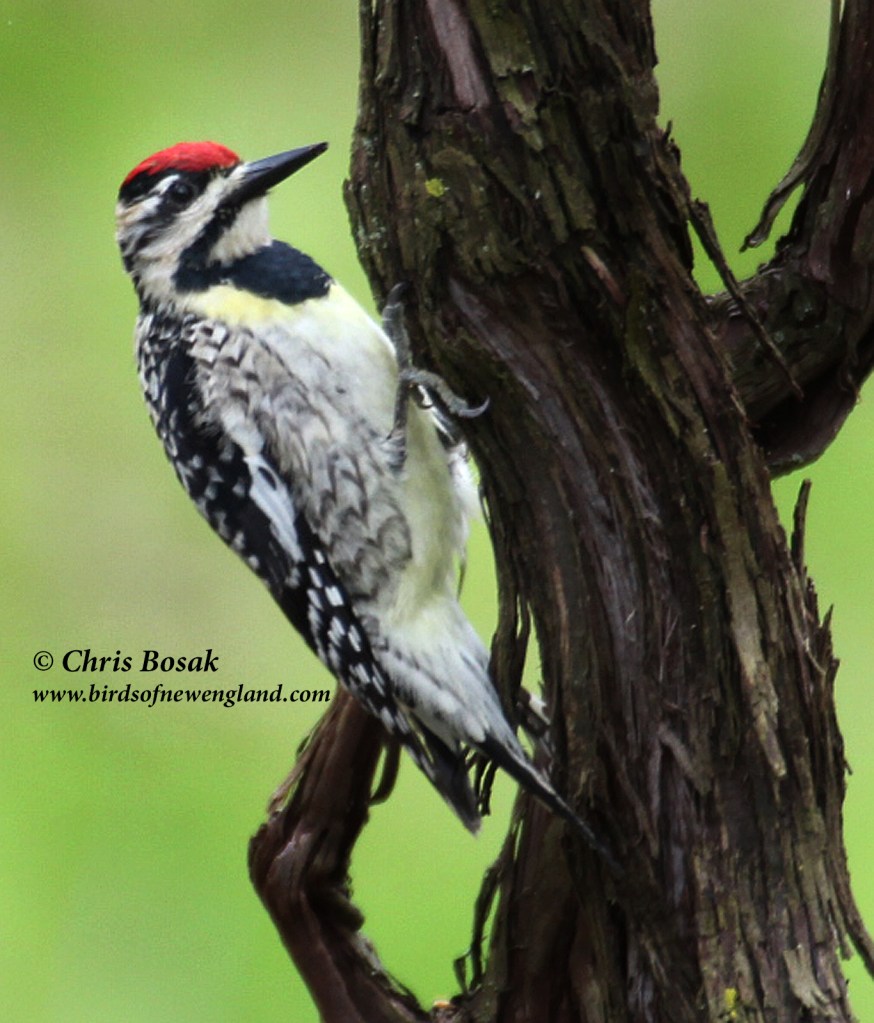
A yellow-bellied sapsucker perches on a vine in New England, May 2020. Merganser Lake.

A Day on Merganser Lake

The yellow-bellied sapsucker is one of the more underrated woodpeckers in New England, in my opinion. Perhaps it’s because they aren’t seen as often as downy, hairy or red-bellied woodpeckers or have the wow factor of flickers or pileated woodpeckers. It’s always a treat to see these handsome birds with an interesting eating habit. This is from allaboutbirds.org: “They feed at sapwells—neat rows of shallow holes they drill in tree bark. They lap up the sugary sap along with any insects that may get caught there.”

And, of course, there’s always this:

(Repeat text for context:  I’m running out of COVID-19 lockdown themes so from now until things get back to some semblance of normalcy, I will simply post my best photo from the previous day. You could say it fits because of its uncertainty and challenge. I’ll call the series “A Day on Merganser Lake,” even though that’s not the real name of the lake I live near in southwestern Connecticut, it’s just a nod to my favorite duck family.)

The sapsucker shown is a female. Males have red throats.

Photo by Chris Bosak
A yellow-bellied sapsucker perches on a vine in New England, May 2020. Merganser Lake.

Birds to brighten your day: May 18

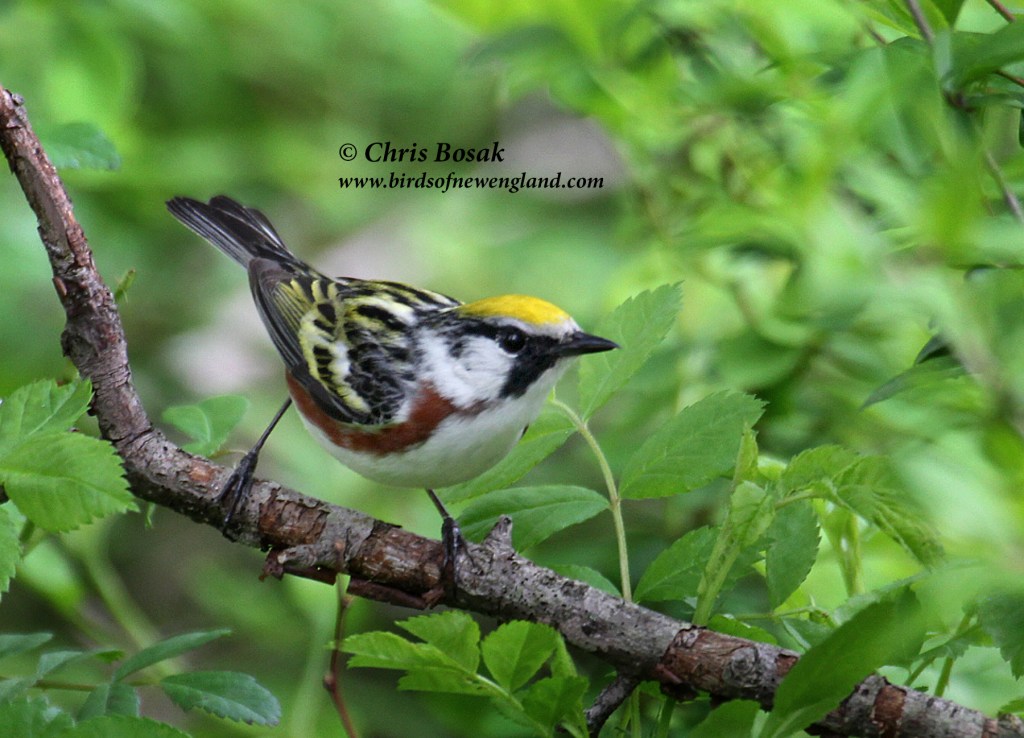
Photo by Chris Bosak A chestnut-sided warbler lurks in the brush in New England, May 2020. Merganser Lake.

A Day on Merganser Lake

Warbler season was on full display over the weekend. One of my favorite warblers is the chestnut-sided warbler. I like the color scheme and anything with the color chestnut has got to be cool. This guy was lurking among the bushes as I was trying to find a different warbler. I’m glad he made himself known.

(Repeat text for context:  I’m running out of COVID-19 lockdown themes so from now until things get back to some semblance of normalcy, I will simply post my best photo from the previous day. You could say it fits because of its uncertainty and challenge. I’ll call the series “A Day on Merganser Lake,” even though that’s not the real name of the lake I live near in southwestern Connecticut, it’s just a nod to my favorite duck family.)

Birds to brighten your Day: May 17

Photo by Chris Bosak
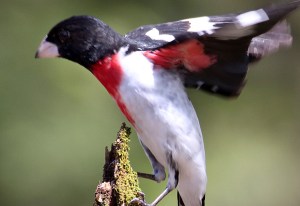
A rose-breasted grosbeak shows off its red feathers in its “wing pits” in New England, May 2020. Merganser Lake.

A Day on Merganser Lake

Male rose-breasted grosbeaks are known for their beautiful plumage: contrasting black-and-white overall with a large rose-red triangle patch on the chest. The red under the wings is not seen often, even in flight. Here’s a shot that shows that extra splash of color.

(Repeat text for context:  I’m running out of COVID-19 lockdown themes so from now until things get back to some semblance of normalcy, I will simply post my best photo from the previous day. You could say it fits because of its uncertainty and challenge. I’ll call the series “A Day on Merganser Lake,” even though that’s not the real name of the lake I live near in southwestern Connecticut, it’s just a nod to my favorite duck family.)

Photo by Chris Bosak A rose-breasted grosbeak shows off its red feathers in its “wing pits” in New England, May 2020. Merganser Lake.

Birds to brighten your day: May 16

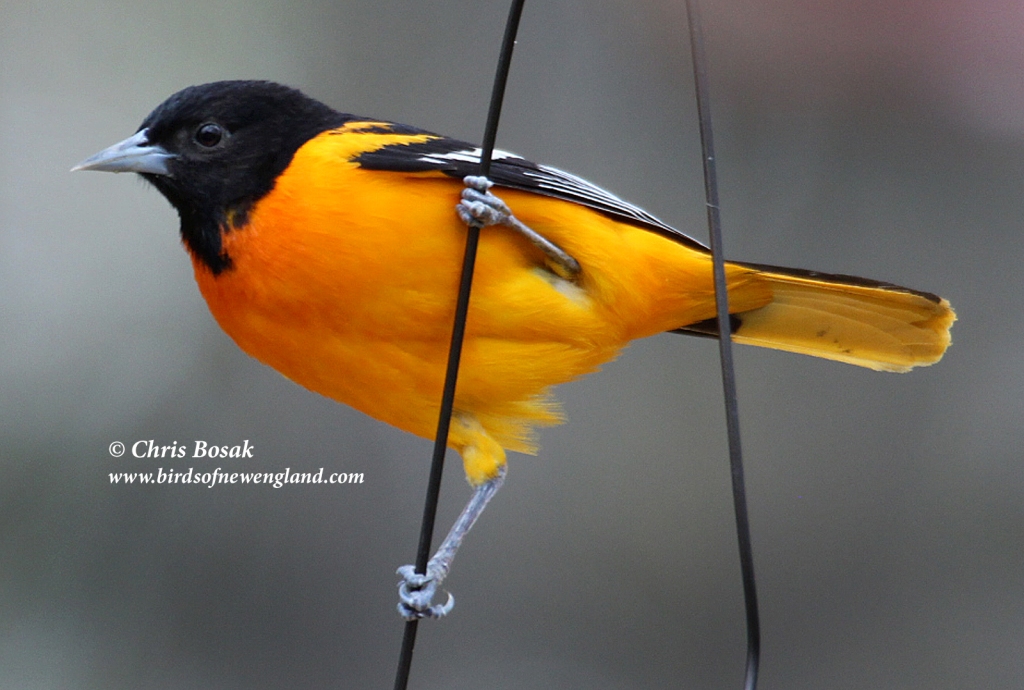
Photo by Chris Bosak A Baltimore oriole perches on a wire in New England, May 2020. Merganser Lake.

A Day on Merganser Lake

I’m getting a lot of reports about Baltimore orioles this spring. It’s great that so many people are seeing them and getting them to their feeders. I’m hearing that some orioles are going to orange halves, some to nectar feeders and some to suet. I also know that orioles like grape jelly. “My” oriole goes to the suet cake and ignores the oranges, grape jelly and nectar feeder right next to it. His visits are also very short and infrequent. Striking bird, for sure.

(Repeat text for context:  I’m running out of COVID-19 lockdown themes so from now until things get back to some semblance of normalcy, I will simply post my best photo from the previous day. You could say it fits because of its uncertainty and challenge. I’ll call the series “A Day on Merganser Lake,” even though that’s not the real name of the lake I live near in southwestern Connecticut, it’s just a nod to my favorite duck family.)

Birds to brighten your day: May 15

Photo by Chris Bosak
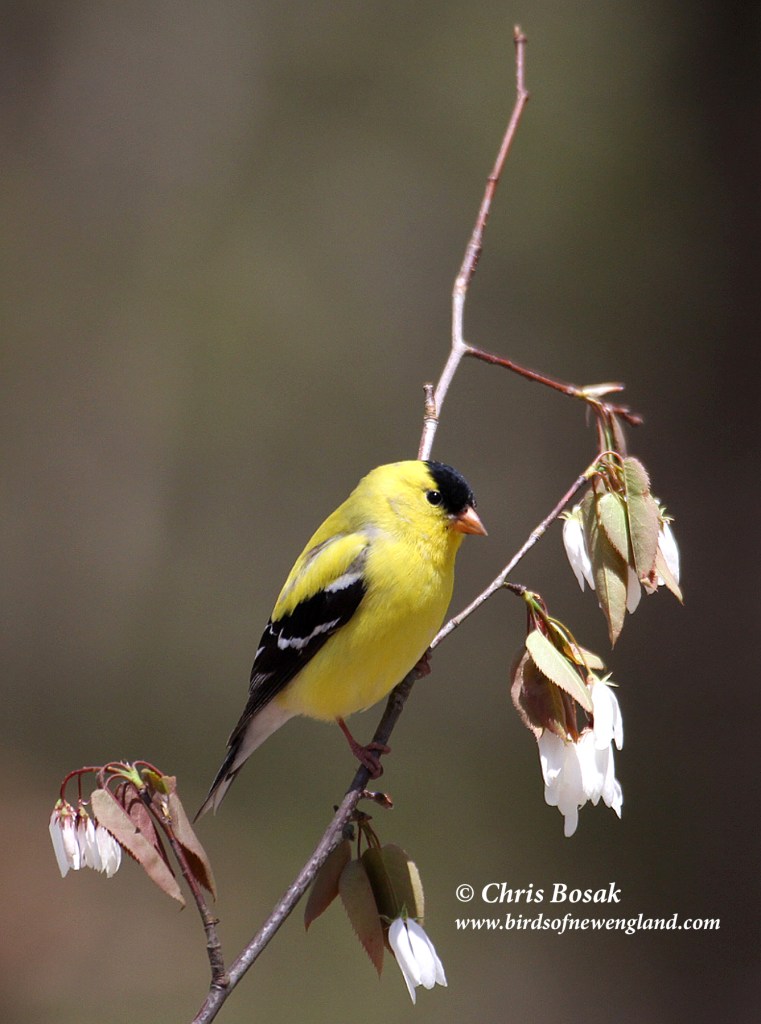
An American goldfinch perches on a branch in New England, May 2020. Merganser Lake.

A Day on Merganser Lake

American goldfinches continue to be the top customer at my feeding station. I get dozens and dozens each day and it’s been like that for months. I only wish Nyjer seed wasn’t so expensive. It’s been fun and educational watching the goldfinches. Their plumage is constantly changing and there is great variety among the individual birds.

It is the height of spring migration. Drop me a line and let me know what you’re seeing.

(Repeat text for context:  I’m running out of COVID-19 lockdown themes so from now until things get back to some semblance of normalcy, I will simply post my best photo from the previous day. You could say it fits because of its uncertainty and challenge. I’ll call the series “A Day on Merganser Lake,” even though that’s not the real name of the lake I live near in southwestern Connecticut, it’s just a nod to my favorite duck family.)

Photo by Chris Bosak
An American goldfinch perches on a branch in New England, May 2020. Merganser Lake.