Photo by Chris Bosak An American goldfinch perches on a chain that holds birdfeeders during a November 2018 snow storm in Danbury, Connecticut.
The snow this week brought not only the unexpected visitors, such as fox sparrows, but also the regular visitors such as chickadees, nuthatches, titmice, doves, juncos, and woodpeckers. It also brought goldfinches, which was to be expected, but what was surprising was the number of goldfinches. Every perch on my thistle tube feeder was filled and other goldfinches either waited patiently nearby or “settled” for sunflower seeds at other feeders. There were even goldfinches on the ground among the many juncos.
I hope to post a video of the goldfinches later today. Let’s see if time and my technical knowledge of video programs permit …
Photo by Chris Bosak American goldfinches eat Nyjer seed from a tube feeder in Danbury, Conn., Nov. 2018.
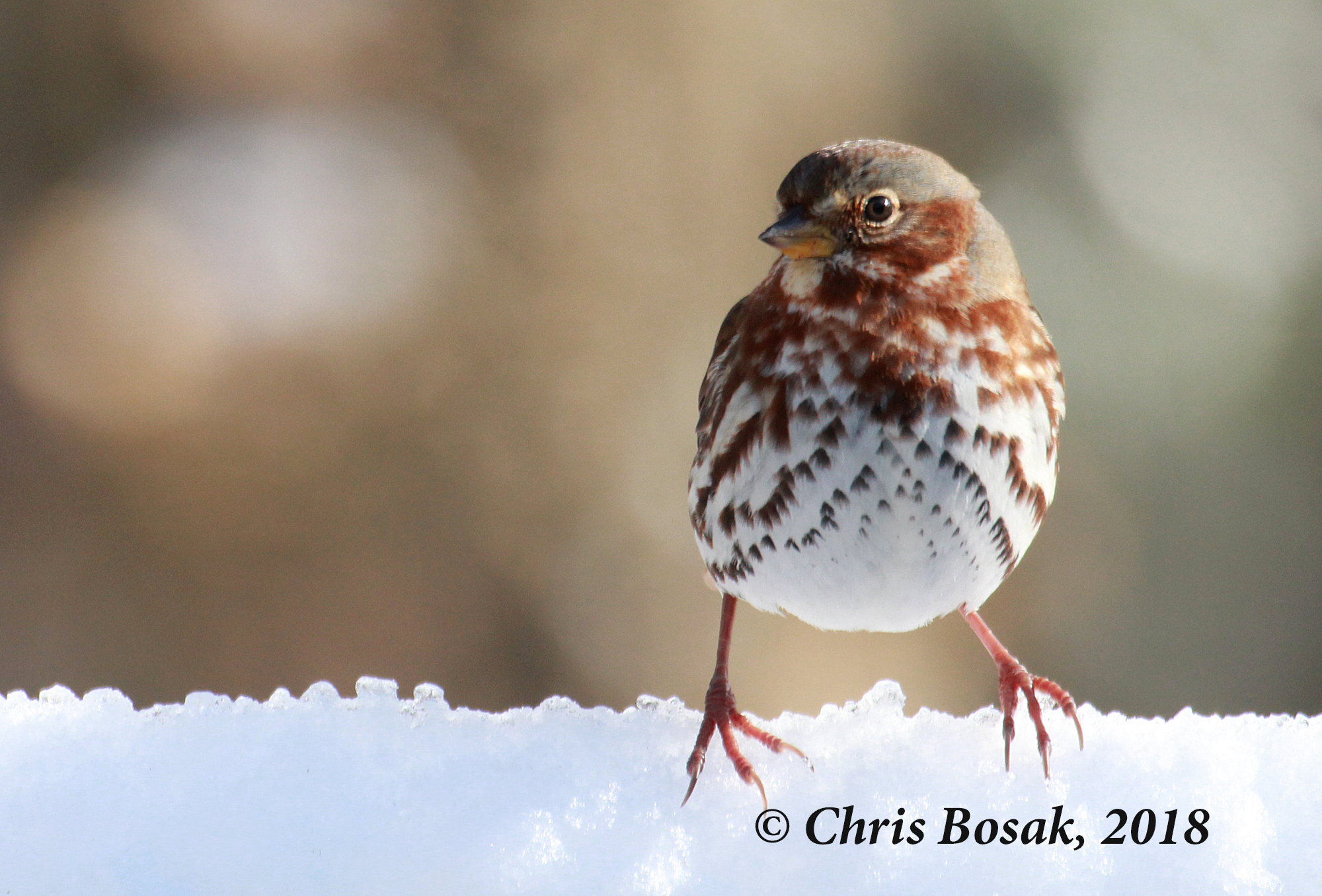
Photo by Chris Bosak
A fox sparrow perches on the snow in Danbury, Conn., Nov. 16, 2018.
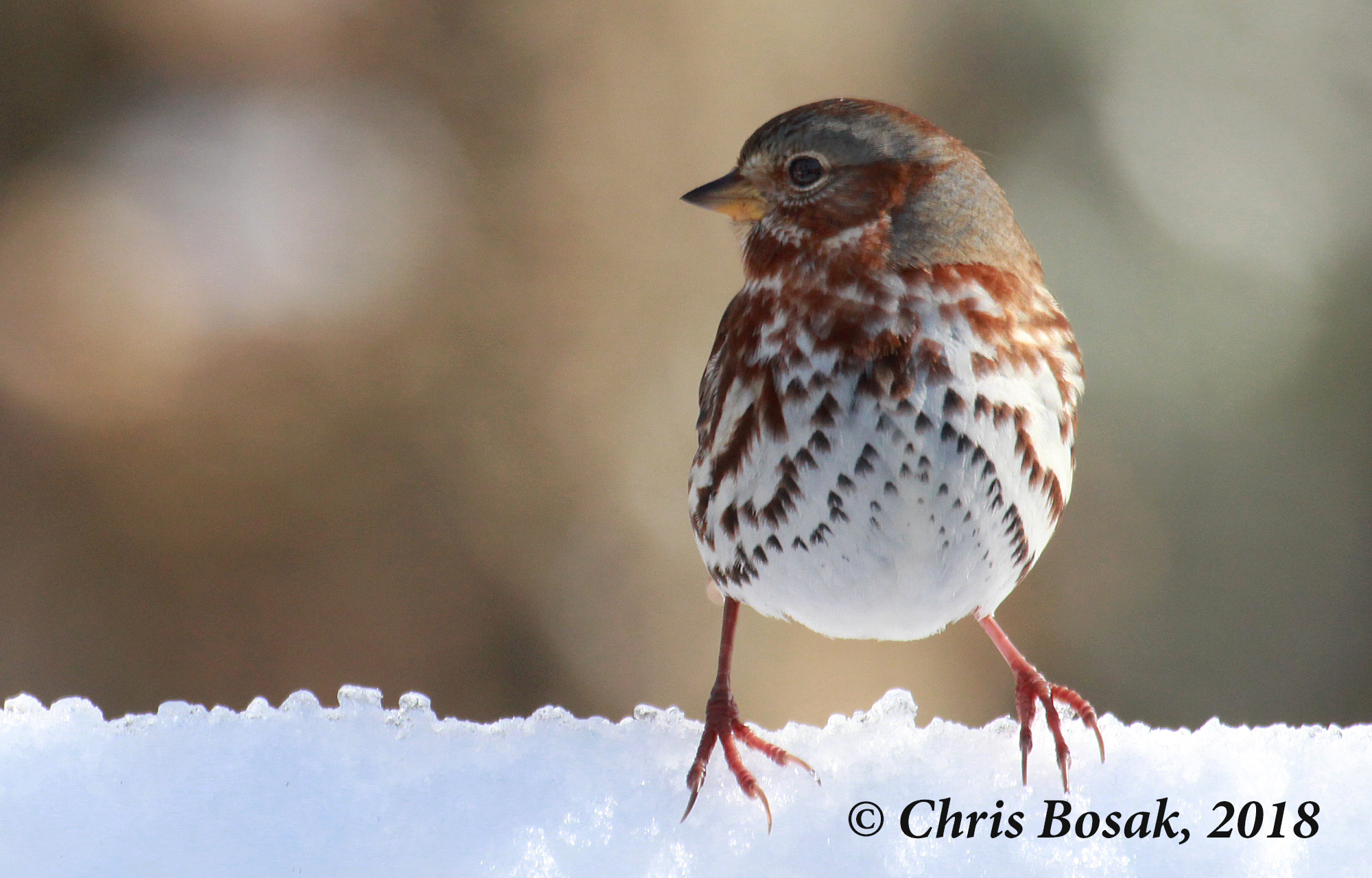
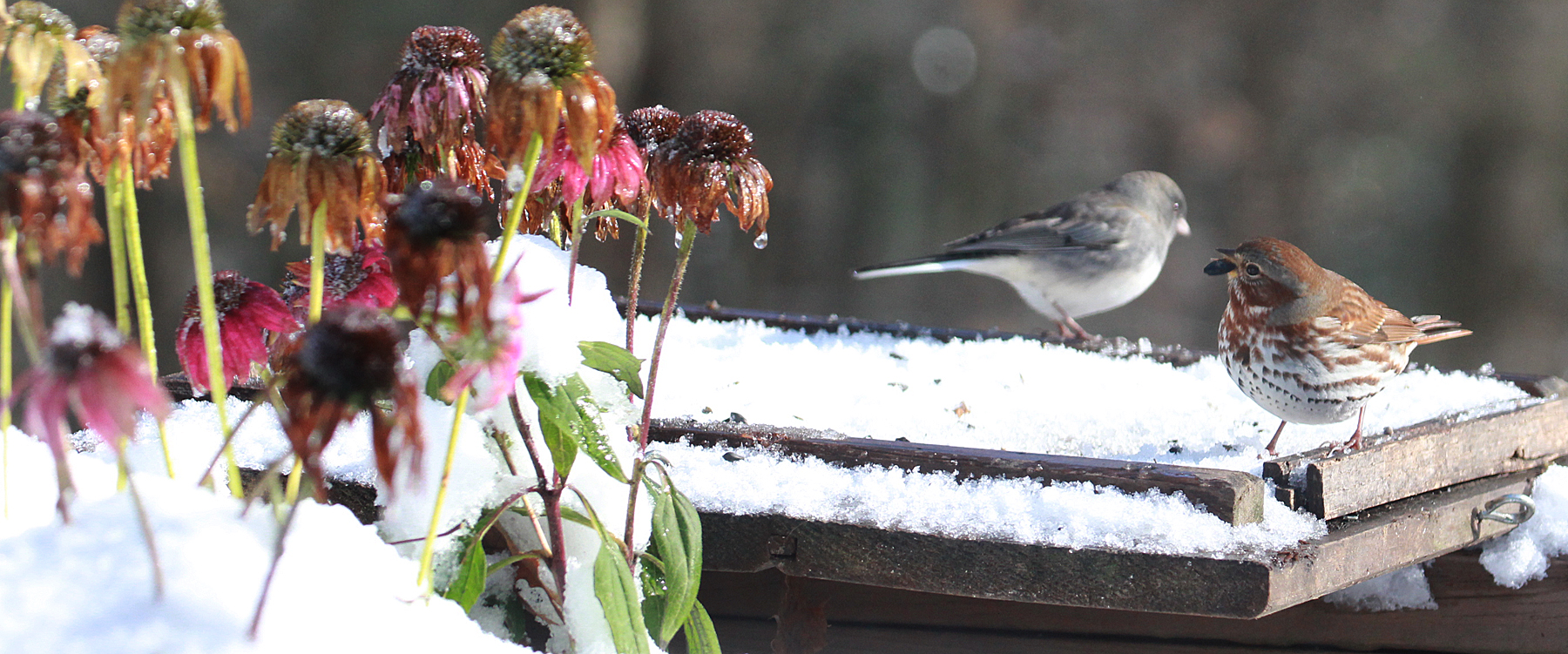
As an addendum to my last post, here are some more photos of the fox sparrows that are visiting my yard today following a snow and ice storm.
Later today or tomorrow, I’ll add some photos of the goldfinches that are visiting today. There are lots of them.
Photo by Chris Bosak
A fox sparrow perches on the snow in Danbury, Conn., Nov. 16, 2018.
Photo by Chris Bosak
A fox sparrow and junco eat sunflower seeds following an ice storm in Danbury, Conn., Nov. 16, 2018.Photo by Chris Bosak
A fox sparrow perches on the snow in Danbury, Conn., Nov. 16, 2018.
Photo by Chris Bosak
A fox sparrow eats sunflower seeds from the ground during an ice storm in Danbury, Conn., Nov. 16, 2018.
Southern New England got its first snow of the season on Thursday evening, a bit earlier than usual on Nov. 15. At some point overnight, the snow gave way to a snow/freezing rain mixture. The four or five inches of snow that fell now has a hard layer of ice on top.
The harsh weather brought in a pair of unexpected, but welcomed, visitors: fox sparrows. The large sparrows, which are also a bit more colorful than the usual sparrows in New England, show up sporadically throughout the region, mostly during the winter. With strange weather gripping the region, keep an eye out for unexpected visitors at your feeder stations. Let me know what you see by commenting on this post.
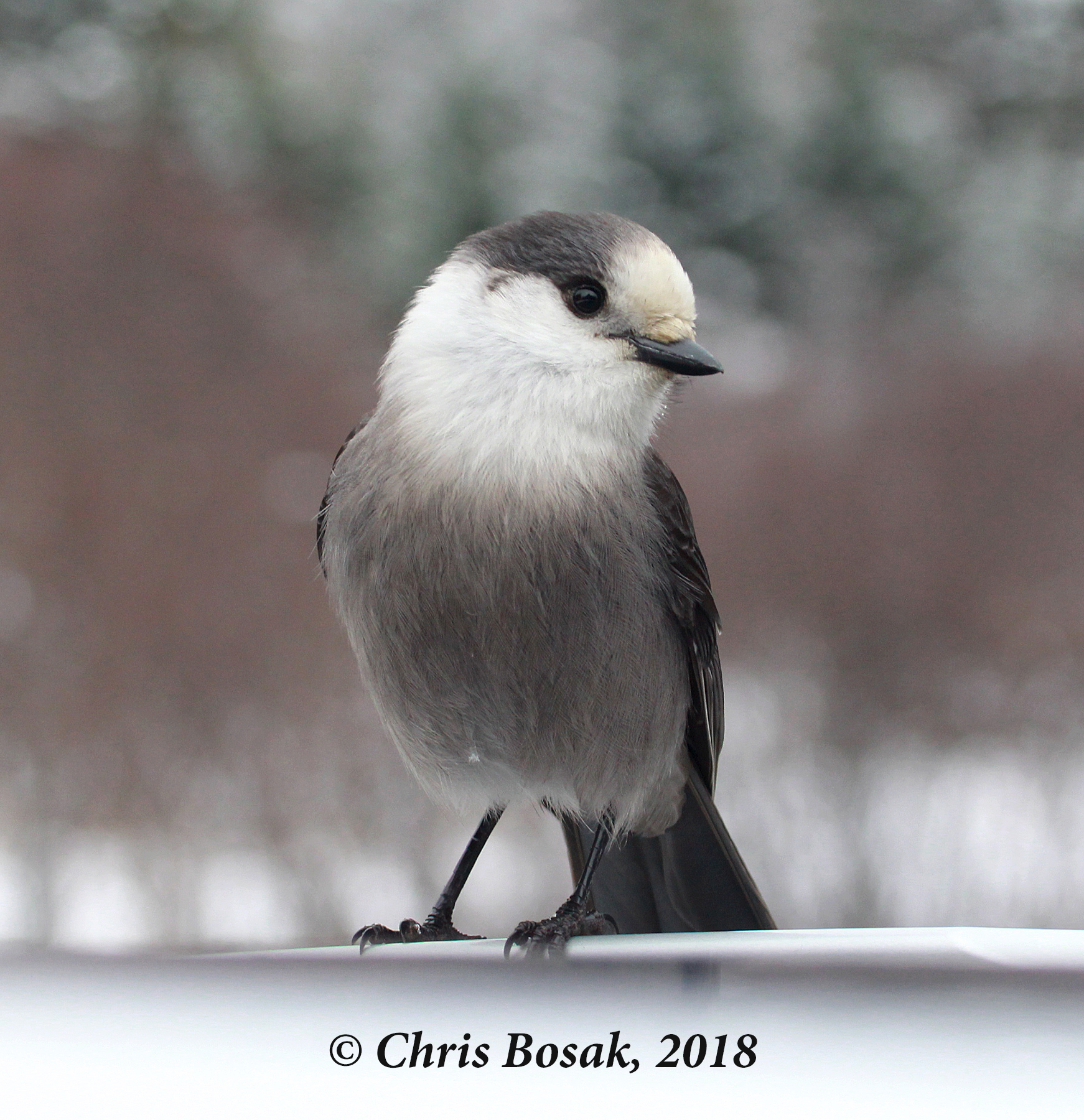
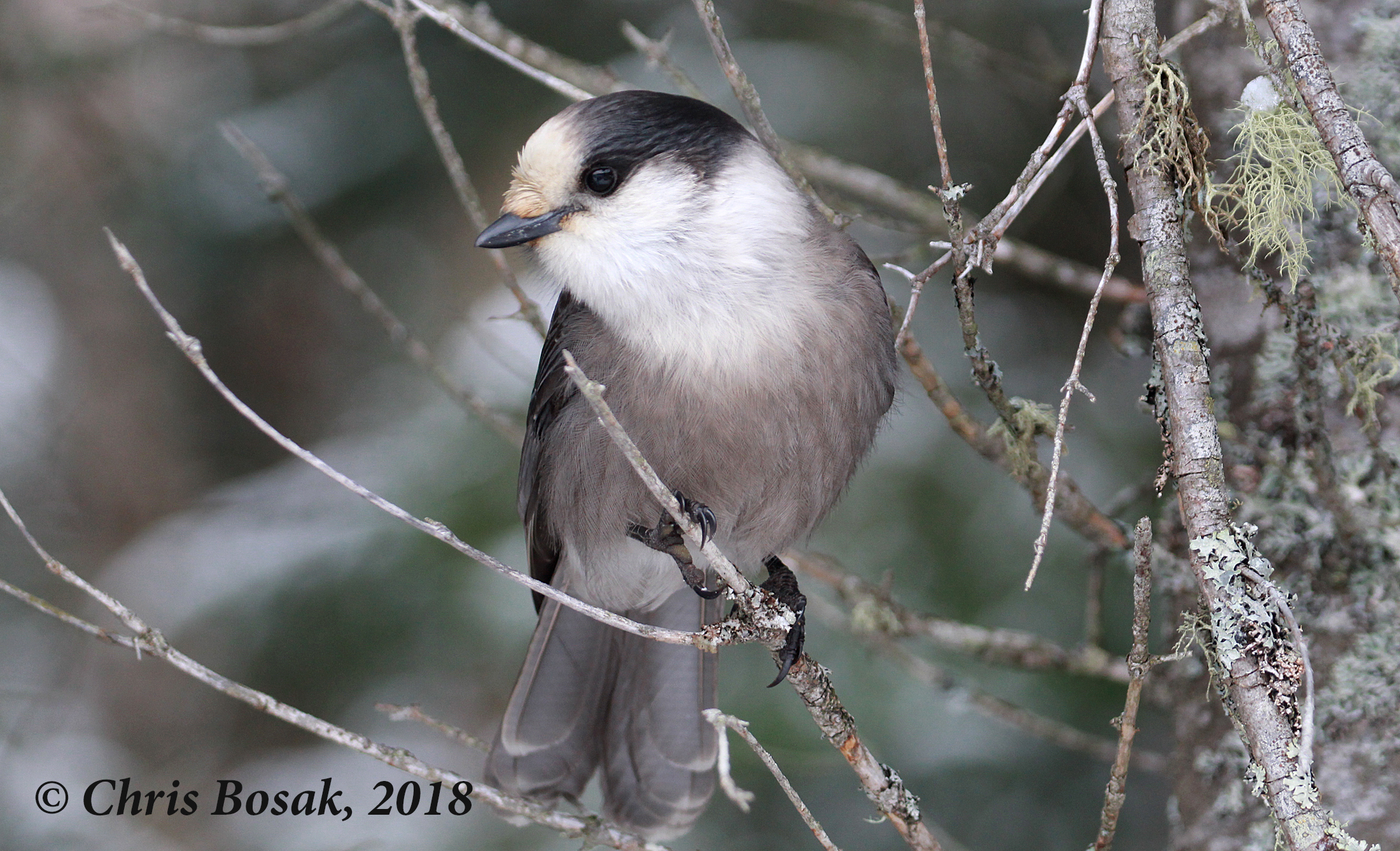
Photo by Chris Bosak A gray jay perches in a tree in Pittsburg, N.H., November 2018.
The surprises began as soon as we arrived in Pittsburg, the northern tip of the Granite State. To be more accurate, the surprises began about an hour before our arrival.
“Is that snow on the ground?” I asked as we drove through the darkness.
The headlights revealed that, indeed, a thin layer of snow blanketed the sides of the roads. We arrived at our rented cabin to find about 2 inches of snow in the Great North Woods.
Snow in early November in northern New Hampshire is not surprising, but this particular snow caught me off guard because of how warm it has been in southern New England. Wasn’t it just 70 degrees the week before?
Although it served as a reminder that winter is coming fast for all of the region, the snow was a welcome gift from the North Country. It was beautiful and, Continue reading →
Photo by Chris Bosak An American goldfinch perches on a coneflower head, Nov. 2018.
Since I have some late-blooming coneflower thanks to a clearance sale at a nearby big-box hardware store, I may as well milk the blooms when it comes to photographing birds. Here’s a shot I took today (Tuesday, Nov. 13, 2018) of an American goldfinch eating seeds from one of the dead heads.
More shots featuring the flowers coming soon, I’m sure. Best $2 flowers I ever bought!
Two weeks ago I had a post on this site about mushrooms and last week I made a few posts during my trip to Pittsburg, N.H.
By way of revisiting both of those topics, here’s a photo of interesting looking fungi we spotted during a walk through the boreal forest. There’s so much cool stuff to see out there — whether it’s southern, central or northern New England — but you have to get out there to see it.
Photo by Chris Bosak
Tufted titmice gather near a container with coneflower during November 2018.
Scenes like this are quickly fading as winter starts to creep into New England. These coneflowers have lingered into late fall because I purchased them at a box hardware store on clearance a few weeks ago. I’m hoping the flowers return next year, but until then I’m enjoying their later-than-usual blooms. The birds are, too, of course.
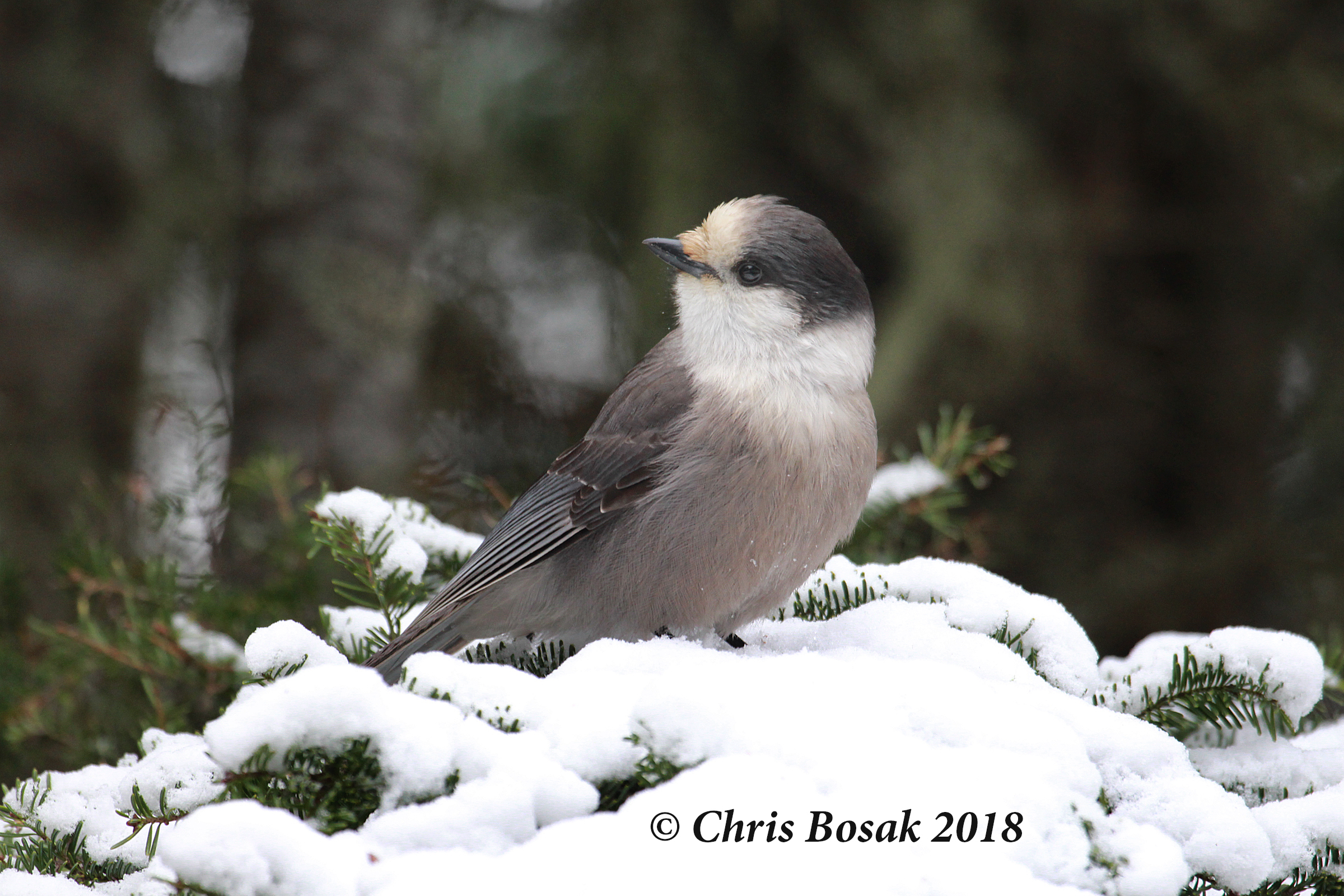
Gray jay on snowy bough in Pittsburg, N.H., Nov. 2018.
It shouldn’t be too surprising that there is snow in November in the Great North Woods, the area of extreme northern Vermont and New Hampshire. We were surprised, however, to see snow when we arrived on Sunday only because it has been so warm this fall in southern New England.
I hadn’t even given snow a thought yet, to be honest. Heck, wasn’t it in the 70s in Connecticut just last week? But, sure enough, a beautiful blanket of the white stuff covered Pittsburg, N.H. It was only an inch or two, just enough to make it beautiful and remind us that snow is coming soon enough for the rest of New England. (Update: Now it’s Tuesday and a steady rain has melted all the snow.)
With the moose population continuing to dwindle in northern New Hampshire, the wildlife highlight was a trio of gray jays we came across just south of Deer Mountain Campground, which itself is just south of the Canadian border.
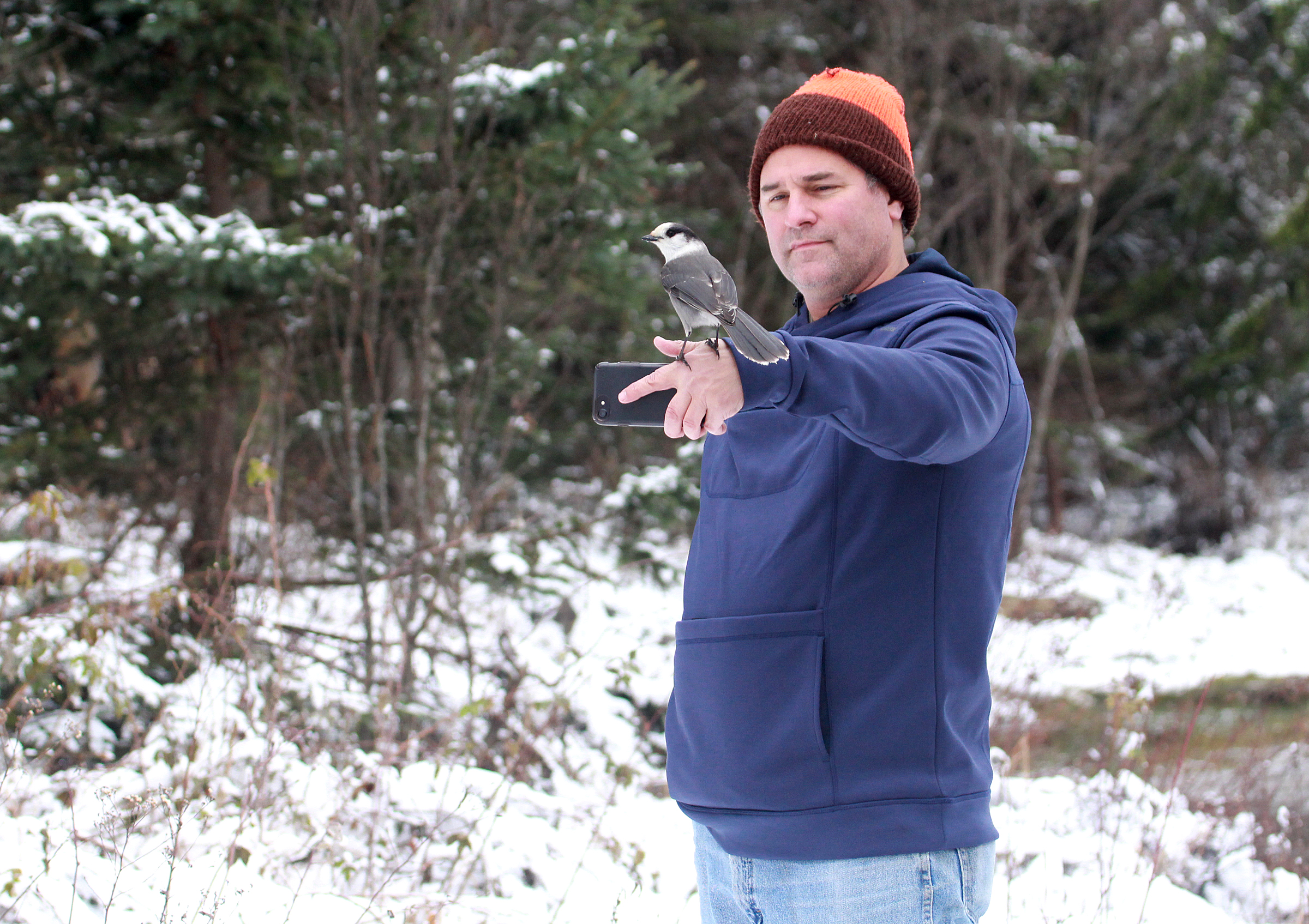
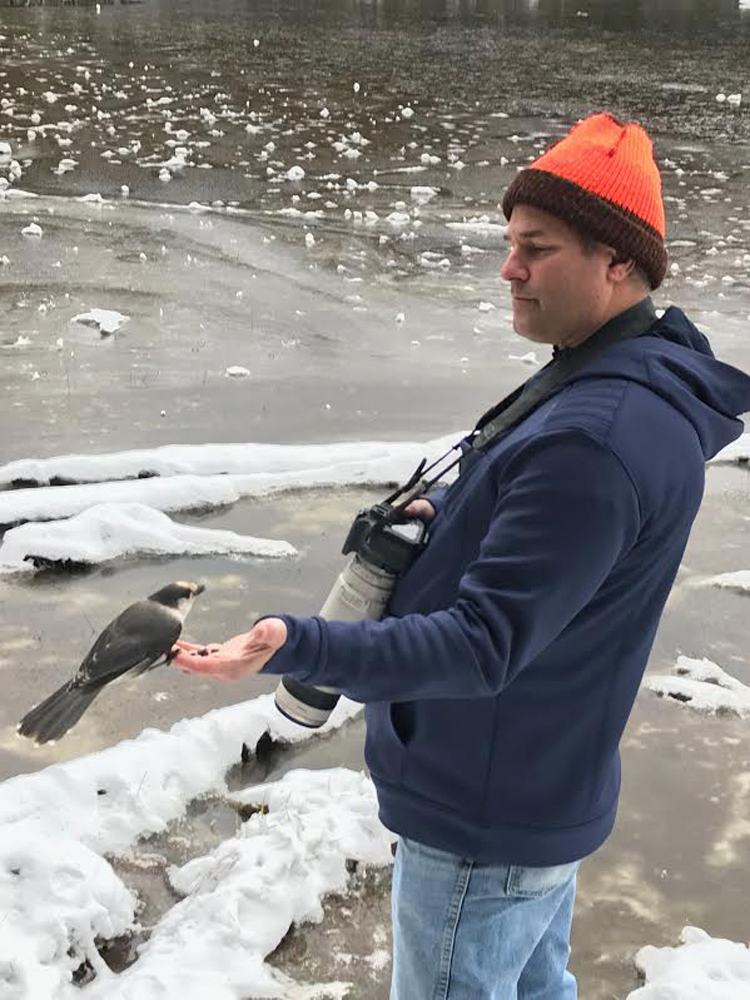
I’ve seen gray jays before in Pittsburg, N.H, but never during the “winter.” They were extra bold and landed on our hands as we offered sunflower seeds. I’ve had black-capped chickadees land on my hands for sunflower seeds before, but I could tell the tiny birds were unsure of themselves as they landed quickly and flew off. These gray jays, however, were not shy at all and landed on our finger tips and dug through the seeds to find just the right one.
About half an hour later we found a pair of gray jays, which also ate from our hands and showed little fear. At one point, an evening grosbeak flew in and landed in a nearby tree. I hadn’t seen an evening grosbeak in years and years, so the large yellow, black and white bird was a welcomed, if not fleeting, sighting.
Aside from gray jays, blue jays, ruffed grouse, chickadees, and red squirrels, the wildlife sightings have been rather scarce. But we’ll keep looking and I’ll let you know what we find.
Photo by Chris Bosak Feeding brave gray jays in Pittsburg, N.H., Nov. 5, 2018.Photo by Chris Bosak Feeding gray jays in Pittsburg, N.H., on Nov. 5, 2018.
Photo by Chris Bosak A great blue heron perches on one leg in a tree in Brookfield, Conn., during the fall of 2018.
Here’s the latest For the Birds column, which runs in several New England newspapers.
….
The fall drawdown on large New England lakes can make it a challenge to launch a canoe. The shoreline is often soupy and mucky, making it a dirty and dicey proposition to get in a quick paddle.
A little dirt and muck have never deterred me, however, especially when the possibility of good duck watching lies ahead. Such was the case last week when I braved the Lake Lillinonah shoreline in southwestern Connecticut to launch my canoe. Lillinonah is considered a lake because of its width, but it is really part of the Housatonic River.
Thankfully, it hadn’t rained in a few days so much of the shoreline was hardened mud. It got muckier the closer I got to the water, but I was able to leave the tail end of the canoe out far enough that my feet only sunk down about 2 or 3 inches before jumping in.
The bottom of the canoe’s interior was smeared with mud, but what the heck; it’s a canoe, a little dirt won’t hurt it. I lifted up my butt, dug in the paddle and pushed off hard. I was on my way and instantly felt the cares of the world disappear as I glided over the glassy water, surrounded by New England’s famous fall colors.







 Birds of New England.com