Photo by Chris Bosak
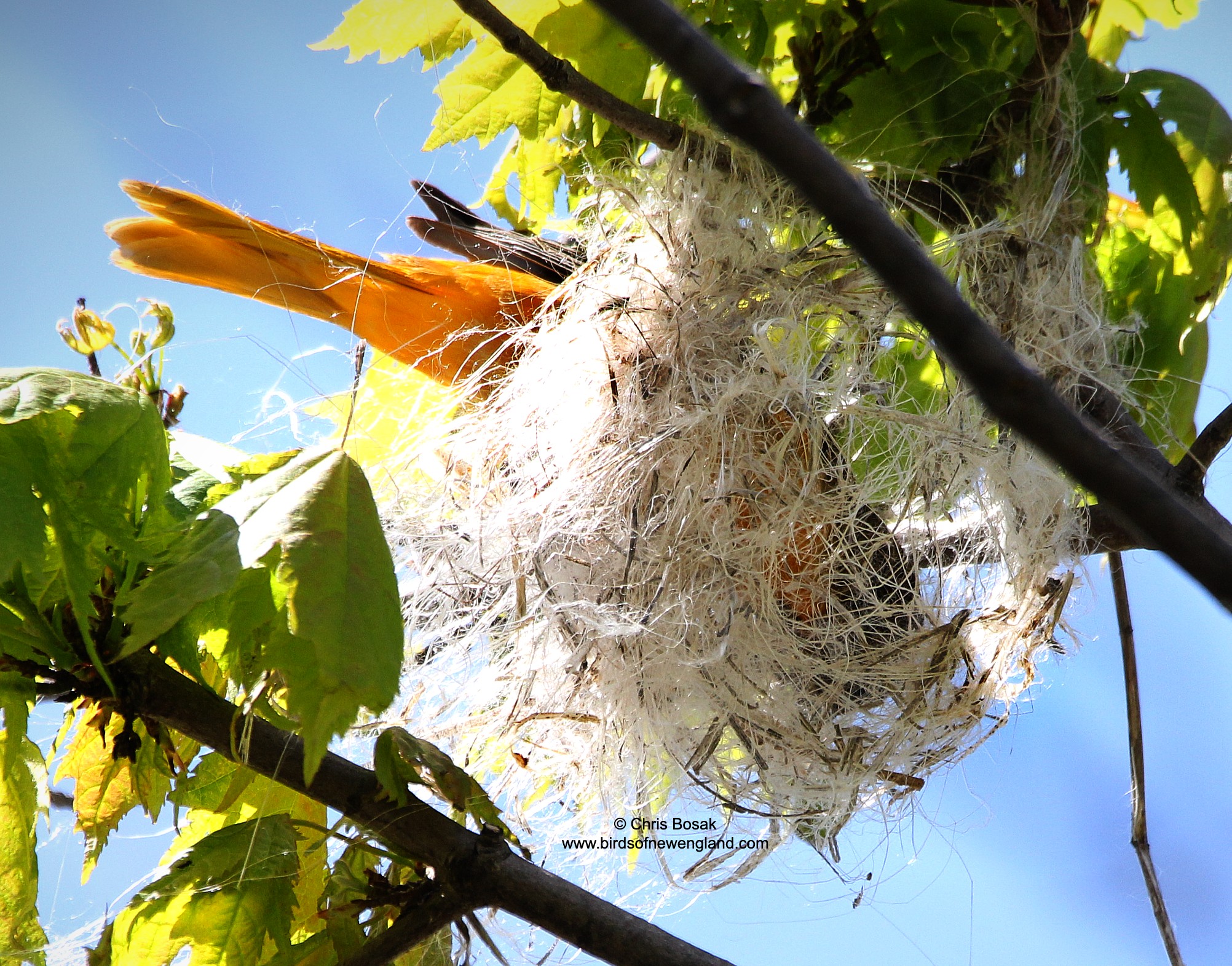
A Baltimore oriole builds a nest at Presque Isle State Park, Erie, Pa., May 2025.
Everything about a Baltimore oriole nest is ingenious. From the design and materials to the location selection, the nest is a perfect haven to raise young birds safely from predators (for the most part).
Fall is the best time to find oriole nests, after the leaves have fallen. Of course, by that time, the orioles are long gone, and the nest is a mere relic of the past breeding season, but it’s still interesting to see one of the pouch-like nests dangling from the end of a branch.
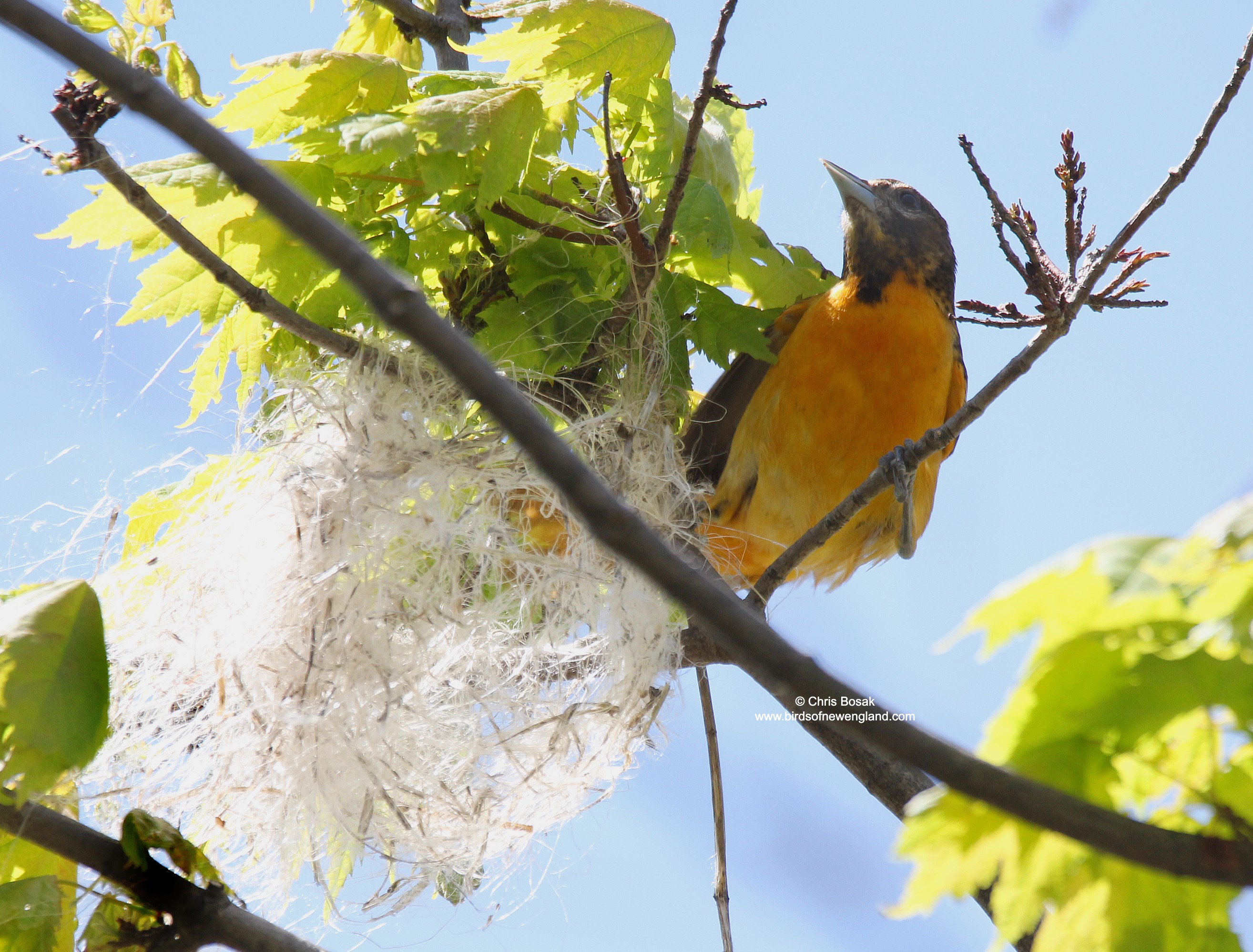
The other week, I was lucky enough to watch a female oriole build one of those remarkable nests. I was walking along a trail that was teeming with yellow warblers, catbirds, and Baltimore orioles when I glanced up and saw an oriole perched at the end of a branch overhead.
Photo by Chris Bosak
A Baltimore oriole builds a nest at Presque Isle State Park, Erie, Pa., May 2025.
Baltimore orioles have one of the most unique nests of all the songbirds in New England.
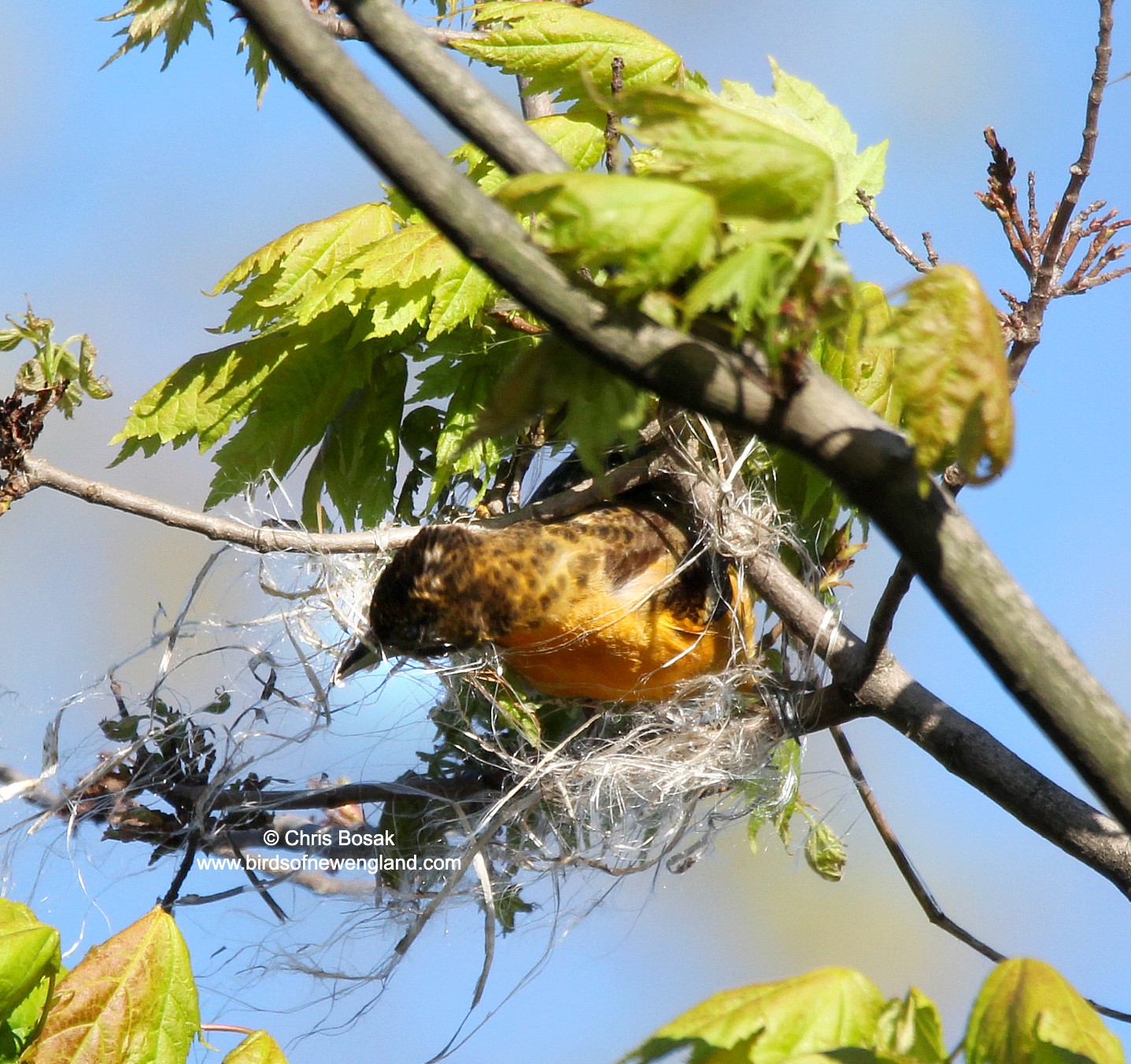
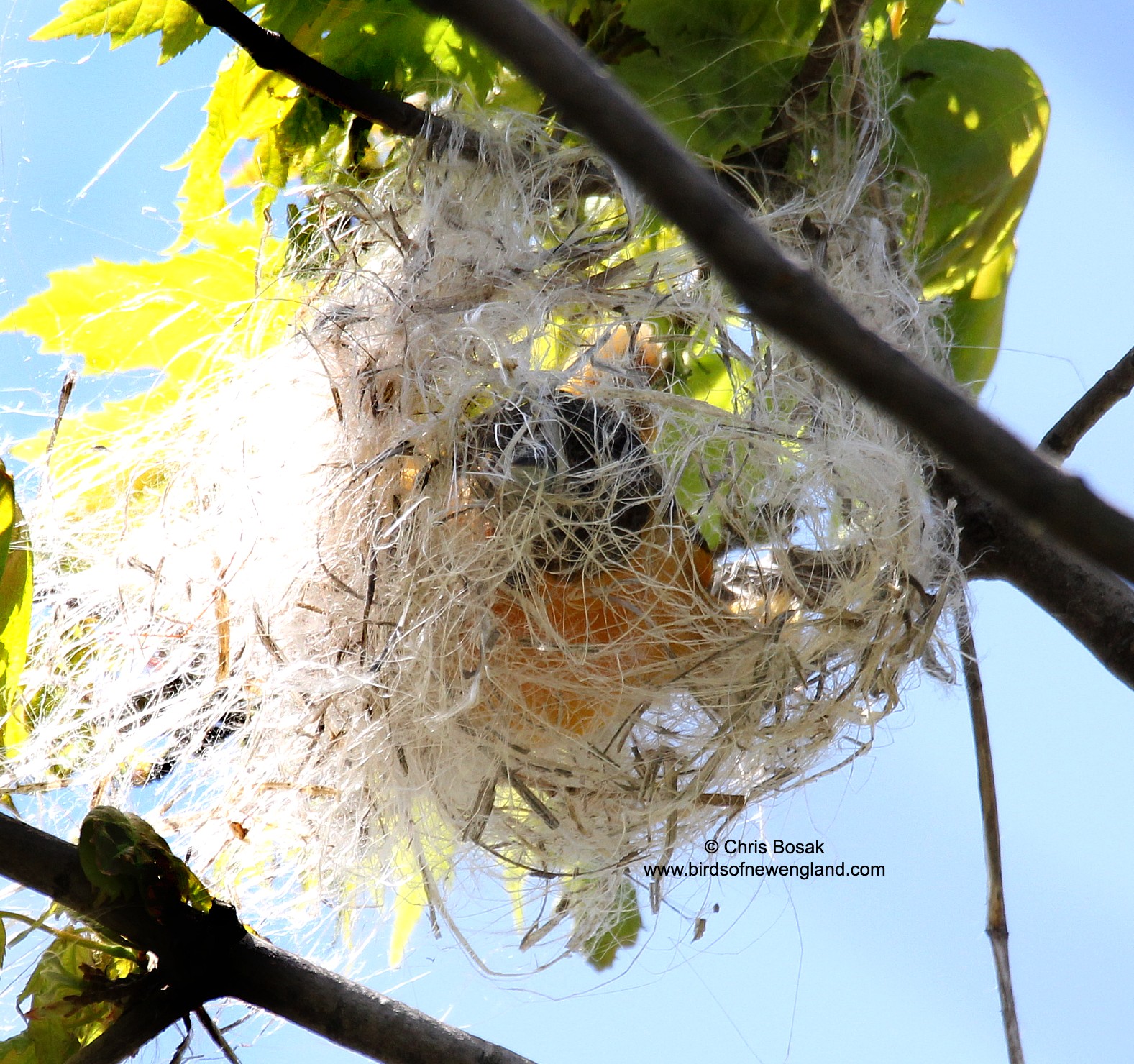
According to allaboutbirds.org, “Baltimore Orioles build remarkable, sock-like hanging nests, woven together from slender fibers. The female weaves the nest, usually 3 to 4 inches deep, with a small opening, 2 to 3 inches wide, on top and a bulging bottom chamber, 3 to 4 inches across, where her eggs will rest. She anchors her nest high in a tree, first hanging long fibers over a small branch, then poking and darting her bill in and out to tangle the hank. While no knots are deliberately tied, soon the random poking has made knots and tangles, and the female brings more fibers to extend, close, and finally line the nest. Construction materials can include grass, strips of grapevine bark, wool, and horsehair, as well as artificial fibers such as cellophane, twine, or fishing line. Females often recycle fibers from an old nest to build a new one. Males occasionally bring nesting material, but don’t help with the weaving. Building the nest takes about a week, but windy or rainy weather may push this as long as 15 days. The nest is built in three stages: first, the female weaves an outer bowl of flexible fibers to provide support. Next, springy fibers are woven into an inner bowl, which maintains the bag-like shape of the nest. Finally, she adds a soft lining of downy fibers and feathers to cushion the eggs and young.”
During my recent trip to Presque Isle State Park in Erie, Pa., I came across an oriole pair building a nest. We saw tons of orioles overall, but this was the only nest I found under construction. I was amazed at how much progress the orioles made in just one day. The first photo below was taken on a Sunday and next two photos (and the one above) were taken on a Monday. Nature is amazing.
Photo by Chris Bosak
A Baltimore oriole builds a nest at Presque Isle State Park, Erie, Pa., May 2025.Photo by Chris Bosak
A Baltimore oriole builds a nest at Presque Isle State Park, Erie, Pa., May 2025.Photo by Chris Bosak
A Baltimore oriole builds a nest at Presque Isle State Park, Erie, Pa., May 2025.
Photo by Chris Bosak A Baltimore Oriole nest in Stamford, Conn., May 2015.
I took a walk around a local park in Stamford, Conn., yesterday. I knew the warbler migration was winding down, but I figured I’d see a few late migrants and perhaps something else interesting. Something always happens when you make the effort to take a walk in the woods.
I was walking happily along looking up in the trees for movement. With the leaves out now, movement is the only way to spot most birds. I glanced down and suddenly found myself tip-toeing frantically to avoid bird droppings all over the trail. Not that it would have been a big deal if I stepped on one, but my brain recognize Continue reading →


 Birds of New England.com