For the Birds: Birding by ear, for starters

Photo by Chris Bosak An American Redstart sings from a perch in Selleck's and Dunlap Woods in Darien, Conn., May 2015.
Photo by Chris Bosak An American Redstart sings from a perch in Selleck’s and Dunlap Woods in Darien, Conn., May 2015.

Any walk through deciduous woods when the leaves are out drives home the importance of knowing what birds sound like. It can be a lesson in futility to try to find a tiny warbler at the top of a giant oak tree covered in leaves. The exercise can lead to frustration and a condition known as “warbler neck.”

My birding-by-ear skills are average at best, and I was reminded of this during a recent walk through the woods under a thick canopy. I heard several warblers and other birds, and, while I saw only a few, I was able to recognize the songs of several others. There were many birds, however, I could not find through my binoculars nor recognize by their songs or calls. As I mentioned before, it can be frustrating, but I have reached an age where I can let go of the frustration quickly and not dwell on the bird that got away. In years past, I would often hold onto the frustration long after the walk, which, after all, is supposed to be enjoyable.

Birds don’t always look exactly like they do in a field guide, whether the images are photos or illustrations. There are different plumages depending on time of year, age, sex and other factors. There is also slight variation among individuals of a species. Not every male robin looks exactly the same.

That said, birds don’t always sound exactly like they are supposed to either. A bird’s song is only one of the sounds they make and even their songs can vary greatly. Cardinals, for instance, have distinctive high-pitched call notes. They also have a distinctive song, but there are several versions of the song. The cardinal in your forsythia may have a song that is greatly different from the cardinal across the street. All of the songs are loud, clear and beautiful, but very different. Don’t get stuck thinking that the cardinal song you hear every day is the only one cardinals have. Many other birds are the same way as well.

My advice if you are just starting to learn bird sounds is to learn the common and obvious ones really well. Study what the robin sounds like. Their typical song is often translated to “cheerily, cheer up, cheer up, cheerily, cheer up.” But there is much variation in the song, and they have several calls as well, such as the “tut, tut, tut,” call.

Robins are very common in New England, so if you learn the sounds of the robin, you can save yourself much frustration on your walks by not getting hung up on a bird you will likely come across several times.

Get to know the various calls and songs of blue jays, cardinals, nuthatches, chickadees and titmice. You will hear those often throughout the year, and you can eliminate other birds in the spring when you hear those sounds during a song-filled spring morning.

Warblers and other migrants are a different story. We do not hear them year-round, but rather for only a few weeks out of the year. That is a short window to try to learn those songs in the field. Birding Internet sites and phone apps are filled with recordings of bird songs and calls. I would encourage you to learn a few warbler songs each year so as to not try to pack too much information in your head and end up not remembering anything. Learn the yellow warbler and common yellowthroat, for instance, as those are commonly heard in the spring and summer throughout New England.

Warblers are difficult to learn because there are so many of them and many of their songs are similar to each other’s. But, as I said, learn a few a year and within a couple of years you will be picking out many of the songs you hear in the woods in April and May. And if you just can’t pick it up, don’t fret or stress. Study a little more, and get it next time.

For the Birds: One of those walks

Photo by Chris Bosak A yellow warbler perches in a tree in New England, spring 2021.

It was the type of walk you anticipate for about 11 months.

It started fairly slowly with robins and red-winged blackbirds as my only visible avian companions while a lone song sparrow sang in the distance. Soon enough, I heard a mockingbird going through its repertoire from a nearby shrubby patch. They usually belt out their songs from a fairly obvious perch and this guy was no different as I found him easily at the end of a branch.

As I watched and listened to this talented songster, a female ruby-throated hummingbird entered the scene. It hovered briefly at the honeysuckle but did not stay long as the blossoms were not quite ready to provide nectar.

A familiar song then permeated the area as dueling male yellow warblers proclaimed ownership of their respective patches. I was stuck in the middle of the rivals and enjoyed the sweet music. To us, it’s entertainment. To them, it’s a turf war with much at stake.

Continue reading

Yellow warbler again

Photo by Chris Bosak A yellow warbler perches in a tree in New England, spring 2021.

Yellow warblers are one of the more reliable warblers in New England. Pretty much any walk in New England in May or June is enhanced by the song and/or sight of a yellow warbler. Here are a few shots of one I saw the other day.

Continue reading

Snow in May

Photo by Chris Bosak A blue-winged warbler perches on snowy branches at Bennett’s Farm State Park in Connecticut during a rare May snowfall in 2020.

It sounds like something one of your grandparents would say: I remember when it snowed during the second week of May.

But it wasn’t that long ago when it snowed in May in southern New England. It was last year, in fact. It was overnight May 8 into May 9, to be more specific. That’s exactly one year ago today (at the time of this posting, anyway.)

Granted, it wasn’t a big snow and what little covered the ground was gone by mid-morning, but still …

Here are a few photos I took the morning of May 9, 2020. I may never see a blue-winged warbler in snow again. And that would be just fine with me.

Photo by Chris Bosak A blue-winged warbler perches on snowy branches at Bennett’s Farm State Park in Connecticut during a rare May snowfall in 2020.

For the Birds: Welcome to May!

Photo by Chris Bosak A chestnut-sided warbler lurks in the brush in New England, May 2020. Merganser Lake.

Welcome to May, arguably the best month of the year for birdwatching.

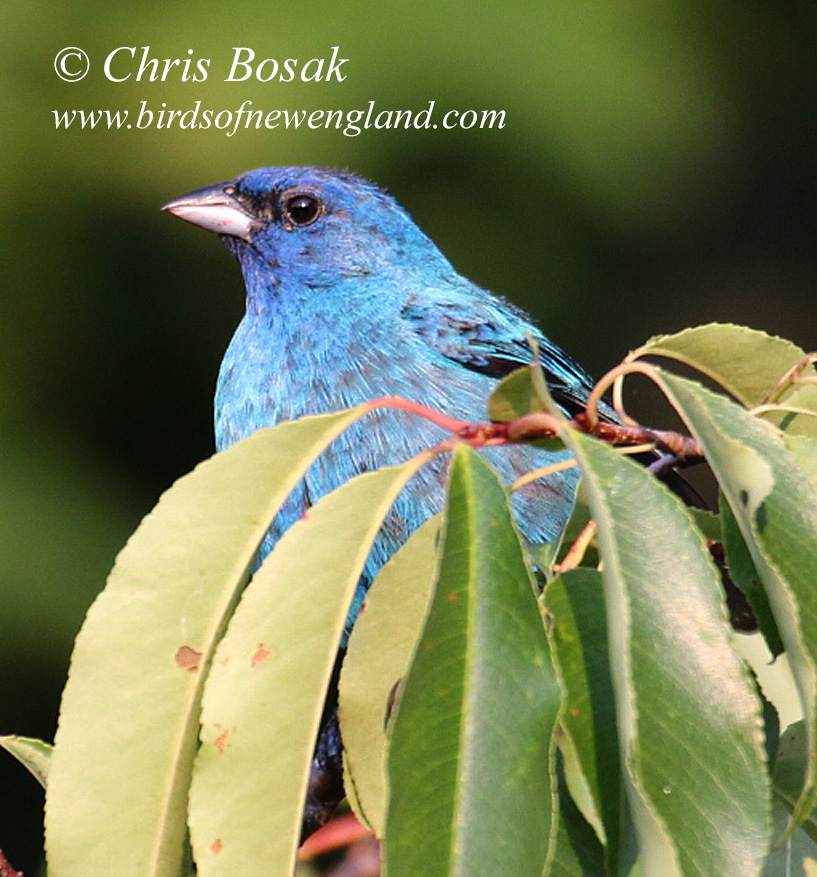
So many exciting things happen in the bird world in May that it’s hard to know where to begin. The breeding season is in full swing and our year-round birds as well as newly arrived migrant birds are either looking for nesting sites or already raising young. Suddenly our feeders are visited by colorful newcomers such as rose-breasted grosbeaks, Baltimore orioles or indigo buntings. Waders are back in full force stalking our ponds and rivers.

When it comes to May, however, talk of the birding world has to begin with warblers, those small and often colorful Neotropical migrants that add life to our neck of the woods every spring. Some of these warblers will simply stop by for a few days before heading farther north to their breeding grounds. Many, however, will find a suitable place to raise young and will be with us until the fall.

Continue reading

A few other birds that may be showing up

Photo by Chris Bosak A Rose-breasted Grosbeak visits a feeder in Danbury, Conn., May 2016.

I’ve posted several warbler photos over the last week or so, but early May isn’t only about warblers. Here are a few other birds that may show up in your backyard (if they haven’t already.)

Continue reading

For the Birds: Spring feeding and purple martins

Purple martins with dragonflies.

I don’t see a lot of press releases now that journalism is no longer my full-time profession, but I did receive a few last week that caught my eye.

One was from Cole’s Wild Bird Products and the other from the Purple Martin Conservation Association. The topics were very different but did have one important commonality: spring.

Cole’s, which makes a red-hot blend that I’ve used and the birds loved, sent some spring bird-feeding tips. Many people stop feeding birds in the spring for a variety of reasons, including bears and not wanting birds to become dependent upon feeders, but I’m a big fan of spring bird feeding. It’s a great way to get close, long looks at birds such as grosbeaks, orioles, buntings and even a few warbler species if you’re lucky.

Continue reading

A few warblers

Photo by Chris Bosak A chestnut-sided warbler lurks in the brush in New England, May 2020. Merganser Lake.

Due to various reasons (excuses?), I haven’t been out this year looking for warblers yet. But here are a few “old” shots to celebrate warbler season, a highlight of the birding year. I will take my own advice soon and “get out there.”

Continue reading

For the Birds: Spring wood duck sightings always welcome

Photo by Chris Bosak A wood duck swims in a pond in New England, April 2021.

Only a narrow barrier of reeds separated the fairly busy road from the rain-swelled pool of water bordered by railroad tracks on the backside.

On any other day, this pool of water would be ignored and driven past without a second look. But on this day, something caught my eye and I promptly turned around at the next available safe place to do so. I drove past the water again, this time more slowly, and realized that what had caught my eye was a small group of male wood ducks.

Continue reading

For the Birds: Waxwings are always a welcomed sighting

Photo by Chris Bosak A cedar waxwing perches on a branch in New England, spring 2021.

I had hobbled almost all the way from the car to the entrance of work when I noticed a flock of cedar waxwings picking off leftover berries in a nearby tree.

Even with the persistent tendinitis in my feet acting up, I made my way back to the car to grab the camera. Usually, in situations like this the camera is sitting at home, but this time I was prepared for the unexpected. Cedar waxwings, in my experience anyway, are always unexpected. They are fairly nomadic, and it’s hard to go out looking specifically for them. But they appear now and then and it’s always a thrill to see them.

I retrieved the camera and hobbled back through the parking lot to the tree in question. Of course, the tree was empty when I got back as the waxwings had taken off for parts unknown.

Continue reading