Photo by Chris Bosak – Bluebirds were a common sighting during a house- and dog-sitting experience in New England.
I agreed to house- and dog-sit for a friend recently. I had never been to the house before so when I parked in the driveway, I did what I always do upon visiting a house for the first time: evaluate the birding potential of the yard.
When I visit a home in a city or busy part of a suburb, I don’t expect much but remain optimistic. Sometimes I’m disappointed and sometimes I’m pleasantly surprised. If the house is in a rural area, I assume the best and expect to spend many enjoyable hours on the porch or deck listening to and watching birds.
This particular house was in “the country” and lived up to all expectations.
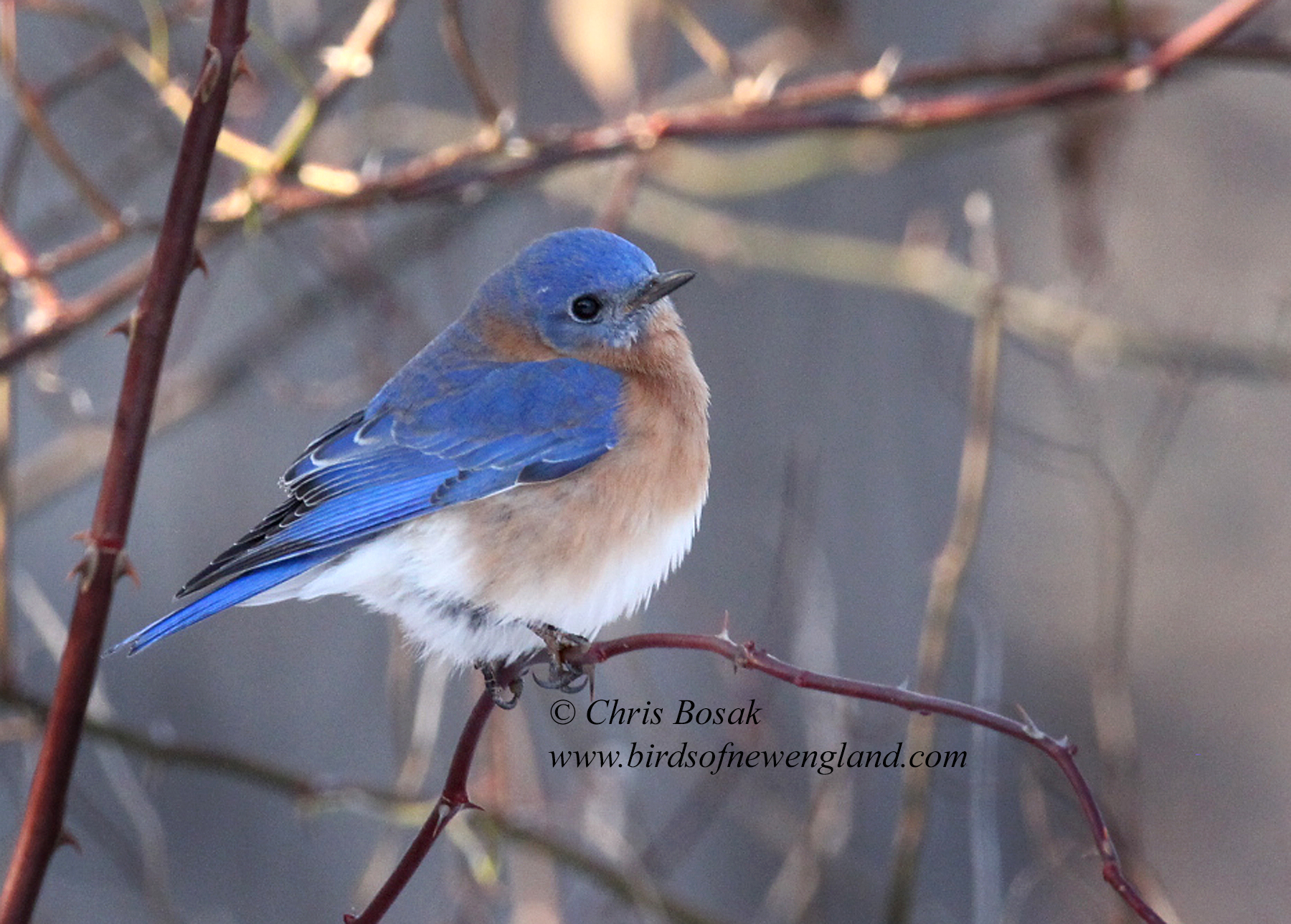
Photo by Chris Bosak
An eastern bluebird perches on a branch in New England, Jan. 2022.
Beautiful sights in nature can be long-lasting or fleeting. Sometimes a split second is all it takes to leave an impression.
A beautiful view from a mountaintop is always there. You could hike to the top of Mount Monadnock or Mount Washington and enjoy the panoramic splendor today, tomorrow or next month. The view will always be there. Sure, it will change with the seasons and weather, but the mountain isn’t going anywhere. You could plan months or even years ahead and count on seeing the beautiful view.
An awe-inspiring sunrise or sunset is more fleeting. First of all, there is no guarantee a gorgeous sunrise or sunset will happen at all. But when you do happen to catch one, the view lasts for 20 or 30 minutes. You could grab a seat and watch the show until it is either dark or light, depending on whether it’s a sunrise or sunset.
With birdwatching, most memorable sights are fleeting, and unless you are visiting a zoo or nature center, there are no guarantees. There are some almost certainties, such as a hawk watch location in the fall or a bald eagle watching spot in the winter, but those sightings are mostly fleeting. During a hawk watch, the bird is spotted as it approaches, observed as it flies overhead and then disappears into the distant sky. Eagle watches can offer a longer view as the large birds rest in trees near the water, but they can take off at any time.
Photo by Chris Bosak A tufted titmouse looks into a cup for peanuts in New England, February 2020.
For a cold February day, it’s been a pretty good day at the feeder. In all, 14 species showed up already and it’s not even noon. The pileated woodpecker was in the side yard, not at the feeders. I took the photo through a dirty, hence the poor quality. Here’s some photographic evidence of the busy day: Continue reading →
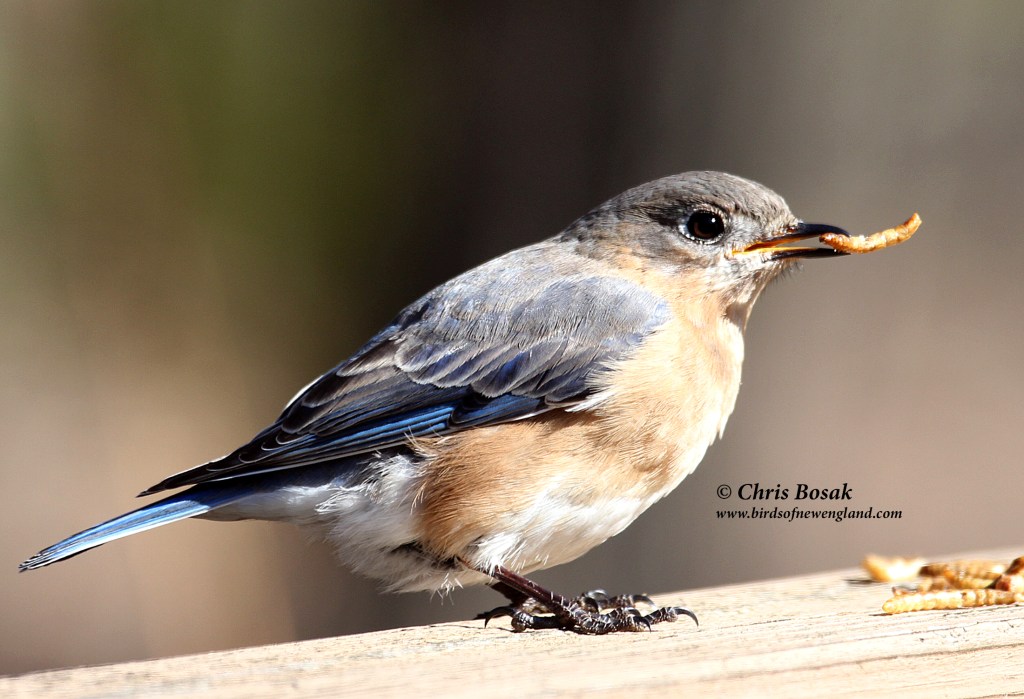
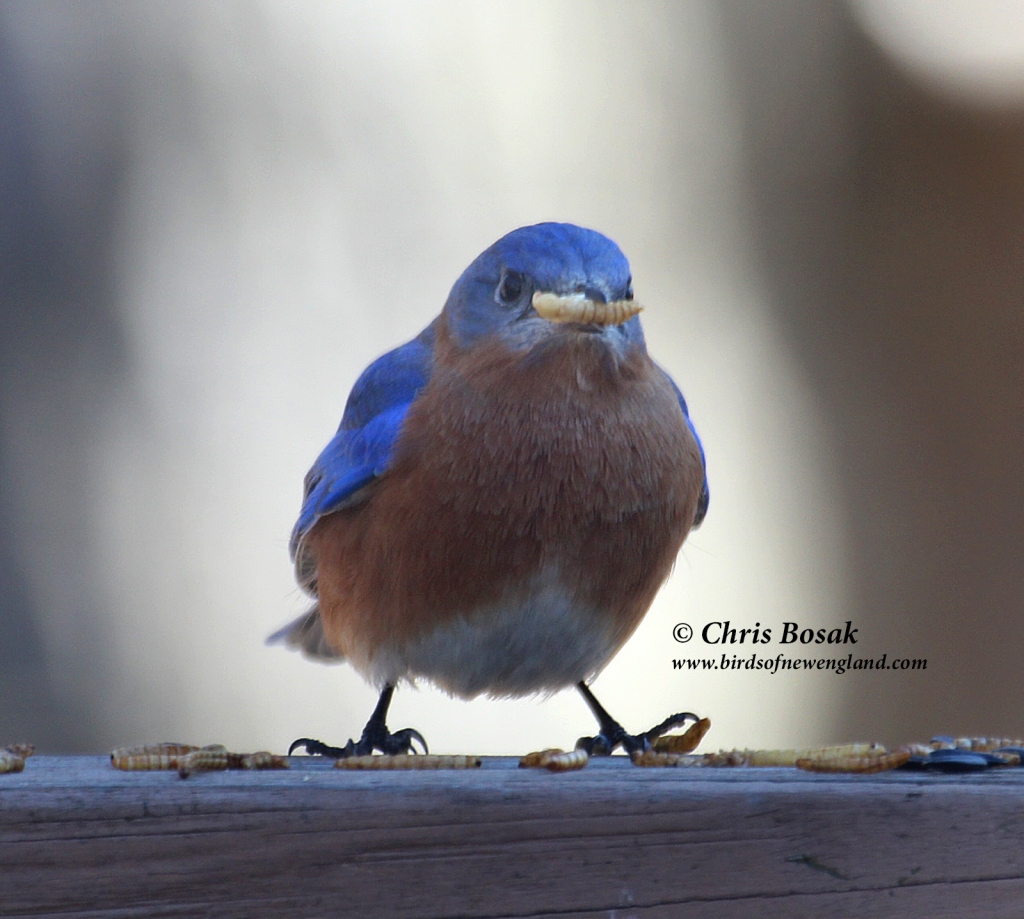
Photo by Chris Bosak An eastern bluebird visits a backyard feeder for mealworms in New England, Feb. 2020.
After several weeks of writing about eastern bluebirds that other people have seen, I finally got a few of my own this weekend. I caught a glimpse of one flying away from my feeding station that includes suet, sunflower seeds and Nyjer seed. My guess is that the bird flew away disappointed as mealworms are their favorite food (at least in terms of backyard feeding.) So, of course, I rushed out there with a handful of mealworms and spread them out on the deck railing. Within half an hour a male and female bluebird were enjoying the dried morsels.
More on this to come! In the meantime, here are a few more shots. Also, feel free to look back on some past posts on this site to see how this has become the Winter of the Bluebird in New England.
Photo by Chris Bosak An eastern bluebird visits a backyard feeder for mealworms in New England, Feb. 2020.Photo by Chris Bosak An eastern bluebird visits a backyard feeder for mealworms in New England, Feb. 2020.



 Birds of New England.com