For the Birds: Flushing a Cooper’s hawk will get the heart pumping

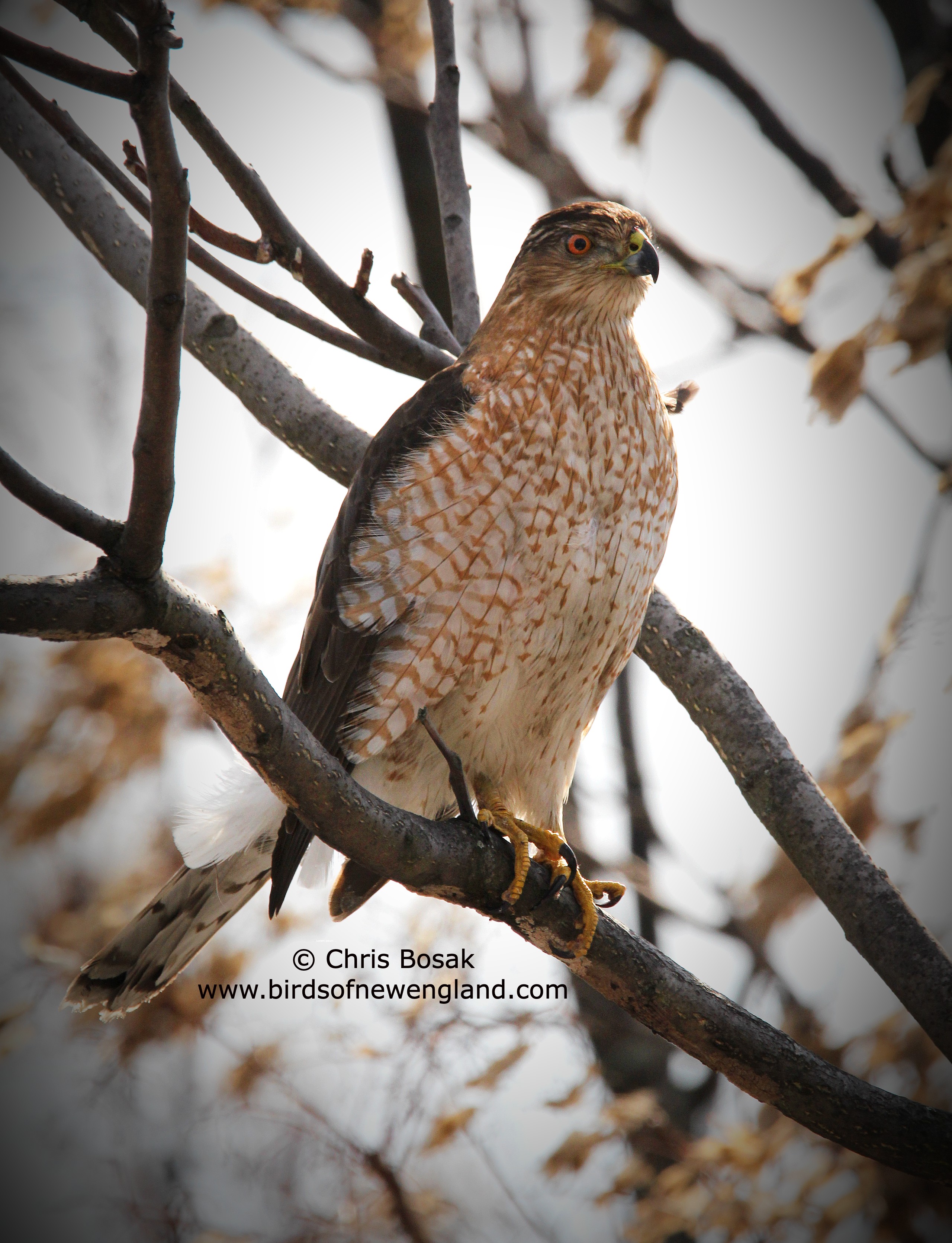
Photo by Chris Bosak Adult Cooper’s hawk seen in Norwalk, Connecticut, January 2025.

I was walking along a short but windy trail in southern New England the other day in search of overwintering warblers. This short path is known for harboring these tiny songbirds during the winter, as it is adjacent to a water treatment center that features open water on even the coldest days.

I came around one of the many bends and jumped back as I flushed a large bird that was on the ground next to the trail. With my heart racing from the surprise, my immediate reaction was that it was a ruffed grouse. It flushed with the familiar exuberance and noise of a grouse, so my mind immediately went there. Ruffed grouse, however, do not live in that area of New England any longer, and the habitat wasn’t right for the popular game bird.

Continue reading
More robin and berry photos

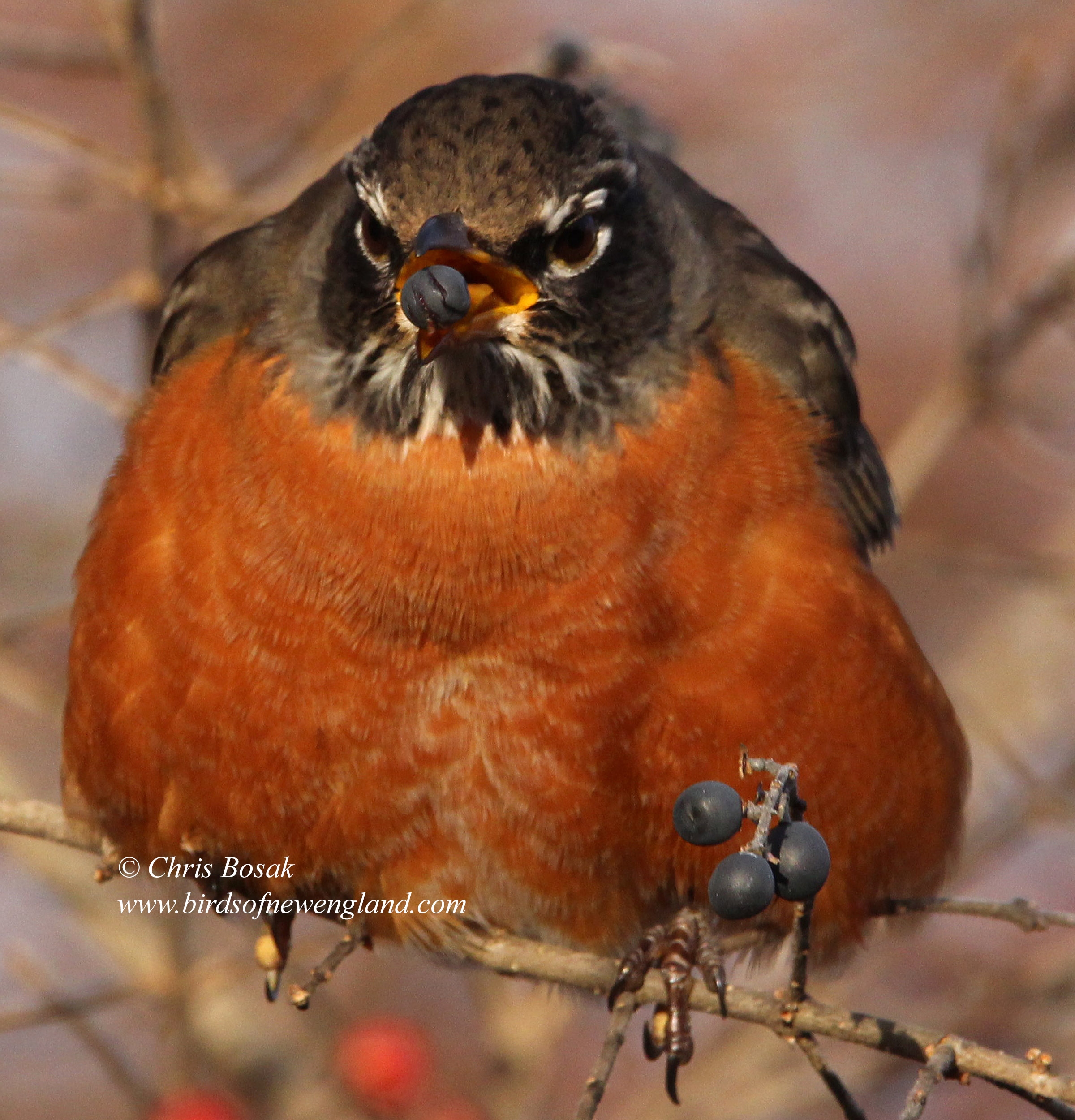
Photo by Chris Bosak An American robin eats border privet berries in New England, January 2025.

I wrote a few weeks ago about robins being the frontrunner for the Bird of Winter. Click here to find out what that even means. The photo I ran with it showed a robin eating border privet berries. Separately, I also wrote recently about my fascination with photographing birds eating berries. Click here for that one.

Well, here are more photos of those robins eating berries.

Photo by Chris Bosak An American robin eats border privet berries in New England, January 2025.
Continue reading

A few birds from a late-April morning walk: field sparrow, eastern towhee, bald eagle

Photo by Chris Bosak – Field sparrow, April 2022.

Not as many migrants as I expected, but a good walk nonetheless at Huntington State Park in Redding, Conn. I heard only one warbler (black-and-white), but I have heard and seen dozens of eastern towhees over the last two days. It’s (arguably) the best time of year to be out there. No excuses! (I’m talking to myself too). The bald eagle flyover was a bit of a surprise, hence the lousy photo.

Photo by Chris Bosak – Eastern towhee, April 2022
Photo by Chris Bosak – Bald eagle, April 2022
Photo by Chris Bosak – field sparrow, April 2022.

How’s your warbler season going?

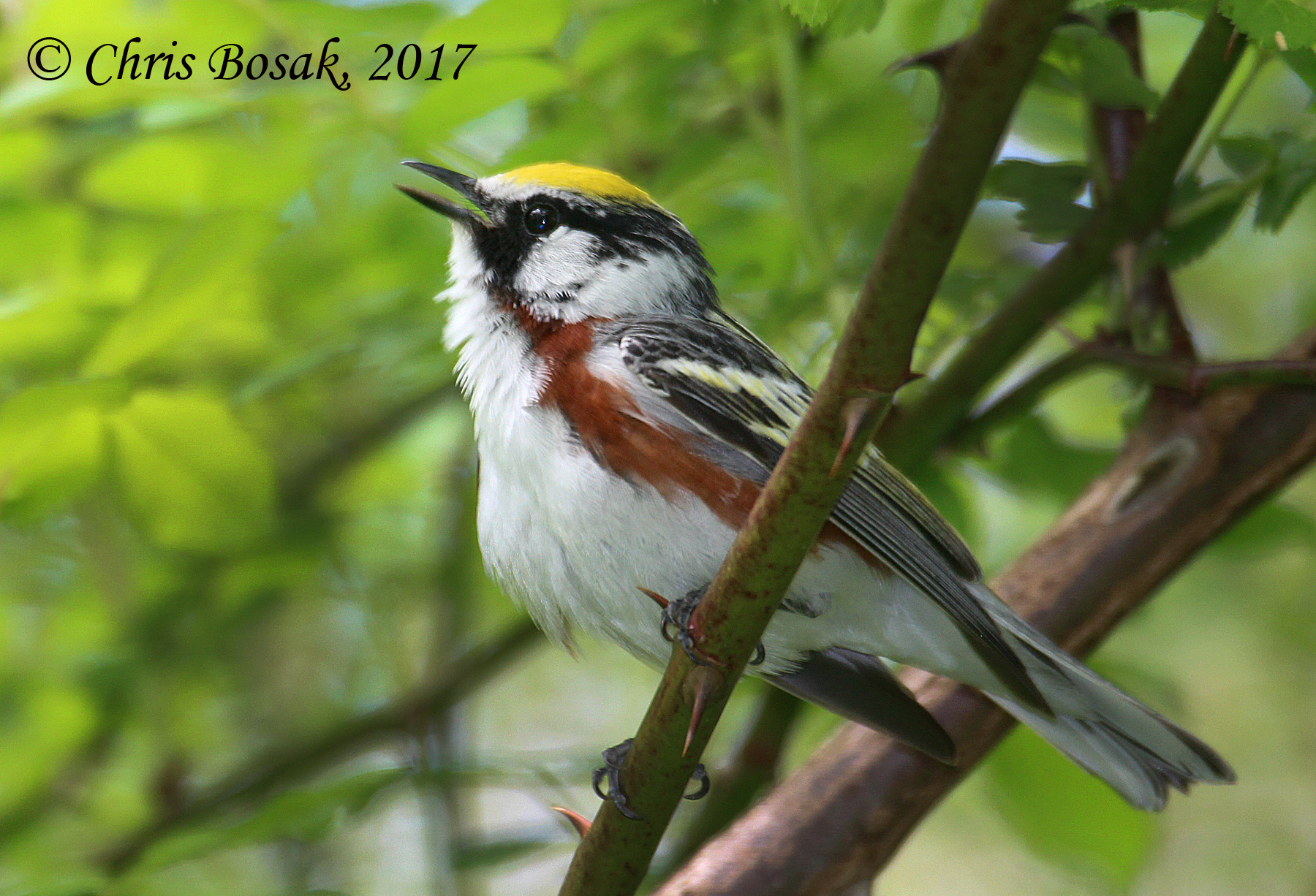
Photo by Chris Bosak A chestnut-sided warbler sings from a lower perch in Ridgefield, Conn., during the spring of 2017.

Photo by Chris Bosak
A chestnut-sided warbler sings from a lower perch in Ridgefield, Conn., during the spring of 2017.

We are heading to a point on the calendar where the spring warbler migration should be hitting its peak before trickling off as we head into the later weeks of May. The weather has been so cool and wet that many birders are wondering where the early part of the spring migration went.

I am included in that group as, between coaching youth baseball teams and having rain put a damper on birdwalks, my spring migration season has barely started .. and it’s already mid-May.

I did have a good walk recently with sightings of chestnut-sided warblers, blue-winged warblers, ovenbirds, wood thrushes, eastern towhees, and — to top it off — a male scarlet tanager. I also hear barred owls calling in the distance.

How is your spring migration season going? Let me know what you’re seeing out there.

Hummingbird photo number 2


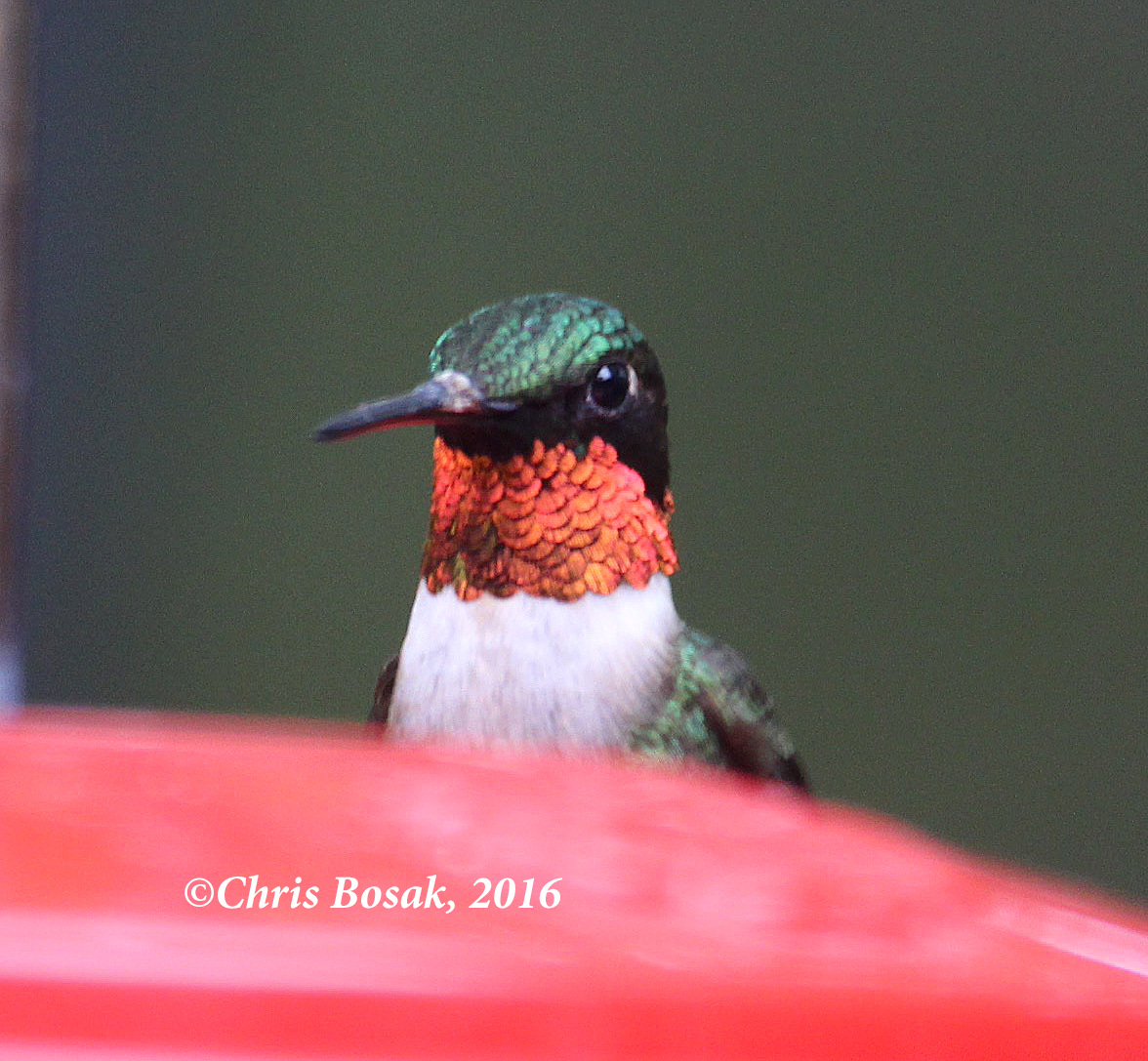
Photo by Chris Bosak A Ruby-throated Hummingbird eats at a feeder in Danbury, Conn., summer 2016

Photo by Chris Bosak
A Ruby-throated Hummingbird eats at a feeder in Danbury, Conn., summer 2016

Updated: Somehow I repeated my first hummingbird photo. Two days into the series and I messed it up already. The photo above is the replacement (the one that should have been there in the first place). Sorry about that. Thanks for the heads up, Wayne.

Here’s is the second of a few posts featuring photos of Ruby-throated Hummingbirds. The male’s throat is red or black or somewhere in between depending on how the light is hitting it.

Bird Book Look: Birdology

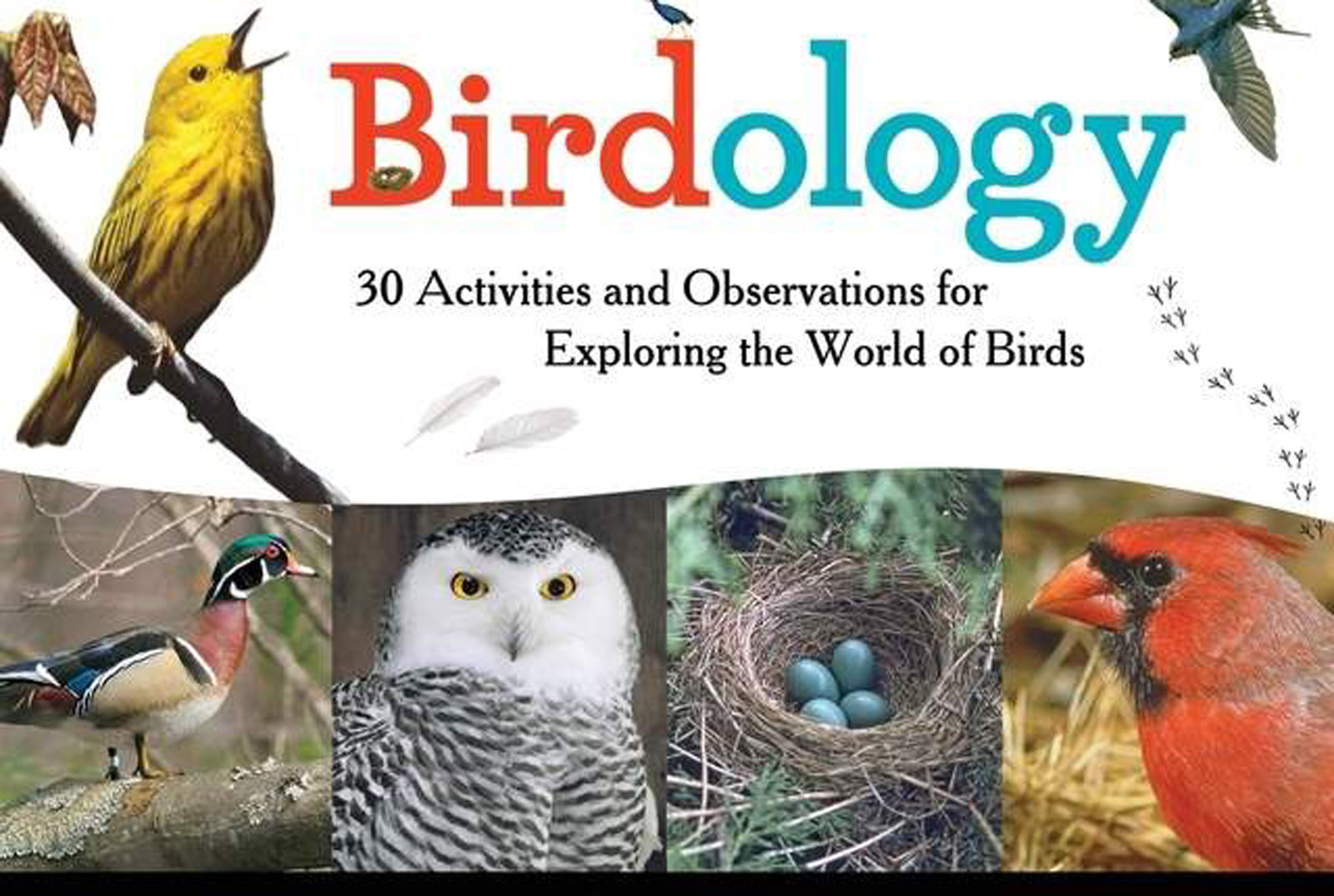
Cover of Birdology

Cover of Birdology

The book “Birdology” by Monica Russo came out earlier this year. It’s designed for kids, but is also interesting and engaging for adults. It is full of information about birds, activities for further exploration of birds and excellent photos by Kevin Byron.

I enjoy this book and have enjoyed reading parts with my kids.

Here’s the description of the book from its publisher Chicago Review Press:

“An engaging book that encourages young nature enthusiasts to explore the world of birds This generously illustrated, full-color book teaches kids that birds can be seen almost anywhere: in city parks and streets, zoos, farms, and backyards. Using “Try This,” “Look For,” and “Listen For” prompts, Birdology promotes independent observation and analysis, writing and drawing skills, and nature literacy. Kids observe the diversity of shapes, colors, patterns, and behavior of birds; listen for their songs and the clap of wings; make a juice-box feeder; plant flowers that attract hummingbirds; start a birding journal and sketchbook; and much more. Other topics that are presented in clear, kid-friendly prose include migration, nesting, food, territories, and conservation and preservation. Additional resources, such as a glossary, bird orders and scientific names, bird and wildlife organizations, and “Teacher Topics” to initiate classroom discussion and investigation, are also included.”

Black-crowned Night Heron and their big red eyes

Photo by Chris Bosak A Black-crowned Night Heron looks for food in Holly Pond in Stamford in summer 2015.

Photo by Chris Bosak
A Black-crowned Night Heron looks for food in Holly Pond in Stamford in summer 2015.

I finally got my big camera lens back. I sent it to the “shop” months ago. “Oh, it will be back soon,” I heard week after week. But it’s back for real now. The next morning I drove by Holly Pond on the Stamford/Darien border and noticed a few Black-crowned Night Herons perched on rocks and branches exposed from the low tide. So I got between the sun and birds and tried out my newly fixed lens. it’s good to have it back.

More shots of the birds are below. Thanks for checking out http://www.birdsofnewengland.com

Continue reading

Looking back at a Barn Swallow nest

Photo by CHRIS BOSAK Young Barn Swallows look for food from their mother, which is returning to the nest with food.

Photo by CHRIS BOSAK
Young Barn Swallows look for food from their mother, which is returning to the nest with food.

Here’s a group of photos I took at a Barn Swallow nest, which was built on a light fixture in the covered portion of the parking lot where I work. The parents dive-bombed and swooped at all the people who parked nearby. They had only one brood before moving on. It’s a credit to the building owner that they let the nest remain throughout the entire process. This was a few summers ago, but I’ve never published all of these photos.

More photos below. Continue reading

Junco season winding down

Photo by Chris Bosak A Dark-eyed Junco perches in a tree in New England in March 2015.

Photo by Chris Bosak
A Dark-eyed Junco perches in a tree in New England in March 2015.

We love to see our first Dark-eyed Juncos of the late fall. They remind us that our winter birds have arrived and will be with us for the next several months.

Well, those months are passing by quickly and soon the junco sightings will become scarce again. So here’s a shot I took of a junco the other day. Will it be one of the last— at least until next fall?

Did you know …

• Juncos are members of the sparrow family

• There are several types of juncos in the U.S., including Slate-colored; Oregon; Pink-sided; White-winged; Gray-headed; and Red-backed. Only the Slate-colored is found in New England.


Two backyard favorites in one shot

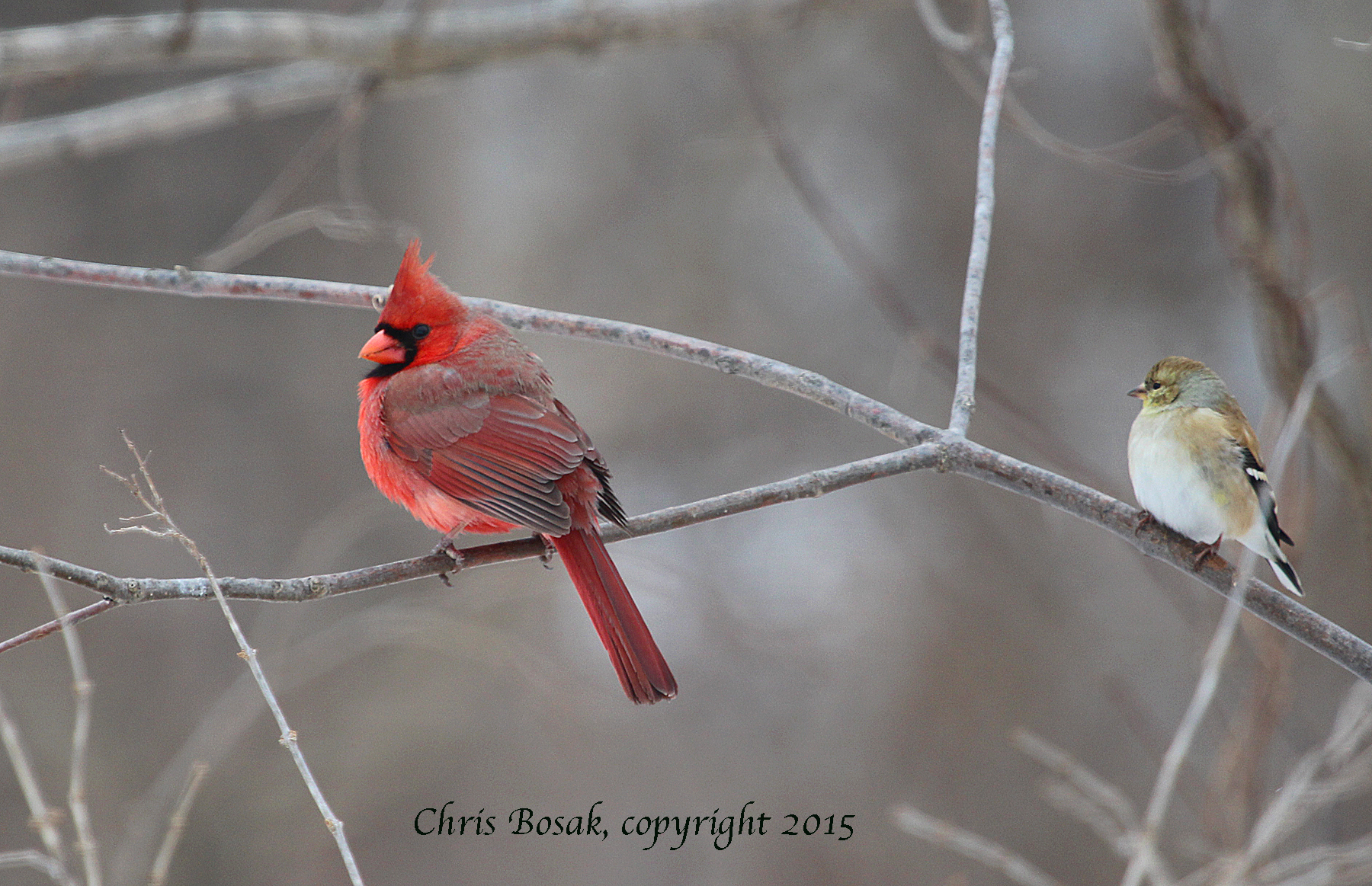
Photo by Chris Bosak A Northern Cardinal, left, and an American Goldfinch perch in a tree near a feeding station at Cove Island Wildlife Sanctuary in Stamford, Conn., in March 2015.

Photo by Chris Bosak
A Northern Cardinal, left, and an American Goldfinch perch in a tree near a feeding station at Cove Island Wildlife Sanctuary in Stamford, Conn., in March 2015.

You don’t always see cardinals and goldfinches perched near each other, but when you are watching a feeding station at which the birds are somewhat skittish, anything can happen. The usual assortment of birds were enjoying the feast at Cove Island Wildlife Sanctuary in Stamford, Conn., the other day, but other than occasionally being perched on the same feeder, the species generally kept away from each other.

However, the birds scattered every five minutes or so because of some unseen (by me anyway) force and sometimes the birds would find themselves perched next to an individual of another species.

I was focused on getting a photo of this cardinal, but noticed the goldfinch off to the right, so I decided to get them in the same frame. Why not?