For the Birds: When they all visit at once

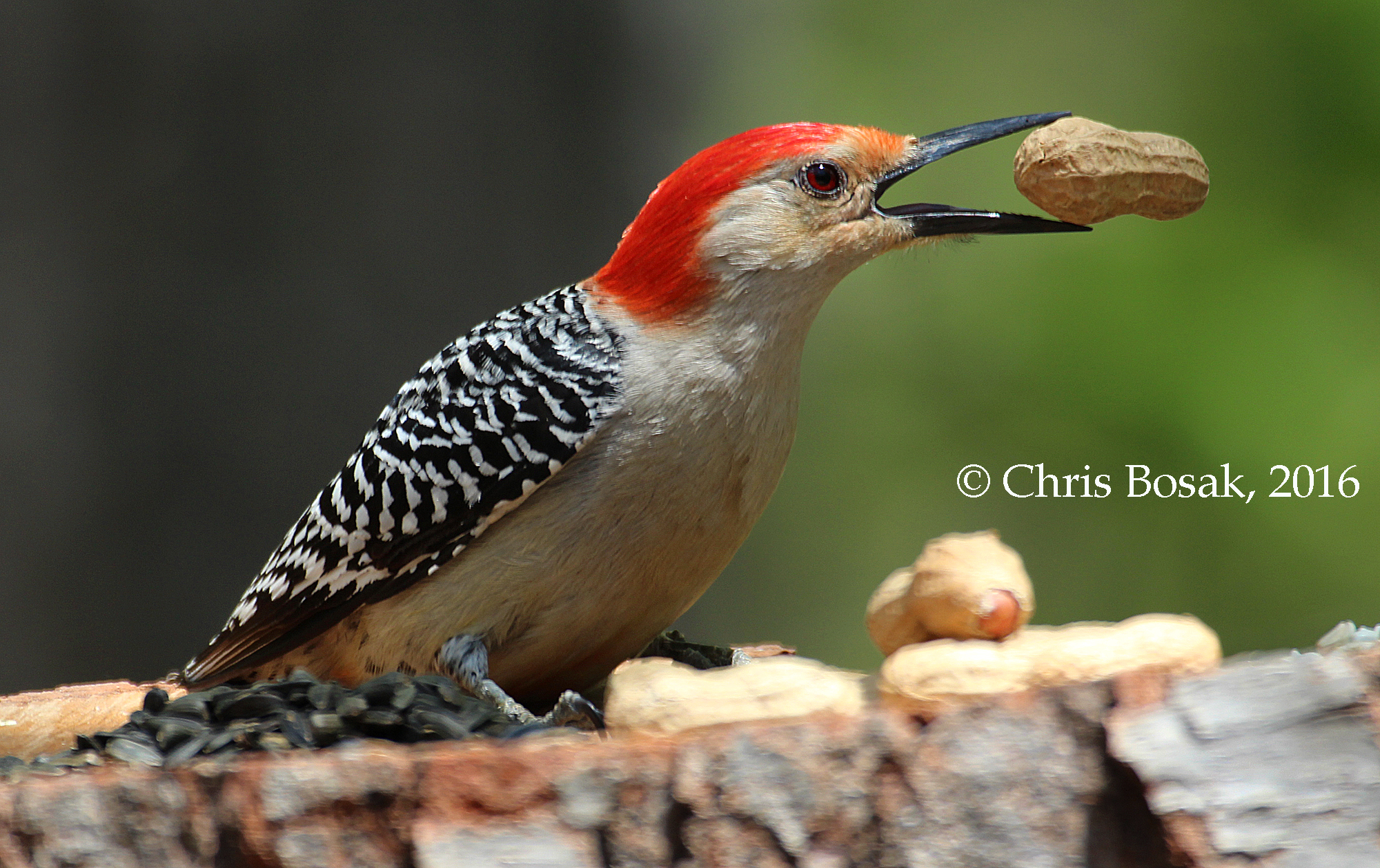
Photo by Chris Bosak A Red-bellied Woodpecker takes a peanut from a homemade birdfeeder in Danbury, Conn., spring 2016.

Photo by Chris Bosak
A Red-bellied Woodpecker takes a peanut from a homemade birdfeeder in Danbury, Conn., spring 2016.

Here’s the latest For the Birds column, which runs in several New England newspapers.

Some days none of them come, some days some of them come, and some days they all come.

I guess we wake up expecting the middle ground and — somewhere in the back of our minds — we hope for the higher ground. Isn’t it great when we hope for the best and it happens?

That can hold true for just about anything in life, but I’m talking about birds. What else? 

One day last weekend was one of those days when all of the birds in the neighborhood were in my backyard. My bedroom window affords views of only the tops of trees and, before heading downstairs to make the morning coffee, I had already seen a downy woodpecker, black-capped chickadee and white-breasted nuthatch.

The birds just kept on coming. There’s a feeder hanging outside of the kitchen window and, before the coffee was done brewing, tufted titmice, house finches and hairy woodpeckers joined the list of bird species I’d seen in my yard that day.

I glanced out the kitchen window onto the backyard and noticed white-throated sparrows and dark-eyed juncos were hopping around the grass and mourning doves were hanging out beneath the feeder. Suddenly, I heard a blue jay and saw it perch on a branch just outside the window.

Not that I was counting, but I had seen 10 species of birds and hadn’t even stepped foot outside yet.

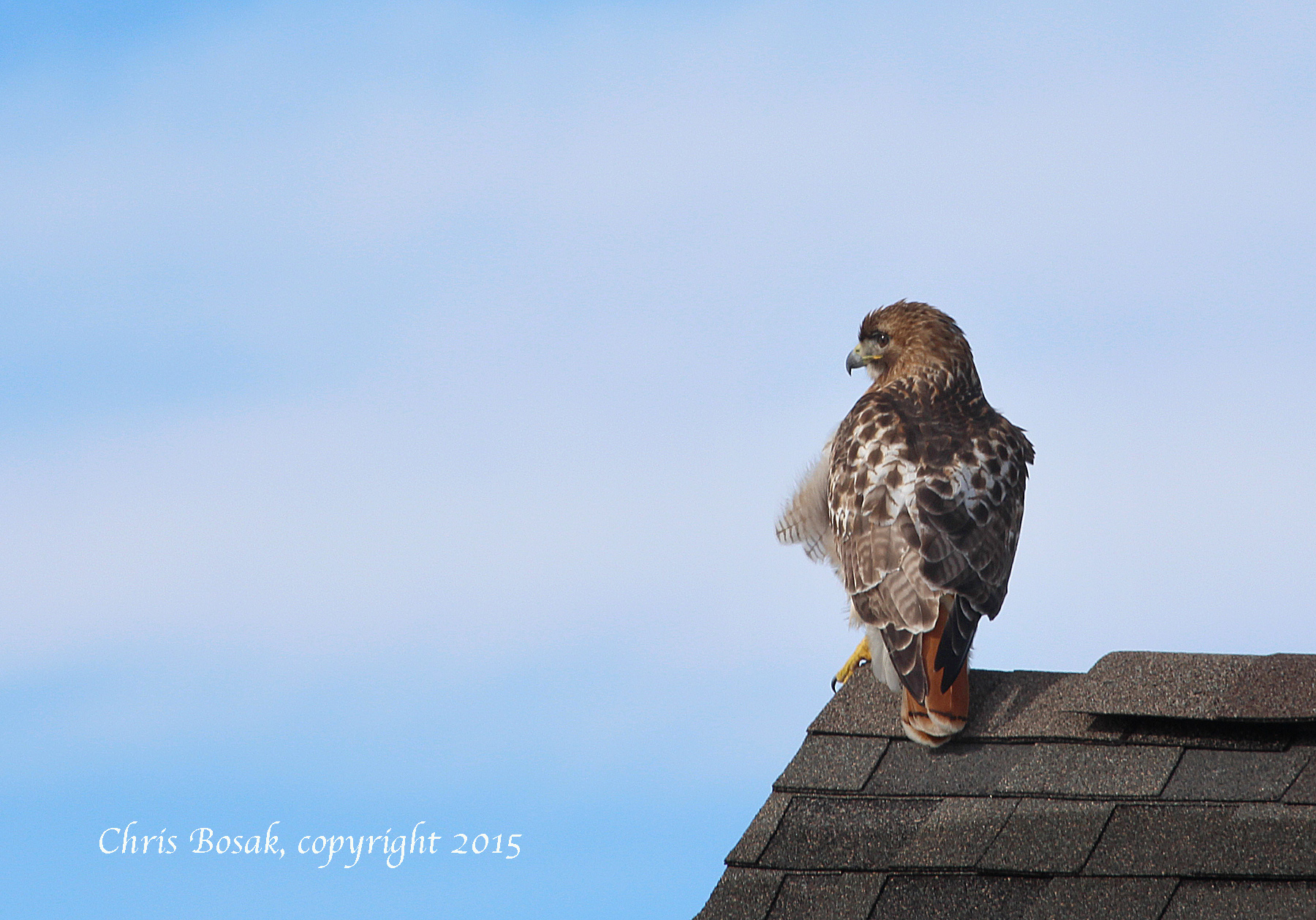
As I was thinking about how nice it was to have seen so many birds already, I looked out a kitchen window that faces a different direction and saw a red-tailed hawk practically right in front of my face. It sensed the movement from inside the house and flew off to a safer perch about three trees away, but still within easy watching distance from the kitchen.

I was surprised that so many of the songbirds were brazenly flitting about when a big, bad hawk was so close by. Had it been a sharp-shinned or Cooper’s hawk, it may have been a different story.

So that made 11 species, including a hawk, and the coffee was just getting poured into the mug. It could have ended there, but I had the whole weekend day ahead of me.

I never set out specifically to look for birds that weekend, but the sightings kept presenting themselves.

I went to get something out of the car and a pair of cardinals hurried into the brush. On my way to the mailbox, a house wren hopped along the stone wall. As I made lunch, minding my own business, I was serenaded to the kitchen window by a Carolina wren singing its heart out, even in winter.

Red-bellied woodpeckers climbed up tree limbs and uttered their strange calls several times throughout the day. It had been days since I’d seen a red-bellied woodpecker in the yard.

It was an odd day, indeed. Odd in a good way, of course. Nothing too out of the ordinary came to the yard, but I was more than happy to welcome the common species that did show.

Sure, it could have been even more spectacular. I didn’t see a brown creeper, goldfinch or kinglet. Come to think of it, a red-breasted nuthatch, fox sparrow or pine siskin wouldn’t have been out of the question during this time of year.

Sure it would have been nice if they would have stopped by, but trust me, I’m not complaining. I had plenty of company that day.

For the Birds: Wrapping up Vulture Week — the story behind the photos

Here is the latest For the Birds column, which runs in several New England newspapers.

Photo by Chris Bosak Black and turkey vulture sit on a hill in Danbury, Conn., fall 2017.

Photo by Chris Bosak
Black and turkey vultures sit on a hill in Danbury, Conn., fall 2017.

Photo by Chris Bosak A black vulture sits on a hill in Danbury, Conn., fall 2017.

Photo by Chris Bosak
A black vulture sits on a hill in Danbury, Conn., fall 2017.

I hope you enjoyed and made the most of Vulture Week.

What? You didn’t know last week was designated as a celebration of vultures? That’s understandable considering I totally made it up so I could post on my birding blog some vulture photos I had sitting around. Days, weeks and months are designated for all sorts of crazy things, so why can’t www.BirdsofNewEngland.com proclaim Vulture Week?

Well, it was last week anyway, so if anyone has a problem with it, it’s too late.

Vulture Week consisted of a series of photos with fun facts about the birds, which are

Photo by Chris Bosak A turkey vulture sits on a hill in Danbury, Conn., fall 2017.

Photo by Chris Bosak
A turkey vulture sits on a hill in Danbury, Conn., fall 2017.

among the largest in New England. (The posts are still available on the site, of course.)

New England now boasts two species of vultures. The familiar turkey vulture — the one with the reddish/pink head — has been in our region all along. Now, the black vulture — with a blackish/gray head — is becoming more and more common in New England.

The northward range expansion started decades ago, but similar to the expansion of the red-bellied woodpecker and Carolina wren, black vultures are garnering more attention as they become increasingly common.

It is not uncommon for both species to be seen together, offering an easy side-by-side comparison. Aside from the color of their heads, there are other differences. The turkey vulture, for instance, is significantly larger. It is hard to judge its size when it is soaring, but when a close look is afforded, the difference is plain to see. Turkey vultures have a wing span of nearly 70 inches (about 6 feet) compared to the black vulture’s 60 inches (about 5 feet). The underside of the wings is another way to tell them apart. Black vultures have whitish wing tips while the white spreads significantly farther on the wings of turkey vultures.

Both birds have a keen sense of smell, but the turkey vulture has the stronger sniffer. That’s one of the reasons the birds are often found together, I’m sure.

Perhaps that’s how the large flock of vultures I photographed earlier in the fall found the prime spot at which I saw it. I can’t reveal exactly where I saw the vultures because I’m 99.9 percent sure I shouldn’t have pulled my car into that dirt lot. It is state-owned land (I’m not saying which state) and operated by the Department of Transportation. It is right off the highway and the rutted, rocky dirt driveway leading to a huge dirt pile is designed for dump trucks and large machinery, not passenger cars.

But, after seeing huge numbers of vultures on that dirt pile day after day, I couldn’t help myself anymore.

No one was behind me on the highway, so I made the turn into the area. There were dozens and dozens of vultures and I quickly realized why they liked that spot so much. It was the “dumping ground,” for lack of a better term, for the roadkill the DOT collected along the highways.

Several dead deer, many with magnificent racks, were spread around the base of the dirt pile. It’s an easy, endless source of food for the birds.

I kept my visit brief. I snapped a few photos, compared the black and turkey vultures, snapped a few more photos and got the heck out of there.

People get excited when they see vultures. Why wouldn’t they? They are huge and, despite their ominous appearance, can be quite endearing. They are less wary than other birds of prey (even though they scavenge instead of hunt) and smart, too.

Now try to tell me they don’t deserve their own week.

For the Birds: Brown creeper highlights the fall

Here is the latest For the Birds column, which runs in several New England newspapers.

Photo by Chris Bosak A Brown Creeper finds food at the base of a tree during a cold snap in February 2016, Danbury, Connecticut.

Photo by Chris Bosak
A Brown Creeper finds food at the base of a tree during a cold snap in February 2016, Danbury, Connecticut.

The fall migration is miraculous when you consider the thousands of miles birds fly from their breeding grounds to their winter havens. It’s also miraculous in its ability to stir excitement into the hearts and bones of otherwise completely normal adult human beings.

Well, “completely normal” may be pushing it with some birders I’ve come across, but you know what I mean.

Take the other day for instance. I was relaxing on the patio toward the end of a long day when a sight literally lifted me off my seat and drew me closer.

Bald eagle? Brown pelican? Some sort of rare bird not seen in generations?

No, it was a brown creeper. Brown creepers are just as their name suggests they are. For one, they are indeed brown. For another, they creep. They creep up trees looking for insects hidden among the bark. When they reach a point where they think they’ve exhausted a tree’s food supply, they fly quickly to the bottom of the nearest tree and start the creeping all over again.

Continue reading

For the Birds: Not so colorless afterall

Here is the latest For the Birds column, which runs in several New England newspapers.

Photo by Chris Bosak A male Northern Cardinal in Stamford, Conn., March 2015.

Photo by Chris Bosak
A male Northern Cardinal in Stamford, Conn., March 2015.

Oak leaves, at least the ones in my yard, turned directly from green to brown and fell in droves during the windy days of the past week.

The trees are largely bare, most of the flowers that survived the fall have now perished in the year’s first frost and big, brown oak leaves cover many of the open spaces in the region.

There’s not a lot of color to be seen these days, except for evergreens and the occasional blue sky.

But, there are always the birds. Late fall and throughout the winter is when we need the birds the most to brighten our fading landscape. Luckily, plenty of colorful birds remain with us while the fair-weathered New England creatures — including migrant birds, butterflies and dragonflies — have taken their cheerful hues south.

Chickadees, titmice, nuthatches and downy woodpeckers may not be the most dynamic birds in terms of color but fall and winter is their time to shine. The subtle oranges on the titmice and chickadees, the gray-blue backs of the nuthatches, and the red on the heads of male downeys seem to be noticed more as the number of bird species we see at our feeders dwindles.

Even the white throat and yellow lore – the region between the eyes and nostrils — of a white-throated sparrow appears to glow brighter during these days.

Continue reading

For the Birds: Bountiful time in the birding world

Here is the latest For the Birds column, which runs in several New England newspapers.

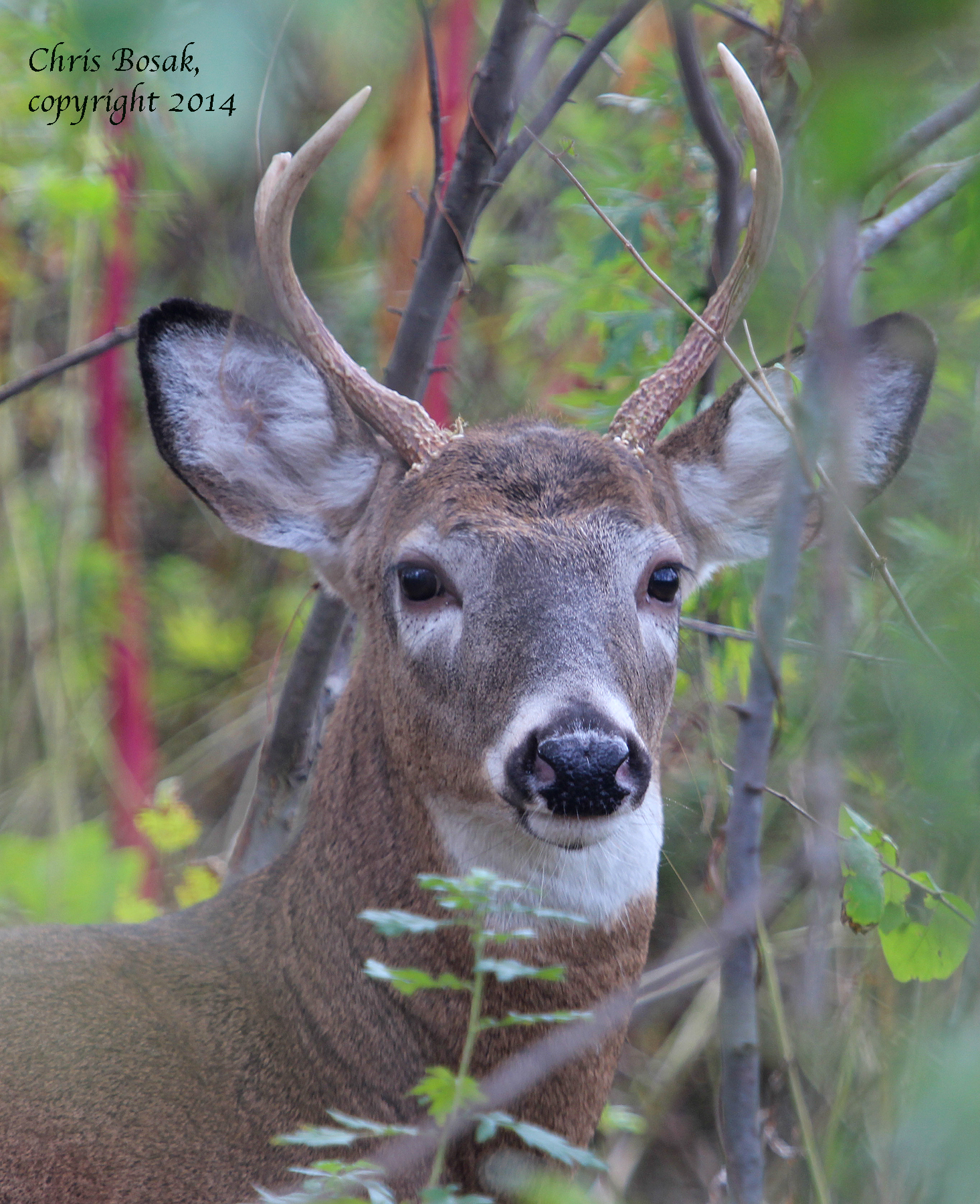
Photo by Chris Bosak A young White-tailed Deer in Stamford, Oct. 2014.

Photo by Chris Bosak
A young White-tailed Deer in Stamford, Oct. 2014.

There’s so much I like about this time of year.

I know, I know, I could block-save those words and start every other column with them.

Mid to late fall does have a lot to offer birdwatchers, though, despite the falling temperatures and fleeting daylight.

This time of year also has its challenges, but they are largely overshadowed by its rewards.

Right off the bat, it’s time for waterfowl migration. As far as I’m concerned, you can’t go wrong when there’s migrating waterfowl around. One glimpse of a merganser, ring-necked duck or bufflehead and it’s a successful day, regardless of what else happens.

Finding and seeing waterfowl is no problem in mid fall, especially if you have a spotting scope. Basically, all you do is find water. Getting close looks or trying to photograph or hunt the creatures is a different matter; unless it’s a nonmigratory mallard or Canada goose, waterfowl are wary.

Continue reading

For the Birds: Slow days happen in the fields and woods, too

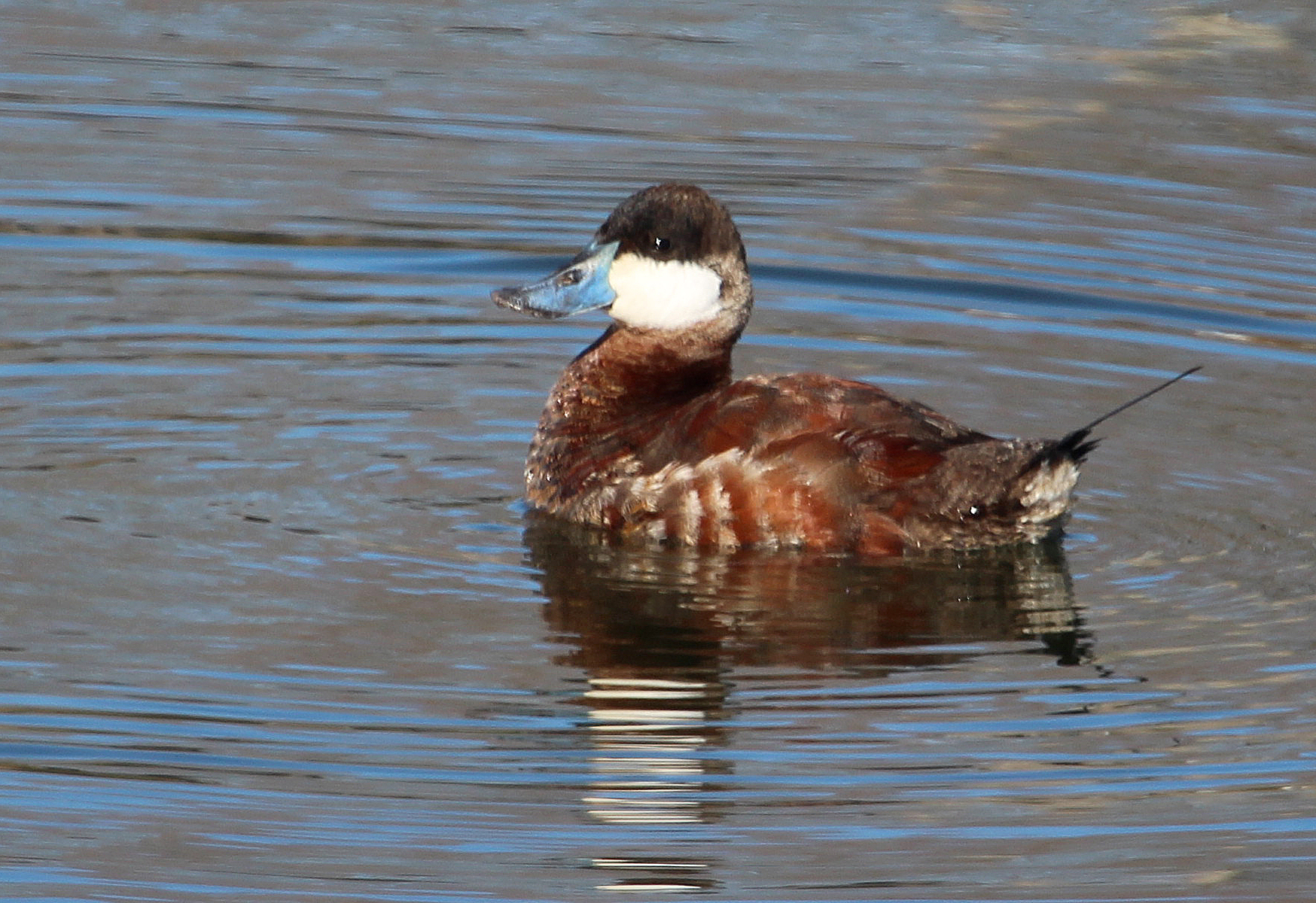
Photo by Chris Bosak Ruddy Duck at Cove Island Park in Stamford, CT, April 2014.

Photo by Chris Bosak
Ruddy Duck at Cove Island Park in Stamford, CT, April 2014.

Here is the latest For the Birds columns, which runs weekly in several New England newspapers.

Last week I wrote about the disappearance of birds in people’s backyards. I had received a lot of letters from people concerned that their feeders were not getting visited any longer.
Although there are several possible explanations, I had concluded that the warm and dry fall made for a bounty of natural foods on which the birds were feasting. Therefore, the birds did not need the supplemental food offered from feeders. That was my conclusion, anyway, not necessary the real reason.
I stick to that assertion, however I also visited a park the other day that was rich in natural food sources and guess what? Hardly any birds. The birds I did see were all fairly ordinary species. Not that I don’t appreciate the ordinary species too, but a song sparrow or two and a mockingbird was about the extent of my bird sightings that day.
Mid to late fall can be a tricky time for birdwatching. The feeders, as my readers pointed out, can be scarcely visited and the woods can be very quiet as well. The migration, for the most part, is finished and we are waiting for our winter birds such as juncos and white-throated sparrows to arrive en masse.
I have been lucky that my feeders, as long Continue reading

For the Birds: Busy Kinglet is in constant motion

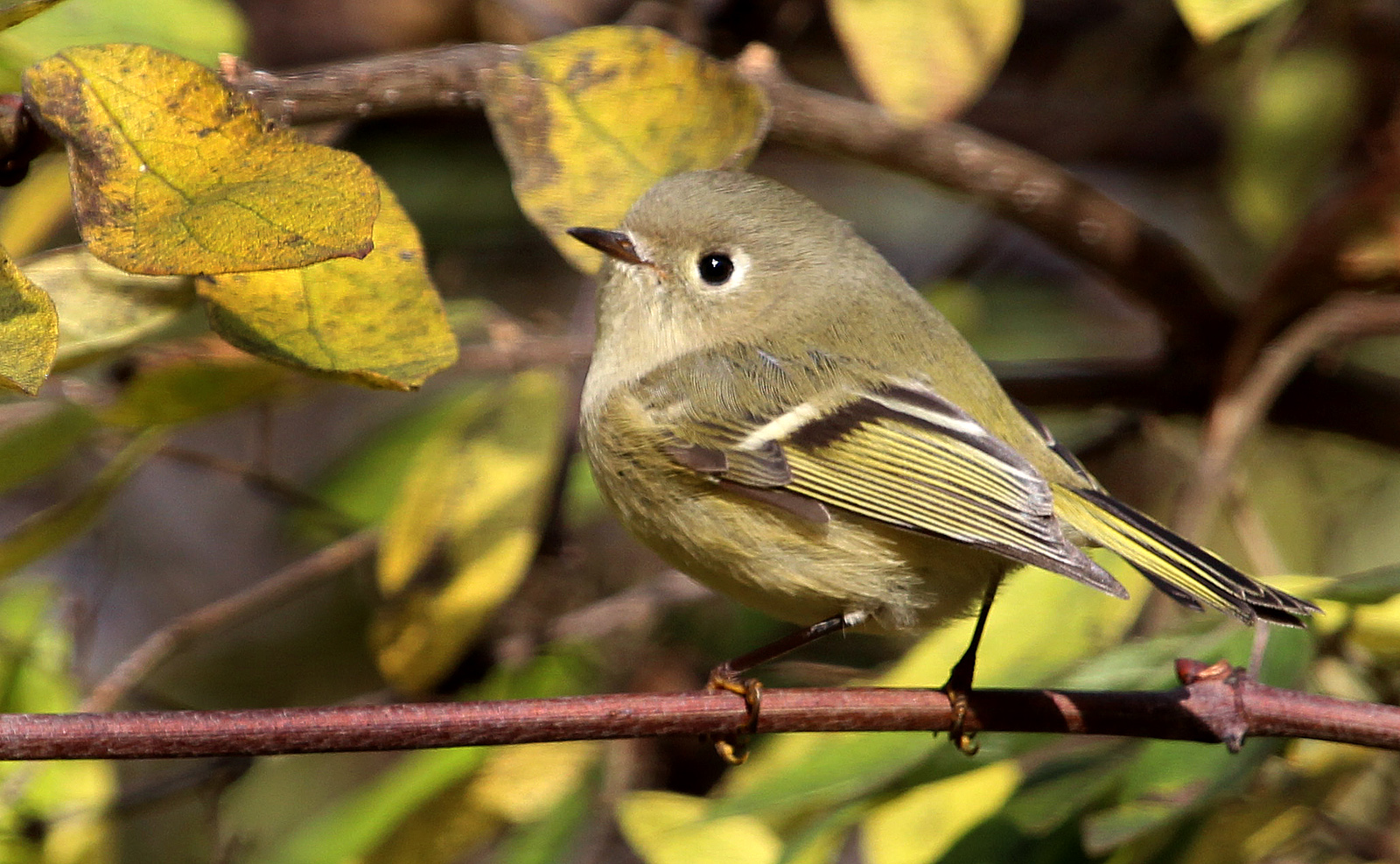
Photo by Chris Bosak A Ruby-crowned Kinglet perches on a branch in New England.

Photo by Chris Bosak
A Ruby-crowned Kinglet perches on a branch in New England.

Here is the latest For the Birds column, which runs in several New England newspapers.

I thought it was going to be the easiest bird photo I’ve ever taken.

There was the kinglet, literally right at my feet. It was hopping along the beach a few weeks ago looking for small insects among the plants popping out of the sand. It was a male ruby-crowned kinglet and he was alone at this stage of his migration.

I grabbed the camera from the front seat and got out of the car for what I thought would be a quick strike. It wasn’t. The kinglet didn’t fly away and didn’t run away. It just wouldn’t sit still — not even for a second. Now I know how department store children’s photographers feel on their bad days.

First, let’s familiarize ourselves with the kinglet. There are two types of kinglet: ruby-crowned kinglet and golden-crowned kinglet. The ruby-crowned kinglet has an eye-ring that doesn’t quite make it all the way around its eye. The golden-crowned kinglet has no eye-ring, but rather an eye stripe.

To tell the species apart I like to think of a “ruby ring.” Hey, it works for me.

The male ruby-crowned kinglet has a small patch of red on the top of his head, while the female has no patch. With the golden-crowned kinglet, the male has an orangish patch outlined in yellow and the female has a yellow patch.

Keep in mind that the colorful patches are not always visible, especially on the ruby-crowned.

Usually the species stick together, but I’ll never forget the time I looked out a window of my house and saw a ruby-crowned kinglet and a golden-crowned kinglet cross paths on a hemlock branch. If I ever wanted a side-by-side comparison, that was my chance.

The kinglets are also among the smallest birds we see here in New England. The golden-crowned measures about 4 inches, while the ruby-crowned is a whopping 4 ½ inches. By comparison, the black-capped chickadee is about 5 inches (slightly larger than both kinglets) and the ruby-throated hummingbird is almost 4 inches (only slightly smaller than the kinglets).

Their tiny size makes it a challenge to photograph them. Even with a powerful lens, it’s tough to fill the frame.

But the real challenge is their energy. They don’t sit still. By the time the camera’s auto-focus feature nails the subject, the bird is gone. It’s not far away, perhaps only an inch or two, but far enough to throw off the focus.

Now back to my beach-combing ruby-crowned kinglet.

I performed the auto-focus dance for a while before switching to manual focus, which proved to be even more frustrating. Usually focusing required only a slight turn of the lens one way or the other, but I always picked the wrong way. By the time I corrected the error — you guessed it — the bird was elsewhere.

The bird never went very far and at one point was about a foot away from my shoes. I had already determined before that moment that my presence didn’t bother him. The last thing I’d want to do is deny a hungry migrating bird of a good food source, which it obviously had found at the beach.

I wasn’t disturbing him, but he certainly wasn’t cooperating with me either. He was very busy. No time for posing.

After several minutes of trying to catch the little guy, I remembered the last time I had tried to photograph kinglets. I was at a Connecticut park and there were kinglets all over the place in the bushes. In a way that experience was even more frustrating because I didn’t know which kinglet to target and, no matter which one I picked, it was constant motion. I never did get a great photo that day, despite there being dozens of little subjects flitting around the bushes.

But on this day there was only one subject on which to channel my efforts. The results were not much better. I got a couple of decent photos and a bunch of blurry images of a male ruby-crowned kinglet’s tail. A few photos showed nothing but landscape: sand and weeds, no bird. I missed the little guy by a split second, but it may as well have been an hour.

But I can laugh about it now. My therapist says that’s a good thing. He also suggests that I just look at kinglets from now on and not try to photograph them. What does he know? Next time I’ll do better.

Continue reading

For the Birds: Fall has it all

Photo by Chris Bosak A green Eastern Pondhawk dragonfly clings on to a vine wrapped around a stalk on a meadow property of the Darien Land Trust, summer 2013.

Photo by Chris Bosak
A green Eastern Pondhawk dragonfly clings on to a vine wrapped around a stalk on a meadow property of the Darien Land Trust.

Here is the latest For the Birds column that runs in several New England newspapers.

Early fall is an exciting time, not only for birdwatchers, but for watchers of nature in general.

Male white-tailed deer and moose have their antlers fully grown and ready for the rut, or breeding season. What were little nubs of antlers in early spring are impressive racks for fighting, intimidating other males and showing off in front of the females.

Some say that spring is the best time for watching nature, but only in the fall can we appreciate the beauty and majesty of fully grown antlers. 

Seeing a bull moose in July is a memorable experience. Seeing a bull moose in the fall is an unforgettable experience.

Early fall is also a time when a birdwatcher can really pile on the numbers for a species-seen list. Herons and egrets are still around. Shorebirds are still migrating. Songbirds are moving south as well. Waterfowl start migrating through New England. Continue reading

For the Birds: Hawkwatching season in New England

Photo by Chris Bosak A Red-tailed hawk at Weed Beach in Darien, Conn., January 2015.

Photo by Chris Bosak
A Red-tailed hawk at Weed Beach in Darien, Conn., January 2015.

Here’s the latest For the Birds column, which runs in several New England newspapers.

The seasons are changing, and there’s a lot going on in the birding world.

Warblers and other songbirds are migrating south. Shorebirds — many species of which have long migrated already — continue to move through New England. Other small winged creatures — monarch butterflies — are also seen more often now as they prepare for their generational migration.

On the ponds, the waterfowl migration hasn’t started with verve yet, but wood ducks, which spend much of the summer hiding out, are more often seen and heard in the fall. At the same time, herons and egrets are still with us in large numbers, and feeder birds continue to keep us company in our backyards. 

Yes, a lot is going on in early fall as we birdwatchers start to shift from a summer frame of mind to a winter one.

With all that’s going on, one type of bird still manages to take center stage in September and October: hawks.

Hawkwatches are the primary destination for birdwatchers this time of year as birds of prey by the thousands ride the wind south. Pick the right day with the ideal weather conditions, and a birdwatcher may see hundreds of hawks, falcons, eagles and vultures soaring overhead.

Continue reading

For the Birds: Goldfinches brighten the landscape

Here is the latest For the Birds column, which runs in several New England newspapers.

Photo by Chris Bosak An American Goldfinch rests on a sunflower in New England.

Photo by Chris Bosak
An American Goldfinch rests on a sunflower in New England.

N othing cheers up a day like a goldfinch. Those little, bright bursts of yellow are always a welcome site at your feeder, bird bath or perched on a flower in your garden.

I especially appreciate goldfinches in the dead of summer. I remember taking a walk a few years ago on one of those classic hot, humid days in August. It was the middle of the afternoon and, not surprisingly, I was finding very little in terms of wildlife. Dragonflies were dancing all over the place, but even the butterflies seemed to be hiding from the heat.

Suddenly, I heard the cheerful song of a goldfinch in flight coming up from behind me. I turned just in time to see the bright yellow bird perch on the top of a thistle flower. The pink-and-purple flower rocked back and forth as it reacted to the weight of the tiny bird. When the flower settled, the goldfinch went about its business of picking at the flower.

I watched the scene briefly, and continued my walk. About five minutes later, I heard the bird again. I looked up to see it fly over my head and disappear into the distance. Despite its tiny size — about 5 inches — the goldfinch is an easy bird to identify in flight. It flies quickly in an undulating fashion — like a roller coaster with small rises and falls — usually uttering its potato-chip, potato-chip song as it bounces up and down.

I didn’t see any other birds on that walk, but the single goldfinch perched on the flower made it all worthwhile.

Goldfinches also score points with me as they are frequently seen in my garden. I’ve seen goldfinches perched atop coneflower and black-eyed Susan flowers, picking away at the seeds. I’ve also seen them on sunflowers.

Goldfinches, of course, are also reliable feeder birds, often occupying every perch of a tube feeder. I love to see all six perches of my blue tube feeder occupied by the bright yellow birds.

Goldfinches will eat sunflower seeds and will visit platform or tube feeders. A sure way to attract goldfinches is to offer Nyjer in a tube feeder specifically designed for the tiny seeds. Do not try to use thistle seeds in a regular feeder as the tiny seeds will spill through the holes.

“Sock” feeders stuffed with thistle seeds are a good alternative.

Goldfinches visit feeders at any time of the day. It’s interesting to note that goldfinches move on frequently so the birds you see at your feeder in the evening are not likely the same ones you saw in the morning.

Goldfinches are found throughout the country and many remain in New England through the winter months. They are not the flashy yellow birds we love so much in the summer, though. We still love them in the winter, of course, but they are much duller, often appearing olive or brownish.

It’s fun to see the splotchy male goldfinches in the early part of spring as they slowly regain their bright yellow plumage. Only the males are bright yellow. Females are a duller yellow.

They also have black caps and black wings with white stripes. My brother Ed and his wife, Debbie, are big Pittsburgh Steelers fans, so the goldfinch is a favorite in that household.

Of course, you don’t have to be a Steelers fan to appreciate the beauty of a goldfinch. The bright yellow speaks for itself. Throw in a purple or pink flower and you’ve got real proof that Mother Nature likes her colors.

Continue reading