
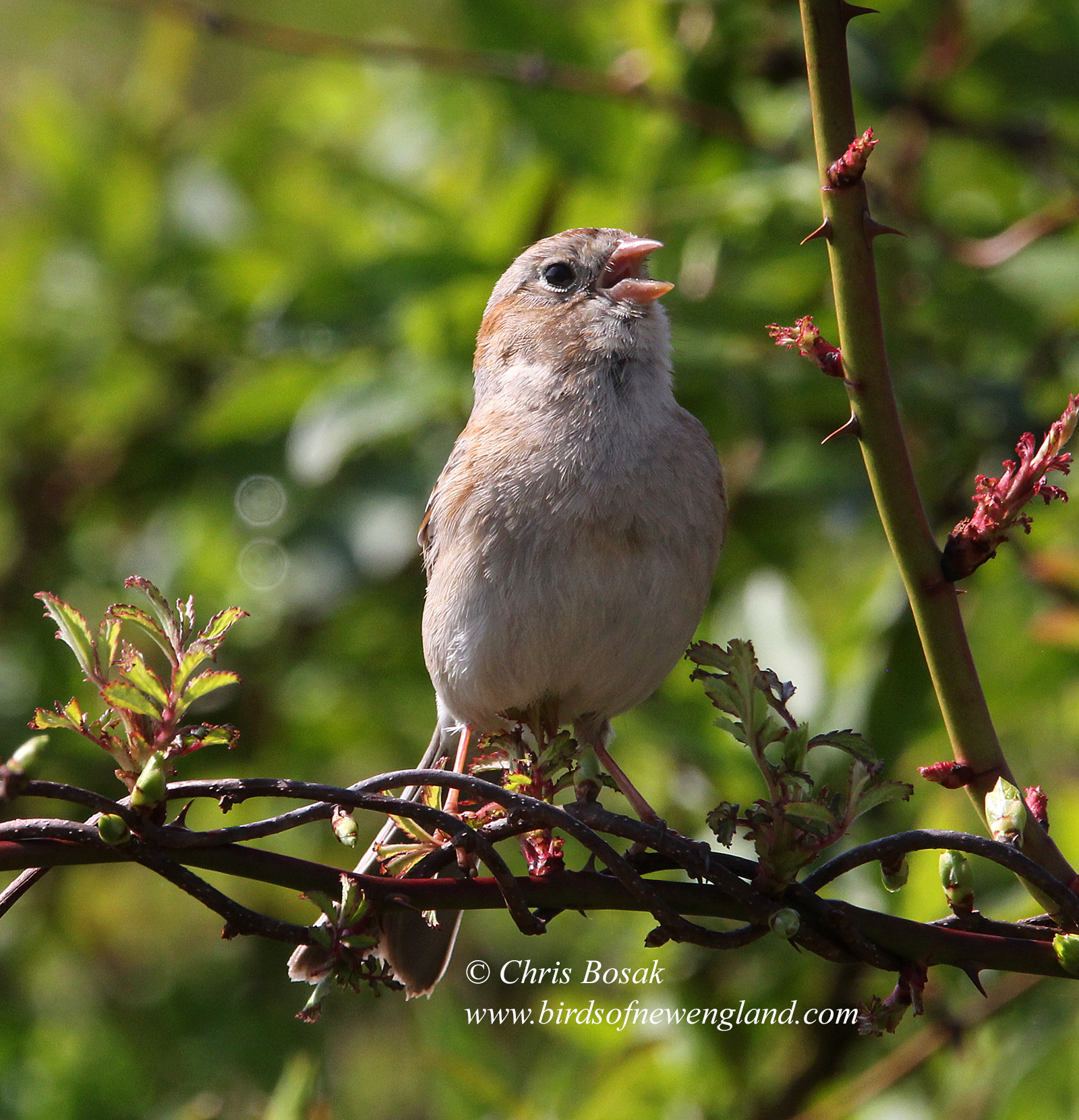
Here’s the second installment of Singing in the Spring. The field sparrow looks more like a typical sparrow than the previously featured eastern towhee, but a close look reveals a handsome bird with subtle beauty.
Here’s the second installment of Singing in the Spring. The field sparrow looks more like a typical sparrow than the previously featured eastern towhee, but a close look reveals a handsome bird with subtle beauty.
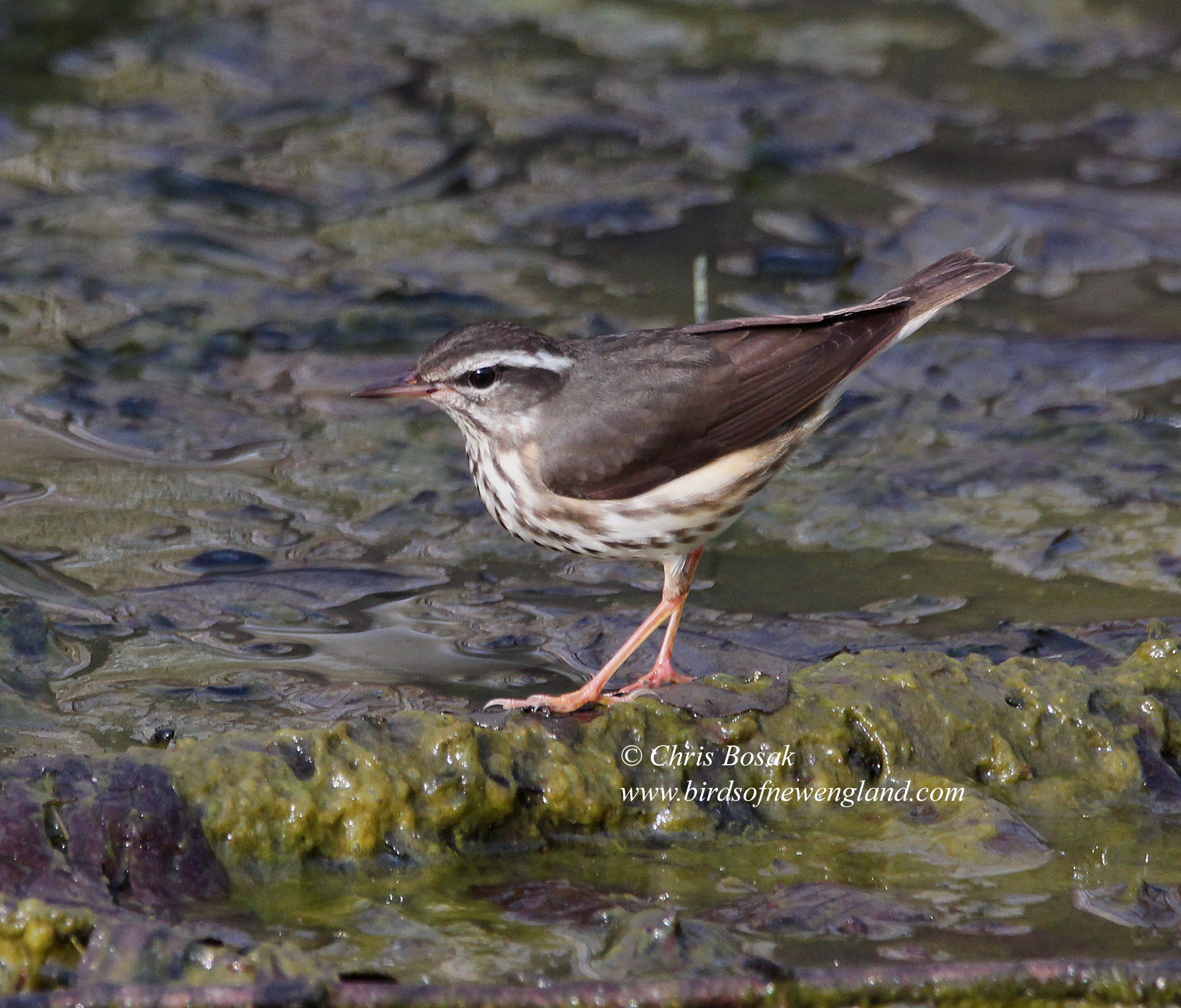
Judging from my own experience this morning and several posts on birding community websites, last night was a good night for migration with many of the long-awaited warblers and other songbirds arriving this morning. I had 43 species on my eBird list, including a few warblers, rose-breasted grosbeak, Louisiana waterthrush, Baltimore oriole, and American woodcock.
Here are a few shots from the day.




The weather icons on my iPhone showed rain starting at 8 a.m. I figured that would give me about an hour of dry weather to look for some early spring migrating birds.
No such luck. The rain started even before sunrise so my hour of dry weather wasn’t going to happen. Instead of rolling over and going back to sleep (a very tempting option) or mindlessly scrolling through social media, I decided to head out into the rain anyway. OK, I did take a few minutes to do Wordle quickly before heading out.
The walk started in a light rain, and a lot of birds were out singing. Immediately, I heard robins, cardinals, blue jays, song sparrows and a field sparrow in the distance. Field sparrows have a very distinctive song that sounds like a ping-pong ball bouncing on a table with the time between bounces getting progressively shorter, just like a real ball would do.
As soon as I committed to a trail leading me farther into the woods, the rain picked up. It never turned into a downpour, but it was a good, steady rain. Thankfully, the temperature was a very manageable 55 degrees, so I just got wet instead of wet and cold. I like birdwatching in all types of weather, but a cold rain is probably the worst. Heavy wind is not much fun either, but I would take it over a cold rain.
Continue reading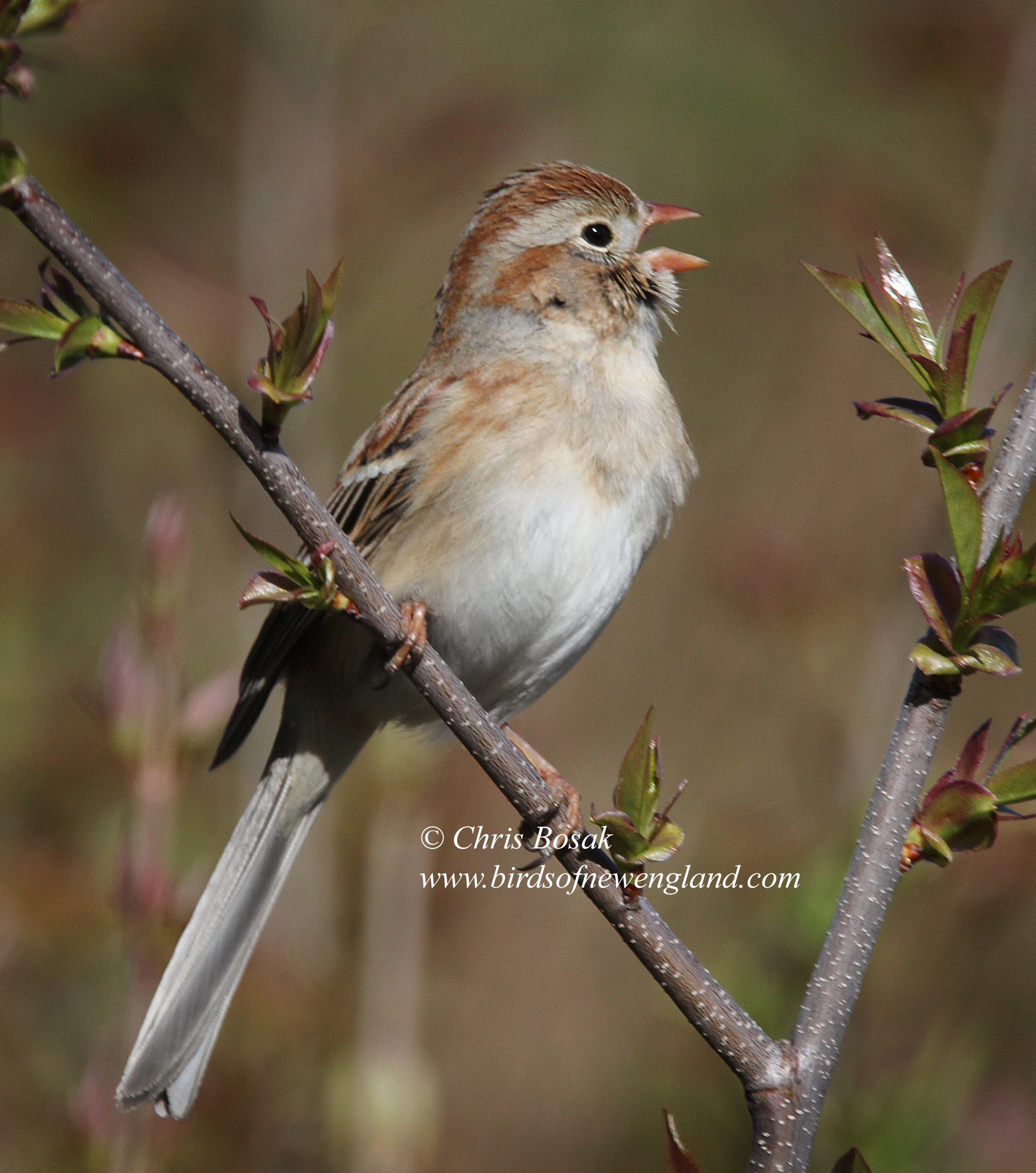
Here are a few more photos of a field sparrow I got during a recent walk.
Habitat is an important factor when determining what sparrow you are looking at. This one, obviously enough, was found in a field. Here’s a description of their habitat from allaboutbirds.org: “Field Sparrows seek out open habitat with low perches, such as abandoned agricultural fields and pastures, fencerows, road and forest edges, and openings in wooded areas. You may also spot them occasionally in Christmas tree farms, orchards, and nurseries.” Ream more.
Tomorrow, we’ll look at another handsome sparrow named for its preferred habitat.


Not as many migrants as I expected, but a good walk nonetheless at Huntington State Park in Redding, Conn. I heard only one warbler (black-and-white), but I have heard and seen dozens of eastern towhees over the last two days. It’s (arguably) the best time of year to be out there. No excuses! (I’m talking to myself too). The bald eagle flyover was a bit of a surprise, hence the lousy photo.


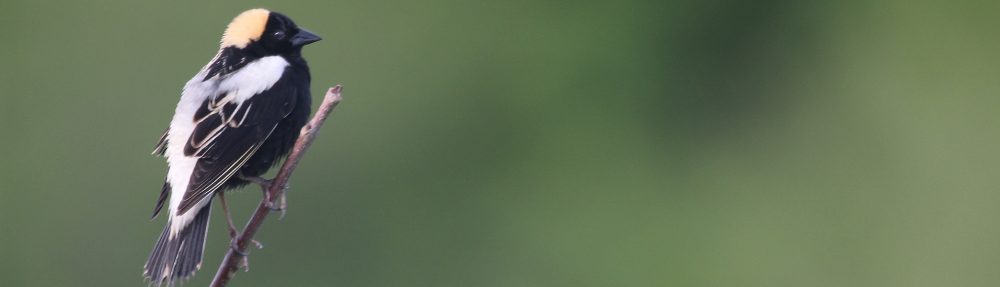
I checked out Happy Landings, an open space of fields and shrubby areas in Brookfield, Connecticut, after dropping off my son Will at middle school the other day. With its huge fields, the protected space is a rare haven for bobolinks in New England. There should be more such field habitat. Anyway, I wanted to see if the bobolinks were back and sure enough, they were — along with plenty of other birds. Take a look …
Happy birding and let me know what you see out there this migration period.


 Birds of New England.com