For the Birds: Another successful Christmas Bird count

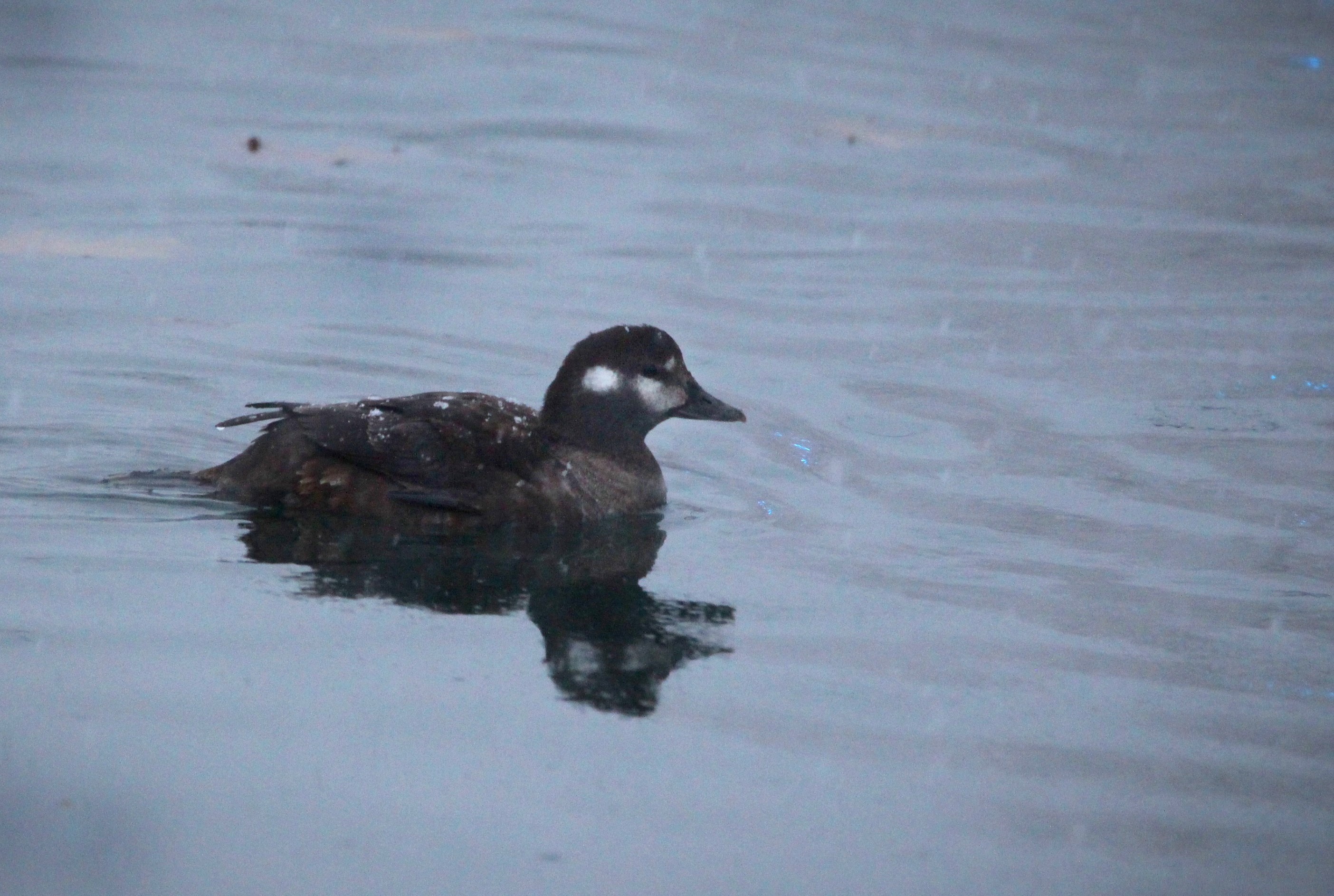
Female harlequin duck, Christmas Bird Count 2025, Stamford, Connecticut.

I’ve participated in the Christmas Bird Count in all types of weather.

I can recall bitter cold days, unusually warm days, pouring rain, sleet, light snow and blustery snow squalls. Once a date is set far in advance, it is usually held on that day regardless of the weather. 

This year, the count I did with my friend Frank in southern New England took place in a wet snow that accumulated before our eyes. It made for beautiful scenery but also frozen fingers and toes, damp clothing, steamed optics and fewer birds than usual. 

It was still a great day, don’t get me wrong, but there were challenges. Birders are a determined, resourceful, and hardy bunch, though, and we made it work.

The day got off to a good start. The first spot we looked was a small, half-frozen river that feeds into Long Island Sound. Hooded mergansers and buffleheads, mostly females, swam in the water. Then Frank, who is a far superior birdwatcher than I am, noticed something different about one of the female “buffleheads.”

“Is that a harlequin duck?” he asked. “I think that’s a harlequin duck.”

Of course, as soon as he said it, the duck in question dove under the water. When it reappeared with the two female buffleheads it was swimming with, I did notice the subtle differences between the species. We studied it a bit longer and determined that it was, in fact, a harlequin duck. 

Female buffleheads, a common occurrence in southern New England during the winter, are dark overall with a single white spot on their cheeks. The other bird was a bit larger, and the main white spot on the cheek was set back a bit farther, and there were other white patches closer to the bill above and below the eye. Indeed a female harlequin duck. 

If you do an internet search for harlequin duck, the majority of the images that appear will be of the male harlequin duck. They are one of the most strikingly colored and decorated ducks around. Like most duck species, however, females are much more plain in appearance.

Christmas Bird Count participants are tasked with counting every bird they see so the database gives an accurate representation of bird populations over time. But, whether they admit it or not, the birders are hoping to find unusual or even rare birds. We hit on one of them five minutes into our count.

I did manage to get a photo to verify the sighting, but the heavily falling snow and gray day made for tough conditions. A very average (or below) photo may be found on my website, www.birdsofnewengland.com

After a beautiful but rather unproductive walk through a field and nearby woods, we checked out a nearby beach. Visibility was poor, so we didn’t see many ducks on the water, but a lone snow bunting flew overhead, giving us another somewhat unusual bird.

We then followed reports of a greater white-fronted goose and indeed found three of them in one of the spots it had been previously reported. 

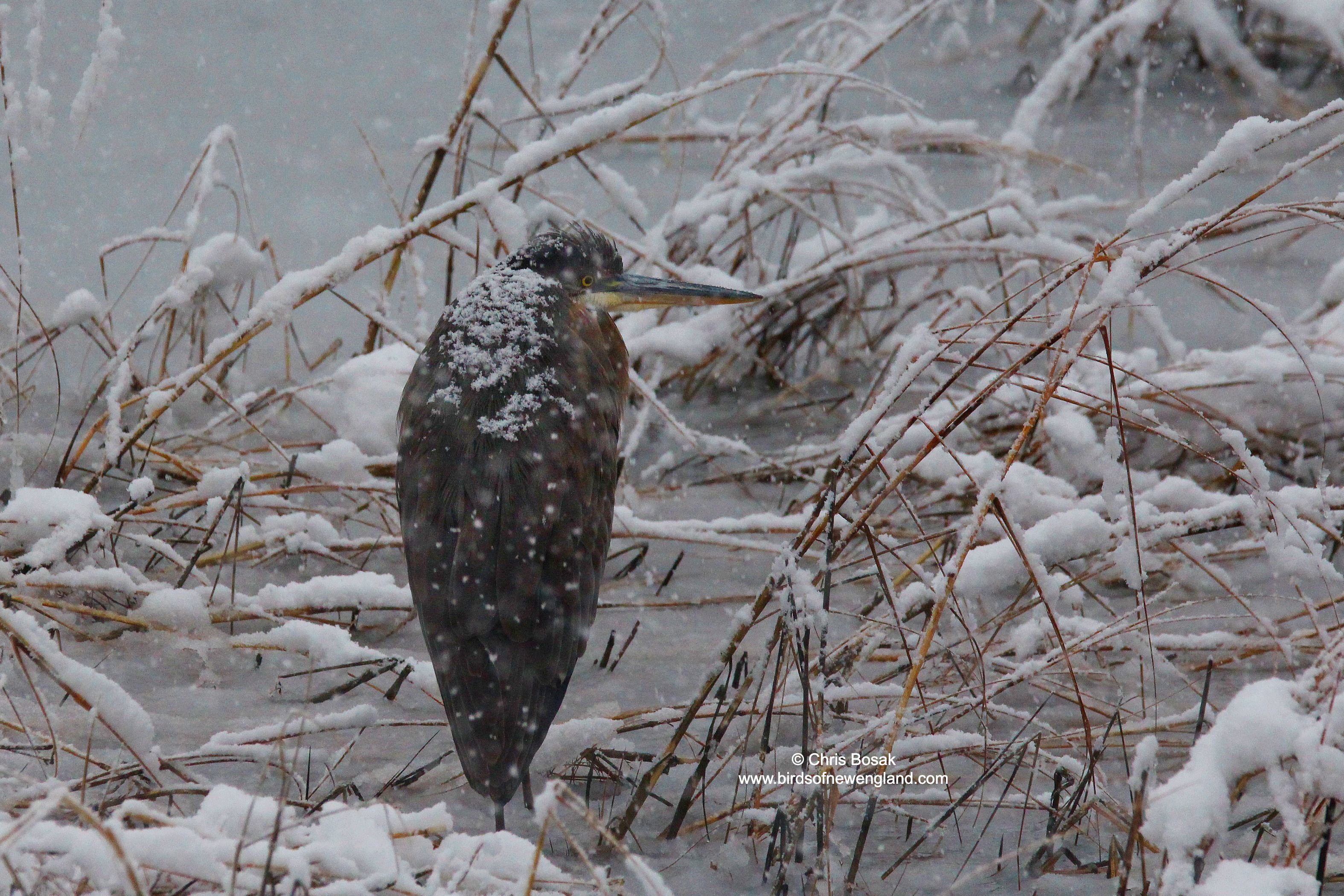
For me, I appreciate the common birds as much, if not more than, the unusual or rare birds. With that in mind, other highlights included a huge flock of robins in a stand of cedar trees, a snow-covered great blue heron on the shoreline and watching the snow gather on the backs of the hooded mergansers we saw on the river.

The Christmas Bird Count is always a highlight of the year. This year was no exception. 

Snowy Christmas Bird Count

Great blue heron in snow, Christmas Bird Count 2025, Stamford, CT.

It was that type of day for the Christmas Bird Count today (Sunday, Dec. 14, 2025). Frank and I did the Cove area of Stamford (Connecticut) and nearby Darien.

The heavy snow in the morning kept many of the land birds hidden, but many of the water birds were still around, braving the elements. A few highlight species were: harlequin duck (one female), greater white-fronted goose, killdeer, yellow-bellied sapsucker, and snow bunting.

Photo by Chris Bosak
Hooded mergansers in the snow, Christmas Bird Count 2025, Stamford, Connecticut.
Female harlequin duck, Christmas Bird Count 2025, Stamford, Connecticut.
Three greater white-fronted geese with one Canada goose, Christmas Bird Count 2025, Darien, Connecticut.

Greater White-fronted Goose chilling with Canada Geese


Photo by Chris Bosak A Greater White-fronted Goose is seen with a flock of Canada Geese at Cove Island Park in Stamford, Conn., March 2015.

Photo by Chris Bosak
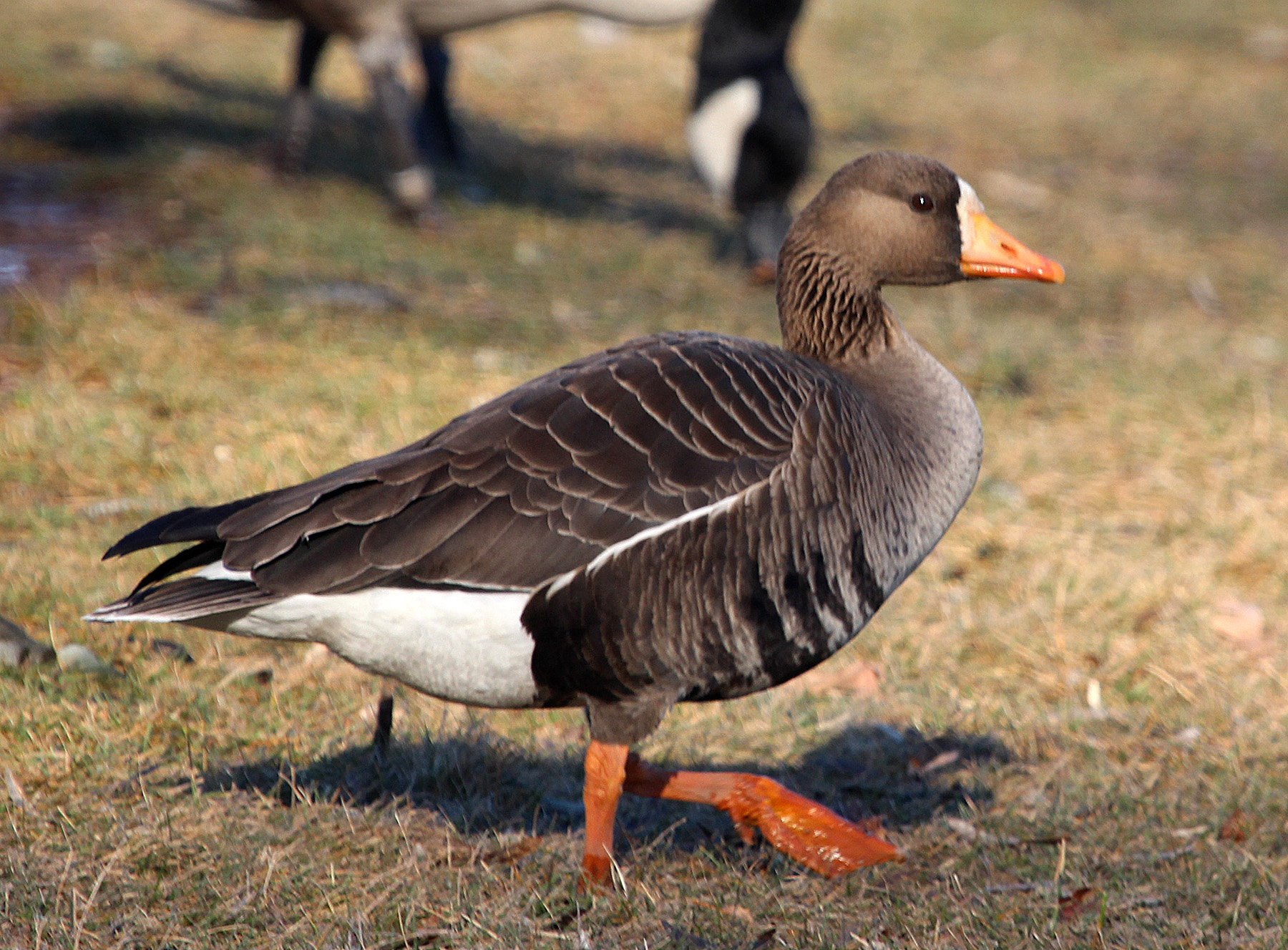
A Greater White-fronted Goose is seen with a flock of Canada Geese at Cove Island Park in Stamford, Conn., March 2015.

Here’s a shot of a Greater White-fronted Goose within a flock of Canada Geese. The photo was taken Sunday, March 22, 2015, at Cove Island Park in Stamford, Conn.

It’s a reminder to look closely at flocks of Canada Geese for the stray bird. Individual Snow Geese are often found among flock of Canada Geese, too. So, when is a flock of Canada Geese not a flock of Canada Geese? When there’s something else in there, too. Look carefully.

The Greater White-fronted Goose is common in the West and Midwest, but seen only occasionally in the East.

I was alerted to this bird by the Connecticut birding list, so thanks to those who listed this bird.

Here’s a close up:

Photo by Chris Bosak A Greater White-fronted Goose is seen with a flock of Canada Geese at Cove Island Park in Stamford, Conn., March 2015.

Photo by Chris Bosak
A Greater White-fronted Goose is seen with a flock of Canada Geese at Cove Island Park in Stamford, Conn., March 2015.