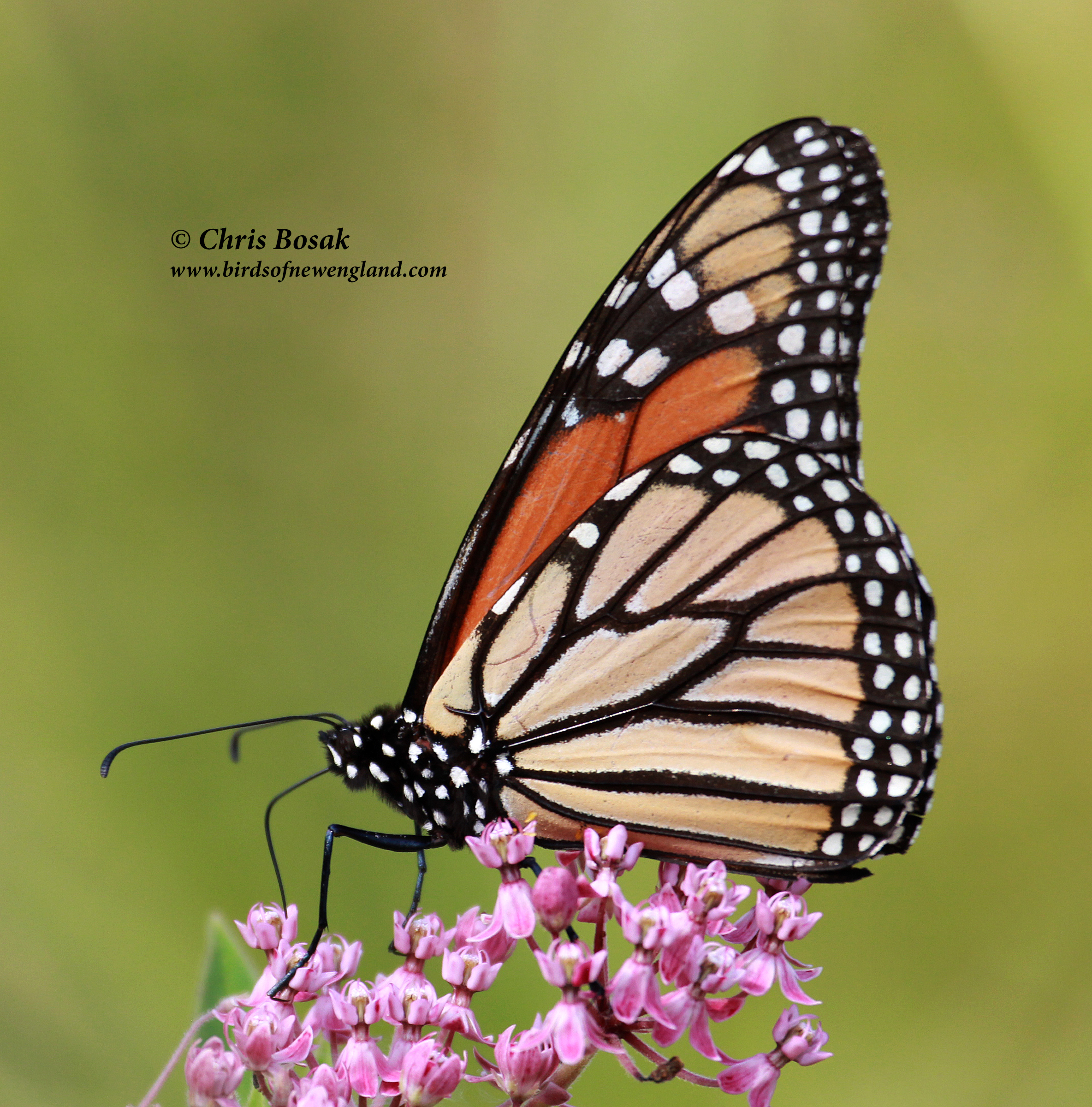
Monarch, Brookfield, CT, summer 2019.
Too often, the perils facing a species in serious decline rise to the top of our consciousness through extensive media coverage or other means only to fade into the backs of our minds over time.
Is progress being made to help the species? Has the decline worsened, gotten better or stayed the same?
Here is a look at a few species in peril that were all over the media years ago, but not so much in recent years.
Remember when monarch butterflies were believed to be going extinct and had only a few years left? That news took on a life of its own in the mid-2010s due to a catastrophic population collapse caused mainly by habitat loss.
It turns out the apocalyptic predictions may not have been right, but the species is far from out of the woods. The latest reports show short-term improvement but significant long-term declines.
The World Wildlife Fund last month published an article entitled “Monarch butterfly population increases by 64 percent.” The article states that the population increase is buoyed by a reduction in forest degradation of their winter habitat.
While that is definitely good news, I’m slightly skeptical about how they obtained the 64 percent number. Scientists do not actually count or estimate the number of butterflies they see (that would be nearly impossible to do) but rather monitor how many acres of forest have monarch colonies in their winter range. In 2026, 7.24 acres were inhabited by monarchs compared to 4.42 acres last year.
Again, good news for sure, but the long-term decline is still grim considering they covered 45 acres just 30 years ago, according to the WWF. Hopefully, this short-term increase trend continues.
What about honey bees? Remember how the media told us we were all going to starve because honey bees were disappearing? Indeed, Colony Collapse Disorder in the mid-2000s wiped out about 30 percent of the honey bee colonies, and those losses continue today in some areas due to factors such as mite infestation, pesticides, and habitat loss.
The panic over the loss of honey bees created a surge in home beekeeping, which has helped keep overall population numbers relatively stable. Unfortunately, recent years have seen an uptick in bee colony mortality, with 2025 being one of the worst years yet.
Extinction is not imminent, but all bees, either wild or part of a managed colony, should remain in the public consciousness as the consequences of a bee-less world are severe.
Bats are another animal that received a lot of concern due to a precipitous decline. The panic was warranted as some species were nearly completely wiped out by white-nose syndrome that came to New Hampshire in 2009. Similar to the monarchs and honey bees, bats seem to be making a slow comeback.
Despite the recent success, historic numbers are still concerning. Caves that used to house thousands of bats now have hundreds. According to a University of New Hampshire report last month, one bat survey counted more than 3,000 bats in 2009 and only 16 in 2011. That’s how quick and devastating the fungus was. In 2022, the number was up to 700.
Next week, I’ll look at a decline that is near and dear to my heart. Ever since I saw my first moose in the early 1990s, they have been my favorite animal at times bordering on obsession. Sadly, their numbers took a huge hit in recent years. Are they making a comeback, or are they still struggling?
 Birds of New England.com