For the Birds: Wrapping up the warbler season

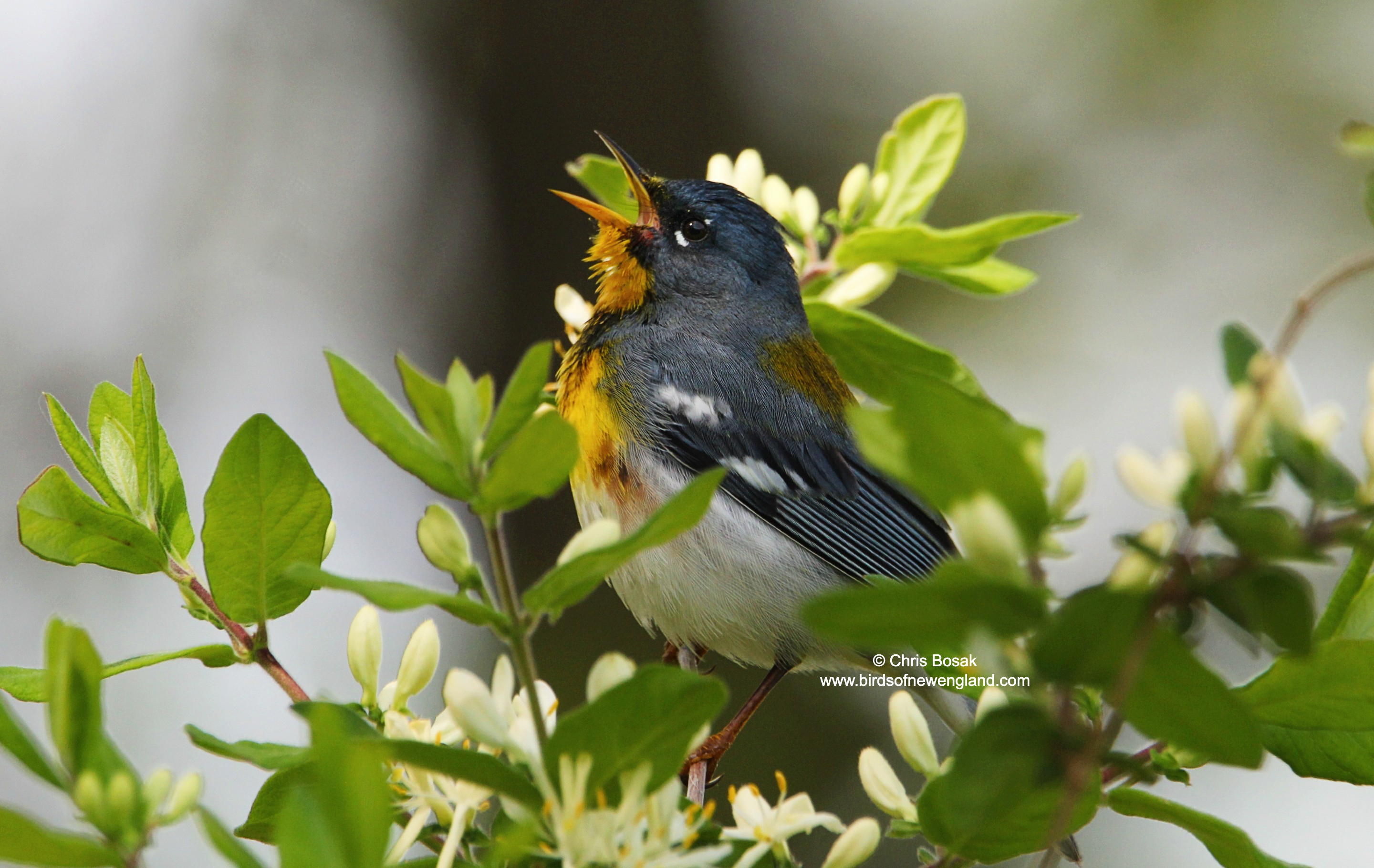
Photo by Chris Bosak – A northern parula sings from the top of a shrub in New England this spring.

Now that the spring migration is over, at least for the most part, it’s time to turn our attention to summer birdwatching.

Before we do that, I want to recap my spring birdwatching highlights. Spring highlights often begin and end with warblers, and this spring was no exception, although some non-warblers are certainly worthy of inclusion here.

It was another good spring for warblers. I’ll get into some of the less common ones later in the column, but the warblers that are often seen in New England did not disappoint. Yellow warblers were, and continue to be, seemingly around every corner. Their ubiquitous song is inescapable. (Not that I’d want to escape it in the first place.)

Other common warblers seen on nearly every walk this spring include common yellowthroats, black-and-white warblers, blue-winged warblers, palm warblers, ovenbirds, American redstarts, yellow-rumped warblers and pine warblers. 

While the warbler action was pretty consistent, it was a slow spring for some of the other colorful birds we look forward to seeing after every long winter. The only scarlet tanager I’ve seen so far was a female that I saw briefly in the canopy weeks ago. I did, however, receive emails from both Pat from Sandwich and Greg from Tilton with photos attached of male scarlet tanagers at their feeders. Scarlet tanagers are not considered common feeder birds, but they will occasionally visit for suet or mealworms.

Thankfully, tanagers nest throughout New England so my window is far from closed.

It’s also been rather slow for rose-breasted grosbeak and indigo bunting sightings. By this time of the year, I’ve usually seen dozens of grosbeaks and at least a few buntings. So far, I’ve seen only a few grosbeaks and not a single bunting. Indigo bunting did come up on my Merlin app a few times, but I was never able to spot it.

Baltimore orioles, on the other hand, have been plentiful this spring on my walks. The other day, I spotted a bird near the top of a dead tree. Even at about 100 yards, I could see the bright orange plain as day. A peer through my binoculars confirmed that it was an oriole.

Warbling vireos, which were pervasive on my walks last spring, were somewhat more scarce for me this spring, but still plentiful. Red-eyed vireos were plentiful as well. Of course, catbirds and eastern towhees were constant companions too.

Less common warblers are always a thrill to see and a highlight of spring birdwatching. This year, my top warblers included hooded warblers, northern parulas, magnolia warblers, black-throated blue warblers, chestnut-sided warblers, and a Wilson’s warbler. Hopefully, I’ll make it to northern New Hampshire a few times this summer and find a few more warblers to add to the list. 

Overall, it was a good spring for spotting migrants. Now it’s on to summer birding. Next week, we’ll look at some of the things to look for in the bird world during the summer. 

For the Birds: Warblers return

The warblers are back and delighting, confusing, and frustrating birdwatchers throughout New England.

Warblers are small, usually colorful, passerine (perching) birds that migrate into New England every spring. Many nest here while others continue north to nest in Canada. In the fall, they head to points south such as southern U.S., the Caribbean, Central America or South America. The odd warbler shows up on New England Christmas Bird Counts from time to time, but for the most part, they are gone before the snow starts to fly. 

To me, the quintessential warbler is the yellow warbler. It is small, brightly colored, numerous throughout the region and sings its ubiquitous song (“sweet sweet I’m so sweet”) over and over from the brush. It is all yellow with some rusty streaking on its chest and belly.

Warblers come in all colors, however. Many are mostly yellow and many others have flashes of yellow in their plumage. Some are black and white, and some are mostly brownish. A few are mostly blue. It’s no wonder that the spring migration, highlighted by warblers, is the favorite time of year for most birdwatchers.

Continue reading