
I looked out my window at work and saw this bird staring at me. Thankful for nature every day.
Red-shouldered hawks are slightly smaller than red-tailed hawks, which are also common in New England.
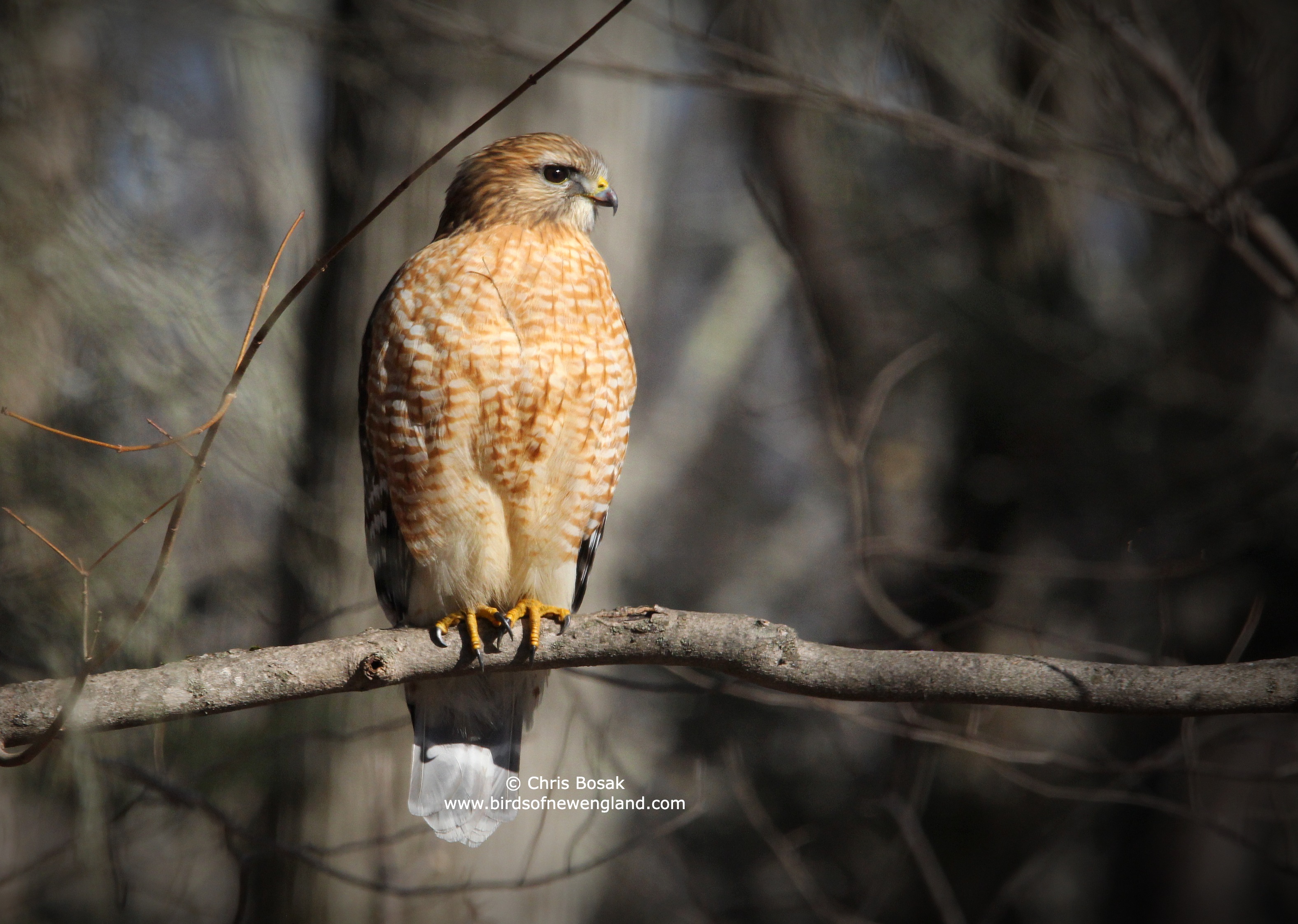
I looked out my window at work and saw this bird staring at me. Thankful for nature every day.
Red-shouldered hawks are slightly smaller than red-tailed hawks, which are also common in New England.
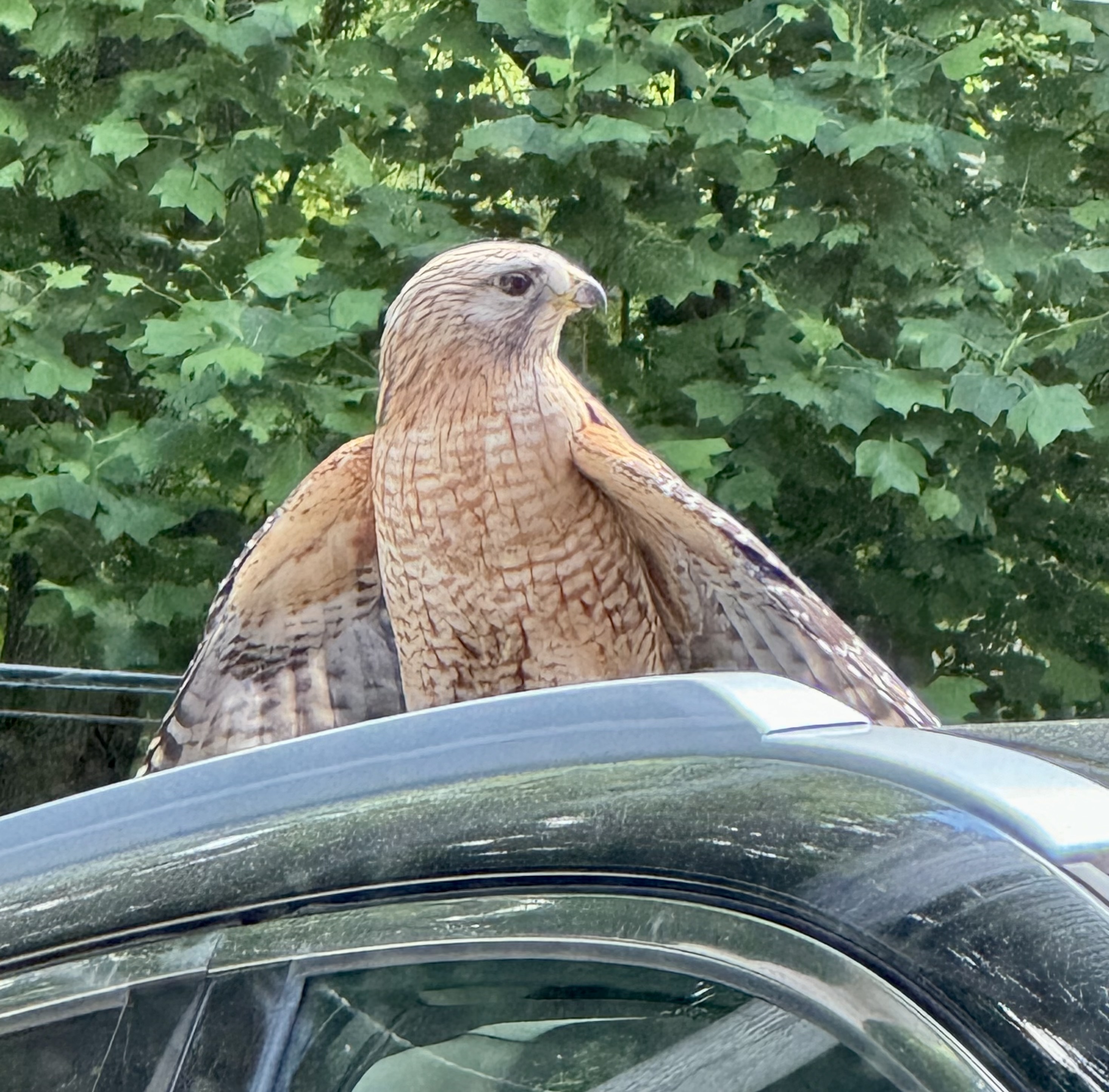
Some birds have adapted to humans and what we have done to their habitat better than others.
Pigeons, house sparrows and mallards have obviously fared well and thrive in urban environments. Other birds, including many songbirds, have not. Why else would the populations of so many songbirds have decreased so dramatically over the last several decades?
An experience at work the other day got me thinking about how birds adapt to human interference. I was working in my office when I heard a co-worker calling my name in whispered urgency. I rushed out to see what the commotion was about and saw a red-shouldered hawk perched on top of an Infinity SUV right on the other side of the window.
The impressive bird of prey was a mere 12 feet away from the small crowd that had now gathered inside the building — urgent whispers have a way of drawing a crowd. Everyone broke out their phones and took pictures of the specimen. Red-shouldered hawks nest on the property at work, so seeing the bird was not unusual, but seeing it perched on a car was certainly different.
Continue reading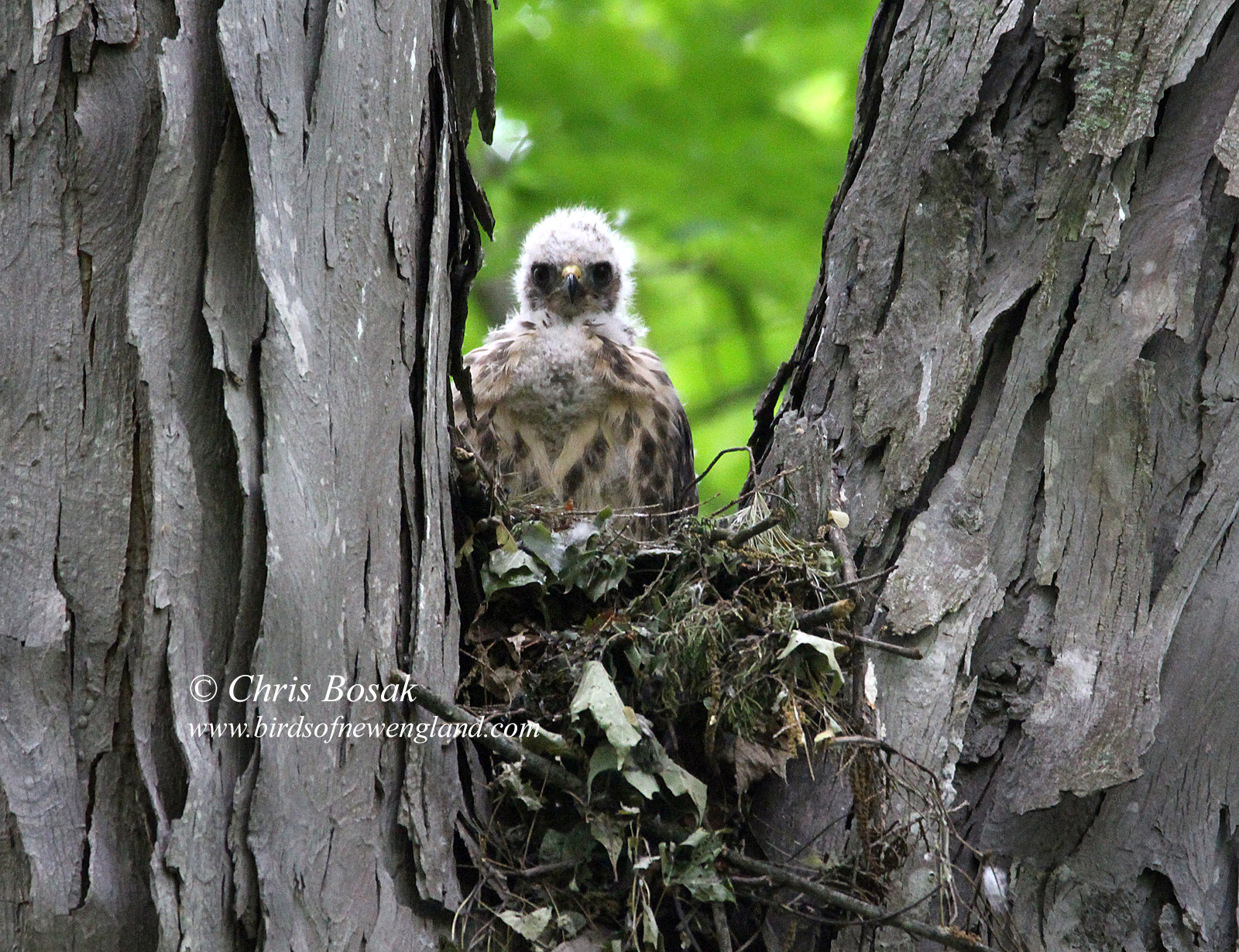
A few weeks ago, I wrote about a short walk that I often take at work. It is on my employer’s property and, despite being a small piece of land that takes only five minutes to walk, it has a mix of habitat that includes a meadow, stream, pond and woods.
A few days after I had written that column, I took a walk there and discovered something new. I had noticed on previous walks a Y in a large tree and thought maybe there were some sticks or leaves in the crotch. It was too small for a squirrel’s nest, and it didn’t seem significant enough to be any other type of nest, so I kept on walking. I figured it was just the collection of a few sticks and leaves that had fallen throughout the year.
One day, however, I noticed movement in the area. Upon inspection, it turned out to be the nest of a red-shouldered hawk family. Two young birds were eating a squirrel, chipmunk or some other small mammal. No adults were present.
The next day, I took another walk, and an adult bird was tearing apart a meal. I didn’t notice the young birds right away, but when the adult sat upright after picking off a morsel, I saw the young ones to either side behind the adult.
Continue reading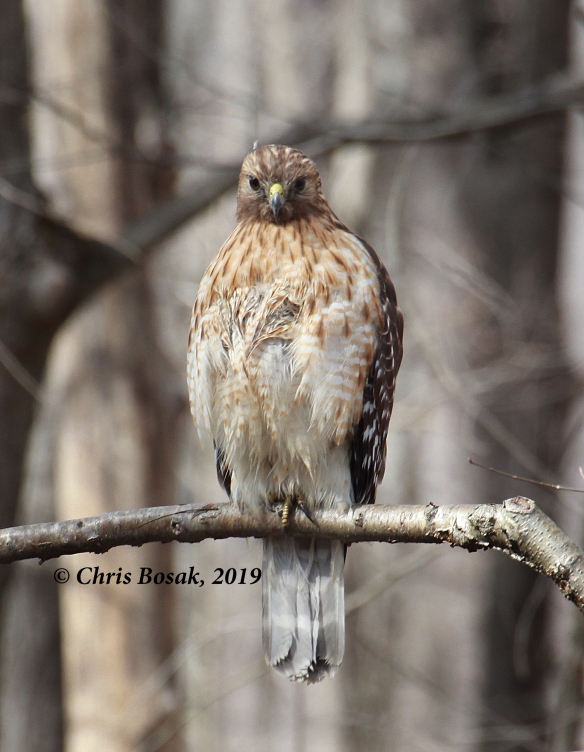
Here’s our old friend, the red-shouldered hawk. This time he’s looking right at us.
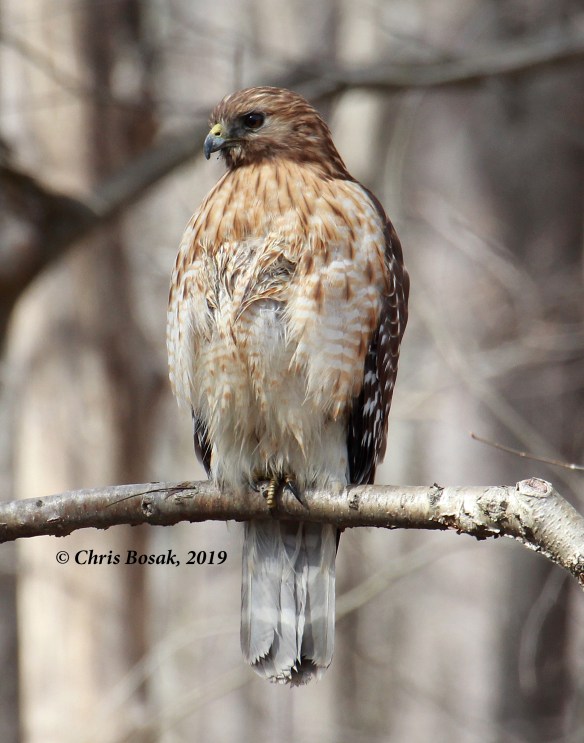
As long as this red-shouldered hawk is going to take obvious perches when I drive by a certain spot, I’m going to take photos of it. Red-shouldered hawk, take 20.
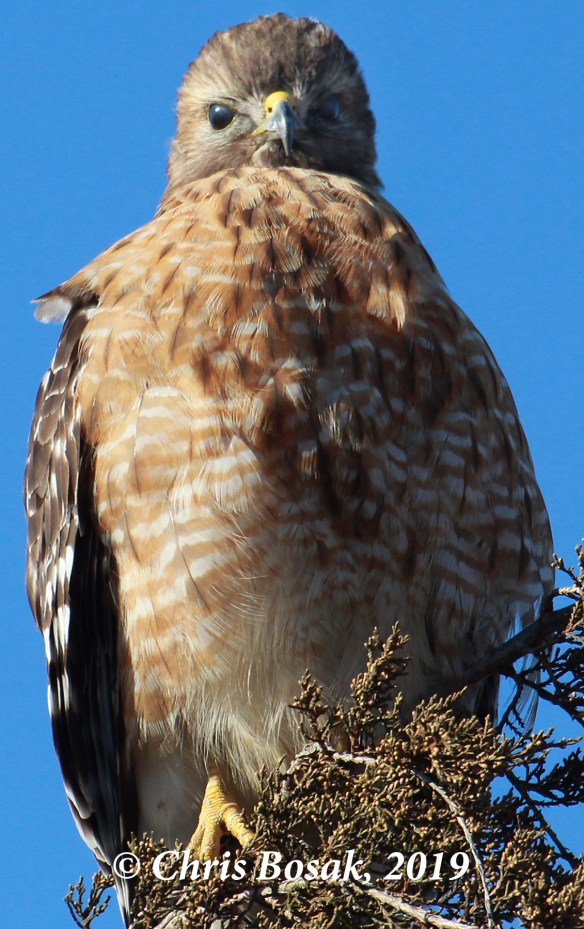
Here are a few more shots of the red-shouldered hawk I photographed last weekend in Brookfield, Connecticut. Here’s the original story, in case you missed it.
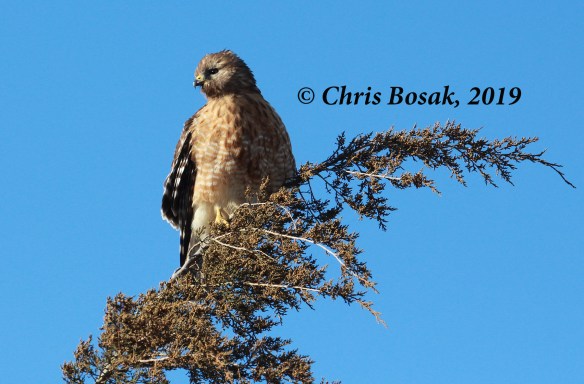

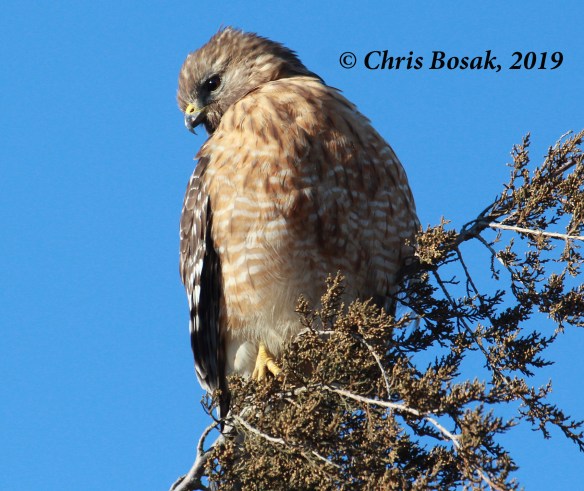
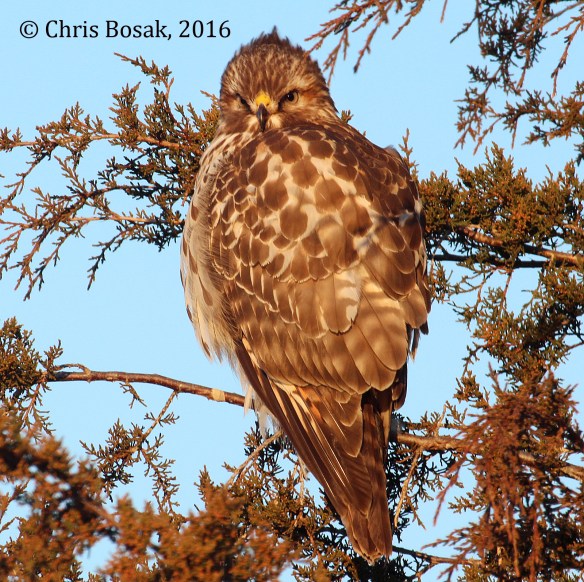
About three years ago I got a photo of a red-tailed hawk in an evergreen tree across the road from Brookfield High School in SW Connecticut. Yesterday, I was able to photograph another hawk in the same tree — this one a red-shouldered hawk.
There is often confusion between the two species as they are both large birds of the genus buteo. Throw in the broad-winged hawk and there’s even more confusion with three common buteos to be found in New England. (There are others, too, but not as commonly seen.)
The red-tailed hawk is the largest and broad-winged the smallest, but size is of little help in the field — unless, of course, individuals of all three species are perched next to each other, which never happens. I find the easiest way to distinguish the red-shouldered hawk is with its reddish or rusty chest and belly. Young birds, however, have tan or brown chests and bellies, similar to the other buteos in question.
For comparison’s sake, here’s a shot of the red-tailed hawk I photographed in the same tree in 2016.
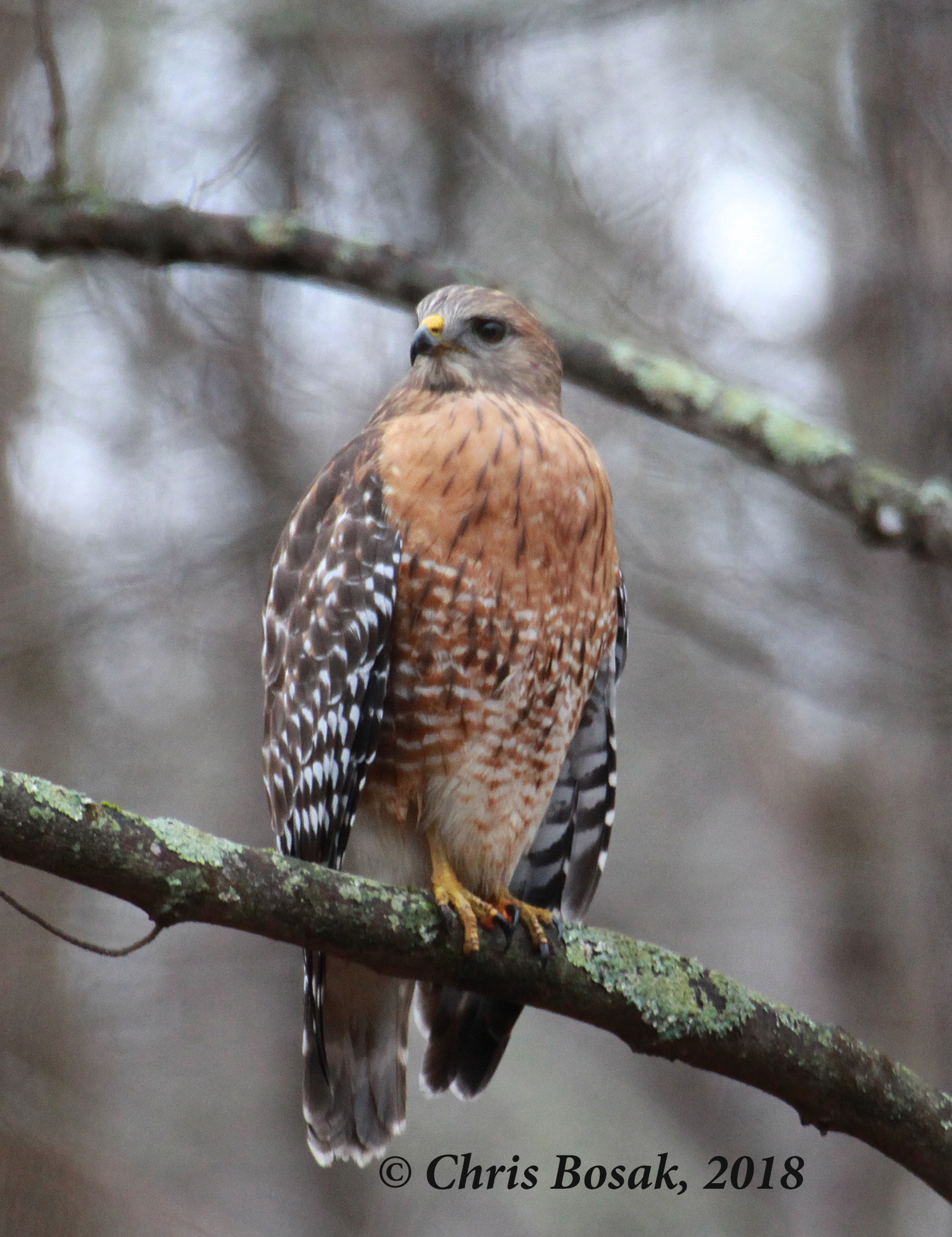
My son Will and I came across this red-shouldered hawk while we were driving through a neighborhood in Brookfield, Connecticut, the other day. It’s times like this that I usually don’t have my camera with me, but this time I happened to be prepared.
The red-shouldered hawk is one of New England’s most common hawks, along with red-tailed hawk, broad-winged hawk, Cooper’s hawk, and sharp-shinned hawk. There are other hawks in the region, of course, but these are the ones seen most often. I typically see red-tailed hawks most often, but I’ve been seeing more and more red-shouldered hawks of late.


Photo by Chris Bosak
A red-shouldered hawk perches on a wire in Brookfield, Connecticut, Jan. 2018.
Sorry for the delay on this post … I ended the last post with this:
“I have a feeling this bird is digesting a recently eaten meal. Anybody know what makes me think that?”
Take a look at the bill and talons of the bird. Some small bird or animal found out why hawks are “birds of prey.”

Photo by Chris Bosak
A red-shouldered hawk perches on a wire in Brookfield, Connecticut, Jan. 2018.

Photo by Chris Bosak
A red-shouldered hawk perches on a wire in Brookfield, Connecticut, Jan. 2018.
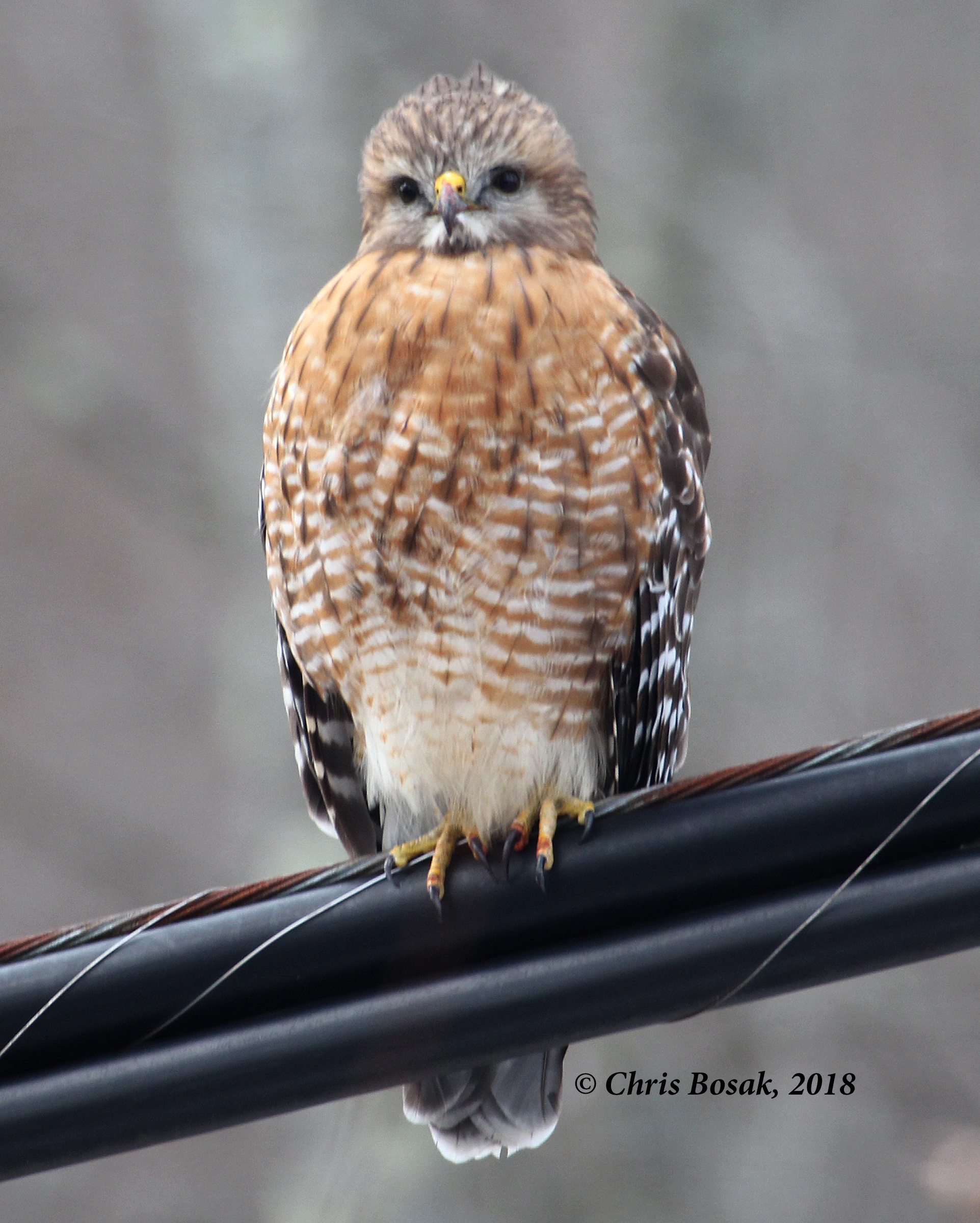
Photo by Chris Bosak
A red-shouldered hawk perches on a wire in Brookfield, Connecticut, Jan. 2018.
Here are a few more photos of the red-shouldered hawk I spotted the other day in Brookfield, Conn.
Notice how far the head can turn around. Quite an impressive and useful adaptation for birds.
I have a feeling this bird is digesting a recently eaten meal. Anybody know what makes me think that?

Photo by Chris Bosak
A red-shouldered hawk perches on a wire in Brookfield, Connecticut, Jan. 2018.

Photo by Chris Bosak
A red-shouldered hawk perches on a wire in Brookfield, Connecticut, Jan. 2018.
 Birds of New England.com