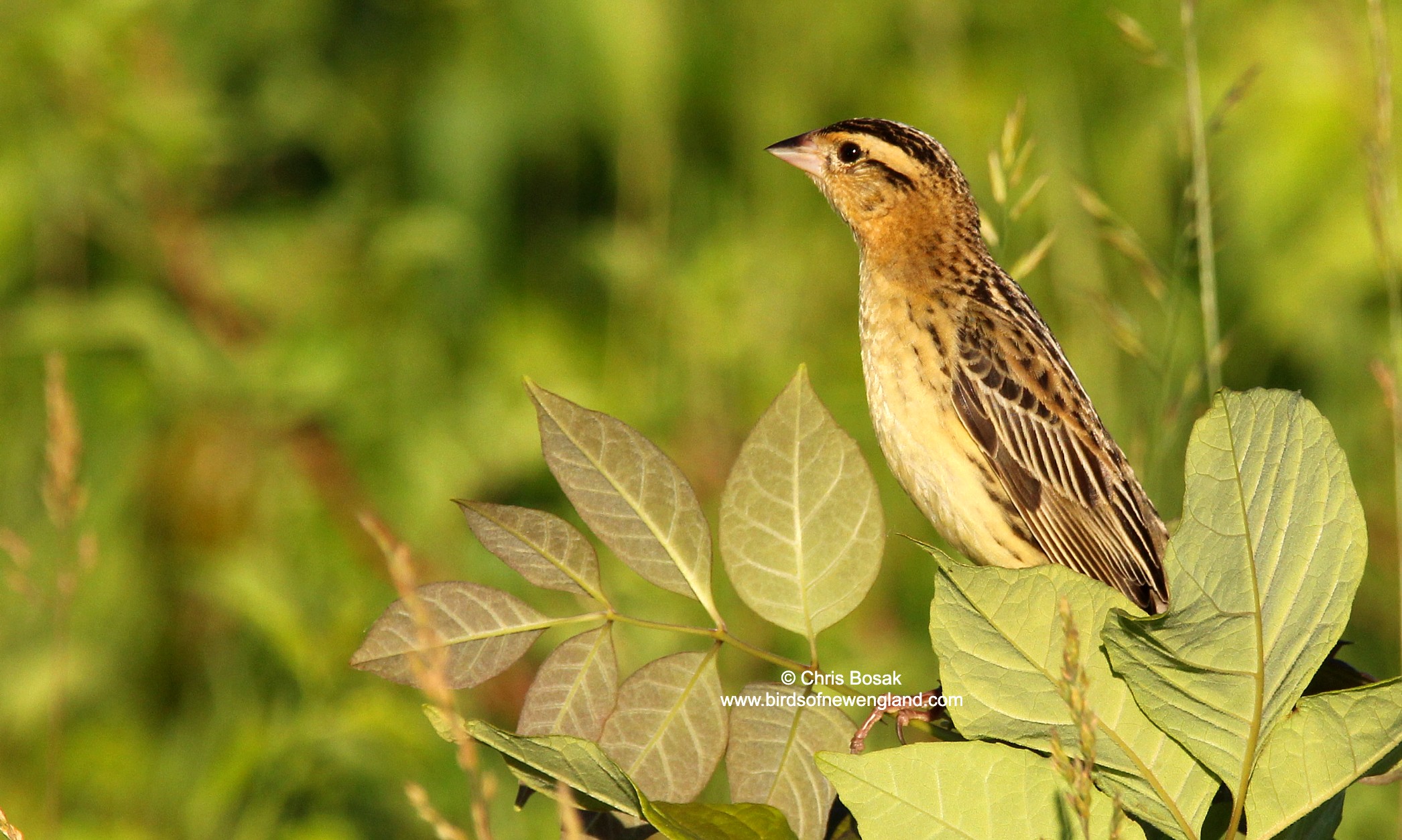
A female bobolink perches in a field in Brookfield, Connecticut, summer 2026.
Every spring I head out to the same field to photograph bobolinks.
I know the hotspots to find them and wait patiently on the trails that cut through the fields for one to perch within reach of my zoom lens.
Even as I write this, several months after my latest adventure, I am picturing a male bobolink with its amazing black and white plumage accented by a large yellow patch on the back of his head. New England boasts many colorful birds, especially in the spring, and bobolinks certainly fit that bill.
As I was walking out of the field, I noticed a female bobolink perched among the tall grasses. I stopped in my tracks and snapped several photos of the willing subject. She didn’t have the striking colors or patterns of the male, but she had a subtle, understated beauty nonetheless.
The Cornell Lab of Ornithology describes the female bobolink as “warm buffy brown, streaked with dark brown on the back and flanks, and bold brown stripes on the crown.” That sounds about right. It must be a tough job having to write descriptions of brownish birds and capturing the subtle beauty they each possess.
The bobolink is another example of a dimorphic bird species in which the male grabs most of the attention. Dimorphism is when male and female birds of the same species have different appearances. Monomorphism is when they look the same.
Males get the attention for good reason, and it’s the way nature intended. Males are flashy so they can attract mates, intimidate rivals, and draw the attention of predators that may be lurking around a nest. Females are more drably plumaged to remain hidden during the nesting season.
Females of dimorphic species rarely make magazine covers or calendars. That doesn’t mean they aren’t beautiful. Sometimes, though, it takes a closer look to appreciate the intricate patterns and subdued but visually appealing colors.
I don’t think I’m going out on a limb when I say that the scarlet tanager, rose-breasted grosbeak, indigo bunting and Baltimore oriole are four of the birds that cause the most excitement in New England because of the brilliant plumages of the males. The females are much more subtly colored, particularly the bunting. Female orioles and tanagers, however, feature colorful plumage but pale in comparison to striking males.
Interestingly, male bobolinks, tanagers and grosbeaks in nonbreeding plumage very closely resemble females and look vastly different during fall migration.
Fully appreciating female birds is like appreciating sparrows. They are largely devoid of bright colors, so much so that they are often lumped together as LBJs, or little brown jobs. But closer inspection of these birds, especially the native sparrows, yields a beauty that is easy to appreciate. They can be tricky to identify for beginning and even intermediate birders until one learns to recognize and truly appreciate the intricacies of their plumage.
When I got home from my bobolink adventure and looked at the photos, it was the ones of the female that pleased me the most. I’m glad I took the time to stop and appreciate the bird rather than writing her off as just another boring brown bird.

