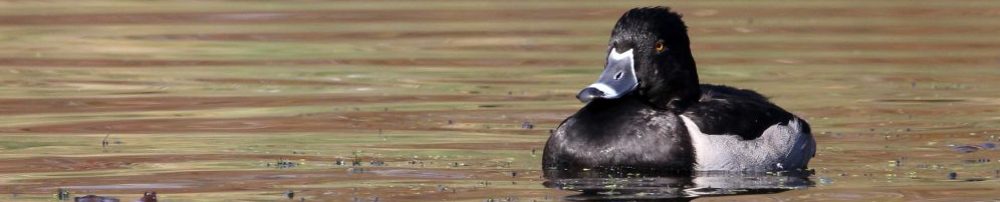
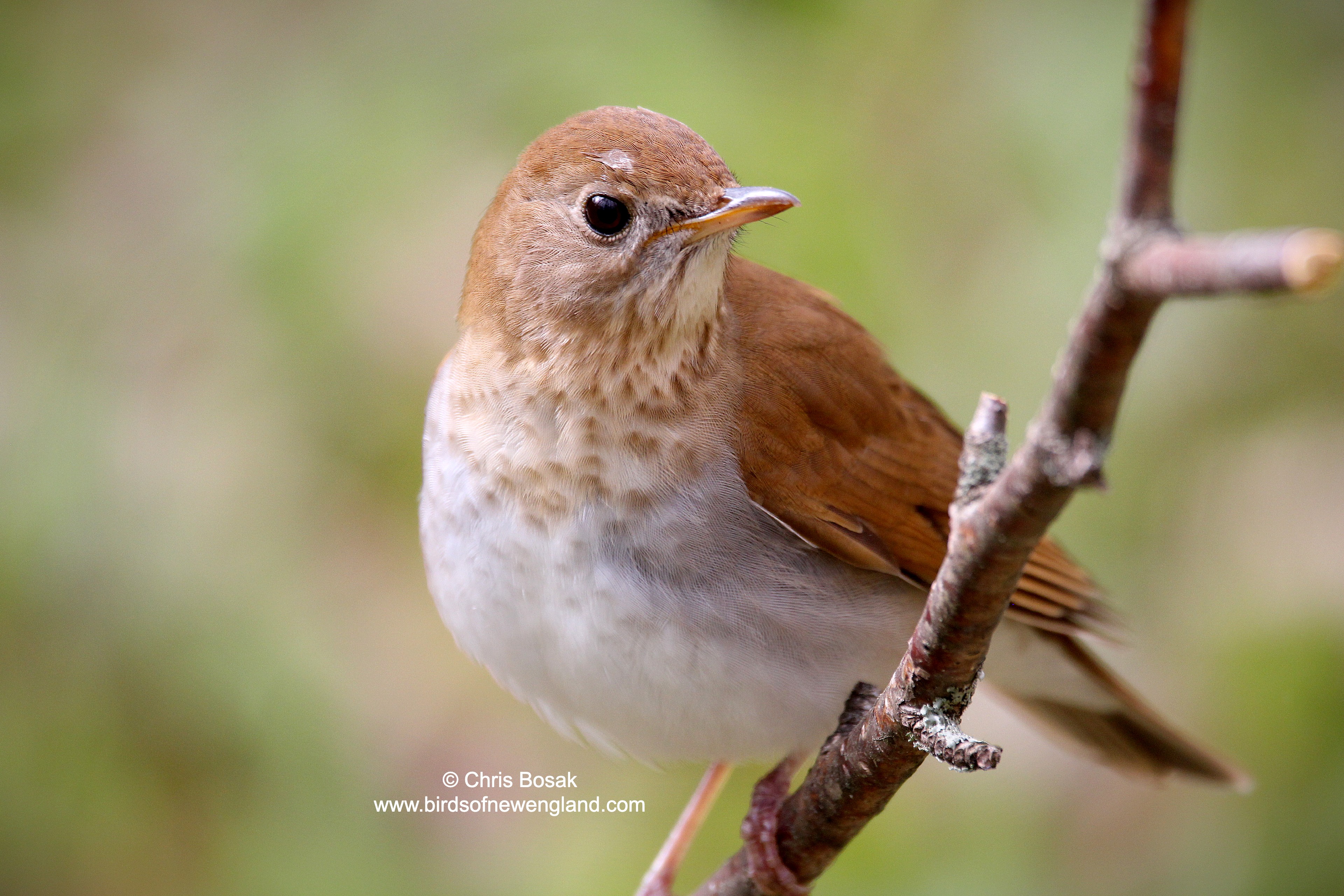
A veery stakes out territory in New England, spring 2025.
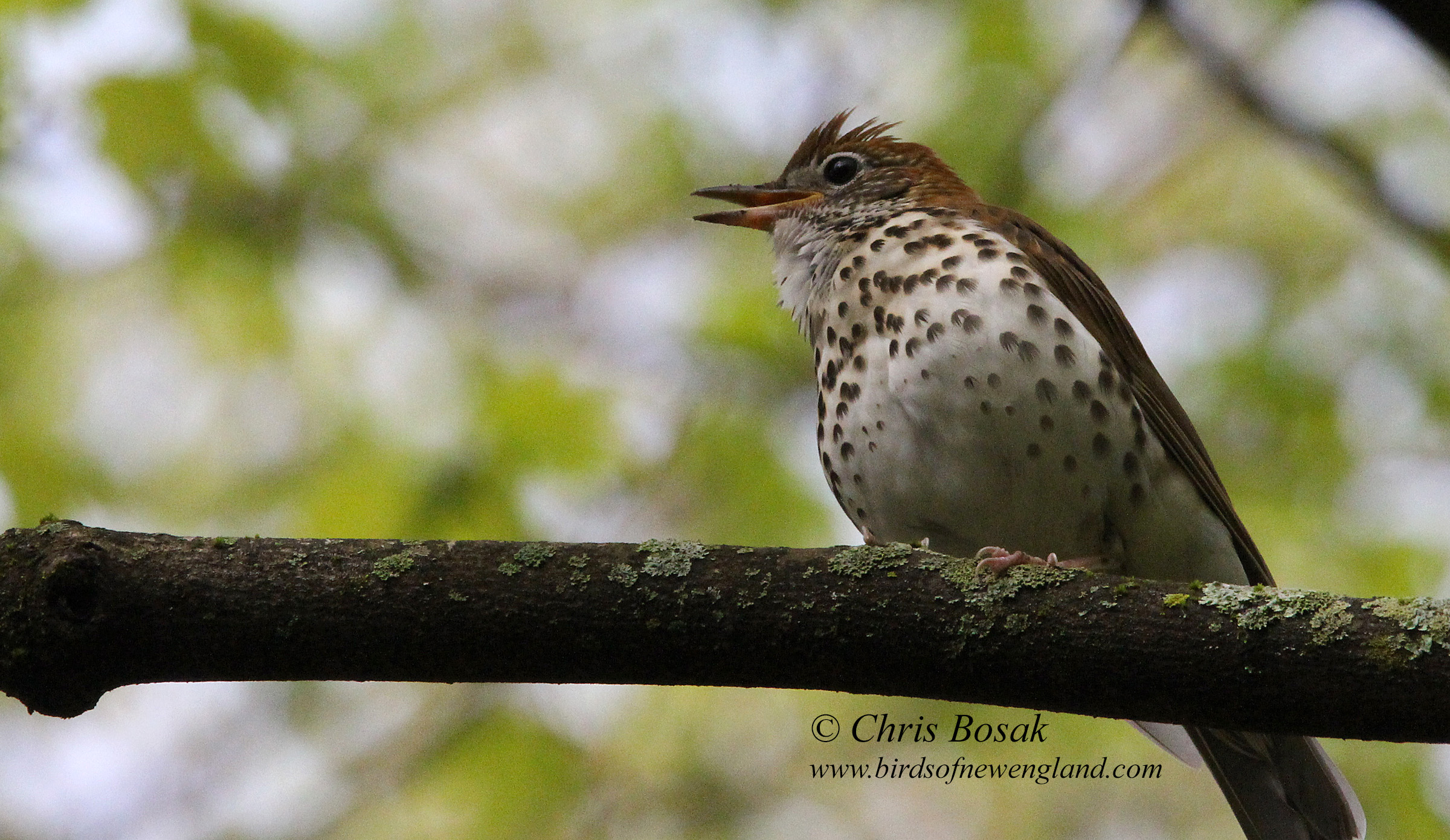
A wood thrush sings from a branch in New England.
I wrote back in early July that the veery had taken the lead as the Bird of Summer, my very unofficial designation that goes to the bird that I see most frequently, or at least more frequently than usual.
With summer now over, I can officially—or unofficially—name the Bird of Summer. The veery and wood thrush share the distinction. Early in the summer, I saw and heard veeries on every walk. In the middle of summer and into late summer, it was the wood thrush that stood out more. I didn’t always find the often-secretive bird, but I certainly heard the unmistakable flute-like song way more often than I usually do.
It was encouraging to hear the wood thrush so often, as they are one of the many birds that have experienced a sharp population decline in recent decades.
The veery and wood thrush are both thrushes and have a similar appearance. They are not as similar-looking as some thrushes in New England, but each one has the classic thrush look with brown bodies and spotted buffy chests.
The American goldfinch made a late-summer push and was by far the species I saw the most in August and early September. Goldfinches are late nesters in New England and do not even start nesting until many have already fledged multiple broods. Goldfinches time their breeding season with the availability of their preferred food and nest-building material.
Goldfinches came especially close to stealing the title from the thrushes one day in late August when I looked out at my modest garden and saw half a dozen of them perched on the tops of my coneflower picking out seeds. I appreciate seeing birds on my feeders, but it’s an extra thrill when they land on flowers that I planted expressly for them.
I’ll give the American goldfinch an honorable mention, but the thrushes share the crown. Honorable mentions to a lesser degree go to Baltimore oriole, gray catbird and song sparrow, which were also quite reliable sightings this summer for me.
Now for the other end of the spectrum. It was a disappointing summer for me in terms of seeing some of our other colorful songbirds, such as scarlet tanager, rose-breasted grosbeak and indigo bunting. For whatever reason, my sightings of these sought-after birds were few and far between this summer. I’m certainly not suggesting there is a sudden worrisome decline in these birds, but for me anyway, the sightings just didn’t happen like they usually do.
I am a little worried about the lack of butterflies I saw this summer. The meadow at one of the parks I frequent was nearly void of butterflies, whereas it is usually hopping with them. With all the talk of the declining monarch population and the challenges they face, it was distressing to see them in such small numbers this summer.
By now, many of our songbirds have flown south under the cover of darkness. Hawks, ducks, swallows and some other birds migrate by day, but most of the other birds fly by night. Migrating at night offers advantages such as lack of predators, cooler temperatures, constellations in the sky to guide them and less turbulence. It also allows them to rest and feed during the day when it is easier to find food. Unfortunately, migrating at night also includes disadvantages, such as the possibility of crashing into buildings or being disoriented by city lights.
So now we turn our attention to fall birding, which has its own highlights. Hawkwatches continue through October, and the duck migration starts around the middle of October as well. Late-migrating songbirds such as palm warblers and yellow-rumped warblers are also fall birding highlights.
Let me know your summer highlights and what you are looking forward to this fall.
A veery stakes out territory in New England, spring 2025.


I must say that my summer highlight remains the frequency that I see American Bald Eagles now around our lakes + rivers. Look fwd. to the improvement though of the Osprey young in our small state, NH is seeing a downturn on hatchling survival and are working on improving the habitat situation here that seems causal. In the meantime on with winter feeding thrills!!!
LikeLiked by 1 person
Hi Hootie. A similar trend with osprey is happening in Connecticut, even along the coast of Long Island Sound where the population has thrived over the past few decades. I believe one of the bait fish that serves as a primary source of food for osprey is hurting. I’ll have to look into the osprey population throughout New England in a column soon. Thanks for all your support!
LikeLike
saddened to know the Osprey struggle in so many areas, especially after such thrills seeing their resurgence these past several years. Prayers that humankind will come to our senses before its too late…
Your quite welcome, I enjoy your informative and beautiful posts.
LikeLike
Thanks flute !!Sent from my iPhoneOn Oct 3, 2026,
LikeLiked by 1 person