Unknown's avatar

About Chris Bosak

Bird columnist and nature photographer based in New England.

Gardening with Melinda: Plant easy-care daffodils now for added spring beauty

Photo by Longfield-Gardens.com Unique daffodil varieties like Lingerie offer double flowering.

Photo by Longfield-Gardens.com
Unique daffodil varieties like Lingerie offer double flowering.

By Melinda Myers

Daffodils have a cheery presence in the spring garden and are a surefire way to chase away the winter blues. These fall-planted bulbs are also reliable perennials that require no maintenance and are not bothered by deer or other pests. The National Garden Bureau has declared 2017 the Year of the Daffodil, and with the fall planting season right around the corner, now is the time to choose your favorites.

Yellow trumpet daffodils are classics, but there are many other flower styles and colors to choose from. Double-flowering types like white and yellow Lingerie and long lasting lemon-yellow Sherbourne feature multiple rows of petals and some varieties look more like peonies than daffodils.

Multi-flowering varieties like Beautiful Eyes, display several flowers on each stem. This variety’s white and orange blossoms have a gardenia-like fragrance. Miniature Continue reading

For the Birds: Busy Kinglet is in constant motion

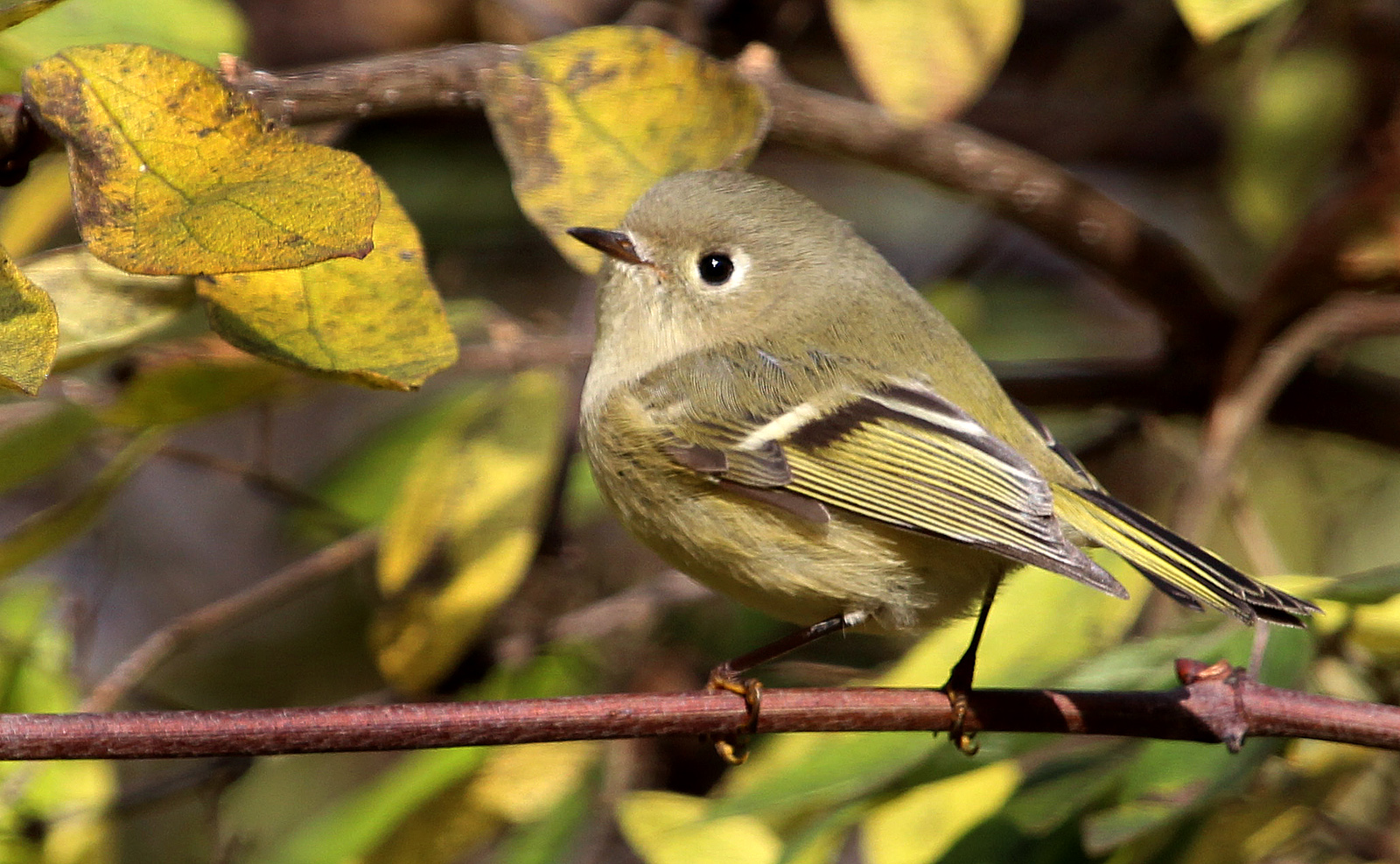
Photo by Chris Bosak A Ruby-crowned Kinglet perches on a branch in New England.

Photo by Chris Bosak
A Ruby-crowned Kinglet perches on a branch in New England.

Here is the latest For the Birds column, which runs in several New England newspapers.

I thought it was going to be the easiest bird photo I’ve ever taken.

There was the kinglet, literally right at my feet. It was hopping along the beach a few weeks ago looking for small insects among the plants popping out of the sand. It was a male ruby-crowned kinglet and he was alone at this stage of his migration.

I grabbed the camera from the front seat and got out of the car for what I thought would be a quick strike. It wasn’t. The kinglet didn’t fly away and didn’t run away. It just wouldn’t sit still — not even for a second. Now I know how department store children’s photographers feel on their bad days.

First, let’s familiarize ourselves with the kinglet. There are two types of kinglet: ruby-crowned kinglet and golden-crowned kinglet. The ruby-crowned kinglet has an eye-ring that doesn’t quite make it all the way around its eye. The golden-crowned kinglet has no eye-ring, but rather an eye stripe.

To tell the species apart I like to think of a “ruby ring.” Hey, it works for me.

The male ruby-crowned kinglet has a small patch of red on the top of his head, while the female has no patch. With the golden-crowned kinglet, the male has an orangish patch outlined in yellow and the female has a yellow patch.

Keep in mind that the colorful patches are not always visible, especially on the ruby-crowned.

Usually the species stick together, but I’ll never forget the time I looked out a window of my house and saw a ruby-crowned kinglet and a golden-crowned kinglet cross paths on a hemlock branch. If I ever wanted a side-by-side comparison, that was my chance.

The kinglets are also among the smallest birds we see here in New England. The golden-crowned measures about 4 inches, while the ruby-crowned is a whopping 4 ½ inches. By comparison, the black-capped chickadee is about 5 inches (slightly larger than both kinglets) and the ruby-throated hummingbird is almost 4 inches (only slightly smaller than the kinglets).

Their tiny size makes it a challenge to photograph them. Even with a powerful lens, it’s tough to fill the frame.

But the real challenge is their energy. They don’t sit still. By the time the camera’s auto-focus feature nails the subject, the bird is gone. It’s not far away, perhaps only an inch or two, but far enough to throw off the focus.

Now back to my beach-combing ruby-crowned kinglet.

I performed the auto-focus dance for a while before switching to manual focus, which proved to be even more frustrating. Usually focusing required only a slight turn of the lens one way or the other, but I always picked the wrong way. By the time I corrected the error — you guessed it — the bird was elsewhere.

The bird never went very far and at one point was about a foot away from my shoes. I had already determined before that moment that my presence didn’t bother him. The last thing I’d want to do is deny a hungry migrating bird of a good food source, which it obviously had found at the beach.

I wasn’t disturbing him, but he certainly wasn’t cooperating with me either. He was very busy. No time for posing.

After several minutes of trying to catch the little guy, I remembered the last time I had tried to photograph kinglets. I was at a Connecticut park and there were kinglets all over the place in the bushes. In a way that experience was even more frustrating because I didn’t know which kinglet to target and, no matter which one I picked, it was constant motion. I never did get a great photo that day, despite there being dozens of little subjects flitting around the bushes.

But on this day there was only one subject on which to channel my efforts. The results were not much better. I got a couple of decent photos and a bunch of blurry images of a male ruby-crowned kinglet’s tail. A few photos showed nothing but landscape: sand and weeds, no bird. I missed the little guy by a split second, but it may as well have been an hour.

But I can laugh about it now. My therapist says that’s a good thing. He also suggests that I just look at kinglets from now on and not try to photograph them. What does he know? Next time I’ll do better.
Continue reading

For the Birds: Fall has it all

Photo by Chris Bosak A green Eastern Pondhawk dragonfly clings on to a vine wrapped around a stalk on a meadow property of the Darien Land Trust, summer 2013.

Photo by Chris Bosak
A green Eastern Pondhawk dragonfly clings on to a vine wrapped around a stalk on a meadow property of the Darien Land Trust.

Here is the latest For the Birds column that runs in several New England newspapers.

Early fall is an exciting time, not only for birdwatchers, but for watchers of nature in general.

Male white-tailed deer and moose have their antlers fully grown and ready for the rut, or breeding season. What were little nubs of antlers in early spring are impressive racks for fighting, intimidating other males and showing off in front of the females.

Some say that spring is the best time for watching nature, but only in the fall can we appreciate the beauty and majesty of fully grown antlers. 

Seeing a bull moose in July is a memorable experience. Seeing a bull moose in the fall is an unforgettable experience.

Early fall is also a time when a birdwatcher can really pile on the numbers for a species-seen list. Herons and egrets are still around. Shorebirds are still migrating. Songbirds are moving south as well. Waterfowl start migrating through New England. Continue reading

Gardening with Melinda: Proper tree planting and care is critical to survival

The GreenWell water saver contains and concentrates the water where it is needed during a tree’s critical root establishment phase.

The GreenWell water saver contains and concentrates the water where it is needed during a tree’s critical root establishment phase.

By Melinda Myers

Whether planting a tree to add seasonal beauty, grow backyard fruit, provide a bit of shade, or reduce energy costs, it’s a big upfront investment.  Make the most of your money spent by giving your tree its best chance at survival with proper planting and care.

Now is a great time to plant trees. Cooler air temperatures make it less stressful on newly planted trees and the gardeners planting them.

Select a tree suited to the growing conditions. Make sure it tolerates the sunlight, soil and temperature extremes. Check the tag for the mature height and spread. You’ll have a better-looking plant that always fits the space with minimal pruning.

Plant it correctly to insure your tree thrives for many years to come. Dig a Continue reading

For the Birds: Hawkwatching season in New England

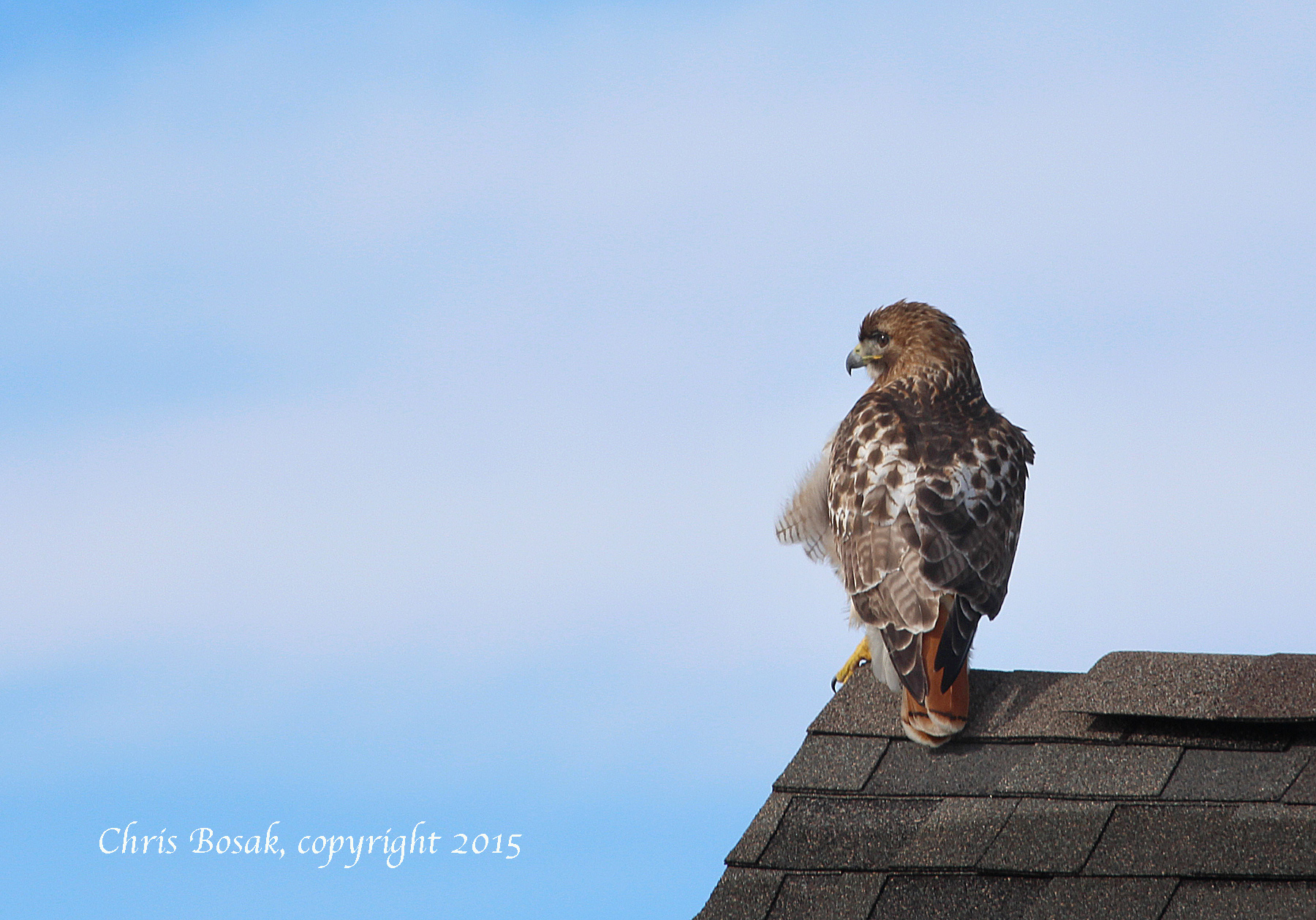
Photo by Chris Bosak A Red-tailed hawk at Weed Beach in Darien, Conn., January 2015.

Photo by Chris Bosak
A Red-tailed hawk at Weed Beach in Darien, Conn., January 2015.

Here’s the latest For the Birds column, which runs in several New England newspapers.

The seasons are changing, and there’s a lot going on in the birding world.

Warblers and other songbirds are migrating south. Shorebirds — many species of which have long migrated already — continue to move through New England. Other small winged creatures — monarch butterflies — are also seen more often now as they prepare for their generational migration.

On the ponds, the waterfowl migration hasn’t started with verve yet, but wood ducks, which spend much of the summer hiding out, are more often seen and heard in the fall. At the same time, herons and egrets are still with us in large numbers, and feeder birds continue to keep us company in our backyards. 

Yes, a lot is going on in early fall as we birdwatchers start to shift from a summer frame of mind to a winter one.

With all that’s going on, one type of bird still manages to take center stage in September and October: hawks.

Hawkwatches are the primary destination for birdwatchers this time of year as birds of prey by the thousands ride the wind south. Pick the right day with the ideal weather conditions, and a birdwatcher may see hundreds of hawks, falcons, eagles and vultures soaring overhead.

Continue reading

Red-winged blackbird singing: Cleaning off the desktop to get ready for fall

Photo by Chris Bosak A red-winged blackbird sings from the top of a tree at Happy Landings in Brookfield, Conn., spring 2017.

Photo by Chris Bosak
A red-winged blackbird sings from the top of a tree at Happy Landings in Brookfield, Conn., spring 2017.

I almost forgot about a series of red-winged blackbird photos I took on the same day I captured nice images of cedar waxwings and bobolinks. I’m glad I started this cleaning off the desktop project or this photo may never have seen the light of day.

Yellowthroat singing: Cleaning off the desktop to get ready for fall

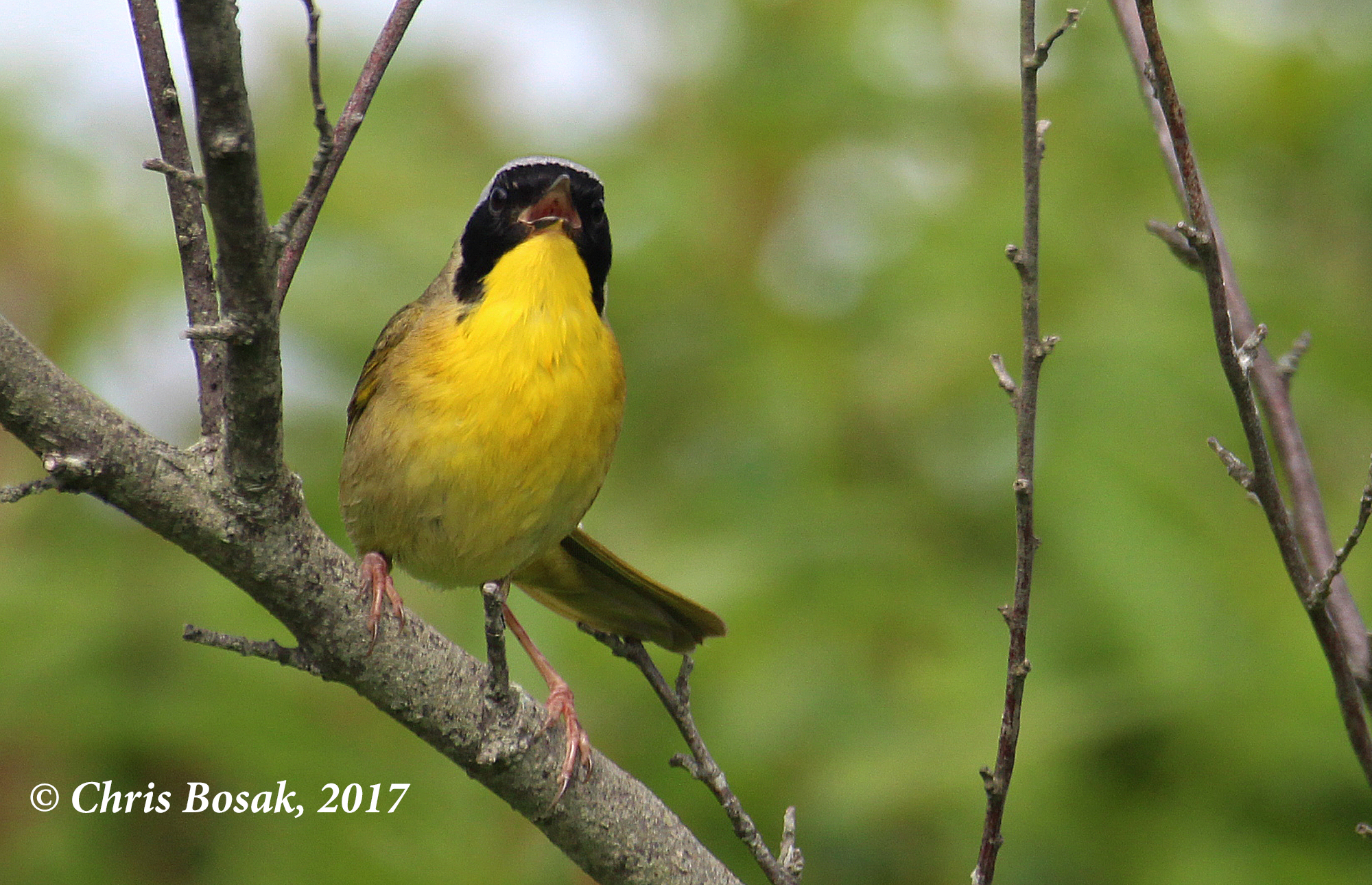
Photo by Chris Bosak A common yellowthroat sings from a perch in Brookfield, Conn., during spring 2017.

Photo by Chris Bosak
A common yellowthroat sings from a perch in Brookfield, Conn., during spring 2017.

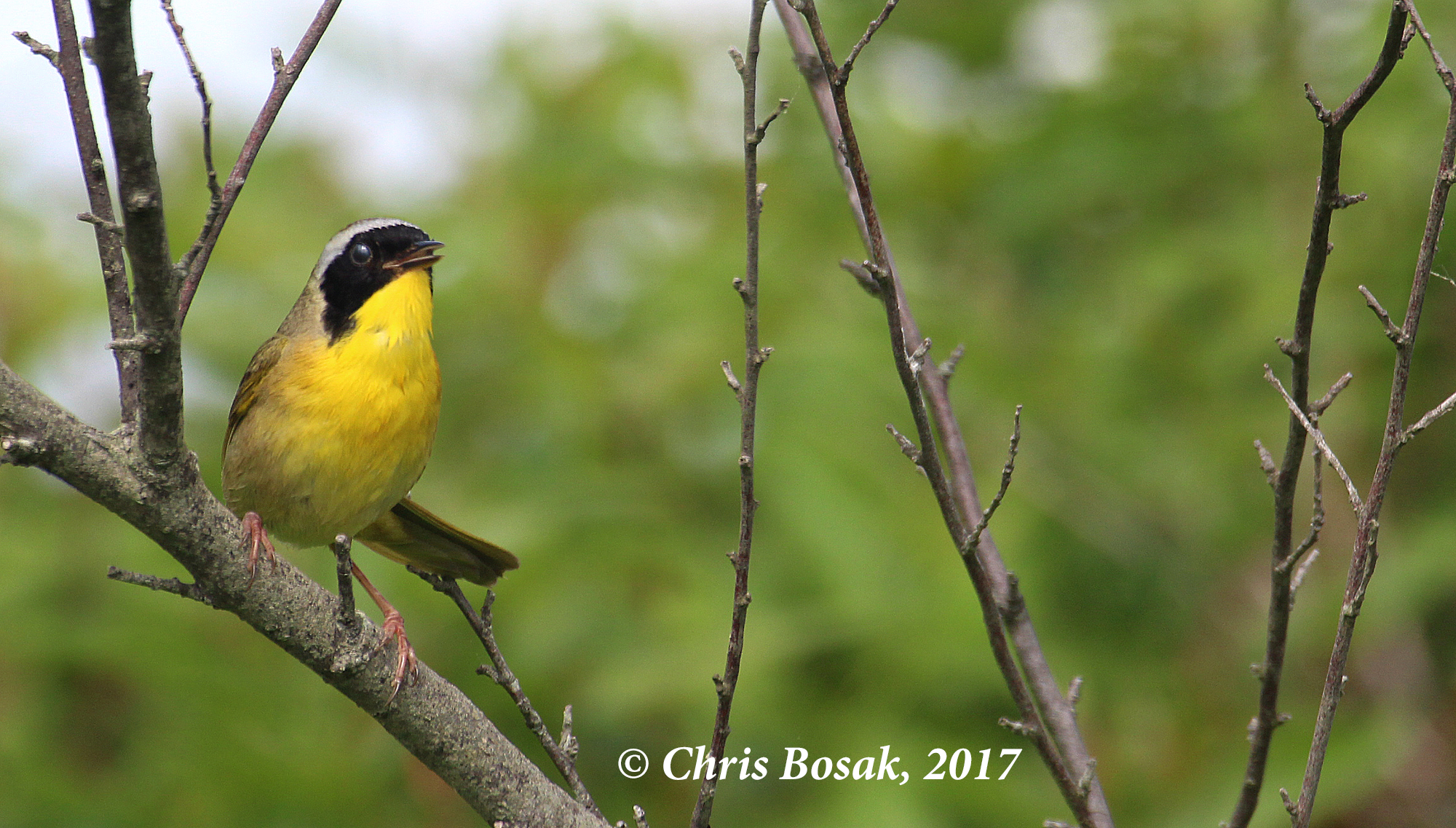
I posted one shot of this common yellowthroat early this spring. Never had time to edit the other photos until now.

Photo by Chris Bosak A common yellowthroat sings from a perch in Brookfield, Conn., during spring 2017.

Photo by Chris Bosak
A common yellowthroat sings from a perch in Brookfield, Conn., during spring 2017.

Song sparrow with lipstick: Cleaning off the desktop to get ready for fall

Photo by Chris Bosak A song sparrow eats berries at Dolce Center in Norwalk, Conn.

Photo by Chris Bosak
A song sparrow eats berries at Dolce Center in Norwalk, Conn.

I caught this song sparrow in August eating ripening berries and looking like a kid who just ate a cherry popsicle.

Starting with towhees: Cleaning off the desktop to get ready for fall

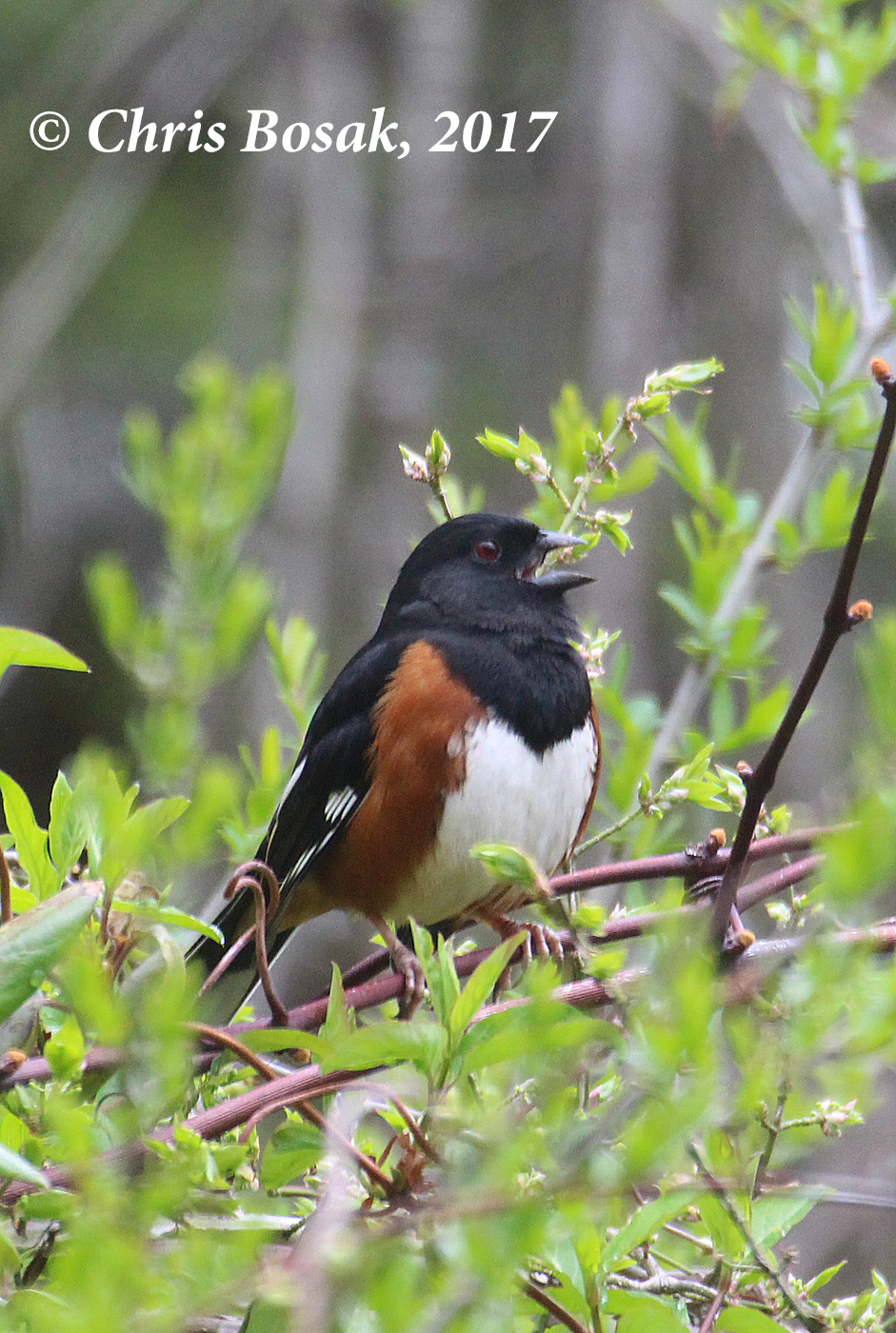
Photo by Chris Bosak An eastern towhee perches in thick brush in Ridgefield, Conn., spring 2017.

Photo by Chris Bosak
An eastern towhee perches in thick brush in Ridgefield, Conn., spring 2017.

The spring and summer went by so quickly I didn’t have time to post many of the photos I was able to capture. Typically I posted a few shots of an outing in a post, but filed the dozens of other photos in a “get to them later” folder.

Well, with fall migration starting already, I figured this would be a good time to get around to them. So, without much fanfare or description, these next few posts will be random shots I collected this past spring and summer.

This post features the eastern towhees I found during an early May walk at Bennett’s Pond State Park in Ridgefield, Conn.

Photo by Chris Bosak An eastern towhee perches in thick brush in Ridgefield, Conn., spring 2017.

Photo by Chris Bosak
An eastern towhee perches in thick brush in Ridgefield, Conn., spring 2017.

Photo by Chris Bosak
An eastern towhee perches in thick brush in Ridgefield, Conn., spring 2017.


For the Birds: Goldfinches brighten the landscape

Here is the latest For the Birds column, which runs in several New England newspapers.

Photo by Chris Bosak An American Goldfinch rests on a sunflower in New England.

Photo by Chris Bosak
An American Goldfinch rests on a sunflower in New England.

N othing cheers up a day like a goldfinch. Those little, bright bursts of yellow are always a welcome site at your feeder, bird bath or perched on a flower in your garden.

I especially appreciate goldfinches in the dead of summer. I remember taking a walk a few years ago on one of those classic hot, humid days in August. It was the middle of the afternoon and, not surprisingly, I was finding very little in terms of wildlife. Dragonflies were dancing all over the place, but even the butterflies seemed to be hiding from the heat.

Suddenly, I heard the cheerful song of a goldfinch in flight coming up from behind me. I turned just in time to see the bright yellow bird perch on the top of a thistle flower. The pink-and-purple flower rocked back and forth as it reacted to the weight of the tiny bird. When the flower settled, the goldfinch went about its business of picking at the flower.

I watched the scene briefly, and continued my walk. About five minutes later, I heard the bird again. I looked up to see it fly over my head and disappear into the distance. Despite its tiny size — about 5 inches — the goldfinch is an easy bird to identify in flight. It flies quickly in an undulating fashion — like a roller coaster with small rises and falls — usually uttering its potato-chip, potato-chip song as it bounces up and down.

I didn’t see any other birds on that walk, but the single goldfinch perched on the flower made it all worthwhile.

Goldfinches also score points with me as they are frequently seen in my garden. I’ve seen goldfinches perched atop coneflower and black-eyed Susan flowers, picking away at the seeds. I’ve also seen them on sunflowers.

Goldfinches, of course, are also reliable feeder birds, often occupying every perch of a tube feeder. I love to see all six perches of my blue tube feeder occupied by the bright yellow birds.

Goldfinches will eat sunflower seeds and will visit platform or tube feeders. A sure way to attract goldfinches is to offer Nyjer in a tube feeder specifically designed for the tiny seeds. Do not try to use thistle seeds in a regular feeder as the tiny seeds will spill through the holes.

“Sock” feeders stuffed with thistle seeds are a good alternative.

Goldfinches visit feeders at any time of the day. It’s interesting to note that goldfinches move on frequently so the birds you see at your feeder in the evening are not likely the same ones you saw in the morning.

Goldfinches are found throughout the country and many remain in New England through the winter months. They are not the flashy yellow birds we love so much in the summer, though. We still love them in the winter, of course, but they are much duller, often appearing olive or brownish.

It’s fun to see the splotchy male goldfinches in the early part of spring as they slowly regain their bright yellow plumage. Only the males are bright yellow. Females are a duller yellow.

They also have black caps and black wings with white stripes. My brother Ed and his wife, Debbie, are big Pittsburgh Steelers fans, so the goldfinch is a favorite in that household.

Of course, you don’t have to be a Steelers fan to appreciate the beauty of a goldfinch. The bright yellow speaks for itself. Throw in a purple or pink flower and you’ve got real proof that Mother Nature likes her colors.

Continue reading