For the Birds: Towhee saves the quest

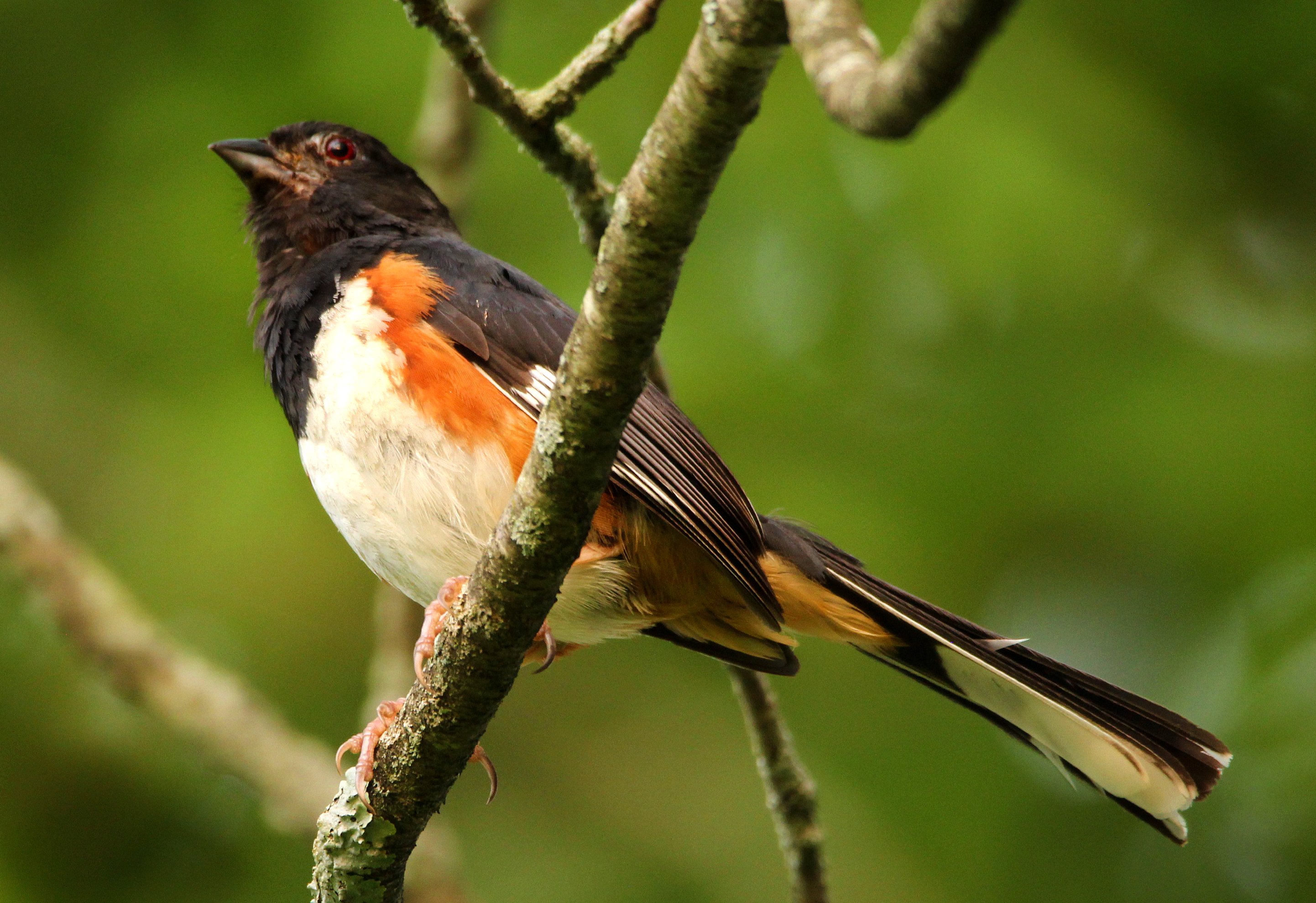
Photo by Chris Bosak – An eastern towhee perches on a tree branch in New England, August 2026.

I got home at 6 o’clock in the evening and had two hours of daylight left.

Did I have enough time to change and get to the park for a bird walk? Or should I sit around the house and do nothing?

I wouldn’t be writing a bird column about that evening if I chose the latter, so yes, I decided I did have enough time to look for some birds before it got dark.

It had been a long time since I had taken a decent bird photo, so my goal was to get one on this walk despite not having a lot of time. I didn’t care what bird it was, I just wanted to capture a good image. 

As I pulled into the parking lot, I started making odds in my head about what bird would present itself for a good photo opportunity first. I was about 90 percent sure it would be a catbird. They are reliable sightings all throughout the summer and often are not shy about being seen. If not a catbird, I thought, perhaps a song sparrow, mourning dove or cardinal. But catbird was definitely my best shot, I figured.

The walk started out rather slowly. The first bird I heard in the brush was a Baltimore oriole chattering away. It was clearly very close, and I thought it would pop out of the brush and give me a chance at a decent photo. So much for a catbird, I thought, an oriole will be my first subject. No such luck, however, as the oriole never showed itself and stopped chattering as I continued along the trail.

I heard cardinals calling to each other with their high-pitched chip notes but never spotted one as they remained well hidden in the thick brush. A little further along the trail I heard a northern house wren uttering its aggressive chatter call. (Remember, they aren’t just house wrens any longer.) This will be it for sure, I thought, as this northern house wren will certainly come out of hiding and defend its territory. Again nothing. 

I was about halfway through my walk, and I had heard but a few different species. The only views I got were birds ducking into the brush or flying overhead. 

Finally, I saw my first catbirds. The quest is over, I was quite certain. But even this wasn’t to be. Two catbirds teased me as they flitted among the branches of a tree already darkened by the shadows. In a rarity for catbirds, neither one of them came out into the open, not even for a moment. 

Things were looking bleak, and it seemed like I may fail in my quest to get a decent bird photo as I turned the corner to enter the field. Other than a few brushy patches and tall trees, the field was the last stretch before getting back to the parking lot. I did have a brief moment of hope when I spotted a female common yellowthroat in a bush, but like all the other birds before on this evening, she stayed well within the confines of the thick branches and leaves.

When I came to the first brushy area in the field, I heard an eastern towhee singing its “drink your tea” song. I was surprised to hear it singing, as I figured by this time of year it would only be using its call notes. 

As I got closer, I spotted the towhee dart out of the brush and land in a tree about 20 feet above my head. It immediately started to sing again. That was my big break, and I took advantage. They weren’t prize-winning photos by any stretch, but they were good enough to satisfy my evening quest. I never would have guessed eastern towhee would be the first bird I got.

As I continued through the field, I spooked a flock of about 30 American goldfinches that were eating seeds among the tall grasses. How could I have not seen 30 goldfinches as I approached, I thought. Then, they all landed a few dozen yards away and disappeared again. None of the birds were eating the seeds from the tops of the tall grasses and weeds, but rather the lower plants, making them invisible to passersby.

It was dusk by the time I got home. It had been a very satisfying past two hours. I’m quite sure much more so than if I had decided to stay home and do nothing. 

Singing in the spring: Eastern towhee

Photo by Chris Bosak An eastern towhee sings from a perch, spring 2025 at Huntington State Park in Redding, Connecticut.

Here’s the start of a new birdsofnewengland.com mini series called Singing in the Spring. It will feature, all together now, birds singing in the spring. The posts will appear randomly throughout this spring.

I’ll kick it off with an eastern towhee. Although a member of the sparrow family, which features mostly small brownish birds, the towhee is larger and much more decorated.

A little towhee time before warbler season

Photo by Chris Bosak An eastern towhee perches on a branch in New England, April 25, 2019.

My foot was feeling up for a short, relatively non-taxing walk yesterday (Thursday) so I grabbed a walking stick and hit a trail. The aching foot enhanced the walk in one fashion as it made me slow down and take in all the sights and sounds of the spring New England woods. Too often when I walk I’m rushing to a destination or point of interest (pond or open field) and don’t take the time to fully absorb all that is around me. Not that I’m hoping the foot keeps hurting, but that was the silver lining in this latest bout of tendonitis.

It was still a bit early for a big warbler count — blue-winged and black-and-white were the only warbler species I found — but eastern towhees were numerous. I’ll expand on the eastern towhee in an upcoming post, but this large sparrow is one of my favorites. The calls and songs of the towhee filled the edge of the woods and I noticed several pairs, which bodes well for a strong breeding season (hopefully.) Above is the male eastern towhee and below is the female. The female is duller in color, but still a striking bird.

Photo by Chris Bosak A female eastern towhee perches on a branch in New England, April 25, 2019.

Starting with towhees: Cleaning off the desktop to get ready for fall

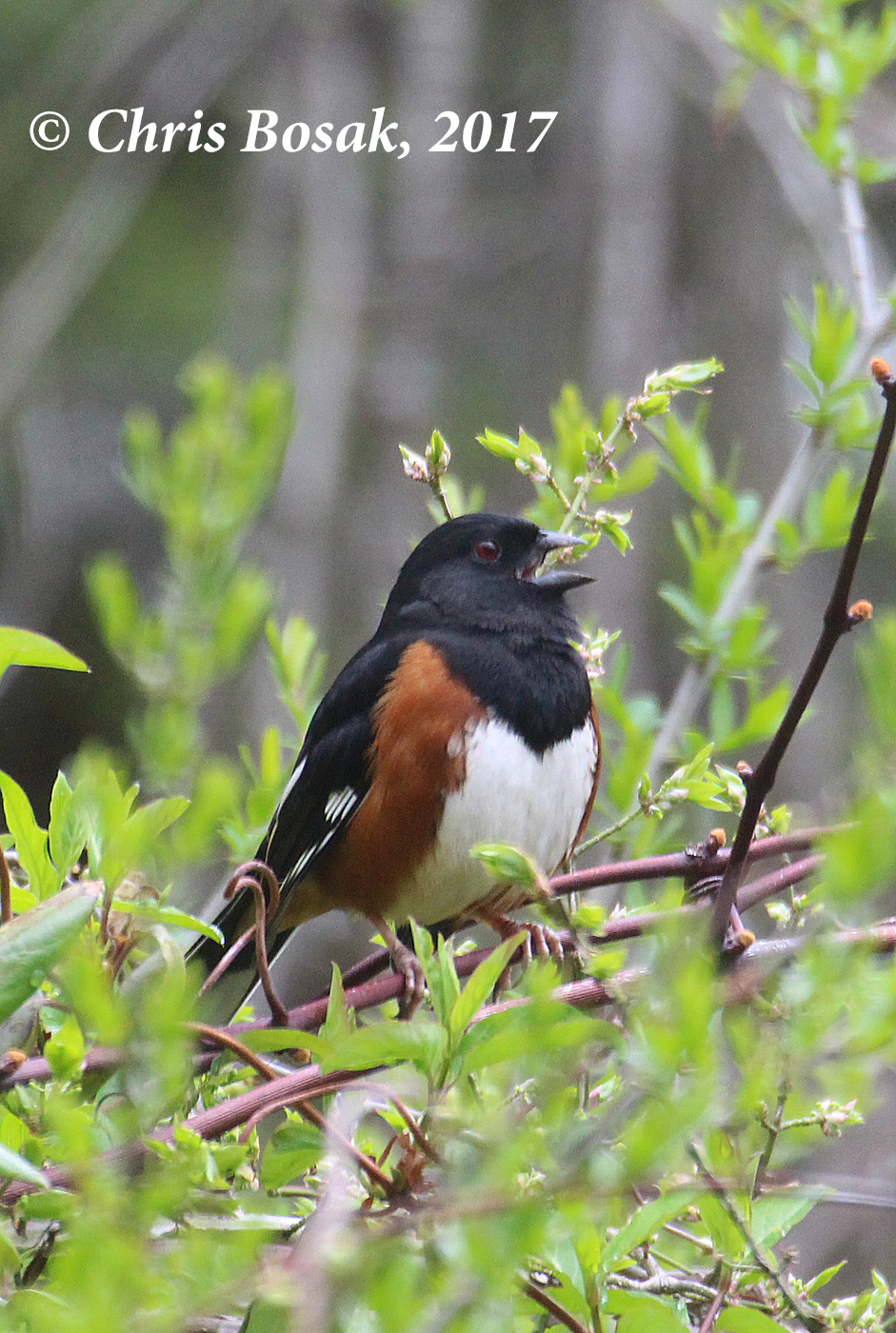
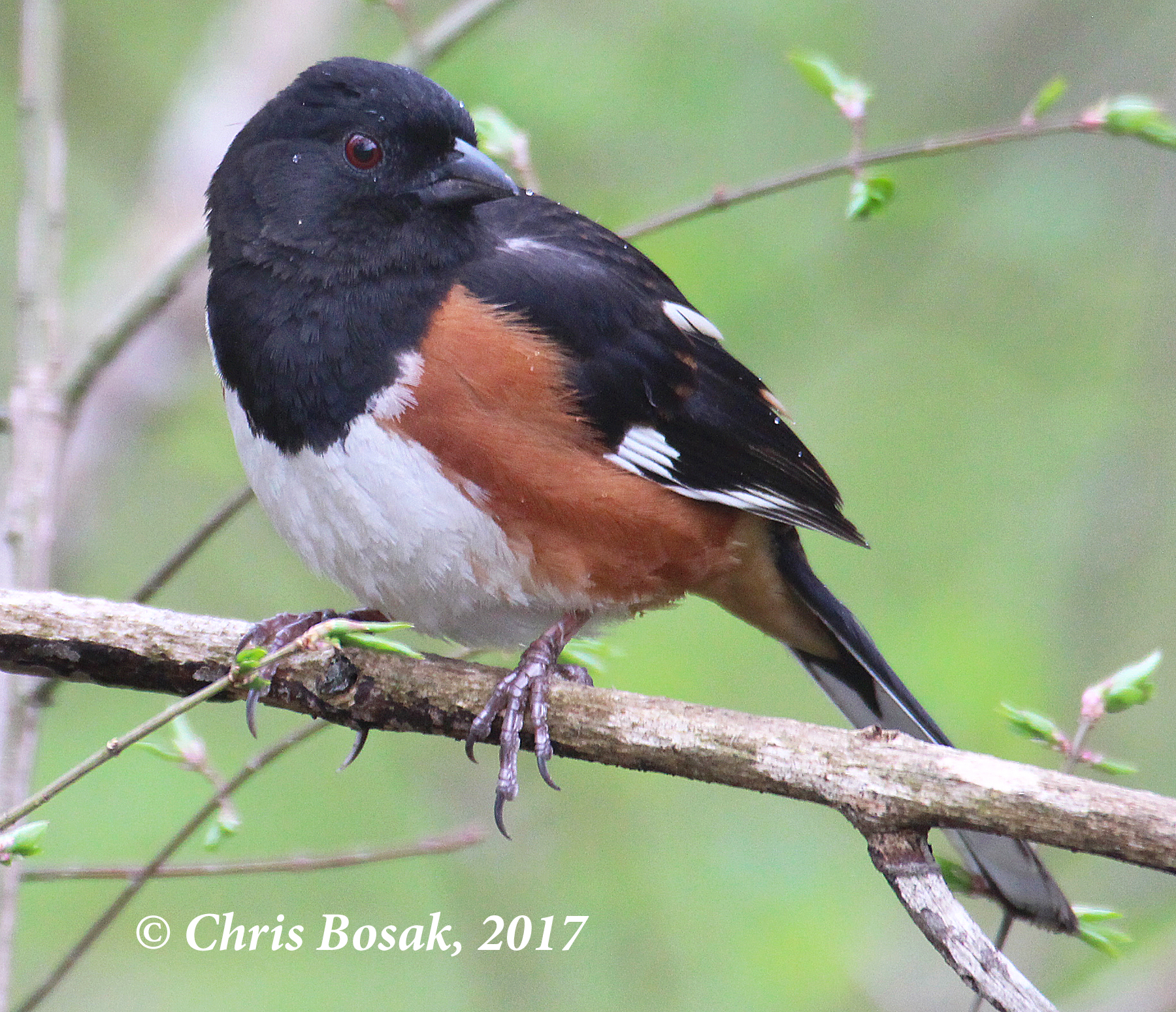
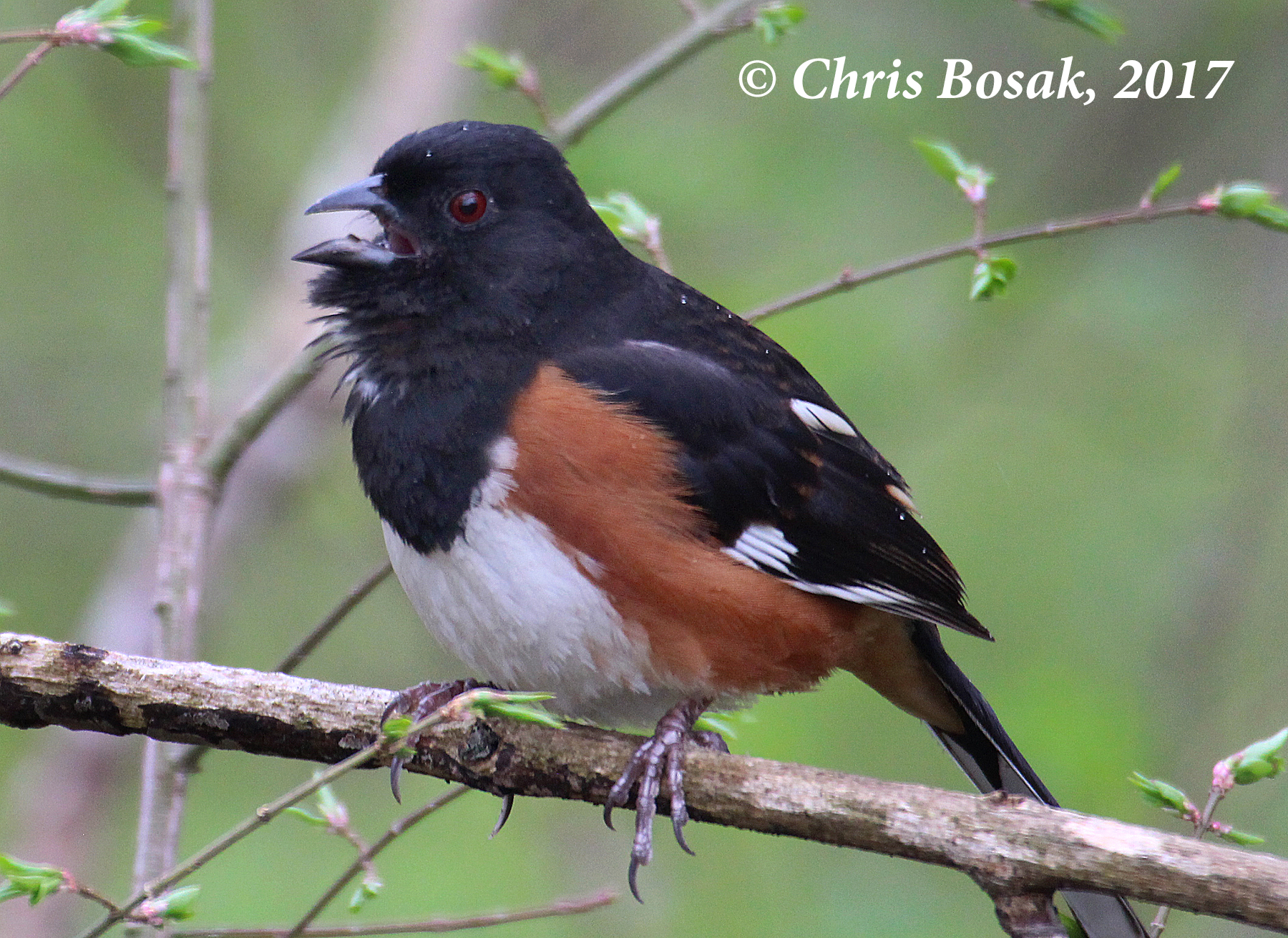
Photo by Chris Bosak An eastern towhee perches in thick brush in Ridgefield, Conn., spring 2017.

Photo by Chris Bosak
An eastern towhee perches in thick brush in Ridgefield, Conn., spring 2017.

The spring and summer went by so quickly I didn’t have time to post many of the photos I was able to capture. Typically I posted a few shots of an outing in a post, but filed the dozens of other photos in a “get to them later” folder.

Well, with fall migration starting already, I figured this would be a good time to get around to them. So, without much fanfare or description, these next few posts will be random shots I collected this past spring and summer.

This post features the eastern towhees I found during an early May walk at Bennett’s Pond State Park in Ridgefield, Conn.

Photo by Chris Bosak An eastern towhee perches in thick brush in Ridgefield, Conn., spring 2017.

Photo by Chris Bosak
An eastern towhee perches in thick brush in Ridgefield, Conn., spring 2017.

Photo by Chris Bosak
An eastern towhee perches in thick brush in Ridgefield, Conn., spring 2017.


Lots of towhees on a rainy day

Photo by Chris Bosak An Eastern Towhee perches on a branch in Ridgefield, Conn., April 2017.

Photo by Chris Bosak
An Eastern Towhee perches on a branch in Ridgefield, Conn., April 2017.

I spent some of the rainy Saturday at Bennett’s Pond in Ridgefield, Conn. I didn’t see or hear a single warbler, but I did see and hear several eastern towhees. It is a great bird with interesting plumage and a unique song.

Formerly called the rufous-sided towhee, this bird has light brown/reddish flanks. Its call is a loud and quickly uttered “tow-hee” and its song is the famous “drink-your-teaaa!” They are more often seen on the ground, scratching in the leaves to uncover food. The male is pictured in this post. The female, which I couldn’t photograph yesterday but did see, is also a handsome bird with white and reddish light brown plumage.

They were passing through in large numbers Saturday. I hope at least a few of them stick around locally to nest. It’s a great bird to see in summer when the birding can get a little slow.

You can even see the little rain drops on this guy.

Here’s one of him singing: Drink-your-teaaa!

Photo by Chris Bosak An Eastern Towhee sings from a perch in Ridgefield, Conn., April 2017.

Photo by Chris Bosak
An Eastern Towhee sings from a perch in Ridgefield, Conn., April 2017.


What will this late-fall/early-winter bring?

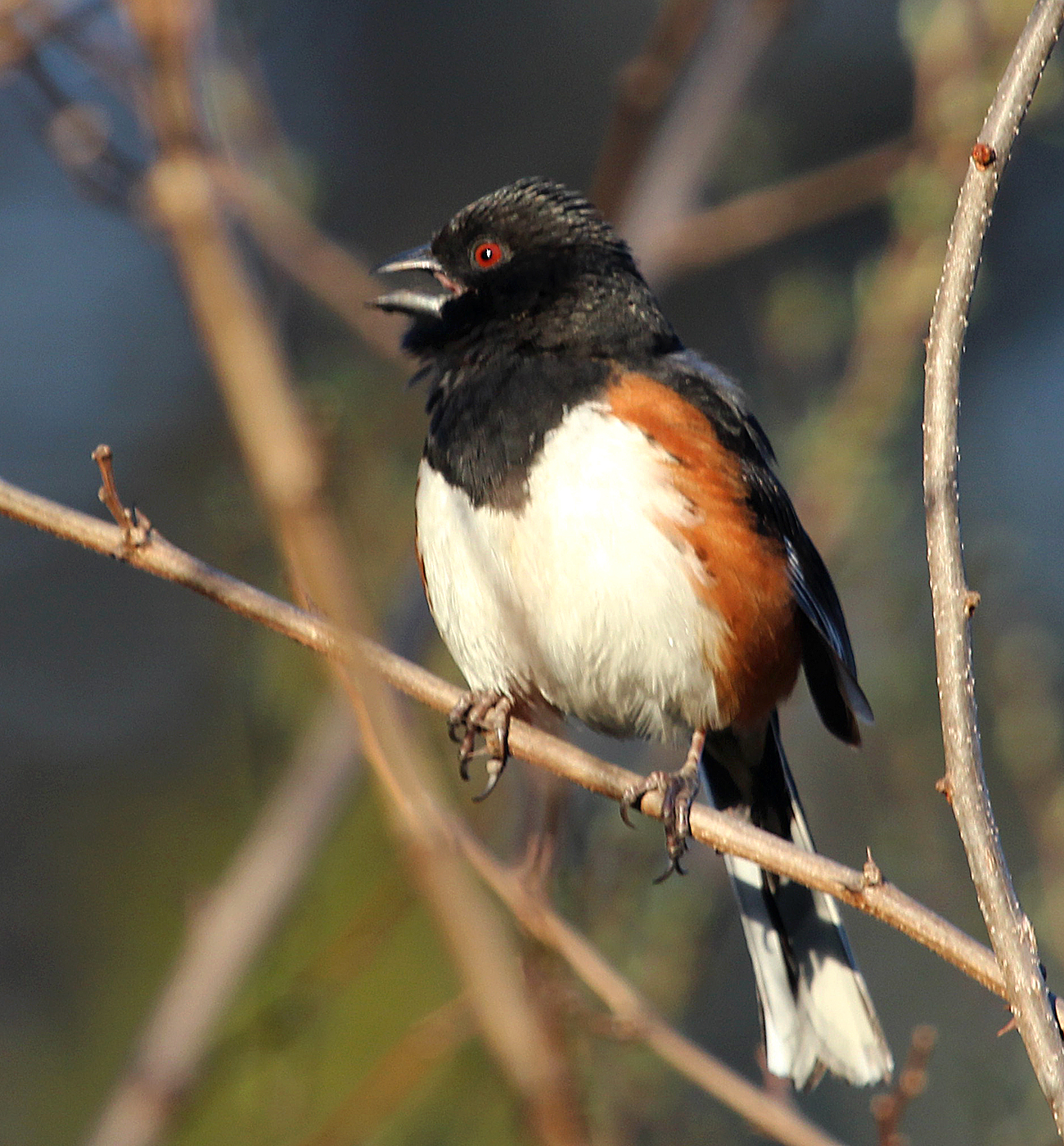
Photo by Chris Bosak An Eastern Towhee calls from his perch at Selleck's Woods in Darien, Conn., April 2014.

Photo by Chris Bosak
An Eastern Towhee calls from his perch at Selleck’s Woods in Darien, Conn., April 2014.

For years I’ve struggled to get decent shots of Eastern Towhees. Either I couldn’t find them or they remained in thick brush, rendering them unphotographable (but safe from predators, which I guess is way more important than me getting a photograph of one.)

But last fall and early winter, I saw plenty of towhees. The best part is they occasionally came out into the open to be photographed. It was one of the highlights of last fall/early winter. Then, remember, the Snowy Owls came in force into New England.

What will this year bring? I guess we have to wait and see. If you see something interesting out there or you’ve taken a neat photo of a bird (or other wildlife), drop me a line at bozclark@earthlink.net. I’d love to put more photos on my “Reader Submitted Photos” page.