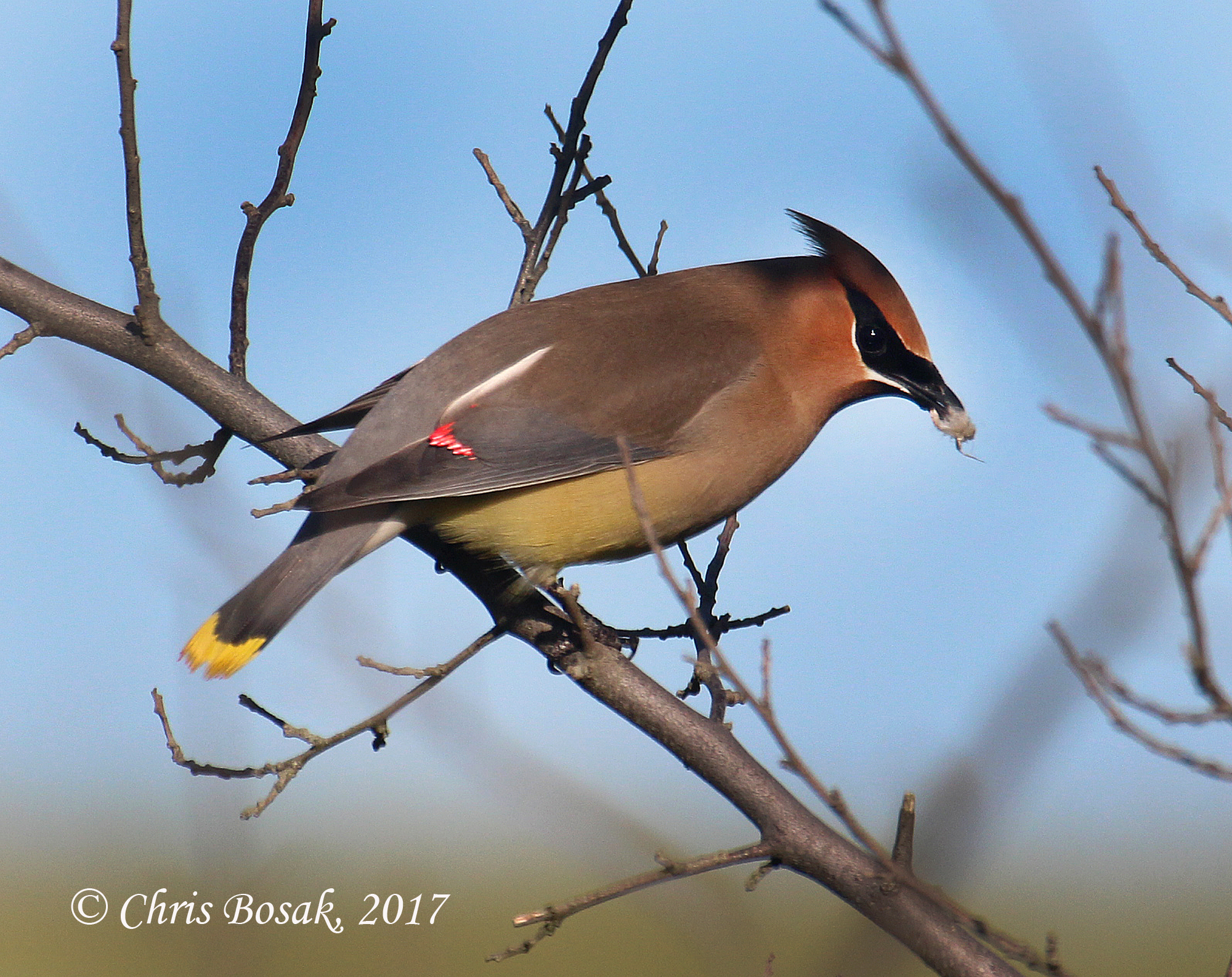
Most photos of cedar waxwings eating are of the handsome birds chowing down on berries of some sort or another. I got this guy (or girl) eating a white insect. As long as they are eating, it’s all good, I guess.
Author Archives: Chris Bosak
Indigo bunting: Trying for the elusive photo
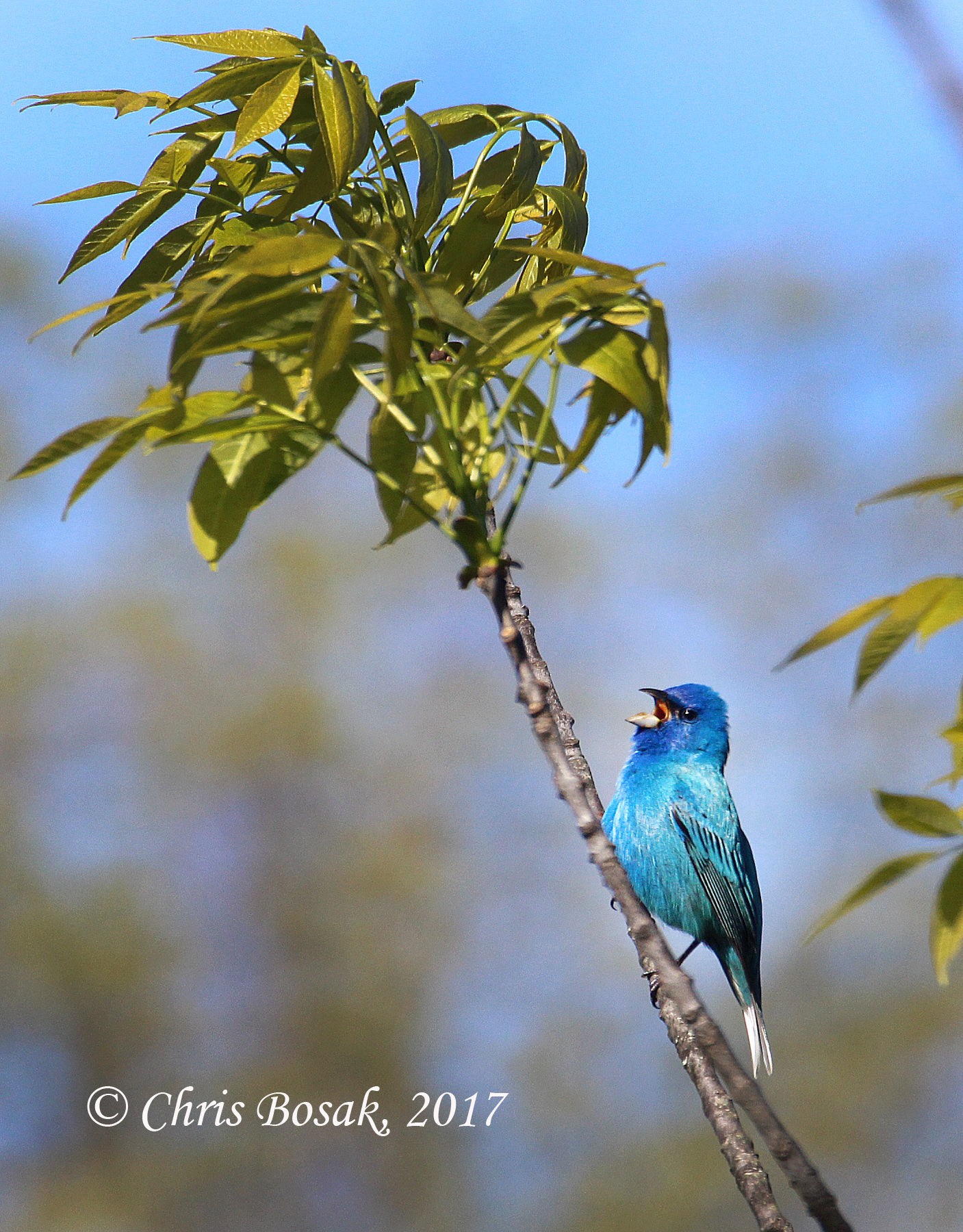
I made my annual trip to Bennett’s Pond State Park in Ridgefield, Conn., to try to capture a decent photo of a male indigo bunting. I had limited success as they are fairly difficult to photograph, I’ve found. They are fairly wary birds and their brilliant blue plumage varies greatly with the lighting. That said, here’s one of the shots I managed. What a great bird.
Gardening with Melinda: Harvesting, Storing and Preserving Herbs from the Garden

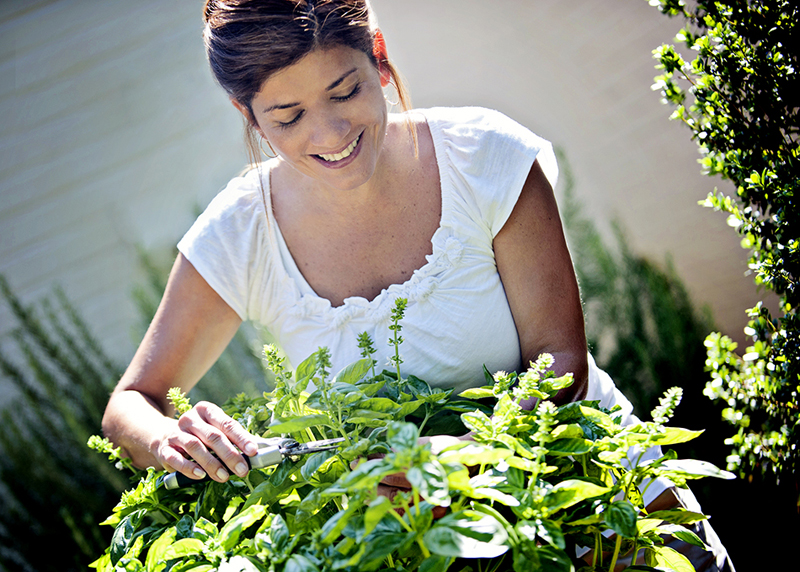
Photo credit: Bonnie Plants
Harvesting and preserving herbs allows you to enjoy fresh-from-the-garden flavor all year long.
By Melinda Myers
Enjoy herbs all year round. Harvest herbs now for garden-fresh meals and preserve a few for the winter ahead.
Snip a few leaves or leaf-covered stems as needed. For the same intensity of flavor, you generally need two to three times more fresh herbs than dried except for Rosemary which has an equally strong flavor fresh or dried. Continue harvesting herbs as needed throughout the growing season. And don’t worry about harming the plant because regular harvesting encourages new growth which means more for you to harvest. Just be sure to leave enough foliage to maintain plant growth.
You can remove as much as fifty percent of the foliage from annual herb plants. This is about when the plants near their final height. You can remove up to one third from established perennial plants that have been in the garden for several months or more. Harvest when the plant has formed buds, but before they open into flowers for the greatest concentration of flavor. This is the perfect time to Continue reading
Not bad for an iPhone photo

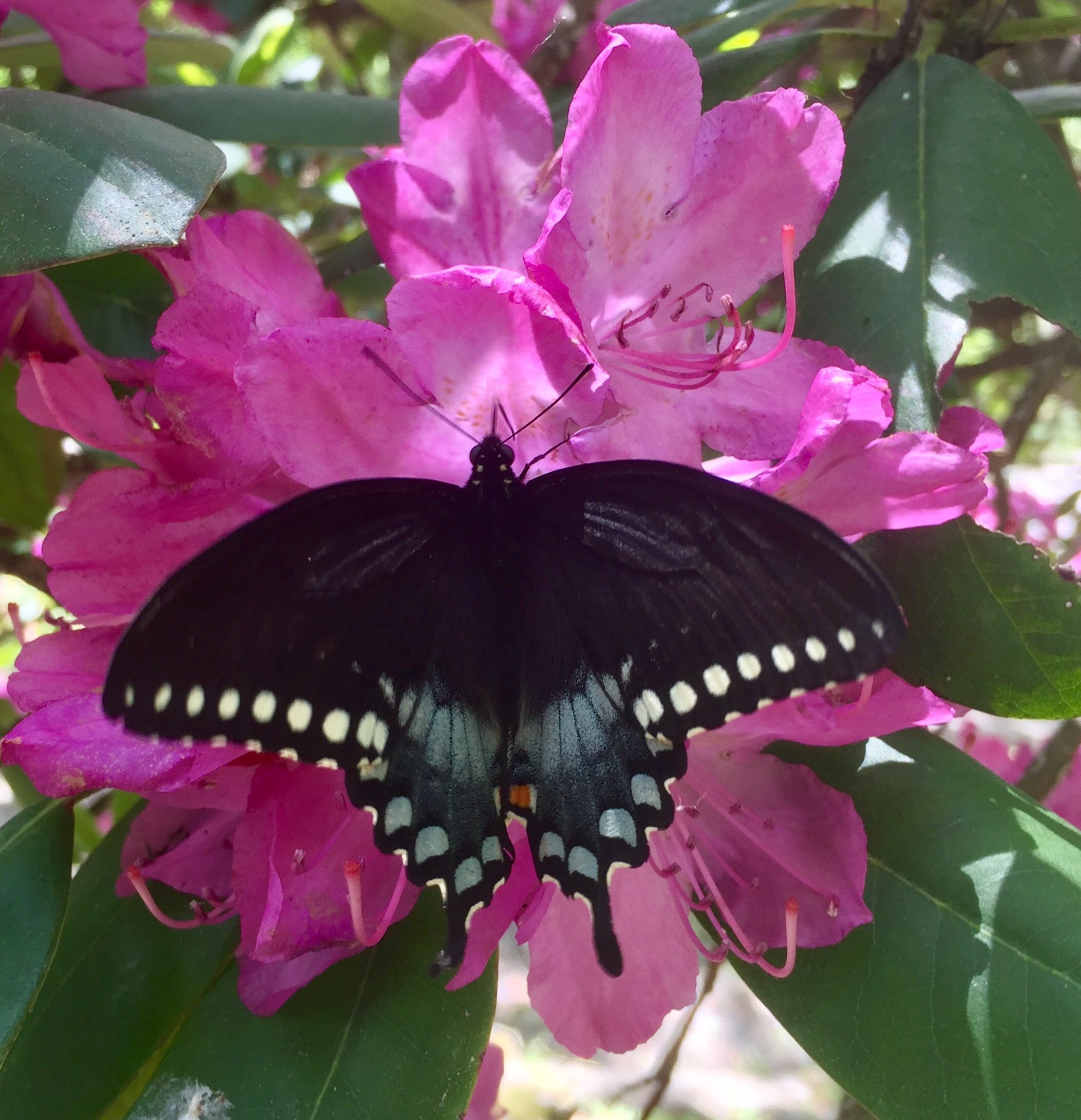
I walked out the front door and this black swallowtail was nice enough to land on the rhododendron right in front of me. The rhododendron, by the way, is awesome in bloom for about three weeks each late spring. Only better when a nice butterfly stops to check it out. I didn’t have my “real” camera with me so I did the best I could with my iPhone.
For the Birds: Odd call, brilliant color
I heard the uniquely odd call from the nearby woods.
“Chick burr. Chick burr.” The “chick” is higher and louder than the “burr.”
I rushed for my stepladder, set it up on my back deck and climbed onto the roof — camera in hand. It was something I did on a few occasions last year, which is how I learned that call so well.
It is one call of a scarlet tanager. It has a longer, more melodic song, but this particular call is a quick and unmistakable “chick burr.” It is distinctive; I know of no other bird noise like it.
As I walked along the roof, I was eye level with the tops of the smaller trees and about the middle of the giant oaks that tower over my house. Yes, those same oaks that have literally covered my deck and clogged my gutters with their catkins and pollen this spring. Yes, those same oaks that form a multi-layer ground covering with their leaves in late fall.
But also those oaks that are so good at attracting birds with the plentiful worms and other insects among their leaves and branches. The larger dead branches also serve as homes for cavity-nesting birds. So, I will take the pollen and leaves in exchange for their bird friendliness. It’s a fair trade as far as I’m concerned.
The oaks seem to be a favorite of the scarlet tanagers that pass through in the spring and early summer. It is always a thrill when I hear that strange call because I know one of New England’s most brilliantly plumaged bird is nearby.
The noisy, but welcomed, great-crested flycatcher

Photo by Chris Bosak
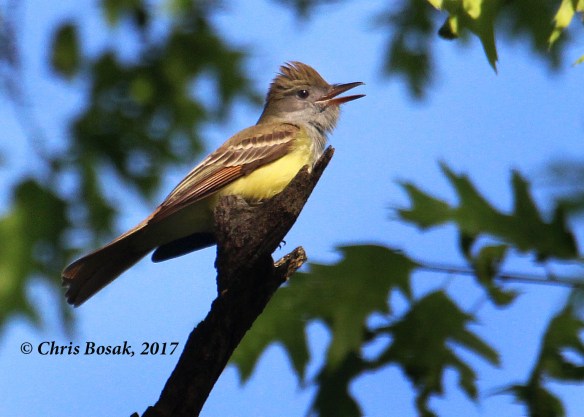
A great-crested flycatcher perches on a branch at Merganser Lake in Danbury, Conn., spring 2017.
At times, nature’s noises are dominated by this average-sized bird: the great-crested flycatcher. While it is easy to hear this bird and its “CREEEEP” call, it is not always easy to spot it. It is larger than sparrows and warblers, but still tough to find as it tends to hang out high in trees among the leaves. It is a beautiful bird, but doesn’t have flashy colors like the red of a scarlet tanager that makes it pop. But when you do find it, preferably through binoculars for a good look, you see it’s a handsome bird with soft browns and yellows.
Their habit of hanging out among the leaves makes them difficult to photograph as well. I was lucky in that two were flying back and forth, perhaps building a nest, and using this one dead branch as a lookout area before continuing on. So, of course, I climbed onto the roof to get a little closer to the branch and waited. It didn’t take long before one landed there, let out a big “CREEEEP” and took off. They have other songs and calls, but that’s the one I typically hear. I grabbed a few shots of that bird and when it took off, I left the roof, too. If they were indeed building a nest, I certainly didn’t want to stand in their way.

Stunned eastern wood-pewee survives

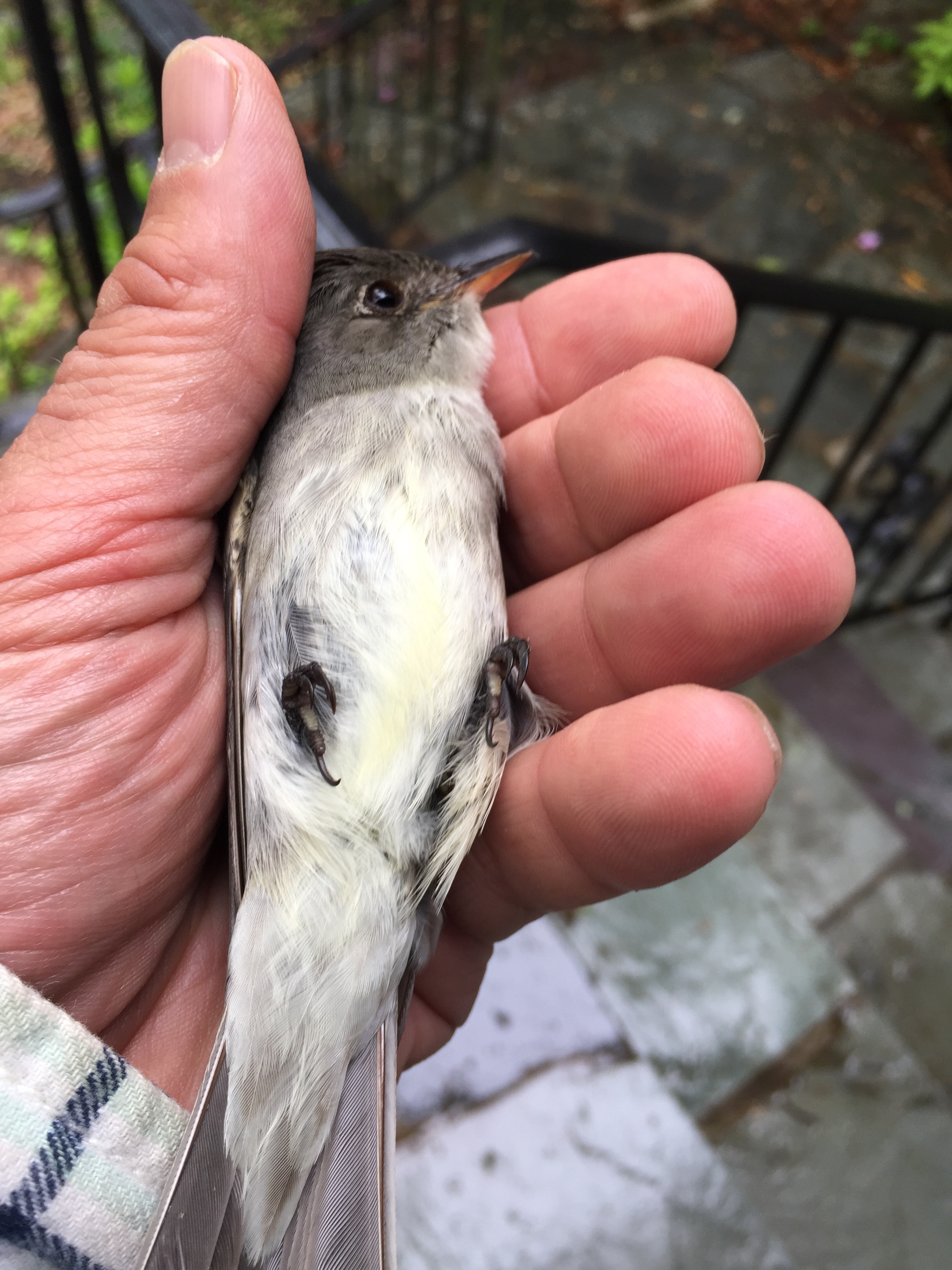
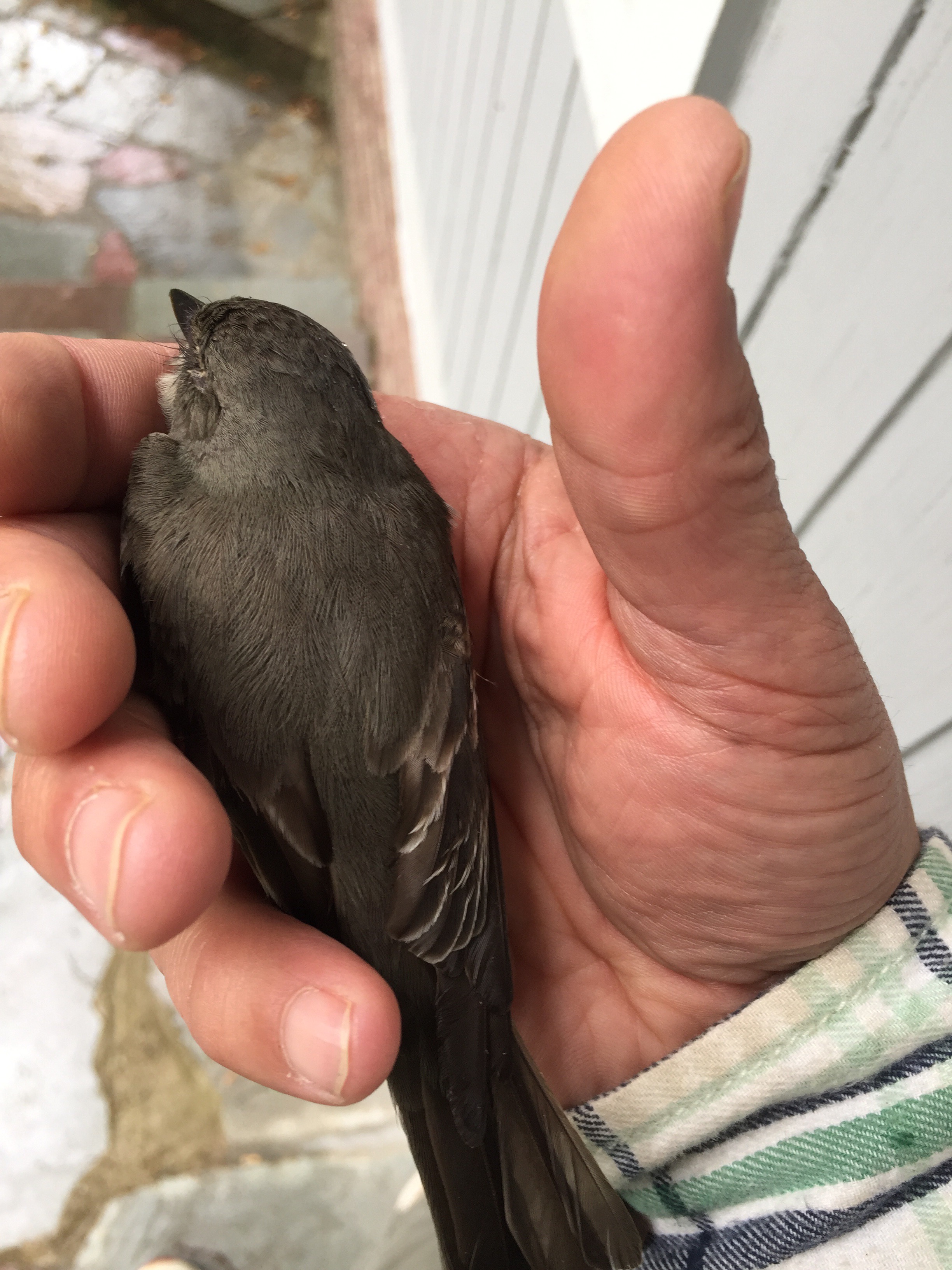
I found this guy on my porch as I was walking into the house this afternoon. He must have bumped into the bedroom window, and became stunned. I was happy to see that its neck looked OK. A broken neck from a window strike is fatal to birds.
Often, they are only stunned and need to collect their wits before they fly off and return to their day. I picked up the bird to keep it warm and calm. I was going to put it in a box and place it away from lurking predators. However, after a few seconds, I felt the bird try to flap its wings in my hand. I loosen my grip and the bird flew to a nearby branch. It immediately let out its trademark song, a high-pitched “pee-wee.”
It was an eastern wood-pewee and we will hear that song in the woods all summer.
Singing yellowthroat makes quick appearance

Photo by Chris Bosak
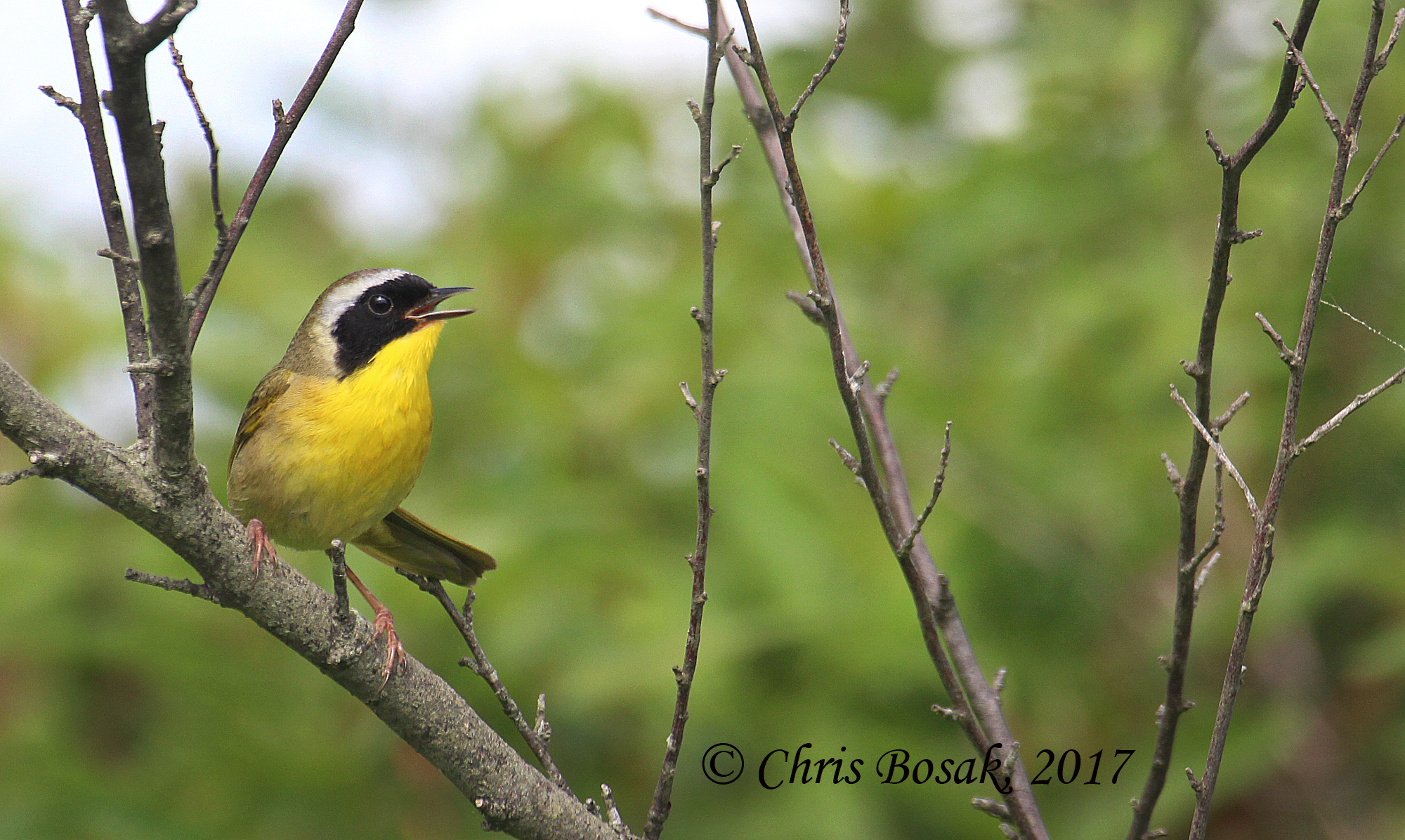
A common yellowthroat sings from a branch at Happy Landings in Brookfield in spring 2017.
While looking for bobolinks (more on those guys later) at Happy Landings in Brookfield, Conn., the other day, this common yellowthroat made a quick appearance. As yellowthroats often do, it disappeared as quickly as it appeared. It sang a quick tune “witchity, witchity, witchity” and ducked back into the brush.
I’ll take a quick sighting over no sighting at all any day.
Connecticut duck stamp winners announces
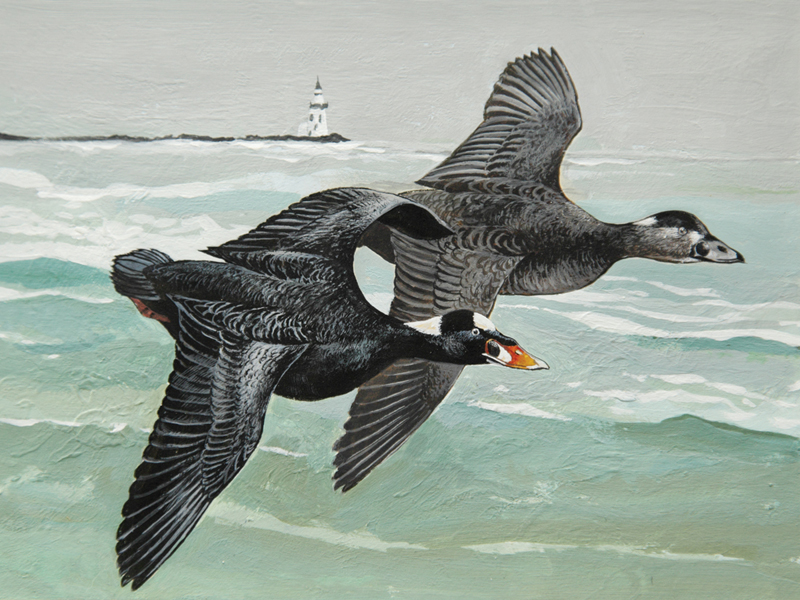
On occasion I’ll run a bird-related press release on this site. It’s been a while since I ran one, but I love ducks and the Connecticut duck stamp winners were announced. As usual, the artwork is terrific, so I figured why not post them here.
Enjoy … and buy duck stamps — either from your state or the federal stamp. All proceeds go to conservation efforts.
Here it is from Connecticut DEEP:
In a contest filled with great artwork, a panel of judges recently selected world renowned and Connecticut artist Chet Reneson’s depiction of a pair of surf scoters flying at the mouth of the Connecticut River with the Saybrook Jetty and Lighthouse in the background as the winner of the Department of Energy and Environmental Continue reading
Good spring for rose-breasted grosbeaks

Photo by Chris Bosak
A female rose-breasted grosbeak eat seeds at a platform feeder at Merganser Lake in Danbury, Conn., in spring 2017.
I’ve also seen them at suet feeders, so those of us who feed birds into the summer (or year-round) can attract them with a variety of foods. Many people stop feeding birds in the spring. I don’t blame those who have bears to worry about, but those who stop feeding birds once the winter ends miss out on birds such as rose-breasted grosbeaks.
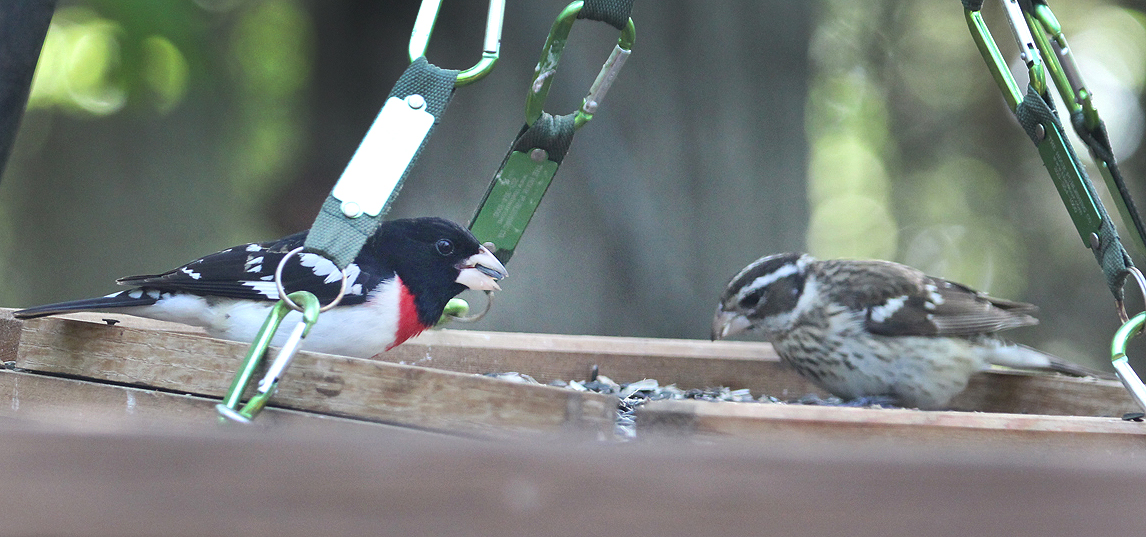
Above is a shot of the female at the feeder. Check out the sizable bill on her. Below is the male and female. Not a great shot, I know, but interesting to see them together. Another female was at the feeder seconds before this shot, but the female shown chased her away.