Unknown's avatar

About Chris Bosak

Bird columnist and nature photographer based in New England.

Chickadee checks out birdhouse

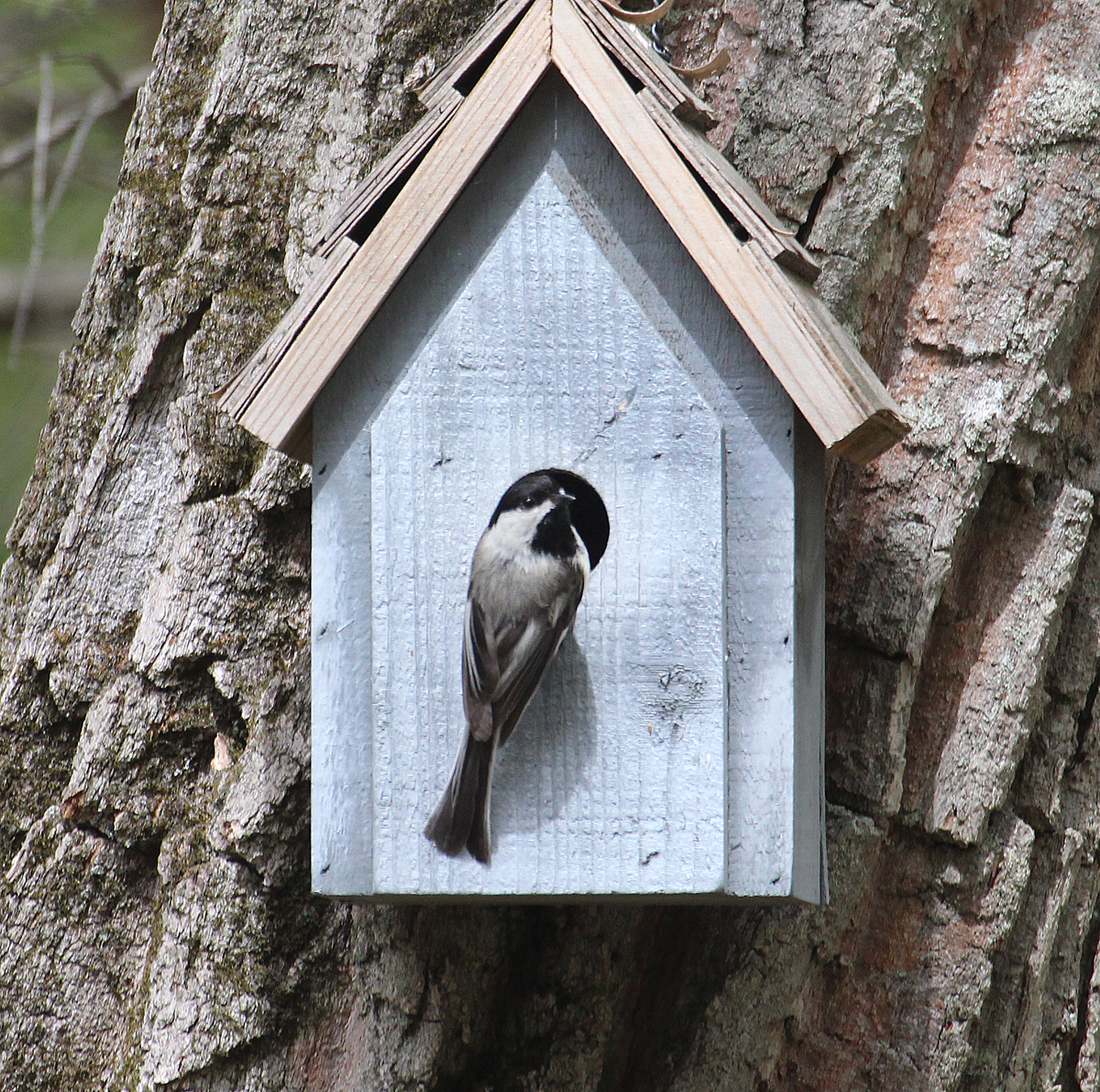
Photo by Chris Bosak A black-capped chickadee checks out a birdhouse in Danbury, Conn., during the spring of 2017.

Photo by Chris Bosak A black-capped chickadee checks out a birdhouse in Danbury, Conn., during the spring of 2017.

One of the biggest thrills in spring is seeing what birds are choosing your yard to raise a family. I have mourning dove and robin nests this spring, and this chickadee is checking out one of my four birdhouses. Unfortunately, I haven’t seen it since, so it likely found another home.

I did notice great-crested flycatchers flying into a large oak tree with nesting material in its bill. Hopefully that’s a good sign. I’ll certainly keep an eye out to see how that develops. I also have male and female hummingbirds coming to the feeders, so if hummingbirds nested in the yard somewhere, that would be cool.

As spring progresses, I’ll keep an eye out for what else might be nesting nearby. Drop me a line and let me know what’s nesting in your yard.

Nice to see this guy back

Photo by Chris Bosak A male ruby-throated humminacgbird visits a feeder in Danbury, Conn., during the spring of 2017.

Photo by Chris Bosak A male ruby-throated hummingbird visits a feeder in Danbury, Conn., during the spring of 2017.

Not sure if it’s the same male ruby-throated hummingbird I had last fall, but at any rate, it was good to see him return to the feeder a few days ago. He’s been their daily, several times a day. The female is still hanging around, too. Hopefully there’s a love connection there and they’ll build a nest somewhere on my property. I’ll keep my eyes open.


For the Birds: A migratory turn of events

Here is the latest For the Birds column, which runs in several New England newspapers.

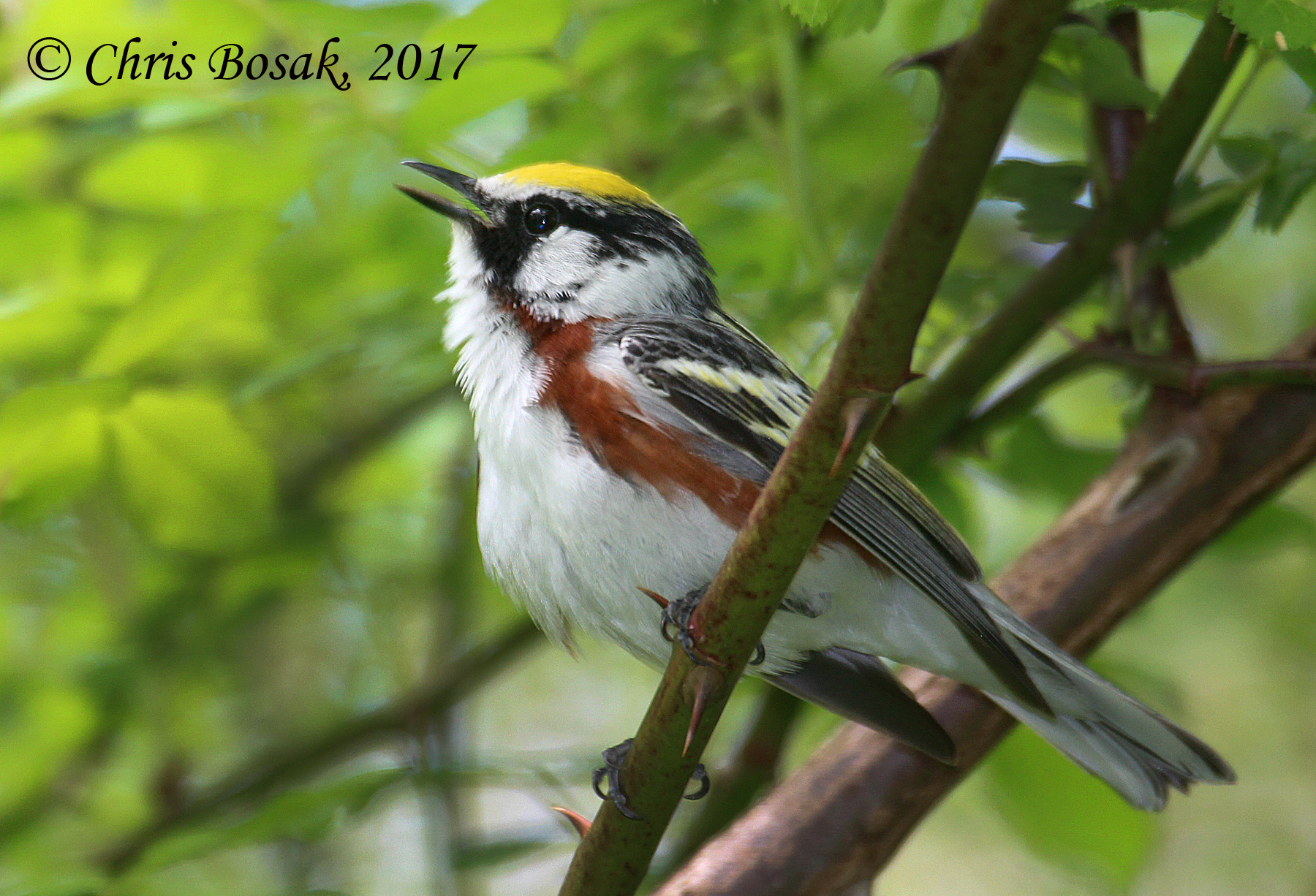
Photo by Chris Bosak A chestnut-sided warbler sings from a lower perch in Ridgefield, Conn., during the spring of 2017.

Photo by Chris Bosak
A chestnut-sided warbler sings from a lower perch in Ridgefield, Conn., during the spring of 2017.

My birdwatching fortunes this spring migration made an abrupt turn for the better last week.

The cool, wet weather – in addition to working and coaching youth baseball – had limited my time looking for birds. When I did get out there, the birdwatching was relatively slow: a towhee here, a thrush there.

I love my towhees and thrushes, of course, but the day of seeing a flurry of spring migrants had escaped me. The dry spell ended during a walk in the woods last week.

The woods themselves were alive with the sounds of ovenbirds, thrushes and even barred owls, which often sing during the day.

The ubiquitous “teacher-teacher-teacher” call of the ovenbird reminded me of a spring camping trip I did with the boys about five years ago. We canoed to a site on Grout Pond in Green Mountain National Park in southern Vermont. Once settled we walked through the woods and ovenbirds seemingly surrounded us the entire way.

It was a highlight of an otherwise, let me say difficult, camping experience. The wood was wet and wouldn’t burn, and rain fell throughout most of the cool day and cooler night. A steady wind made fishing impossible. The boys – then nine and five – fought and bickered the entire time.

I’ve had plenty of great camping experiences with the boys, but this was not one of them. I did have those ovenbirds, though.

Back to my walk Continue reading

Scarlet tanager makes spring appearance

A male scarlet tanager perches in a maple tree during spring migration 2017, in Danbury, Conn.

A male scarlet tanager perches in a maple tree during spring migration 2017, in Danbury, Conn.

It’s always nice when one of these guys lands in your yard. This is two years in a row I’ve played host to one of these flashy migrants. Now that’s a streak I hope continues.

The male scarlet tanager is arguably New England’s most brilliantly colored bird — in spring and summer, anyway. By the fall, he will molt into a much more dull plumage.


Happy Mother’s Day from BirdsofNewEngland.com

Photo by Chris Bosak A Common Loon swims on a lake in northern New Hampshire with two young loons.

Photo by Chris Bosak
A Common Loon swims on a lake in northern New Hampshire with two young loons.

Here’s an oldie, but a goodie for Mother’s Day as this mother loon keeps a watch over her growing babies. Happy Mother’s Day from Birds of New England.

How’s your warbler season going?

Photo by Chris Bosak A chestnut-sided warbler sings from a lower perch in Ridgefield, Conn., during the spring of 2017.

Photo by Chris Bosak
A chestnut-sided warbler sings from a lower perch in Ridgefield, Conn., during the spring of 2017.

We are heading to a point on the calendar where the spring warbler migration should be hitting its peak before trickling off as we head into the later weeks of May. The weather has been so cool and wet that many birders are wondering where the early part of the spring migration went.

I am included in that group as, between coaching youth baseball teams and having rain put a damper on birdwalks, my spring migration season has barely started .. and it’s already mid-May.

I did have a good walk recently with sightings of chestnut-sided warblers, blue-winged warblers, ovenbirds, wood thrushes, eastern towhees, and — to top it off — a male scarlet tanager. I also hear barred owls calling in the distance.

How is your spring migration season going? Let me know what you’re seeing out there.

A few singing warblers

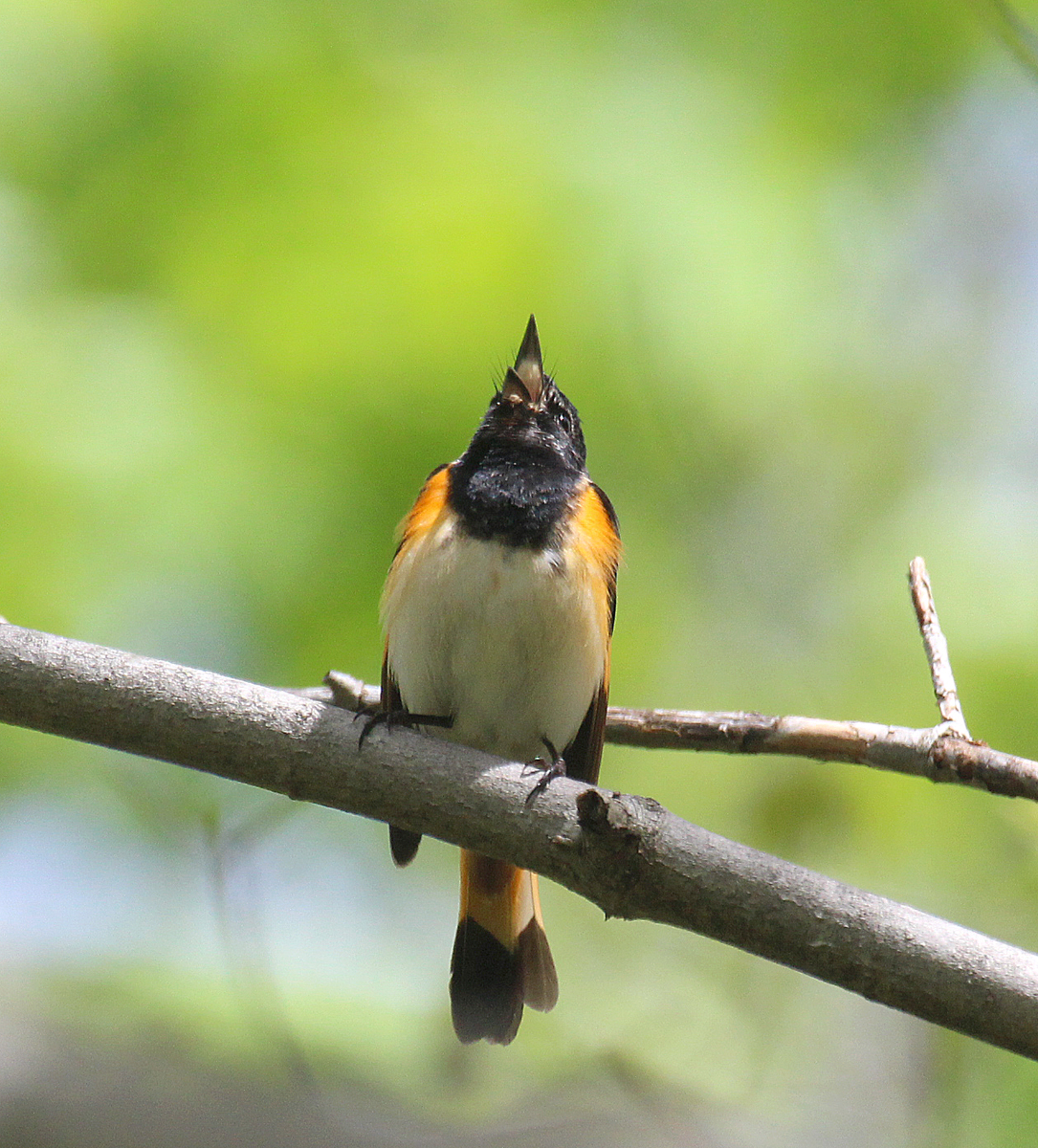
Photo by Chris Bosak  An American redstart sings from a perch in New England in spring 2017.

Photo by Chris Bosak
An American redstart sings from a perch in New England in spring 2017.

It’s warbler season (despite the below-normal New England temperatures) so I may as well post a few photos of these little birds …

Hopefully there will be more to come.

Photo by Chris BosakA chestnut-sided warbler sings from a perch in New England in the spring of 2017.

Photo by Chris BosakA chestnut-sided warbler sings from a perch in New England in the spring of 2017.

For the Birds: Towhees aplenty on walk


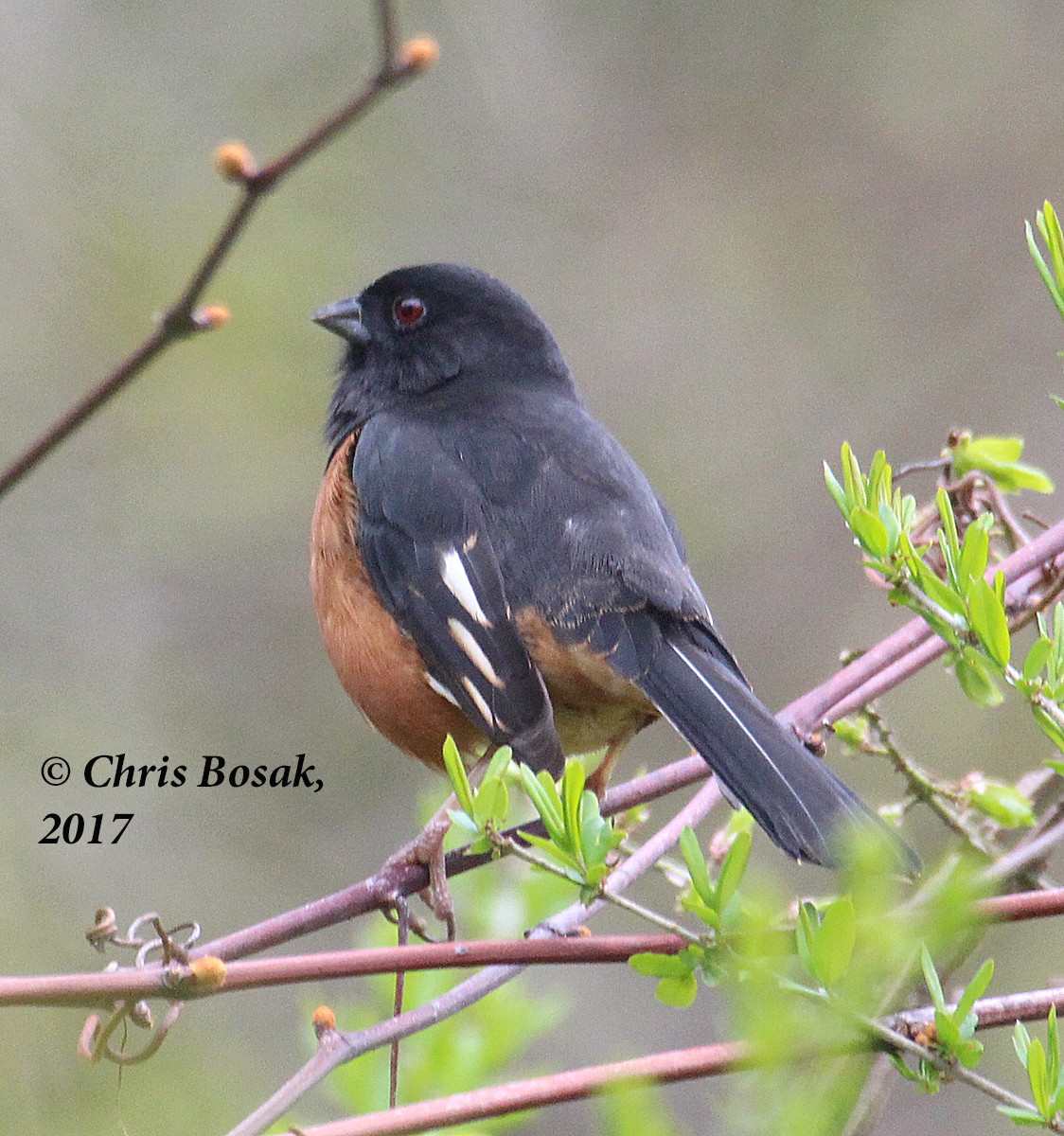
Photo by Chris Bosak An Eastern Towhee perches on a branch in Ridgefield, Conn., April 2017.

Photo by Chris Bosak
An Eastern Towhee perches on a branch in Ridgefield, Conn., April 2017.

Here is the latest For the Birds column, which runs in several New England newspapers.

….

I was on a tight schedule so I planned a quick out-and-back bird walk, instead of trying to tackle the entire several-mile loop.

The entire walk on the “out” portion was quiet with not a single bird seen or heard. I found that very peculiar considering it was the middle of April when the spring migration should be heating up. No warblers, no vireos, no regular birds. It was a drizzly day, so perhaps that had something to do with keeping the birds hunkered down.

The “back” portion of the trip started in similar fashion. No birds to be seen, no birds to be heard.

Then, deep in the woods, I heard a familiar call. It was a sharp and fairly loud two-syllable call. It was an eastern towhee. Based on where the sound was coming from, there was no way I was going to find it. I could have tromped through the brush and woods, but I didn’t want to risk being covered in ticks. It’s early spring, and I’ve already found several ticks on my clothes and a few attached to my body. In fact, that started back in February.

I’ve heard from several sources that the conditions are right for a bad tick season, so be careful out there. Check your clothes and self frequently.

It turned out it was no big deal that the towhee alluded me as several other towhees made their presence known as I made my way back. These towhees were much closer and some were even cooperative for the camera. From my experiences, that is pretty rare for a towhee — although the breeding season makes birds, and other creatures, do strange things sometimes.

By the end of the walk, I had seen about eight towhees. Only one of the birds was a female, and she stayed out of range of the camera. I did bring her in with my binoculars and got good looks at her. A male was close by, singing and calling. It was likely her mate.

Like many species, eastern towhees are sexually dimorphic, meaning males and females differ in appearance. But unlike many bird species, female towhees, in my opinion, are just as handsome as the males.

While the males are decorated with black, reddish-brown and white plumage, the females are light brown and white. Both have a similar pattern with white bellies and rufous-colored flanks. The males also have red eyes, which I always find cool.

As I mentioned before, time was short on my walk but the towhee sightings extended the walk — I’ve never been one to leave cooperative birds because of being in a rush. Two towhees in particular were cooperative and allowed me to grab some shots of them. Neither was overly cooperative, but each offered a few seconds worth of perching on an obvious, unobstructed branch. Towhees are infamous for hiding among the thick brush.

The walk ended void of any other bird sightings. No warblers, no vireos, no tanagers or grosbeaks. Just towhees. I’ll try again on a sunnier day.

Another shot of the ‘pileated’ woodpecker

Photo by Chris Bosak  A pileated woodpecker looks for insects at the base of a tree at Merganser Lake in Danbury, Conn., April 2017.

Photo by Chris Bosak
A pileated woodpecker looks for insects at the base of a tree at Merganser Lake in Danbury, Conn., April 2017.

Here’s another photo of the pileated woodpecker I saw the other day.

Hearing the name of this remarkable bird begs the question: What does pileated mean? According to dictionary.com, it simply means “crested,” an apt name for this woodpecker. There’s also this, more descriptive, definition from thefreedictionary.com: “Etymologically means “capped,” like a mushroom, but now refers to a bird with a crest on the top of the head from the bill to the nape.”

So there you have it …


Look who’s back

Photo by Chris Bosak A ruby-throated hummingbirds hovers near a feeder at Merganser Lake in Danbury, Conn., in April 2017.

Photo by Chris Bosak
A ruby-throated hummingbirds hovers near a feeder at Merganser Lake in Danbury, Conn., in April 2017.

This female ruby-throated hummingbird arrived today (Sunday, April 30, 2017) at the feeder. I put the feeder out about two weeks ago in anticipation of the hummingbirds’ return. Is it the same female hummingbird that has visited my feeder over the last few seasons? I’m not sure, but I’m glad to welcome them back, either way. Hopefully she will find a suitable nesting site on my property. If she heads farther north, well, that’s fine, too.

Photo by Chris Bosak A ruby-throated hummingbirds perches on a feeder at Merganser Lake in Danbury, Conn., in April 2017.

Photo by Chris Bosak
A ruby-throated hummingbirds perches on a feeder at Merganser Lake in Danbury, Conn., in April 2017.