Unknown's avatar

About Chris Bosak

Bird columnist and nature photographer based in New England.

Latest For the Birds column: Fall brings beauty beyond birds

Photo by Chris Bosak Fall colors abound at a cemetery in Darien, CT, Nov. 2013.

Photo by Chris Bosak
Fall colors abound at a cemetery in Darien, CT, Nov. 2013.

Here’s the latest For the Birds column, which runs weekly in The Hour (Norwalk, Conn.), The Keene (NH) Sentinel and several Connecticut weekly newspapers.

….

The other day I woke up to a gray, drizzly day. The bright yellow birch leaves popped in contrast to the dark evergreen branches of the hemlocks.

The weight of the overnight rain and persistent drizzle was enough to cause hundreds of those leaves to break free from their boughs and sway their way to the ground. It was a sight to behold and merely a precursor of what autumn will show us over the next few weeks.

A bright yellow carpet now forms the first layer of color on the floor of the woods in my front yard. The leaves of the oaks and maples in that patch of woods will form subsequent layers.

I love fall in New England. I think just about every New Englander feels the same way. Yes, it means winter is coming next, but it also means a bird migration, pumpkin festivals, apple picking, cool dips in your favorite lake, Halloween decorations, no more mosquitoes and, of course, the aforementioned remarkable fall foliage.

Leaves take center stage during a New England autumn, but there are plenty of other natural wonders to amaze us in September, October and November. Many of these spectacles have nothing to do with birds, or animals of any sort for that matter.

I was driving my son Will home from his soccer practice last Friday and a brilliant harvest moon seemed to follow us from above the hills. It is full moons like that one that inspire so many poems, folktales, and legends about the moon. It had me on the roof trying to finally get a decent photo of a full moon. I failed again, but had fun trying and will try again on the next full moon.

Fall is a great time to walk around a meadow. The various daisies and milkweeds that dominate the meadows in the summer start to give way to goldenrod and purple asters. There’s nothing like cutting through a field covered in goldenrod. Whatever the background may be – barn, covered bridge, trees or pond — it is enhanced by the sweeping deep yellow shades of the goldenrod.

The moon, the leaves, the flowers … nature never fails to delight us in the fall.

Now you add in the animal kingdom. I’ve written in previous weeks about the spectacular hawk migration that takes place in the fall and the various songbirds that visit our yards on their way south. The meadows I mentioned before burst with life as butterflies and other insects can’t resist those goldenrod flowers as they fuel up for whatever winter has in store for them.

Fall is also my favorite time to visit moose country in northern New England. They are not easy find in the fall – sadly, they are never easy to find these days – but if you come across a bull moose with a fully grown set of antlers and have fall colors as the backdrop, it’s a scene you’ll never forget. I’ve seen it several times, but still get the itch to return up north every fall.

Even if the search for moose, or whatever might be your target, comes up empty, you’re still surrounded by those stunning colors nature grants us.

I know I’m preaching to the choir, but New England really is something special in the fall.

Just when you thought the hummingbird photos were over

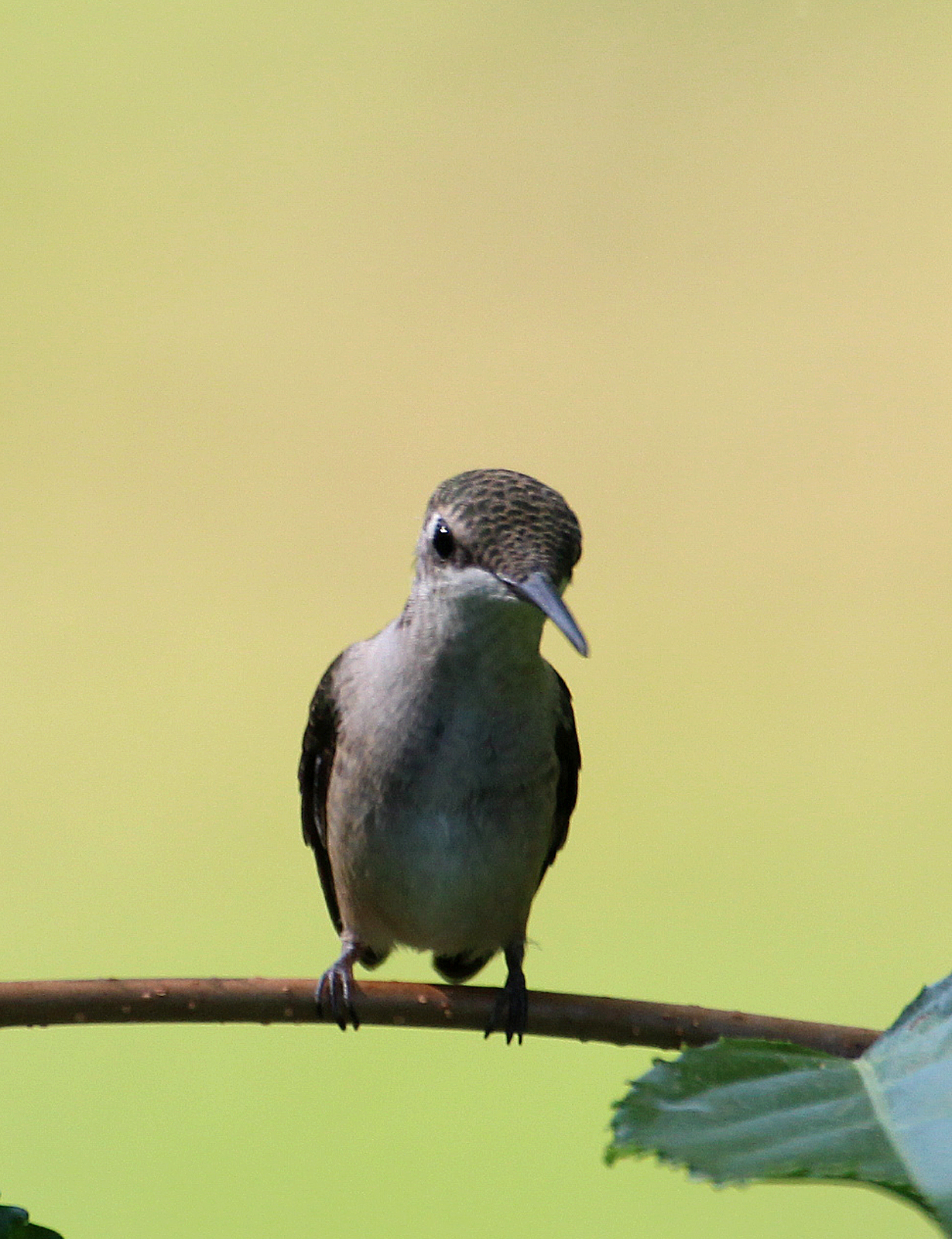
Photo by Chris Bosak A Ruby-throated HummingAbird perches on a branch in Brookfield, Conn., summer 2016.

Photo by Chris Bosak
A Ruby-throated HummingAbird perches on a branch in Brookfield, Conn., fall 2016.

Well, I keep seeing them, so I’ll keep posting photos of them. Soon, the vast majority of hummingbirds will have left New England for their incredible migration to Central and South America. So as long as I keep seeing them …

Photo by Chris Bosak A Ruby-throated HummingAbird perches on a branch in Brookfield, Conn., summer 2016.

Photo by Chris Bosak
A Ruby-throated Hummingbird perches on a branch in Brookfield, Conn., fall 2016.

Photo by Chris Bosak A Ruby-throated HummingAbird perches on a branch in Brookfield, Conn., summer 2016.

Photo by Chris Bosak
A Ruby-throated Hummingbird perches on a branch in Brookfield, Conn., summer 2016.


Little rascals — but still cute little buggers

Photo by Chris Bosak An Eastern Chipmunk eats from a platform bird feeder in Danbury, Conn., summer 2016.

Photo by Chris Bosak
An Eastern Chipmunk eats from a platform bird feeder in Danbury, Conn., summer 2016.

People don’t feel the same way about chipmunks as they do gray squirrels.

Keeping squirrels away from birdfeeders is a multi-million dollar industry. People can’t stand the sight of a squirrel at their birdfeeder. If they don’t have a squirrel-proof feeder (half of which don’t work anyway) they bang on a window, yell at the offensive little rodent, and toss things at them to make them scram. (Of course, I’m talking in general here. Some people don’t mind squirrels and some people actually like them.)

But chipmunks. Everyone loves chipmunks. They are cute, handsomely colored and decorated, and fun to watch. And, as far as I can tell, eat just as much of my birdseed as the squirrels do. They are Continue reading

Never tire of Great Blue Herons

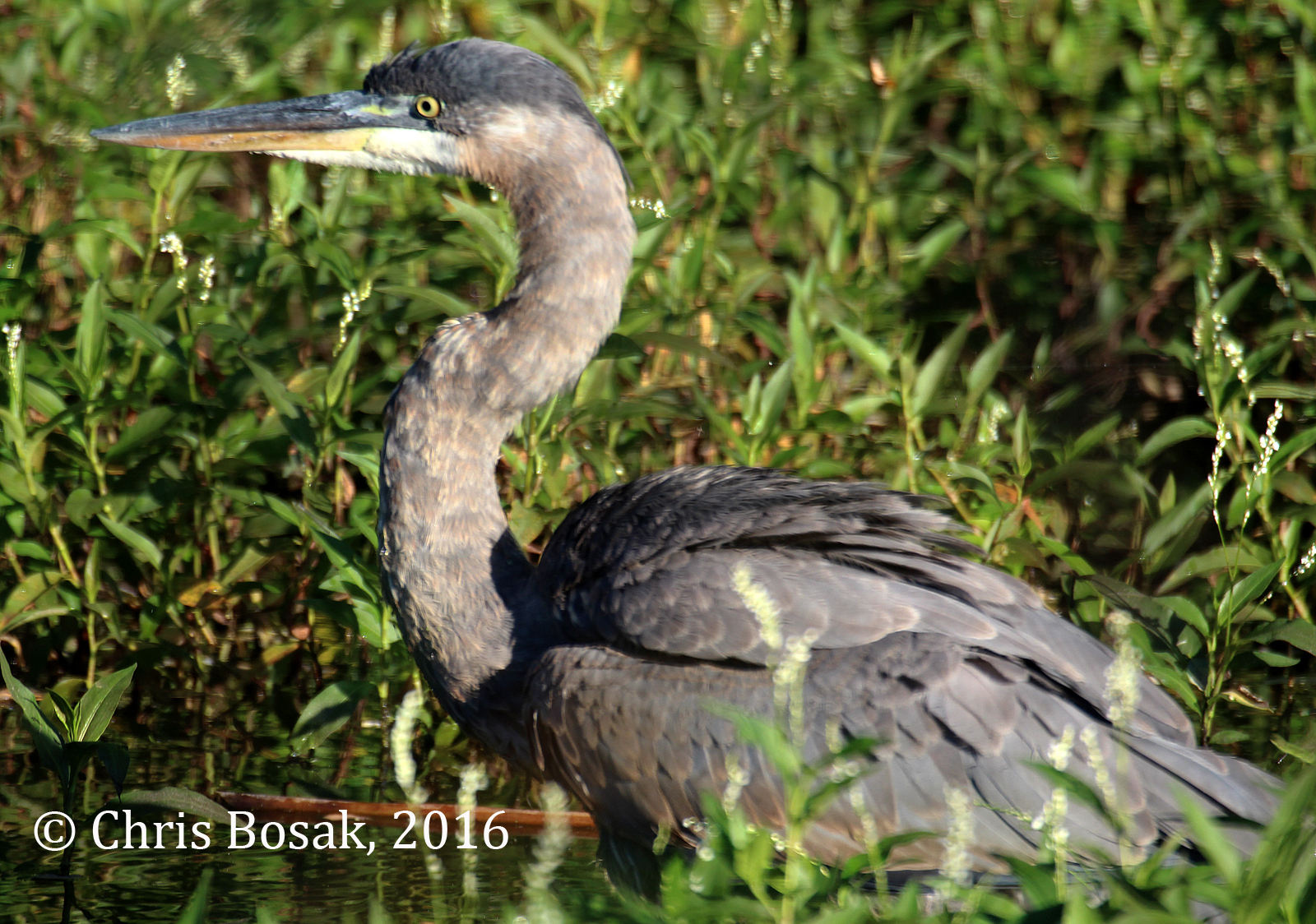
Photo by Chris Bosak A Great Blue Heron walks in a pond in Danbury, Conn., summer 2016.

Photo by Chris Bosak
A Great Blue Heron walks in a pond in Danbury, Conn., summer 2016.

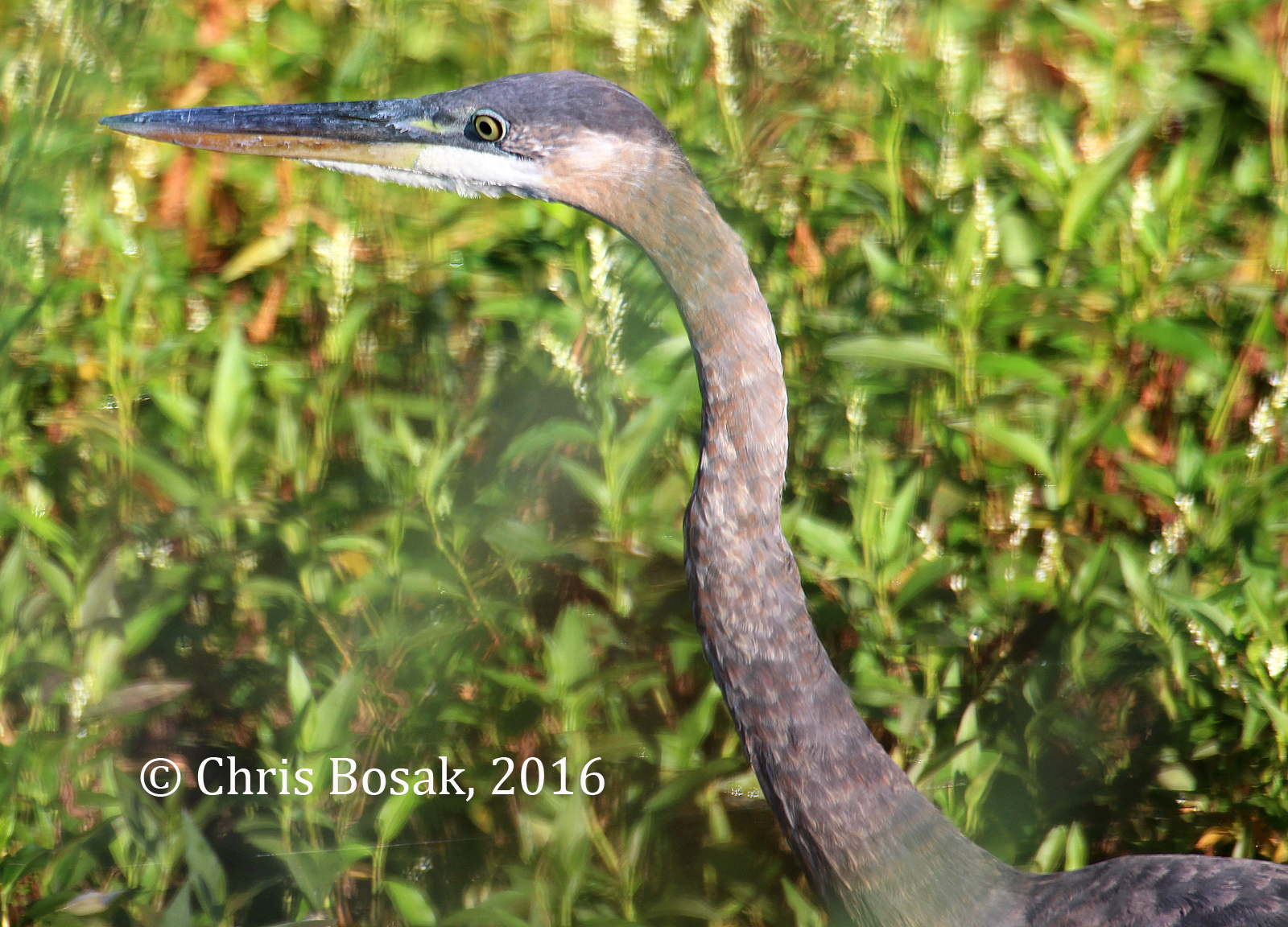
I have a stock pile of Great Blue Heron photos to last me a lifetime. Here are some more I took this week as I can’t resist driving or walking past one without taking some photos.

Photo by Chris Bosak A Great Blue Heron walks in a pond in Danbury, Conn., summer 2016.

Photo by Chris Bosak
A Great Blue Heron walks in a pond in Danbury, Conn., summer 2016.

Gardening: Add some eye candy to your garden this fall

Photo credit: Longfield Gardens Dutch Master daffodils, Involve tulips and Muscari provide several layers of color in the garden.

Photo credit: Longfield Gardens
Dutch Master daffodils, Involve tulips and Muscari provide several layers of color in the garden.

By Melinda Myers
Shorten the winter season with the help of spring flowering bulbs that you plant in fall. These beauties often provide the first bit of color, fragrance and winter relief each year.

Look for new and unique ways to incorporate bulbs into your landscape. Create a seasonal water feature with a river of blue scillas and grape hyacinths meandering through the garden. Welcome visitors with a front door or walkway garden that blooms from early spring through early summer and is loaded with crocus, tulips, daffodils and allium.

Don’t overlook those shady spots. Many of these locations provide enough early season sun, before the trees leaf out, for bulbs to grow and flower. Use more shade tolerant spring bloomers like snowdrops, grape hyacinths, scillas, anemones, daffodils, fritillarias and Camassias in shady areas among hostas, ferns and other shade tolerant perennials.

Whether you’re new or experienced, growing bulbs is an easy endeavor. Just follow these simple steps to a beautiful spring garden.

Selection

Purchase bulbs that are dense and firm, and free of bruises or mold. Shop early for the best selection. Mail order sources will ship your Continue reading

Latest For the Birds column: Hawkwatching primer

Photo by Chris Bosak An Osprey soars over the Norwalk River on Monday, Sept. 1, 2014.

Photo by Chris Bosak
An Osprey soars over the Norwalk River on Monday, Sept. 1, 2014.

Here’s the latest For the Birds column, which runs weekly in The Hour (Norwalk, Conn.), The Keene (NH) Sentinel and several Connecticut weekly newspapers.

A September would not be complete without a bird column on the fall hawk migration. For many, the hawk migration is the highlight of the fall season, despite there being many other birding options this time of year.
It’s hard to blame those people who feel that way. You can’t complain about spending a sunny, crisp fall day on the top of a mountain or other open area looking for hawks coming down from the north. Pick the right day and you may see hundreds of hawks making their way to their winter grounds.
The trick for many people, including myself, is figuring out which hawk is which from such a distance in the sky. I have gotten better over the years but certainly not to the level of the experts at the popular hawkwatching sites throughout New England. The experts, who are trained in this sort of thing, know the identification of the bird long before I can even see it out in the horizon.

The other trick to hawkwatching is picking the right day. Weather plays a big role in the fall hawk migration. Pick a day with a steady southerly wind and you’ll likely see very few hawks. Which hawk wants to battle a stiff headwind to start a thousand-mile (or more) journey.

But, pick a sunny day following a cold Continue reading

Canna brings in the hummingbirds


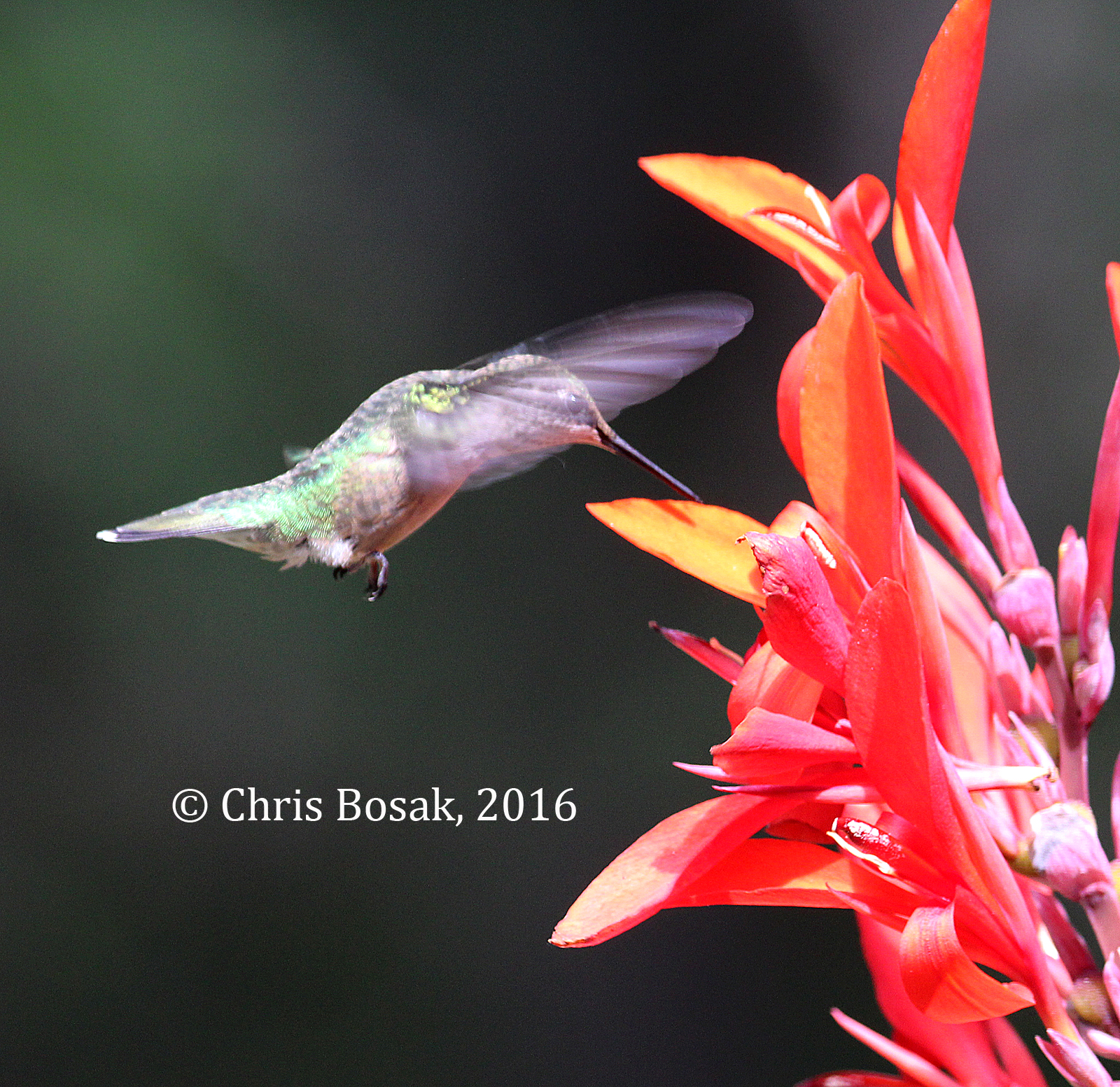
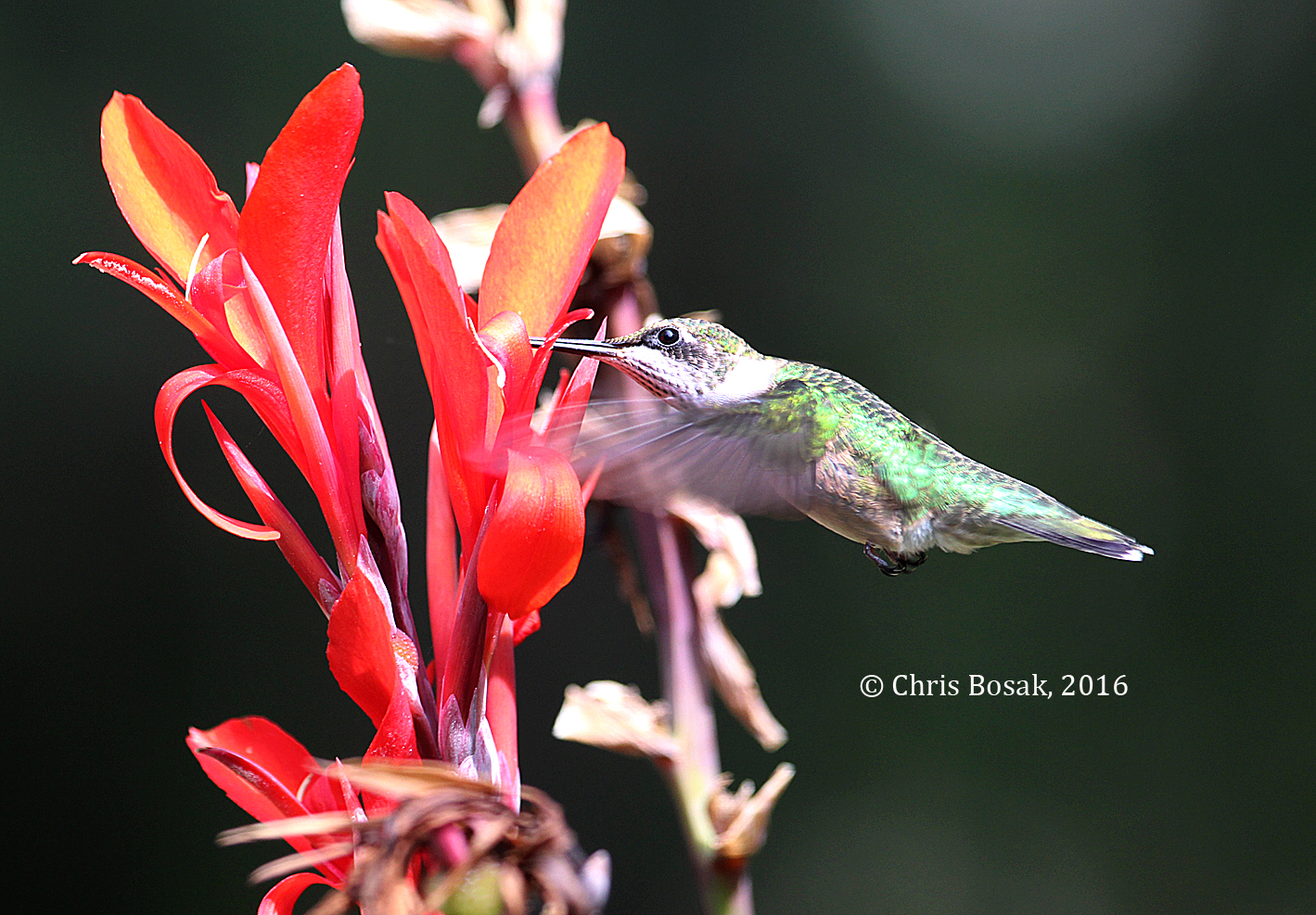
Photo by Chris Bosak A Ruby-throated Hummingbird sips nectar from Canna flower in Danbury, Conn., summer 2016.

Photo by Chris Bosak
A Ruby-throated Hummingbird sips nectar from Canna flower in Danbury, Conn., summer 2016.

My friend Stacy gave me some Canna rhizomes last winter. I stored them in the basement and planted them this spring. In the middle of summer, I had a few red flowers, but not as many as I thought I’d have. Now, at the end of summer/beginning of fall, I have tons of flowers. The hummingbirds are taking notice, as well, as proven by these photos.

Canna is a more southern plant so it should be dug up and stored over winter in New England. Kind of a hassle, but worth it …

Photo by Chris Bosak A Ruby-throated Hummingbird sips nectar from Canna flower in Danbury, Conn., summer 2016.

Photo by Chris Bosak
A Ruby-throated Hummingbird sips nectar from Canna flower in Danbury, Conn., summer 2016.

Photo by Chris Bosak A Ruby-throated Hummingbird sips nectar from Canna flower in Danbury, Conn., summer 2016.

Photo by Chris Bosak
A Ruby-throated Hummingbird sips nectar from Canna flower in Danbury, Conn., summer 2016.

Photo by Chris Bosak A Ruby-throated Hummingbird sips nectar from Canna flower in Danbury, Conn., summer 2016.

Photo by Chris Bosak
A Ruby-throated Hummingbird sips nectar from Canna flower in Danbury, Conn., summer 2016.

Gardening: Turn Yard Waste into Gardener’s Gold – Compost

Another column by Melinda Myers, well-known gardening and columnist: 

Gardener’s Supply Company Tumbler composters are great for small spaces and make loading, unloading and turning much easier.

Gardener’s Supply Company
Tumbler composters are great for small spaces and make loading, unloading and turning much easier.

Save time and money by turning landscape trimmings into a valuable soil amendment.

The idea is simple, just collect disease- and insect-free plant debris into a heap and let it decompose into a fine, nutrient rich material that helps improve the soil. Don’t add meat, dairy, invasive plants, weeds that have gone to seed or perennial weeds that can take root and grow in your compost pile.

Speed things up by layering yard waste with soil or compost, adding a bit of fertilizer to each layer and moistening to a consistency of a damp sponge. Further speed up the process by making the pile at least three-feet tall and wide.

Turn the pile as time allows, moving the more decomposed materials from the center to the outside of the pile. It’s a great work out and speeds up the decomposition. The more effort you put into composting the sooner you have rich organic matter for your garden.

Build the pile in a location that is convenient for adding raw materials and harvesting the finished compost. Consider placing the pile near a water source to make moistening the pile easier.  Avoid poorly drained locations that may lead to the pile of compost becoming waterlogged.  Soggy materials break down more slowly and may smell.   Continue reading

Latest For the Birds column: More on hummingbirds (again)

Here’s the latest For the Birds column which runs in The Hour (Norwalk, Conn.), Keene (NH) Sentinel, and several weekly newspapers on Connecticut.

Ruby-throated Hummingbird at Errol Hotel in Errol, NH.

Ruby-throated Hummingbird at Errol Hotel in Errol, NH.

The emails about hummingbirds kept coming, so I will roll out one more column on these tiny birds.

I used to have the worst luck trying to find hummingbirds, but this year has been an exception. I have consistently seen them at my feeder and out in the field, so to speak.

Now is the time to look for them among the many patches of jewelweed, or touch-me-not, that grow at the edges of New England’s woods. Even in years when I don’t see a lot of hummingbirds, I always seem to find them in late summer and early fall buzzing around the small orange flowers of jewelweed.

But enough about where I am seeing them. Hummingbirds are obviously a regional favorite as I have received several emails regarding the species over the last few weeks. In addition to what I included a few weeks ago, here’s a sampling of what people are saying about the smallest of birds. Continue reading

Latest For the Birds column: For some birds, humans are a rarity

Here’s the latest For the Birds column. This one’s a little different. Let me know what you think. Thanks for taking a look at http://www.BirdsofNewEngland.com.

Photo by Chris Bosak Yellow-rumped Warbler in Selleck's Woods, Darien, Conn., April 2014.

Photo by Chris Bosak
Yellow-rumped Warbler in Selleck’s Woods, Darien, Conn., April 2014.

Is it possible that the bird in your backyard has never seen a human before?

It’s not likely, but if there were ever a time for that happen, it’s during the fall migration.

If we were a little farther north in New England, the odds would be much greater. Even in the middle of New England, however, the possibility still exists — at least in my very unscientific estimation. The adult birds, those that flew through our region on their northern migration in the spring, have almost certainly seen humans.

But first-year birds, those born a few short months ago, who knows? Maybe you are the first human one is seeing.

It would take a relatively cautious bird species that breeds in the vast Boreal Forest of the northern U.S. and Canada. So a Gray Catbird or Baltimore Oriole passing through has likely seen plenty of humans already, having likely been born in the suburbs.

But one of any number of warbler, vireo or fly Continue reading