Unknown's avatar

About Chris Bosak

Bird columnist and nature photographer based in New England.

New garden feature at www.BirdsofNewEngland.com

https://birdsofnewengland.com/wp-content/uploads/2016/09/fawn.jpg

Photo by Melinda Myers, LLC
Deer damage can be devastating to vegetable and flower gardens, making fencing, repellents and other tactics essential.

I’m happy to introduce a new feature and page for http://www.BirdsofNewEngland.com

It’s a garden column from Melinda Myers, a well-known gardener and columnist. I have read her garden column in Birds and Blooms for years. Her columns will appear from time to time with permission on http://www.BirdsofNewEngland.com.

Here’s the first one. I hope you enjoy this occasional series.

Five Ways to Protect Your Garden from the Deer
By Melinda Myers

Don’t let your vegetable and fall flower gardens succumb to hungry deer. Even if you’re lucky enough to be deer-free now, be vigilant and prepared to prevent damage as these beautiful creatures move into your landscape to dine. Here are five tactics to help you in the battle against these hungry animals.

Fencing is the best, though not always practical, way to control deer. Install a 4- to 5-foot-high fence around small garden areas. This is usually enough to keep out deer that seem to avoid small confined spaces.  The larger the area, the more likely deer will enter. Some gardeners report success surrounding their garden or landscape with strands of fishing line set at 12” and 36” above the ground.

Low voltage electric fencing or posts baited with a deer repellent are also options. Just be sure to check with your local municipality before installing this type of fencing.

Scare tactics are less effective on deer in urban environments. They are used to human scents and sounds. Many gardeners report success with motion sensor sprinklers. As the deer passes in front of the motion sensor it starts the sprinkler and sends them running. Just be sure to turn off the sprinkler when you go out to garden.

Repellents that make plants taste or smell bad to deer can also help.  You will find products containing things like garlic, hot pepper oil, and predator urine.  Apply them before the animals start feeding for the best results. And reapply as directed on the label. Look for products like Deer Ban (summitchemical.com) that are easy to apply, odorless and last a long time.

Include deer resistant plants whenever possible. Even though no plant is one hundred percent deer-proof, there are those the deer are less likely to eat. Include plants rated as rarely or seldom damaged by deer.  And be sure to provide additional protection if you include plants known to be frequently or severely damaged.

Constantly monitor and evaluate the effectiveness of the methods used.  Deer often change their feeding location and preferred food. And if the populations are high and the deer are hungry, they will eat just about anything. Be willing to change things up if one method is not working. Using multiple tactics will help increase your level of success.

So don’t let hungry deer stop you from gardening.  Be vigilant and persistent and send them elsewhere to dine.

Gardening expert Melinda Myers has more than 30 years of horticulture experience and has written over 20 gardening books, including  Small Space Gardening  and the  Midwest Gardener’s Handbook . She hosts The Great Courses “How to Grow Anything:  Food Gardening For Everyone ” DVD set  and the nationally syndicated  Melinda’s Garden Moment  TV & radio segments. Myers is a columnist and contributing editor for  Birds & Blooms  magazine and was commissioned by Summit Responsible Solutions for her expertise to write this article. Myers’ website is www.melindamyers.com.


Feeders are back up


Photo by Chris Bosak A Chipping Sparrow eats from a acbirdfeeder at Merganser Lake in Danbury, Conn., summer 2016.

Photo by Chris Bosak
A Chipping Sparrow eats from a a bird feeder at Merganser Lake in Danbury, Conn., summer 2016.

When the nights first start to feel just a bit like the fall, I start filling the feeders again. This year that happened to fall on Labor Day Weekend. I hope everyone had a good holiday. The bad news is that summer is almost over. The good news is that fall is next. It’s a great season for birdwatching. (Aren’t they all, though?)

One of my first visitors to the feeders was this Chipping Sparrow. It’s a cute little sparrow and VERY common around my neighborhood. It’s always good to see the birds back at the feeders again.

Latest For the Birds column: I always come back to the American Oystercatcher

An American Oystercatcher seen at Milford Point during the summer.

An American Oystercatcher seen at Milford Point during the summer.

It’s been far too long since I’ve written anything about one of my favorite birds, the American Oystercatcher.

Since they will be migrating to points south before we know it, I figured this is a good time to shine a light on these fantastic birds again.

Many birds make a statement with their plumage. Flashy colors or muted tones, their plumage is their most distinguishing feature. Other birds stand out from the crowd with other features: an owl’s large eyes; a heron’s long legs; a Northern Mockingbird’s incredible singing.

The American Oystercatcher makes a statement in many ways. It is large, especially by shorebird standards. It has beautiful brown, black and white plumage. Its noises are loud and conspicuous, able to be heard from distant beaches as the birds rest on off-shore islands.

Perhaps the most impressive feature of the oystercatcher is its bill. It is a thick, long, bright orange/red bill as strikingly beautiful as it is deadly. It is called an oystercatcher because that bill can open shells that other shorebirds can only dream of opening.

American oystercatchers’ eyes are a spectacle unto themselves. While many birds simply have black beads for eyes, the oystercatcher has large bright yellow eyes with a black dot in the middle. The eye is also surrounded by a thick bright red eye ring, similar to that of a wood duck’s.

I still feel that the American Oystercatcher is an underrated bird. Many people rarely see them, if at all, because oystercatchers are only seen around the shore. If you don’t visit the coast, you won’t see one. So it doesn’t even register on the radar of many people because they simply don’t see them. For many birders who do visit the coast frequently, they’ve seen plenty of oystercatchers so the thrill is limited when the see another one.

That, of course, has never been a problem for me. Like Great Blue Herons, Hooded Mergansers, Wood Ducks and countless other bird species, I get a thrill every time I see an American Oystercatcher.

Now that I don’t live near the coast anymore, I rarely see these most impressive birds. I miss a lot about coastal birding, but the American Oystercatcher is perhaps what I miss the most. I still see Osprey, cormorants, gulls and some shorebirds on my freshwater haunts, but not oystercatchers.

I’ll be back soon enough to see them again, I’m sure. I’d better hurry, though, the migration is already under way.

And the answer is …


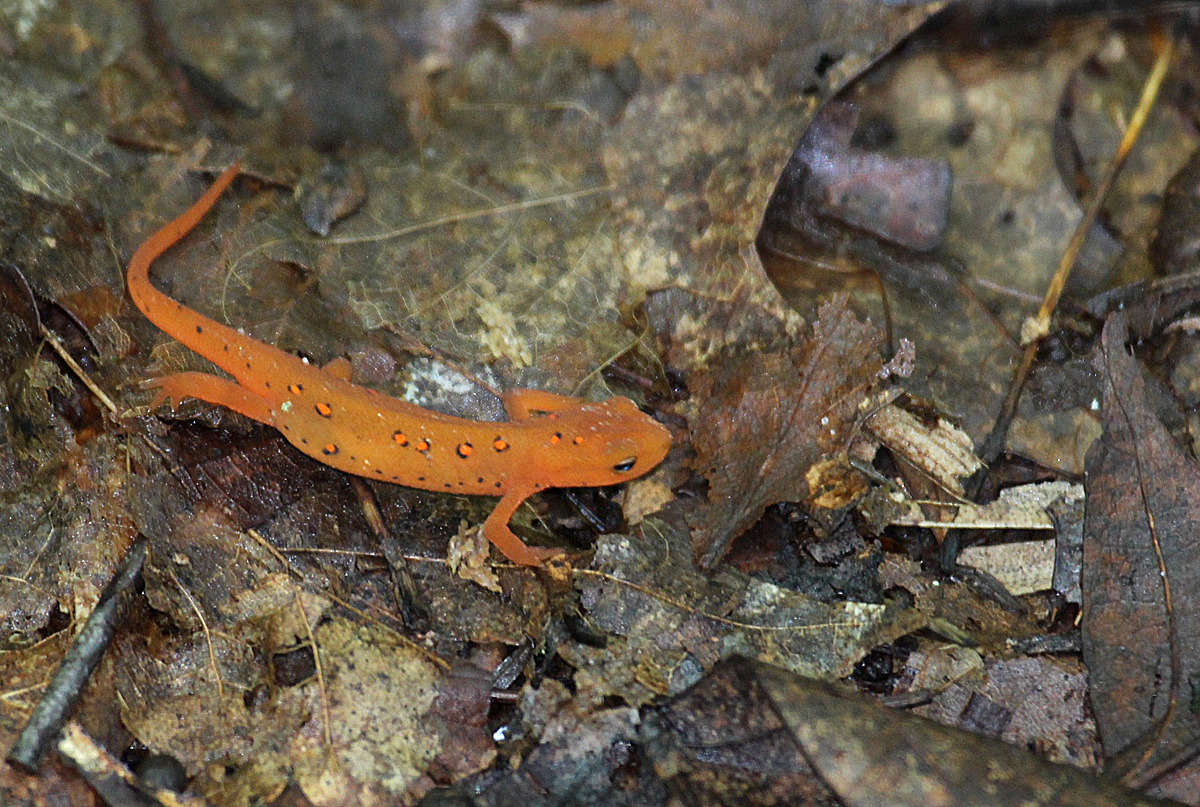
Photo by Chris Bosak An eft crawls across a trail at Merganser Lake in summer, 2016.

Photo by Chris Bosak
An eft crawls across a trail at Merganser Lake in summer, 2016.

A newt. More accurately an eft, which is a terrestrial stage of a newt’s life. The efts eventually make their way to water and become newts, which are duller in color and have a tail more suitable for aquatic life.

Birders, hikers and anyone else who uses wooded trails must be careful in the spring and summer, especially after a rain, to be sure not to step on these interesting creatures.

Click here for a Wikipedia page with more information.

Here are few more photos.

Photo by Chris Bosak An eft crawls across a trail at Merganser Lake in summer, 2016.

Photo by Chris Bosak
An eft crawls across a trail at Merganser Lake in summer, 2016.

Photo by Chris Bosak An eft crawls across a trail at Merganser Lake in summer, 2016.

Photo by Chris Bosak
An eft crawls across a trail at Merganser Lake in summer, 2016.

New birding quiz

Photo by Chris Bosak

Photo by Chris Bosak

It’s been a while since I’ve posted a birding quiz. So here’s another … what is this?

Big hint … it is NOT a bird or a part of bird!!! It is something that birders often come across when out in the woods, however. (That’s another hint.)

Answer coming soon at http://www.BirdsofNewEngland.com

Answer by leaving a comment, emailing me at bozclark@earthlink.net, or just make the guess in your head and wait for the answer.

Thanks for playing along.

This guy’s not happy about the hummingbird series ending

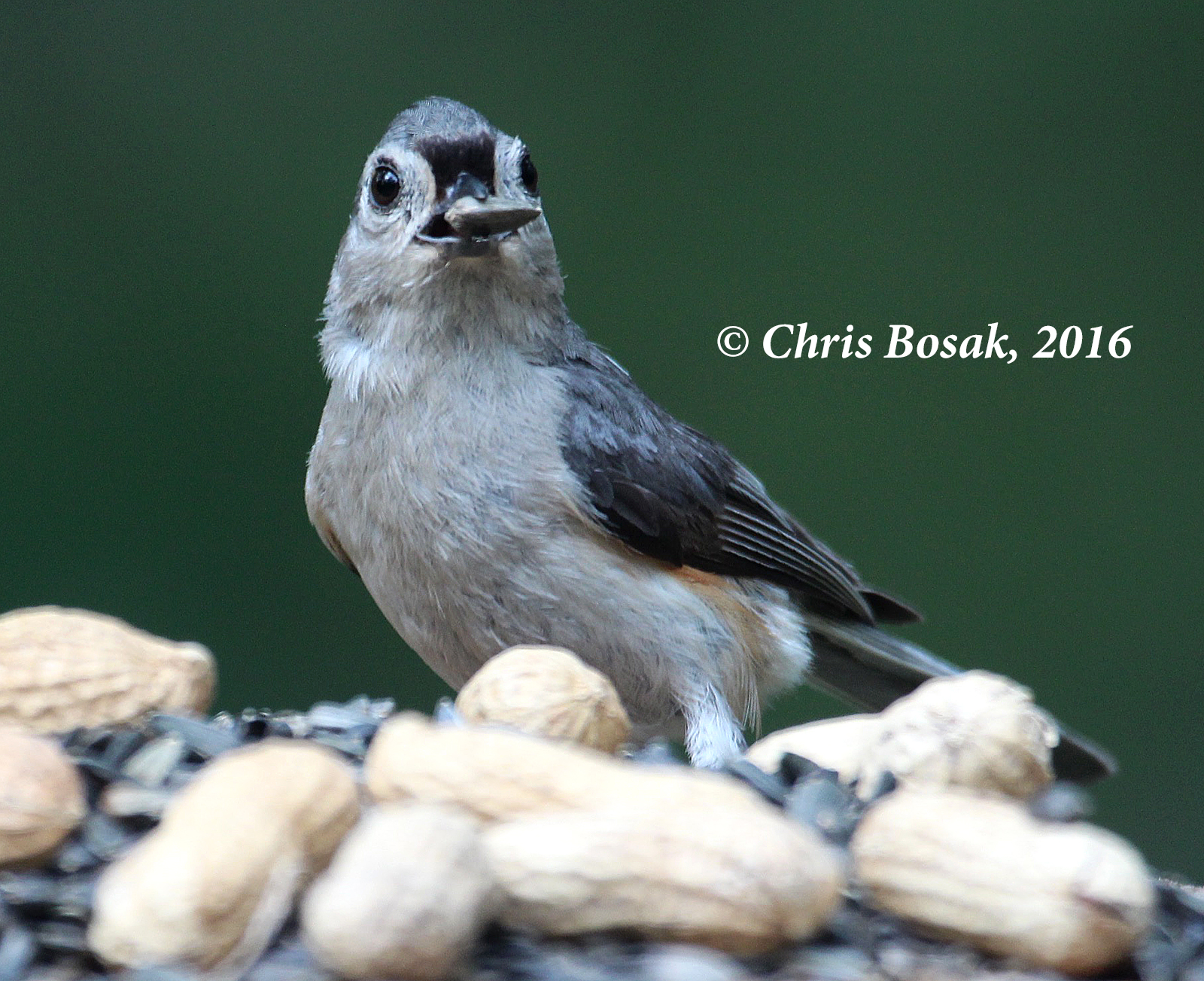
Photo by Chris Bosak A Tufted Titmouse grabs a sunflower seed from a feeder in Danbury, Conn., summer 2016.

Photo by Chris Bosak
A Tufted Titmouse grabs a sunflower seed from a feeder in Danbury, Conn., summer 2016.

Yes, yesterday was the last hummingbird photo in the series. This was the reaction of this Tufted Titmouse when it found out the news.

But in all seriousness, I don’t typically feed birds in summer, mostly because by June all I’m getting are squirrels, chipmunks and House Finches. Every so often, though, I put some sunflowers seeds on a platform and see what will show up. It didn’t take long for the titmice, chickadees and nuthatches to show up.

Sixth (and final) hummingbird photo in series; and latest For the Birds column

Photo by Chris Bosak A female Ruby-throated Hummingbird takes off from a perch in Norwalk, Conn., summer 2014.

Photo by Chris Bosak
A female Ruby-throated Hummingbird takes off from a perch in Norwalk, Conn., summer 2014.

This final photo in the hummingbird series comes with a bonus, the latest For the Birds column, which also happens to be about hummingbirds. I hope you enjoyed the series and thanks for checking out http://www.BirdsofNewEngland.com

Last week, I wrote about the hummingbirds visiting my feeder this summer. Hummingbirds, however, are much too interesting to be limited to one column.

This week, I’ll focus on facts about these tiny dynamos. Fun facts, of course, not just any old boring facts.

Before those facts, let me start with this … I ended my column last week by requesting from readers input about which flowers attract their hummingbirds.

I received an email from Carol, who relayed some interesting information. In addition to the flowers I mentioned in my last column, Carol said at her place pink phlox, gladiolas, perennial sweet peas, coleus flowers and morning glories do the trick.

“My special joy is watching them fly through the sprinkler and seeming to really enjoy their own personal showers. They are really amazing creatures,” Carol wrote.

Marsha wrote to say that petunias and fuchsia hanging in a basket bring the little birds in. She added, however, that neighbor’s feeders are busy, but they tend not to visit hers. Sometimes the bird world is unpredictable, even frustrating.

She also wrote to say she was disappointed that the birds are aggressive toward each other instead of playful. Then she summed up all of nature very succinctly: “Oh well, I guess it can’t be Disney all the time.”

Very well put, Marsha.

Pam from Walpole added trumpet vine and blue lobelia to the list.

Donna, who has a place on Granite Lake, wrote to say her hummingbirds are attracted to a hanging tri-level flower pot arrangement with mellow yellow cuphea.

Stephen sent in a picture of a bird on his hummingbird feeder. It was a downy woodpecker, not a hummingbird. That is not a common occurrence, but not terribly rare either. Woodpeckers, warblers, thrushes and some other species can sometimes be spotted at hummingbird feeders. Remember, Baltimore orioles can be attracted to a nectar feeder as well, but with a different mixture of water and sugar. Hummingbird nectar is four parts water to one part sugar; oriole nectar is less sweet at eight parts water to one part sugar. You may also need a special oriole feeder.

Now for some of those facts I promised — in no particular order.

There are more than 300 hummingbird species, and each one makes different humming noise with its wings. Imagine being so good at birdwatching you tell each one by the humming of its wings. Hey, many birders know the woodpecker species from its knocking, so why not?

Of those more than 300 species, only eight regularly breed in the U.S. — and only one east of the Mississippi River. Most hummingbirds are tropical and do not migrate. They are strictly a Western Hemisphere bird so don’t go to Europe, Asia or Africa and expect to see hummingbirds.

Hummingbirds can flap their wings up to 90 times per second — and even faster during courtship.

Many birds can hover, but hummingbirds are the only birds that can fly backwards.

Hummingbirds double their weight before taking off for their incredible migration over the Gulf of Mexico.

Hummingbirds have tiny feet and far fewer feathers (only about 1,000) than most birds to help them fly easier. By comparison, the Mallard has about 12,000 feathers.

If you started putting ruby-throated hummingbirds on a scale (for whatever reason) you would have to place 150 of them for it to read one pound.

Hummingbirds are aggressive not only toward other hummingbirds but also birds such as hawks, blue jays and crows. In other words, don’t mess with a hummingbird.


Fifth photo in hummingbird series

Photo by Chris Bosak A female Ruby-throated Hummingbird perches on a thorny branch in Norwalk, Conn., summer 2014.

Photo by Chris Bosak
A female Ruby-throated Hummingbird perches on a thorny branch in Norwalk, Conn., summer 2014.

Here’s the fifth photo in the hummingbird series. Here’s another one I got when I was watching the Ruby-throated Hummingbirds at the thorn bushes at the Dolce Center in Norwalk, Conn. I like the tongue sticking out.

Fourth photo in hummingbird series

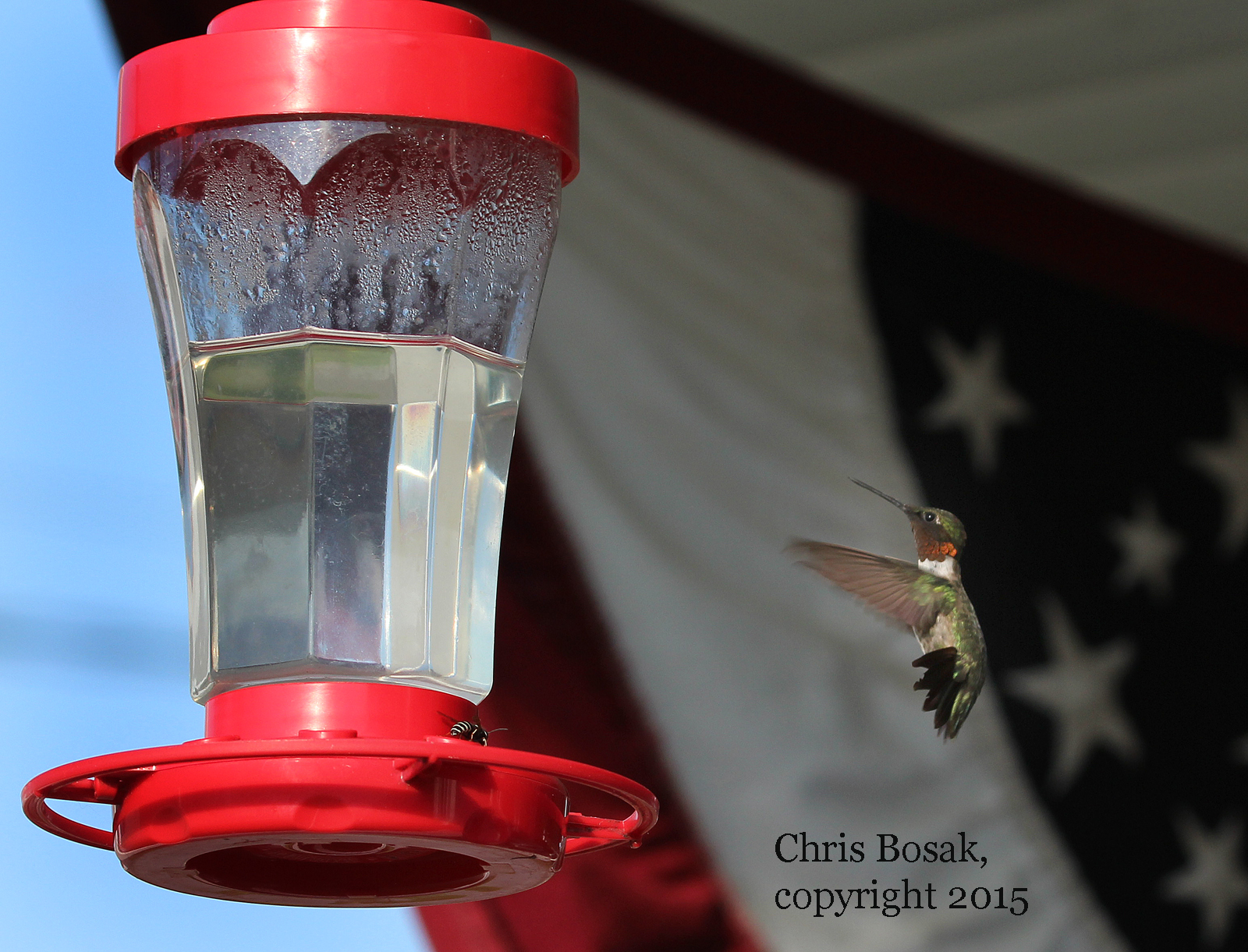
Ruby-throated Hummingbird at Errol Hotel in Errol, NH.

Ruby-throated Hummingbird at Errol Hotel in Errol, NH.

Here’s one from last summer while on a trip to northern New Hampshire with my boys. This was taken at the Errol Motel. I love the patriotic look and feel of this one.

Third photo in hummingbird series

Photo by Chris Bosak A female Ruby-throated Hummingbird sips juice from a wild berry at Dolce Norwalk Center in summer 2014.

Photo by Chris Bosak
A female Ruby-throated Hummingbird sips juice from a wild berry at Dolce Norwalk Center in summer 2014.

Here’s one I took a few years ago. Hummingbird drinking juice from a berry. Who knew?