Unknown's avatar

About Chris Bosak

Bird columnist and nature photographer based in New England.

Tip on how to attract birds in the winter

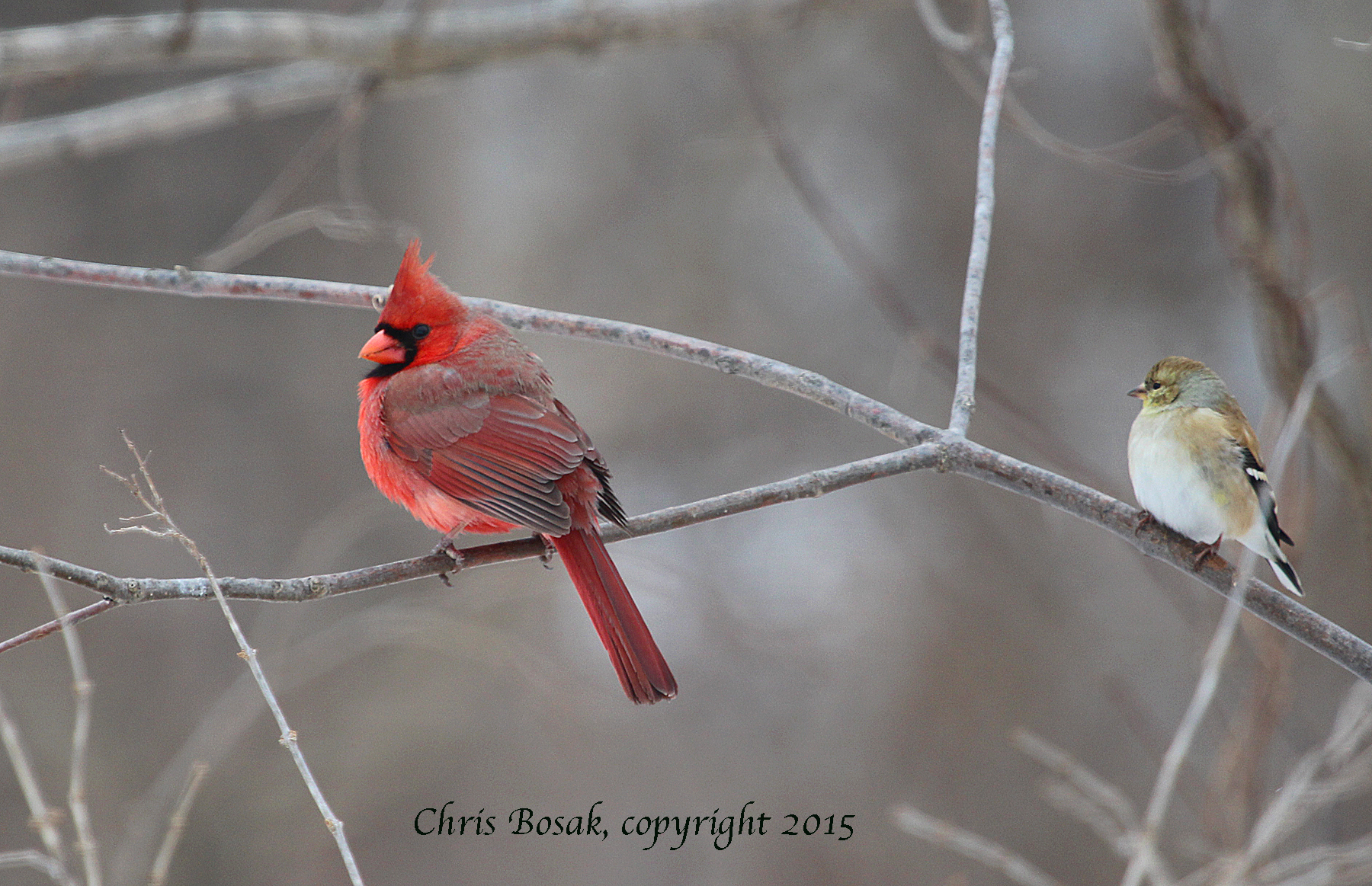
Photo by Chris Bosak A Northern Cardinal, left, and an American Goldfinch perch in a tree near a feeding station at Cove Island Wildlife Sanctuary in Stamford, Conn., in March 2015.

Photo by Chris Bosak
A Northern Cardinal, left, and an American Goldfinch perch in a tree near a feeding station at Cove Island Wildlife Sanctuary in Stamford, Conn., in March 2015.

Here’s a press release shamelessly used in full here from the National Audubon Society. It’s good information, so here it is. (The post is jazzed up by one of my own photo, however.)

TIP SHEET: Winterize Your Yard for Birds

Tips on How to Welcome Winter Birds For Reporters and Bird Lovers

NEW YORK (December 15, 2015) – With winter just days away, and the Christmas Bird Count finally here, there’s no better time to protect the birds you love. Birds have the same needs—food, water, shelter—in winter as they do any other time. Helping these winter visitors could help sustain their populations in both their wintering and summering grounds. The National Audubon Society has compiled the following guide on simple ways you can help.

Bird-friendly Yards and Communities

Where birds thrive, people prosper. One of the most important things we can do to help birds and other wildlife is to make our yards bird and wildlife-friendly.

  • Minimize the amount of manicured lawn in your yard. Reduce the amount of pesticides and fertilizers in your yard and plant native species. The wilder and more varied, the better it is for your avian neighbors.
  • Make a brush pile in the corner of the yard. Collect and set aside fallen branches and logs. This will provide shelter for birds from predators and storms, and a place to roost at night.
  • Rake leaves up under trees and shrubs and leave them there. The resulting mulch will make a lush environment for the insects and spiders that birds love to eat.
  • Create a songbird border of native trees and shrubs to create shelter from wind. Berry and fruit-producing shrubs and trees such as dogwoods, hollies, chokeberries, and elderberries and cherry trees are favored by many types of birds.  Plant native species whenever possible, and avoid invasives.
  • Clean out old nest boxes and feeders. It’s wise to remove old nests and seeds from shelters and feeders to prevent birds from getting sick.
  • Protect Your Windows. About a billion birds die from glass collisions each year. You can reduce this threat by making all your windows visible to birds. Glass appears clear or reflective to birds. Visual cues and markers as window decals on the outside of windows alert birds to the presence of glass.

Continue reading

Featured photo on “The Birding Wire”

The Birding Wire is an electronic newsletter that comes out weekly as a service of the Outdoor Wire Digital Network. It includes news, events, equipment reviews and other odds/ends about the birding world. It also includes a featured photo of the week.

Guess who had this week’s featured photo? (The Birding Wire is actually much larger, but I just spliced via Photoshop the top and the section with the featured photo.) To see the Birding Wire, click here.

https://birdsofnewengland.com/wp-content/uploads/2015/12/birding-wire-mash.jpg

The Birding Wire featured photo, Dec. 9, 2015.

Day 6 of my #challengeonnaturephotography

Here is my Day 6 contribution to #challengeonnaturephotography

See previous post for explanation of #challengeonnaturephotography

Thanks for checking out http://www.birdsofnewengland.com

challenge 6


Day 5 of my #challengeonnaturephotography

Here is my Day 5 contribution to #challengeonnaturephotography

See previous post for explanation of #challengeonnaturephotography

Thanks for checking out http://www.birdsofnewengland.com

challenge5

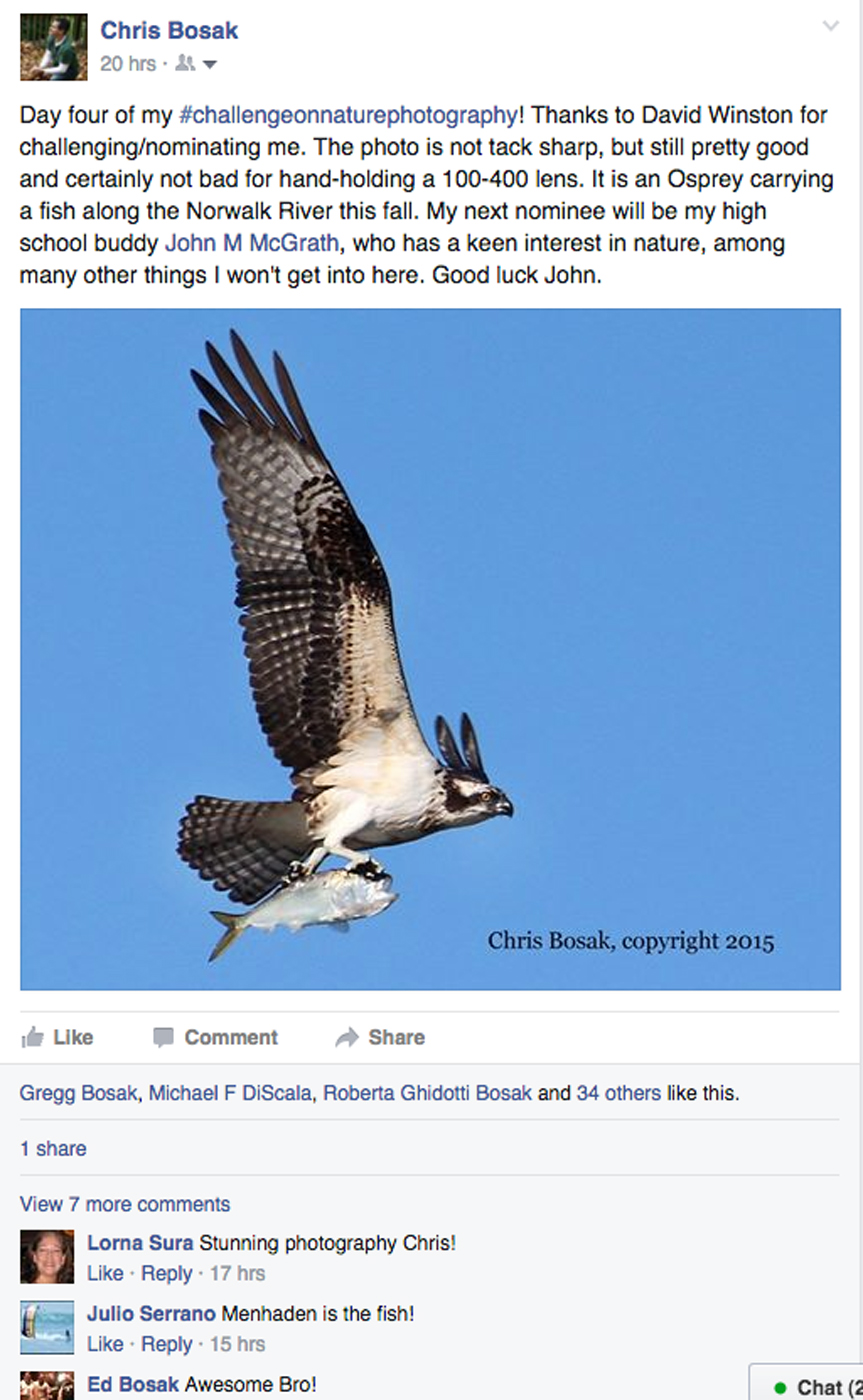
Day 4 of my #challengeonnaturephotography

Here is my Day 4 contribution to #challengeonnaturephotography

See previous post for explanation of #challengeonnaturephotography

Thanks for checking out http://www.birdsofnewengland.com

Screen shot 2015-12-07 at 2.16.10 PM


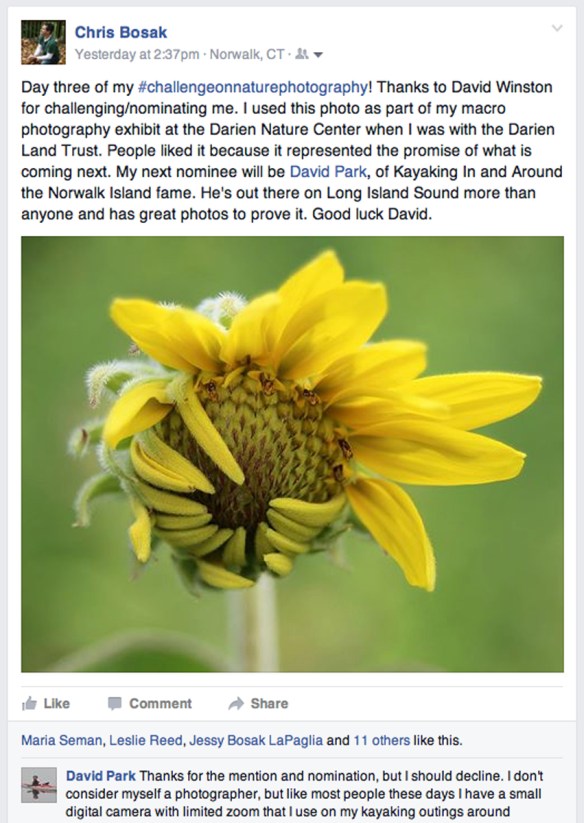
Day 3 of my #challengeonnaturephotography

Here is my Day 3 contribution to #challengeonnaturephotography

See previous post for explanation of #challengeonnaturephotography

Thanks for checking out http://www.birdsofnewengland.com

challenge 3

I have accepted the #challengeonnaturephotography

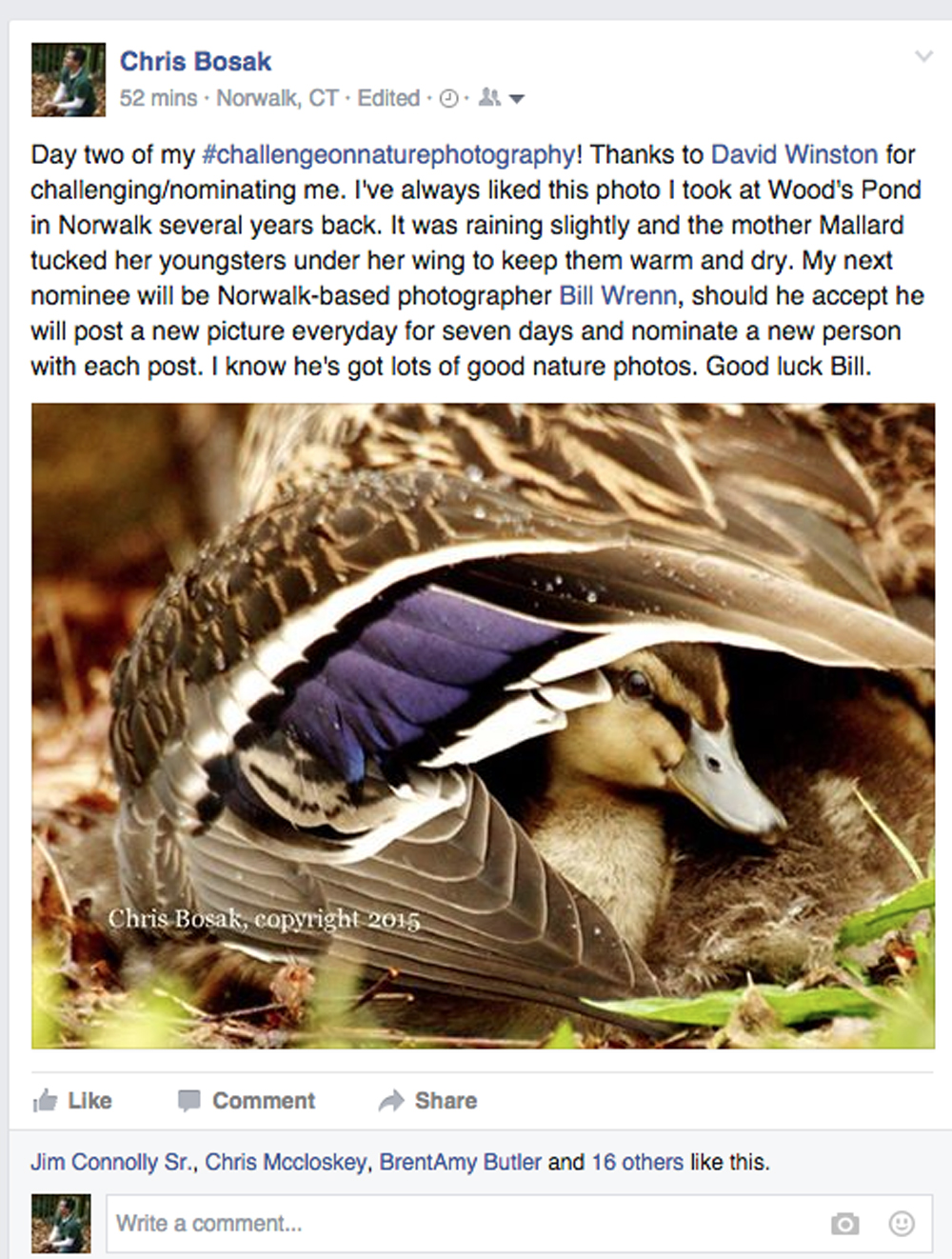
Day 1 of the #challengeonnaturephotography

Day 1 of the #challengeonnaturephotography

One of the many latest things on Facebook these days is the Challenge on Nature Photography. Oh, I’m sorry. This is 2015. I mean the #challengeonnaturephotography

I was challenged by my friend David Winston, the landscaper/photographer of Cove Island Wildlife Sanctuary fame. The challenge is put up a different nature photograph for seven days and nominate a different person to do the same. Coming up with seven nature photographs will be a breeze. Can I come up with seven Facebook friends who would accept the challenge. Do you want to be challenged? Let me know and nominate you. Above is my first contribution to the Challen … sorry, to the #challengeonnaturephotography

You can look on Twitter using the hashtag search #challengeonnaturephotography for other challenge-takers throughout the world. I’m happy to be part of it and thank David for his nomination.

New bird feeder already working

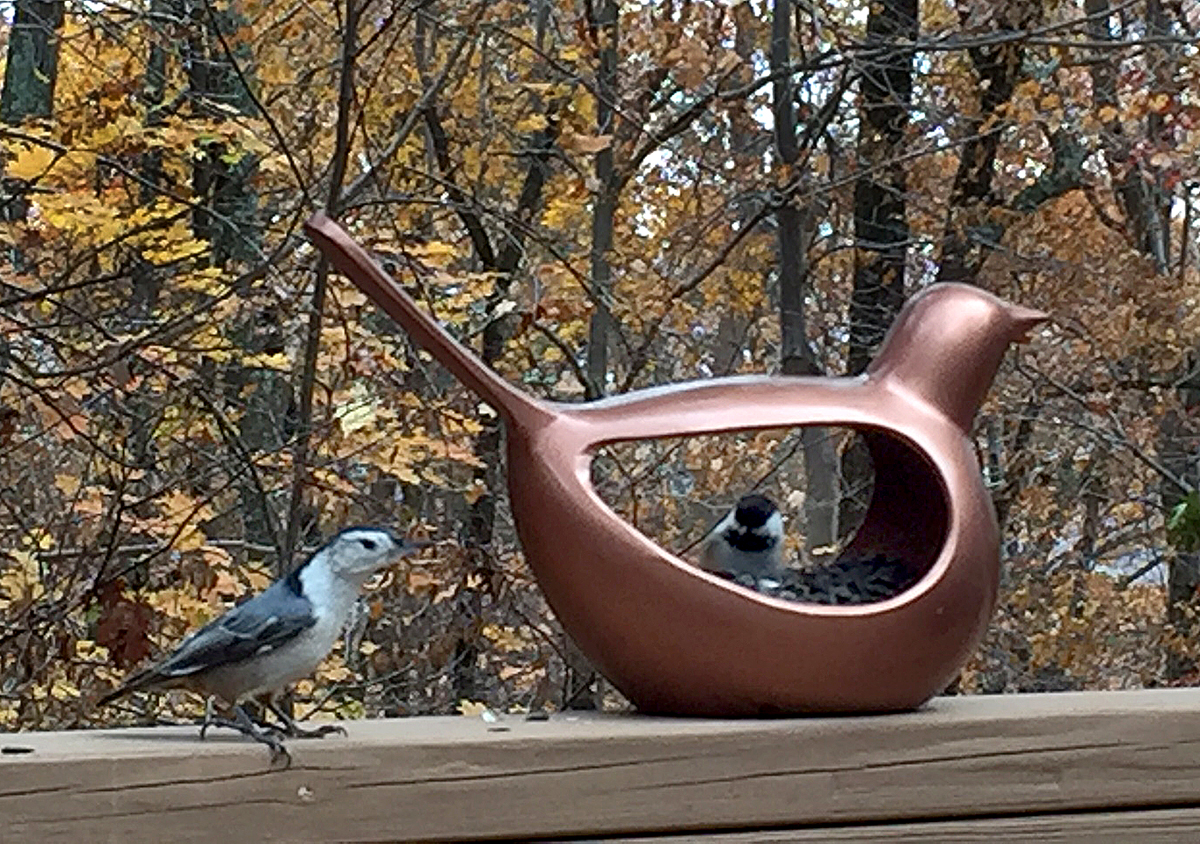
Photo by Chris Bosak A Black-capped Chickadee grabs a seed from a bird feeder as a White-breasted Nuthatch bides its time before grabbing a seed.

Photo by Chris Bosak
A Black-capped Chickadee grabs a seed from a bird feeder as a White-breasted Nuthatch bides its time before grabbing a seed.

I received a neat bird feeder as a house-warming gift recently from a friend. I debated whether to actually use it as a bird feeder or to keep it inside as a decoration. I ultimately figured that it would serve both purposes outdoors on the deck. It would be a nice decoration outside and feed the birds.

But would it really attract birds? It is unlike any bird feeder I’ve ever had before. There’s only one way to find out and that is to put some seeds in it. Within minutes the chickadees came. Then the titmice came. Finally the nuthatches checked it out and took some seeds.

After the seeds were gone, I put some whole peanuts in there and waited. Sure enough, within a day or two, the Blue Jays found it.

It’s been a very popular feeder with the birds — and a nice decoration for the deck. Thanks for the thoughtful gift, Lorna!

For the Birds column: Project FeedWatch underway

Here’s my latest For the Birds column, which ran last Thursday in The Hour (Norwalk, CT) and Monday in The Keene (N.H.) Sentinel.

Photo by Chris Bosak White-breasted Nuthatches are a common feeder bird in New England.

Photo by Chris Bosak
White-breasted Nuthatches are a common feeder bird in New England.

Project FeederWatch gets under way

What will $18 get you these days?

About four cups of coffee from Starbucks. (Served in plain red cups void of evil, offensive snowflake images.)

About eight gallons of gasoline. Way better than the five gallons it used to get you.

Three bundles of the firewood stacked at the entrance of every grocery store, convenience store and hardware store these days. The bundles are each good for about 10 minutes in a firepit.

Two and a half craft beers at just about any bar or restaurant. Oops, forgot about the tip. Make that two beers.

Or, $18 covers your entrance fee to participate in Project FeederWatch, a citizen science project of The Cornell Lab of Ornithology and Bird Studies Canada. It entails keeping track of the birds you see at your backyard feeding stations and submitting your results online. The data collected helps scientists track bird populations in the winter — similar to the Christmas Bird Count and Great Backyard Bird Count.

The fee also gets you a bird ID poster, birdwatching calendar, instruction sheet and newsletter. No guarantee here that the materials will not have images of snowflakes. Try not to be offended if they do.

Project FeederWatch officially started this past Saturday and runs through early April. Don’t worry if you missed the opening day, you can join in whenever. Participants can count the birds as much or as little as they’d like — 24/7 monitoring is not necessary. Being an expert birdwatcher is not required either.

All skill levels welcome. Why not get the entire family involved? Old and young.

I’ve never participated in the Project before, mostly because I’ve never lived in a place where my feeders have been terribly active. Now that I live at a place with very active feeders I’m looking forward to participating this year. (Active feeders, however, are not a prerequisite for participation. Anybody can do it as long as they have a feeder up.)

The feeders at my new place are always bustling with the common visitors White-breasted Nuthatches, Black-capped Chickadees, Tufted Titmice and Downy Woodpeckers. I also see Carolina Wrens, Blue Jays, Hairy Woodpeckers, Red-bellied Woodpeckers and American Goldfinches. Lately I’ve noticed a few Dark-eyed Juncos under the feeders. The White-throated Sparrows are not far behind, I’m sure. Will my Pine Warblers I had earlier this fall return to the suet cake? Probably not, but I’ll be watching. Who knows what else will show up?

To join the Project or to get more information, visit http://www.feederwatch.org. The website is full of information and tips on identifying birds (including tricky IDs), feeding birds tips, trend maps, and historical data.

So why participate other than it “helps scientists?” Many bird species are in decline, some seriously so. Tracking the winter abundance and distribution of birds with long-term data offers valuable insight into their lives. It helps scientists track gradual population shifts of bird species. WE know the Carolina Wren and Red-bellied Woodpecker are trending northward. This data quantifies the movement.

That’s more of a positive population shift. What about the negative one? What about the species that are declining year after year?

The data helps scientists recognize the decline and figure out solutions more quickly.

Let me know if join and what birds you see at your feeders.


For the Birds runs Thursdays in The Hour. Chris Bosak may be reached at bozclark@earthlink.net. Visit his website at birdsofnewengland.com