Sometimes I’ll crop photos to delete extraneous background “clutter” or just to highlight the bird more. This time, I decided to run the photos as is (as are?). The palm warbler was a fair distance away, but I kind of like the “clutter” in these photos. (I did burn the edges of the photos in Photoshop to make the bird stand out a bit more.)
I’m not a big keeper of lists. I don’t have a bird life list, U.S. list or state list. I do, however, keep a yard list and work list.
My yard list was very robust at my former house in the woods. Now that I live close to downtown in a small suburban town, my yard list is not very impressive. My work list is growing, however. We recently got new offices and I now look out into a patch of woods instead of a parking lot. My daily sprinkling of seeds and nuts in the crevices of the downed trees at the wood’s edge enhances the view and draws in extra birds.
The other day, a hermit thrush hopped along the ground near where I place the seeds. It wasn’t eating the seeds, of course, but it was slowly walking among the leaves and looking curious as hermit thrushes often do.
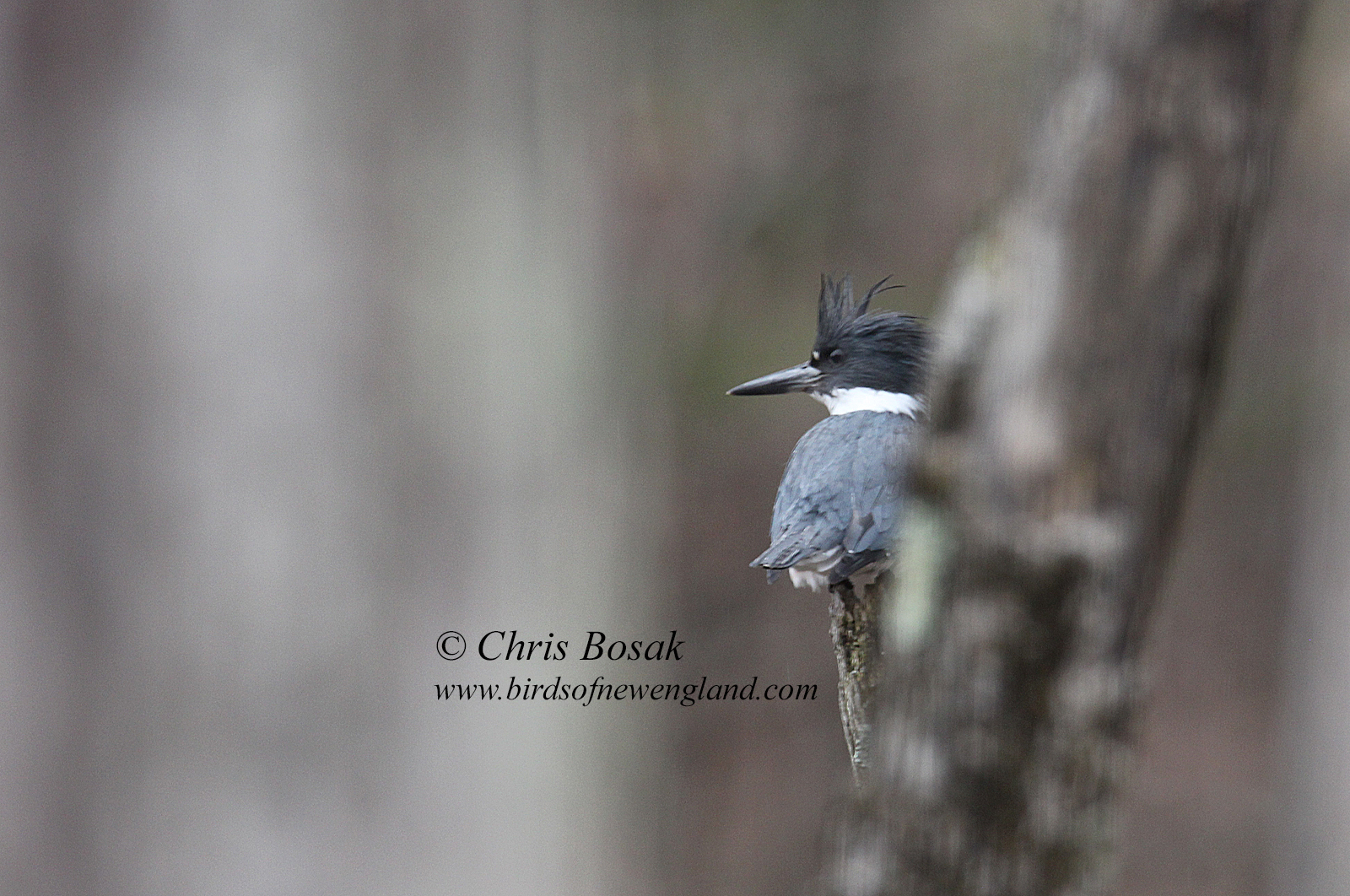
I couldn’t quite get the entire belted kingfisher in the frame, but I like the shot anyway as it makes it look like the bird is sneaking around the swamp.
I’ve missed countless photo opportunities while driving because I did not have my camera with me.
This time I was well-armed.
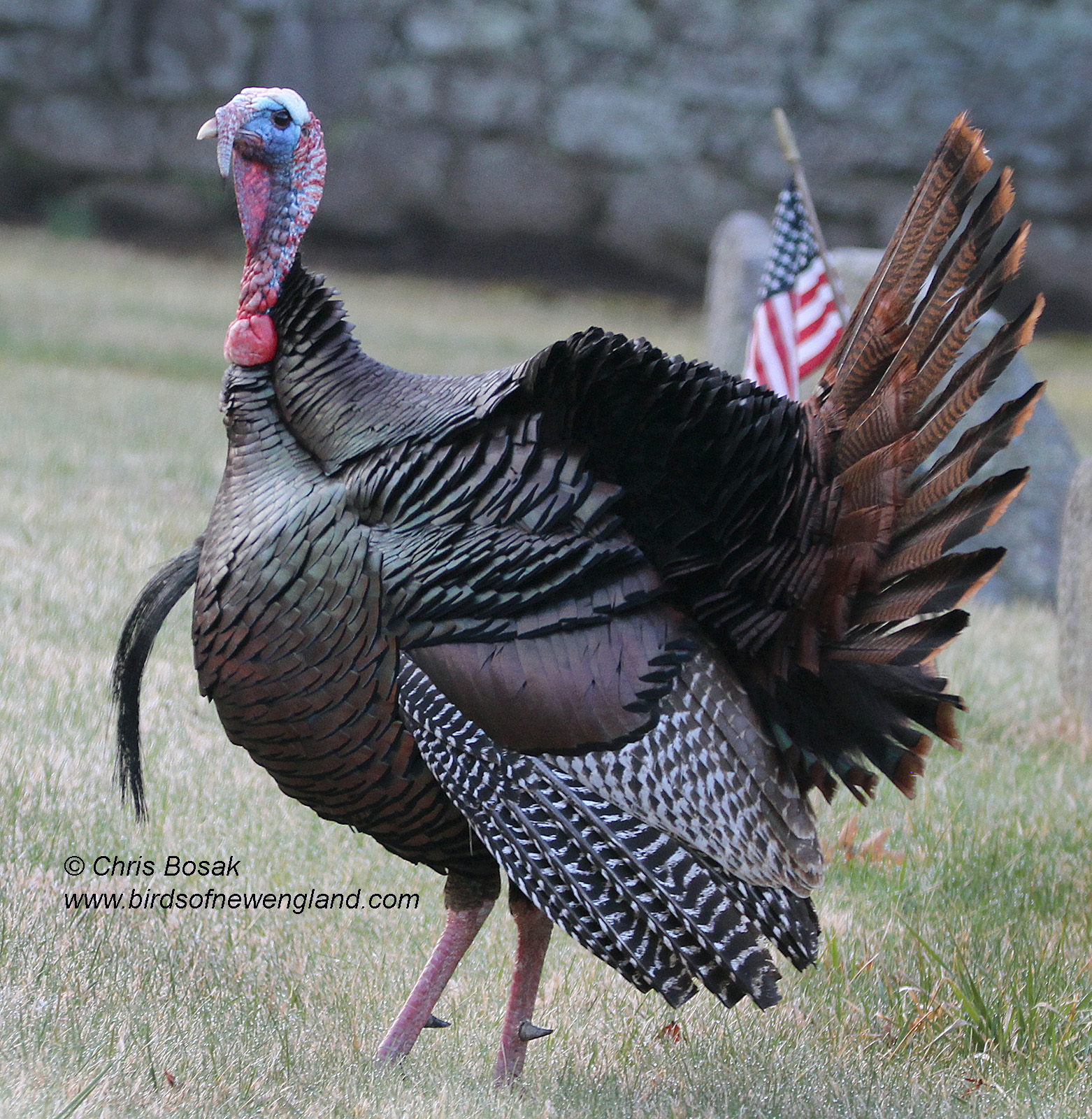
I was driving to work along my usual route when I passed a small, historic cemetery that I have passed hundreds of times before. On this day, I noticed a flock of turkeys among the grave markers as I sped past. I found the nearest safe place to turn around and headed back to the cemetery.
Here’s where my stories usually end with “but they were gone.”
Photo by Chris Bosak
An American robin perches in a tree in New England, June 2020. Merganser Lake.
I think we can officially call it spring now.
The myth that robins are the harbinger of spring has been debunked several times over. I have even mentioned that as being the case in this column several times. But, I’m going to backtrack a bit and say that I still consider the robin to be a harbinger of spring of sorts.
Many robins stay in New England throughout the winter, which is why it is not a true harbinger of spring as you can see them in January or February as well as March or April.
Photo by Chris Bosak — A white-tailed deer eats garlic mustard in New England, April 8, 2022.
I’ve come across several articles that state white-tailed deer do not eat garlic mustard because of its bitter taste. Well, here’s proof that they do eat the highly invasive plant. Of course, the plants are young and tender and not as bitter this time of year, which may make it more palatable for the deer.
By the way, garlic mustard is edible for humans, too, and actually quite good in salads or by itself as a snack while wondering the woods. Now is a good time to harvest it while the leaves are young and tender. The flowers, when they arrive, are good to eat as well. To make sure you are eating the right plant, smell it first. As the name suggests, it will smell garlicy. It does have trace amounts of cyanide, as I have read, so don’t overdo it with the garlic mustard. (Many of the common vegetables we eat have trace amounts of cyanide, too, so you’d really have to eat a lot to be negatively impacted.) At least this highly invasive plant has some good uses.
It’s mating season for wild turkeys. I’ve seen them several times in various habitats. I got this guy at an interesting location. More on that coming soon.
Photo by Chris Bosak
A red-winged blackbird sings from the top of a tree at Happy Landings in Brookfield, Conn., spring 2017.
Late March and early April can be a tough time for birdwatchers as we are in the slow build up to spring migration.
The spring migration actually starts sometime in February when the first male red-winged blackbirds arrive. It’s a nice sight (and sound) when they return to our swamps, but it’s pretty much just a tease as we know winter will continue, and it will be several weeks until other birds start to show up.
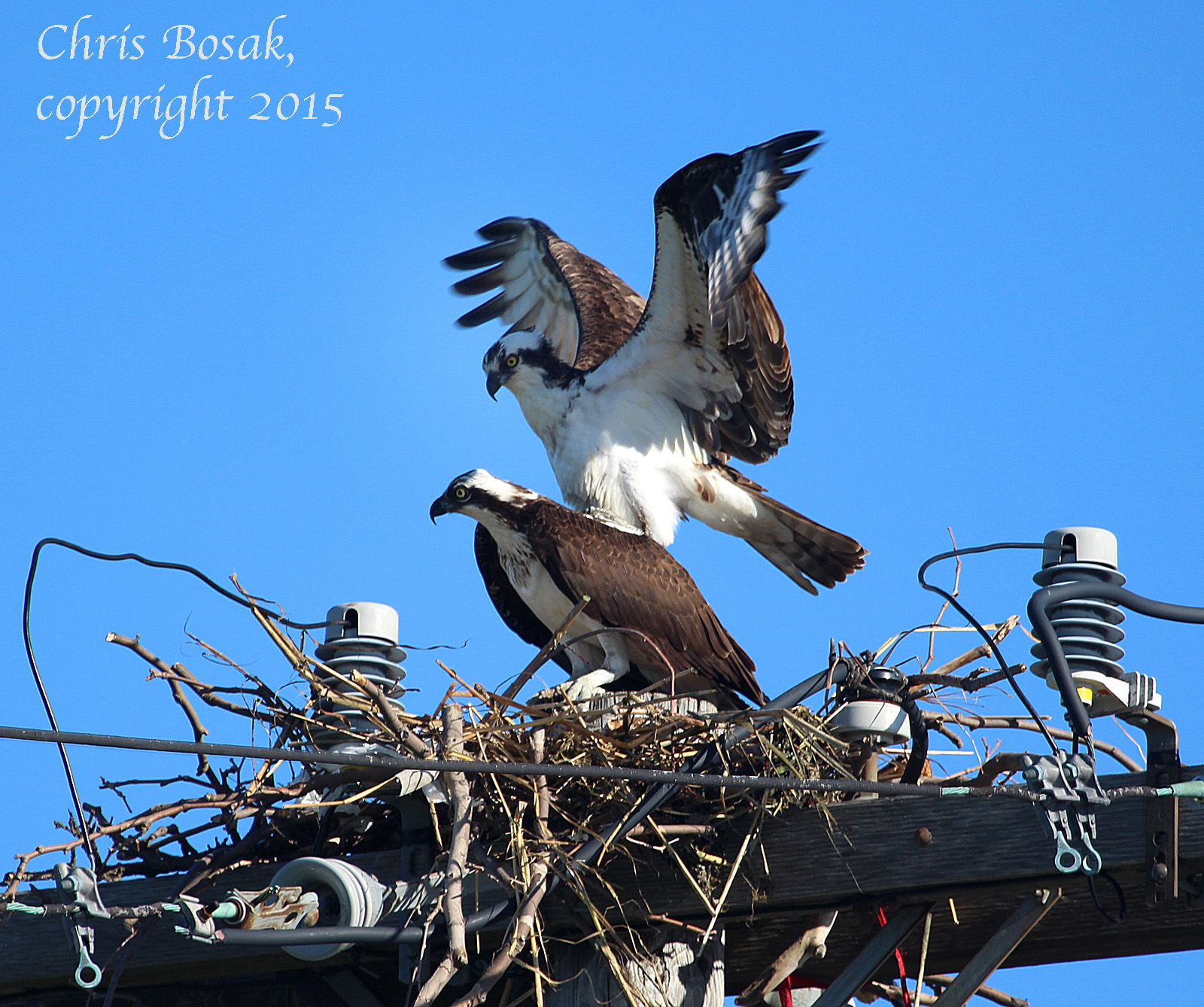
American woodcocks and eastern phoebes return to New England around the middle of March. A few weeks later, ospreys arrive. The build up can be excruciatingly
Photo by Chris Bosak
A red-winged blackbird sings from the top of a tree at Happy Landings in Brookfield, Conn., spring 2017.
March is a crazy and unpredictable month for wildlife watching.
One day you’re completely absorbed by winter. You bundle up, head outdoors and see all the nature that our coldest months have to offer.
The next day it appears as if spring has the upper hand. The winter birds seem to have disappeared and early migrants, such as red-winged blackbirds and eastern phoebes, fill the warm air with breeding and territorial songs. In the evening, the chorus of spring peepers dominates the airwaves.
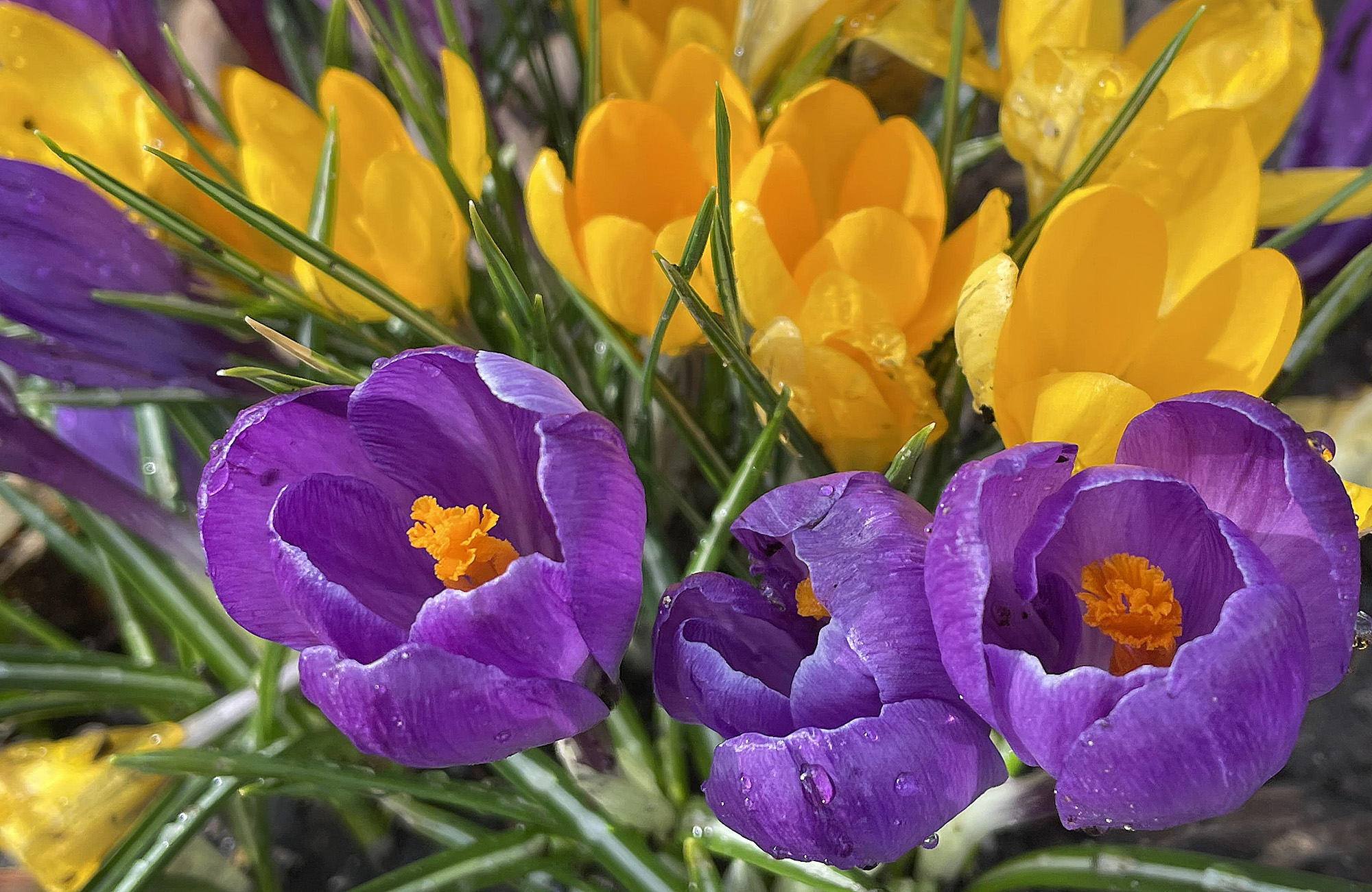
There are many “first signs of spring.” Among them are crocuses, which are in bloom at my place of work in New England. I’ve also seen daffodils and a few other flowers that are beyond my identification skills. I don’t want to jinx it because New England weather can be goofy, but welcome to spring.





 Birds of New England.com