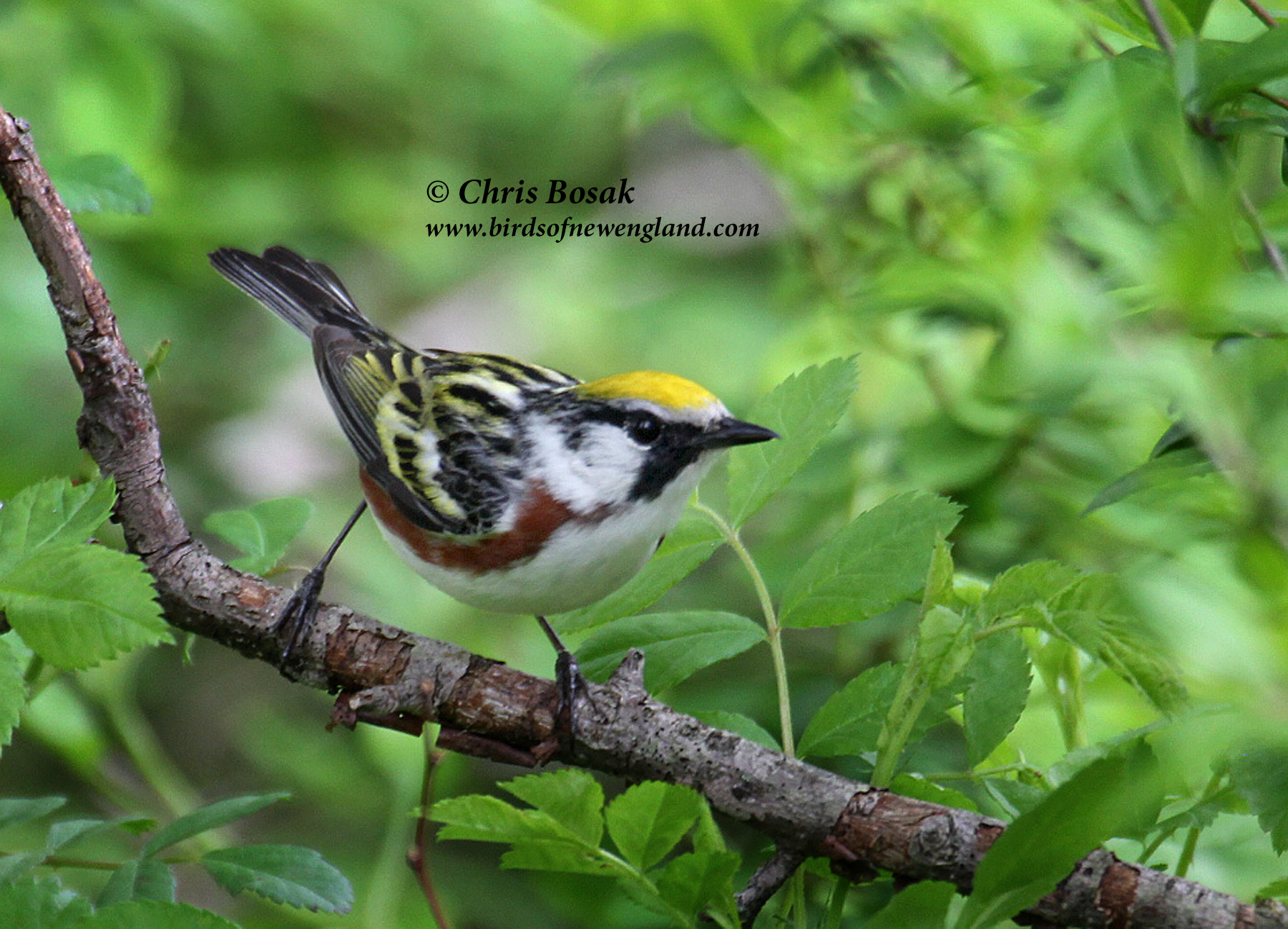
Because why not? It’s warbler season, after all.
Continue reading

Because why not? It’s warbler season, after all.
Continue reading
Due to various reasons (excuses?), I haven’t been out this year looking for warblers yet. But here are a few “old” shots to celebrate warbler season, a highlight of the birding year. I will take my own advice soon and “get out there.”
Continue reading
Only a narrow barrier of reeds separated the fairly busy road from the rain-swelled pool of water bordered by railroad tracks on the backside.
On any other day, this pool of water would be ignored and driven past without a second look. But on this day, something caught my eye and I promptly turned around at the next available safe place to do so. I drove past the water again, this time more slowly, and realized that what had caught my eye was a small group of male wood ducks.
Continue readingHere are some bird feeding tips compliments of Cole’s Wild Bird Products Co.

During the global pandemic, and as coronavirus restrictions persist, sales of bird feeders and bird feed continue to skyrocket as people flock to the avian world, right outside their windows where they find the safe and fascinating world of bird watching.
Interest in birding isn’t slowing down; if you haven’t yet tried attracting birds to your backyard, now is a great time to start and for those who are reaping the rewards of watching the birds from home, the experts at Cole’s Wild Bird Products, Co. offer information on bird feed and feeder basics to attract more birds to your backyard this spring.
Continue reading
Norwalk Library did a great job with the announcement for my upcoming bird talk. It’s virtual, so please join us.

I had hobbled almost all the way from the car to the entrance of work when I noticed a flock of cedar waxwings picking off leftover berries in a nearby tree.
Even with the persistent tendinitis in my feet acting up, I made my way back to the car to grab the camera. Usually, in situations like this the camera is sitting at home, but this time I was prepared for the unexpected. Cedar waxwings, in my experience anyway, are always unexpected. They are fairly nomadic, and it’s hard to go out looking specifically for them. But they appear now and then and it’s always a thrill to see them.
I retrieved the camera and hobbled back through the parking lot to the tree in question. Of course, the tree was empty when I got back as the waxwings had taken off for parts unknown.
Continue reading
I’ve seen a few reports of pine warblers showing up in New England already. The thick of warbler season is still weeks away, however, so let’s put warblers on the back burner for now.
Phoebe reports are bursting all over the region. Those small, rather nondescript songbirds are an early spring migrant and get a head start on the competition by their early arrival. The risk, of course, is that winter lingers into spring in New England, and phoebes have a hard time coping with the weather. It’s all about risk-reward strategy when it comes to migration for birds.
Continue reading
The large field is bordered by hedgerows on three sides and woods on the fourth. Additional hedgerows divide the field perpendicularly about every 100 yards with small cutouts where the trails pass through.
I emerged from the woods and spotted something large walking along the east hedgerow about 40 yards away from the trail. It was tan, but then again so was everything else around it: the grass, the weeds, the hedgerow. I stopped in my tracks to watch it.
Before my brain fully comprehended the situation, I thought it was either a deer or a mountain lion. I quickly eliminated deer as it was clearly a large cat based on its smooth, stealthy and powerful stride. Can I finally put the mountain lion (or cougar or catamount) debate to rest with solid photos documenting the sighting?
Continue reading
Other than the very few warblers of various types that remained in New England all winter, the pine warbler and palm warbler will be the first arrive in the region. I have seen them show up on rare bird alerts already but they will return in larger numbers over the next two weeks. Keep you eyes on your feeders as pine warblers are one of the few warbler species that will visit feeders. I’ve seen them eat suet, suet nuggets and meal worms. Above is the pine warbler; below is the palm.