Two backyard favorites in one shot

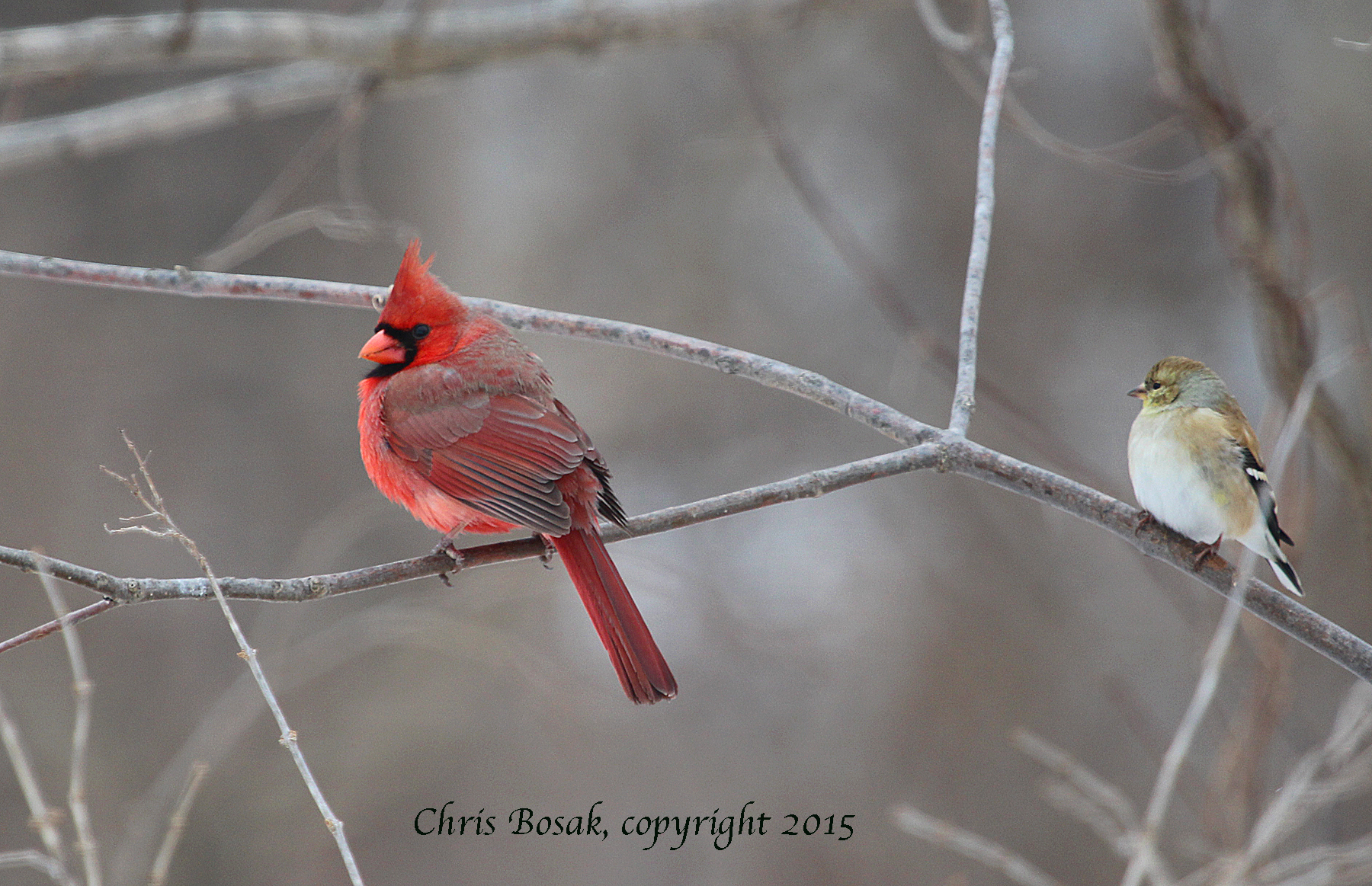
Photo by Chris Bosak A Northern Cardinal, left, and an American Goldfinch perch in a tree near a feeding station at Cove Island Wildlife Sanctuary in Stamford, Conn., in March 2015.

Photo by Chris Bosak
A Northern Cardinal, left, and an American Goldfinch perch in a tree near a feeding station at Cove Island Wildlife Sanctuary in Stamford, Conn., in March 2015.

You don’t always see cardinals and goldfinches perched near each other, but when you are watching a feeding station at which the birds are somewhat skittish, anything can happen. The usual assortment of birds were enjoying the feast at Cove Island Wildlife Sanctuary in Stamford, Conn., the other day, but other than occasionally being perched on the same feeder, the species generally kept away from each other.

However, the birds scattered every five minutes or so because of some unseen (by me anyway) force and sometimes the birds would find themselves perched next to an individual of another species.

I was focused on getting a photo of this cardinal, but noticed the goldfinch off to the right, so I decided to get them in the same frame. Why not?

Can you spot the difference?

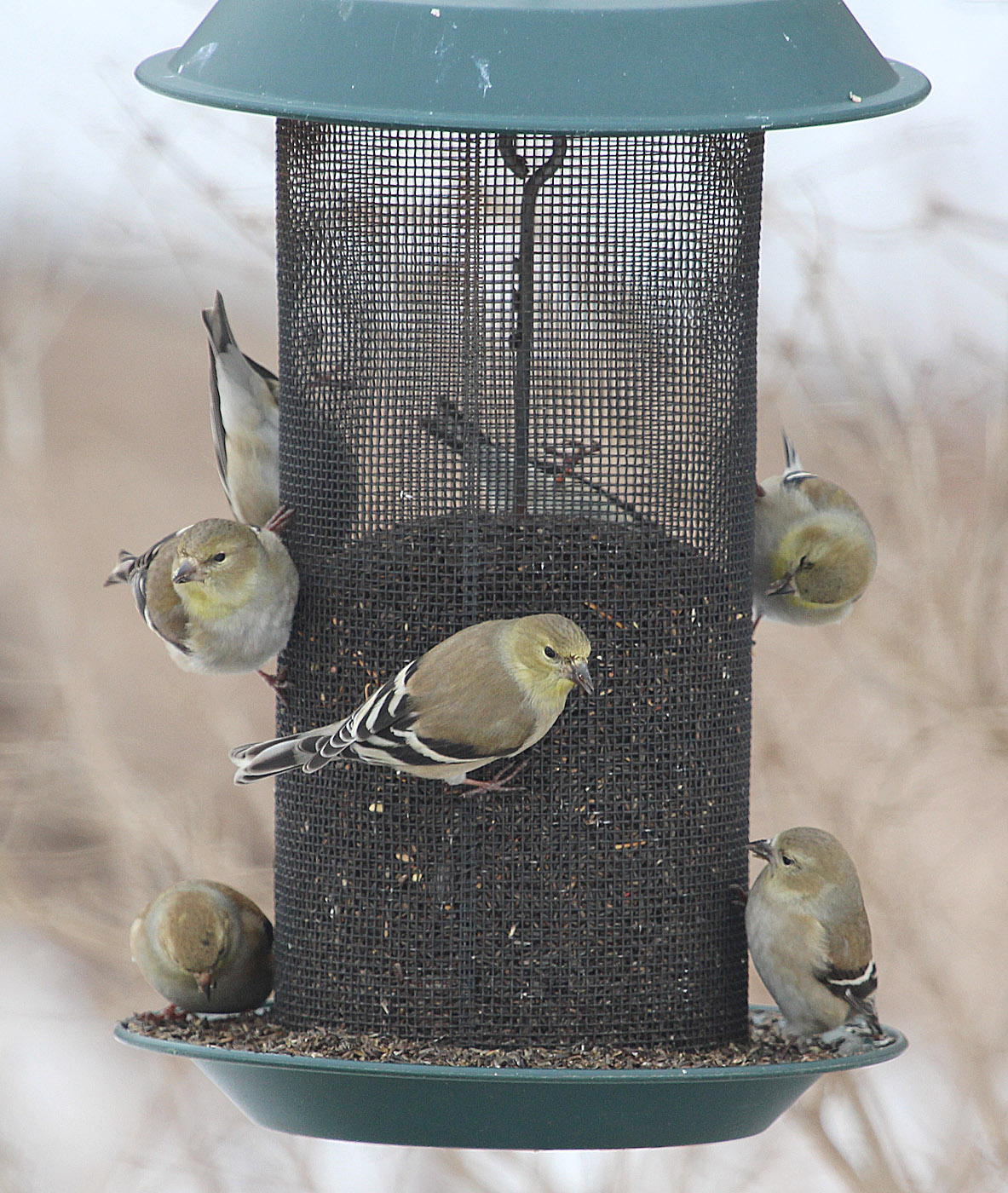
Photo by Chris Bosak American Goldfinches eat from a feeder at Cove Island Park in Stamford, March 2015.

Photo by Chris Bosak
American Goldfinches eat from a feeder at Cove Island Park in Stamford, March 2015.

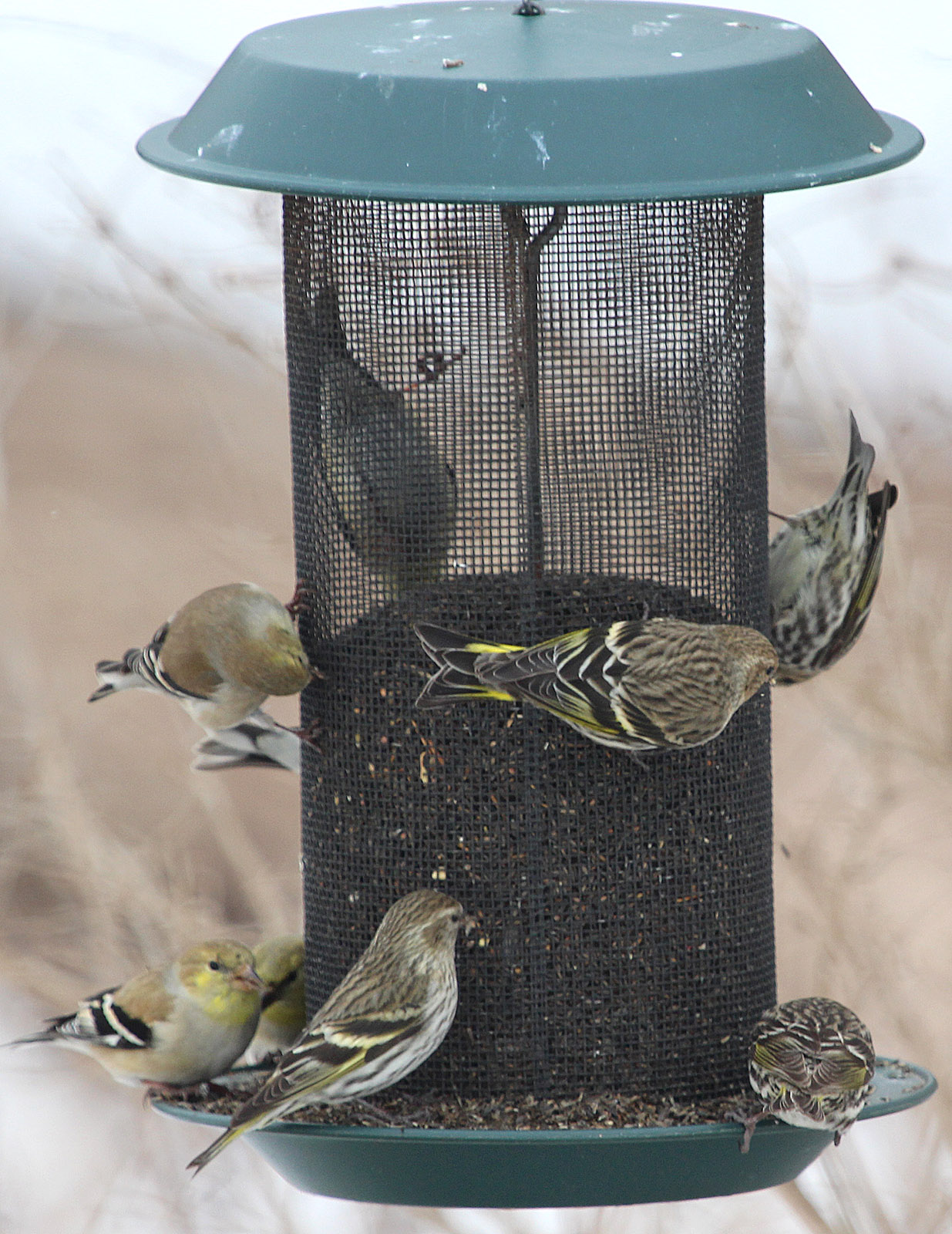
Photo by Chris Bosak Pine Siskins and American Goldfinches share a Nyjer feeder at Cove Island Park in Stamford, March 2015.

Photo by Chris Bosak
Pine Siskins and American Goldfinches share a Nyjer feeder at Cove Island Park in Stamford, March 2015.

What’s the difference between these two photos?

It’s not one of those find 10 subtle differences puzzles, but rather a pretty simple quiz and lesson in paying attention closely to your feeders. These photos were taken about 10 minutes apart the other day at Cove Island Wildlife Sanctuary in Stamford, Conn.

The top photo, taken first, shows all American Goldfinches on a feeder offering Nyjer seeds. At first glance the next photo appears to show a bunch of American Goldfinches, too. But there’s more to that seco Continue reading

Cooper’s Hawk eating squirrel

Photo by Chris Bosak A young Cooper's Hawk eats a squirrel in southern New England in Feb. 2015.

Photo by Chris Bosak
A young Cooper’s Hawk eats a squirrel in southern New England in Feb. 2015.

The other day I pulled into my driveway and noticed a clump of brown in my neighbor’s yard. Birders are trained to notice anything out of the ordinary in a scene because it just might be a bird. Often these days it ends up being a plastic bag stuck in a tree, but sure enough, sometimes it is a bird.

Such was the case the other day. That brown clump was a bird, a young Cooper’s Hawk to be exact. Not only that, but the bird was eating (a Gray Squirrel as it turns out.) Cooper’s Hawks eat mainly birds, but small mammals can also fall prey to these quick and agile birds.

I’ll let the pictures tell the rest of the story. (Warning: If you don’t like the bloody side of nature, don’t click “continue reading.” Fair warning.)

Continue reading

A change of heart regarding House Finches

Photo by Chris Bosak A House Finch eats buds from a bush in Norwalk, Conn., Feb. 2015.

Photo by Chris Bosak
A House Finch eats buds from a bush in Norwalk, Conn., Feb. 2015.

I almost hate to admit it on this site, but I’ve never been a big fan of House Finches. Sure they are wild birds and look pretty with their reddish-pink feathers. But their eating habits at bird-feeding stations have long been a bone of contention with me. They perch on the feeder and gorge themselves for minutes on end. I prefer the grab-a-seed-and-go method employed by backyard favorites such as chickadees, titmice, and nuthatches. Come back as often as you need, as far as I’m concerned, but grab and go. Leave space and time for others.

But not House Finches.They fly in, perch, and sit there. Seed after seed goes into their belly and there they sit. Meanwhile, the chickadees and nuthatches sit on nearby branches waiting for a spot to open. House Finches aren’t even Continue reading

More Carolina Wrens (sorry, I can’t help myself)


Photo by Chris Bosak A Carolina Wren searches on the snow-covered ground for food in New England, Feb. 2015.

Photo by Chris Bosak
A Carolina Wren searches on the snow-covered ground for food in New England, Feb. 2015.

I know I just featured Carolina Wrens in a recent post, but I couldn’t resist posting a few more photos. I’ve seen these beautiful wrens on suet feeders and platform feeders, but I hadn’t seen them looking for food under feeding stations before. Severe weather can cause Continue reading

The underrated Mourning Dove

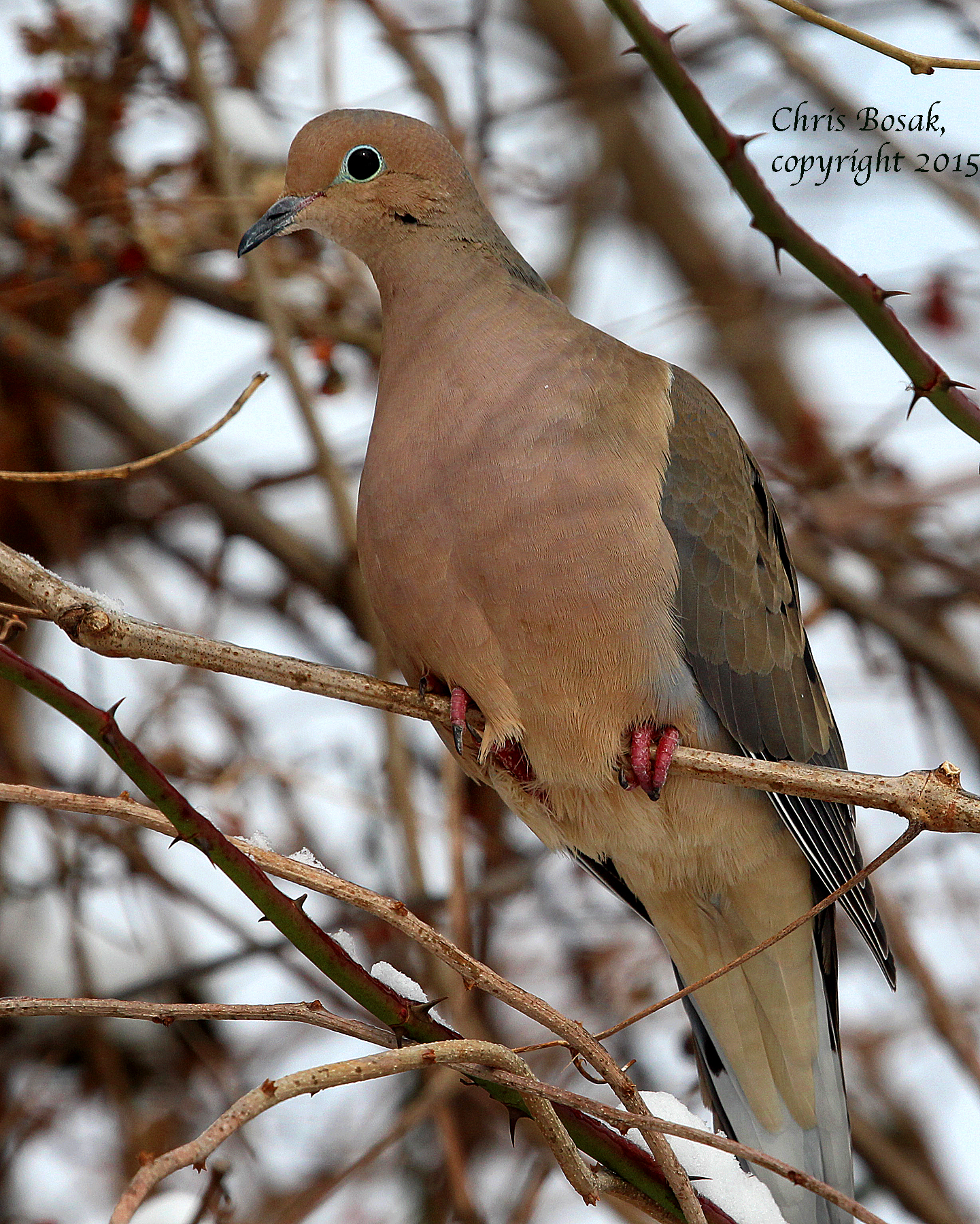
Photo by Chris Bosak A Mouning Dove perches in a tree after a New England snowfall in February 2015.

Photo by Chris Bosak
A Mouning Dove perches in a tree after a New England snowfall in February 2015.

It’s true that many people love Mourning Doves, but in my opinion, the large backyard bird is still way underrated.

I’m just as guilty as anybody by not giving the Mourning Dove its due. Rarely do I write about Mourning Doves (although I have on occasion.) It’s not often I hear about people seeing Mourning Doves, although they are probably being seen by just about everybody on a daily basis.

It’s often overlooked _ again I’m guilty of this too_ when relaying what birds were seen at the feeder that day. Chickadees, juncos, nuthatches, titmice, white-throated sparrows, cardinals. What about Mourning Doves? Surely they were there, too. Mourning Doves are spectacularly beautiful birds when looked at closely. The subtle tones of the plumage change with the light and that blue eye ring never gets old. Also, their song (cooing) _ although it’s a sad song and indeed is the reason for the bird’s name _ always seems to cheer us up when we hear it.

So here’s to the Mourning Dove … with appreciation.

Tiny footprints in the snow: White-throated Sparrow

Photo by Chris Bosak Footprints of a White-throated Sparrow are impressed into the snow of a sidewalk in New England.

Photo by Chris Bosak
Footprints of a White-throated Sparrow are impressed into the snow of a sidewalk in New England.

Not all interesting bird sightings involve birds. Sometimes they involve merely the signs of birds, which are everywhere if you look hard enough. When I opened the door this morning to check the temperature about a dozen White-throated Sparrows took off for shelter. But their signs were everywhere on the ground in the form of tiny footprints in the dusting of snow that fell overnight in parts of New England.

Who’s got the seed? Click and see

So who is this anyway? The guesses were great and the correct answer got the most votes. Good job to all and thank you to everyone to “voted” whether you got the right answer or not.

Click below for the answer.

Continue reading

Quick quiz: Who’s got the seed?

A quick quiz for you as New England braces for another potential snowstorm coming up in the next few days.

There’s not much of the bird showing, but the bill may be a big enough clue. So what do you think? (Share this with your friends, too. See what they think?)

Something to do on a snowy day: Learn the difference between hairy and downy woodpeckers

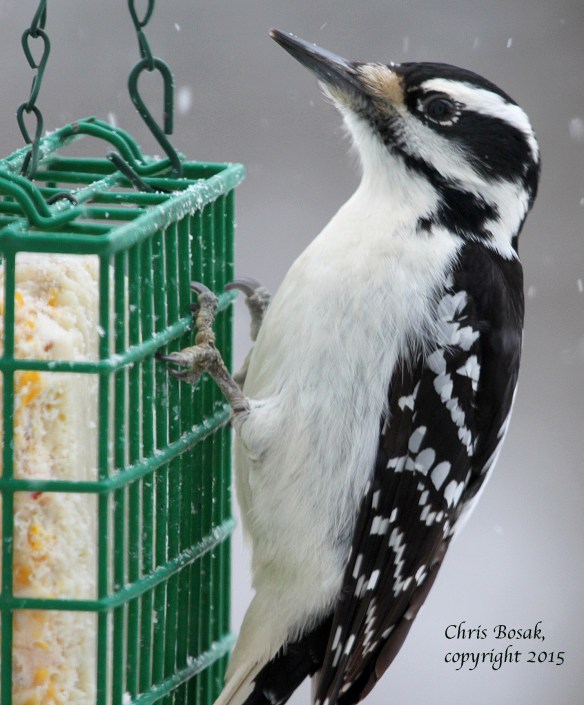
Photo by Chris Bosak A female Hairy Woodpecker clings to a suet feeder as snow falls in Jan. 2015.

Photo by Chris Bosak
A female Hairy Woodpecker clings to a suet feeder as snow falls in Jan. 2015.

If you live in New England you’re about to buried in snow so why not studies these photos and learn the differences between the hairy and downy woodpeckers. Beginning birders often confuse the two species. I know it took me a long time to be able to tell the two woodpecker species apart with confidence. Hopefully this posting will help some of you distinguish between the two.

The two species are hard to tell apart because they basically look exactly the same, hence the confusion. The major difference is the size. The downy is a dainty six inches, while the hairy is a beefy nine inches. That’s enough of a difference that you’d think it would be easy to tell one from the other. But if you’re new to this birding thing and don’t have a point of reference to judge size, it’s tough. I know, I’ve been there. Plus, like any birds, there can be size variations within a particular species. There can be smallish Hairy Woodpeckers and largish Downy Woodpeckers. So size can or can’t be a good way to tell them apart.

For me, the biggest difference is the size of the bill. In the most simple terms, downys have small bills and hairys have big bills. Beyond that, the bill of the downy just looks small and rather fragile. It isn’t fragile, of course, it’s quite strong. It just looks small and fragile. The bill of the Hairy Woodpecker, on the other hand, looks more sturdy and substantial. If one or the other lands on your feeder, check out the bill — dainty downy or hardy hairy.

Below is a side-by-side comparison. (Males of both species have a red patch on their heads. Females do not have have the red patch. Both birds below are females.)

Photos by Chris Bosak Side-by-side comparison of Hairy and Downy Woodpeckers' bills. Female Hairy on the left, female downy on the right.
Photos by Chris Bosak
Side-by-side comparison of Hairy and Downy Woodpeckers’ bills. Female Hairy on the left, female downy on the right.