Happy Easter weekend from BirdsofNewEngland.com

Photo by Chris Bosak A baby mallard stays dry during a rainfall by huddling under its mother's wing.

Photo by Chris Bosak
A baby mallard stays dry during a rainfall by huddling under its mother’s wing.

Here’s one of my favorite Mallard shots. The chick with its head sticking out was one of several tucked under the mother’s wing during a light rain. Even common subjects such as Mallards have their photographic moments. Happy Easter weekend from http://www.birdsofnewengland.com

A few late ducks — and other fowl sightings

Photo by Chris Bosak Horned Grebe at Cove Island Park in Stamford, CT, April 2014.

Photo by Chris Bosak
Horned Grebe at Cove Island Park in Stamford, CT, April 2014.

While watching a small flock of Ruddy Ducks at Cove Island Park in Stamford, CT, a Horned Grebe made an appearance. The grebe was in a transitional plumage and will look quite different a few weeks from now.

Most of our “winter ducks” have flown north already, but some still linger. The Ruddy Ducks were a good sighting and there are still several Red-breasted Mergansers around. Soon, It will be mallards and black ducks for southern New England.

The Ruddy Duck photos are below:

Continue reading

Just a few gratuitous Killdeer photos

Photo by Chris Bosak A Killdeer at a cemetery in Darien, CT, April 2014.

Photo by Chris Bosak
A Killdeer at a cemetery in Darien, CT, April 2014.


I’ve always liked Killdeer. They depend on large, flat open spaces to lay their eggs. As that habitat disappears, Killdeer have proven to be very resourceful. I’ve seen Killdeer nests (really just a small depression in the ground) in places such as parking lots, ball fields and cemeteries. These guys I photographed this week at a cemetery in Darien. I have plenty of Killdeer shots already, but I couldn’t resist.

To add in one fact about Killdeer to make this post at least a little informative — they are one of the species that will use the “broken wing” tactic to keep predators away from their eggs and young. As a predator (or unwitting human) approaches the nest, the parent will walk away from the eggs to divert the attention. To keep the interest of the predator the adult Killdeer will pretend it has a broken wing and limp along the ground. When the predator is sufficiently away from the nest, the adult will fly away, leaving the predator dumbfounded and hungry.

One more quick fact: Killdeer are shorebirds, and are indeed found along the shore at times, but are usually found far from the shore.

Thanks for visiting http://www.birdsofnewengland.com

Photo by Chris Bosak A Killdeer at a cemetery in Darien, Conn., April 2014.

Photo by Chris Bosak
A Killdeer at a cemetery in Darien, Conn., April 2014.

Wood Ducks not happy with Redhead

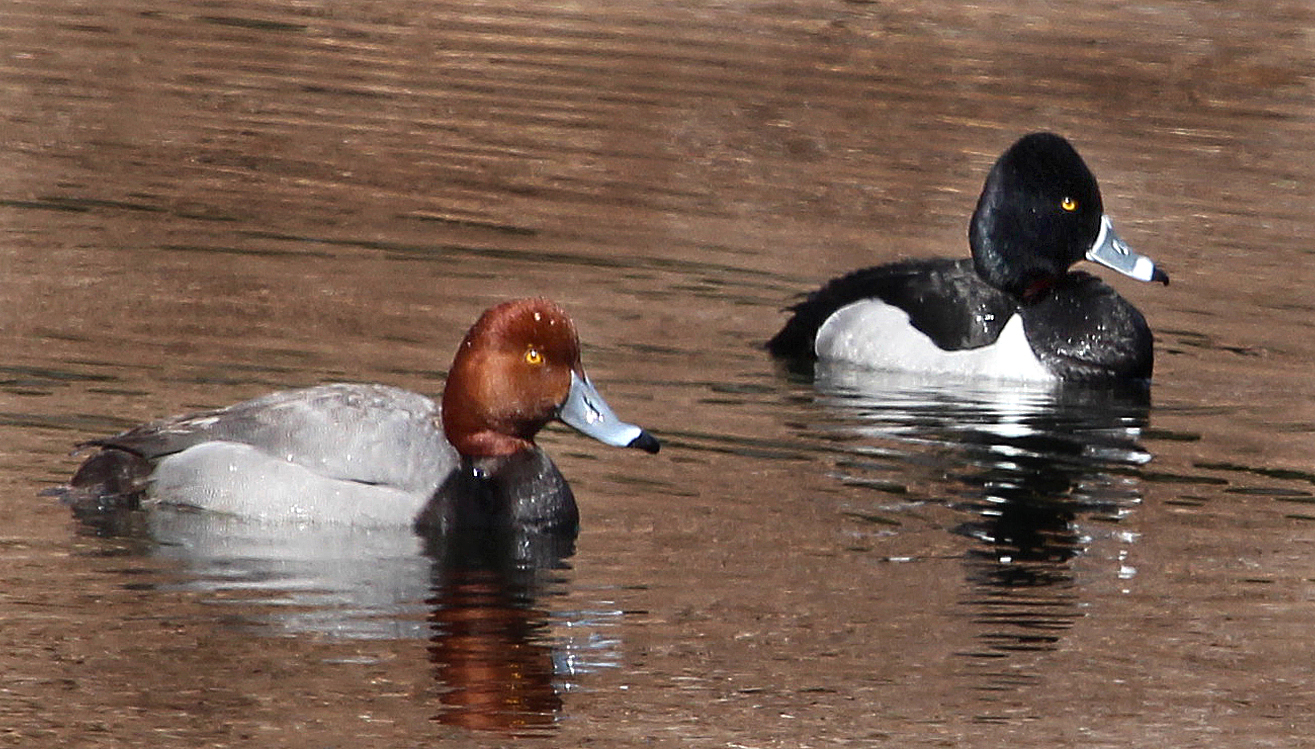
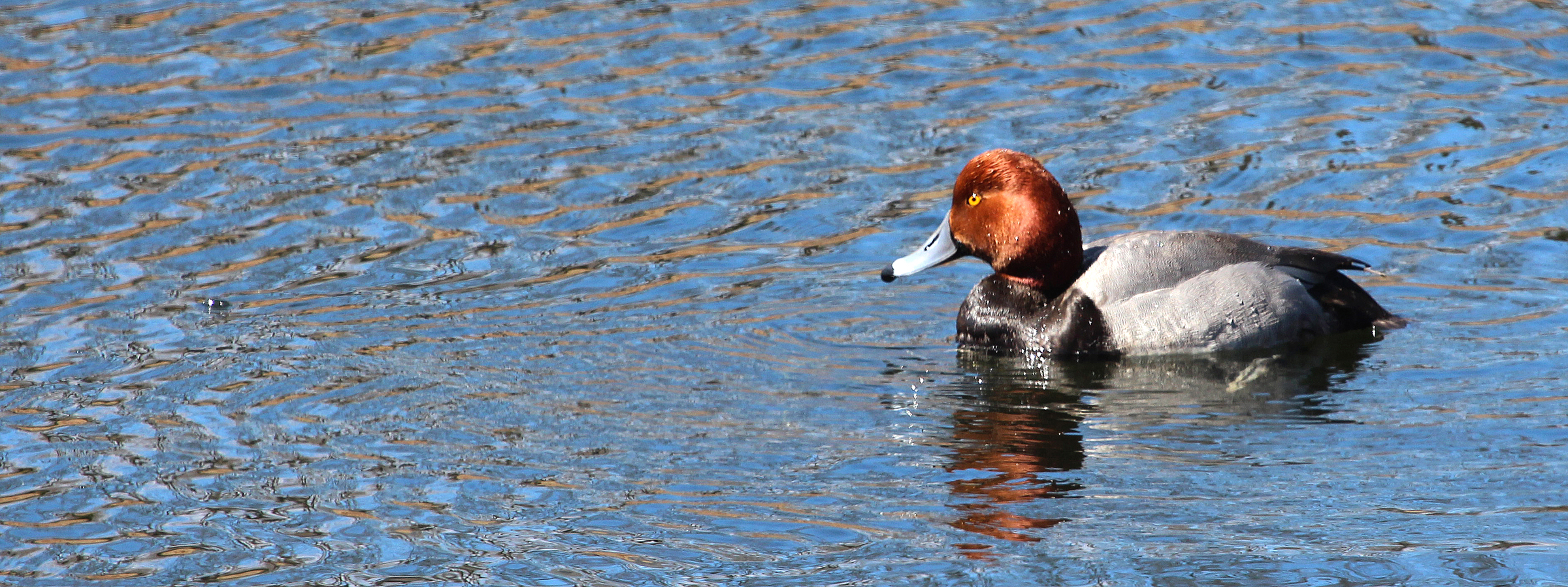
Photo by Chris Bosak A Redhead swims alongside a Ring-necked Duck in Darien in March 2014.

Photo by Chris Bosak
A Redhead swims alongside a Ring-necked Duck in Darien in March 2014.

In a previous post I mentioned I had seen a Redhead at Spring Grove Cemetery in Darien, Conn. It was the first time I had seen a Redhead at this small pond and it shared the water with Ring-necked Ducks, Hooded Mergansers, Wood Ducks, Canada Geese and Mallards.

At one point or another, I saw the Redhead “cross paths” with each of the other kinds of ducks. With one exception, the other ducks and geese basically paid no attention to the Redhead. In fact, at one point it was diving among a small flock of Canada Geese. It resurfaced next to a different goose every time and none of the geese seemed to mind.

It hung around the Ring-necked Ducks quite a bit and my suspicion is that it arrived with those ducks and will likely depart with them as well. Just a guess.

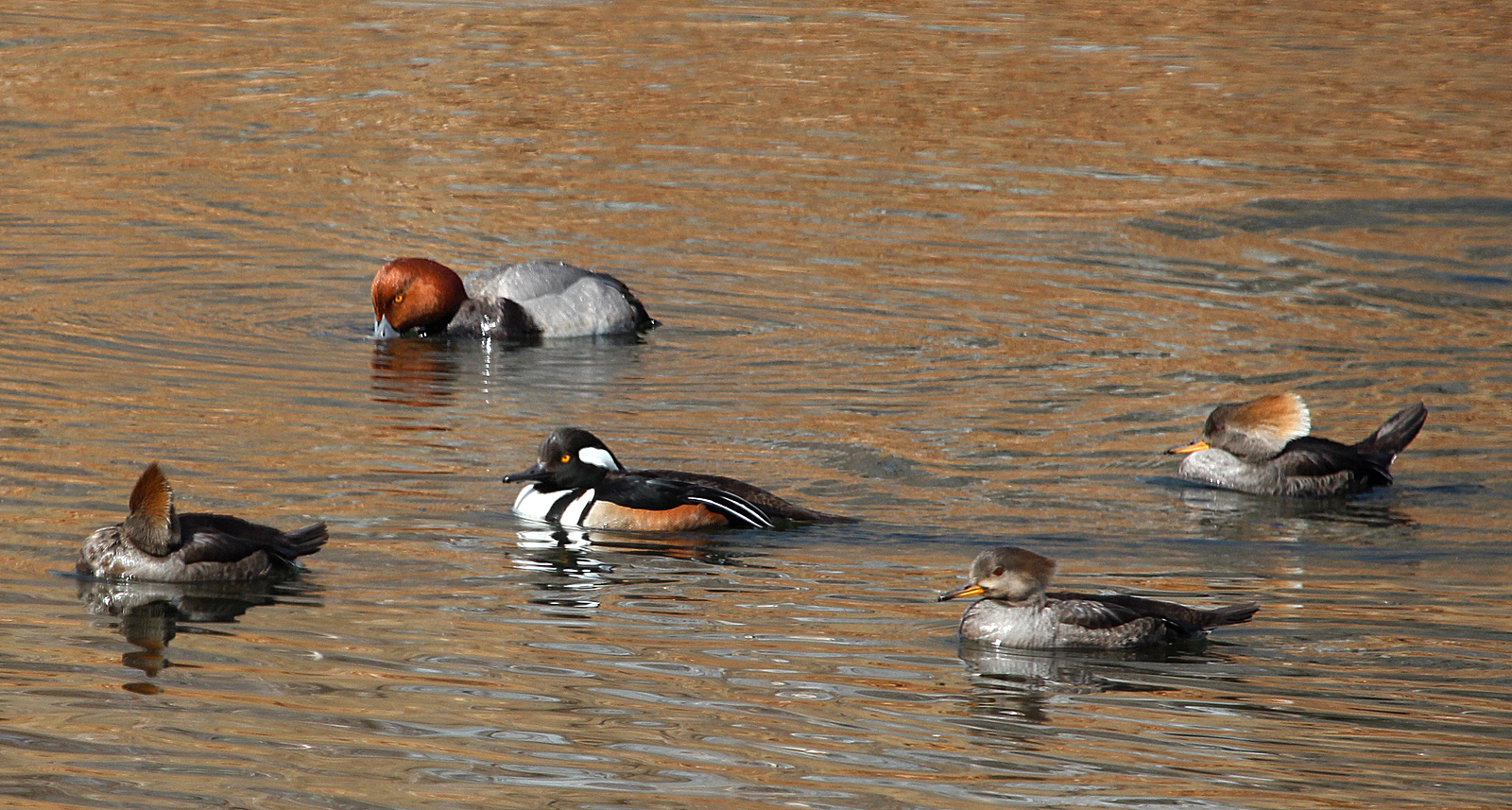
Five Hooded Mergansers passed the Redhead at one point with no drama.

Photo by Chris Bosak A flock of Hooded Mergansers swims past a Redhead at a Darien pond in March 2014.

Photo by Chris Bosak
A flock of Hooded Mergansers swims past a Redhead at a Darien pond in March 2014.

But the Wood Ducks did not like the Redhead getting too close. The Redhead drifted over from one side and the Wood Ducks from the other. When they got close enough, the male Wood Duck lowered its head and snapped repeatedly at the Redhead. Then the female Wood Duck did the same thing. The Redhead casually drifted away from the Woodies, but apparently not fast enough as the male Wood Duck reacted even more strongly to shoo away the somewhat rare New England visitor.

Fun stuff, this birdwatching hobby.

Photo by Chris Bosak A pair of Wood Ducks show their displeasure with a nearby Redhead in Darien in March 2014.

Photo by Chris Bosak
A pair of Wood Ducks show their displeasure with a nearby Redhead in Darien in March 2014.

Redhead makes surprise visit

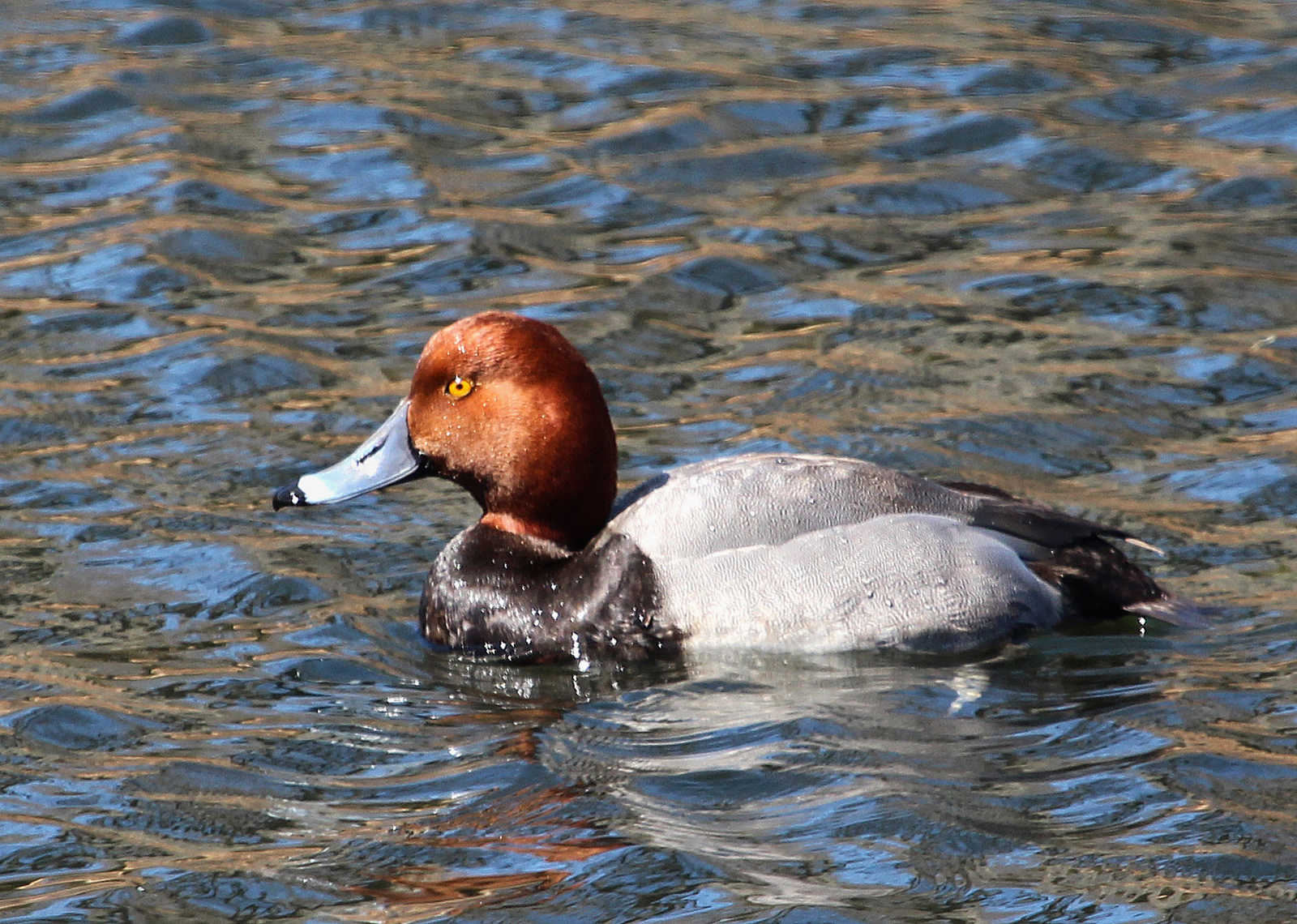
Photo by Chris Bosak Redhead seen in Darien pond in March 2014.

Photo by Chris Bosak
Redhead seen in Darien pond in March 2014.

I drove past the pond at first, assuming nothing of note would be there. But that nagging voice in the back of my head said: “Go back and check. It’ll take five minutes and you’re right here anyway.” I listened to that voice, as I usually do, and it paid off, as it often does.

Photo by Chris Bosak A Redhead swims at a pond in Darien in March 2014.

Photo by Chris Bosak
A Redhead swims at a pond in Darien in March 2014.

The pond at Spring Grove Cemetery in Darien is small but often fairly productive. It’s a good place to see Wood Ducks in the fall and spring. Hooded Mergansers are frequent visitors in winter when the water isn’t frozen over. Ring-necked Ducks are occasional visitors. And, of course, Canada Geese and Mallards are usually there.

But one day this week, not only were Hooded Mergansers, Wood Ducks and Ring-necked Ducks all there, but a surprise visitor was there as well. Redheads are a beautiful medium-sized duck that are seen occasionally in New England. I’ve seen massive flocks of them in the Midwest, but only a handful of times have I seen them in New England. They are seen sometimes within huge flocks of scaup. But I’ve never seen one in New England at a pond as small as this one. It was interesting to see it among the mergansers and ring-neckeds.

This is a male Redhead. The female is much duller in color, mostly tannish brown.

In a post later this week I’ll let you know how the Redhead seemed to get along with the other ducks in the small pond.

Photo by Chris Bosak A Redhead seen in Darien in March 2014.

Photo by Chris Bosak
A Redhead seen in Darien in March 2014.

BirdsofNewEngland’s random bird thought of the day: Ring-necked Ducks

Photo by Chris Bosak Ring-necked Ducks swim at Selleck's/Dunlap Woods in Darien, March 2014.

Photo by Chris Bosak
Ring-necked Ducks swim at Selleck’s/Dunlap Woods in Darien, March 2014.

In my last post about getting out there to check out the ducks before they are gone for the summer, I listed a bunch of ducks that winter throughout New England, but breed farther north. I left off that list Ring-necked Duck. It just didn’t come to mind when I was compiling the list. Sure enough, the next day I went out for a quick bird walk and the only ducks I saw were Ring-necked Ducks. I immediately thought: Hey, I don’t think I mentioned Ring-necked Ducks in that last post.

So, finally getting its due, here you have the Ring-necked Duck, a very handsome duck that spends its winters here in New England (and well south, too) and breeds in northern New England and into Canada. As you can see from the photo, a more apt name might be Ring-billed Duck, but the scientists who named it likely had a dead specimen in hand and the ring around its neck — which is difficult to see in the field — was more visible. It took me years to stop calling it Ring-billed Duck, but I eventually got used to it.

Also, as you can see from the photo, the species is sexually dimorphic: the males and females look different. All ducks seen in New England are sexually dimorphic with the males often brilliantly colored and females usually more dull in color.

BirdsofNewEngland’s random bird thought of the day: Seeing ducks

Photo by Chris Bosak Female Hooded Merganaser at Holly Pond in Stamford, CT, Nov. 2013.

Photo by Chris Bosak
Female Hooded Merganaser at Holly Pond in Stamford, CT, Nov. 2013.

Our winter ducks will remain with us for only a few more weeks so be sure to check out your local watering holes for these birds before they are gone.
Some ducks, of course, will remain with us all summer and breed locally, but most of the ducks we have on our waters now will head far north of here shortly. Depending on what part of New England we are talking about, Mallards may be the only duck we see in the summer – with perhaps the occasional tucked away pond holding Wood Ducks. The farther north you go in New England the more duck species there will be.
So get out there and enjoy the mergansers, scaup, grebes, teal, Long-tailed Ducks, Buffleheads and Goldeneye while you can. We won’t see them again until the fall.

Another Snowy Owl sighting in this historic year

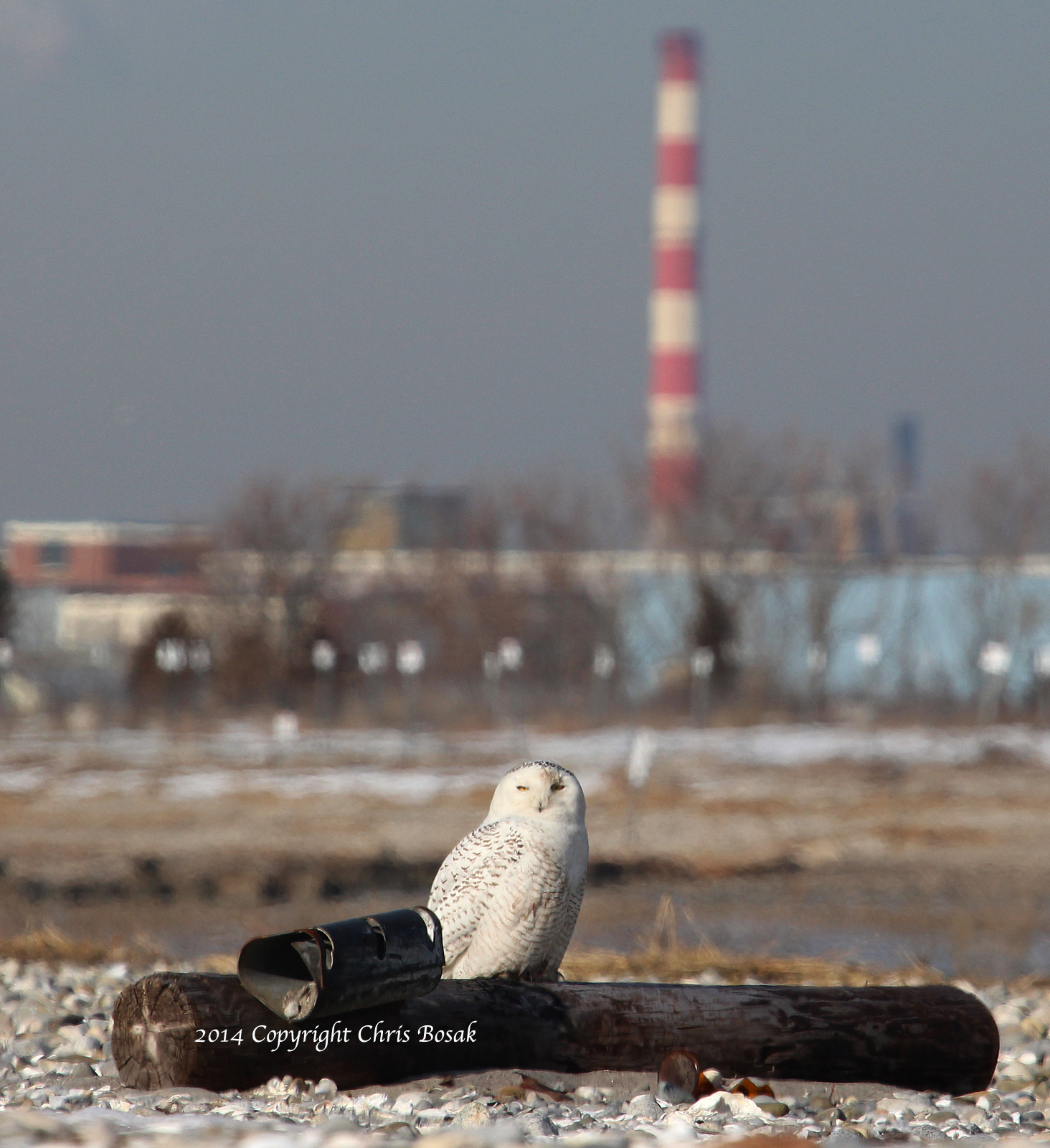
Photo by Chris Bosak A Snowy Owl sits on an old telephone pole at The Coastal Center at Milford Point in early March 2014. Smoke stacks in Bridgeport loom in the background.

Photo by Chris Bosak
A Snowy Owl sits on an old telephone pole at The Coastal Center at Milford Point in early March 2014. Smoke stacks in Bridgeport loom in the background.

It’s no secret by now that this is a historic winter for Snowy Owl sightings throughout New England and beyond. Snowy Owls are large owls that breed in the Arctic. The irruption of Snowies has gained the attention of nearly all media outlets — small, medium and large; newspapers, magazines, radio and television.

It’s hard to ignore such an avian happening. A couple Snowy Owl sightings in a New England winter is the norm. This year there have been dozens, perhaps hundreds. The most recent Audubon magazine has a great article by Scott Weidensaul. I highly recommend reading it.

I saw my first Snowy Owl of this winter in December in Westport, Conn. I saw a few more in January and February in Milford and Stratford, Conn.

On March 1 I had perhaps my best Snowy Owl sighting of the year. It was at the Coastal Center at Milford Point in Milford, Conn. The owl was on the beach and, while I photographed it from a distance, other beach walkers flushed the impressive bird on occasion. Because of the owl’s impressive size I was able to relocate it each time. Such an impressive bird.

My hope is that as many of these beautiful birds as possible make it back to the Arctic. Perhaps they’ll visit us again another winter.

Enjoy these photos. I hope to have a short video ready soon.
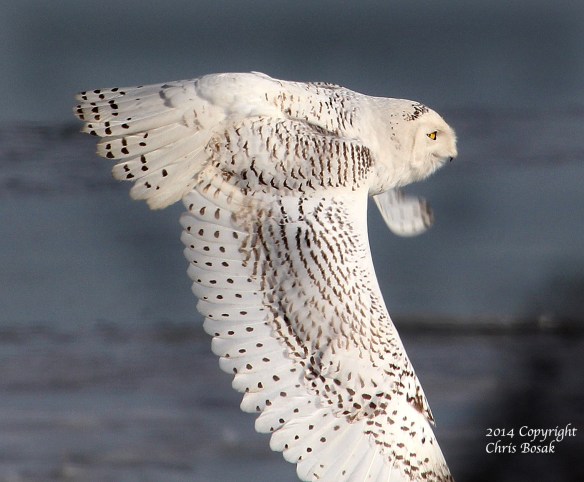
Photo by Chris Bosak A Snowy Owl flies across the beach at The Coastal Center at Milford Point in early March 2014.

Photo by Chris Bosak
A Snowy Owl flies across the beach at The Coastal Center at Milford Point in early March 2014.

More photos below (click on “continue reading.”)

Continue reading

Why are birds attacking my windows?

My latest For the Birds column was prompted by a question I received from a reader. It was a good question and one I’ve received several times in the past. So here’s my attempt at answering the question: “Why are birds attacking my windows?” (By the way, if you have a bird question for me, feel free to send it to bozclark@earthlink.net.)

Photo by Chris Bosak A Northern Cardinal eats berries from a cedar tree.

Photo by Chris Bosak
A Northern Cardinal eats berries from a cedar tree.

The good news is that signs of spring are everywhere in the birding world. The bad news is that this winter doesn’t seem to want to loosen its grip.

So for now let’s focus on the signs of spring and think warm thoughts. Not quite bird related, but I’ve noticed several plants poking out of the ground already. A nearby bed of daylilies has produced several of the plants jutting out about an inch already.
In the bird world, yes, American Robins have been seen in large numbers, but they are not necessarily a sign of spring as many robins stick with us throughout winter. To me, a sure sign of spring is hearing cardinals sing for the first time. Cardinals have been “chipping” or calling all winter to keep in contact with each other, but I’ve heard on a few occasions cardinals singing their famous songs. I assume they were male cardinals, but female cardinals also sing. Cardinals also have a variety of loud, whistling songs.

Read the rest of the column by clicking here.

Yes, more Hooded Merganser photos

Over the years I’ve taken tons of Hooded Merganser photos. I just love those little ducks and find them infinitely interesting.

So this weekend, what did I do? I took more Hooded Merganser photos, of course. About five males and four females were utilizing a small pool of unfrozen water on an otherwise frozen lake at Sellecks/Dunlap Woods in Darien, Conn. The males were not displaying, but that time is coming soon. (A video I took last winter of their breeding display behavior is included at the bottom of this post.)

Here are the latest. (Remember, you can always send me your bird photos and I’ll include them on my “Reader Submitted Photos” page. Send me your photos at bozclark@earthlink.net.

Now for those hoodies:

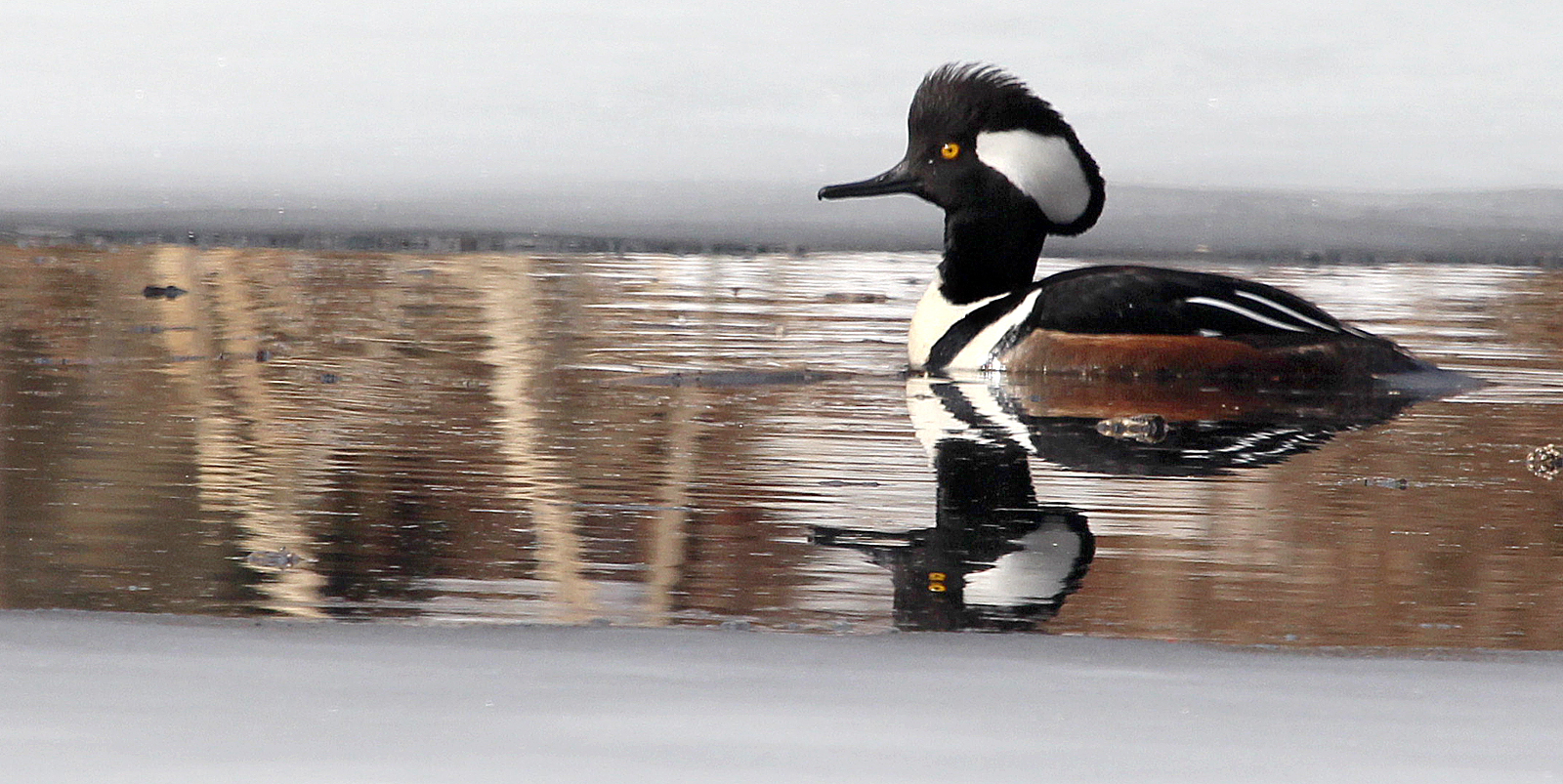
Photo by Chris Bosak Hooded Mergansers swim in a small unfrozen section of water at Selleck's/Dunlap in Darien, Conn., in Feb. 2014.

Photo by Chris Bosak
Hooded Mergansers swim in a small unfrozen section of water at Selleck’s/Dunlap in Darien, Conn., in Feb. 2014.

Photo by Chris Bosak A Hooded Merganser swim in a small unfrozen section of water at Selleck's/Dunlap in Darien, Conn., in Feb. 2014.

Photo by Chris Bosak
A Hooded Merganser swim in a small unfrozen section of water at Selleck’s/Dunlap in Darien, Conn., in Feb. 2014.

More photos below …

Continue reading