For the Birds: Not so colorless afterall

Here is the latest For the Birds column, which runs in several New England newspapers.

Photo by Chris Bosak A male Northern Cardinal in Stamford, Conn., March 2015.

Photo by Chris Bosak
A male Northern Cardinal in Stamford, Conn., March 2015.

Oak leaves, at least the ones in my yard, turned directly from green to brown and fell in droves during the windy days of the past week.

The trees are largely bare, most of the flowers that survived the fall have now perished in the year’s first frost and big, brown oak leaves cover many of the open spaces in the region.

There’s not a lot of color to be seen these days, except for evergreens and the occasional blue sky.

But, there are always the birds. Late fall and throughout the winter is when we need the birds the most to brighten our fading landscape. Luckily, plenty of colorful birds remain with us while the fair-weathered New England creatures — including migrant birds, butterflies and dragonflies — have taken their cheerful hues south.

Chickadees, titmice, nuthatches and downy woodpeckers may not be the most dynamic birds in terms of color but fall and winter is their time to shine. The subtle oranges on the titmice and chickadees, the gray-blue backs of the nuthatches, and the red on the heads of male downeys seem to be noticed more as the number of bird species we see at our feeders dwindles.

Even the white throat and yellow lore – the region between the eyes and nostrils — of a white-throated sparrow appears to glow brighter during these days.

Continue reading

For the Birds: In the world of mallards

Here is the latest For the Birds column, which runs in several New England newspapers.

Mallards sit on a branch overhanging a pond in New England.

Mallards sit on a branch overhanging a pond in New England. Photo by Chris Bosak


For just a moment, I was in their world.

As I stood there I could see nothing but branches, sticks and stubborn brown leaves that refused to fall off the low trees. Then I crouched like a baseball catcher and there they were: a flock of mallards taking a mid-day break in the tangled trees growing out of a small pond.

Normally mallards would not make for a memorable birdwatching outing, but this time was different.

A fairly busy road was no more than 50 yards away, and my car was about 50 feet away, but I felt as if I was visiting the ducks’ world. The area was thickly wooded and a dark canopy of towering branches hung over the pond’s edge, adding to the feeling of seclusion. It was as if the world was reduced to the woods, the mallards and me.

It was a neat sensation, one that I’ve experience only a handful of times before — usually in extreme northern New Hampshire.

It was the way the mallards acted. They didn’t flee when my feet crunched the crispy leaves as I approached. They didn’t plop into the water and swim away slowly when I crouched for my view. They stirred only slightly as I settled in for a closer look and found a more comfortable position. (The catcher’s stance lasts only so long these days for me.) Most importantly, the mallards didn’t approach me looking for a handout. That definitely would have ruined it.

I watched as the mallards simply went about their day. The average person would have been bored silly in about 30 seconds, but I was fascinated.

A drake had the best seat in the house, hogging a gnarled tree all to himself. Just off to the right was a leaning tree with half a dozen mallards sitting next to each other. Four of them were sleeping, heads turned around with their bills nestled into their backs — eyes closed. The two wakeful mallards paid no attention to me. At least eight other mallards occupied trees or branches in the same area.

Looking back, it would have been even more memorable had the birds been wood ducks or hooded mergansers — both of which were also at the pond that day — but I can’t complain about the mallards. Besides wood ducks or mergansers would have been long gone at the first snap of a twig.

Another drake swam onto the scene. It bypassed the crowded leaning tree and tried to join the male that was sitting alone. Big mistake. The duck leaned forward, hissed and snapped at the newcomer, shooing him away. It found a place nearby to roost.

A minute or two later, one of the hens left the crowded tree, took a few graceful paddles through the shallow water and climbed aboard the gnarled tree with the ornery male. The male shifted slightly, but let the hen stay. After about three minutes, the drake’s charitable mood changed and he nipped at the female, sending her away.

The mallards’ mid-afternoon break outlasted mine. I was already late for work and, knowing that, the feeling of being in a different world faded away.

It was back to the real world. But I had the dirty pants and muddy shoes to prove that I had been elsewhere.

For the Birds: Bountiful time in the birding world

Here is the latest For the Birds column, which runs in several New England newspapers.

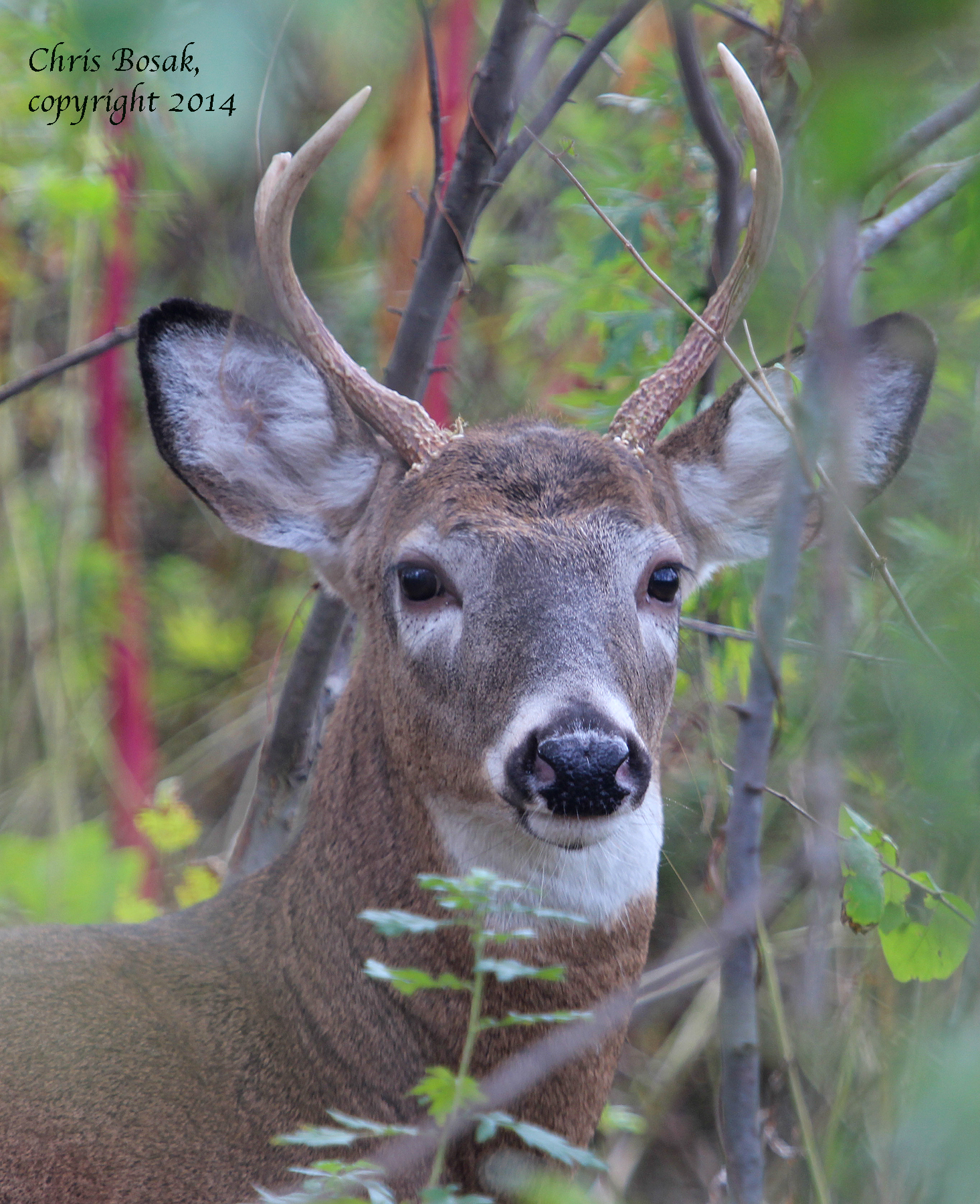
Photo by Chris Bosak A young White-tailed Deer in Stamford, Oct. 2014.

Photo by Chris Bosak
A young White-tailed Deer in Stamford, Oct. 2014.

There’s so much I like about this time of year.

I know, I know, I could block-save those words and start every other column with them.

Mid to late fall does have a lot to offer birdwatchers, though, despite the falling temperatures and fleeting daylight.

This time of year also has its challenges, but they are largely overshadowed by its rewards.

Right off the bat, it’s time for waterfowl migration. As far as I’m concerned, you can’t go wrong when there’s migrating waterfowl around. One glimpse of a merganser, ring-necked duck or bufflehead and it’s a successful day, regardless of what else happens.

Finding and seeing waterfowl is no problem in mid fall, especially if you have a spotting scope. Basically, all you do is find water. Getting close looks or trying to photograph or hunt the creatures is a different matter; unless it’s a nonmigratory mallard or Canada goose, waterfowl are wary.

Continue reading

For the Birds: Slow days happen in the fields and woods, too

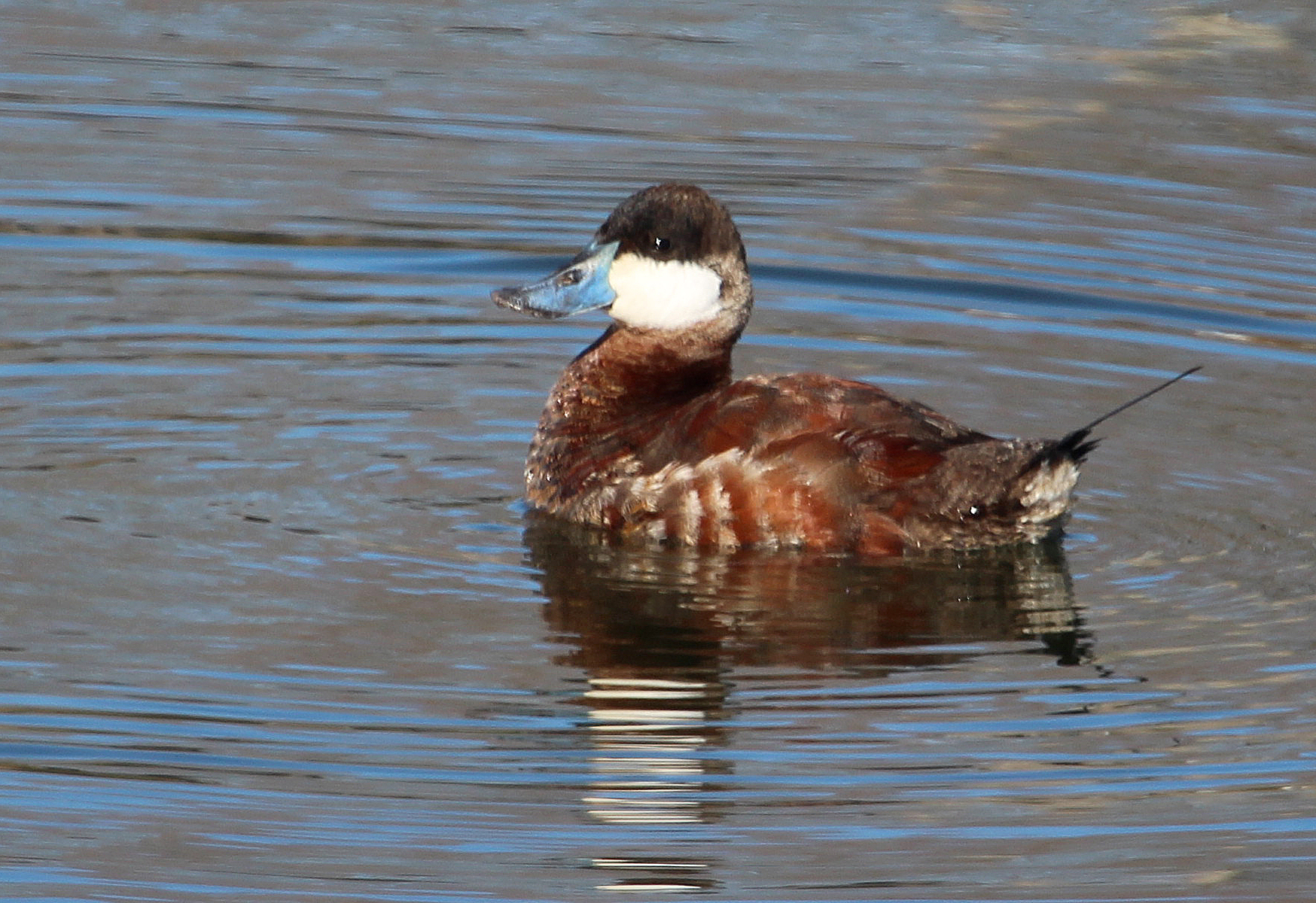
Photo by Chris Bosak Ruddy Duck at Cove Island Park in Stamford, CT, April 2014.

Photo by Chris Bosak
Ruddy Duck at Cove Island Park in Stamford, CT, April 2014.

Here is the latest For the Birds columns, which runs weekly in several New England newspapers.

Last week I wrote about the disappearance of birds in people’s backyards. I had received a lot of letters from people concerned that their feeders were not getting visited any longer.
Although there are several possible explanations, I had concluded that the warm and dry fall made for a bounty of natural foods on which the birds were feasting. Therefore, the birds did not need the supplemental food offered from feeders. That was my conclusion, anyway, not necessary the real reason.
I stick to that assertion, however I also visited a park the other day that was rich in natural food sources and guess what? Hardly any birds. The birds I did see were all fairly ordinary species. Not that I don’t appreciate the ordinary species too, but a song sparrow or two and a mockingbird was about the extent of my bird sightings that day.
Mid to late fall can be a tricky time for birdwatching. The feeders, as my readers pointed out, can be scarcely visited and the woods can be very quiet as well. The migration, for the most part, is finished and we are waiting for our winter birds such as juncos and white-throated sparrows to arrive en masse.
I have been lucky that my feeders, as long Continue reading

For the Birds: Where are the birds?

Here is the latest For the Birds column, which runs weekly in several New England newspapers.

Photo by Chris Bosak A tufted titmouse perches on a homemade birdfeeder in Danbury, Conn., March 2017.

Photo by Chris Bosak
A tufted titmouse perches on a homemade birdfeeder in Danbury, Conn., March 2017.

It started with one, like nearly all things do. Then another came in, and they kept coming.
“Where are the birds?” was the similar question in the emails and phone calls.
Here are few examples:
“Why am I not seeing as many birds at my feeders for the last two to three weeks?”
“I’ve probably seen a woodpecker or two since the beginning of September! What is going on? Why don’t the birds find us again?”
“The birds I feed here in Richmond have disappeared. Myself and my neighbors haven’t seen them for several weeks.”
Becky of New Hampshire offered some hope, however. She said crows were more numerous than in past years and that the smaller birds stopped coming.
“They are just lately slowly reappearing,” she wrote.
So they are coming back. My guess is that all of the writers asking where the birds have gone will soon get their birds back.
Why do yards with bird feeders go through slow Continue reading

For the Birds: Busy Kinglet is in constant motion

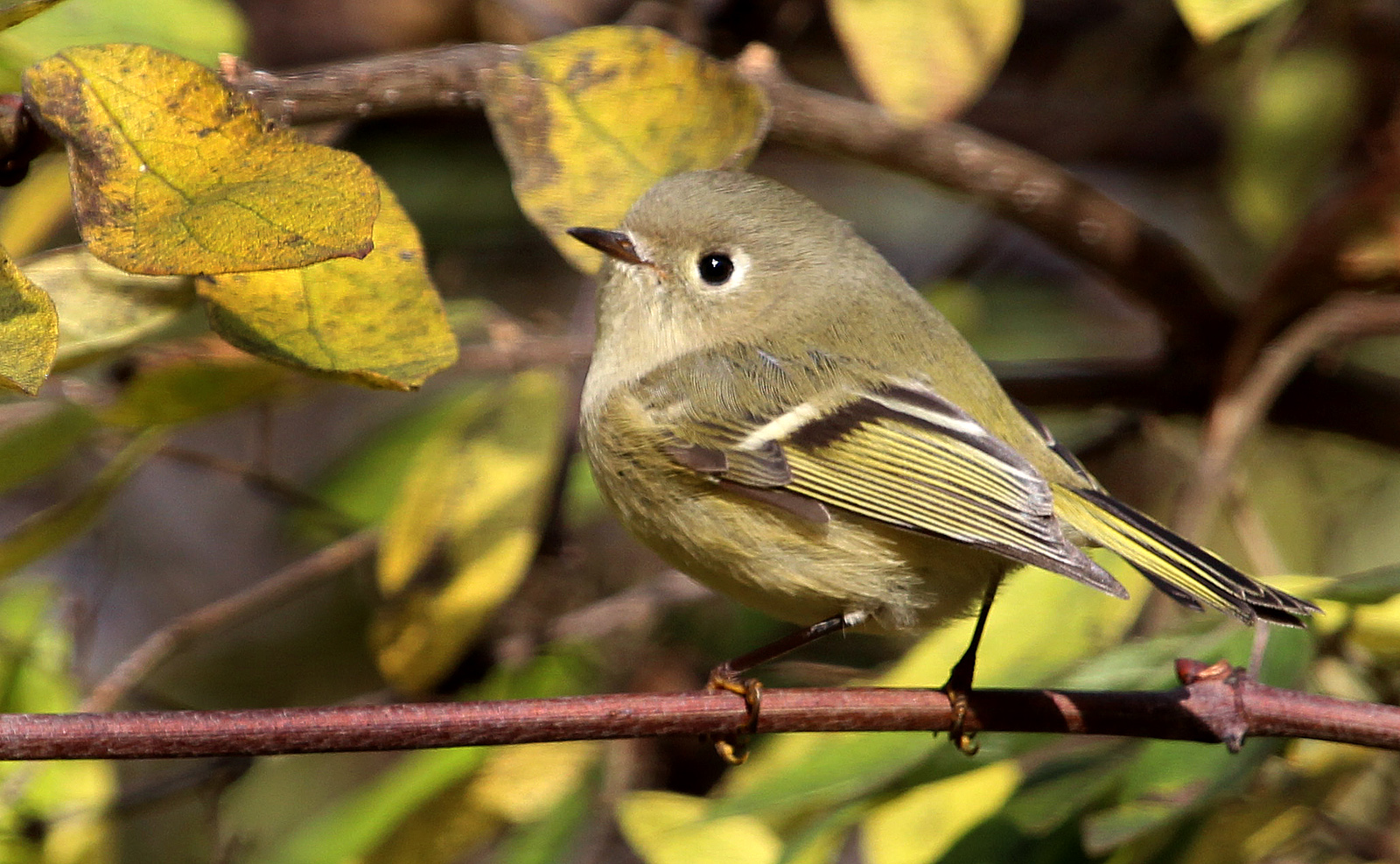
Photo by Chris Bosak A Ruby-crowned Kinglet perches on a branch in New England.

Photo by Chris Bosak
A Ruby-crowned Kinglet perches on a branch in New England.

Here is the latest For the Birds column, which runs in several New England newspapers.

I thought it was going to be the easiest bird photo I’ve ever taken.

There was the kinglet, literally right at my feet. It was hopping along the beach a few weeks ago looking for small insects among the plants popping out of the sand. It was a male ruby-crowned kinglet and he was alone at this stage of his migration.

I grabbed the camera from the front seat and got out of the car for what I thought would be a quick strike. It wasn’t. The kinglet didn’t fly away and didn’t run away. It just wouldn’t sit still — not even for a second. Now I know how department store children’s photographers feel on their bad days.

First, let’s familiarize ourselves with the kinglet. There are two types of kinglet: ruby-crowned kinglet and golden-crowned kinglet. The ruby-crowned kinglet has an eye-ring that doesn’t quite make it all the way around its eye. The golden-crowned kinglet has no eye-ring, but rather an eye stripe.

To tell the species apart I like to think of a “ruby ring.” Hey, it works for me.

The male ruby-crowned kinglet has a small patch of red on the top of his head, while the female has no patch. With the golden-crowned kinglet, the male has an orangish patch outlined in yellow and the female has a yellow patch.

Keep in mind that the colorful patches are not always visible, especially on the ruby-crowned.

Usually the species stick together, but I’ll never forget the time I looked out a window of my house and saw a ruby-crowned kinglet and a golden-crowned kinglet cross paths on a hemlock branch. If I ever wanted a side-by-side comparison, that was my chance.

The kinglets are also among the smallest birds we see here in New England. The golden-crowned measures about 4 inches, while the ruby-crowned is a whopping 4 ½ inches. By comparison, the black-capped chickadee is about 5 inches (slightly larger than both kinglets) and the ruby-throated hummingbird is almost 4 inches (only slightly smaller than the kinglets).

Their tiny size makes it a challenge to photograph them. Even with a powerful lens, it’s tough to fill the frame.

But the real challenge is their energy. They don’t sit still. By the time the camera’s auto-focus feature nails the subject, the bird is gone. It’s not far away, perhaps only an inch or two, but far enough to throw off the focus.

Now back to my beach-combing ruby-crowned kinglet.

I performed the auto-focus dance for a while before switching to manual focus, which proved to be even more frustrating. Usually focusing required only a slight turn of the lens one way or the other, but I always picked the wrong way. By the time I corrected the error — you guessed it — the bird was elsewhere.

The bird never went very far and at one point was about a foot away from my shoes. I had already determined before that moment that my presence didn’t bother him. The last thing I’d want to do is deny a hungry migrating bird of a good food source, which it obviously had found at the beach.

I wasn’t disturbing him, but he certainly wasn’t cooperating with me either. He was very busy. No time for posing.

After several minutes of trying to catch the little guy, I remembered the last time I had tried to photograph kinglets. I was at a Connecticut park and there were kinglets all over the place in the bushes. In a way that experience was even more frustrating because I didn’t know which kinglet to target and, no matter which one I picked, it was constant motion. I never did get a great photo that day, despite there being dozens of little subjects flitting around the bushes.

But on this day there was only one subject on which to channel my efforts. The results were not much better. I got a couple of decent photos and a bunch of blurry images of a male ruby-crowned kinglet’s tail. A few photos showed nothing but landscape: sand and weeds, no bird. I missed the little guy by a split second, but it may as well have been an hour.

But I can laugh about it now. My therapist says that’s a good thing. He also suggests that I just look at kinglets from now on and not try to photograph them. What does he know? Next time I’ll do better.
Continue reading

For the Birds: Fall has it all

Photo by Chris Bosak A green Eastern Pondhawk dragonfly clings on to a vine wrapped around a stalk on a meadow property of the Darien Land Trust, summer 2013.

Photo by Chris Bosak
A green Eastern Pondhawk dragonfly clings on to a vine wrapped around a stalk on a meadow property of the Darien Land Trust.

Here is the latest For the Birds column that runs in several New England newspapers.

Early fall is an exciting time, not only for birdwatchers, but for watchers of nature in general.

Male white-tailed deer and moose have their antlers fully grown and ready for the rut, or breeding season. What were little nubs of antlers in early spring are impressive racks for fighting, intimidating other males and showing off in front of the females.

Some say that spring is the best time for watching nature, but only in the fall can we appreciate the beauty and majesty of fully grown antlers. 

Seeing a bull moose in July is a memorable experience. Seeing a bull moose in the fall is an unforgettable experience.

Early fall is also a time when a birdwatcher can really pile on the numbers for a species-seen list. Herons and egrets are still around. Shorebirds are still migrating. Songbirds are moving south as well. Waterfowl start migrating through New England. Continue reading

For the Birds: Hawkwatching season in New England

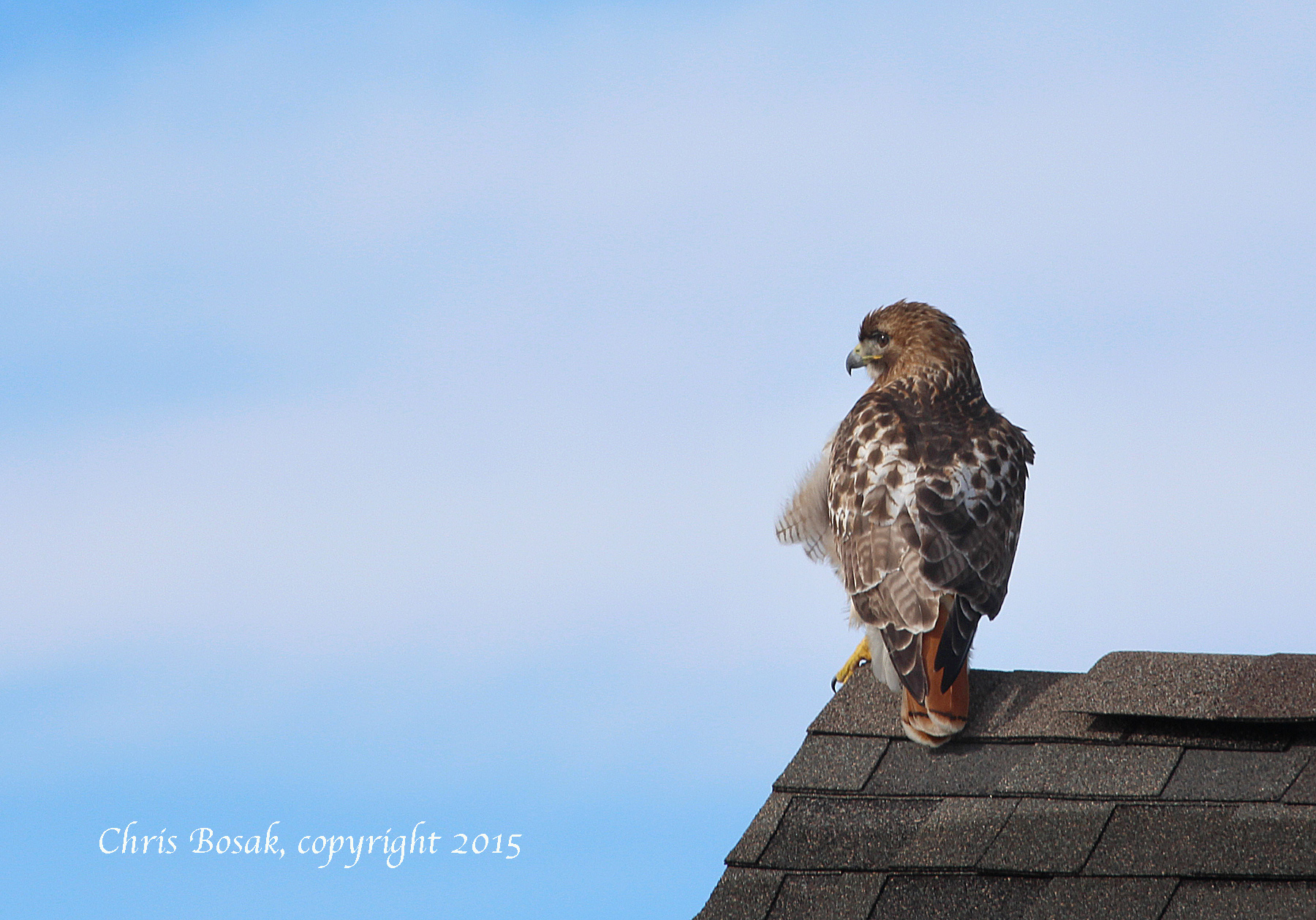
Photo by Chris Bosak A Red-tailed hawk at Weed Beach in Darien, Conn., January 2015.

Photo by Chris Bosak
A Red-tailed hawk at Weed Beach in Darien, Conn., January 2015.

Here’s the latest For the Birds column, which runs in several New England newspapers.

The seasons are changing, and there’s a lot going on in the birding world.

Warblers and other songbirds are migrating south. Shorebirds — many species of which have long migrated already — continue to move through New England. Other small winged creatures — monarch butterflies — are also seen more often now as they prepare for their generational migration.

On the ponds, the waterfowl migration hasn’t started with verve yet, but wood ducks, which spend much of the summer hiding out, are more often seen and heard in the fall. At the same time, herons and egrets are still with us in large numbers, and feeder birds continue to keep us company in our backyards. 

Yes, a lot is going on in early fall as we birdwatchers start to shift from a summer frame of mind to a winter one.

With all that’s going on, one type of bird still manages to take center stage in September and October: hawks.

Hawkwatches are the primary destination for birdwatchers this time of year as birds of prey by the thousands ride the wind south. Pick the right day with the ideal weather conditions, and a birdwatcher may see hundreds of hawks, falcons, eagles and vultures soaring overhead.

Continue reading

For the Birds: Goldfinches brighten the landscape

Here is the latest For the Birds column, which runs in several New England newspapers.

Photo by Chris Bosak An American Goldfinch rests on a sunflower in New England.

Photo by Chris Bosak
An American Goldfinch rests on a sunflower in New England.

N othing cheers up a day like a goldfinch. Those little, bright bursts of yellow are always a welcome site at your feeder, bird bath or perched on a flower in your garden.

I especially appreciate goldfinches in the dead of summer. I remember taking a walk a few years ago on one of those classic hot, humid days in August. It was the middle of the afternoon and, not surprisingly, I was finding very little in terms of wildlife. Dragonflies were dancing all over the place, but even the butterflies seemed to be hiding from the heat.

Suddenly, I heard the cheerful song of a goldfinch in flight coming up from behind me. I turned just in time to see the bright yellow bird perch on the top of a thistle flower. The pink-and-purple flower rocked back and forth as it reacted to the weight of the tiny bird. When the flower settled, the goldfinch went about its business of picking at the flower.

I watched the scene briefly, and continued my walk. About five minutes later, I heard the bird again. I looked up to see it fly over my head and disappear into the distance. Despite its tiny size — about 5 inches — the goldfinch is an easy bird to identify in flight. It flies quickly in an undulating fashion — like a roller coaster with small rises and falls — usually uttering its potato-chip, potato-chip song as it bounces up and down.

I didn’t see any other birds on that walk, but the single goldfinch perched on the flower made it all worthwhile.

Goldfinches also score points with me as they are frequently seen in my garden. I’ve seen goldfinches perched atop coneflower and black-eyed Susan flowers, picking away at the seeds. I’ve also seen them on sunflowers.

Goldfinches, of course, are also reliable feeder birds, often occupying every perch of a tube feeder. I love to see all six perches of my blue tube feeder occupied by the bright yellow birds.

Goldfinches will eat sunflower seeds and will visit platform or tube feeders. A sure way to attract goldfinches is to offer Nyjer in a tube feeder specifically designed for the tiny seeds. Do not try to use thistle seeds in a regular feeder as the tiny seeds will spill through the holes.

“Sock” feeders stuffed with thistle seeds are a good alternative.

Goldfinches visit feeders at any time of the day. It’s interesting to note that goldfinches move on frequently so the birds you see at your feeder in the evening are not likely the same ones you saw in the morning.

Goldfinches are found throughout the country and many remain in New England through the winter months. They are not the flashy yellow birds we love so much in the summer, though. We still love them in the winter, of course, but they are much duller, often appearing olive or brownish.

It’s fun to see the splotchy male goldfinches in the early part of spring as they slowly regain their bright yellow plumage. Only the males are bright yellow. Females are a duller yellow.

They also have black caps and black wings with white stripes. My brother Ed and his wife, Debbie, are big Pittsburgh Steelers fans, so the goldfinch is a favorite in that household.

Of course, you don’t have to be a Steelers fan to appreciate the beauty of a goldfinch. The bright yellow speaks for itself. Throw in a purple or pink flower and you’ve got real proof that Mother Nature likes her colors.

Continue reading

For the Birds: Brown thrasher — talkative entertainer

Photo by Chris Bosak A brown thrasher checks out its surroundings in New England.

Photo by Chris Bosak
A brown thrasher checks out its surroundings in New England.

It’s usually not easy and this time was no exception. It took a little coaxing to get the bird to show itself.

Eventually the brown thrasher flew out of the thicket and landed at the top of a tall shrub to check out its surroundings and sing a few notes. Once a brown thrasher gets going vocally, it rarely lacks for something to say. It can go on and on for hours.

This bird, however, instead of breaking into its incredible repertoire of songs and mimicry, simply repeated its nonmusical call note.

 I watched for a long time as the bird afforded me a close view. From my experiences, brown thrashers are usually skittish, but every so often one will allow for long observation. Another problem is, I don’t find them often enough. A few times a year is about the extent of my brown thrasher sightings.

Many conservationists worry about the status of the brown thrasher. Most would agree that the population is in decline, but the extent to which is up for debate. From my experiences, I’ve never had much luck finding them, so it’s hard for me to form an opinion based on my own anecdotal evidence.

Continue reading