For the Birds: Fall has it all

Photo by Chris Bosak A green Eastern Pondhawk dragonfly clings on to a vine wrapped around a stalk on a meadow property of the Darien Land Trust, summer 2013.

Photo by Chris Bosak
A green Eastern Pondhawk dragonfly clings on to a vine wrapped around a stalk on a meadow property of the Darien Land Trust.

Here is the latest For the Birds column that runs in several New England newspapers.

Early fall is an exciting time, not only for birdwatchers, but for watchers of nature in general.

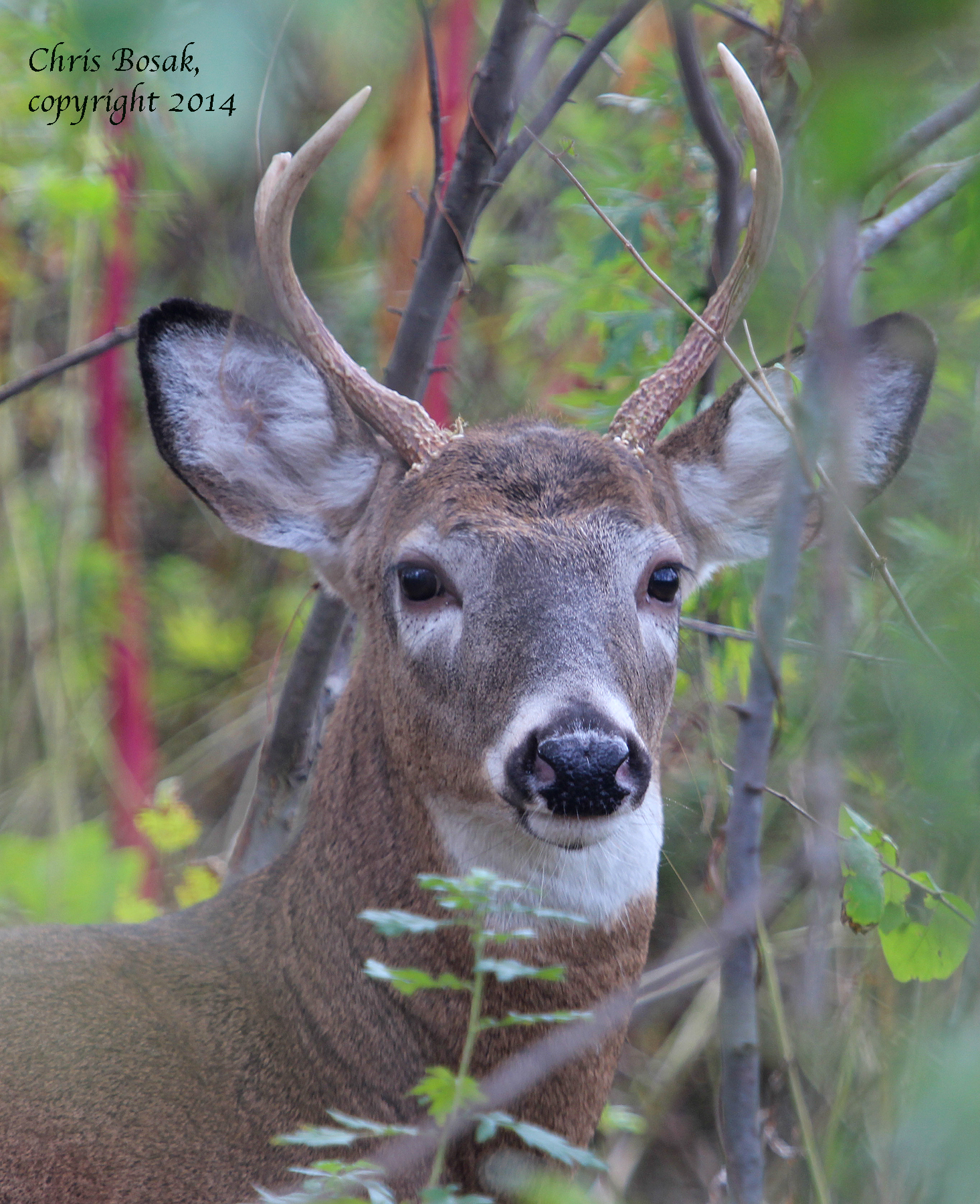
Male white-tailed deer and moose have their antlers fully grown and ready for the rut, or breeding season. What were little nubs of antlers in early spring are impressive racks for fighting, intimidating other males and showing off in front of the females.

Some say that spring is the best time for watching nature, but only in the fall can we appreciate the beauty and majesty of fully grown antlers. 

Seeing a bull moose in July is a memorable experience. Seeing a bull moose in the fall is an unforgettable experience.

Early fall is also a time when a birdwatcher can really pile on the numbers for a species-seen list. Herons and egrets are still around. Shorebirds are still migrating. Songbirds are moving south as well. Waterfowl start migrating through New England. Continue reading

For the Birds: Hawkwatching season in New England

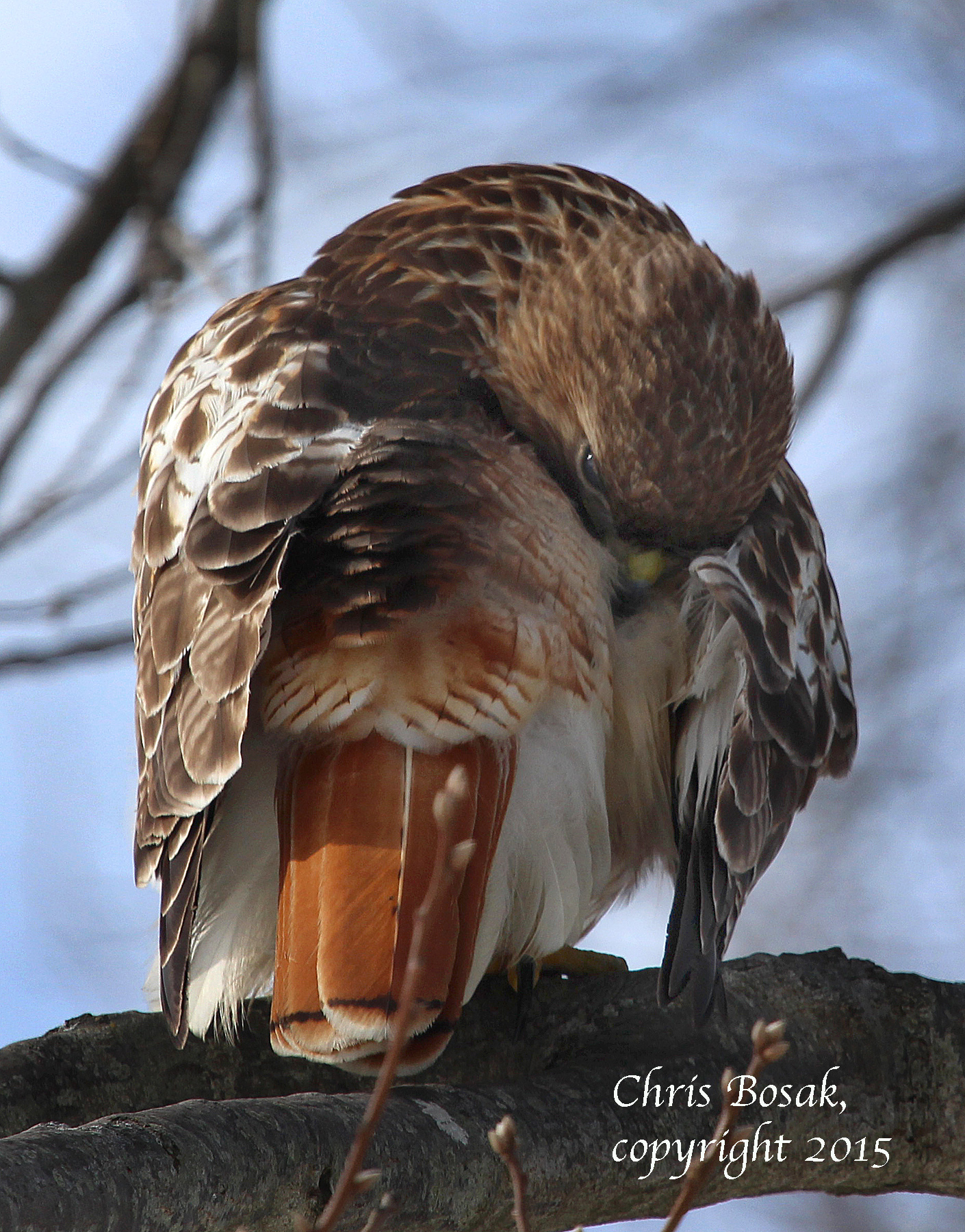
Photo by Chris Bosak A Red-tailed hawk at Weed Beach in Darien, Conn., January 2015.

Photo by Chris Bosak
A Red-tailed hawk at Weed Beach in Darien, Conn., January 2015.

Here’s the latest For the Birds column, which runs in several New England newspapers.

The seasons are changing, and there’s a lot going on in the birding world.

Warblers and other songbirds are migrating south. Shorebirds — many species of which have long migrated already — continue to move through New England. Other small winged creatures — monarch butterflies — are also seen more often now as they prepare for their generational migration.

On the ponds, the waterfowl migration hasn’t started with verve yet, but wood ducks, which spend much of the summer hiding out, are more often seen and heard in the fall. At the same time, herons and egrets are still with us in large numbers, and feeder birds continue to keep us company in our backyards. 

Yes, a lot is going on in early fall as we birdwatchers start to shift from a summer frame of mind to a winter one.

With all that’s going on, one type of bird still manages to take center stage in September and October: hawks.

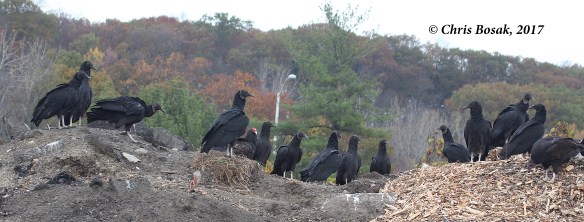
Hawkwatches are the primary destination for birdwatchers this time of year as birds of prey by the thousands ride the wind south. Pick the right day with the ideal weather conditions, and a birdwatcher may see hundreds of hawks, falcons, eagles and vultures soaring overhead.

Continue reading

For the Birds: Goldfinches brighten the landscape

Here is the latest For the Birds column, which runs in several New England newspapers.

Photo by Chris Bosak An American Goldfinch rests on a sunflower in New England.

Photo by Chris Bosak
An American Goldfinch rests on a sunflower in New England.

N othing cheers up a day like a goldfinch. Those little, bright bursts of yellow are always a welcome site at your feeder, bird bath or perched on a flower in your garden.

I especially appreciate goldfinches in the dead of summer. I remember taking a walk a few years ago on one of those classic hot, humid days in August. It was the middle of the afternoon and, not surprisingly, I was finding very little in terms of wildlife. Dragonflies were dancing all over the place, but even the butterflies seemed to be hiding from the heat.

Suddenly, I heard the cheerful song of a goldfinch in flight coming up from behind me. I turned just in time to see the bright yellow bird perch on the top of a thistle flower. The pink-and-purple flower rocked back and forth as it reacted to the weight of the tiny bird. When the flower settled, the goldfinch went about its business of picking at the flower.

I watched the scene briefly, and continued my walk. About five minutes later, I heard the bird again. I looked up to see it fly over my head and disappear into the distance. Despite its tiny size — about 5 inches — the goldfinch is an easy bird to identify in flight. It flies quickly in an undulating fashion — like a roller coaster with small rises and falls — usually uttering its potato-chip, potato-chip song as it bounces up and down.

I didn’t see any other birds on that walk, but the single goldfinch perched on the flower made it all worthwhile.

Goldfinches also score points with me as they are frequently seen in my garden. I’ve seen goldfinches perched atop coneflower and black-eyed Susan flowers, picking away at the seeds. I’ve also seen them on sunflowers.

Goldfinches, of course, are also reliable feeder birds, often occupying every perch of a tube feeder. I love to see all six perches of my blue tube feeder occupied by the bright yellow birds.

Goldfinches will eat sunflower seeds and will visit platform or tube feeders. A sure way to attract goldfinches is to offer Nyjer in a tube feeder specifically designed for the tiny seeds. Do not try to use thistle seeds in a regular feeder as the tiny seeds will spill through the holes.

“Sock” feeders stuffed with thistle seeds are a good alternative.

Goldfinches visit feeders at any time of the day. It’s interesting to note that goldfinches move on frequently so the birds you see at your feeder in the evening are not likely the same ones you saw in the morning.

Goldfinches are found throughout the country and many remain in New England through the winter months. They are not the flashy yellow birds we love so much in the summer, though. We still love them in the winter, of course, but they are much duller, often appearing olive or brownish.

It’s fun to see the splotchy male goldfinches in the early part of spring as they slowly regain their bright yellow plumage. Only the males are bright yellow. Females are a duller yellow.

They also have black caps and black wings with white stripes. My brother Ed and his wife, Debbie, are big Pittsburgh Steelers fans, so the goldfinch is a favorite in that household.

Of course, you don’t have to be a Steelers fan to appreciate the beauty of a goldfinch. The bright yellow speaks for itself. Throw in a purple or pink flower and you’ve got real proof that Mother Nature likes her colors.

Continue reading

For the Birds: Brown thrasher — talkative entertainer

Photo by Chris Bosak A brown thrasher checks out its surroundings in New England.

Photo by Chris Bosak
A brown thrasher checks out its surroundings in New England.

It’s usually not easy and this time was no exception. It took a little coaxing to get the bird to show itself.

Eventually the brown thrasher flew out of the thicket and landed at the top of a tall shrub to check out its surroundings and sing a few notes. Once a brown thrasher gets going vocally, it rarely lacks for something to say. It can go on and on for hours.

This bird, however, instead of breaking into its incredible repertoire of songs and mimicry, simply repeated its nonmusical call note.

 I watched for a long time as the bird afforded me a close view. From my experiences, brown thrashers are usually skittish, but every so often one will allow for long observation. Another problem is, I don’t find them often enough. A few times a year is about the extent of my brown thrasher sightings.

Many conservationists worry about the status of the brown thrasher. Most would agree that the population is in decline, but the extent to which is up for debate. From my experiences, I’ve never had much luck finding them, so it’s hard for me to form an opinion based on my own anecdotal evidence.

Continue reading

For the Birds: Growing up quickly in the bird world

Here is the latest For the Birds column, which runs in several New England newspapers.

Photo by Chris Bosak Young Blue Jay at birdbath

Photo by Chris Bosak
Young Blue Jay at birdbath

They grow up fast, don’t they?

I’m not even talking about my own boys, who are eating me out of house and home with their darn growth spurts. I’m talking about the other youngsters growing up on my property — the birds, or course.

Watching the activity at the birdbath recently has been an education in just how quickly birds grow. I was watching a blue jay the other day and it took me a while to realize the bird looked a little different from the blue jays I was used to seeing. Mostly around the face, the bird just didn’t look right.

It was a youngster, or a fledgling to be more scientific. It doesn’t take long before young blue jays look just like their parents. It takes even less time before they are the size of their parents. This bird was in that short in-between phase when it was the size of an adult, but didn’t quite obtain the adult plumage.

The juvenile plumage disappears quickly in most songbirds, unlike some other types of birds when it can take years. A bald eagle, for instance, doesn’t obtain its white head for four or five years. But in songbirds, it’s a matter of a few short weeks.

The juvenile blue jay I watched tried a defense mechanism Continue reading

For the Birds column: A return to Pittsburg

Here is the latest For the Birds column, which runs in several New England newspapers.

Photo by Chris Bosak Tiger Swallowtails gather at the edge of the pond at Deer Mountain Campground in Pittsburg, N.H., in summer 2017.

Photo by Chris Bosak
Tiger Swallowtails gather at the edge of the pond at Deer Mountain Campground in Pittsburg, N.H., in summer 2017.


My trips, or as I like to call them pilgrimages, to the Great North Woods have changed over the years.

Back when I was making the trips alone, I would have a hard time sleeping the night before so I would eventually just get out of bed and hit the road around 2 or 3 in the morning. That would get me to my destination, usually Pittsburg, N.H., shortly after sunrise.

On one of those overnight drives I saw the most spectacular sunrise while driving through the White Mountains.

Lately, however, I have been making the trip with one or both of my sons. They are excited to get up there, but do not share my neuroses about it and can sleep through the night. Even so, I usually toss and turn most of the night wishing we could just get on the road already. I typically allow them to sleep until 5:30 or 6 before I start rallying the troops.

Such was the case a few weeks ago, when I made my first trip of the year up north. My older son, Andrew, now 14, Continue reading

For the Birds: Answering the call of the woods

Photo by Chris Bosak A Hermit Thrush rests on a log at Selleck's/Dunlap Woods this fall.

Photo by Chris Bosak
A Hermit Thrush rests on a log at Selleck’s/Dunlap Woods this fall.

Here is the latest For the Birds column, which runs in several New England newspapers.

With so many other temptations, sometimes it’s easy to forget about the most fundamental outdoor escape — a simple walk in the woods.

The Atlantic coast beckons with promises of egrets, shorebirds, terns and perhaps — if you’re lucky — an oystercatcher or black skimmer.

Local freshwater bodies of water woo nature watchers with wood ducks, red-winged blackbirds, herons and maybe a bittern. Fields attract butterflies by the score, as well as bobolinks, meadowlarks, and a rainbow of wildflowers. It’s hard for nature-watchers to resist sometimes.

Of course there’s always the backyard, too. There’s no need to get in the car or invest any amount of time. Look out the kitchen window or sit on the patio and enjoy cardinals, blue jays, catbirds, chickadees and other backyard favorites.

And there is the woods — waiting patiently for us to return.

I returned a few days ago and was reminded over and over why outdoors enthusiasts have a natural instinct that draws them back.

I left the parking lot and began walking. I had no route planned, no idea where I would end up. When I came to a fork in the trail, I took the one that seemed to lead deeper into the woods.

The first bird I saw once I lost myself among the trees was an ovenbird, a small, ground-dwelling warbler noted for its “teacher-teacher” song. As far as warblers go, ovenbirds are rather nondescript. Named for the shape of their nests, they look like a small thrush with orange on its crown. Ovenbirds are fairly common and easy to find during spring migration, but occasionally you’ll run into one in the summer.

Then the common birds of the woods began coming. I heard the “yank yank” of a nuthatch in the distance and soon spotted a different nuthatch near the trail. Chickadees were in abundance, keeping me company as I meandered about the woods.

I stopped to watch a robin that was puffing out its orange breast from an obvious perch, but my attention was soon diverted by a flurry of woodpecker activity.

First, I heard and soon found a red-bellied woodpecker. As I followed its flight from one tree to the next, my eyes crossed paths with a downy woodpecker. As I studied the downy, a hairy woodpecker flew in and landed on an adjacent tree. I was looking at three species of woodpeckers in one field of view. All I needed was a pileated woodpecker to join the party. That didn’t happen on this day.

I kept an eye out for the larger creatures of the woods such as deer, wild turkey and hawks, but did not have any luck.

I did hear a scratching noise toward the end of my walk that I recognized immediately. I looked down and, with very little effort, found an eastern towhee shuffling around the ground litter looking for insects.

As my haphazard route finally led me back toward the parking lot, I thought about what a great walk it had been. I had seen a lot of different types of birds and felt as if I had nearly satiated my natural instinct, once again, to enjoy the woods.

Something was missing, though. I didn’t know what it was until I heard it: The song of the wood thrush. To me, nothing says the woods quite like the wood thrush, especially its flute-like song.

It completed my outing. I had satisfied that recurring urge to lose myself in nature’s most basic habitat.

The woods will draw me back — they always do.

Continue reading

Latest For the Birds column: Cedar Waxwings on the scene

Photo by Chris Bosak A cedar waxwing perches on a branch in Brookfield, Conn., spring 2017.

Photo by Chris Bosak
A cedar waxwing perches on a branch in Brookfield, Conn., spring 2017.

Here is the latest For the Birds column, which runs in several newspapers in New England.

There I was, minding my own business photographing a song sparrow in the glowing morning light when out of nowhere a small flock of cedar waxwings appeared on the scene.

Cedar waxwings, in my opinion anyway, are one of the most attractive songbirds we have in New England. They have a nice blend of light browns, tans and grays to go along with their trademark red-tipped wings and yellow-tipped tails. Their thin black eye masks make them look a bit mischievous.

Cedar waxwings are not uncommon, and they can be fairly tame, but quality opportunities to photograph them over the years have been somewhat scarce for me. I see regularly the classic photos of cedar waxwings eating berries. The only time I got a good, close look at waxwings eating berries was years ago on a dark, gloomy day. The photos I took were even more dark and gloomy.

Continue reading

For the Birds: Odd call, brilliant color

A male scarlet tanager perches in a maple tree during spring migration 2017, in Danbury, Conn.

A male scarlet tanager perches in a maple tree during spring migration 2017, in Danbury, Conn.

I heard the uniquely odd call from the nearby woods.

“Chick burr. Chick burr.” The “chick” is higher and louder than the “burr.”

I rushed for my stepladder, set it up on my back deck and climbed onto the roof — camera in hand. It was something I did on a few occasions last year, which is how I learned that call so well. 

It is one call of a scarlet tanager. It has a longer, more melodic song, but this particular call is a quick and unmistakable “chick burr.” It is distinctive; I know of no other bird noise like it.

As I walked along the roof, I was eye level with the tops of the smaller trees and about the middle of the giant oaks that tower over my house. Yes, those same oaks that have literally covered my deck and clogged my gutters with their catkins and pollen this spring. Yes, those same oaks that form a multi-layer ground covering with their leaves in late fall.

But also those oaks that are so good at attracting birds with the plentiful worms and other insects among their leaves and branches. The larger dead branches also serve as homes for cavity-nesting birds. So, I will take the pollen and leaves in exchange for their bird friendliness. It’s a fair trade as far as I’m concerned.

The oaks seem to be a favorite of the scarlet tanagers that pass through in the spring and early summer. It is always a thrill when I hear that strange call because I know one of New England’s most brilliantly plumaged bird is nearby.

Continue reading

For the Birds: A migratory turn of events

Here is the latest For the Birds column, which runs in several New England newspapers.

Photo by Chris Bosak A chestnut-sided warbler sings from a lower perch in Ridgefield, Conn., during the spring of 2017.

Photo by Chris Bosak
A chestnut-sided warbler sings from a lower perch in Ridgefield, Conn., during the spring of 2017.

My birdwatching fortunes this spring migration made an abrupt turn for the better last week.

The cool, wet weather – in addition to working and coaching youth baseball – had limited my time looking for birds. When I did get out there, the birdwatching was relatively slow: a towhee here, a thrush there.

I love my towhees and thrushes, of course, but the day of seeing a flurry of spring migrants had escaped me. The dry spell ended during a walk in the woods last week.

The woods themselves were alive with the sounds of ovenbirds, thrushes and even barred owls, which often sing during the day.

The ubiquitous “teacher-teacher-teacher” call of the ovenbird reminded me of a spring camping trip I did with the boys about five years ago. We canoed to a site on Grout Pond in Green Mountain National Park in southern Vermont. Once settled we walked through the woods and ovenbirds seemingly surrounded us the entire way.

It was a highlight of an otherwise, let me say difficult, camping experience. The wood was wet and wouldn’t burn, and rain fell throughout most of the cool day and cooler night. A steady wind made fishing impossible. The boys – then nine and five – fought and bickered the entire time.

I’ve had plenty of great camping experiences with the boys, but this was not one of them. I did have those ovenbirds, though.

Back to my walk Continue reading