Latest For the Birds column: Surviving the cold in the bird world

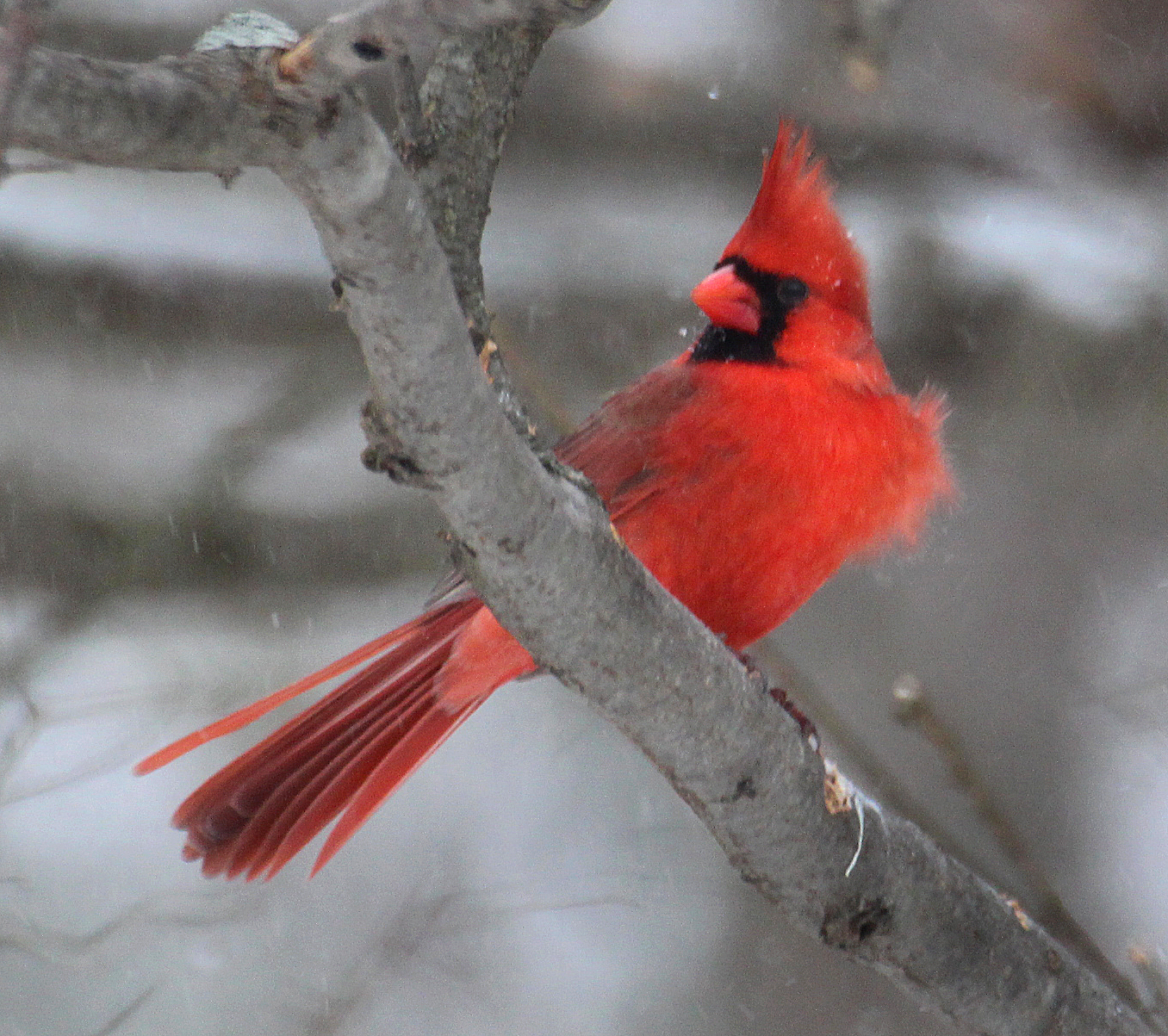
Photo by Chris Bosak A Northern Cardinal perches near a feeder during a snowstorm in Danbury, Conn., Jan. 23, 2016.

Photo by Chris Bosak
A Northern Cardinal perches near a feeder during a snowstorm in Danbury, Conn., Jan. 23, 2016.

Here is the latest For the Birds column, which runs weekly in several New England newspapers.

Despite the welcomed warm weekend, it had been a pretty rough past few weeks weather-wise. Snow, sleet, cold temperatures … in other words, a New England winter.

Most people survive winter by not venturing outdoors and, if it’s necessary to go out, limiting their exposure to the elements to short walks to and from the car. Those who do venture out into the snow, for fun or work, bundle up in apparel scientifically designed to battle the cold.

Birds don’t have the luxury of going inside and turning up the heat. Yet they have survived for eons the worst elements New England can throw at them. It’s nothing short of spectacular when you think about how they do it.

First of all, the ones that are not designed to survive a New England winter hightail it out of the region in the fall. They know what’s coming and head for warmer climes.

That alone is fascinating to think about. Some birds survive by fleeing the cold, some birds survive by toughing it out. Each strategy has its risks and rewards. The birds know which one works best for them.

Unfortunately, some birds that do stick around to battle the elements like true New Englanders will perish during the winter. This is particularly true of individual birds of a species that typically heads south for the winter. Most great blue herons and black-crowned night herons move south for the winter. Some stick around New England and brave the cold. If a winter is too harsh and the bird can’t find enough food, some of those birds will perish.

The same is true of Carolina wrens. They are relatively new to New England, having slowly expanded their range northward, and a harsh winter can take a toll on the population of the handsome little birds.

But, by and large, birds survive these harsh winters just fine.

I was surprised, however, to not see a single Carolina wren last week as I watched the snow falling. Usually one or two show up at my feeders and entertain me during a storm.

Most birds survive the cold nights by seeking shelter to stay out of the elements. I remember a few winters ago seeing a small bird fly under my neighbor’s awning. My curiosity got the better of me, and I had to check under the awning to see if the bird had found a comfy spot. Sure enough, I found a black-capped chickadee tucked into an impossibly small crevice in the corner of the awning. I saw the bird the next evening take the same route under awning.

Continue reading

Latest For the Birds column: Be prepared for snowstorms by filling birdfeeders

Photo by Chris Bosak A Brown Creeper finds food at the base of a tree during a cold snap in February 2016, Danbury, Connecticut.

Photo by Chris Bosak
A Brown Creeper finds food at the base of a tree during a cold snap in February 2016, Danbury, Connecticut.

Here is the latest For the Birds column, which runs weekly in several New England newspapers. (Note the date of the Great Backyard Bird Count has passed for this year.)

When I know a major snowstorm is coming, I want to be well prepared.

That does not include a trip to the grocery store to buy milk, bread, bottled water or any other essentials like that. That stuff I can get after everything is plowed or dug out — usually the next day.

For me, being prepared means making sure my camera batteries are charged, lenses cleaned and storage card emptied. It also means making sure the feeders are full before the storm hits. Perhaps I’ll add a few special treats for the birds in preparation for the snow.

The latest predicted snowstorm did not disappoint. It was supposed to start overnight, and it did. Thankfully I had filled the feeders before going to bed. I woke up to several inches of fresh snow and nonstop action at the feeders.

Juncos were the most prolific bird of the day. They typically hang around the ground seeking seeds, but with snow covering the ground, they perched on feeders alongside the chickadees, titmice and nuthatches.

It was a great storm, and the snow fell all day. Other than a snowshoe hike with the boys, I kept an eye on the feeders most of the day. Nothing too unusual showed up, but the falling snow made for a spectacular scene.

Several New Hampshire readers sent me photos of the birds they saw that day. A collection is available on my website, www.birdsofnewengland.com. If you took any bird photos that day and haven’t shared them with anyone yet, feel free to send them to me at bozclark@earthlink.net. I’ll add them to collection for the world to see.

Speaking of sharing bird sightings, the 20th annual Great Backyard Bird Count is coming up this weekend, taking place Friday, Feb. 17 to Monday, Feb. 20. It is your chance to contribute to a data base of winter bird sightings. The data is used to track bird populations and identify potential problems before they become irreversible.

All it takes is 15 minutes (or longer, of course) of counting birds and entering your checklist online at www.birdcount.org. You can count the birds alone or with a group, in your backyard or in the woods, for 15 minutes or all four days. It’s that easy. Checklists must be submitted online, however.

“The Great Backyard Bird Count is a great way to introduce people to participation in citizen science,” Gary Langham, the Audubon Society’s vice president and chief scientist, said in a news release. “No other program allows volunteers to take an instantaneous snapshot of global bird populations that can contribute to our understanding of how a changing climate is affecting birds.”

The project is growing quickly. In the first year, 13,500 checklists were submitted from the U.S. and Canada. Last year, nearly 164,000 checklists were submitted from more than 100 countries.

It’s a fun project, too, and a good way to introduce children to the joys of birdwatching and citizen science.

Get out there and count.

Latest For the Birds column: Little birds make up “The Big Three”

Here is the latest For the Birds column, which runs weekly in several New England newspapers.

A White-breasted Nuthatch perches near a birdfeeding station in Danbury, Conn., Oct. 2016.

A White-breasted Nuthatch perches near a birdfeeding station in Danbury, Conn., Oct. 2016.

I call them the Big Three.

In order to make it easier to keep track of the number of bird species I see in my backyard, I lump together black-capped chickadees, white-breasted nuthatches and tufted titmice. They count, of course, as three different species, but it’s just easier to group them.

On any given day I can count on seeing those three birds. Cardinals, downy woodpeckers, juncos, white-throated sparrows and mourning doves are nearly as reliable in the winter, but The Big Three just seem to logically belong together.

Continue reading

Latest For the Birds column: Owls of winter

Jeannie Merwin of Marlow got this shot of a Barred Owl in her yard. She said the owl returns to her yard every January.

Jeannie Merwin of Marlow got this shot of a Barred Owl in her yard. She said the owl returns to her yard every January.

Here’s the latest For the Birds column, which runs in several New England newspapers:

I’ve never had great luck finding owls, but I always enjoy hearing when other people do.

Such was the case last week when New Hampshire resident Jeannie Merwin let me know that the Barred Owl that returns to her yard each year on Jan. 1 was a few days late and arrived on Jan. 4. She sent a great photo of the beautiful bird and added another photo of the owl with a Downy Woodpecker and Black-capped Chickadee also in the frame. So much for the big, bad owl.

Imagine having an owl show up at your yard like clockwork each year. I would look forward to it months ahead of time.

Barred Owls are one of New England’s most common owls, along with Great-horned Owls and Eastern Screech Owls. In my years of watching birds in this region, I’ve had decent luck finding Barred Owls, poor luck finding Great-horned Owls and almost no luck finding Eastern Screech Owls. Lucky and observant birdwatchers may also find Northern Saw-whet Owls and Barn Owls in New England.

Winter brings sightings of Snowy Owls, Long-eared Owls and Short-eared Owls and the very rare sightings of Great Gray Owls or Northern Hawk Owls. I’ve seen my share Continue reading

Latest For the Birds column: Keep an eye out for rarities

Here is the latest For the Birds column, which runs in several newspapers in New England.

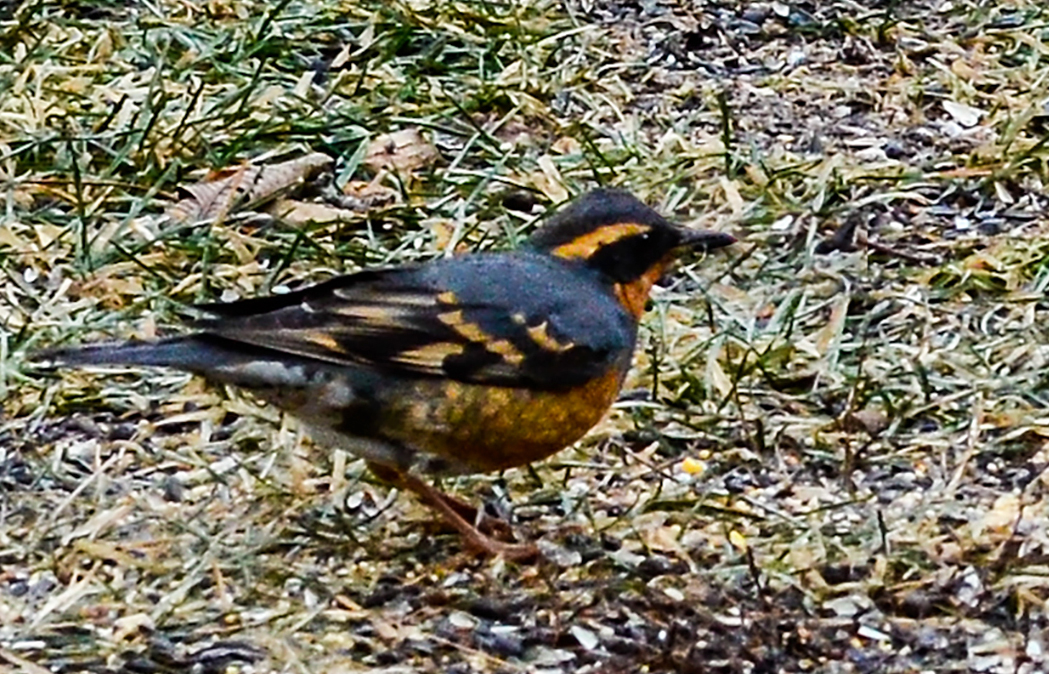
Photo by David Hoitt This Varied Thrush has been seen in Swanzey since Dec. 12.

Photo by David Hoitt
This Varied Thrush has been seen in Swanzey since Dec. 12.

Different seasons bring their own rarities.

Rarities, for the purpose of this column, are birds that are typically not seen in our region. It is not necessarily a bird that is rarely seen – it may be quite common in other parts of the country or world – but rather a bird that only every once in a while ventures into New England for one reason or another. In fact, it can also be a typical New England bird, but just seen in a season in which it is usually far away from here.

Winter is a good time for rarities because they stick out so much better. There are only so many birds that haven’t migrated for us to look at in winter, so when something different appears, it really sticks out.

Participants in the annual Christmas Bird Counts crave rarities. The point of the volunteer bird census is to count all the birds they see to contribute to a long-running data base so ornithologists can track bird population trends. There is no competition involved; no awards given. But the unwritten and unspoken truth is: CBC participants want to tally more species than the other counts held throughout the state.

So when a rarity shows up a week or two before Continue reading

Latest For the Birds column: Another Christmas Bird Count in the books

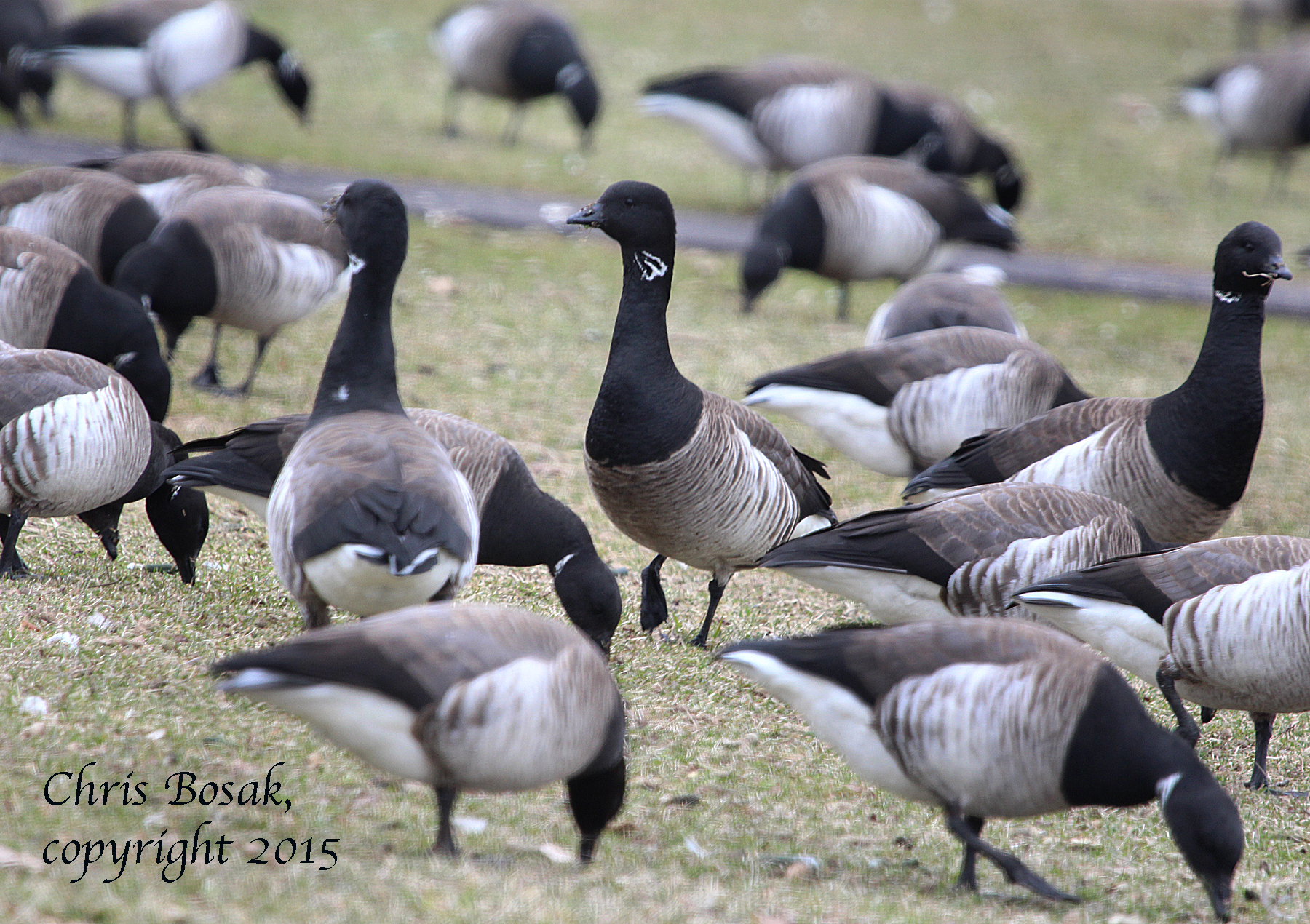
Photo by Chris Bosak A large flock of Brant at Calf Pasture Beach, April 2015.

Photo by Chris Bosak
Brant were once again numerous at Calf Pasture Beach in Norwalk, Conn., during the 2016 Christmas Bird Count.

Here’s the latest For the Birds column, which runs weekly in The Hour (Norwalk, Conn.), The Keene (NH) Sentinel and several Connecticut weekly newspapers.

Buffleheads were everywhere. Not in great numbers, particularly, but they were everywhere we looked.

Norwalk Harbor, Norwalk River, Long Island Sound off Calf Pasture and Cedar Point Yacht Club, the small pond at Taylor Farm … it seemed the bufflehead was the duck of the day for the most recent Christmas Bird Count. As I have for the past 16 years or so, I participated in the Westport Circle count and covered East Norwalk with Frank Mantlik.

The Christmas Bird Count is the world’s largest citizen science program, with data going back to 1900. The data helps scientists track bird populations and is valuable in determining what steps, if any, need to be taken to help certain species.

Frank and I found a total of 53 species, which is about typical for us. The weather was wet and gray, so that may account for the slightly lower total. I can’t complain, though; Continue reading

Latest For the Birds column: Evening Grosbeak kind of winter

Evening Grosbeaks visit a feeder near Jaffrey in this photo taken by For the Birds reader Pam Hoyt.

Evening Grosbeaks visit a feeder near Jaffrey in this photo taken by For the Birds reader Pam Hoyt.

Here’s the latest For the Birds column, which runs weekly in The Hour (Norwalk, Conn.), The Keene (NH) Sentinel and several Connecticut weekly newspapers.

………

The sightings of Evening Grosbeaks keep pouring in.
I mentioned these handsome finches in my last column, but now that I keep hearing from readers who see them, their story bears elaboration.
First, let me mention a few of the sightings that came in this week. Pam, who lives near Jaffrey, had a flock of Evening Grosbeaks visiting her feeder for three days in a row.
“We almost never see them here so I was surprised,” she wrote.
Pam also attached a great photo of her visitors.
I particularly appreciated getting the photo as I could use it to accompany this column. I don’t have any photos of Evening Grosbeaks because I rarely see them as well. I take that back, I do have one photo that I took in Pittsburgh, N.H., about 20 years ago. It was a one-legged male Evening Grosbeak and it was finding seeds along one of the many logging roads in the northern tip of the state. It appeared otherwise healthy so the loss of a leg didn’t seem to be holding this bird back.
I was brand new to photography so the photos I did take Continue reading

Latest For the Birds column: Notes from New England readers

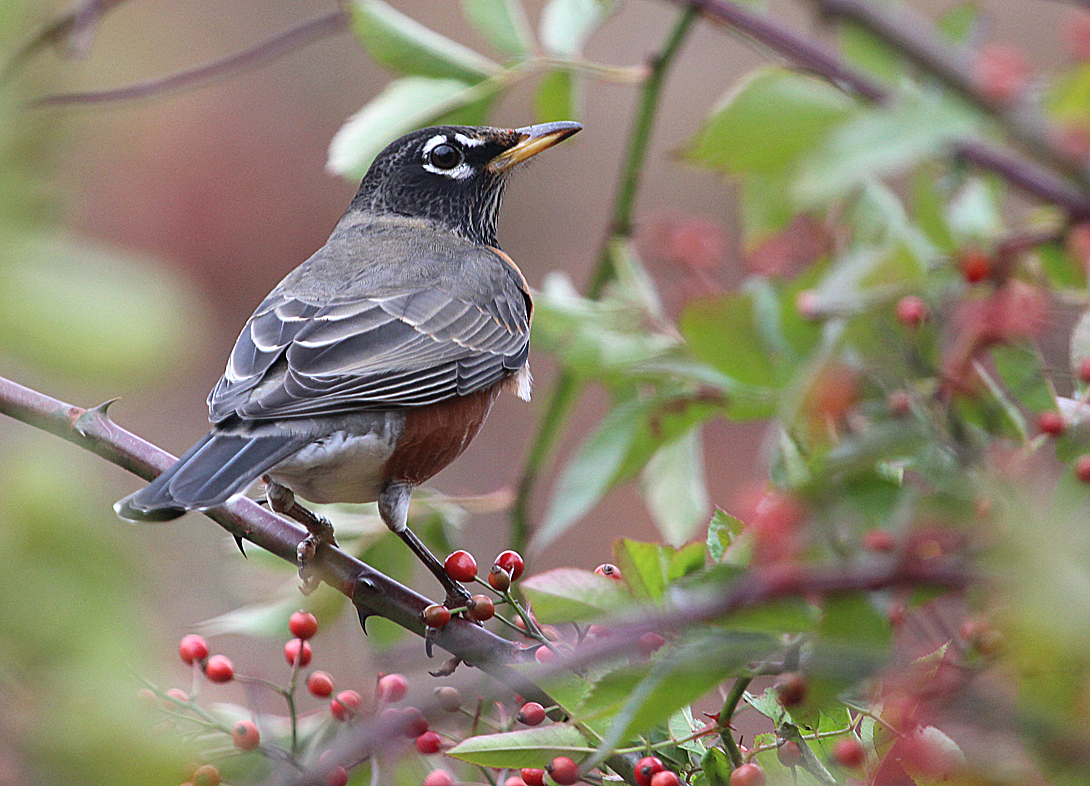
Photo by Chris Bosak American Robin in Selleck's Woods in fall 2013.

Photo by Chris Bosak
American Robin in Selleck’s Woods in fall 2013.


Here’s the latest For the Birds column, which runs weekly in The Hour (Norwalk, Conn.), The Keene (NH) Sentinel and several Connecticut weekly newspapers.

………………

Catching up on some news from For the Birds readers.

Carol wrote in to share a story about a backyard spectacle she witnessed at her new home.

Her new place overlooks a pond surrounded by trees and from her living room window she peers down on two dogwood trees and an adjacent white pine. In early fall, the dogwoods were “both laden with berries,” she wrote.

One day she noticed movement between the pine and dogwoods and inspected the situation. She saw close to a dozen American Robins moving from tree to Continue reading

Latest For the Birds column: The flurry will come

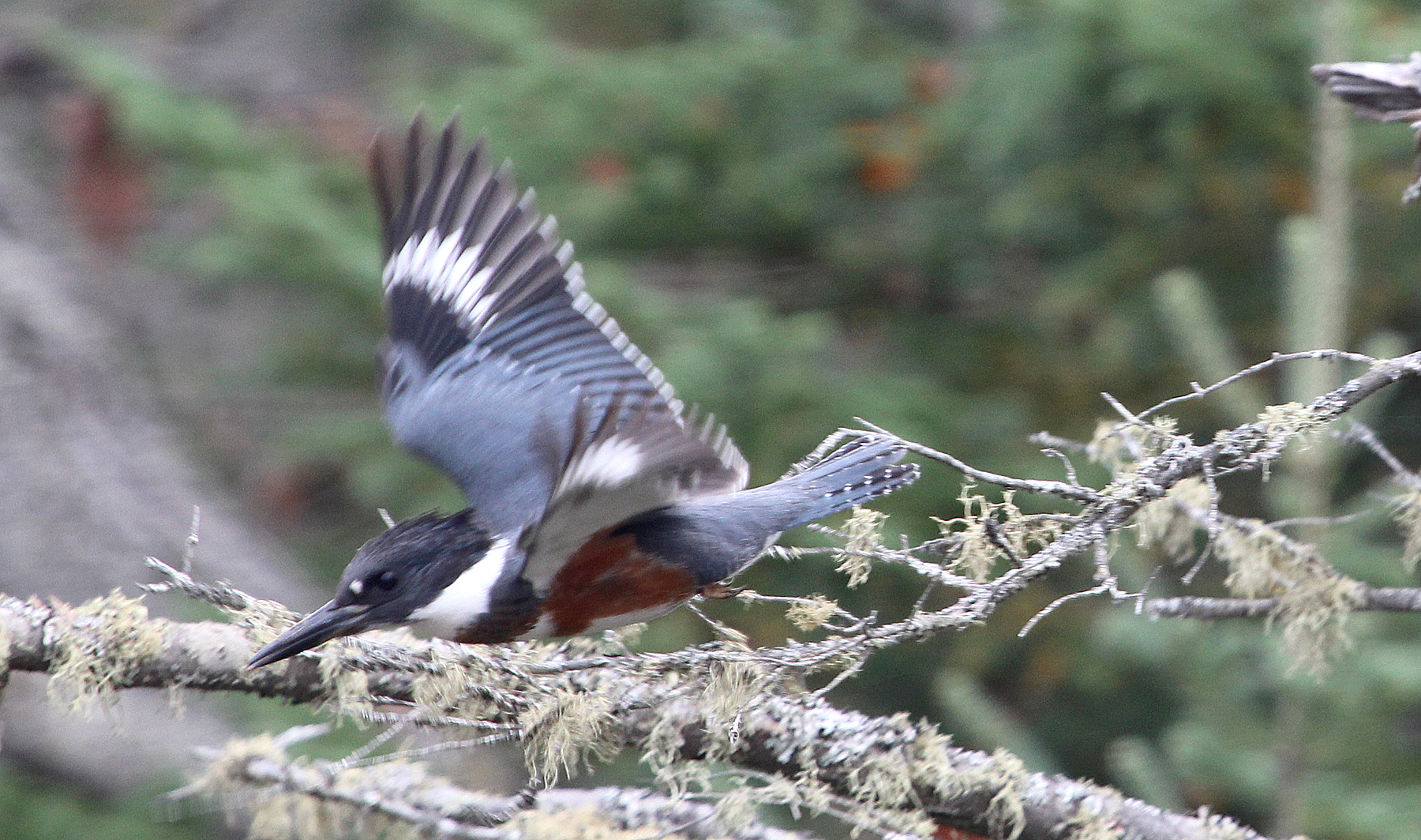
Photo by Chris Bosak A female Belted Kingfisher leaves its perch near a small pond along the Golden Road in Maine.

Photo by Chris Bosak
A female Belted Kingfisher leaves its perch near a small pond along the Golden Road in Maine.

Here’s the latest For the Birds column, which runs weekly in The Hour (Norwalk, Conn.), The Keene (NH) Sentinel and several Connecticut weekly newspapers.

…..

A lot of birdwatching is standing around looking at nothing. It’s also a lot of walking around looking at nothing.

Let me rephrase that. A lot of birdwatching is standing or walking around looking at things other than birds. No matter where you are, there is always something to look at — even if it is the trees, shrubs and flowers in the habitat in which you are seeking birds. I think it is an essential part of being a birdwatcher to appreciate the “less exciting” things in nature.

To be a birdwatcher you also need very heavy doses of patience and faith.

You could walk around your favorite woods Continue reading

Latest For the Birds column: Return of the juncos

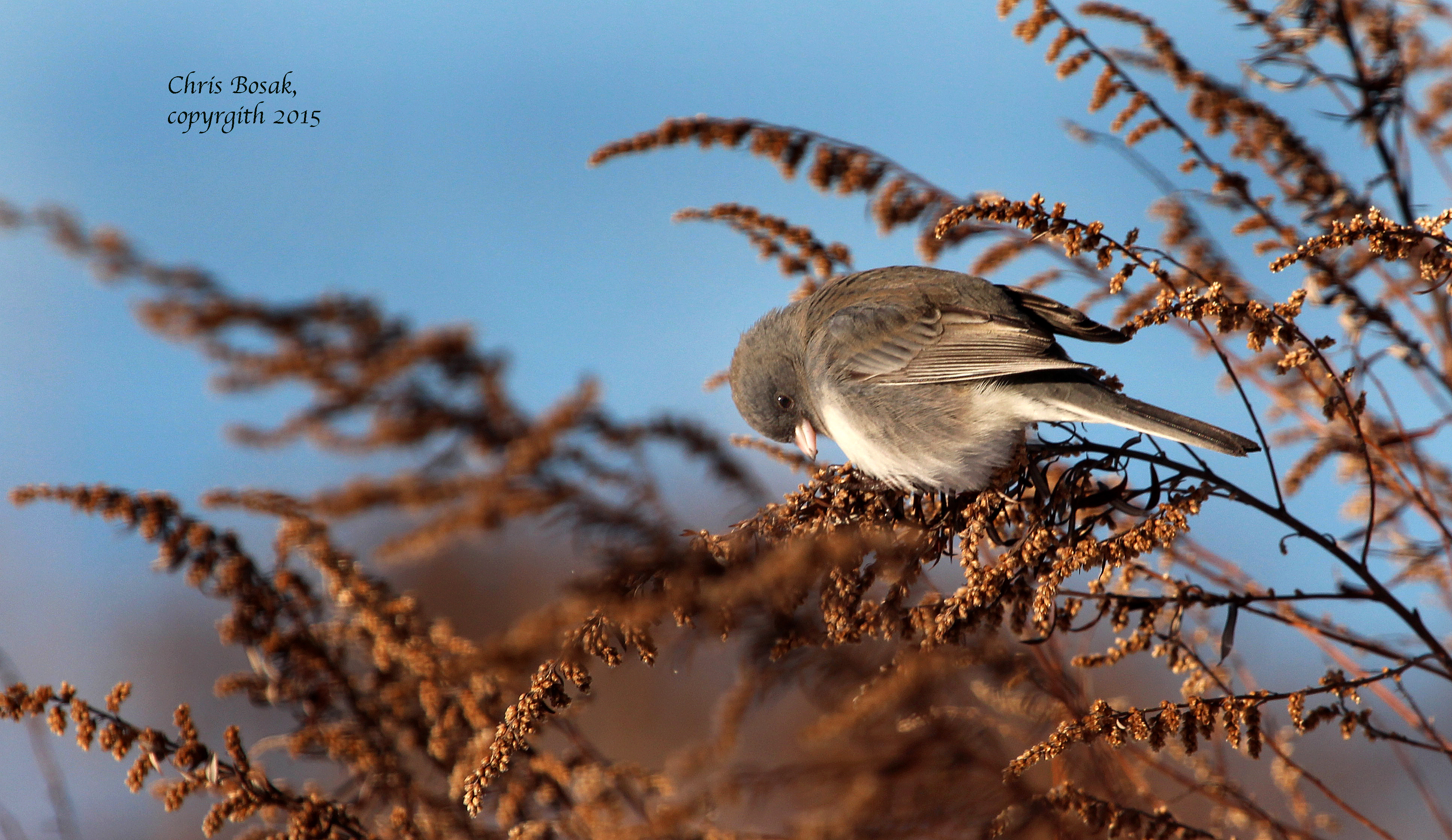
Photo by Chris Bosak A junco looks for seeds on a dried up plant at Weed Beach in Darien, Conn., in Jan. 2015.

Photo by Chris Bosak
A junco looks for seeds on a dried up plant at Weed Beach in Darien, Conn., in Jan. 2015.

Here’s the latest For the Birds column, which runs weekly in The Hour (Norwalk, Conn.), The Keene (NH) Sentinel and several Connecticut weekly newspapers.

I was wondering when the first one would show up. Mid to late October is typically when the Dark-eyed Juncos start showing up throughout the southern half of New England, but I hadn’t seen one yet and October was quickly fading away.

Eventually I noticed something that looked out of place on a low branch of a hemlock that juts into my backyard. Black-capped Chickadees, Tufted Titmice and White-breasted Nuthatches had launched an all-out assault on my feeders in the morning and never stopped as the sun continued to get higher in the sky.

Clearly this bird on the hemlock was not one of those three species. I had seen enough of those birds to be able to identify them in my sleep.

Obviously, the bird was a Dark-eyed Junco. It was an adult male Continue reading