For the Birds: Inside the hawkwatch

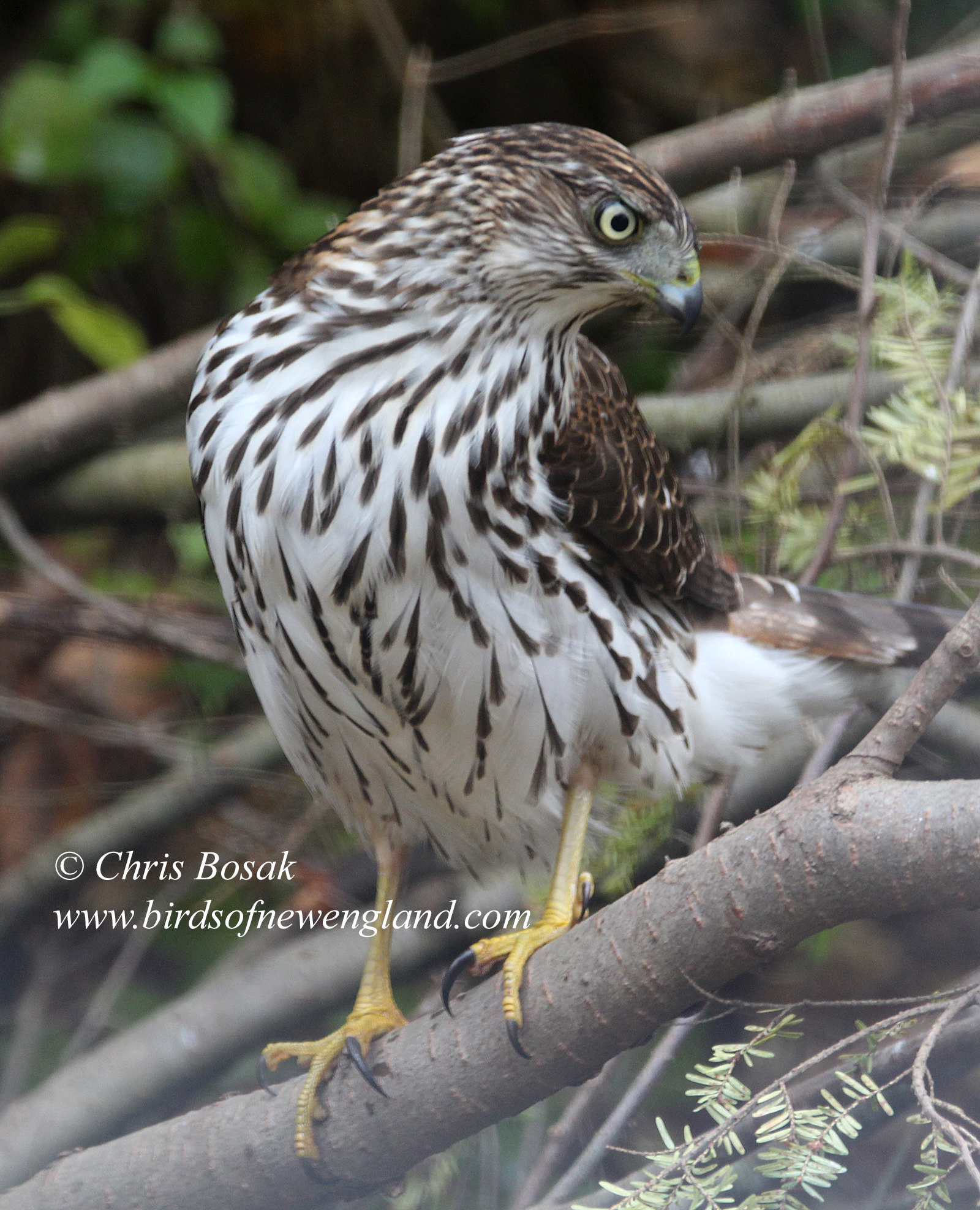
Photo by Chris Bosak
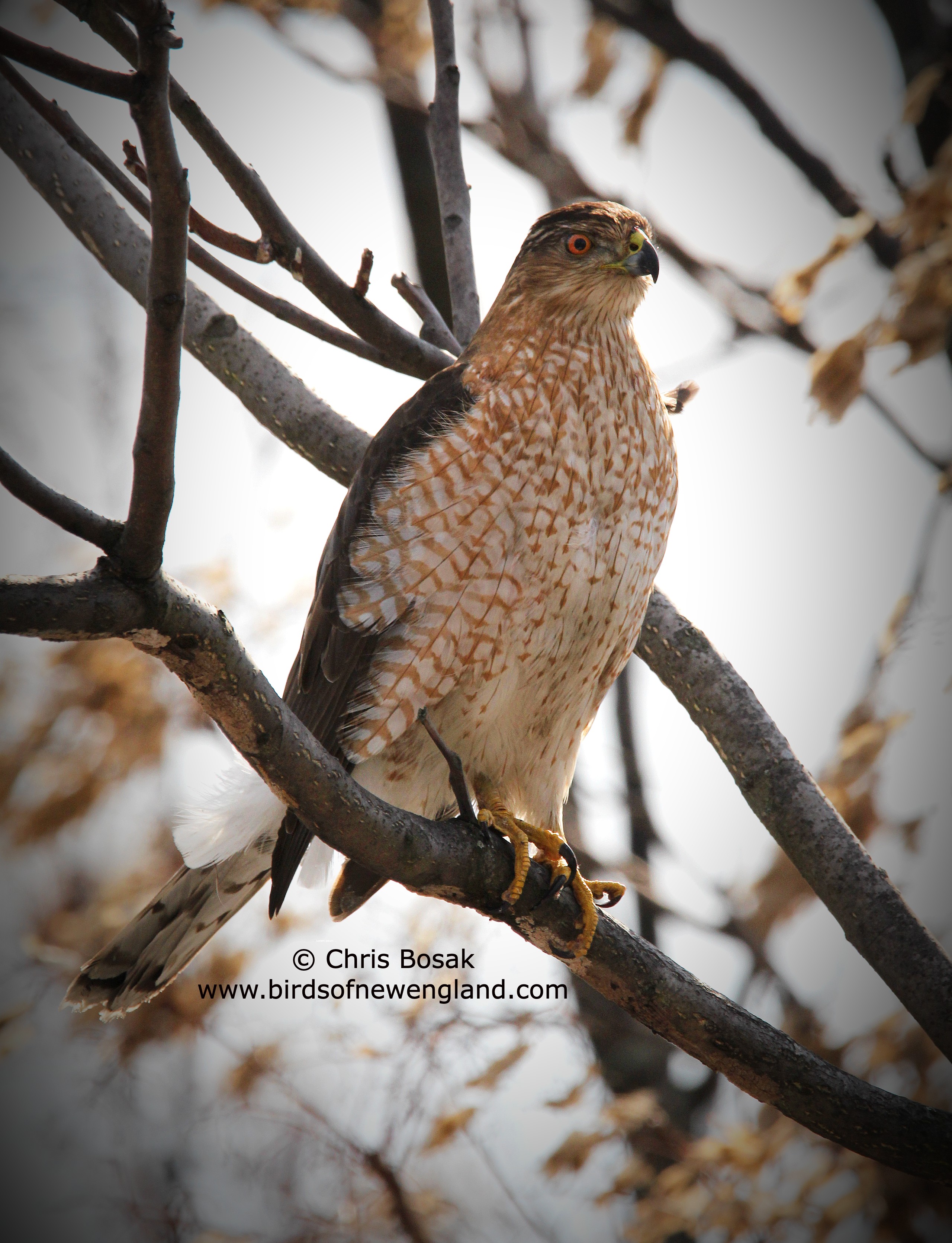
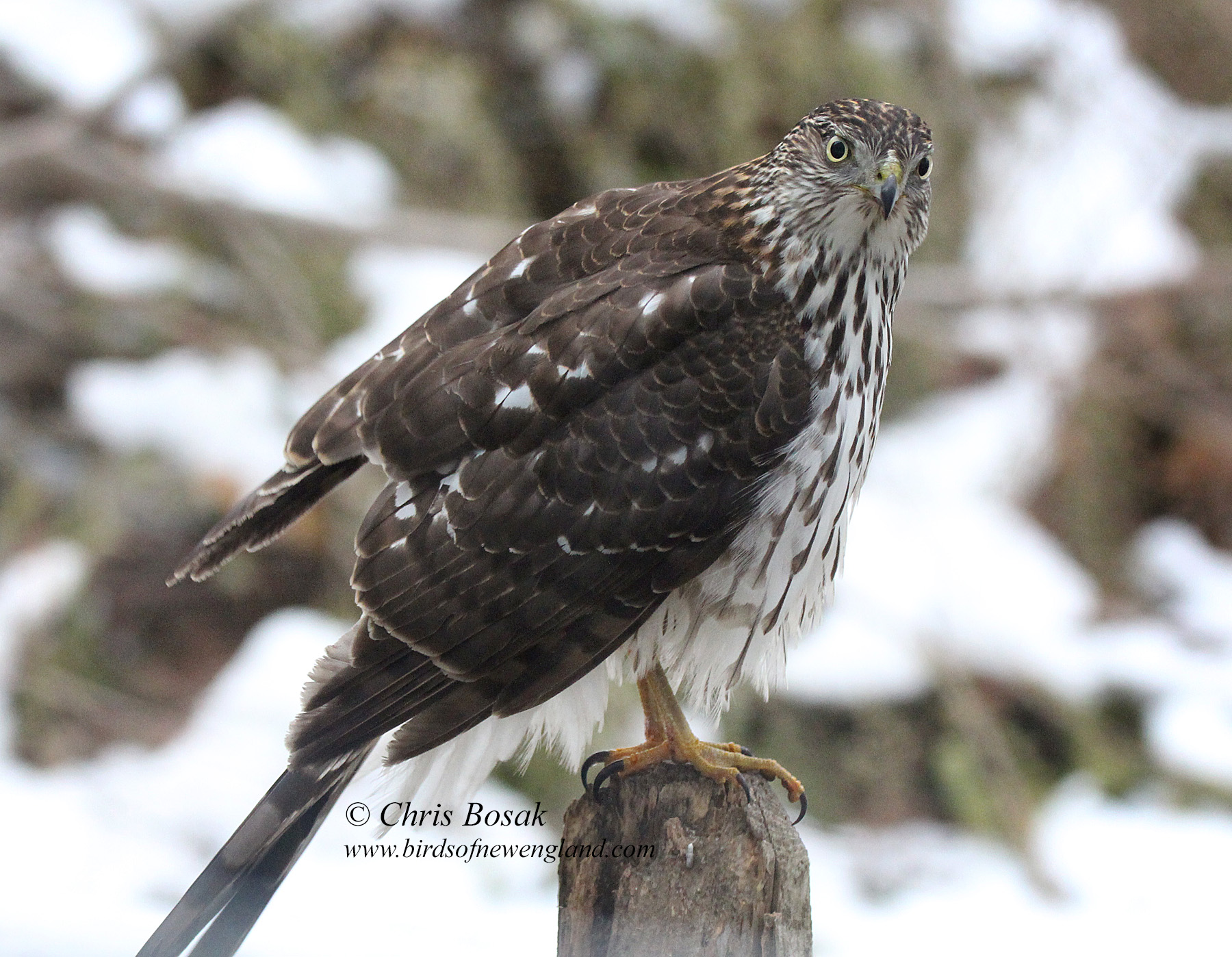
Young Cooper’s hawk in New England.

Last week’s For the Birds column highlighted the results of this year’s fall hawkwatches with a particular focus on Pack Monadnock in Peterborough. The column was heavily focused on data and the number of birds counted.

A number of questions came up in my head as I looked at the results and compiled the data. Not one to let questions go unanswered in my head, I turned to the experts for some explanations.

Specifically, I had an enjoyable chat with Phil and Julie Brown of Hancock, N.H. Phil is the Bird Conservation Director and Land Specialist at the Harris Center for Conservation Education. His wife, Julie, is the Raptor Migration and Program Director of the Hawk Migration Association.

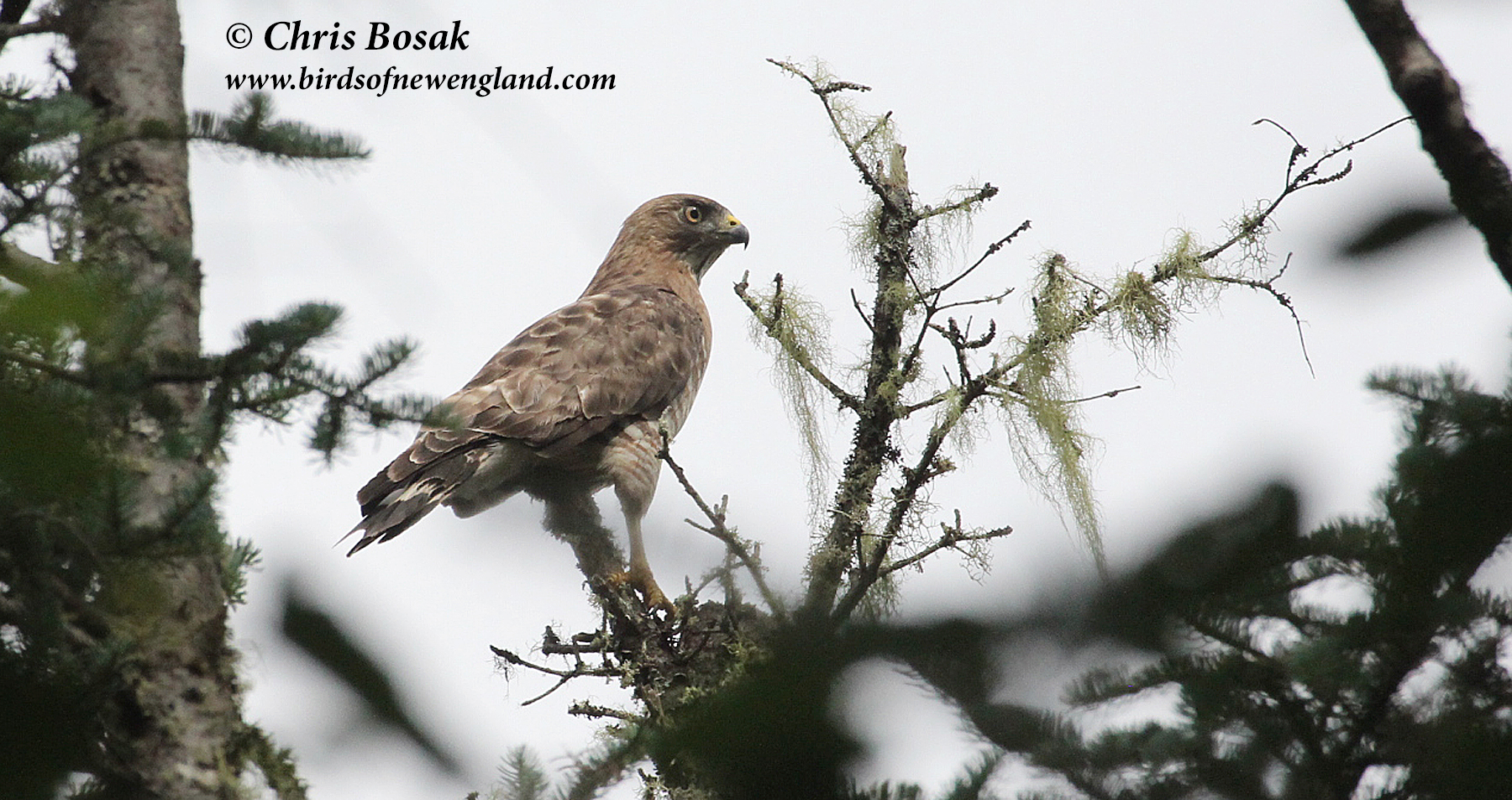
The sheer number of broad-winged hawks was the main thing that jumped out at me as I looked at the data last week. Nearly 6,000 of the 8,500 hawks counted during the 2025 fall migration at Pack Monadnock were broad-winged hawks. To me, it was a bit surprising, as I see red-tailed hawks and red-shouldered hawks all the time, but I rarely see broad-winged hawks.

As a quick reminder, “hawkwatch” in this sense includes eagles, ospreys, falcons and vultures as well.

Julie and Phil explained that broad-winged hawks tend to be more elusive during the breeding season and that they more readily form flocks for migration than other raptors. While most hawks pass over the mountain as one or two birds at a time, broad-winged hawks pass over in huge numbers on certain days.

“They are responsible for a lot of the magic of hawkwatches,” Julie said. “Many people say broad-winged hawks are what got them hooked on hawkwatches.”

While the broad-winged hawk migration is truly a spectacle, with as many as 3,000 or more seen on a single day, it is very time specific. September 14-20 is the sweet spot when nearly all of the broad-wingeds pass through. Phil said many people take the entire week off from work to not miss the right day.

Mark your calendars for the middle of next September and keep your eyes out for a forecast that calls for light or variable winds from the north (or northeast or northwest), particularly following a cold front.

As remarkable as 3,000 birds in a single day is, Julie pointed out that critical hawkwatching sites such as Veracruz, Mexico, can get hundreds of thousands of broad-winged hawks in a single day.

I had a similar question about sharp-shinned and Cooper’s hawks, smallish but fierce hawks that often terrorize birdfeeders. While we tend to see more Cooper’s hawks in our daily lives, sharp-shinned hawks far outnumber Cooper’s hawks on counts. Cooper’s hawks have adapted much better to suburban and urban areas, and many overwinter in New England.

Differentiating between these accipiters often leads to debate, as the species are very similar in appearance. Cooper’s hawks are generally larger, but size is not a reliable determining factor. Even experts debate which bird they are looking at.

Seeing one of these hawks from a distance during a hawkwatch makes for an easier identification, Phil said, as their wing-flapping cadence and other behaviors are reliable differentiators.

Despite the seemingly high numbers of sharp-shinned hawks that are counted on hawkwatches, the Browns said the species is in decline. Phil said sharp-shinned hawks, goshawks, American kestrels and northern harriers do not get the attention they deserve for their decline.

Julie said rodenticides are a major factor in the decline of many hawks, and wildlife rehabilitators are often overwhelmed by the number of poisoned hawks that are brought in. Many people who use rodenticides do not realize the consequences, she said, and education is important in reversing the trend.

“It’s so preventable,” she said.

To end on a positive note (it is the holiday season, after all), the Browns actually met during a hawkwatch on Pack Monadnock in 2006. Julie was a seasonal hawk counter for New Hampshire Audubon, and Phil worked for New Hampshire Audubon at the time. They met on the mountain and got to talking about their love of nature and the boreal forest. Their main goal that day was to see a golden eagle, and sure enough, one of the magnificent birds flew over.

Their wedding bands are adorned with etchings of a golden eagle and the profile of Pack Monadnock.

For the Birds: Breaking down hawkwatch season

Photo by Chris Bosak A broad-winged hawk perches in a tree in northern New Hampshire, July 2020.

The fall hawkwatching season is winding down. Raptor sightings at the various dedicated locations are slowing down, with only a handful of birds counted each day as November progresses.

It’s a good time, therefore, to check in to see how the various hawkwatching sites fared this year. New England has several popular sites, but Pack Monadnock at Miller State Park in Peterborough is New Hampshire’s most active and popular site. The hawk count is a project of the Harris Center for Conservation Education in Hancock.

As of November 11, and according to hawkcount.org, overall numbers look good in 2025 at Pack Monadnock and outpace the number of hawks counted in 2024. It may be noted, however, that 2025 numbers are below the several years prior to 2024. With the official count season ending there on November 20, Pack Monadnock will end up with about 8,500 hawks counted for the fall.

The term hawk is used somewhat loosely here as the count includes hawks, eagles, ospreys, vultures and falcons. The hawks are counted by experts and volunteers who sit at the peak of Pack Monadnock and watch the birds soar in from the north. I’ve been to several hawkwatch sites and am always amazed at the skills of the official counters. They see and identify most of the birds long before the bird is even in view of most other people. 

Before reading on, can you guess what hawks are counted the most? Hint: One bird stands head and shoulders above the rest in terms of sheer numbers. Another hint: It’s not the red-tailed hawk, which I assume would be many people’s first guess. 

That bird is the broad-winged hawk. Of the roughly 8,500 birds counted at Pack Monadnock this fall, nearly 6,000 (5,821 to be precise) were broad-winged hawks. A distant second is the sharp-shinned hawk with 1,133. 

Simple math (even though I used a calculator) shows that broad-winged and sharp-shinned hawks account for more than 80 percent of the total birds counted. The number drops sharply again for the third-most-counted “hawk,” the turkey vulture, with 222 individuals counted. 

For all you stat geeks out there (like me), the next birds in line are American kestrel (196), Cooper’s hawk (190), osprey (167), bald eagle (159), red-tailed hawk (154) and northern harrier (121). Remember, these are not final numbers, but they will be pretty close.

Although “only” five golden eagles were counted, I’m sure each one elicited some oohs and aahs from the crowd. 

According to hawkcount.org, a page that aggregates hawkwatch sites across the country, a few New Hampshire schools performed mini-hawkwatches this September. Concord School District did a week-long program and counted, you guessed it, mostly broad-winged hawks. Turkey vultures were also counted in fairly high numbers.

Interlakes Elementary School in Meredith did a two-day count and found an impressive 1,350 broad-winged hawks, including 1,257 in a single day. Sharp-shinned hawks and turkey vultures were the next highest counts. 

The aptly named Hawk Mountain Sanctuary in Kempton, Pennsylvania, is perhaps the most well-known hawkwatch site in the East. Similar to Pack Monadnock, broad-winged hawks were the most numerous, accounting for 9,015 of the 13,436 overall birds counted. Sharp-shinned hawks were next with 1,530. 

If you missed this year’s hawk counts, mark your calendars for next year. You don’t want to miss mid-September, which is when the number of broad-winged hawks peaks. More than 3,000 broad-wingeds were counted on September 14 at Pack Monadnock. The conditions must have been right just on that day. October is a good month to see a variety of species, while things start to slow down by November.

The end of hawkwatching season means that winter is right around the corner. Winter may bring out a bah humbug from many, but it is also a great time for birdwatching, just in a different way.

For the Birds: Flushing a Cooper’s hawk will get the heart pumping

Photo by Chris Bosak Adult Cooper’s hawk seen in Norwalk, Connecticut, January 2025.

I was walking along a short but windy trail in southern New England the other day in search of overwintering warblers. This short path is known for harboring these tiny songbirds during the winter, as it is adjacent to a water treatment center that features open water on even the coldest days.

I came around one of the many bends and jumped back as I flushed a large bird that was on the ground next to the trail. With my heart racing from the surprise, my immediate reaction was that it was a ruffed grouse. It flushed with the familiar exuberance and noise of a grouse, so my mind immediately went there. Ruffed grouse, however, do not live in that area of New England any longer, and the habitat wasn’t right for the popular game bird.

Continue reading

Christmas Bird Count 2024 photo highlights

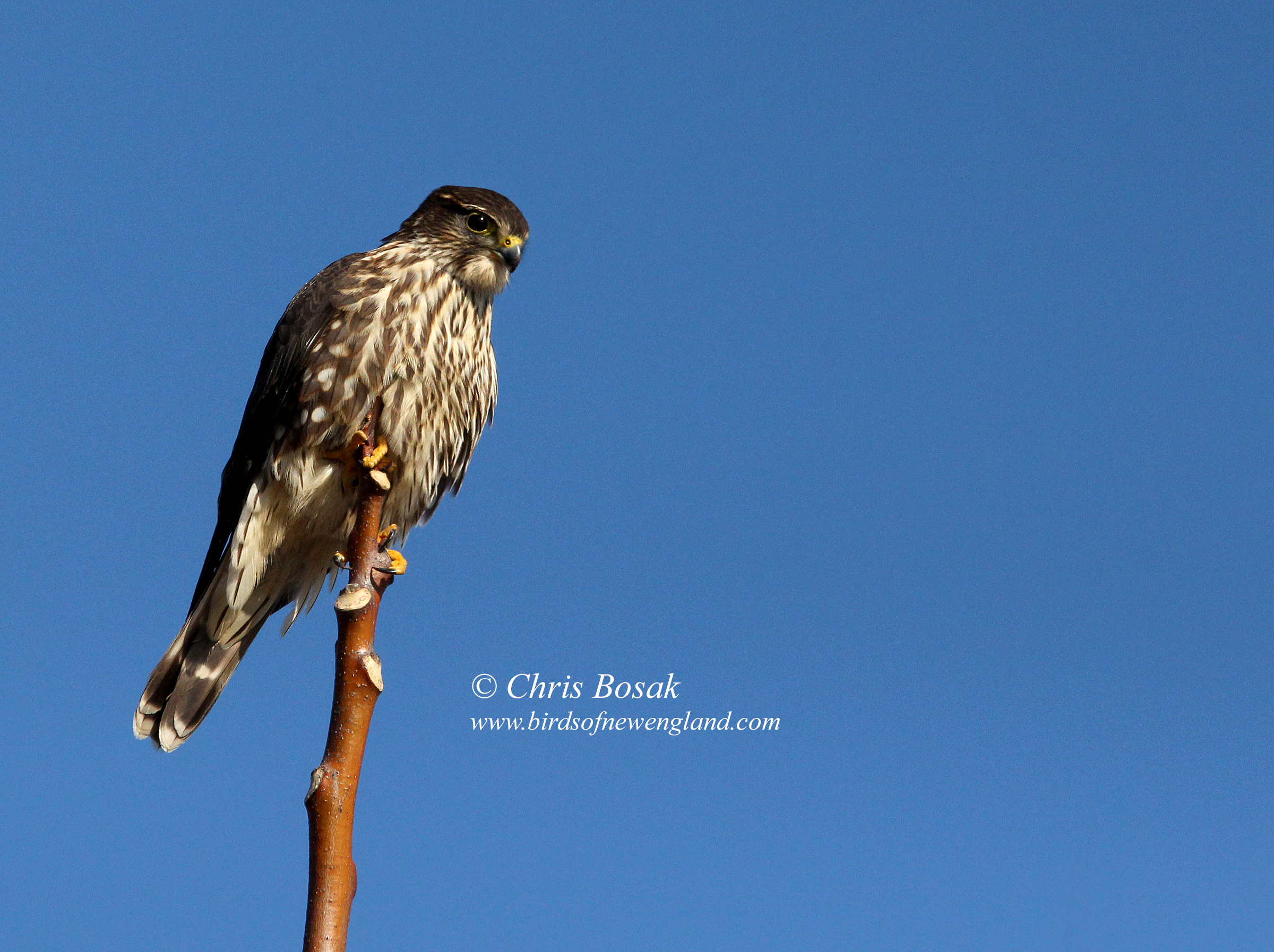
Photo by Chris Bosak – A merlin at Taylor Farm in Norwalk, CT, December 2024.
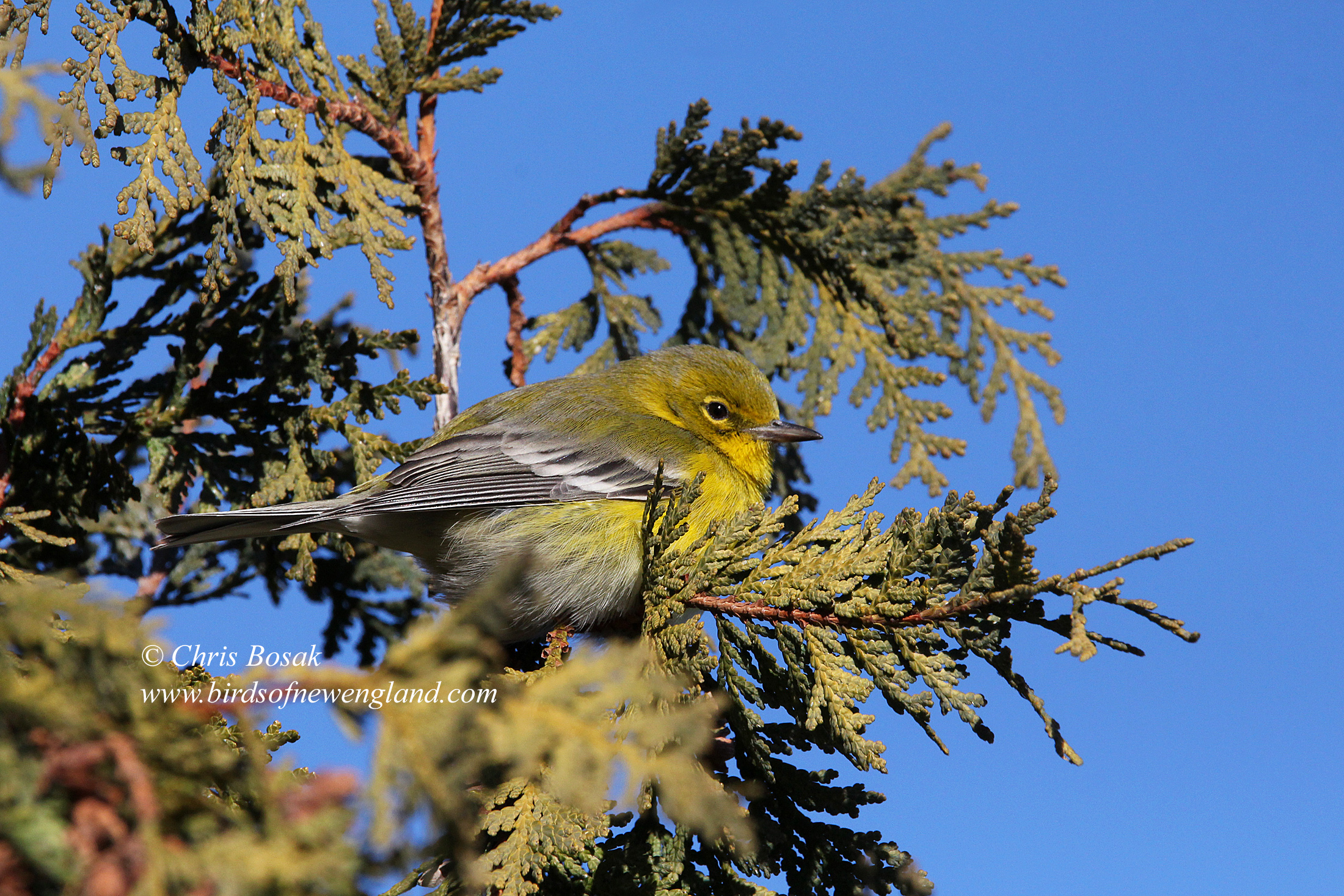
Photo by Chris Bosak – A pine warbler at the esplanade in Norwalk, December 2024.

On Sunday (December 22, 2024), I participated, as usual, in the Christmas Bird Count and covered my usual area of coastal Norwalk (SW Connecticut). Instead of my usual birding partner Frank, I covered the area with Adam and Jo. It was 13 degrees when we started and didn’t seem to get much warmer as the day went on. In fact, the wind picked up and made it seem even colder. The things we do for the birds.

We had a successful day with plenty of highlights, including bald eagle, peregrine falcon, merlin, pipit, pine warbler, yellow-rumped warblerf and both types of kinglet.

Here are some photo highlights of the day:

Continue reading

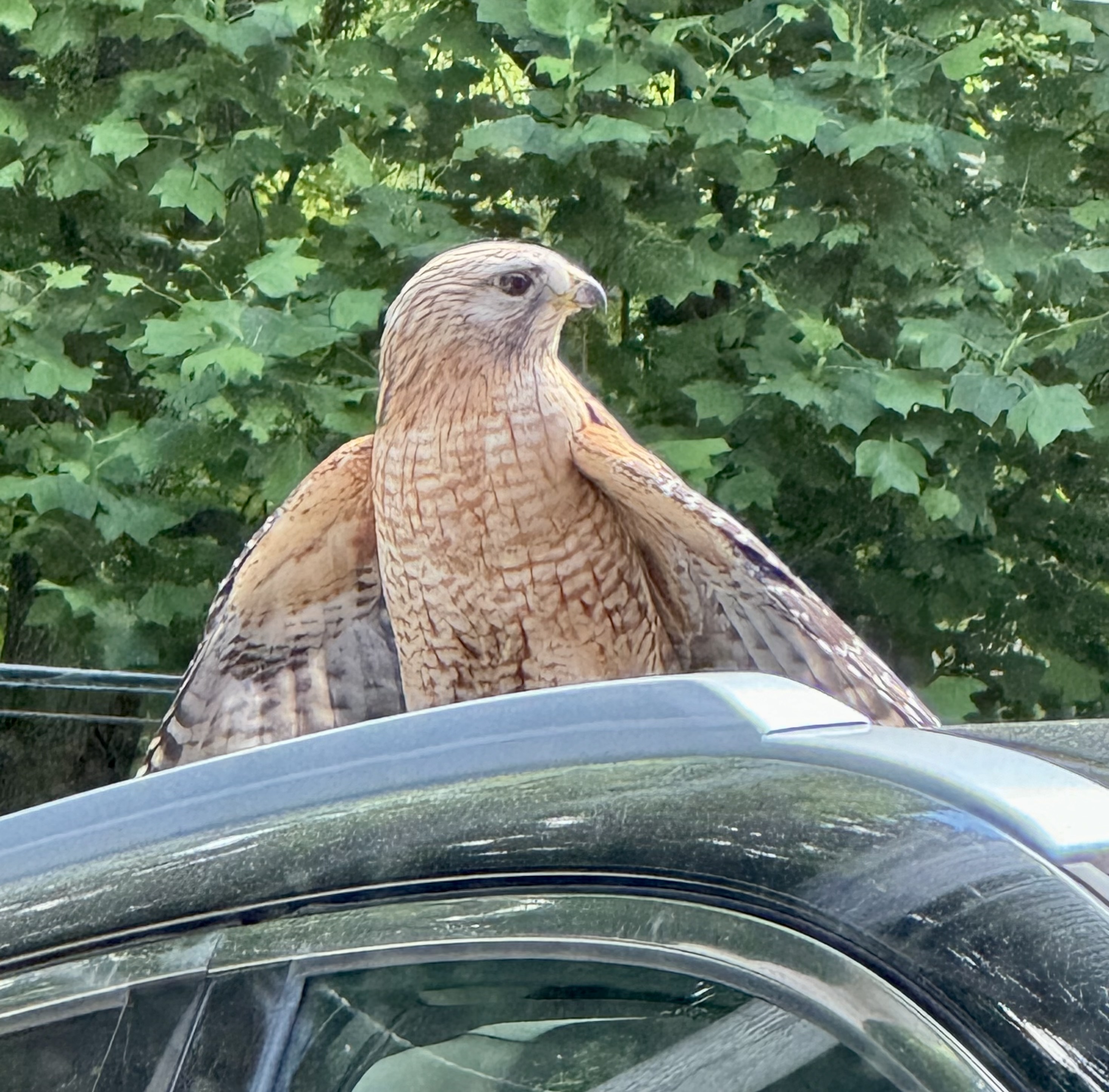
For the Birds: Red-shouldered hawk perched on car in parking lot

Photo by Chris Bosak – Red-shouldered hawk on car in parking lot in New England, May 2024.

Some birds have adapted to humans and what we have done to their habitat better than others. 

Pigeons, house sparrows and mallards have obviously fared well and thrive in urban environments. Other birds, including many songbirds, have not. Why else would the populations of so many songbirds have decreased so dramatically over the last several decades?

An experience at work the other day got me thinking about how birds adapt to human interference. I was working in my office when I heard a co-worker calling my name in whispered urgency. I rushed out to see what the commotion was about and saw a red-shouldered hawk perched on top of an Infinity SUV right on the other side of the window. 

The impressive bird of prey was a mere 12 feet away from the small crowd that had now gathered inside the building — urgent whispers have a way of drawing a crowd. Everyone broke out their phones and took pictures of the specimen. Red-shouldered hawks nest on the property at work, so seeing the bird was not unusual, but seeing it perched on a car was certainly different.

Continue reading

For the Birds: Surprise sighting in unlikely place

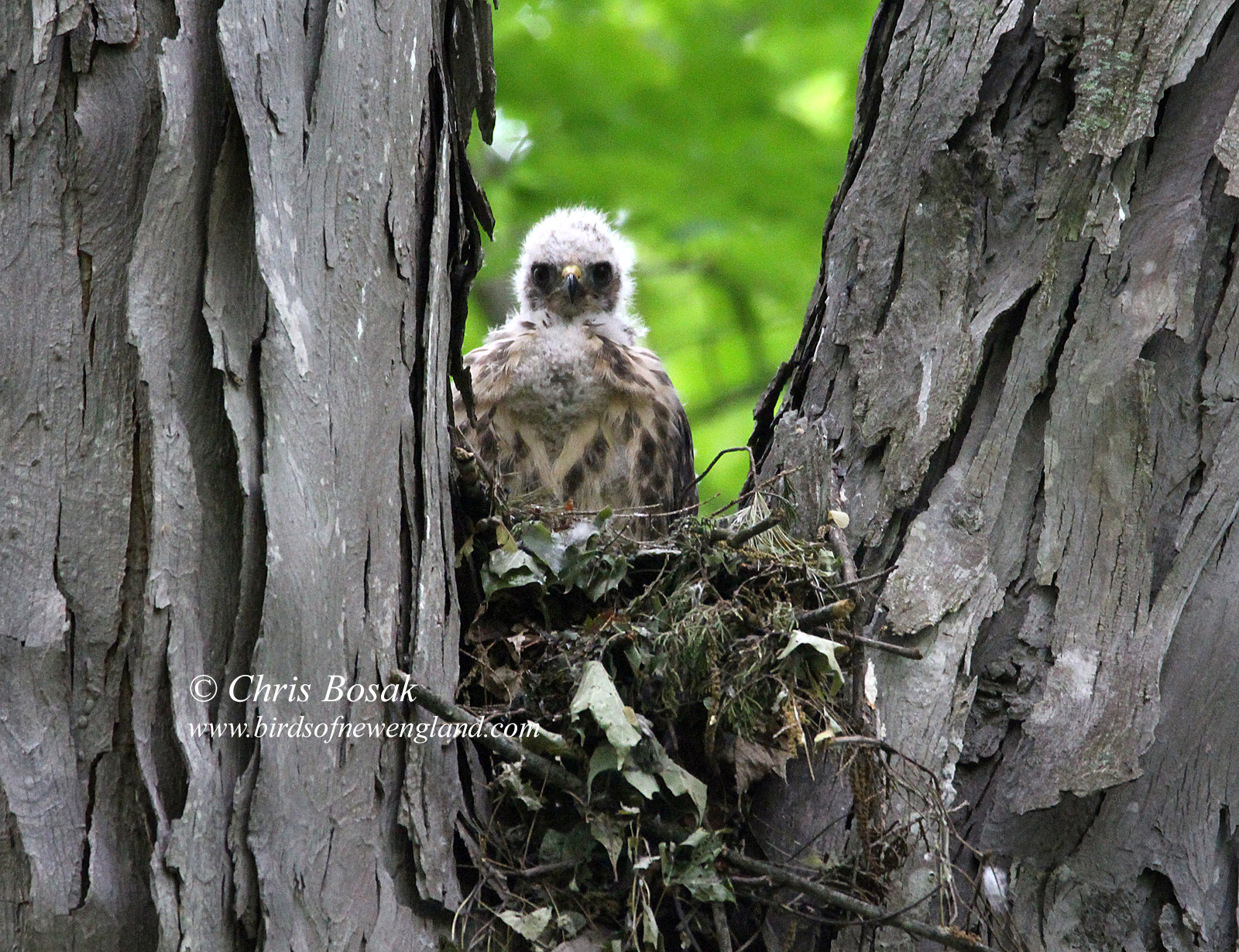
Photo by Chris Bosak – A young red-shouldered hawk looks out from its nest in New England, June 2023.

A few weeks ago, I wrote about a short walk that I often take at work. It is on my employer’s property and, despite being a small piece of land that takes only five minutes to walk, it has a mix of habitat that includes a meadow, stream, pond and woods.

A few days after I had written that column, I took a walk there and discovered something new. I had noticed on previous walks a Y in a large tree and thought maybe there were some sticks or leaves in the crotch. It was too small for a squirrel’s nest, and it didn’t seem significant enough to be any other type of nest, so I kept on walking. I figured it was just the collection of a few sticks and leaves that had fallen throughout the year.

One day, however, I noticed movement in the area. Upon inspection, it turned out to be the nest of a red-shouldered hawk family. Two young birds were eating a squirrel, chipmunk or some other small mammal. No adults were present.

The next day, I took another walk, and an adult bird was tearing apart a meal. I didn’t notice the young birds right away, but when the adult sat upright after picking off a morsel, I saw the young ones to either side behind the adult.

Continue reading

For the Birds: Hawks in a New England winter

Photo by Chris Bosak – Young Cooper’s hawk in New England, January 2023.

It is not uncommon for birders at designated hawk watch sites to see more than 1,000 hawks in a single day. The fall hawk migration is most certainly a sight to see, particularly if the conditions are right.

With the sheer number of hawks and other birds of prey that migrate south through New England in the fall, it is tough to imagine that any of them remain in our region once the migration is over. But, of course, we do see a fair amount of hawks throughout the winter months in New England. 

Red-tailed hawks, red-shouldered hawks and our accipiters, sharp-shinned and Cooper’s hawks, are the most common hawks we see in New England during the winter. Other birds of prey that we continue to see in our coldest months are the peregrine falcon, vultures and, of course, bald eagles, which congregate in large numbers where water remains unfrozen.

Continue reading

A few more shots of the Cooper’s hawk

Here are a few more shots of the Cooper’s hawk that visited my backyard the other day. Click here for the full story.

For the Birds: A different kind of ‘feeder’ bird

I walked across the living room toward the large window that offers a view of the bird-feeding station and birdbath. I stopped dead in my tracks as a bird much larger than I expected to see was perched on the side of the birdbath.

Wisely, all of the other birds were nowhere to be seen. 

It was a Copper’s hawk, one of the hawks in New England that commonly preys on small feeder birds. The large bird of prey had no interest in the birdbath’s water — either for drinking or cleaning. It was simply using the structure as a perch to get a better look at the feeders and nearby bushes. It hopped off the birdbath and onto a hemlock branch I had discarded to give the feeder birds a place to hide. After peering through the underbrush and finding nothing, the hawk flew off.

Continue reading

One more Christmas Bird Count photo

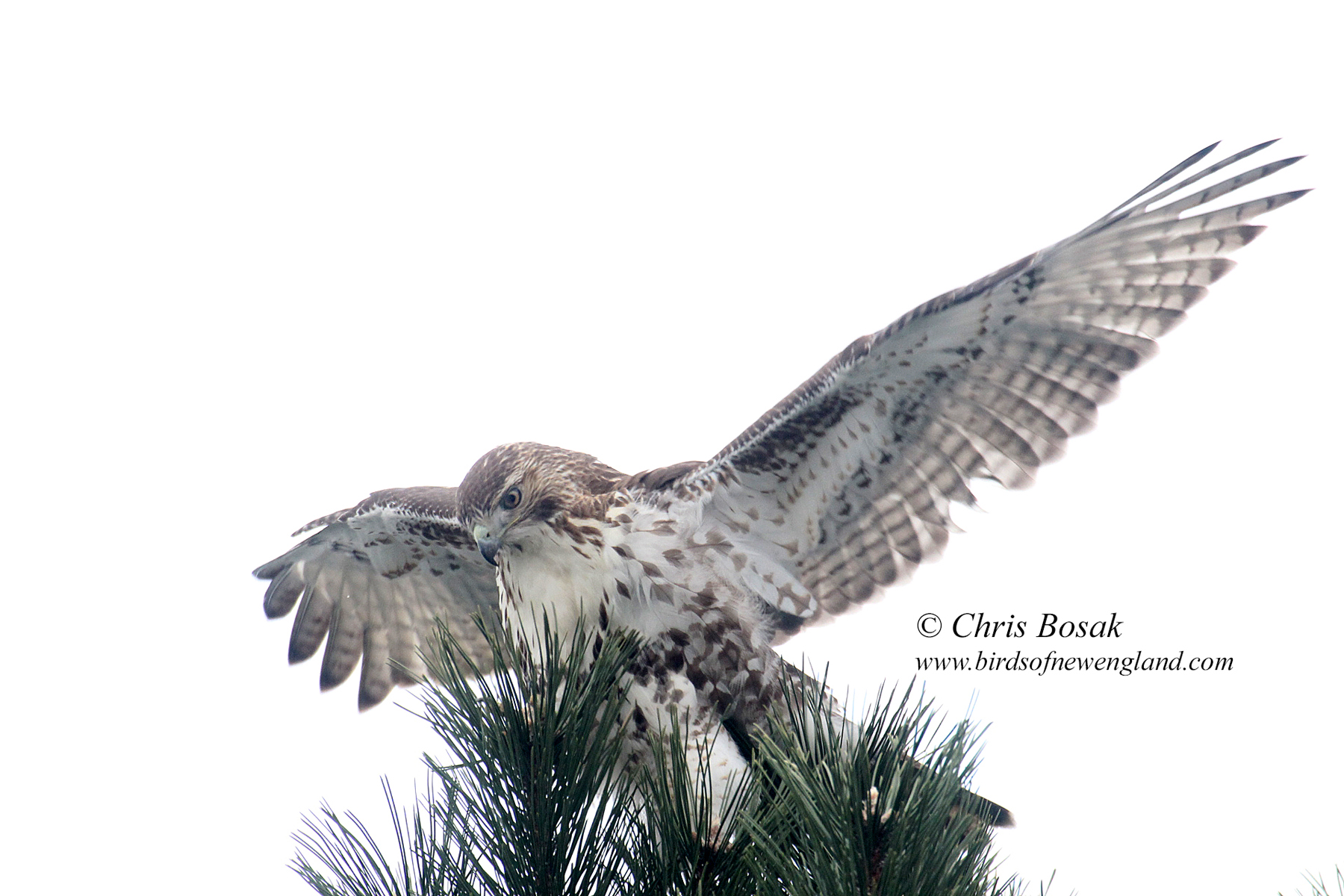
Photo by Chris Bosak A red-tailed hawk perches on the top of a pine tree in New England, December 2020.

Here’s one more shot of the red-tailed hawk that we saw during the Christmas Bird Count on Sunday in Norwalk, Connecticut. We were looking for warblers among the pine trees and this bird flew in out of nowhere to entertain us for a bit.