Here’s a female Common Yellowthroat, one of the many confusing fall warblers to watch out for as you hit your favorite birdwatching spots this fall.
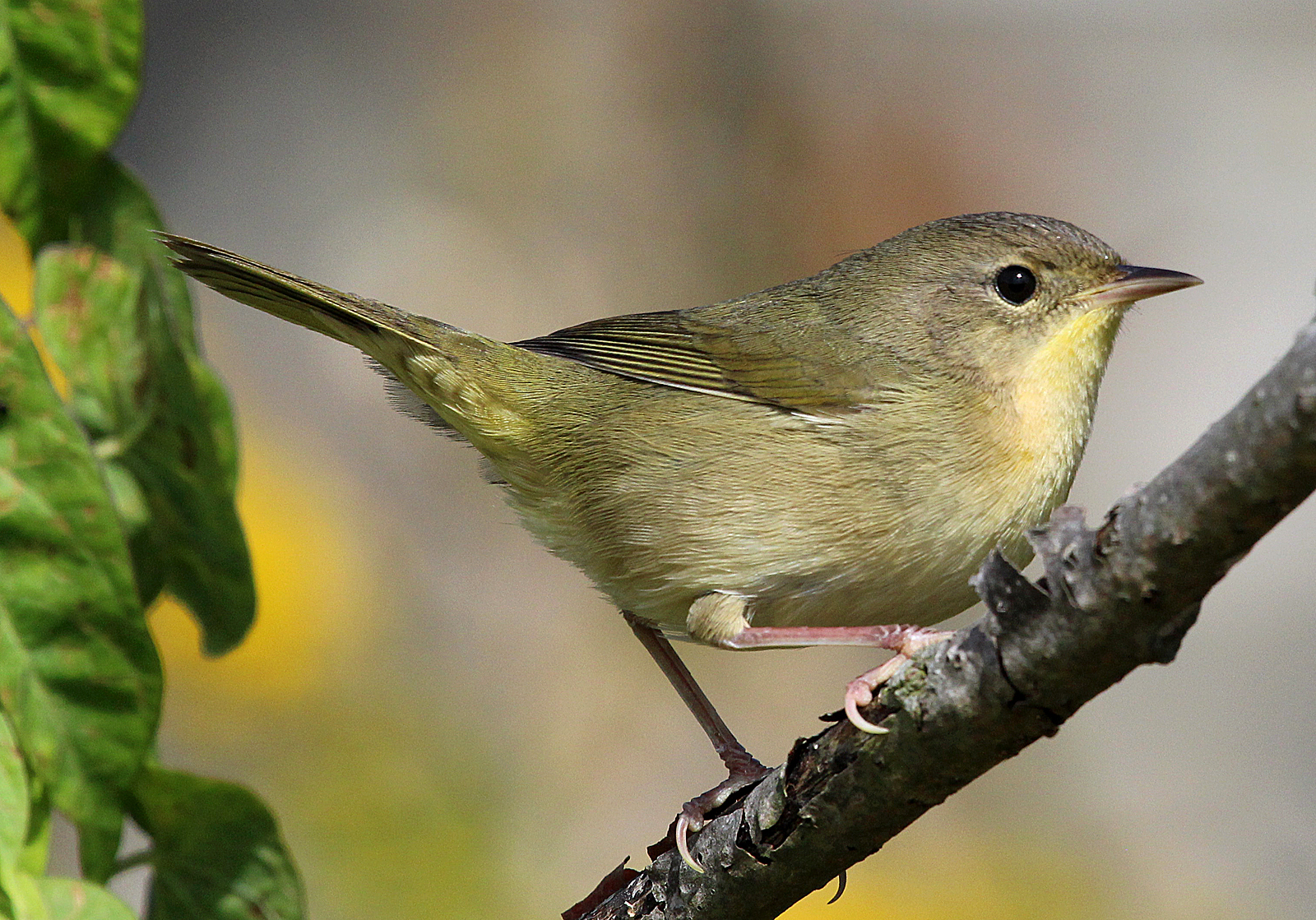
Photo by Chris Bosak
Common Yellowthroat, first year, southern New England, Sept. 2013

Here’s a female Common Yellowthroat, one of the many confusing fall warblers to watch out for as you hit your favorite birdwatching spots this fall.
Photo by Chris Bosak
Common Yellowthroat, first year, southern New England, Sept. 2013
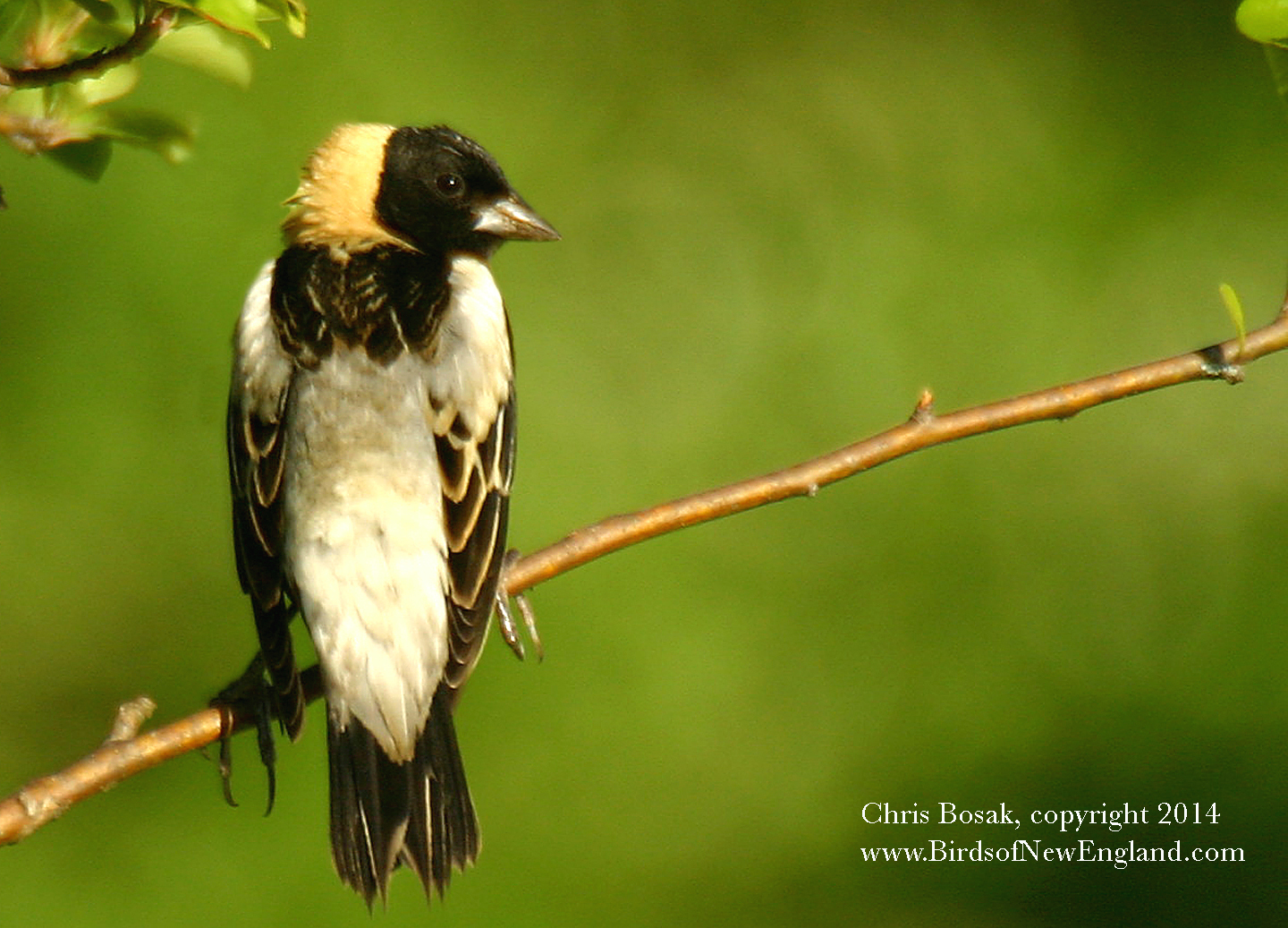
Photo by Chris Bosak
Bobolink
In response to the recently released State of the Birds 2014 report, Patrick Comins, the director of bird conservation with Audubon Connecticut, spoke about the 5 “poster birds” that will be most affected by climate change and the accompanying shifts in bird population. He was speaking specifically about Connecticut, but certainly all of New England will see this impact.
Comins spoke during a telephone conference to journalists on Wednesday.
Here are the birds he picked:
Saltmarsh Sparrow: Currently breeds in Connecticut, but has difficulty with rising sea levels and high tides. Rising tides will only become worse over the next several decades.
Bobolink: This meadow nester will likely not nest or be seen often in Connecticut over the next several decades.
Dunlin: This handsome shorebird currently nests and may be seen throughout winter along the New England coast. It’s nesting ability in Connecticut, as Comins put it, will “become zero.” It will move its range north and perhaps New England will get some winter views of this bird.
Blue-winged Warbler: This handsome bright yellow warbler will “move up and out.”
Veery: Comins almost picked the Wood Thrush for his final bird, but chose the Veery. It will become scarce in New England.
The phrase “over the next several decades” may give some people cause to relax and think “I’ll never notice it” or “maybe things will change.” But the “next several decades” will be here before we know it. There have been staggering declines in bird populations over the last 40 years. We’re talking some species dropping in number by 50, 60 even 80 percent. That’s just the last 40 years. That’s basically yesterday evolutionarily speaking. Jeez, I can remember 40 years ago. It bothers me to think this decline all happened in my lifetime.
Hopefully the State of the Birds report will get the attention it deserves and affect positive change for birds and all wildlife.
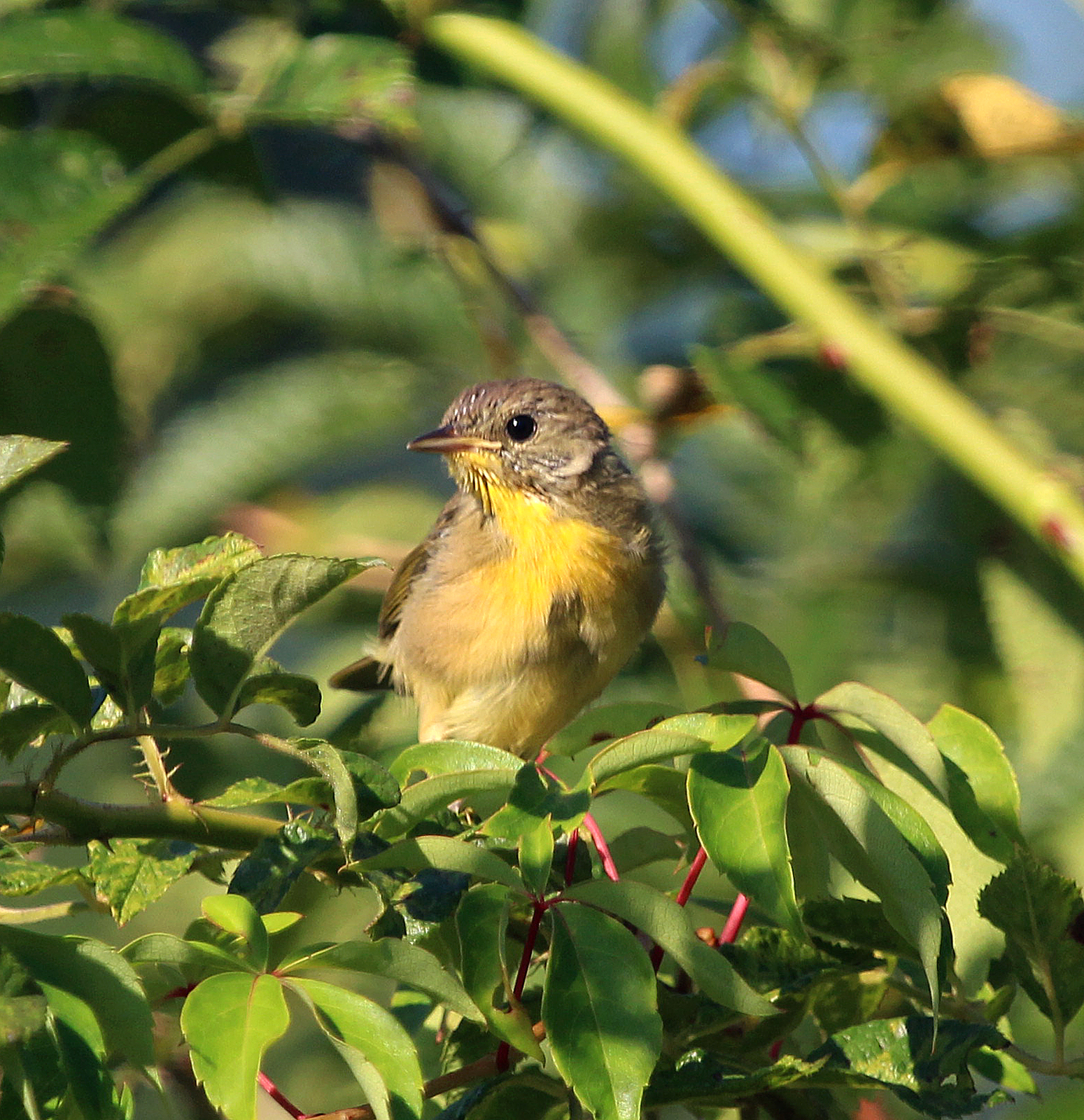
Photo by Chris Bosak
A female Common Yellowthroat perches in a tree in West Norwalk late this summer.
Here’s the latest For the Birds column, which runs weekly in The Hour (Norwalk, CT) and The Keene Sentinel (Keene, N.H.)
…
I’ve mentioned before that the fall migration, for the most part, is less ballyhooed by the birding community.
There are many reasons for this. The spring migration is so eagerly anticipated because it follows winter (usually a harsh one in New England) and birders are itching to see signs of rejuvenation in the natural world. The early flowers do a good job of heightening our spirits, but there’s nothing like the birds’ returning to really get us out of the winter doldrums.
The spring migration is also marked with a wide variety of colorful birds, most notably the warblers and other songbirds that pass through in April and May. The males are in their bright breeding plumage and singing their hearts out. The females are not as brightly colored and not as vocal, but are still a sight for sore eyes in the spring. The birds have a real sense of urgency in the spring migration, too. They need to get to their breeding grounds to get a good nesting spot and get down to th Continue reading
Well-known birdwatcher David Allen Sibley visited The Hour newspaper’s office in March 2014 shortly after the launch of the second edition of his Sibley Guide to the Birds. He sat down with Chris Bosak of The Hour and http://www.birdsofnewengland.com to answer a variety of questions of about birds. Here he discusses birdwatching in New England, where he grew up and currently lives.

