Brant thriving along Connecticut’s coast

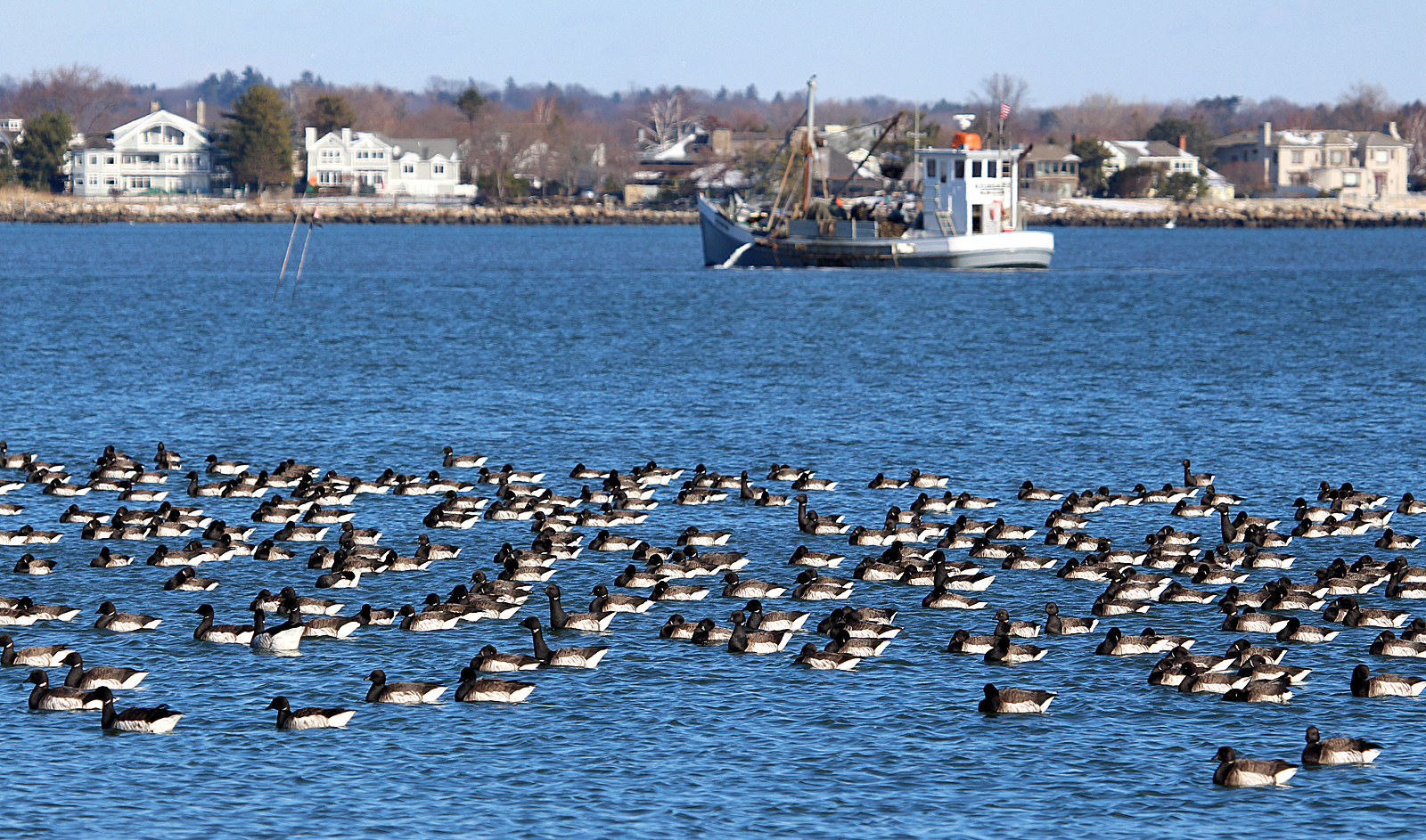
Photo by Chris Bosak A huge flock of Brant congregates as an oysterboat works the waters of Long Island Sound off Calf Pasture Beach in Norwalk this winter.

Photo by Chris Bosak
A huge flock of Brant congregates as an oysterboat works the waters of Long Island Sound off Calf Pasture Beach in Norwalk this winter.

I was filling out my Christmas Bird Count Captain’s Statistic Sheet (finally) and I had to question for a second my own numbers. Did I really see more than 1,000 Brant that day?

Then I recalled the massive flocks we had seen at Calf Pasture Beach that brisk morning. Count compilers Townsend and Mardi Dickinson were with me during that part of the day. They saw them, too. There were so many Brant it was hard to get a good count. (Watch the accompanying video to the end to see what we were up against. Not the best video of all times, but you will see what I’m talking about.)

Photo by Chris Bosak A Brant swims off the coast of Norwalk this winter.

Photo by Chris Bosak
A Brant swims off the coast of Norwalk this winter.

Brant are geese that breed in the Arctic and head to somewhat warmer waters during the winter. From a distance, or to the untrained eye, they can easily be mistaken for Canada Geese. Brant, however, are much smaller and lack the white “chin strap” that is so obvious on Canada Geese.

Norwalk has been a hot spot for Brant for many years. Huge flocks can be seen from Calf Pasture Beach throughout winter. Sometimes they are on the water. Sometimes they are near the water. Sometimes the flock is divided with some on the water and some near the water. The flocks often number hundreds and hundreds of birds.

It’s a treat to hear their low honking (maybe more of an of uttering), much different and more pleasing than the Canada Goose’s honk. When hundreds of them get going at once, it’s an even bigger treat. (Again, check out the video to listen for yourself.)

Most of the Brant will have migrated north by April, but some individuals or small flocks will remain into June or even later. They are likely young birds that aren’t going to breed anyway and therefore do not feel the sense of urgency to fly to the Arctic breeding grounds.

One of the many reasons I like Brant is because they are a reliable winter sighting here in New England. Birdwatching makes the winters here bearable — dare I say enjoyable — and it’s species like Brant that make winter birding fun.

Here’s the video:

Sanderlings and more Sanderlings

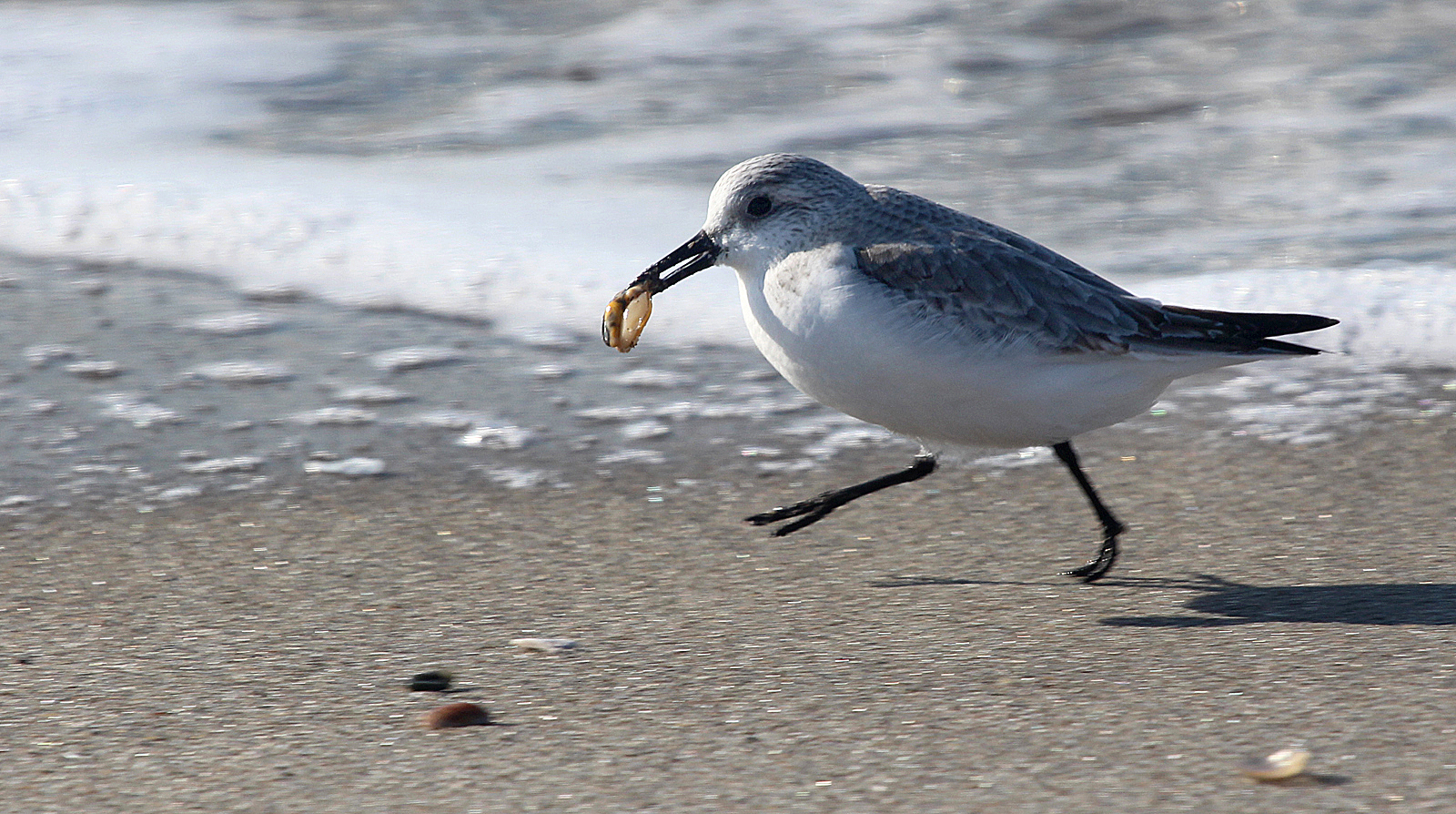
Photo by Chris Bosak A Sanderling runs along with food on the shore of Long Beach in Stratford, CT, Jan. 2014.

Photo by Chris Bosak
A Sanderling runs along with food on the shore of Long Beach in Stratford, CT, Jan. 2014.

Photo by Chris Bosak Sanderlings on the shore of Long Beach in Stratford, CT, Jan. 2014.

Photo by Chris Bosak
Sanderlings and Dunlins on the shore of Long Beach in Stratford, CT, Jan. 2014.

A recent trip to Long Beach in Stratford, CT, yielded one Snowy Owl sighting _ it was far in the distance, but still nice to see, of course. It also yielded more close-up views of Sanderlings, another bird that breeds in the Arctic. Sanderlings are small and common shorebirds that are seen along New England coastal areas from fall through spring, and even in summer at times. Sanderlings are the shorebirds you see chasing the fading waves looking for food and running away from the incoming waves. So much fun to watch.

They also make for good photographic subjects. So with that said, here are several Sanderling photos I took earlier this week. Click on “continue reading” for lots more photos. Continue reading