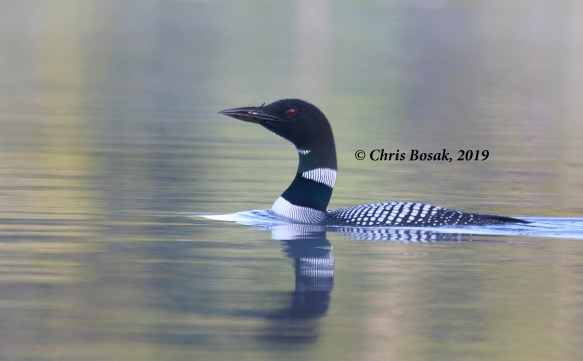
Photo by Chris Bosak
A common loon swims at May Pond in Pillsbury State Park in New Hampshire in June 2019.
Stop posting photos of loons, said no one ever. So, to celebrate Father’s Day, BirdsofNewEngland.com presents a common loon bonanza. Every hour on the hour, a new loon photo will post. All photos were taken earlier this week at Pillsbury State Park in New Hampshire. Happy Father’s Day. Enjoy the loons.
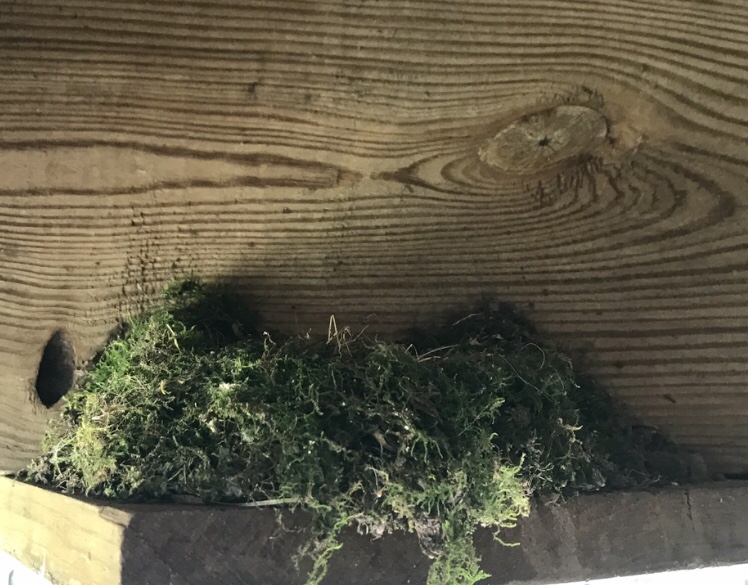
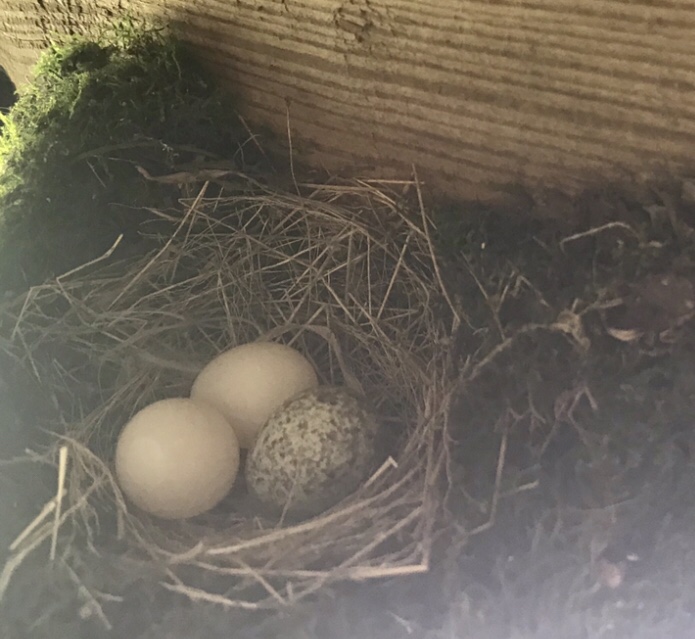
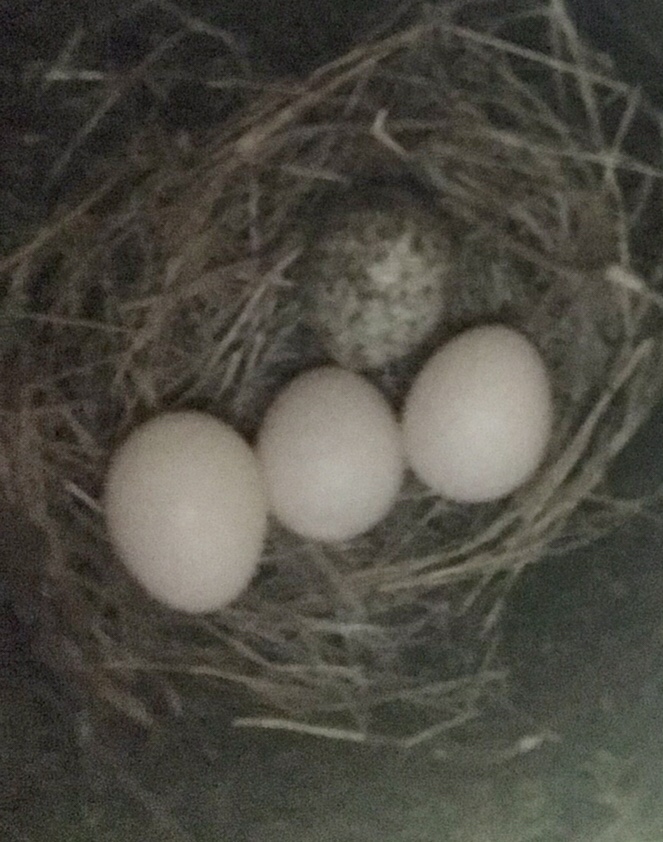
An eastern phoebe finally built a nest on a large piece of wood I had nailed to the underside of my porch three years ago.
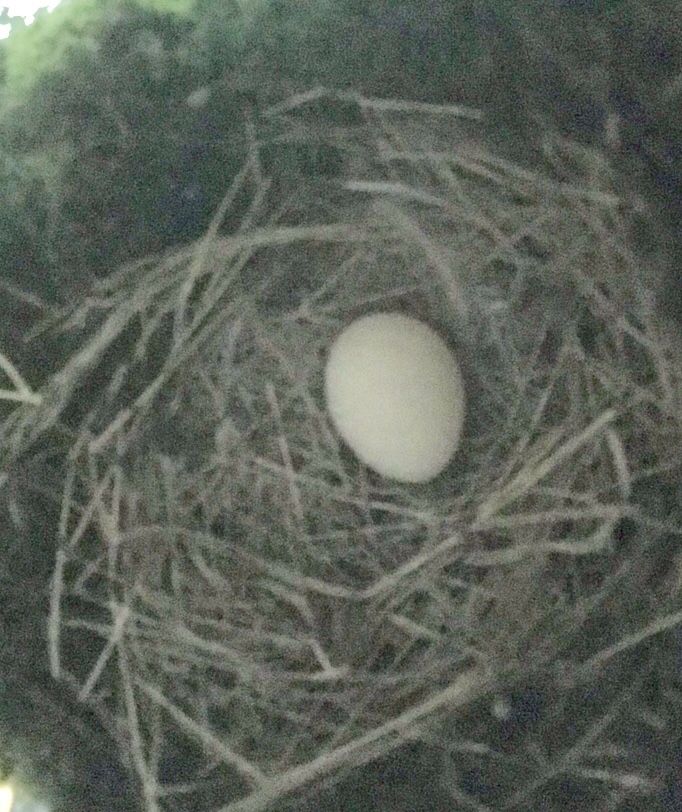
Unfortunately, a brown-headed cowbird egg is among the five eggs currently in the nest. Brown-headed cowbirds are brood parasites and lay their eggs in the nests of other birds. Conventional wisdom says to remove the egg, but that would likely result in the vindictive mother cowbird coming back to destroy the other eggs.
Also, a new line of thinking says to let nature take its course and not let human values interfere with nature. It’s difficult, but I’ll leave the nest alone. I’ll check it daily to see how this all shakes out.
The first egg was laid on Tuesday, June 11. On Wednesday, another phoebe egg and the cowbird egg was discovered. Thursday and Friday brought one phoebe egg each for a total of four phoebe eggs and one cowbird egg.
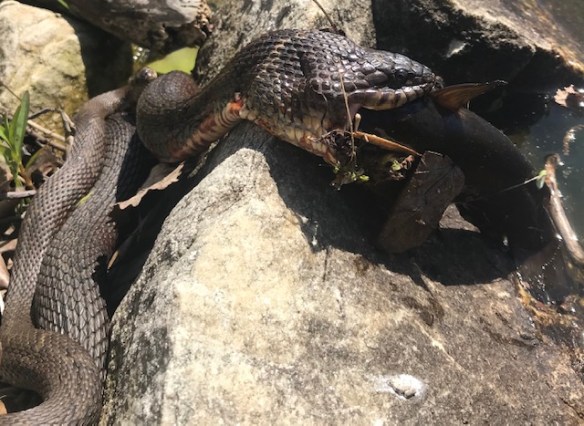
Photo by Chris Bosak Northern water snake with catfish, Danbury, CT, May 2019.
It took a few seconds for us to unravel the scene in the above photo but it eventually became clear it was a large northern water snake eating a fish and a smaller northern water snake clinging close to the larger snake. Although we happened upon the scene at this stage of the battle, I’m fairly certain the fish was a catfish. To give credit where it is due, my 12-year-old son Will was the one who discovered the scene and called the rest of us over.
The snake had pulled the fish onto the shore and the fish continued to fight with everything it had. It was quite the battle and we watched for a good 15 minutes. Not having my camera equipment with me, I did the best I could with my iPhone while at the same time being respectful of the natural scene unfolding. The struggle took place a few weeks ago at Lake Waubeeka in Danbury, Connecticut, along the same shore where I often launch my water tube for a relaxing day on the lake. Guess I’ll watch where I’m stepping next time I do that.
Northern water snakes are large and intimidating looking, especially when moving through the water, but are non-venomous and harmless. They do bite but only when antagonized. They aren’t going to aggressively pursue a human and attack. They are often mistaken for copperheads or water moccasins (cottonmouths). Copperheads live in Connecticut but are snakes of the forest and mountains. Water moccasins are snakes of the southeastern U.S. and do not range into New England.
After about half an hour the snake was able to completely swallow the fish. By that time, the other snake had disappeared. The larger snake, complete with a bulging body behind its head, retreated to the water and hid under a rock along the shore. I’m pretty sure it’s the same rock I use for footing as I launch my tube. Good thing water snakes are harmless.
Here are some more photos to get you ready for summer …
Photo by Chris Bosak Northern water snake with catfish, Danbury, CT, May 2019.Photo by Chris Bosak Northern water snake with catfish, Danbury, CT, May 2019.Photo by Chris Bosak Northern water snake with catfish, Danbury, CT, May 2019.
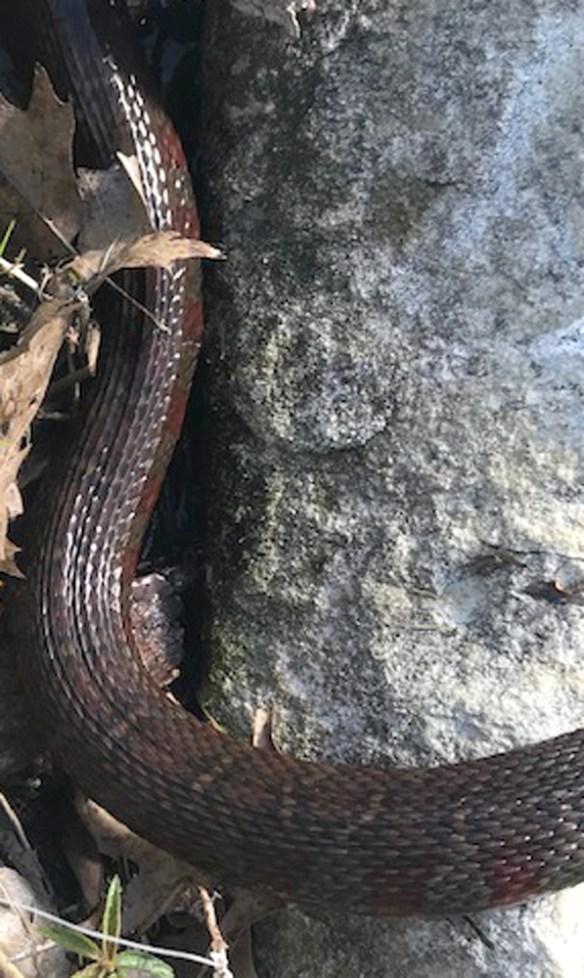
Below, the marking of the harmless northern water snake.
Photo by Chris Bosak Northern water snake with catfish, Danbury, CT, May 2019.
Gino Farina of Jaffrey Center, NH, caught these wild turkeys at the right moment, spring 2019.
I’ve never happened across copulating turkeys and until this spring I had never been sent photos of turkeys copulating. That changed earlier this month when, in the span of a few days, I received two such photos. Thanks to Wayne Snelley of Pepperell, Massachusetts, and Gino Farina of Jeffrey Center, N.H., for taking these excellent shots and sending them to me.
The future of turkeys seems safe for now. (NSFW means Not Safe For Work for those not fluent in Internet speak.)
For more photos submitted by readers from throughout New England, click here, or click on the Reader Submitted Photos link from the menu above.
Wayne Snelley got this shot of copulating wild turkeys in his yard in Pepperell, Massachusetts.
Here’s a video I took a few years ago, but it’s appropriate for the season as these beauties are passing through (and in some cases staying) New England now.
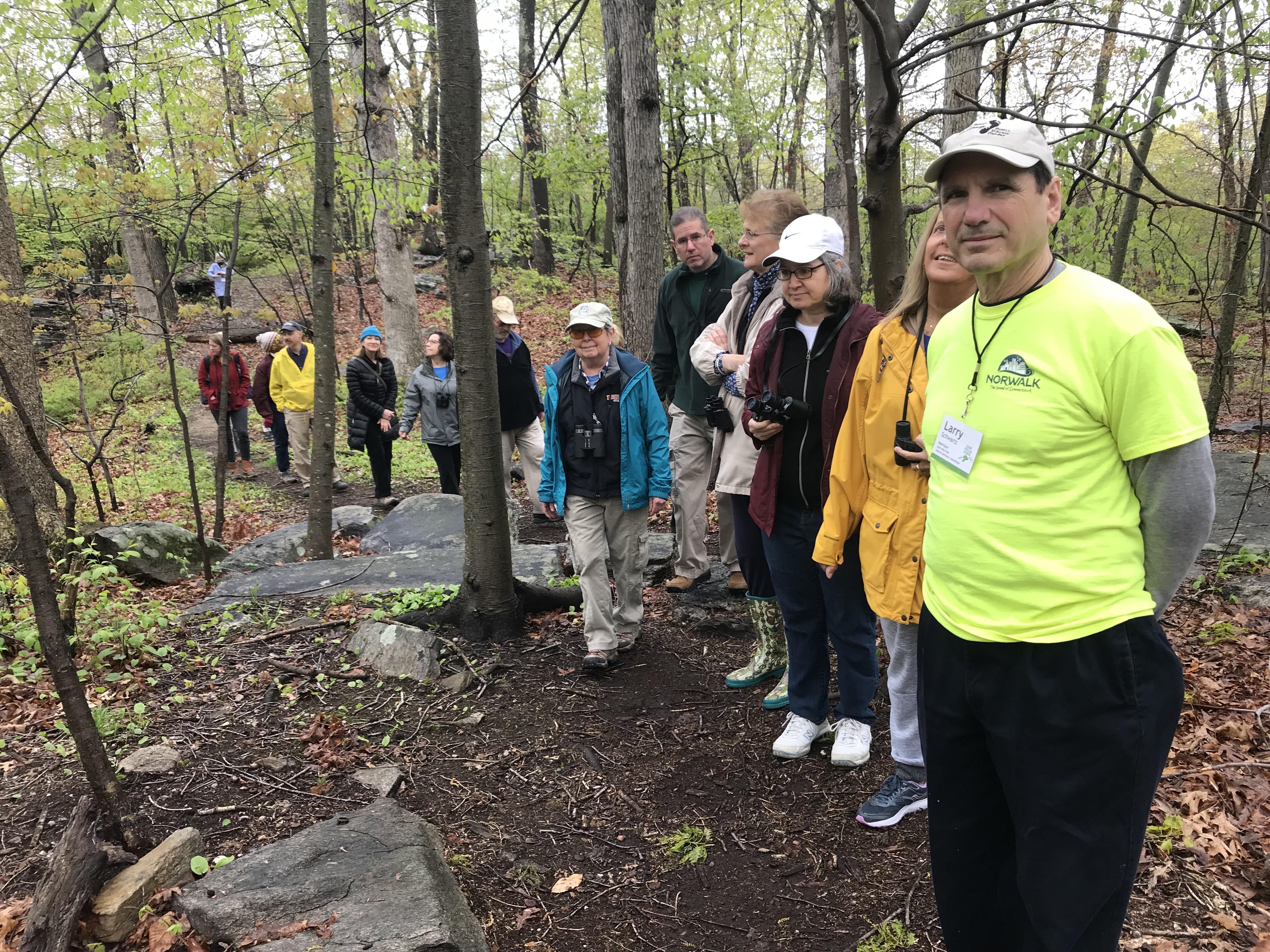
There was a great turnout at yesterday’s bird walk at Oak Hills Park in Norwalk. It is a beautiful park and the folks involved with the nature trail area of it should be proud of their work. It was a decent turnout for the birds as well, highlighted by a very cooperative scarlet tanager. I’ll post more photos and a more complete species list later.
Photo by Chris Bosak A Scarlet Tanager sings in a tree in Danbury, Conn., July 2016.
Well, it’s cold and rainy in New England … at least it’s not snowing like it is in some parts of the country.
With that said, here are some thoughts of the warm weather ahead and what we can expect to see in our New England yards and woods soon. (Many people are already seeing the rose-breasted grosbeaks and indigo buntings.)
Feel free to drop me a line and let me know what you’re Continue reading →
Coming soon to Birds of New England: photos from a recent visit to Florida and updates and photos of the ongoing spring migration in New England. Warblers and other songbirds are here. Feel free to let me know what you’re seeing out there.









 Birds of New England.com