Photo by Chris Bosak A Piping Plover preens at Milford Point in spring of 2014.
Here’s some good news from Connecticut Audubon regarding the success of shorebirds nesting on CT beaches. The nesting areas are monitored by volunteers and staff of the Audubon Alliance, a partnership with Connecticut Audubon Society(standalone organization), Audubon Connecticut (state chapter of national Audubon), CT DEEP, and Roger Tory Peterson Institute of Natural History. The main focus of the monitoring and study are piping plovers and least terns, as well as American oystercatchers.
I was a monitor years ago when I worked nights and loved it. There’s nothing being the first one to discover a piping nest. I use the word “nest” lightly as it’s nothing more than a slight indentation in the rocky/sandy beach. The birds and eggs Continue reading →
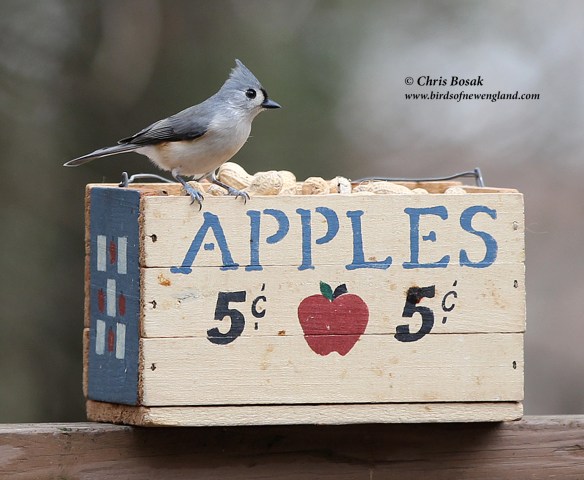
Photo by Chris Bosak A tufted titmouse checks out a box for peanuts in New England, fall 2019.
This cool, November day seemed like a perfect time to add another apple photo — even though apple season in New England September and October. Here’s a link to the original apple photo.
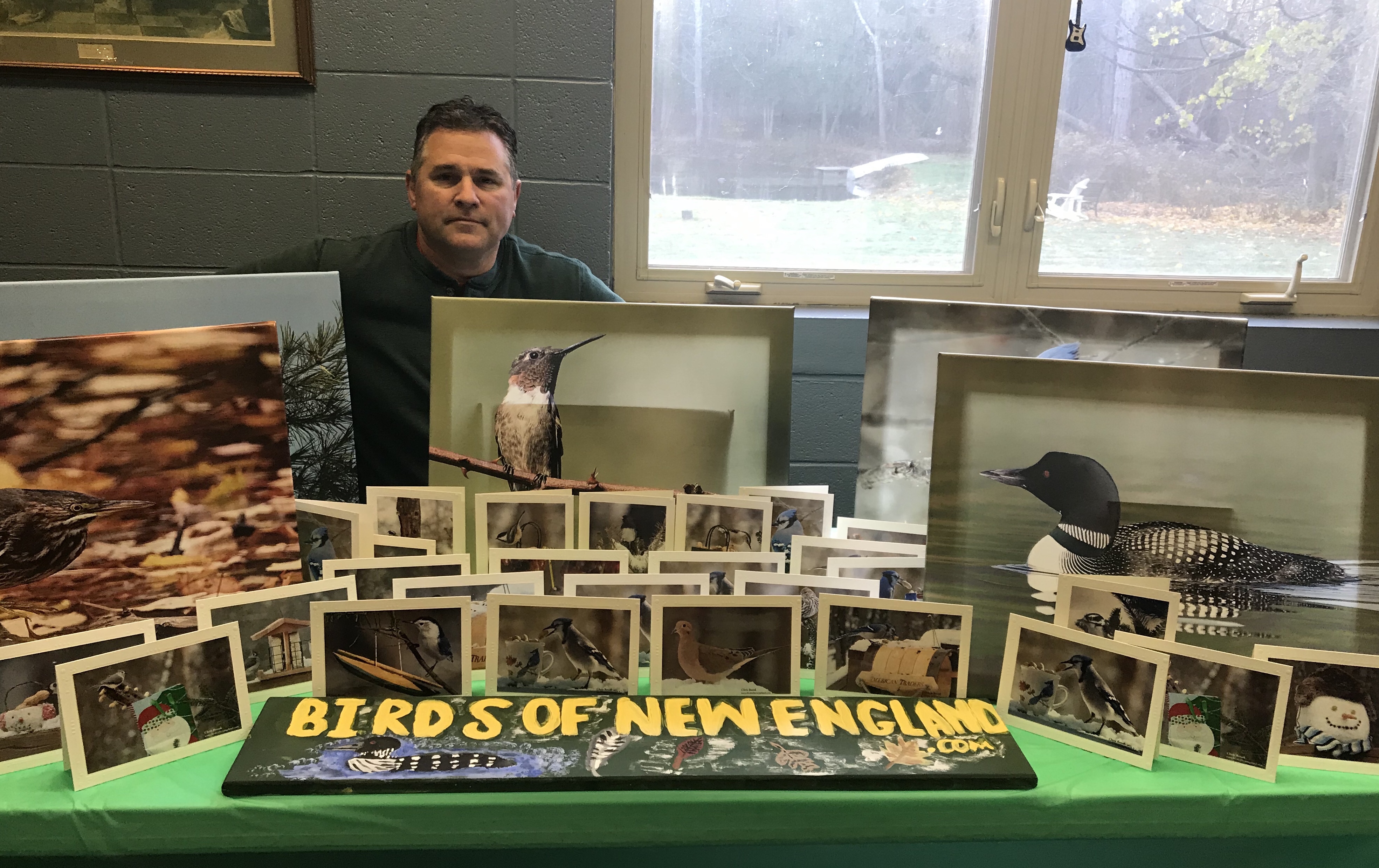
Selling some bird wares at Christ the King Lutheran Church’s Tag and Craft Fair in Newtown, Connecticut (Saturday, November 9). Stop by if you’re in the neighborhood.
I’ll offer some cards for sale on this site soon – as soon as I figure out how to do it!
Photo by Chris Bosak Common loons swim at May Pond in Pillsbury State Park in New Hampshire in June 2019.
Radio people often joke that they prefer that medium over television because they “have a face made for radio.” Well, after having my own radio show for a few years, I can say that I have a “voice made for newspapers.” (Hence, my long career in newspaper writing and editing.)
But, despite that, I recently appeared as a guest on John McGauley’s entertaining Friday radio show on WKBK in Keene, N.H. John reads my column in The Keene Sentinel and was intrigued by an article I had written about a bird population study. He asked if I’d do a quick interview to explain it further. Of course, I obliged and was happy to do so.
I hadn’t been on the radio since I pulled the plug on my Bird Calls Radio show six years ago (or thereabouts). John had some great questions and my answers were fairly intelligent (at least I think so) and delivered in my typical better-off-in-newspapers voice with lots of ums and ahs. So, if you’re a glutton for punishment, click on the link below. I’m on for about the first 20 minutes.
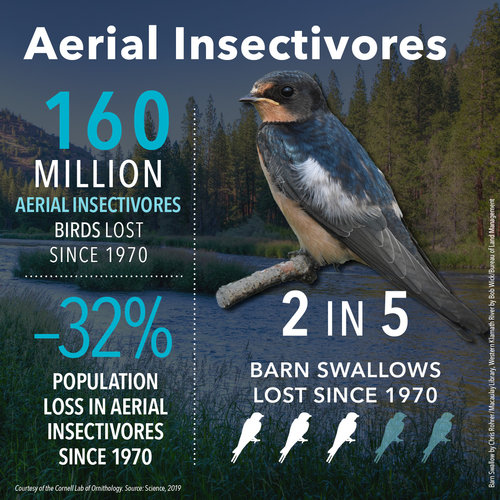
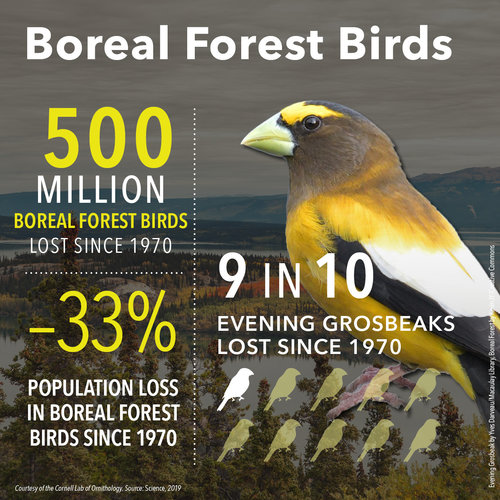
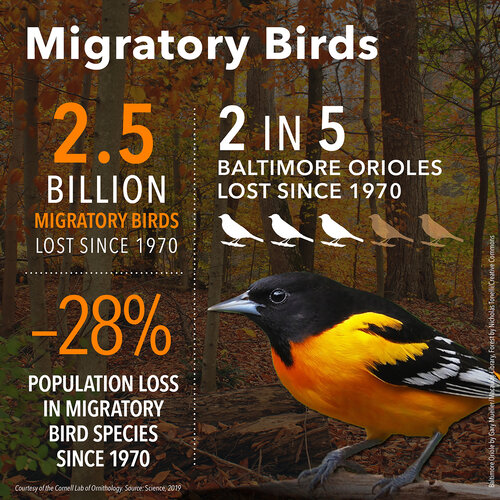
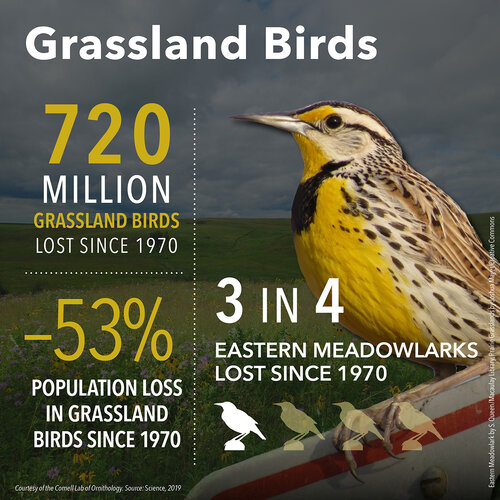
After four days of hammering you with bad news, here are some good news graphics from the recently released bird population study that showed a decline of 2.9 billion birds, or 29 percent, in North American over the last 50 years.
Here are some more graphics from the recently released bird population study that showed a decline of 2.9 billion birds, or 29 percent, in North American over the last 50 years.
Here are some more graphics from the recently released bird population study that showed a decline of 2.9 billion birds, or 29 percent, in North American over the last 50 years.
Here are some more graphics from the recently released bird population study that showed a decline of 2.9 billion birds, or 29 percent, in North American over the last 50 years.
Photo by Chris Bosak Even common birds such as robins are declining, according to a new study.
Several articles published last week confirmed what we all knew already: Birds are in decline.
What was enlightening, in a bad way, was the degree to which birds are disappearing. Citing a report from the journal Science, the articles reported that there are 2.9 billion fewer birds in the U.S. and Canada now than there were in 1979. That’s a decrease of 29 percent.
The 2.9 billion fewer birds certainly is startling. The 29 percent decline is also eye-opening, but to be honest, that number doesn’t really surprise me given the percentage decline of some species. The wood thrush, for example, has declined 62 percent from 1966 to 2015, according to the North American Breeding Bird Survey. Its beautiful flute-like song still echoes throughout our woods, but not nearly as often as it used to.
Other startling examples include the eastern meadowlark (89 percent decline), cerulean warbler (72 percent decline), salt marsh sparrow (75 percent decline from 1998 to 2012), and American bittern (42 percent decline).
Unfortunately, examples are easy to come by as nearly every species has declined to some degree over the last 50 years. And don’t even get me started with the birds that are on the brink of extinction, such as the Kirtland’s warbler.
According to the latest study published by Science, waterfowl and raptors are faring the best with slight population increases. That is not surprising considering the amazing recovery of species such as the osprey and bald eagle.
It is interesting to note the discrepancies between this latest study and previous studies such as the North American Breeding Bird Survey and the Partners in Flight study. The previous studies showed stable or slightly increasing populations for many of our common birds. The latest study shows decreases even among birds such as robins and the more common sparrows. The study was conducted by a collaboration of government, nonprofit and educational organizations.
Not that it makes the 29 percent decrease in the overall bird population any better, but part of me thought that the number would be even higher.
What is the significance of this report and why should we care if birds are in decline or not? Aside from the fact that they are beautiful and fascinating creatures, and that millions of people enjoy watching them, there are serious consequences to losing birds. Birds eat insects, pollinate flowers, are a vital part of the food chain and contribute greatly to earth’s incredible biodiversity. They help keep nature in balance.
Birds are also an indicator species, those species that give a picture of the overall health of the planet. If something is wrong with the birds, something is wrong with the planet. And something is certainly wrong with the birds.
To lose nearly three billion birds in a relatively short time signals that changes need to be made. Pesticides, despite our earlier close calls with extinction due to their use, continue to plague the environment. Habitat loss continues nearly unabated and the rapidly-growing world population isn’t going to ease those pressures any time soon. The fires in the Amazon rainforest don’t help either.
Unfortunately, the list of factors in the decline of bird populations goes on and on and on. Fortunately, we have taken notice and that’s the first step toward doing something about it.
I get tons of eastern towhee shots in the spring. They are perhaps the most prolific bird at a park I frequent in mid April and early May. The sightings die down dramatically in the summer, but I did manage to get this guy to sit still long enough for a photo in July.