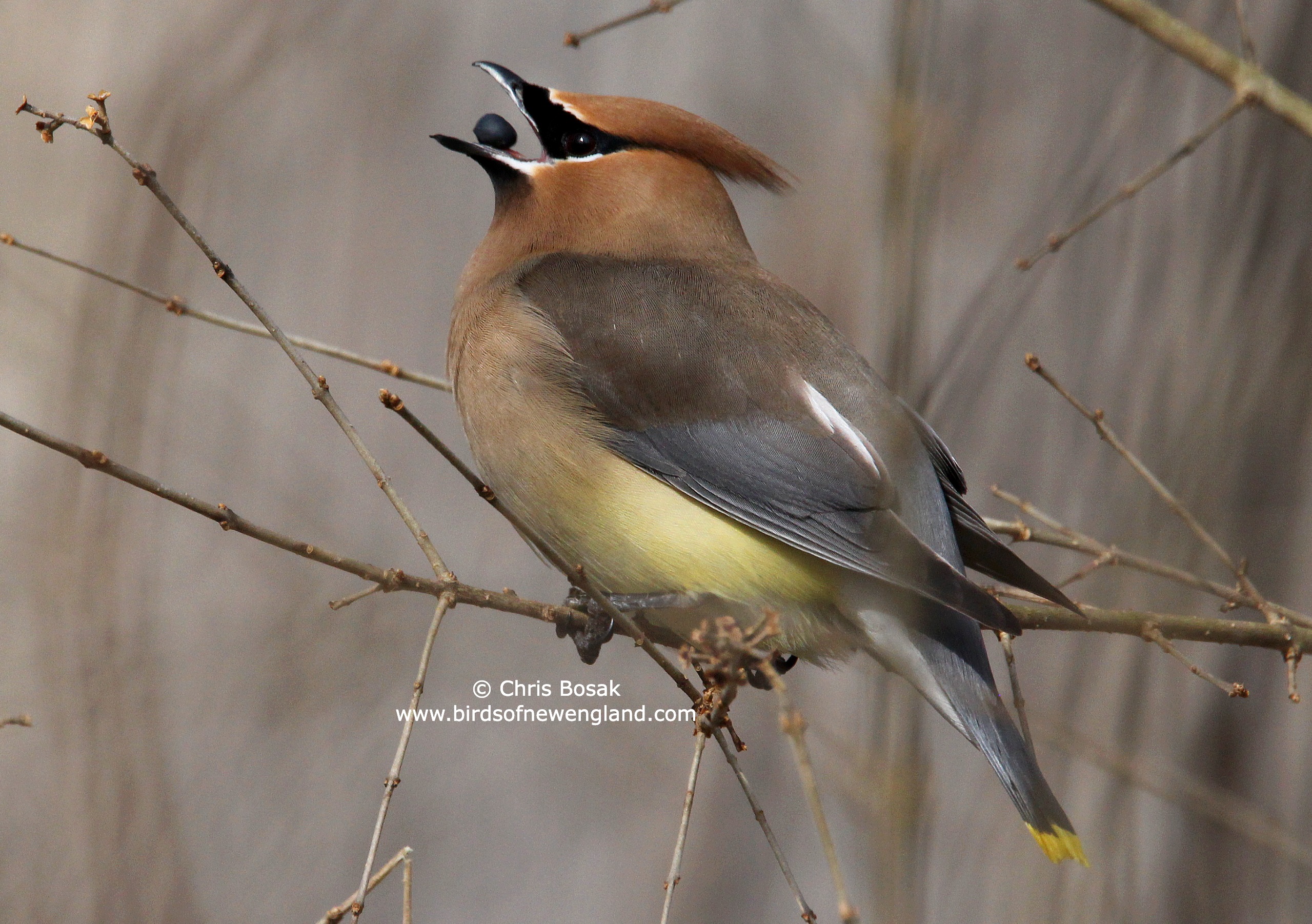
A walk earlier this week yielded these beauties eating border privet berries. Cedar waxwings are one of my favorites.
Continue reading
A walk earlier this week yielded these beauties eating border privet berries. Cedar waxwings are one of my favorites.
Continue reading
I posted the last two days photos of birds following a weekend ice storm. Here are a few shots without birds in them.

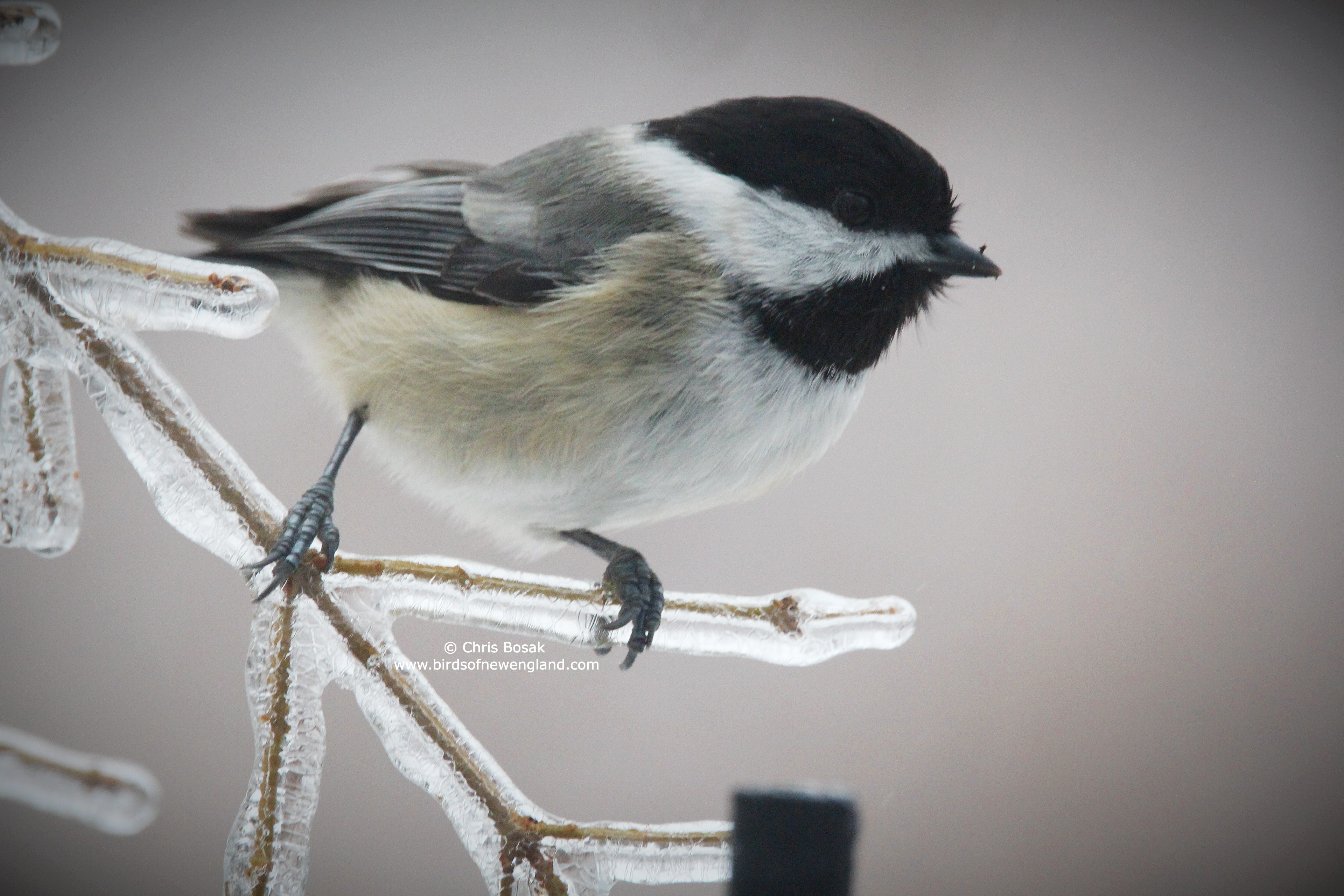
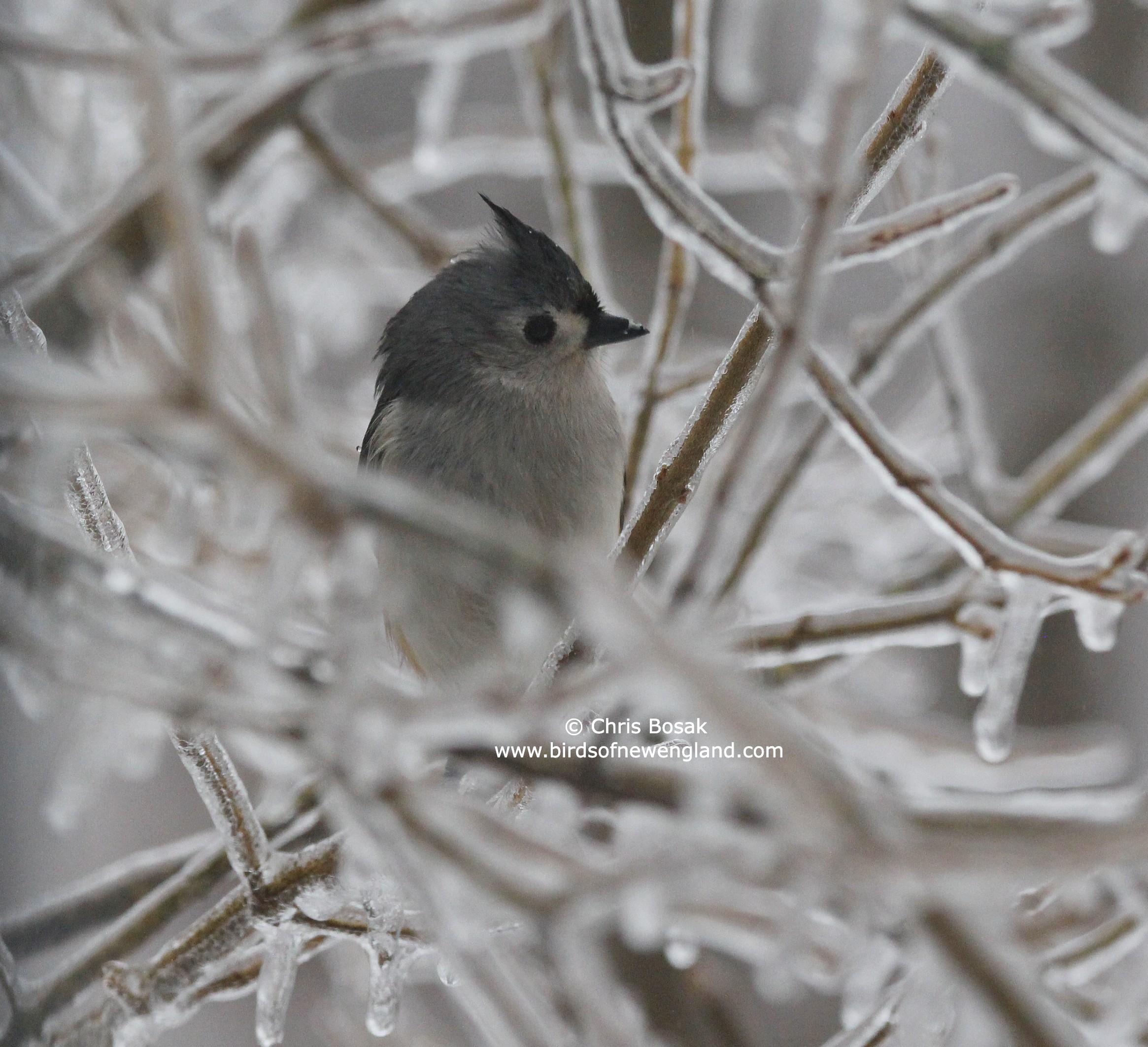
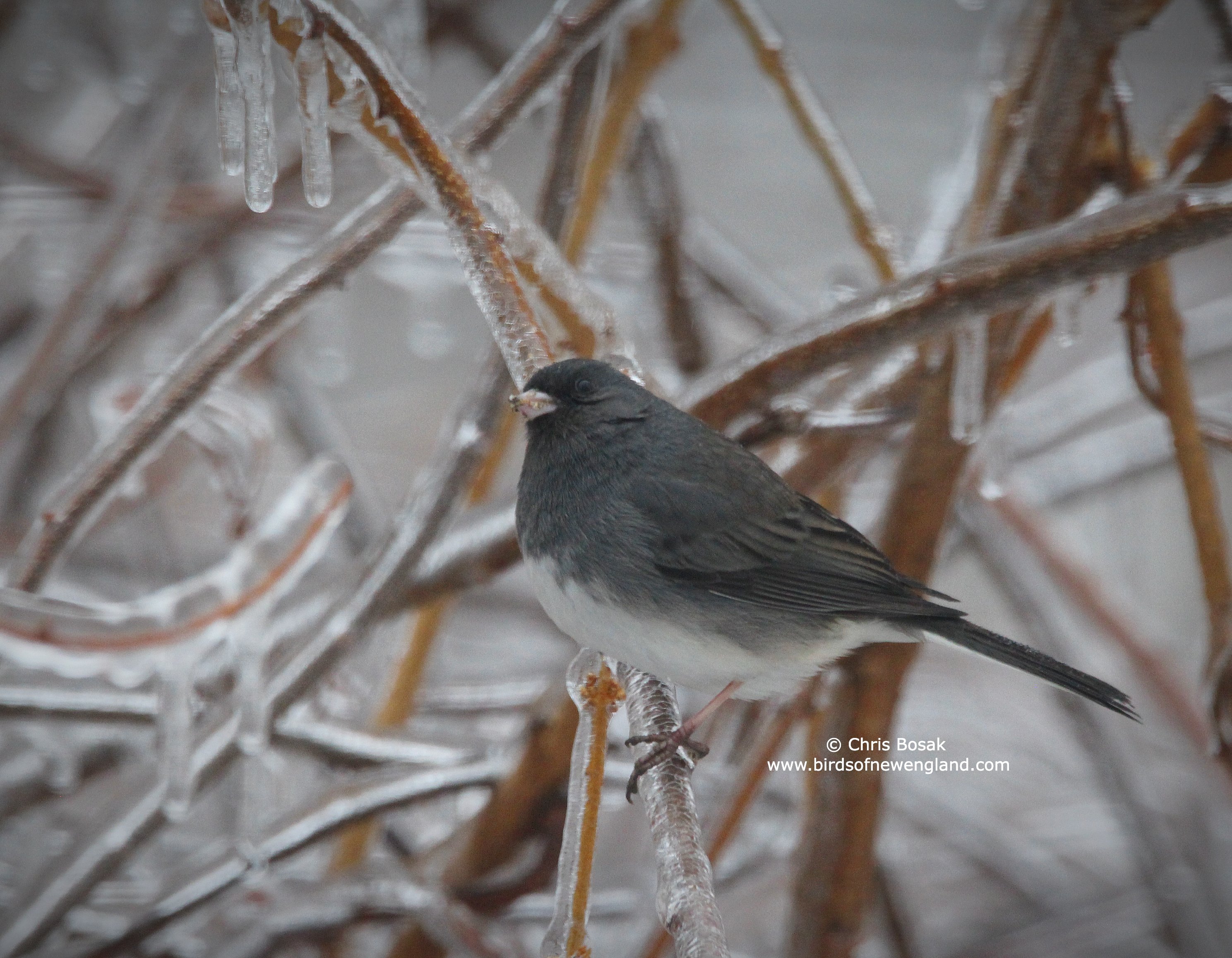
A snowy mix covered much of New England this weekend. It started as snow, then changed to freezing rain, and finally just plain, old rain. The freezing rain formed a hard covering over the snow and sheathed every branch in ice. While walking or driving in these conditions is not advised, it’s always fun to look out the window and see how the birds are handling it. As the photos suggest, they are doing just fine. (Sorry for the grainy photos. Not a whole lot of light to work with.)

It wasn’t an official Christmas tree, but these robins made it one on this Christmas morning. Happy holidays everyone!

Happy holidays, and merry and blessed Christmas to all. Thank you for your support of Birds of New England.
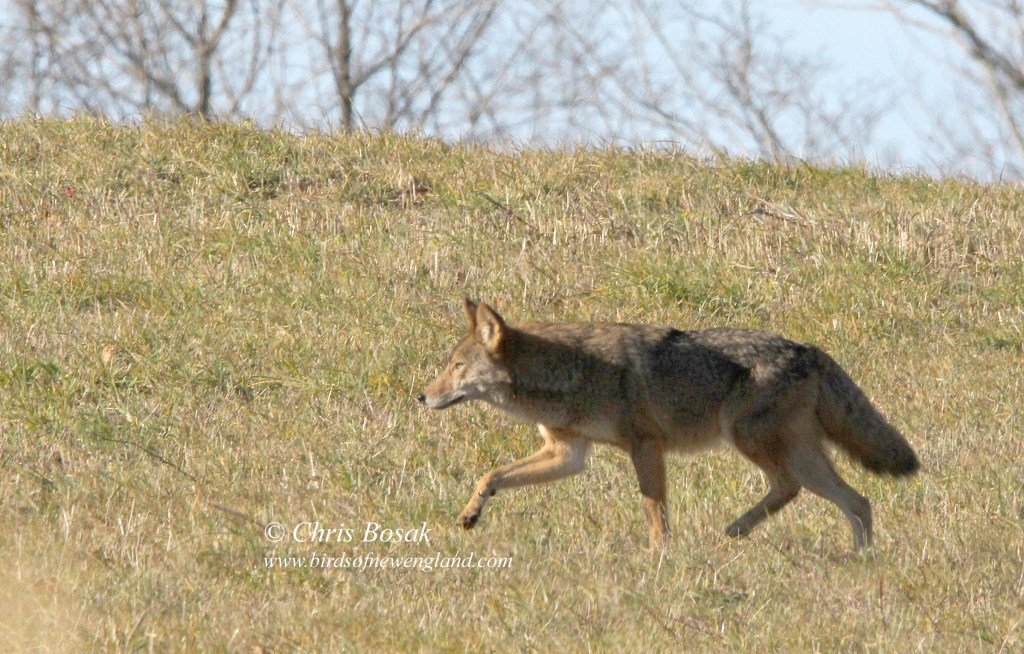
My experience with the coyote the other day got me curious about the species. As I mentioned last week, coyotes are fairly common throughout all of New England these days, but I’ve seen them on only a few occasions.
The recent sighting was my closest encounter with a coyote to date and the only one so far that afforded a photo opp. As is often the case, once I get a decent photo of a species, I do a deep dive into its life history.
Here are some interesting facts (at least I found them interesting) about the eastern coyote, gleaned from several sources on the internet.
Continue reading
My usual walk at a park near my home starts with a slight downhill trail abutting a huge field. The trail soon branches off in two directions: right leads into the woods, and left takes you along a wide trail with brushy habitat on either side.
Nine times out of ten, I take the trail to the left. The brushy habitat is home to a greater number and variety of birds than the narrow trail through the woods. While the left trail is rather wide, approximately 15 feet, the brush on either side is tall and thick and blocks the view of what lies immediately on either side.
There is one spot along the trail, however, where the brush is matted down, exposing a crumbled rock wall and an expansive view of the field. For the adventurous, this spot also offers a chance to gingerly walk on the matted-down brush, step on some of the fallen rocks from the wall and jump down into the field on the other side.
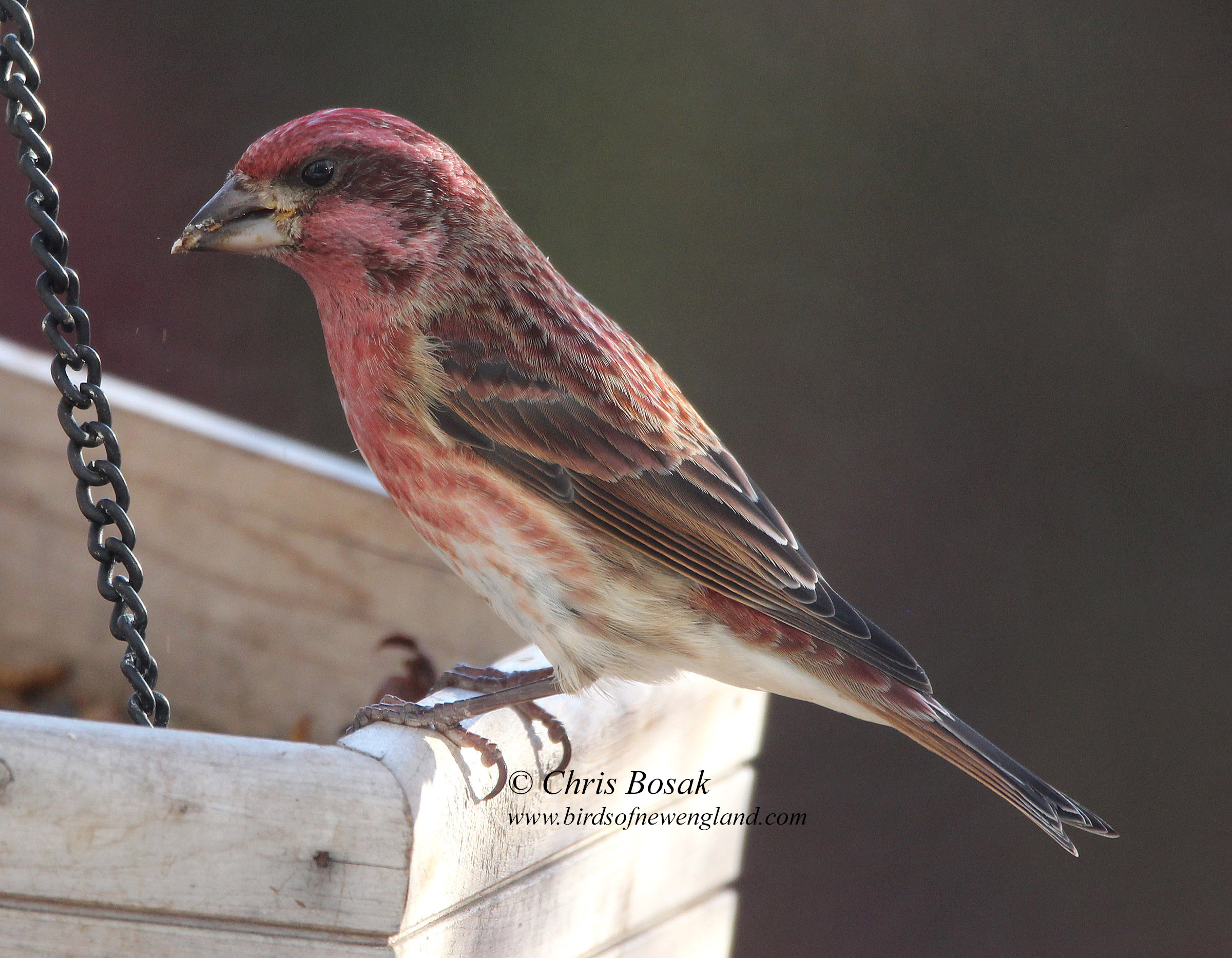
Continue readingHere are some photos of house finches and purple finches, for comparison.
Males
Here’s another shot of the female downy woodpecker looking for food by tearing apart a dormant wasp’s nest.


Last fall, I watched and attempted in vain to photograph several little birds fitting among low-lying bushes at a particular spot in the woods.
Eventually, I was able to get a good look at one and identify them as golden-crowned kinglets. Fitful for kinglets, they moved constantly. They sat still for only a second or two as they moved from one branch to the next. Most of the time, they remained concealed by leaves.
The other day, I walked by that same exact patch in the woods and noticed two small birds flitting among the bushes. My instinct was to move on without getting a better look, as I assumed they were golden-crowned kinglets that wouldn’t let me photograph them anyway.
Continue reading Birds of New England.com