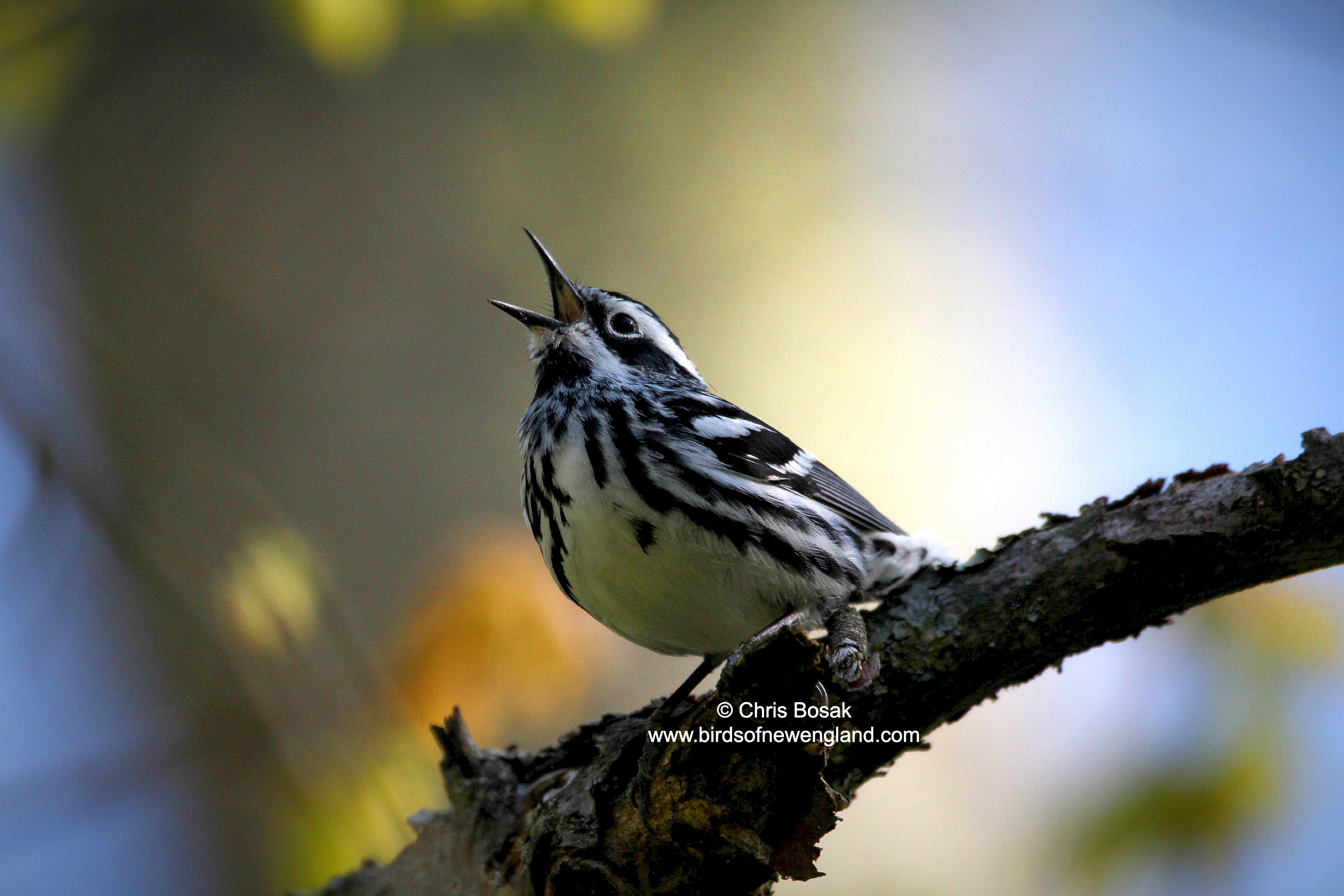
Black-and-white warblers sound like squeaky wheels when they sing. Their song can be ubiquitous in the New England woods depending on the time of year.

Black-and-white warblers sound like squeaky wheels when they sing. Their song can be ubiquitous in the New England woods depending on the time of year.
Birdwatching firsts are usually good things.
A new birdwatcher sees a scarlet tanager for the first time. The first warblers show up in the spring. An evening grosbeak visits a feeder for the first time. (I’m still waiting for that one, by the way.) Witnessing a unique behavior, like an eagle harassing an osprey into dropping a fish, for the first time is always a thrill.
But not all firsts are cause for celebration. Some firsts are best avoided if at all possible. I was reminded of this last week when I woke up and found this year’s first deer tick embedded in my thigh.
I should have known better, of course. But there I was tromping through waist-high grass trying to get a better look at a swamp sparrow. It will be okay, I thought, it’s still early in the season, and it hasn’t really warmed up yet. Every year, it takes this lesson for me to realize that ticks emerge before I think they will.
I returned to the car after my unsuccessful attempt to close in on the swamp sparrow. As I sat down and got ready to turn the key, I noticed a deer tick on my pants, its tiny black-and-red body slowly crawling as it searched for a way to get to my blood.
Continue reading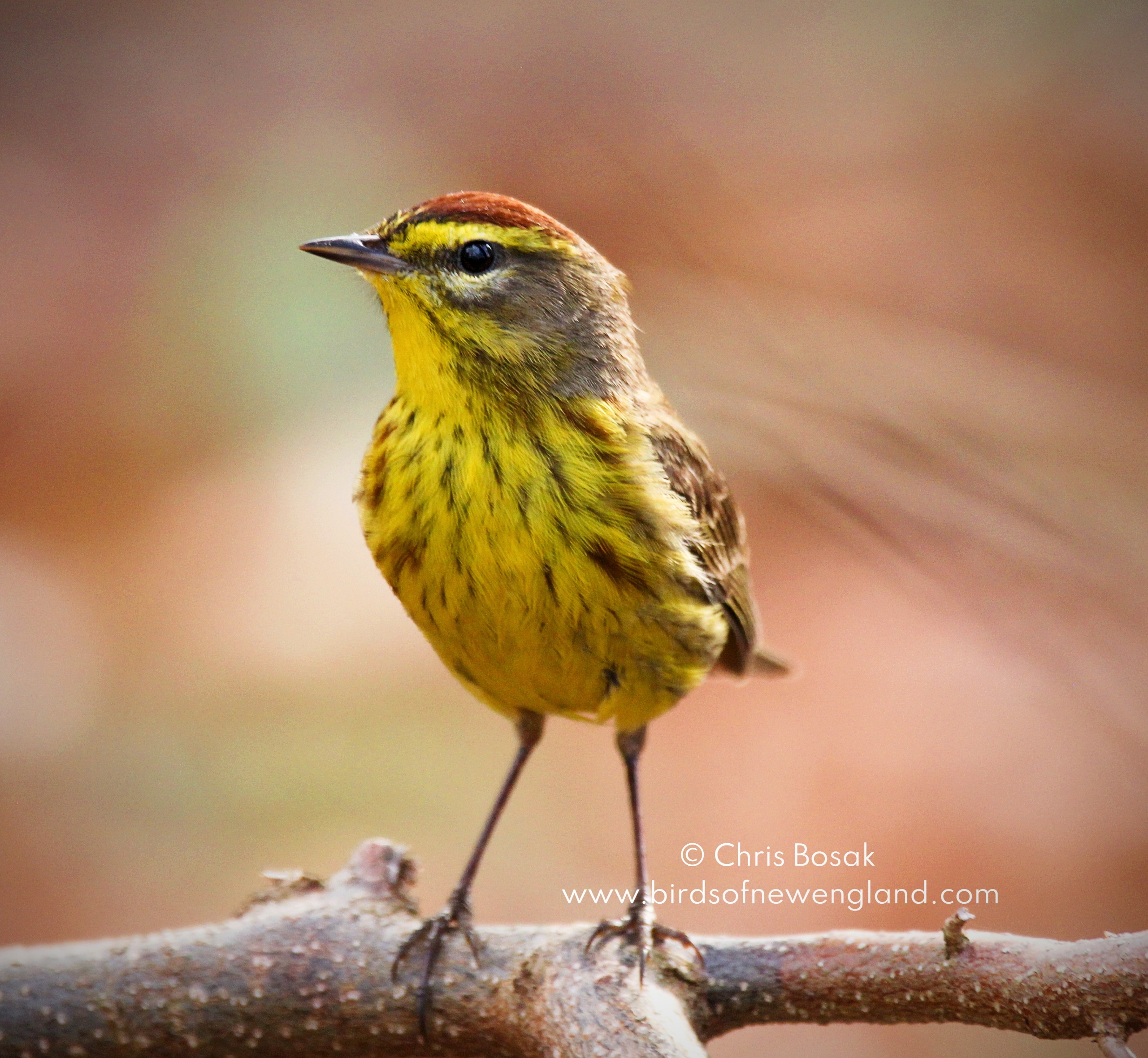
Palm warblers have been by far the most visible spring migrants on my walks lately. Along with pine warblers and yellow-rumped warblers, palm warblers are one of the earliest returning warblers to New England. If you see a small yellow bird pumping its tail constantly, it’s probably a palm warbler.


It’s an early start to the warbler season for me.
I was walking at my usual patch on March 31 when I heard a familiar trill-like song from the top of a tall white pine. A fast-paced trilling usually means it is a junco, chipping sparrow, or pine warbler. All three of these birds are in New England now, so unless you are an expert at identifying birds by song, it is best to find the bird and get visual confirmation.
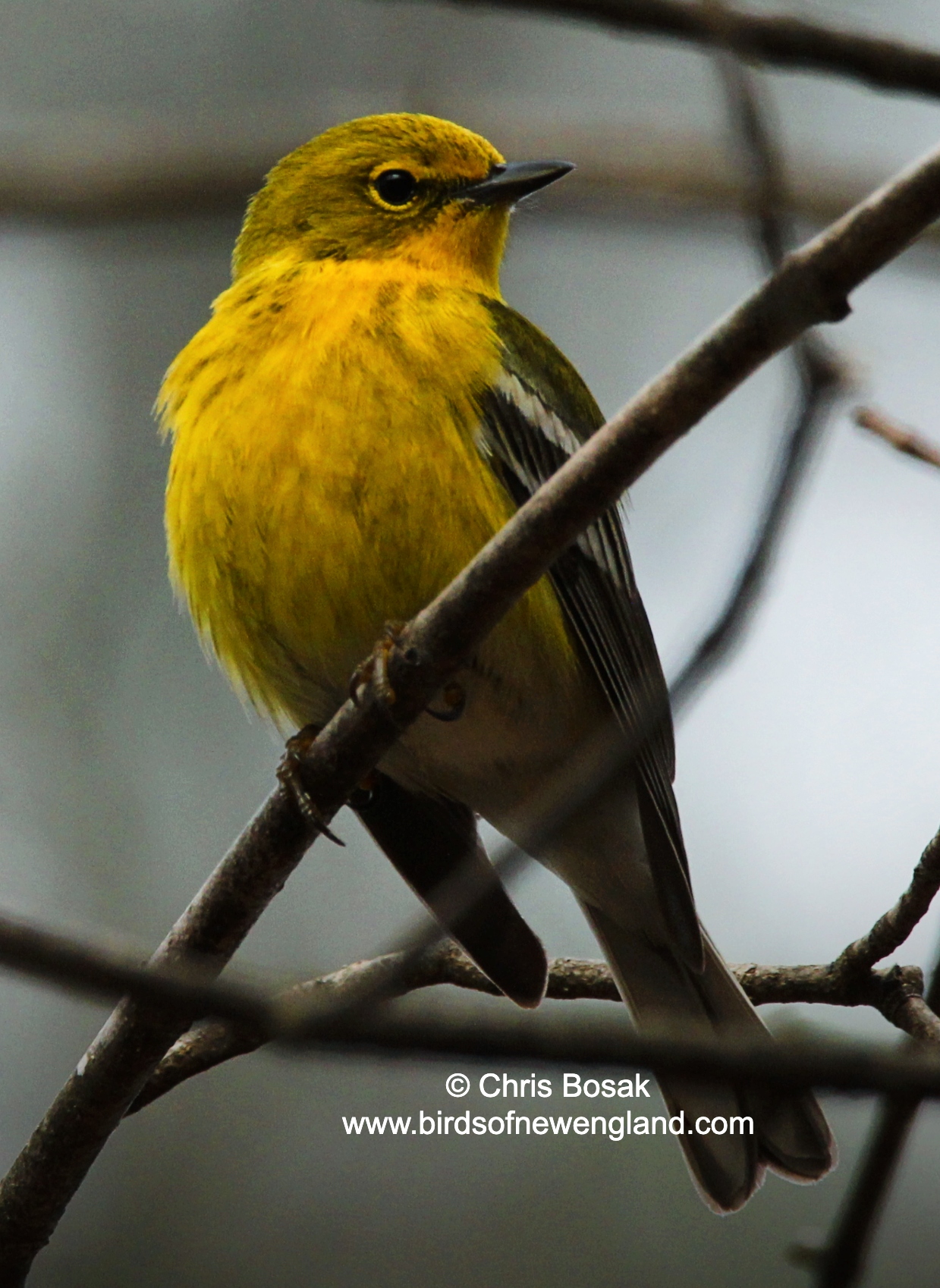
Like most warblers, pine warblers do not sit still for very long, so it took only a few seconds of searching to find the tiny bird moving among the branches. It was indeed a pine warbler, a mostly yellow bird with white wing bars on gray wings.
Pine warblers are always the first, or at least one of the first, warblers to show up in New England each spring. I usually do not find them until a few days into April, but this year, my first warbler sighting came on the last day of March.
Coincidentally, I saw my first chipping sparrow of the spring last week as well. Yes, spring migration is underway.
Continue reading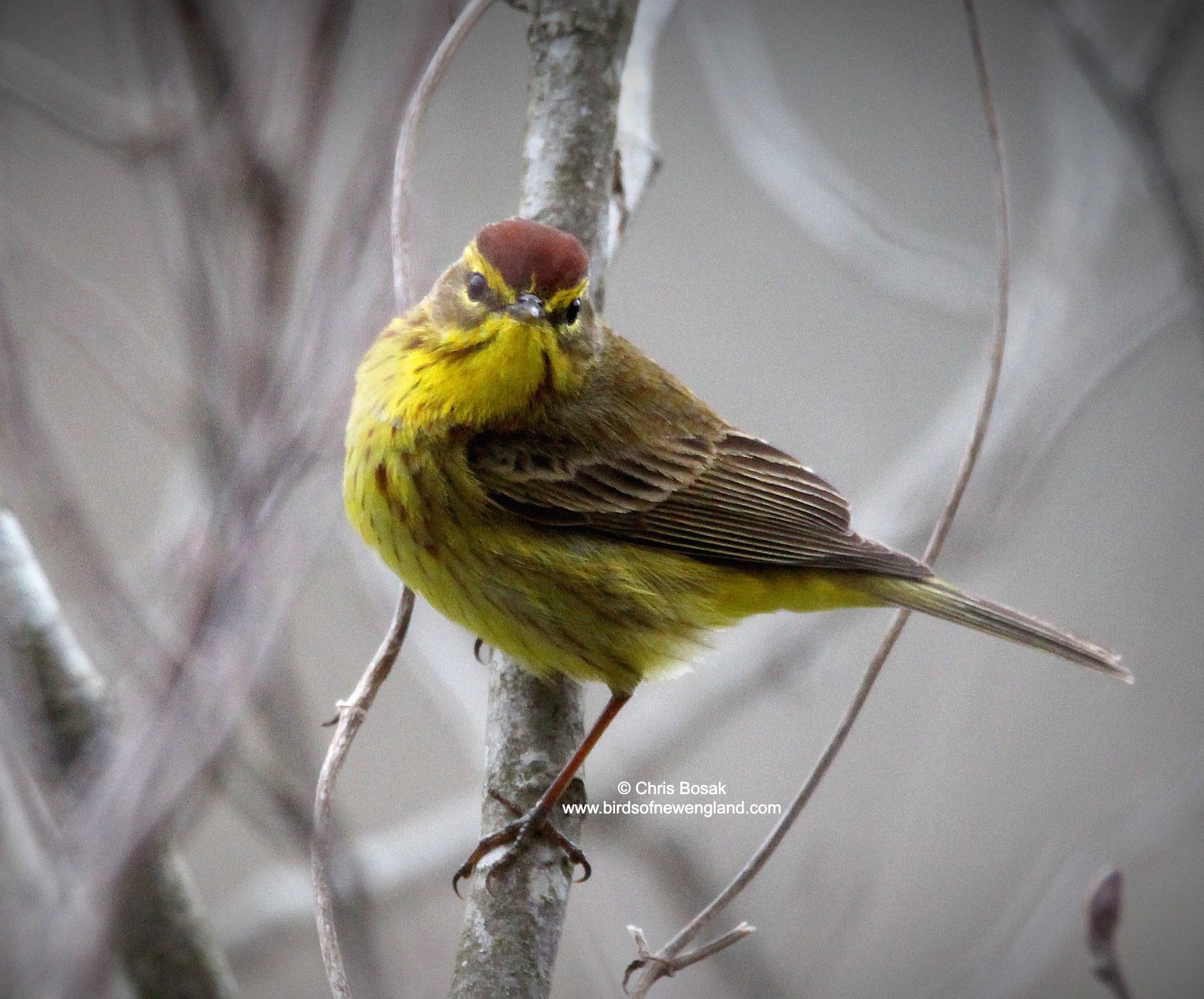
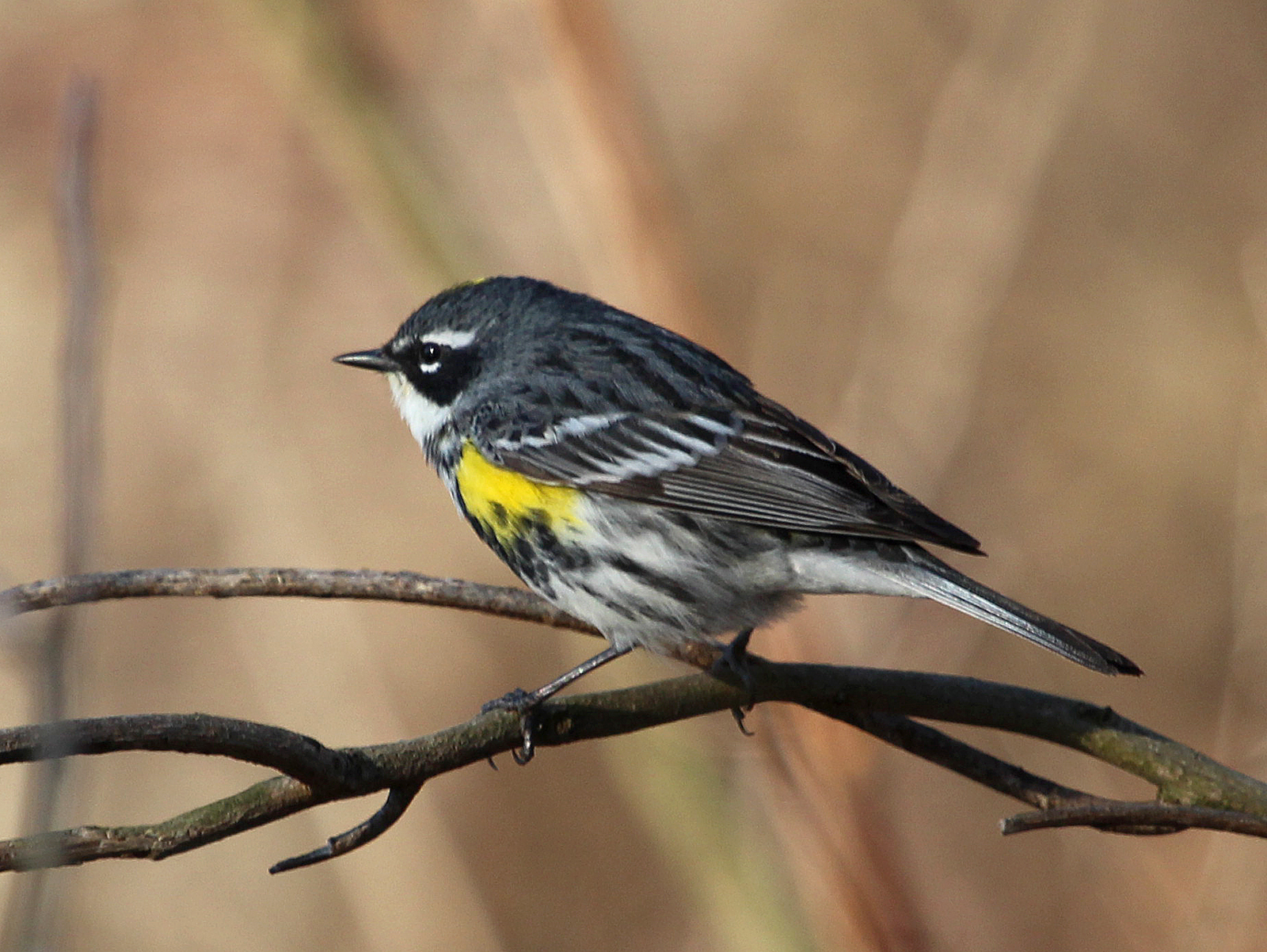
My first warbler (a pine warbler) showed up on March 31. Here are numbers two and three for the year: yellow-rumped warbler and palm warbler, both seen today (Friday, April 11, 2025). More to come in the weeks ahead!
Continue readingPine warblers and palm warblers are typically the earliest warblers to arrive in New England in the spring. This year, the pines showed earlier than usual (at least in my estimation.) I found at least two pine warblers yesterday (March 31, 2025) at Huntington State Park in southern Connecticut. Here’s hoping the rest of the spring migration is as good.
Drop me a line and let me know what you’re seeing out there.

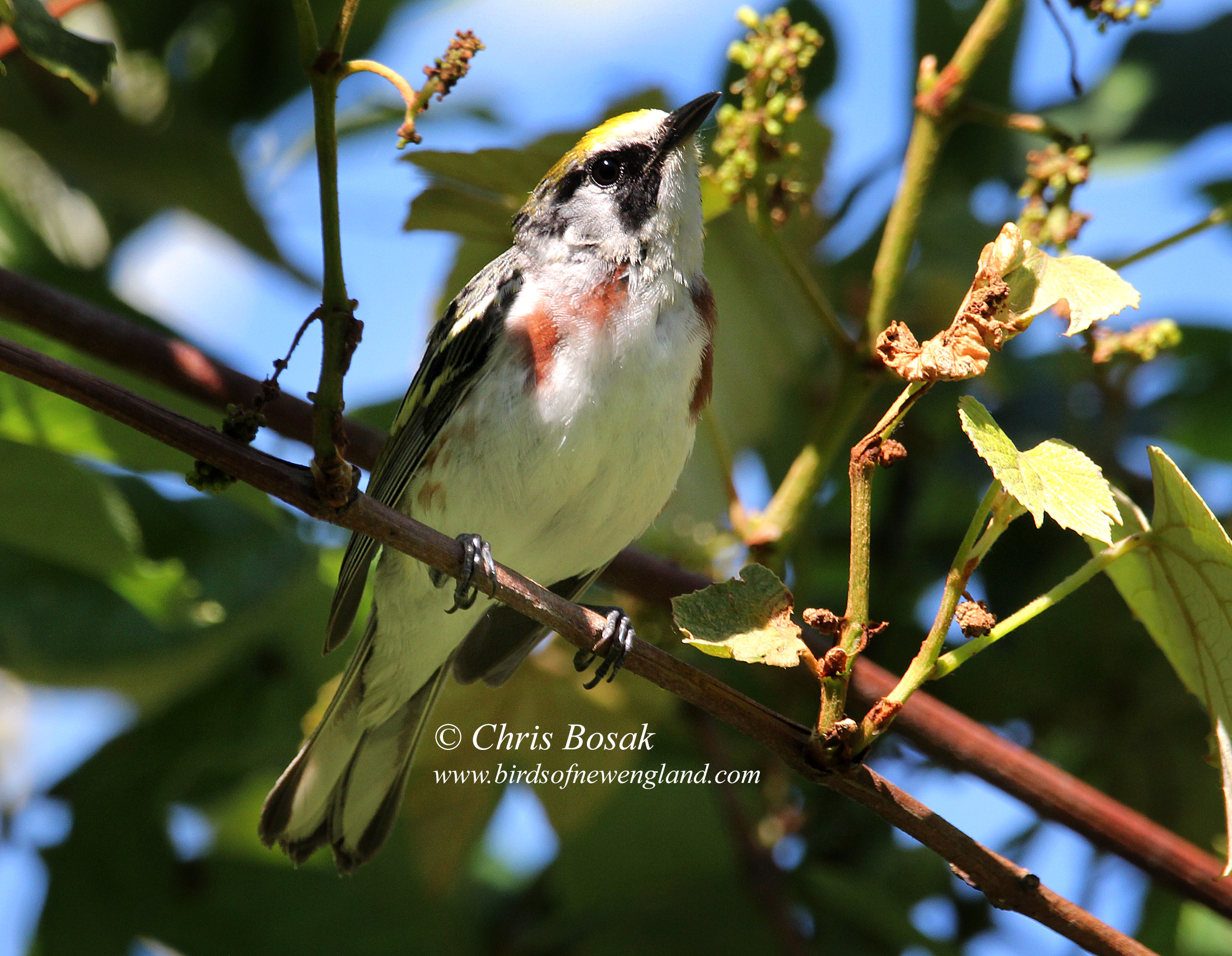
It was one of the better spring migrations I’ve had in a long time. I got out there more than in previous years and visited a greater variety of places.
The big week, of course, was the visit to Erie, Pennsylvania, during the peak of the migration season. I was there for my niece’s wedding but arrived several days in advance of the event to stay with my brother and visit Presque Isle State Park, a birding hot spot. We saw over 70 species of birds over the three separate visits.
I also hit my local New England spots several times a week during migration, starting in late March and going into June. It’s always interesting to see how the spring migration starts with a trickle of very few species and peaks with several dozen species all moving through at once.
Continue reading
When the peak of your favorite hobby lasts only a few weeks each year, you better make the most of that time.
For birdwatchers, that is spring. Specifically, the last week of April and the first two weeks of May. Of course, the spring migration started many weeks ago and will last into June, but the sweet spot is those few weeks.
As luck would have it this year, my niece planned her wedding for mid-May. The wedding was held in my old hometown of Erie, Pennsylvania. I didn’t know it when I was growing up, but Presque Isle State Park in Erie is one of the top birdwatching destinations in the country. Presque Isle is a peninsula jutting into Lake Erie and, in addition to the many birds that nest there, several others use the land as a stopover before crossing over into Canada.
Instead of going home for a long weekend, I took the week off and made a vacation of it. I visited the park for several hours on Monday, Tuesday, and Thursday. Each day I saw something a little different. On Monday’s walk, I saw 51 different species. I did not keep track on Tuesday’s walk as I wanted to focus on photographing some of the warblers.
Continue reading
Here’s a magnolia warbler I encountered during a recent gray morning.

Here are a few more shots of the Louisiana waterthrush I saw the other day. Waterthrushes look like thrushes and even have thrush in their name, but they are actually warblers.
Continue reading Birds of New England.com