
Photo by Chris Bosak
A female Ruby-throated Hummingbird sips juice from a wild berry at Dolce Norwalk Center in summer 2014.
Here’s one I took a few years ago. Hummingbird drinking juice from a berry. Who knew?
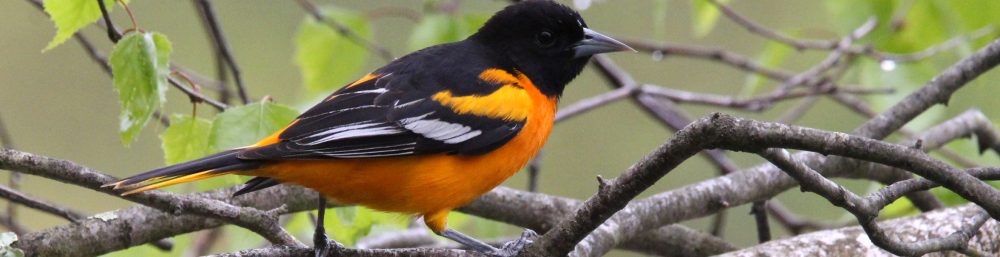
Photo by Chris Bosak
A female Ruby-throated Hummingbird sips juice from a wild berry at Dolce Norwalk Center in summer 2014.
Here’s one I took a few years ago. Hummingbird drinking juice from a berry. Who knew?
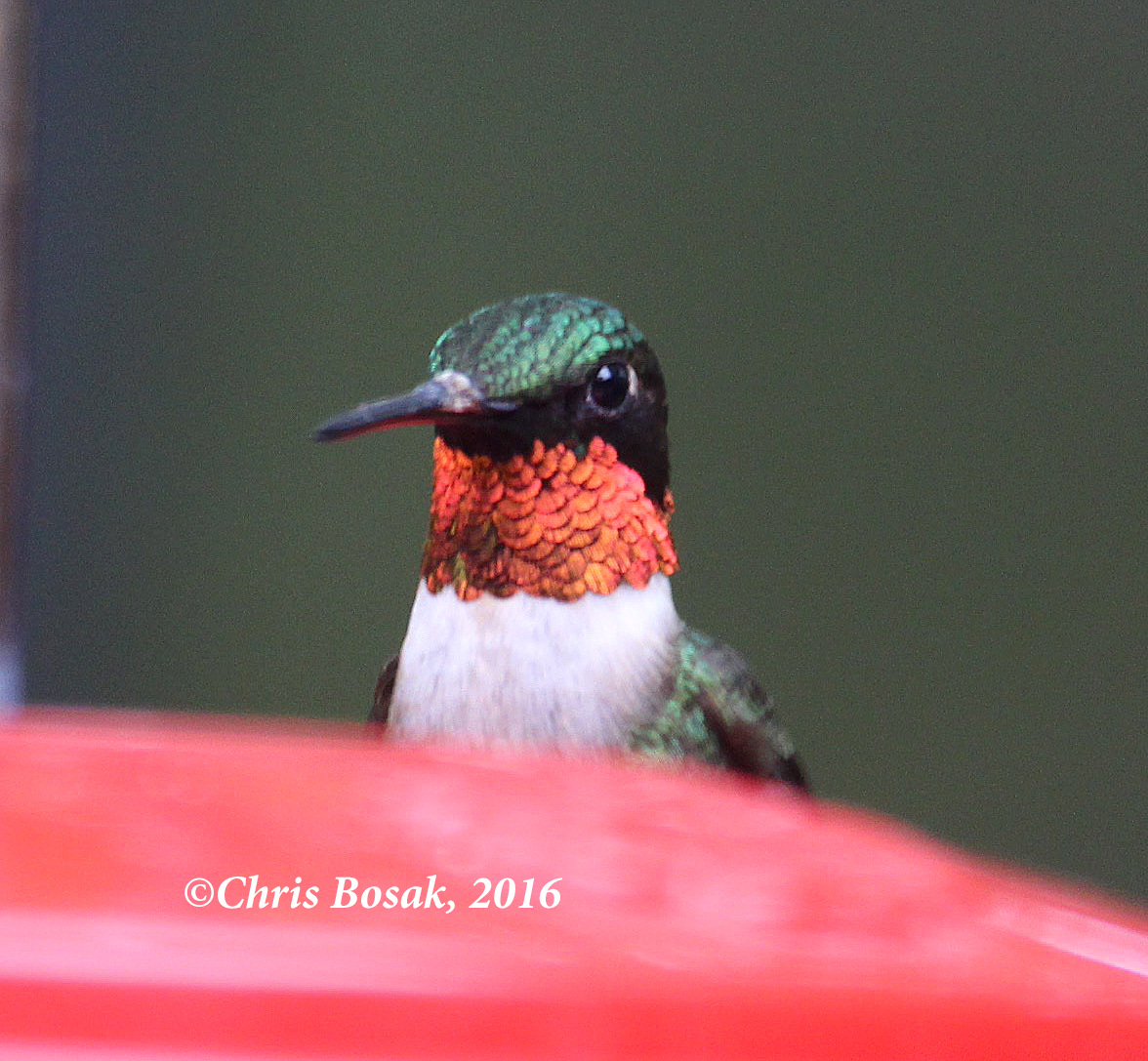
Photo by Chris Bosak
A Ruby-throated Hummingbird eats at a feeder in Danbury, Conn., summer 2016
Updated: Somehow I repeated my first hummingbird photo. Two days into the series and I messed it up already. The photo above is the replacement (the one that should have been there in the first place). Sorry about that. Thanks for the heads up, Wayne.
Here’s is the second of a few posts featuring photos of Ruby-throated Hummingbirds. The male’s throat is red or black or somewhere in between depending on how the light is hitting it.
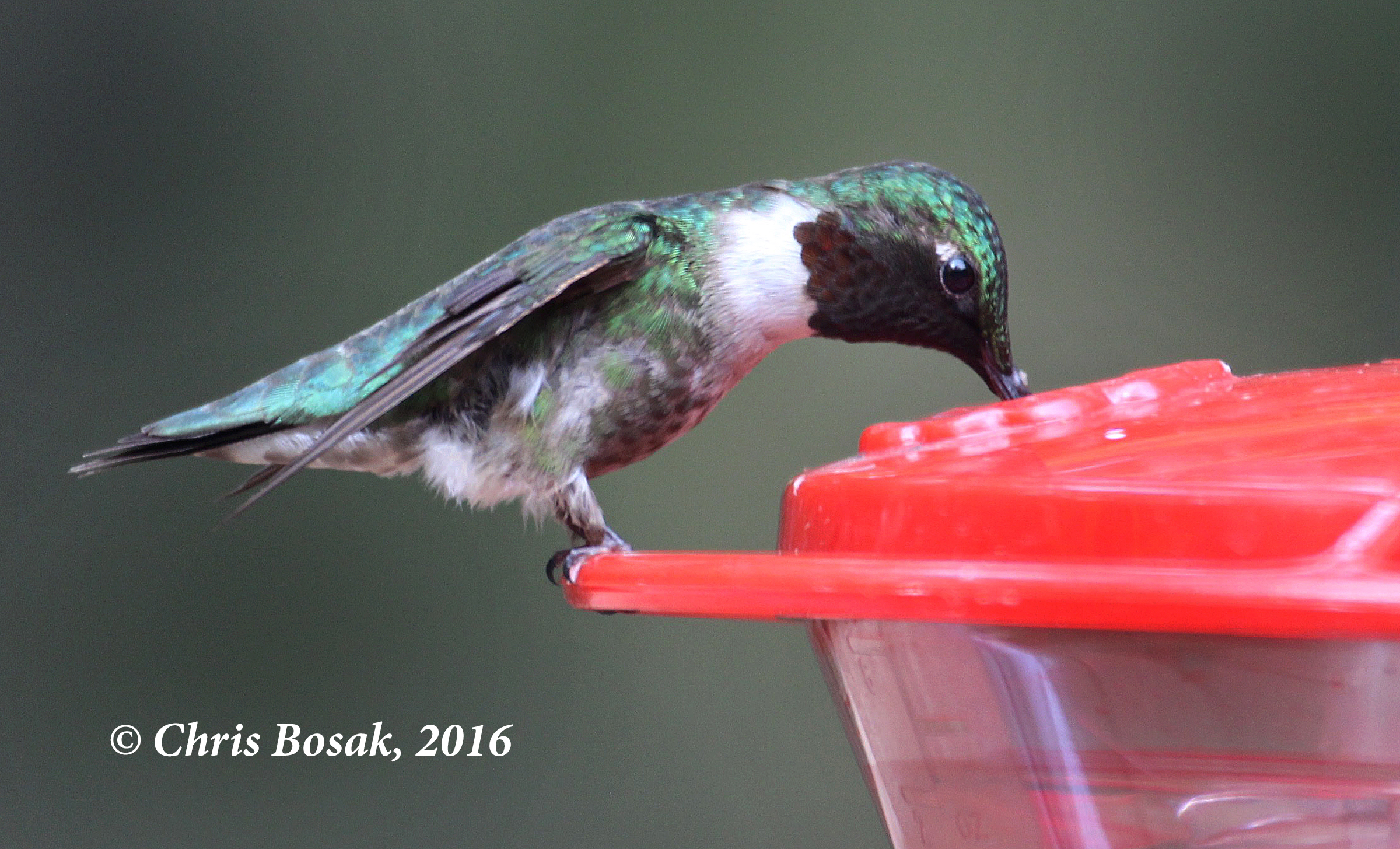
Photo by Chris Bosak
A Ruby-throated Hummingbird eats at a feeder in Danbury, Conn., summer 2016.
Here’s is the first of a few posts featuring photos of Ruby-throated Hummingbirds. A few birds I write about on a regular basis really seem to resonate with readers and the hummingbird is definitely one of them. So why not feature these little birds with a little photo series? Each day I’ll post a new one. Some from this year, some from year’s past.

Photo by Chris Bosak
A Ruby-throated Hummingbird hovers near a feeder in Danbury, Conn., summer 2016
Here’s the latest For the Birds column, which runs weekly in The Hour (Norwalk, Conn.), The Keene (NH) Sentinel and several Connecticut weekly newspapers.
..
The smallest of birds often provide the biggest entertainment.
I’m talking about hummingbirds, of course, and they are big, big on personality even if they are small in stature, weighing in at about an eighth of an ounce. Yes, a small fraction of an ounce, which is the smallest American standard of weight. Thank goodness for the metric system so we can put a whole number on this tiny dynamo. Hummingbirds weight about 2 or 3 grams, about the same as a penny. Not a handful of pennies or five pennies — one penny.
Photo by Chris Bosak
A Ruby-throated Hummingbird eats at a feeder in Danbury, Conn., summer 2016
I have been enjoying immensely watching hummingbirds this spring and summer at my backyard feeder and in the garden now that the flowers have bloomed – at least those that the deer didn’t get to. The only problem is that “my” hummingbirds are very territorial. Usually I see only one male at or near the feeder with the occasional female showing up, too. That was especially true this spring. They are not quite as territorial now, but are still very feisty toward other hummingbirds that show up.
It will be interesting to see what happens in the fall as last year the feeder was dominated by one female. She tolerated nothing from other hummingbirds, even those that dared fly over the house in the general vicinity of the feeder. Will the male remain and dominate, or will he fly off and the female dominate? Or will the male stick around and the female push him out? Or will they tolerate each other and share the sugar water, which is my hope. Or … OK, enough ors for now. As I said, we’ll see what happens.
If you don’t have hummingbirds that act like they own the feeders, you have a greater likelihood of seeing hummingbirds in late summer or fall because of simple mathematics. In the spring the adults pass through or settle in our area. In late sum Continue reading

Photo by Chris Bosak
A young Wood Duck sits on a rock at Woods Pond in Norwalk, Conn., Julyh 2016.
Here’s the latest For the Birds column, which runs weekly in The Hour (Norwalk, Conn.), The Keene (NH) Sentinel and several Connecticut weekly newspapers.
…
I’ll kick off this bird column with a baseball reference. Why not?
A Major League manager once said, and I’m paraphrasing here, “These guys aren’t doing what their baseball cards say they can do.” He meant that he had a group of players who had had great seasons in the past, but were underperforming that particular year.
Well, the same can be said for birds in field guides. I have mentioned in previous columns that you can’t always trust field guides, just like you can’t always trust the statistics on the back of a baseball card. Some of the newer guides, such as the ones by Sibley and Crossley, are much more trustworthy. The Peterson Continue reading
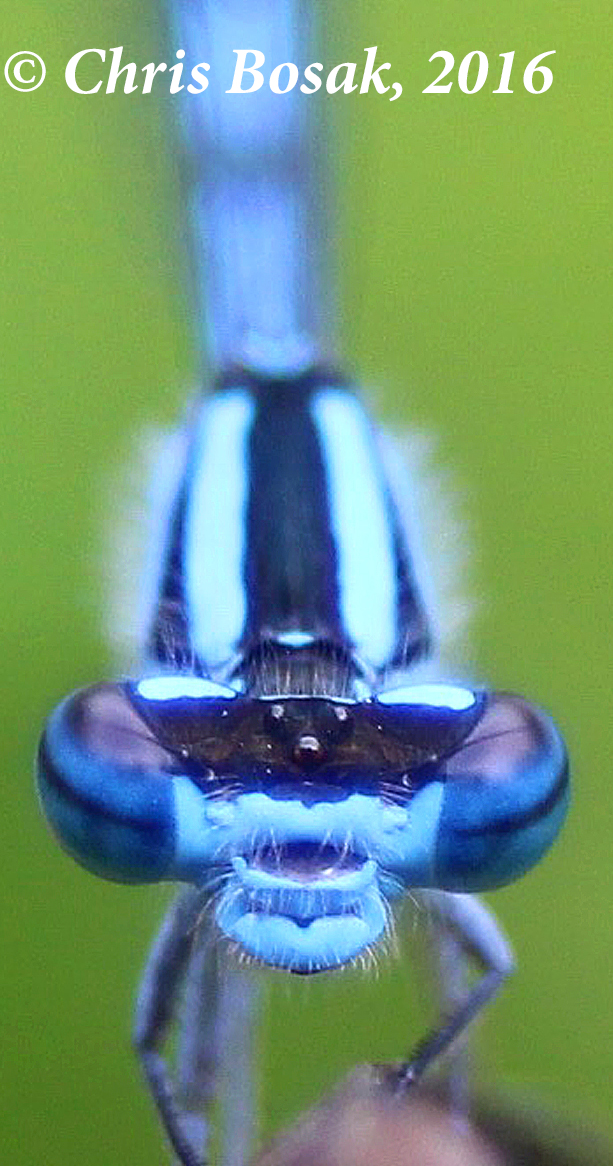
Photo by Chris Bosak
An Azure Damselfly rests on a twig near a pond at Little Merganser Lake in Danbury, Conn., summer 2016.
The other day I posted a few photos of an Azure Damselfly. Well, here are those photos cropped a little tighter.
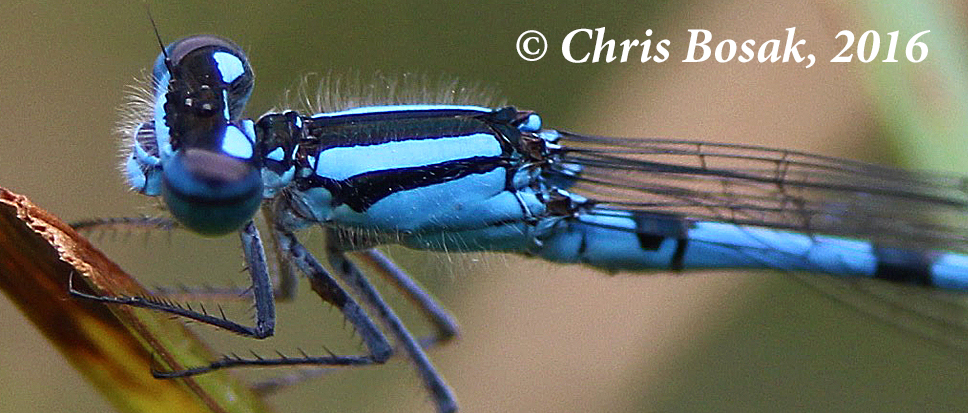
Photo by Chris Bosak
An Azure Damselfly rests on a twig near a pond at Little Merganser Lake in Danbury, Conn., summer 2016.
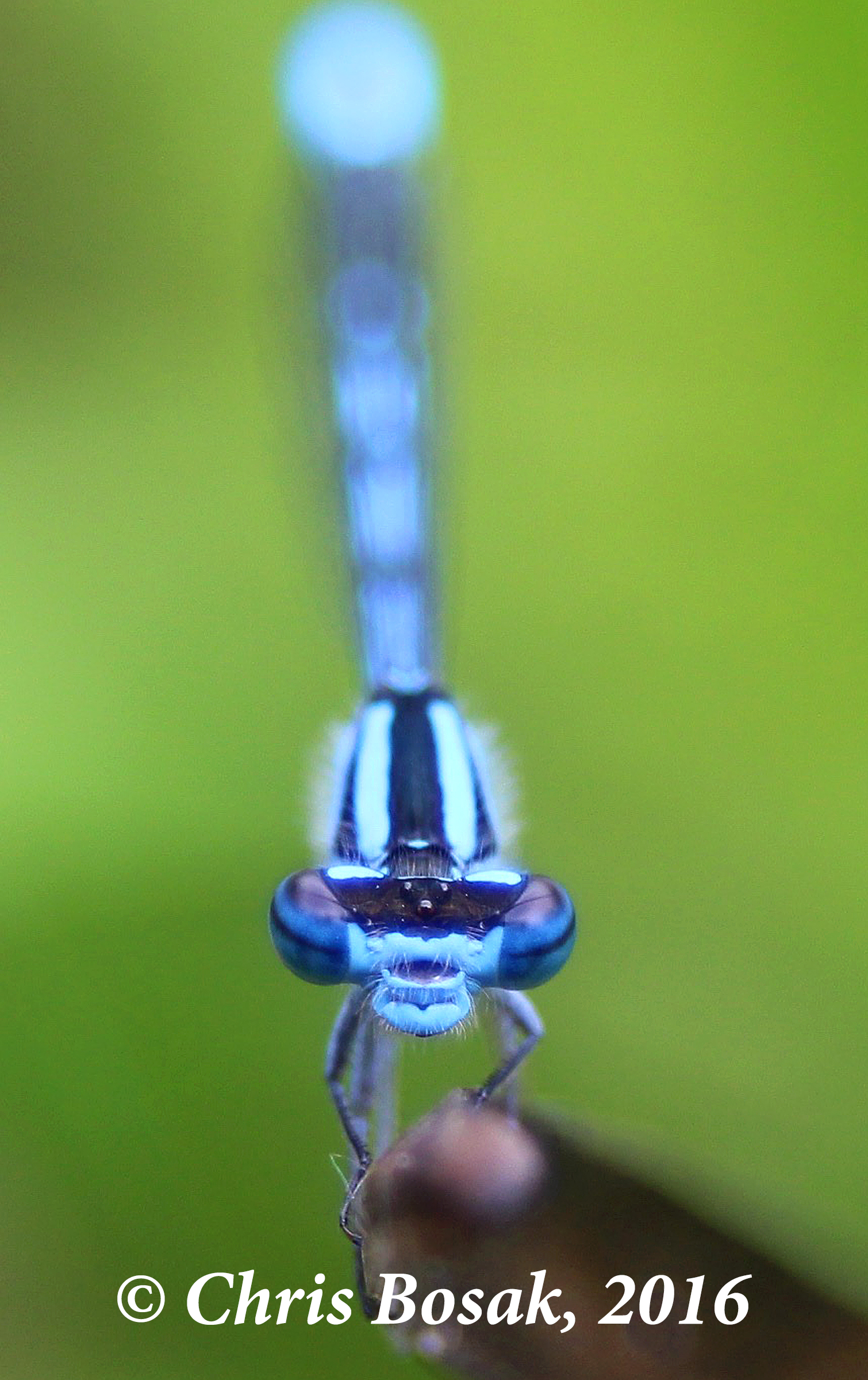
Photo by Chris Bosak
An Azure Damselfly rests on a twig near a pond at Little Merganser Lake in Danbury, Conn., summer 2016.
Go to a pond on a summer day and there’s always something interesting to see. Maybe it’s not a bird, or mammal, but something is always around to catch your attention. On this day it was Azure Damselflies, and lots of them. Here are a photos of these interesting creatures.
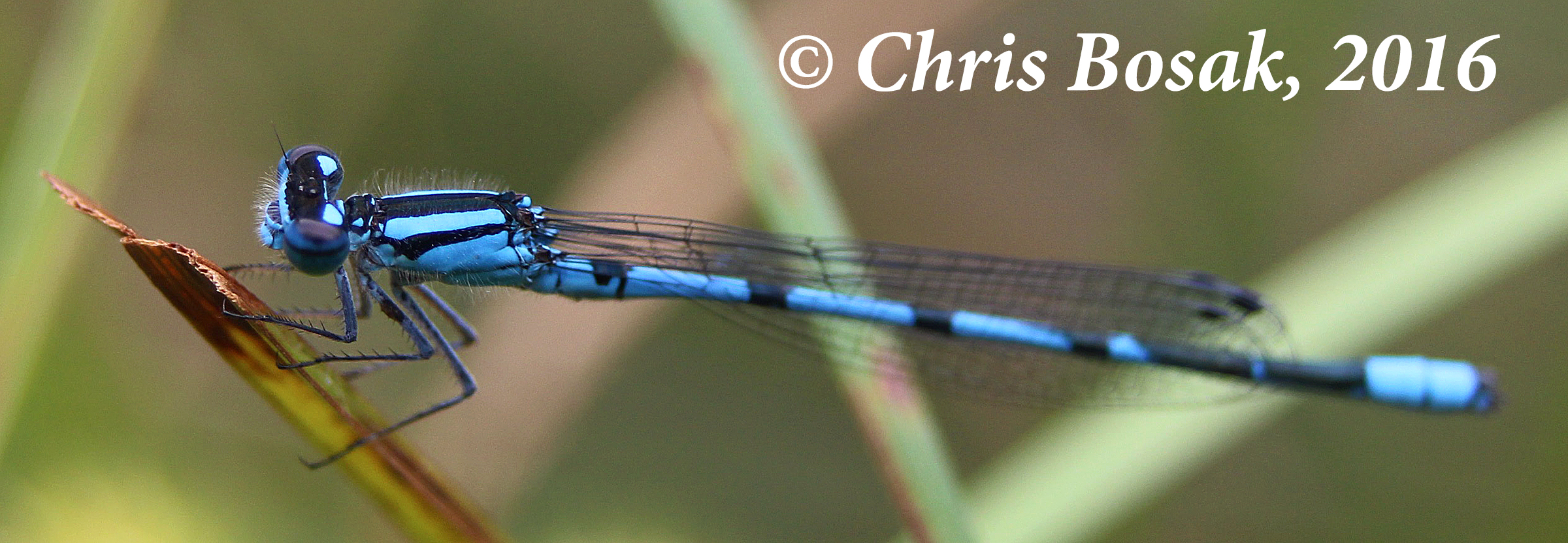
Photo by Chris Bosak
An Azure Damselfly rests on a twig near a pond at Little Merganser Lake in Danbury, Conn., summer 2016.

Photo by Chris Bosak
A Scarlet Tanager sings in a tree in Danbury, Conn., July 2016.
Here’s the latest For the Birds column, which runs weekly in The Hour (Norwalk, Conn.), The Keene (NH) Sentinel and several Connecticut weekly newspapers.
…
Thankfully the trees are fully leafed out. My neighbors probably would have started to wonder about me. Of course, that process likely started long ago.
I found myself standing on my roof, camera in hand, keeping an eye on a male scarlet tanager that was singing his heart out among the oaks.
I had noticed the brilliant red-and-black bird a few days before. I was writing at my computer at home when I spied him through the window eating berries from those ubiquitous wild raspberry bushes, which are really invasive wineberries from Asia. The bird was impossible to miss with that beaming red plumage that puts cardinals to shame. (No offense to our beloved cardinals.) The tanager was gone by the time I opened the front door for a better look.
Photo by Chris Bosak
A Ruby-throated Hummingbird hovers near a feeder in Danbury, Conn., summer 2016
All summer a lone male Ruby-throated Hummingbird has been visiting the feeder in the back yard. This week, however, a female and younger hummingbird showed up as well. Only one eats at a time, however, as the adults are very territorial.
Photo by Chris Bosak
A Ruby-throated Hummingbird eats at a feeder in Danbury, Conn., summer 2016
You didn’t really think the Scarlet Tanager posts would stop at two, did you? Here’s a little video I put together on this brilliant New England bird …
 Birds of New England.com