Turkey facts for Thanksgiving

The text below has been shamelessly stolen from a U.S. Fish and Wildlife Service and National Wildlife Refuge System press release — but, hey, that’s why they send press releases, right? The photo, however, is mine.

Happy Thanksgiving everybody.

Photo by Chris Bosak Wild Turkey in New England, Jan. 2013.

Photo by Chris Bosak
Wild Turkey in New England, Jan. 2013.

Eight Wild Facts about Wild Turkeys
#6. That Funny-Looking Bird is Faster Than You

So you thought there was nothing to know about turkeys except whether you liked drumsticks or white meat. Think again.

  1. Enough with gobble, gobble. Turkeys also cluck http://bit.ly/1sfVooH and purr http://bit.ly/1sfVooH.
  2. Turkey droppings tell a bird’s sex and age. Male droppings are j-shaped; female droppings are spiral-shaped. The larger the diameter, the older the bird.
  3. Feather-hanger: An adult turkey has 5,000 to 6,000 feathers – count them! – on its body.
  4. Tom turkeys aren’t the only ones that swagger and fan their tail feathers to woo mates and ward off rivals. Some hens strut, too.
  5. Crunchy treats. Young turkeys – poults – scarf down insects like candy. They develop more of a taste for plants after they’re four weeks old.
  6. They may look off-kilter – tilting their heads and staring at the sky –yet but they’re fast. Turkeys can clock more than 12 miles per hour.
  7. Move over, American bald eagle. Ben Franklin called the wild turkey a “bird of courage” and thought it would make a better national symbol.
  8. Wild turkeys are not hard to find. National wildlife refuges are great places to look —while you enjoy a stroll in nature and emerge looking less like a butterball yourself. Here are some favorite turkey hideouts:

FLORIDA
St Marks National Wildlife Refuge
To boost your chances of seeing turkeys, get out of your car and walk. “Turkeys are sensitive to the movement of vehicles,” says Ranger David Moody. Wearing camo colors might help, too. The refuge permits bow hunting the first two weeks in November. Then it closes to hunting until December 13. Almost 50 miles of the Florida National Scenic Trail go through the refuge. Turkeys like the open terrain of the longleaf pine sandhill ecosystem along the trail. $5 entrance fee.

GEORGIA
Piedmont National Wildlife Refuge
Look for turkeys along 50 miles of gravel road, including five-mile-long Wildlife Drive.  You might also see them off Round Oak Juliette Road, a scenic (and paved) byway. Or try one of the refuge’s five hiking trails. No entrance fee. (Note: the refuge is closed for a deer hunt Saturday, Nov. 22.)

ILLINOIS
Wild Turkey Trail — Crab Orchard National Wildlife Refuge
Easy to moderate 1.7- mile trail leads through woods and offers a fine chance of seeing wild turkeys. For more of a challenge, take the connecting 2.2-mile Rocky Bluff Trail. Entrance fee: $2 per vehicle.

MASSACHUSETTS
Parker River National Wildlife Refuge
Several short foot trails give you a chance to glimpse wild turkeys. You might also spy some along Wildlife Drive. Entrance fee: $5 per vehicle.

MINNESOTA
Hillside Trail and Long Meadow Lake Trail— Minnesota Valley National Wildlife Refuge
From the Bloomington visitor center, the half-mile Hillside trail connects to the Long Meadow Lake Trail. Follow it around the floodplain wetland, keeping your eyes out for wild turkeys. No entrance fee.

Sherburne National Wildlife Refuge
The refuge has a “healthy population” of the skittish wild birds, says deputy manager Greg Dehmer. Look for them along 7.5-mile Wildlife Drive, two refuge hiking trails, and in prairie fields beside county roads that run through the refuge. No entrance fee.

NEW MEXICO
Bosque del Apache National Wildlife Refuge
The North Auto Tour Loop is a good place to spot some of the hundreds of Rio Grande turkeys found here. An even better place is the Intermittent Auto Tour Road, open Thanksgiving weekend from noon Nov. 28, through noon Dec. 1. (The route will also be open Dec. 26-29 and Jan. 16-19, 2015.) Or try your luck on any of nine refuge foot trails. Entrance fee: $5 per vehicle.

NEW YORK
Iroquois National Wildlife Refuge  
Feeder Road takes you on a scenic 3.5-mile drive into the refuge, passing fields and grasslands that are favorite turkey hangouts. Double back to exit. Hikers can walk the road or sample five other hiking trails. No entrance fee.

SOUTH CAROLINA
Carolina Sandhills National Wildlife Refuge
The 9-mile Wildlife Drive passes many woods and fields where you might spot turkeys, especially in mornings and late afternoons. Or lose the wheels and walk any of seven hiking trails along the drive. No entrance fee.

TEXAS
Hagerman National Wildlife Refuge
Look out for wild turkeys crossing Refuge Road as you drive in the main entrance. Pick from five refuge hiking trails: Raasch Trail is a good bet for seeing wild turkeys. There’s also a Wildlife Drive of about three miles. No entrance fee.

Refuge trails are open sunrise to sunset daily, even on Thanksgiving Day when refuge visitor centers will be closed.  Free trail maps are available outside the visitor center or at a refuge entrance kiosk. For details on Refuge System trails, visit http://go.usa.gov/w9O.
Thoughts from readers — what they are seeing out there

I often ask readers of my bird column, For the Birds, what they’ve been seeing out there in terms of interesting bird sightings. Every once in a while I compile the sightings and use them for my weekly birdwatching column. Here’s the latest, which ran last week in The Hour (Norwalk, CT) and this week in The Keene (NH) Sentinel.

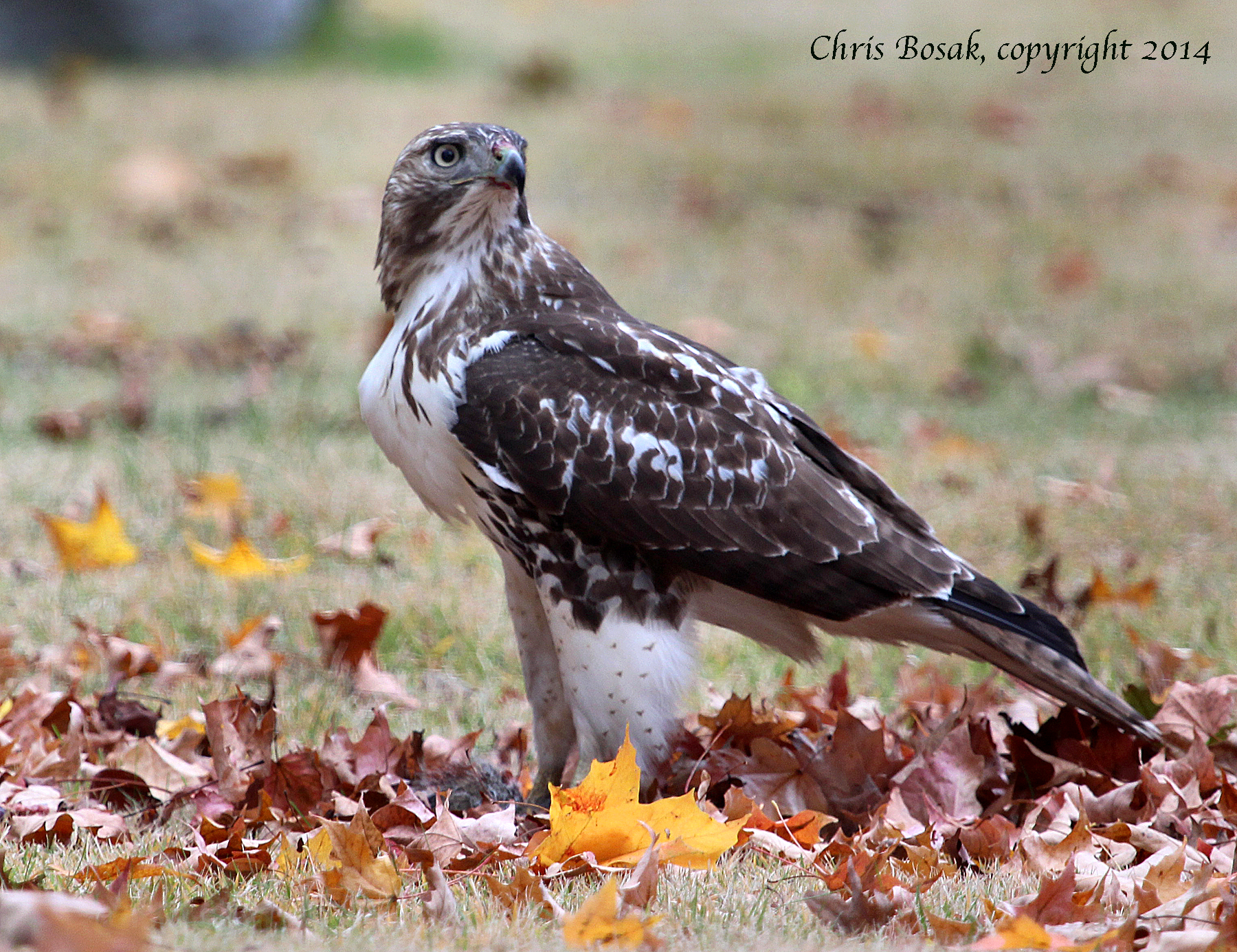
Photo by Chris Bosak A Red-tailed Hawk eats a Gray Squirrel in a cemetery in Darien, Conn., Oct. 2014.

Photo by Chris Bosak
A Red-tailed Hawk eats a Gray Squirrel in a cemetery in Darien, Conn., Oct. 2014.

I often ask readers: “What are you seeing out there?” Well, the answers I get are just as compelling and pertinent as what I see and write about each week, so here are some tidbits that readers have shared over the last few weeks. Why not start with Bald Eagles? Angela of Norwalk and Judy of Westport have written recently about Bald Eagle sightings. Angela saw her eagle in South Norwalk. The large bird of prey flew by her window and landed in an oak tree across the street where she often sees Osprey perch. “I hope it takes up residence here for the winter. I would be thrilled to see it again,” she wrote. Judy has seen her eagle perched high in a pine tree along the Saugatuck River. At one point, she witnessed the bird dive to the river and pull up a fish. Bald Eagles do visit more frequently in the winter, so perhaps this will be a good winter to see our national bird around here. A slightly smaller bird of prey has also been spotted several times by readers. I received a letter from Danny from Hampshire College who said an unidentified predator has been picking off chickens at the college’s farm. Based on the photo he sent, it looks a like a Red-tailed Hawk is the culprit. Gary from New Hampshire wrote to say he has seen Red-tailed Hawks on a few occasions catch pigeons near his home. Andy also shared a sighting of a Red-tailed Hawk in his backyard. He sent a photo, too, with the hawk peering down with a menacing look. He also sent a photo of an albino or leucistic Dark-eyed Junco. The photos, and other photos submitted by readers, may be found on my website http://www.birdsofnewengland.com on the “Reader Submitted Photos” page. I received an interesting phone call from Leona, another New Hampshire reader, who shared a story about crows in her backyard. “Bird brain” is often used as an insult, but we all know birds can be pretty smart, especially crows. Leona’s crows found a way to save trips while gathering and carrying away food. Leona put out crackers for the birds and instead of grabbing them and taking them away one at a time, the crows would stack the crackers and fly away with a bill full. Smart birds indeed. Finally, Joan shared a story about a lucky and determined chickadee. She saw the little bird hit her glass storm door. Expecting the worst, she approached the door to discover that the chickadee had actually gotten its foot stuck in a hinge of the door. Not wanting to let the bird fend for itself in that grave situation she grabbed a plastic flower pot and put it over the tiny bird. She then used a stick to free the bird’s leg. Joan set the flower pot on its side and took a few steps away to watch the bird. “He didn’t seem to be moving but was still breathing,” she wrote. “I then took a small container of water and dripped just a drop or two on his beak, which he quickly took in.” Here’s what happened next: “I was trying to decide what I would do with him overnight when all of a sudden, he moved his head, looked around at me and flew up onto a branch of a nearby tree about 15 feet up. He sat there for a minute, tipped his head to one side, gave a little “chhpp” and flew back toward the woods.” Joan concluded that “it’s nice to know there are still small wonders.” I totally agree. So, what have you been seeing out there in the natural world? Drop me a line and let me know. For the Birds runs Thursdays in The Hour. Chris Bosak can be reached at bozclark@earthlink.net. Visit his website at birdsofnewengland.com.

Duck (watching) season begins in New England

Photo by Chris Bosak A female Bufflehead swims in Gorham's Pond, Nov. 2014.

Photo by Chris Bosak
A female Bufflehead swims in Gorham’s Pond, Nov. 2014.

Ducks are my favorite family of birds to watch in New England. The migration starts in October and many waterfowl may be seen in open water right up through April. For me, it makes our harsh winters that much more bearable.

With that said, here’s the first of what will likely be plenty of waterfowl photos I take (and post) this fall/winter/early spring season. It’s not a great photo, but it’s a start.

Female Buffleheads are much less dramatic looking their male counterparts, which feature contrasting black (or, depending on the sun’s angle, blue, purple or green) and white plumage.

Today at the feeder

Photo by Chris Bosak

Photo by Chris Bosak
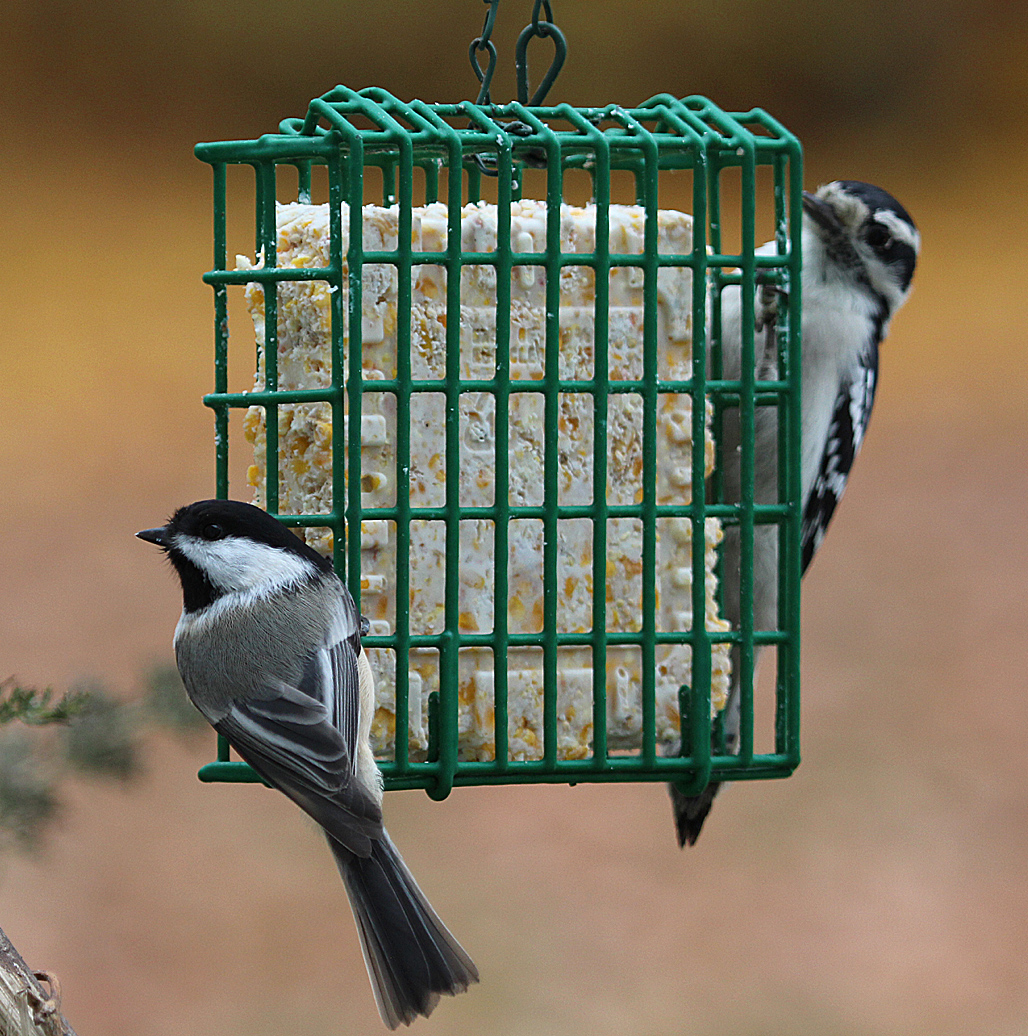
A Black-capped Chickadee and Downy Woodpecker share the suet feeder, Nov. 16, 2014.

It’s been a particularly busy day at the feeder today. There haven’t been any out of the ordinary species, just lots of backyard favorites. Here are a few photos from the action. Not pictured, but seen visiting today are: American Goldfinch; Northern Cardinal; Hairy Woodpecker, Red-bellied Woodpecker; Dark-eyed Junco; White-throated Sparrow; Blue Jay and American Crow. No nuthatches today yet … odd.

(Author’s note: OK, got my nuthatch. All is good.)

More photos are below. Click on “continue reading.”

Thanks for visiting http://www.birdsofnewengland.com

Continue reading

A few more Hermit Thrush photos; and a link to column

Photo by Chris Bosak A Hermit Thrush perches on a branch at Selleck's/Dunlap Woods this fall.

Photo by Chris Bosak
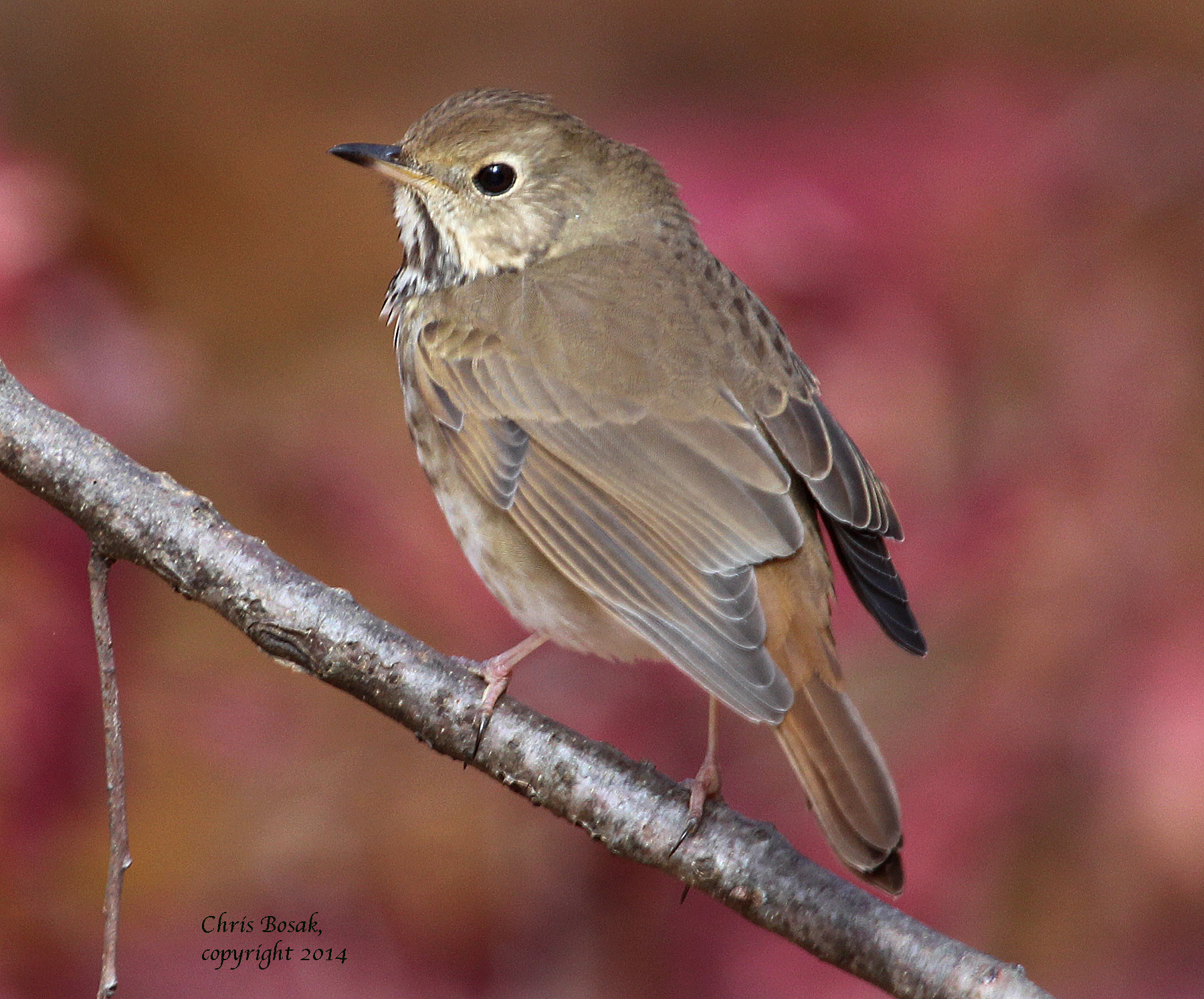
A Hermit Thrush perches on a branch at Selleck’s/Dunlap Woods this fall.

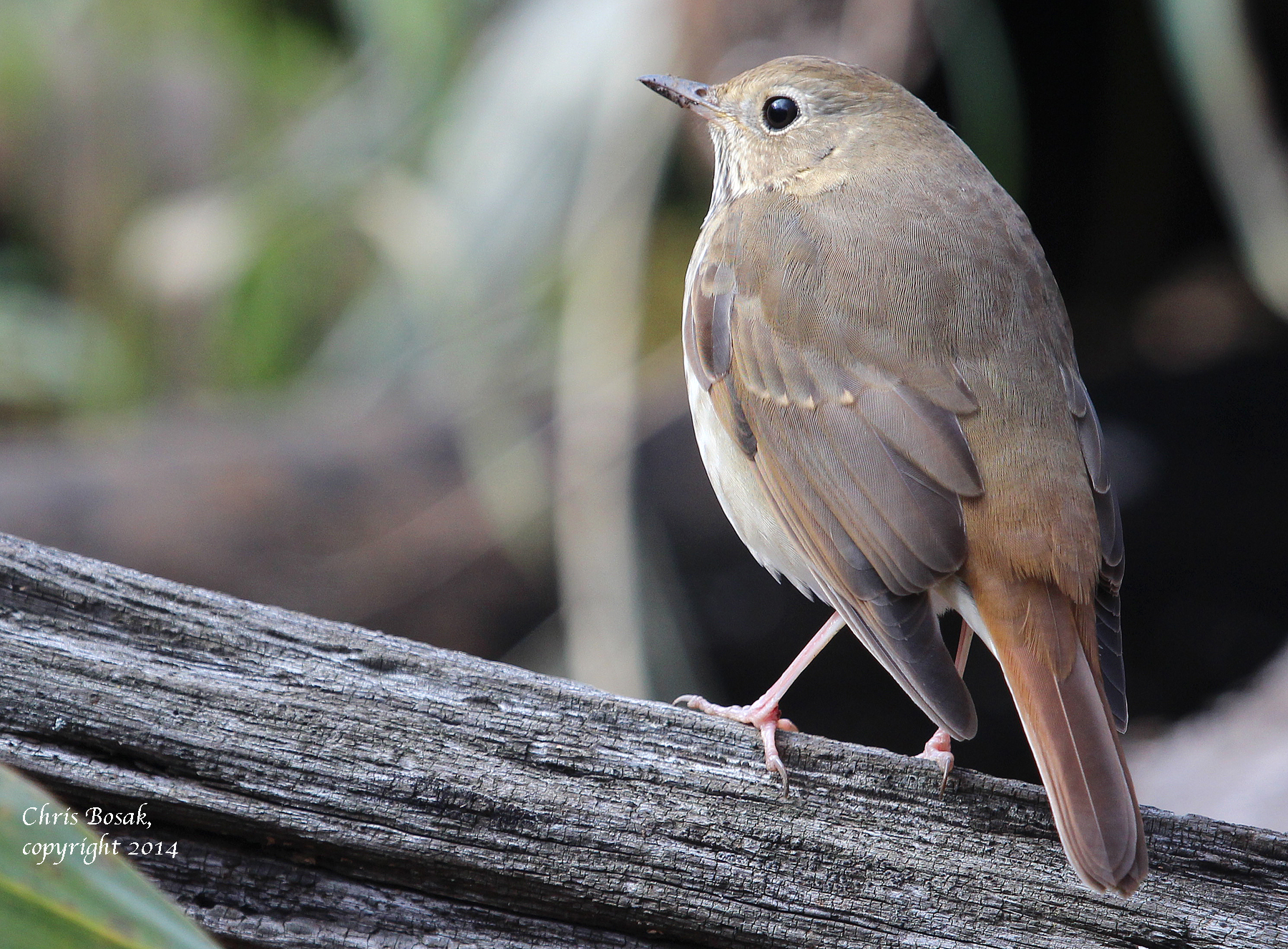
Here are a few more photos of Hermit Thrushes, a species profiled in my last post a few days ago. Also below is a link to my latest For the Birds column, which appears weekly in The Hour (Norwalk, CT) and The Keene Sentinel (Keene, N.H.)

Here’s the link.

Photo by Chris Bosak A Hermit Thrush rests on a log at Selleck's/Dunlap Woods this fall.

Photo by Chris Bosak
A Hermit Thrush rests on a log at Selleck’s/Dunlap Woods this fall.

Hermit thrushes abound on latest bird walk

Photo by Chris Bosak A Hermit Thrush perches on a branch at Selleck's/Dunlap Woods .

Photo by Chris Bosak
A Hermit Thrush perches on a branch at Selleck’s/Dunlap Woods .

I can’t speak for how well the Hermit Thrush population is doing in general, but the last bird walk I took yielded a lot of these handsome birds. I was walking through Selleck’s/Dunlap Woods in Darien (Conn.) with my buddy Larry Flynn and the thrushes were by far the most commonly seen bird. At one point we had five or six Hermit Thrushes in one bush. I’ve seen plenty of Hermit Thrushes in my day, but never that many in the same bush.

As we walked along the trails, Hermit Thrushes popped up here and there, and pretty much everywhere. The birds, however, were silent — other than their little feet rustling among the fallen leaves. They didn’t sing their famous flute-like song because it’s the fall migration. During the breeding season (spring and summer) it’s a treat to hear their song echo throughout the woods.

I mentioned before than I can’t speak for how the population is doing overall. Well, that was a white lie because I can, at least by crediting another source. Hermit Thrushes, thankfully, are doing well as a species. In fact their numbers have been rising since 1966, according to the North American Breeding Bird Survey.

Hermit Thrushes are probably the most commonly seen thrush in New England, but there are several types of thrushes — and they can be very difficult to tell apart. The Wood Thrush and Veery look somewhat different than the Hermit Thrush and are fairly easy to differentiate. However, species such as Bicknell’s Thrush, Swainson’s Thrush and Gray-checked Thrush pose a tougher ID challenge and it takes a trained eye to pick out those species.

Larry and I are pretty certain that what we were seeing were all Hermit Thrushes. The next walk, however, may yield nary a Hermit Thrush. That’s the joy of migration — and birding in general.

Feel free to leave a comment …

In full-hearted agreement

Screen shot 2014-11-10 at 2.28.37 PM

The most recent newsletter of the Cove Island Wildlife Sanctuary — a great spot not too far from my house — is not written by Dave Winston as it usually it, but rather a tribute to Dave and the hard work he does for the Sanctuary. Dave, along with many others, was instrumental in creating the Sanctuary in the first place and continues to maintain and nurture the grounds. I agree that a tribute was in order (not that anyone needed my approval), so here’s the link to the newsletter. Good job and thanks Dave.

Here’s the link.

We need more Titmice

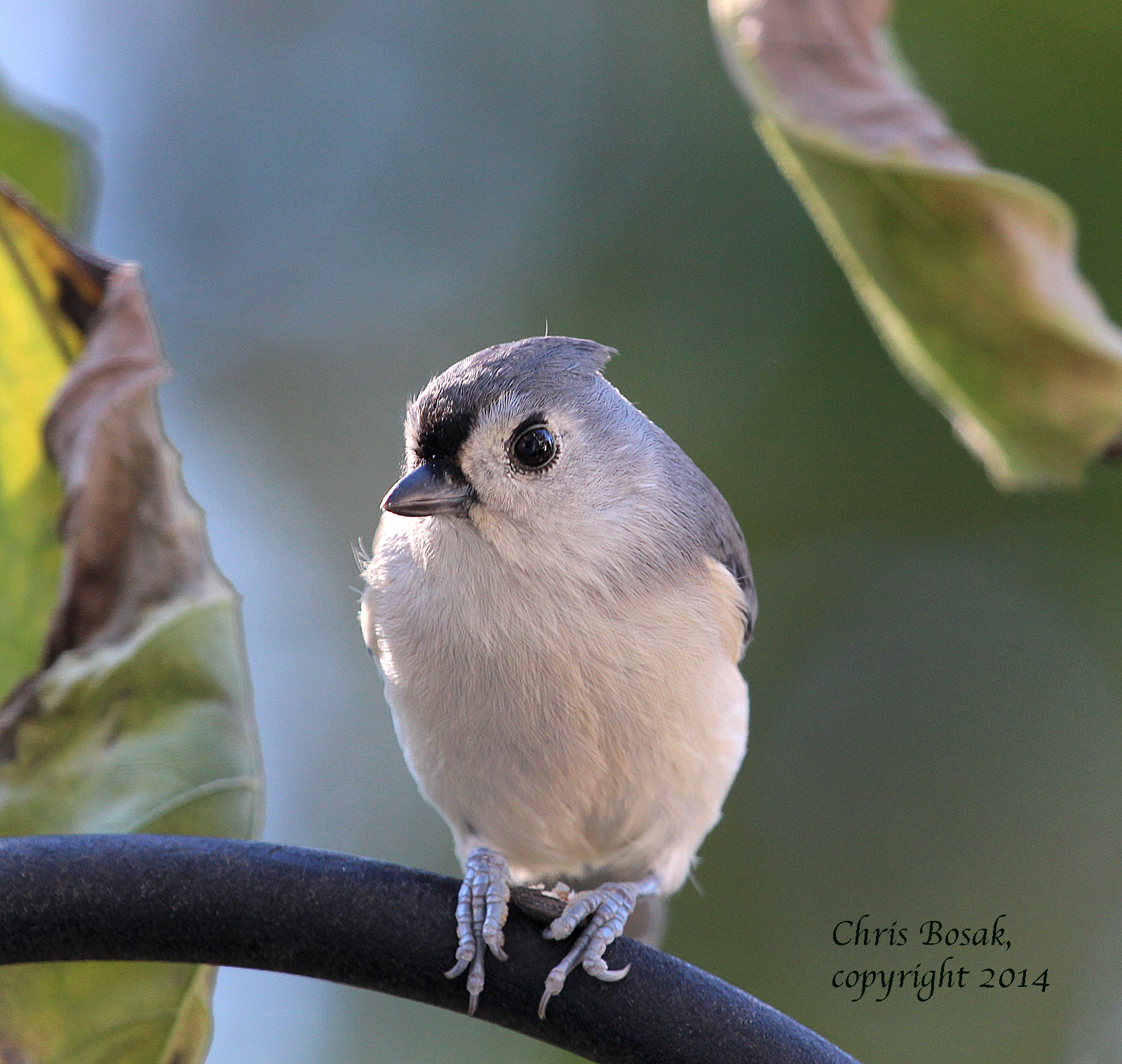
Photo by Chris Bosak A Tufted Titmouse perches on a pole near a birdfeeding station, Oct. 2014.

Photo by Chris Bosak
A Tufted Titmouse perches on a pole near a birdfeeding station, Oct. 2014.

Last week I posted a photo of Tufted Titmouse that I saw outside my window at my birdfeeding station. It kicked off a short series of photos I posted of common backyard feeder birds.

But, of course, I had more than just one photo of Tufted Titmice. So here are a few more photos of this small and lovable blue-gray bird. So far this fall Tufted Titmice have been the most numerous and reliable birds at my feeder. I can’t complain about that.

More photos below:

Continue reading

Nice young buck

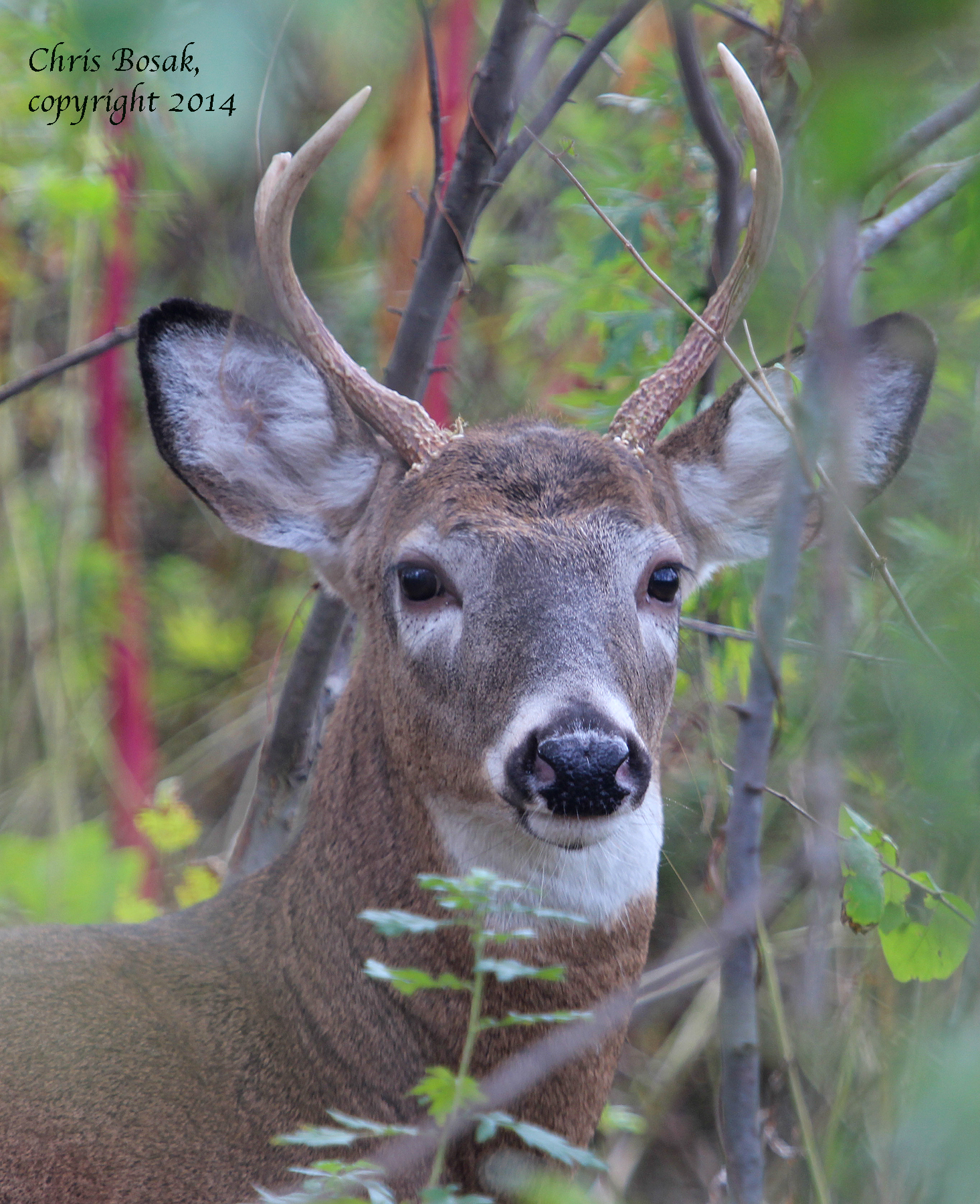
Photo by Chris Bosak A young White-tailed Deer in Stamford, Oct. 2014.

Photo by Chris Bosak
A young White-tailed Deer in Stamford, Oct. 2014.

I was looking for birds, of course, but this young buck (literally) was just off the trail and seemingly unfazed by my presence, so I grabbed a few shots of him. You never know what you’ll see out there. I found this guy at Cove Island Wildlife Sanctuary.

Feel free to share your bird and other wildlife sightings and/or photos. Send them to bozclark@earthlink.net