Good news from Connecticut beaches

Photo by Chris Bosak A Piping Plover preens at Milford Point in spring of 2014.

Photo by Chris Bosak
A Piping Plover preens at Milford Point in spring of 2014.

Here’s some good news from Connecticut Audubon regarding the success of shorebirds nesting on CT beaches. The nesting areas are monitored by volunteers and staff of the Audubon Alliance, a partnership with Connecticut Audubon Society(standalone organization), Audubon Connecticut (state chapter of national Audubon), CT DEEP, and Roger Tory Peterson Institute of Natural History. The main focus of the monitoring and study are piping plovers and least terns, as well as American oystercatchers.

I was a monitor years ago when I worked nights and loved it. There’s nothing being the first one to discover a piping nest. I use the word “nest” lightly as it’s nothing more than a slight indentation in the rocky/sandy beach. The birds and eggs Continue reading

Squirrel in pumpkin

Photo by Chris Bosak
A gray squirrel finds a free meal in a Halloween pumpkin in New England.

I’m sure there’s a funny caption to be had for this photo, but I can’t think of it right now. I caught this guy red-handed and looking guilty as anything as he ate the remnants of a pumpkin left over from Halloween. Feel free to send me your caption …

Another apple visitor

Photo by Chris Bosak
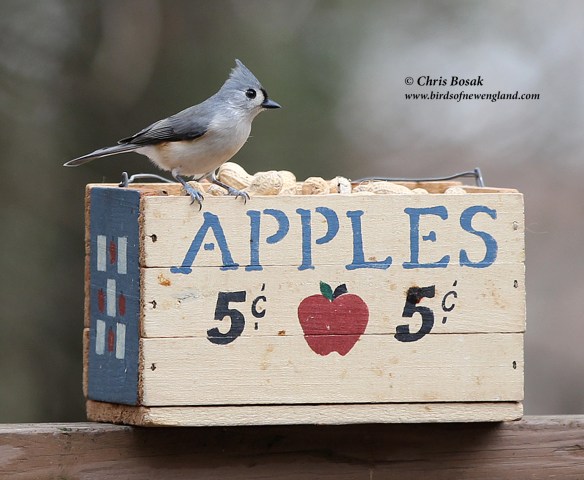
A tufted titmouse checks out a box for peanuts in New England, fall 2019.

This cool, November day seemed like a perfect time to add another apple photo — even though apple season in New England September and October. Here’s a link to the original apple photo.

More kinglets!

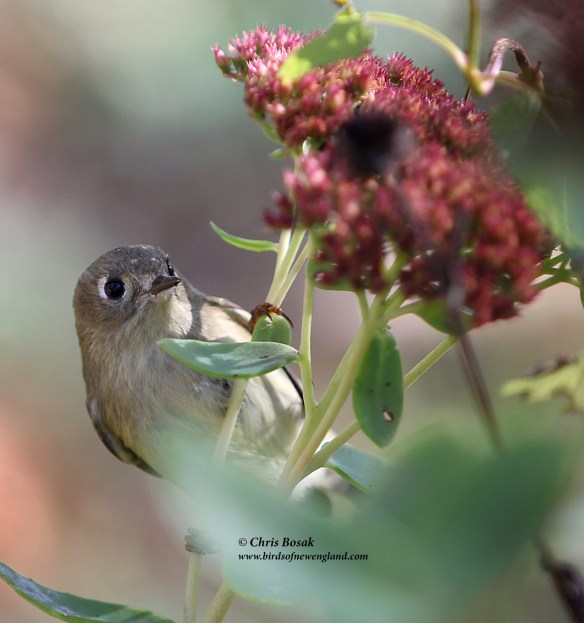
Photo by Chris Bosak A ruby-crowned kinglet inspects sedum for food in New England, fall 2019.

You didn’t think I’d stop at just a couple kinglet photos, did you? Continue reading

For the Birds: Keep an eye out for kinglets

Photo by Chris Bosak A ruby-crowned kinglet inspects sedum for food in New England, fall 2019.

I’ve seen them in the deep woods, in my flower garden, in suburban parks and even at a sandy beach.

There are no excuses for missing out on kinglets during the fall migration. That is, unless you aren’t outside enough looking for them, which is unacceptable.

Last week, I wrote about the tiny kinglets being tough creatures able to withstand extremely low temperatures. This week, I’ll take a closer look at kinglets, a good reliable sighting throughout New England during migration periods.

We have two types of kinglets in New England: the ruby-crowned kinglet and the golden-crowned kinglet. Don’t let the names fool you, the color of the crown is not a good way to distinguish the two species in the field. First of all, you hardly ever see the crowns in the first place — especially that of the ruby-crowned kinglet — and secondly, the colors don’t Continue reading

Holiday cards for sale

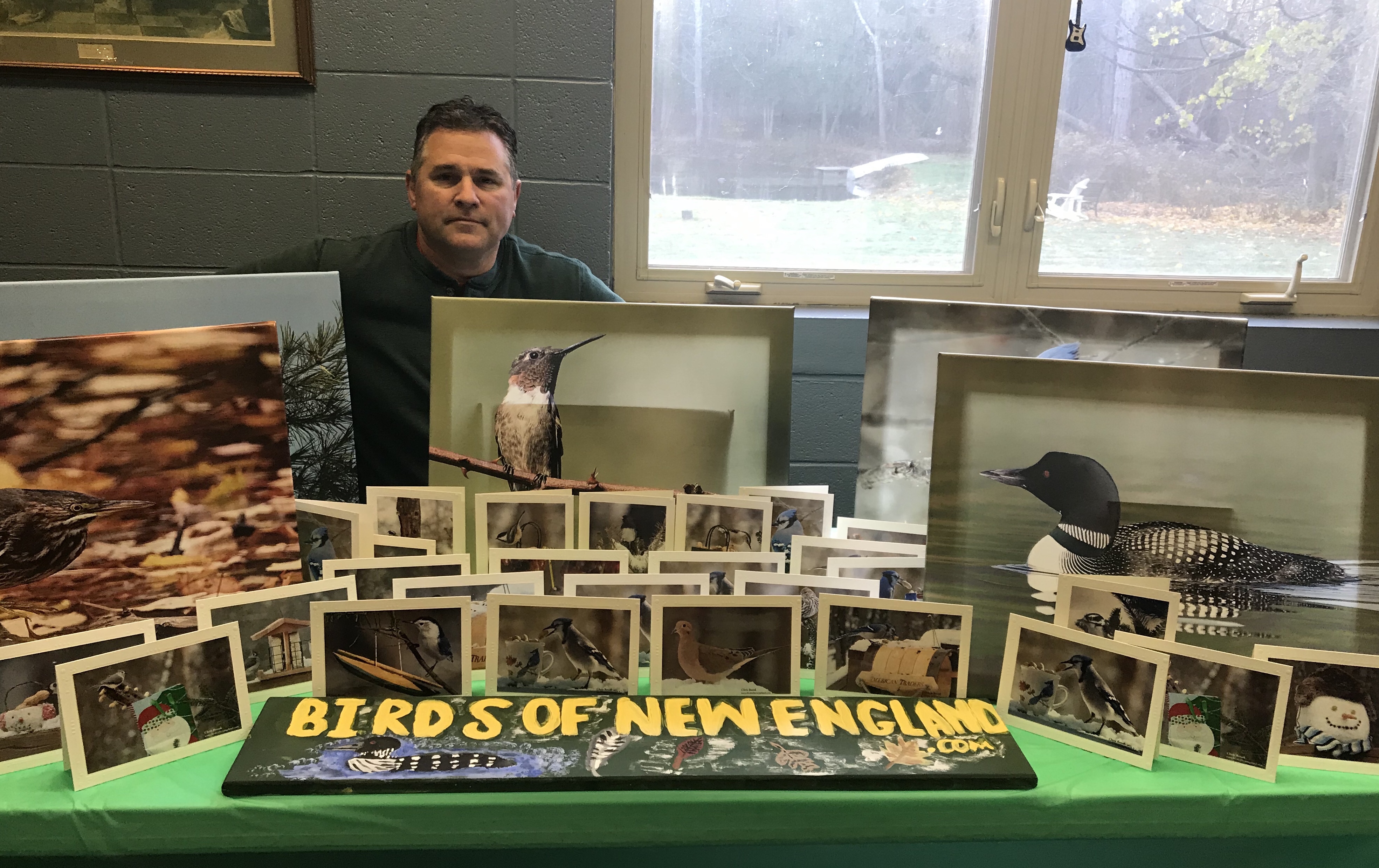
Selling some bird wares at Christ the King Lutheran Church’s Tag and Craft Fair in Newtown, Connecticut (Saturday, November 9). Stop by if you’re in the neighborhood.

I’ll offer some cards for sale on this site soon – as soon as I figure out how to do it!

For the Birds: Many sturdy birds from which to choose

Here is the latest For the Birds column, which runs in several New England newspapers …

Photo by Chris Bosak
A ruby-crowned kinglet inspects sedum for food in New England, fall 2019.

I was recently interviewed about birds and bird population trends by radio show host John McGauley of WKBK.

John had a lot of interesting questions and, following the interview, one in particular stood out in my mind. He asked: “What are the more sturdy birds? Are there any that are especially hardy and durable?”

My on-the-spot answer was hawks and other large raptors. While hawks are indeed large and strong and fierce, I wish I had would have responded differently. All birds, large and small, are hardy and durable. It would have sounded like a wishy-washy answer, but I could have explained it.

Ruby-throated hummingbirds, weighing in at about three Continue reading

A few more nuthatch shots

Photo by Chris Bosak A white-breasted nuthatch grabs a seed from a feeder in New England, fall 2019.

Here are two more shots of the nuthatch taken with the borrowed Continue reading

A nuthatch and a borrowed camera lens

Photo by Chris Bosak A white-breasted nuthatch perches on a branch in New England, fall 2019.

My friend Ellen was excited to show me her new Canan f2.8 lens with a range of 70 to 200mm. She asked if I wanted to borrow it for a week and I said yes (of course). With 200mm as the maximum zoom, its capability as a wildlife photography lens is limited, but still very useful for some circumstances. Many of the days were overcast and that made the 2.8 aperture very handy. It is also a high-quality lens so even subjects that are a bit distant will still be sharp.

I experimented with the lens mostly in the backyard where I know I have a steady supply of subjects near the birdfeeders. White-breasted nuthatches turned out to be the best subjects as they perched in a tree close to the feeders before coming to get a seed. Here are some of the results. Continue reading

How do you like them apples?

Photo by Chris Bosak A blue jay checks out a box for peanuts in New England, fall 2019.

This blue jay apparently does, especially since they are really peanuts.