Photo by Chris Bosak
A yellow-breasted chat sings from a shrub in New England, June 2025.
I was walking along a productive section of a trail in southern New England when a loud birdsong caught my attention. As is often the case, I didn’t recognize it immediately, but knew it was worth stopping for and investigating.
Sometimes when that happens, it turns out to be a seldom-used song or call from a familiar bird. Tufted titmice have a wide variety of sounds and they often throw me off. The same goes for catbirds, robins and orioles. But this time, it was indeed something uncommon.
I used the Merlin app on my phone and it identified it as a yellow-breasted chat. That would be cool, I thought, but let’s get visual confirmation. The Merlin app is a great new tool for birdwatchers, but it’s not 100 percent accurate, and I always like to get visual confirmation.
Photo by Chris Bosak
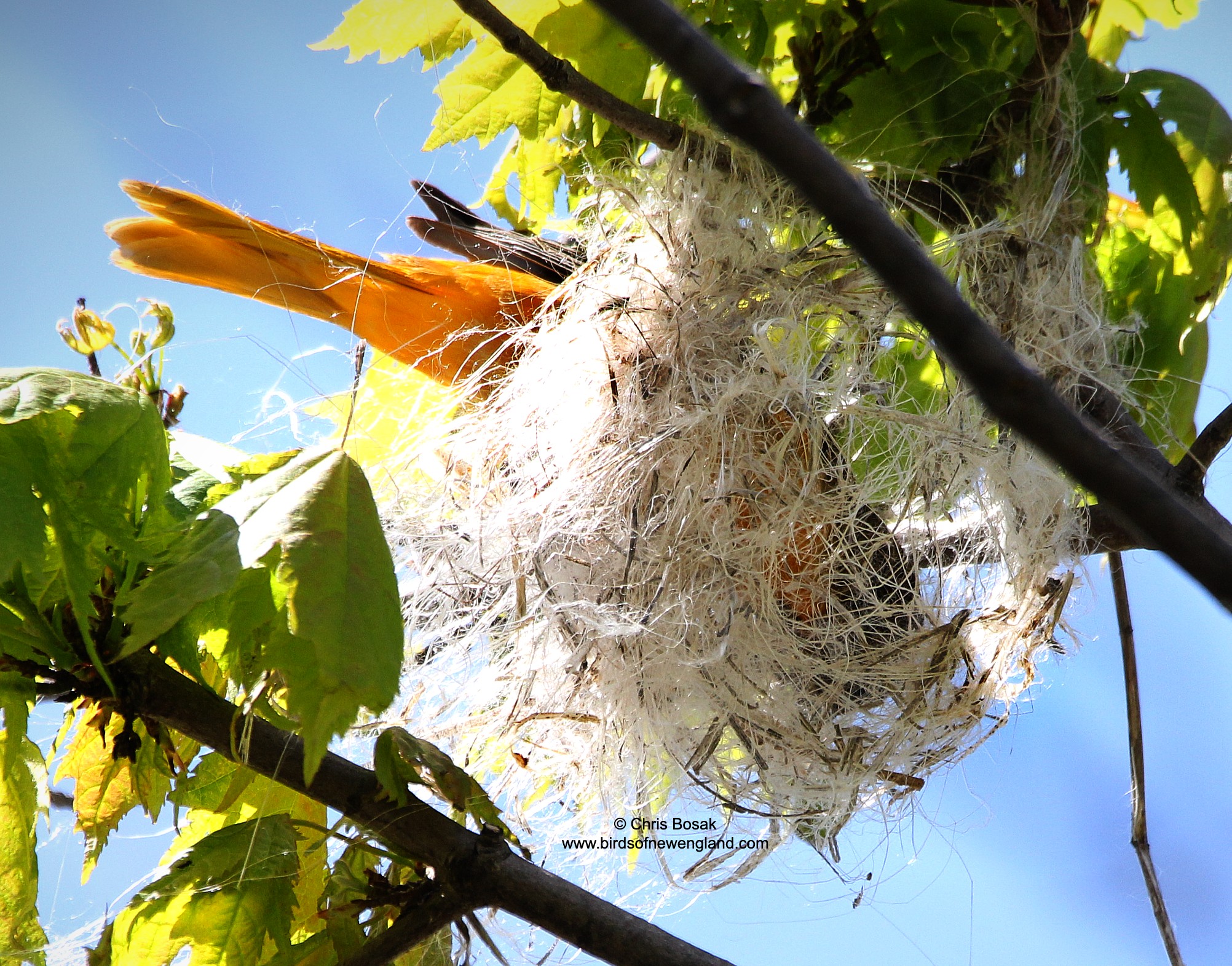
A Baltimore oriole builds a nest at Presque Isle State Park, Erie, Pa., May 2025.
Everything about a Baltimore oriole nest is ingenious. From the design and materials to the location selection, the nest is a perfect haven to raise young birds safely from predators (for the most part).
Fall is the best time to find oriole nests, after the leaves have fallen. Of course, by that time, the orioles are long gone, and the nest is a mere relic of the past breeding season, but it’s still interesting to see one of the pouch-like nests dangling from the end of a branch.
The other week, I was lucky enough to watch a female oriole build one of those remarkable nests. I was walking along a trail that was teeming with yellow warblers, catbirds, and Baltimore orioles when I glanced up and saw an oriole perched at the end of a branch overhead.
Photo by Chris Bosak
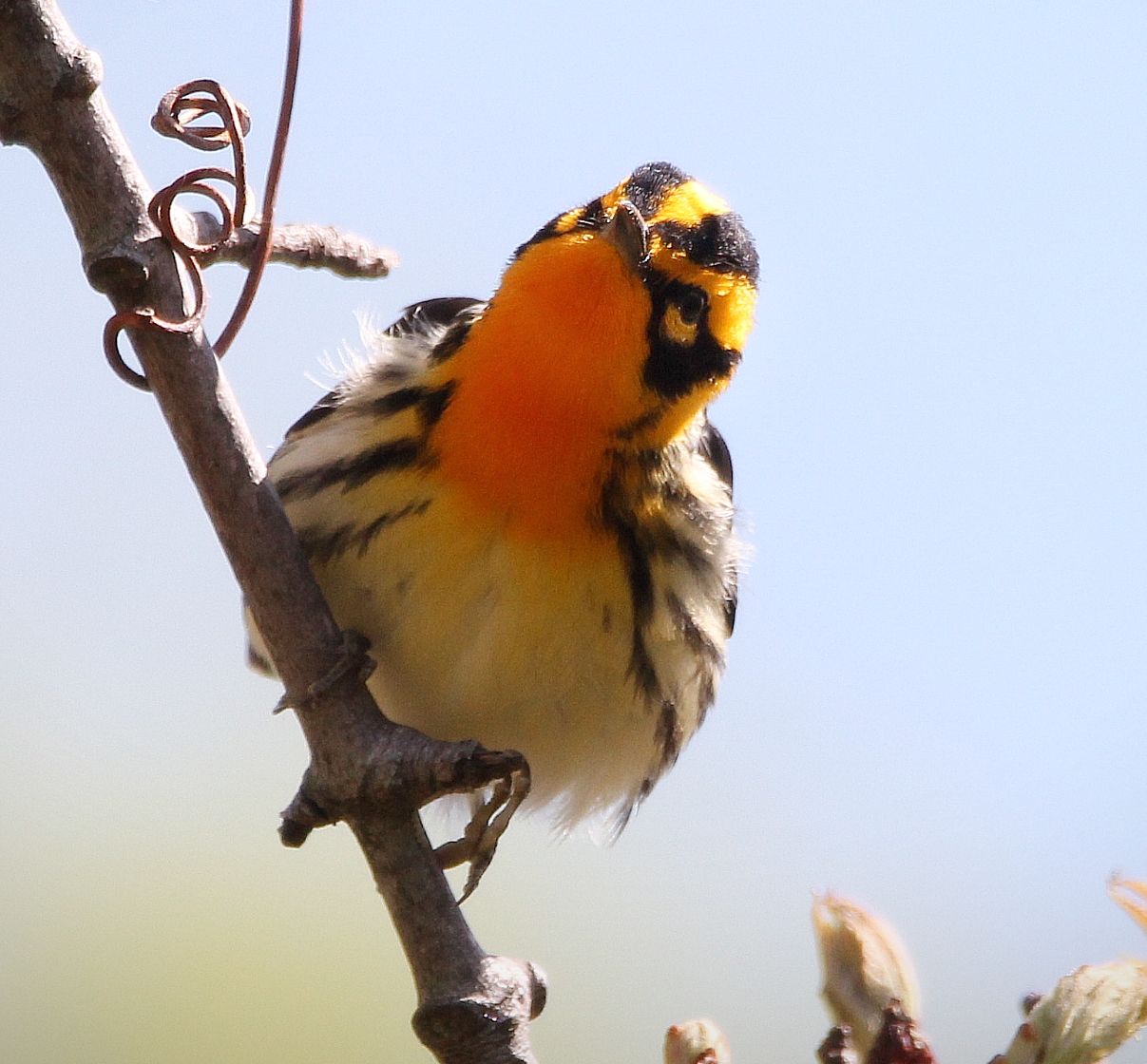
Blackburnian warbler at Presque Isle State Park, Erie, Pa., May 2025.
Here are a few warbler photos I took earlier this month and never got around to posting, until now. The photos don’t do it justice, but the blackburnian warbler is one of the more strikingly colored birds that pass through New England. The warbler migration is winding down, but the ones that nest in our region will keep us busy and occupied for the next few months.
Photo by Chris Bosak
Blackburnian warbler at Presque Isle State Park, Erie, Pa., May 2025.Photo by Chris Bosak
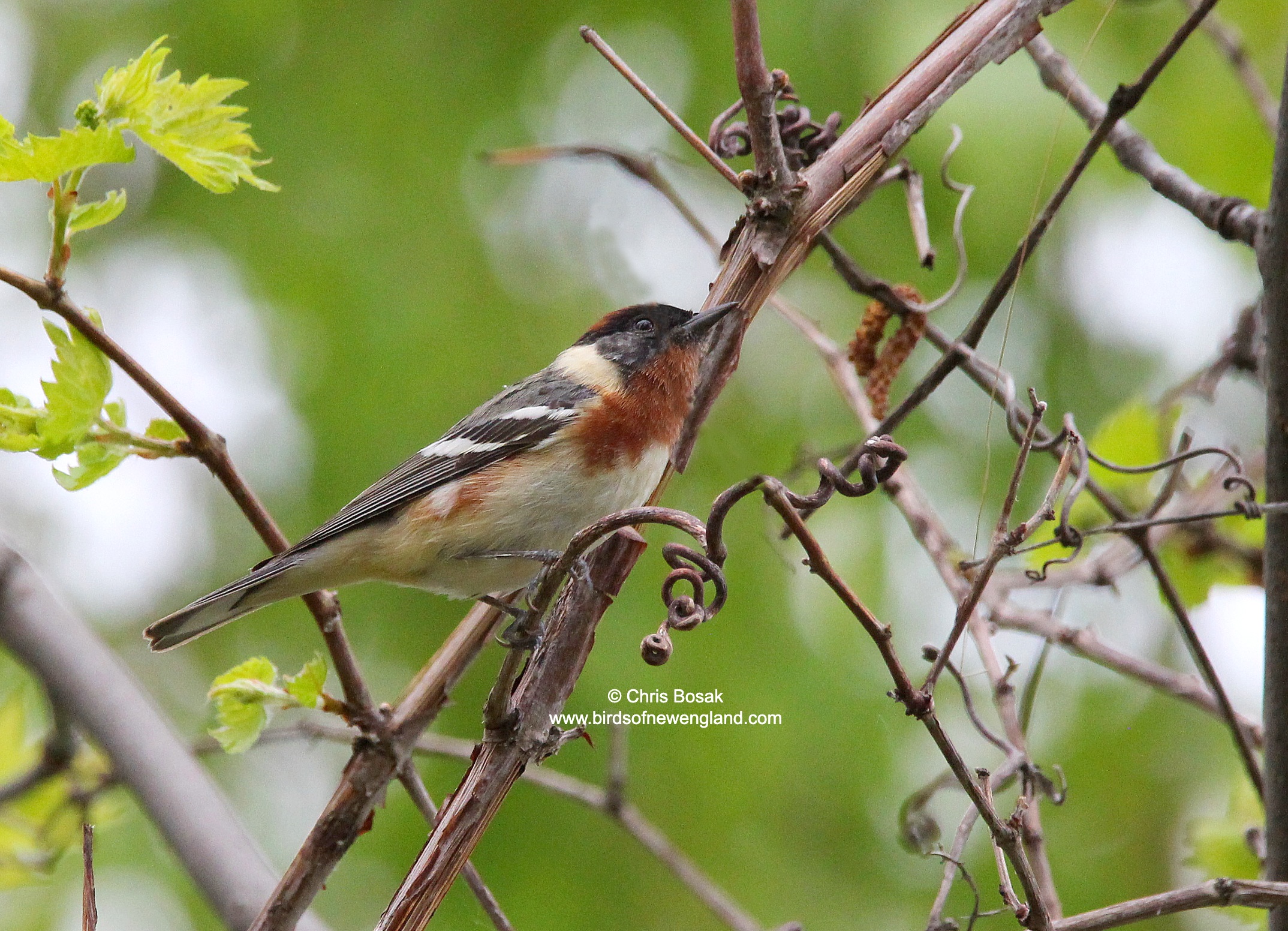
Bay breasted warbler at Presque Isle State Park, Erie, Pa., May 2025.Photo by Chris Bosak
Chestnut-sided warbler at Presque Isle State Park, Erie, Pa., May 2025.Photo by Chris Bosak
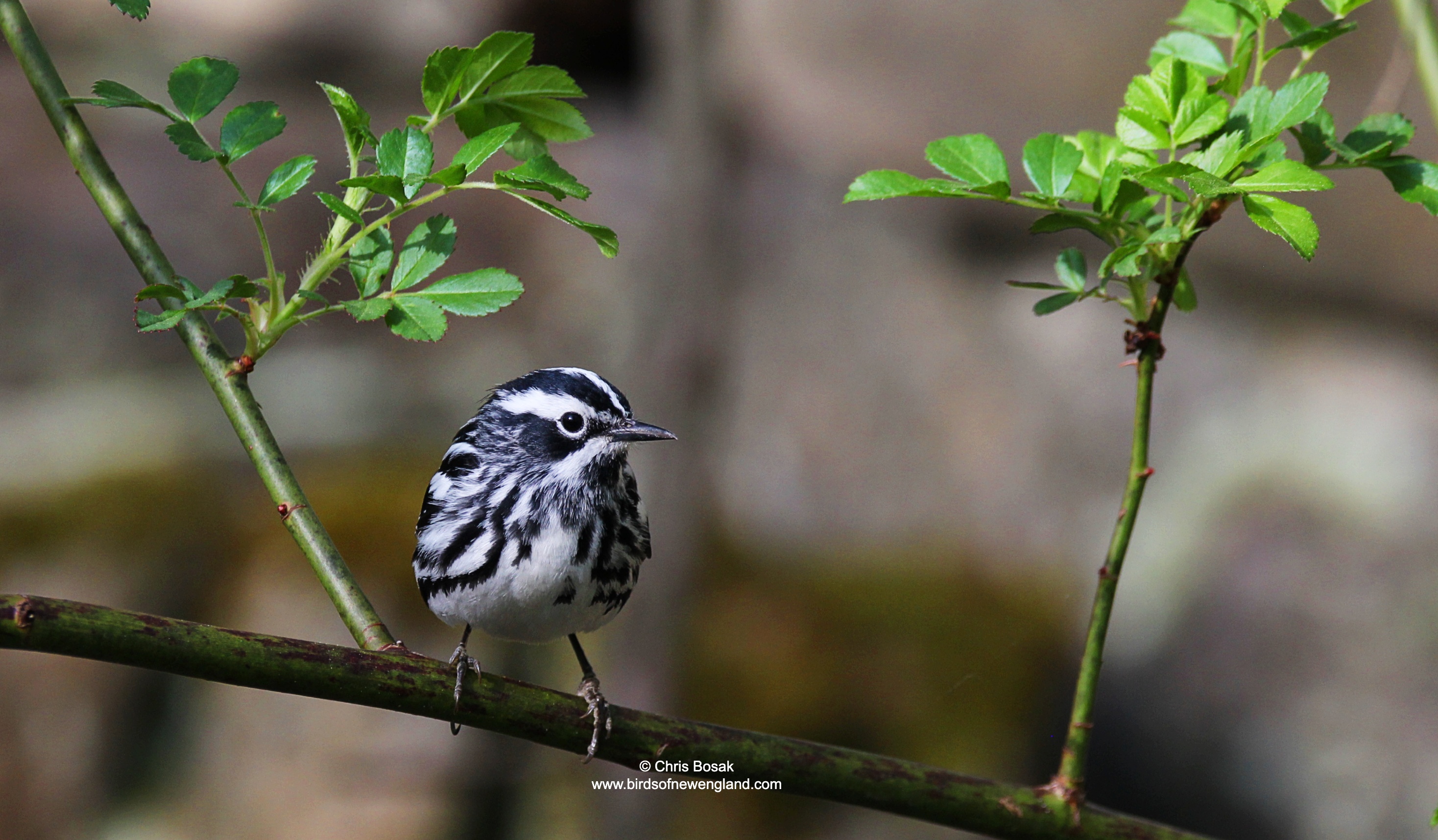
Black-and-white warbler, New England, spring 2025.Photo by Chris Bosak
Blackburnian warbler at Presque Isle State Park, Erie, Pa., May 2025.
Photo by Chris Bosak
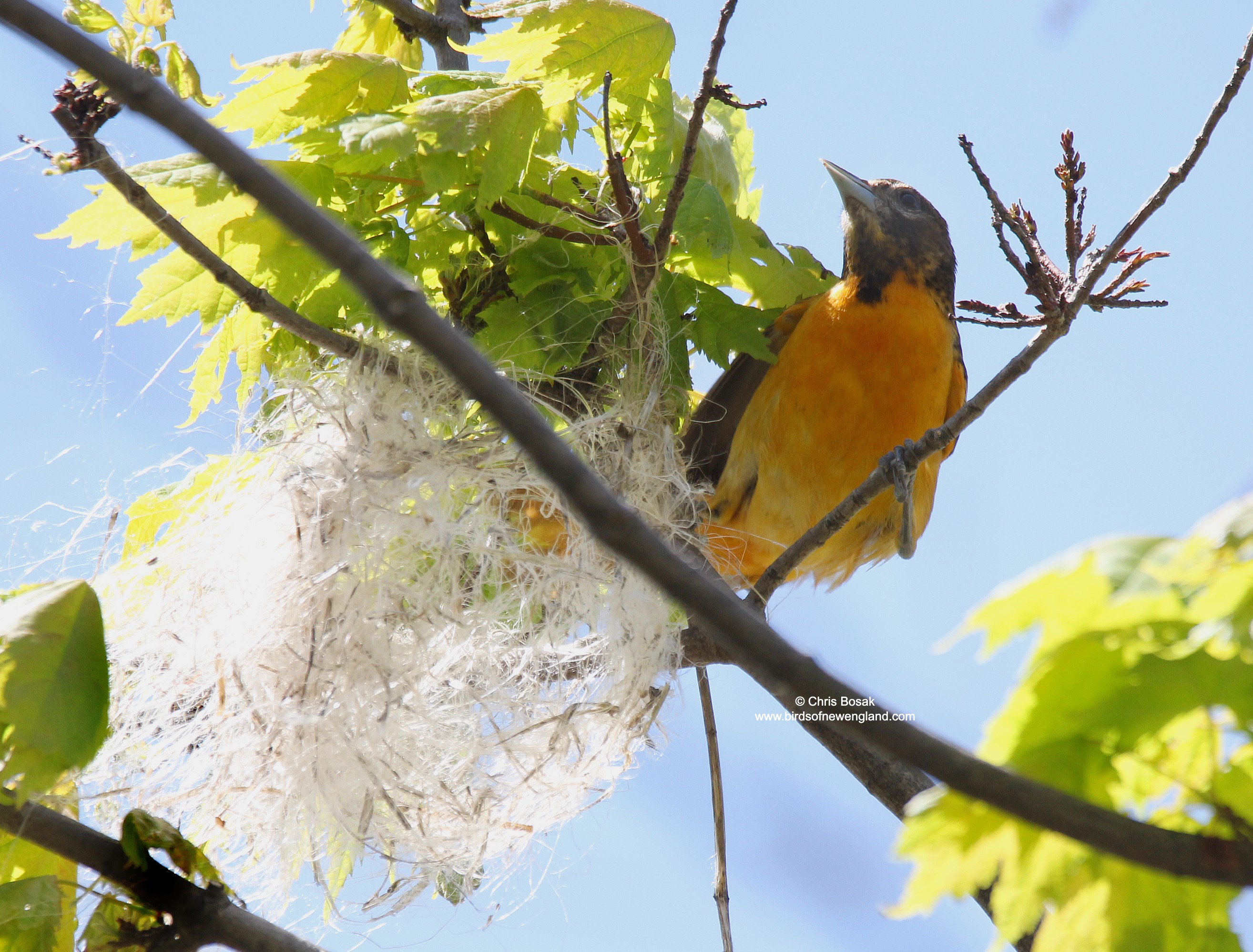
A Baltimore oriole builds a nest at Presque Isle State Park, Erie, Pa., May 2025.
Baltimore orioles have one of the most unique nests of all the songbirds in New England.
According to allaboutbirds.org, “Baltimore Orioles build remarkable, sock-like hanging nests, woven together from slender fibers. The female weaves the nest, usually 3 to 4 inches deep, with a small opening, 2 to 3 inches wide, on top and a bulging bottom chamber, 3 to 4 inches across, where her eggs will rest. She anchors her nest high in a tree, first hanging long fibers over a small branch, then poking and darting her bill in and out to tangle the hank. While no knots are deliberately tied, soon the random poking has made knots and tangles, and the female brings more fibers to extend, close, and finally line the nest. Construction materials can include grass, strips of grapevine bark, wool, and horsehair, as well as artificial fibers such as cellophane, twine, or fishing line. Females often recycle fibers from an old nest to build a new one. Males occasionally bring nesting material, but don’t help with the weaving. Building the nest takes about a week, but windy or rainy weather may push this as long as 15 days. The nest is built in three stages: first, the female weaves an outer bowl of flexible fibers to provide support. Next, springy fibers are woven into an inner bowl, which maintains the bag-like shape of the nest. Finally, she adds a soft lining of downy fibers and feathers to cushion the eggs and young.”
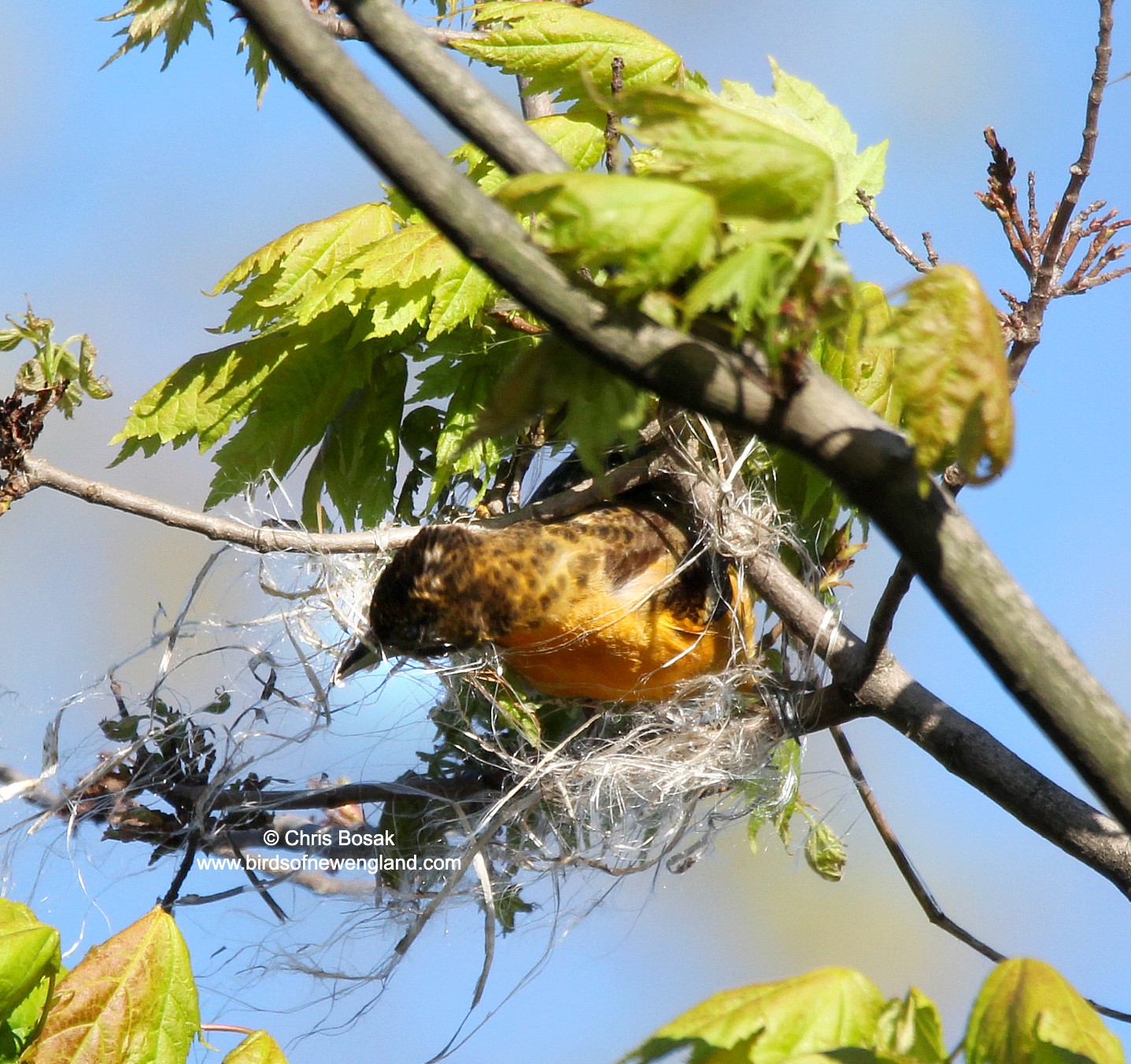
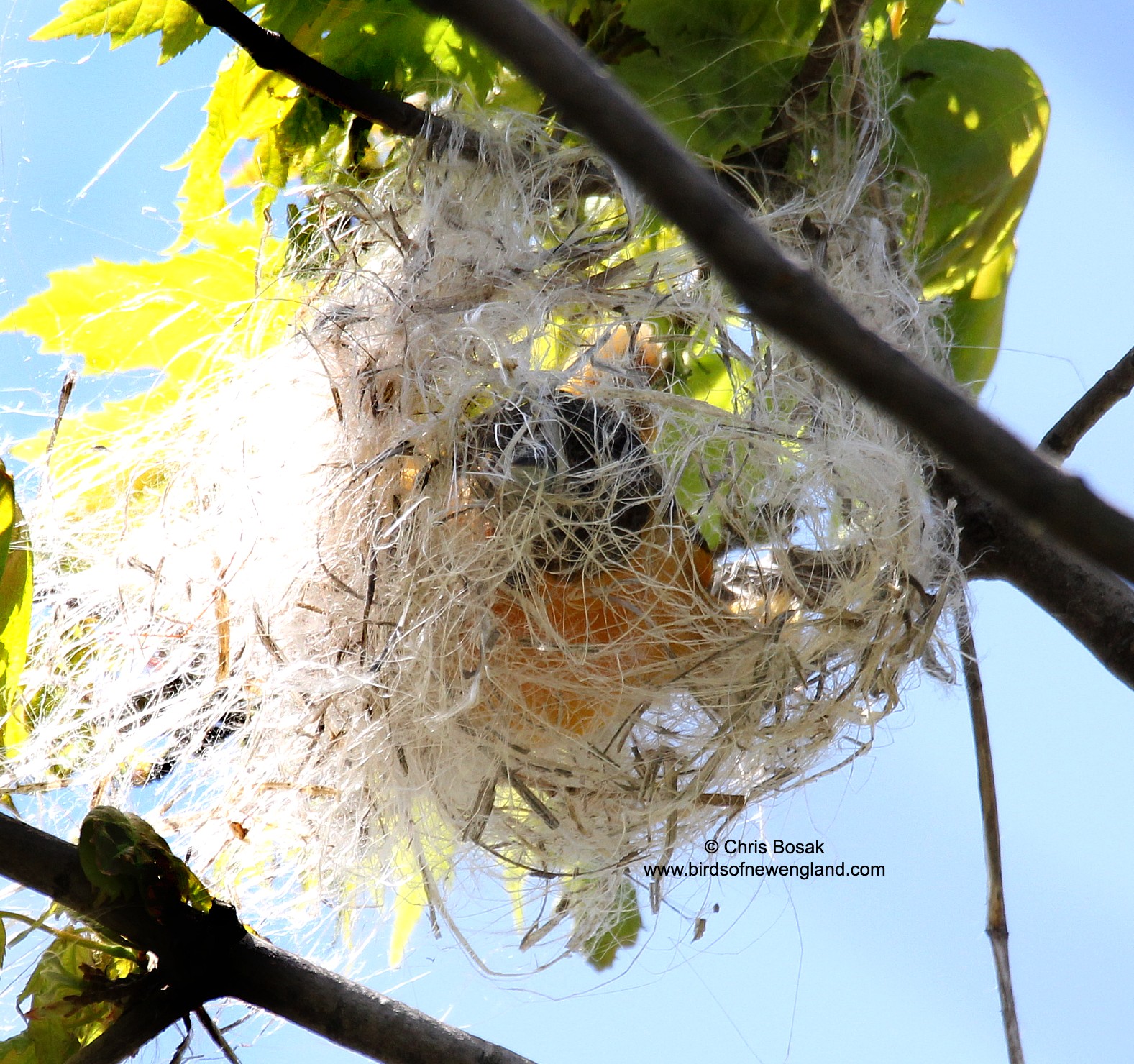
During my recent trip to Presque Isle State Park in Erie, Pa., I came across an oriole pair building a nest. We saw tons of orioles overall, but this was the only nest I found under construction. I was amazed at how much progress the orioles made in just one day. The first photo below was taken on a Sunday and next two photos (and the one above) were taken on a Monday. Nature is amazing.
Photo by Chris Bosak
A Baltimore oriole builds a nest at Presque Isle State Park, Erie, Pa., May 2025.Photo by Chris Bosak
A Baltimore oriole builds a nest at Presque Isle State Park, Erie, Pa., May 2025.Photo by Chris Bosak
A Baltimore oriole builds a nest at Presque Isle State Park, Erie, Pa., May 2025.
Photo by Chris Bosak
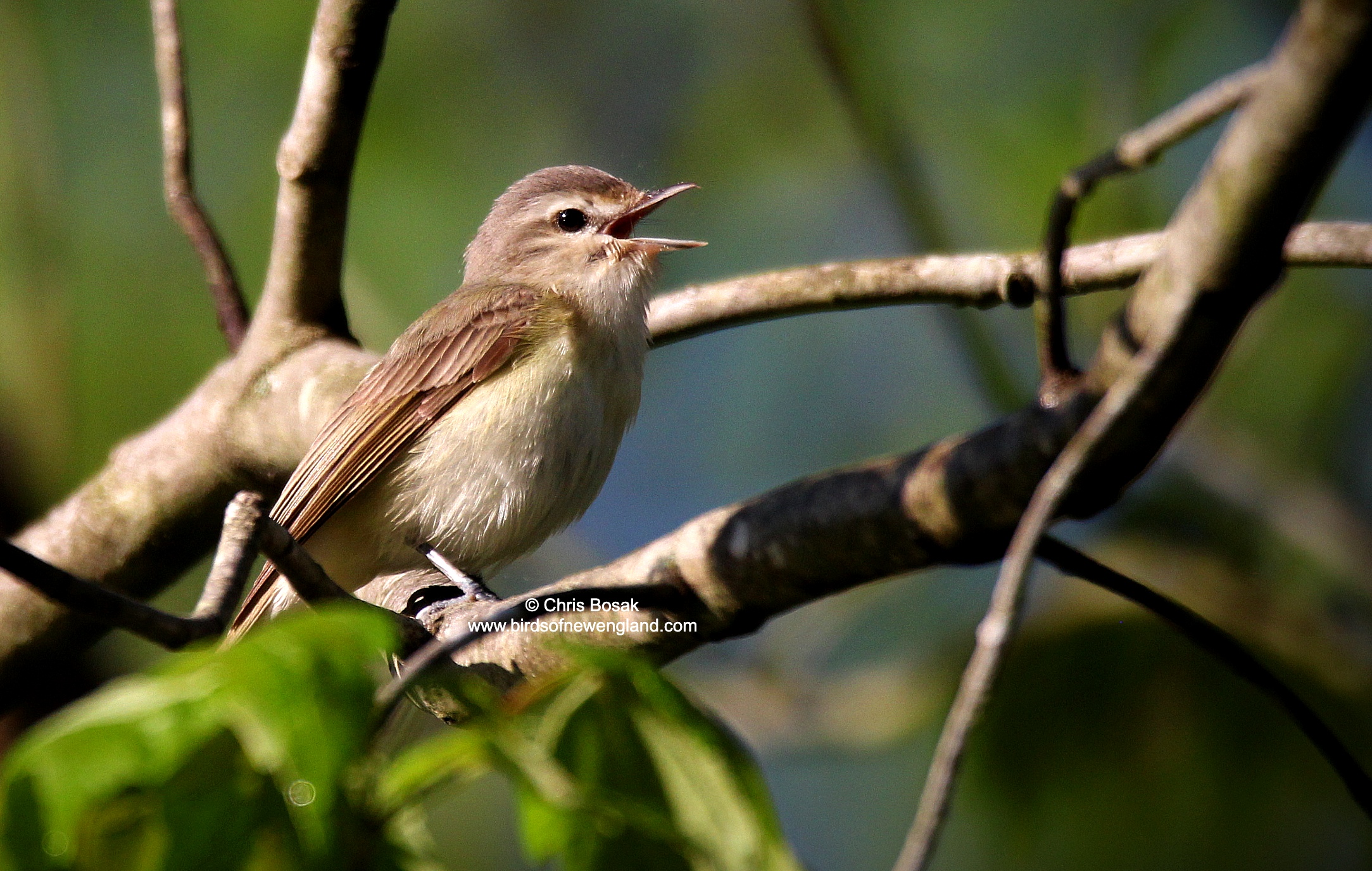
A warbling vireo sings from a branch in New England, spring 2025.
It’s funny how you can still discover new things after so many years.
I’m sure that applies to most hobbies, but it certainly applies to birdwatching. I have only recently “discovered” the warbling vireo. The small, loquacious bird, of course, has been around for far longer than I have been birdwatching, but I am only recently taking notice of it.
Part of the reason I may not have paid it much mind previously is that it is a small, fairly nondescript bird that typically hangs out in the middle to upper branches among the leaves. It is not like some birds that take an obvious perch somewhat low in the trees or brush and are easily found on a birdwalk.
Over the last couple of years, however, I have come to know warbling vireos not only because the males sing constantly, but I am finding them almost everywhere I go in the spring.
Photo by Chris Bosak
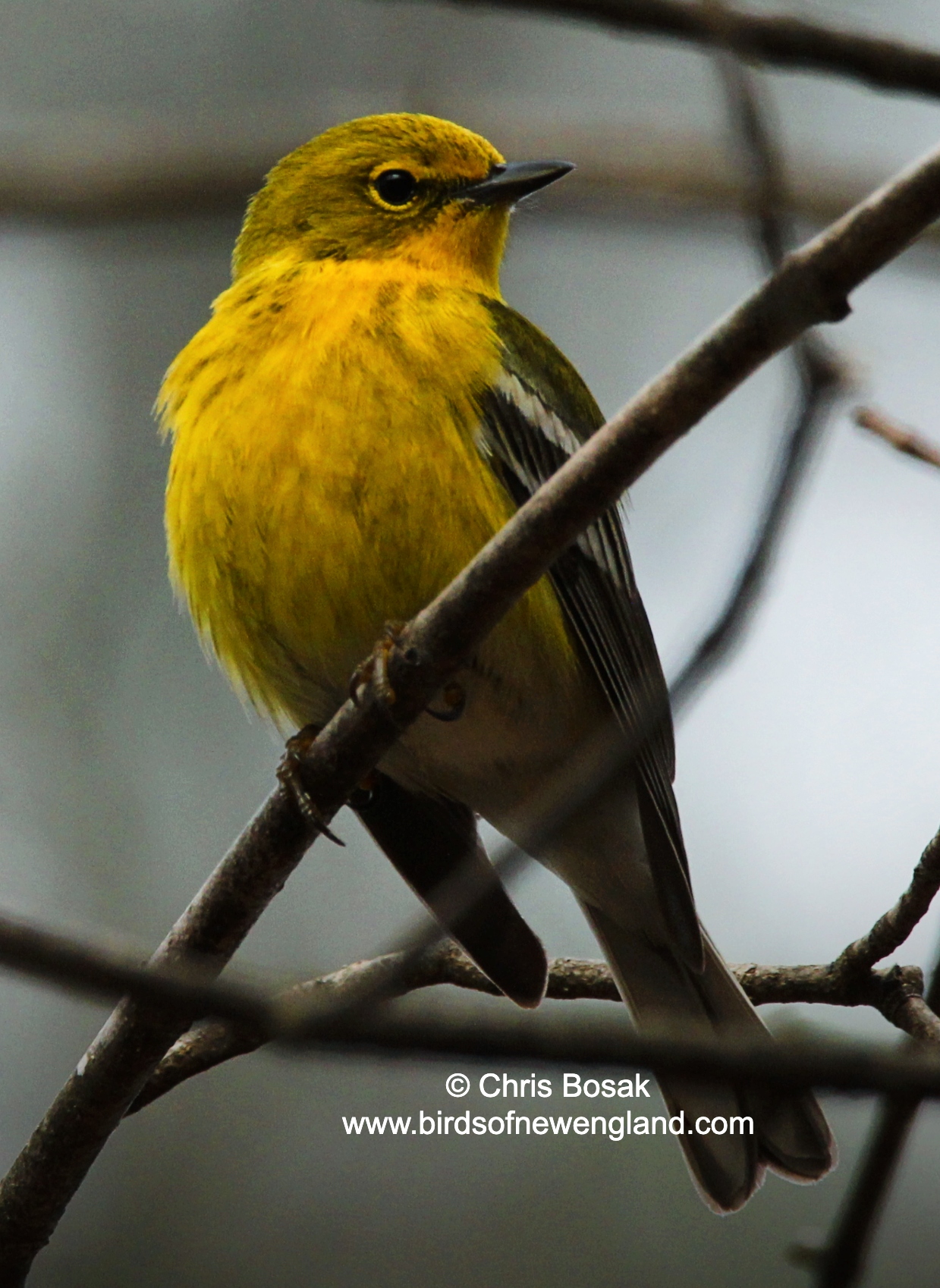
A pine warbler seen March 31, 2025, at Huntington State Park in Redding, Connecticut.
Pine warblers and palm warblers are typically the earliest warblers to arrive in New England in the spring. This year, the pines showed earlier than usual (at least in my estimation.) I found at least two pine warblers yesterday (March 31, 2025) at Huntington State Park in southern Connecticut. Here’s hoping the rest of the spring migration is as good.
Drop me a line and let me know what you’re seeing out there.
Photo by Chris Bosak
A pine warbler seen March 31, 2025, at Huntington State Park in Redding, Connecticut. Photo by Chris Bosak
A pine warbler seen March 31, 2025, at Huntington State Park in Redding, Connecticut.
Photo by Chris Bosak
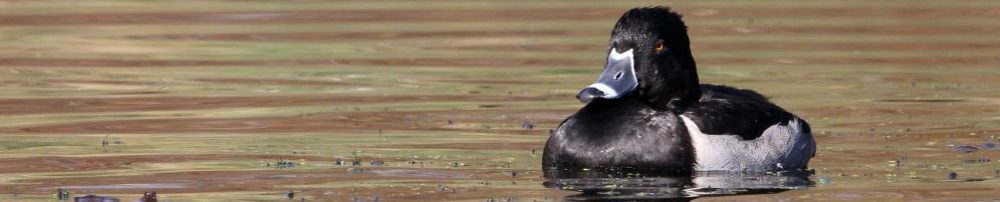
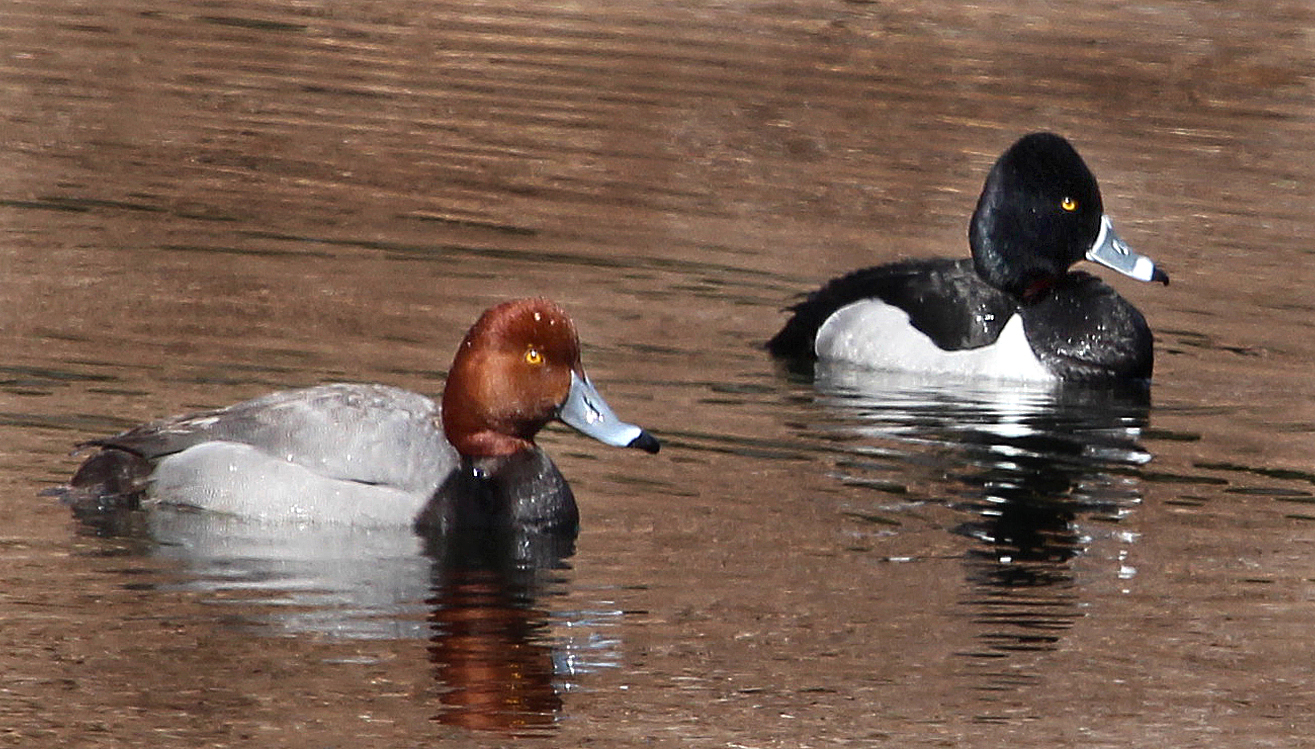
A Redhead swims alongside a Ring-necked Duck in Darien in March 2014.
It’s always good to know where a little open water exists.
Whether the water doesn’t freeze during the winter because of a dam, waterfall, fountain or otherwise, these spots are great for duck watching on even the coldest of days. In fact, the coldest days may be the best time to visit these spots, as very little open water exists elsewhere, and the ducks concentrate in these little oases.
I find it interesting when different species of ducks that usually are not found together congregate in these pools of open water. I’ve seen huge rafts of scaup on Long Island Sound and some large lakes throughout the Northeast. The ducks usually stick with their own kind on these large bodies of water. But when a freeze forces them to find open water, it is not uncommon to see scaups swimming among goldeneyes, buffleheads and redheads.







 Birds of New England.com