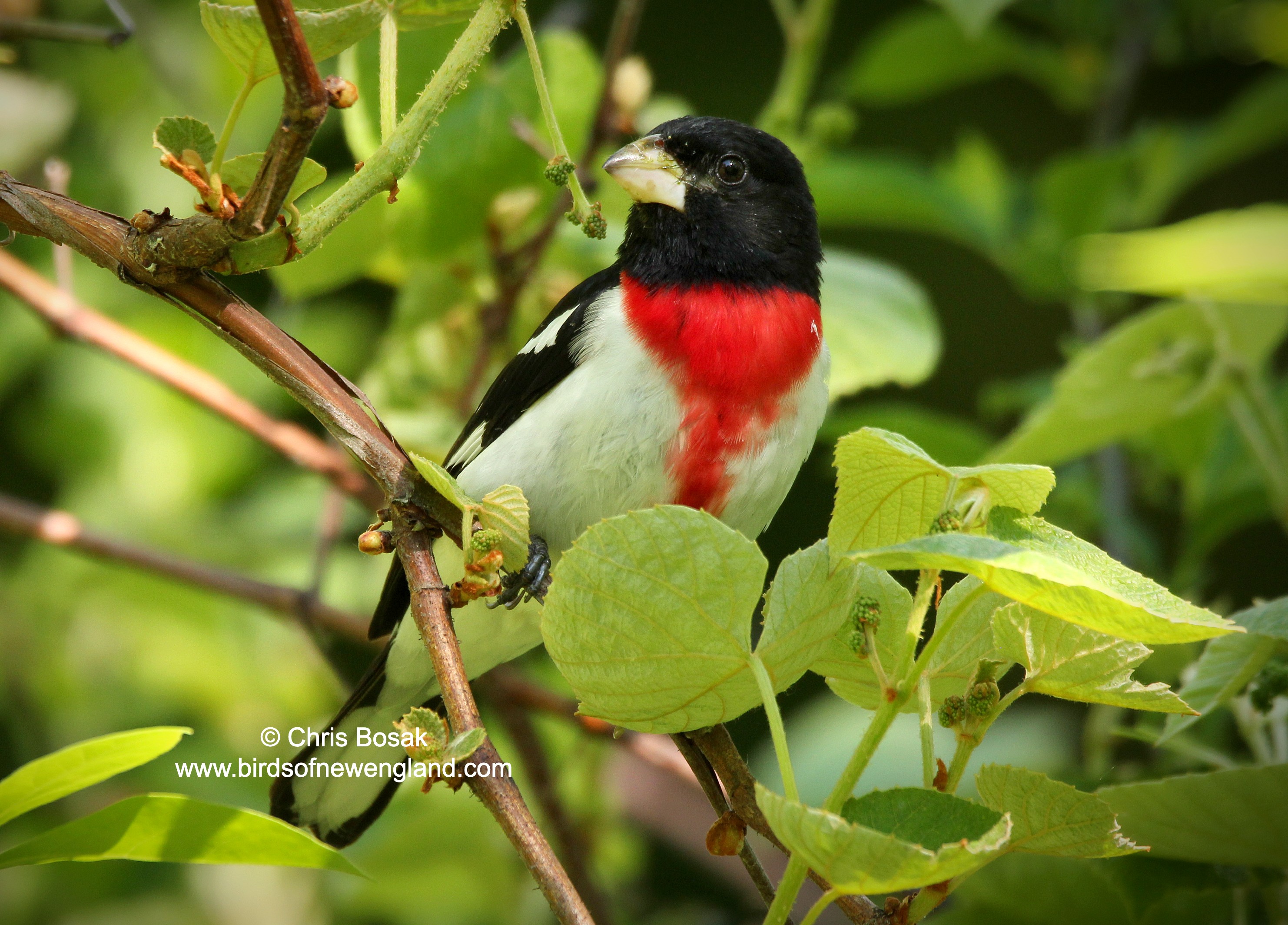
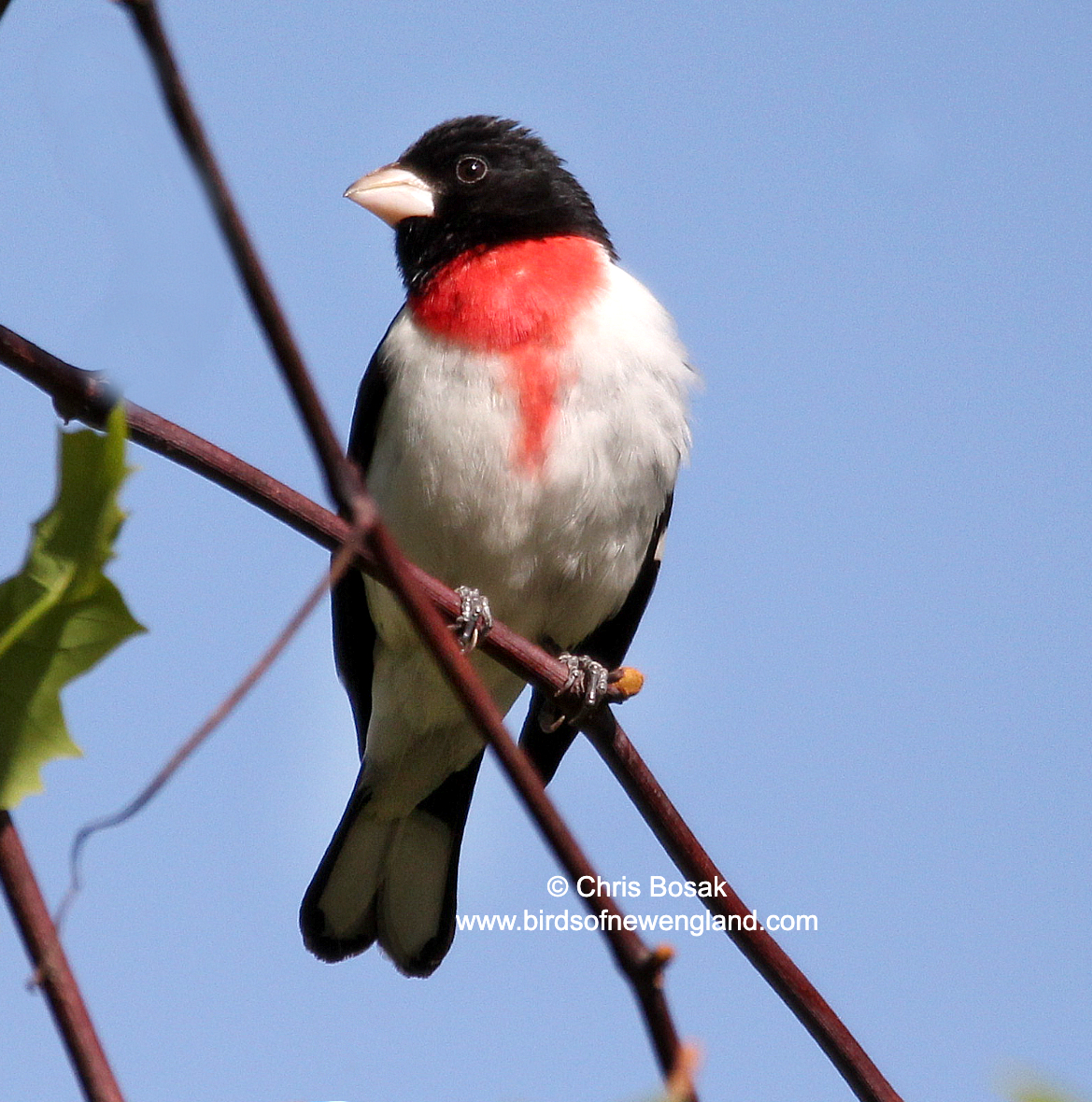
Photo by Chris Bosak A rose-breasted grosbeak perches in a bush at Huntington State Park in Redding, Connecticut, summer 2026.
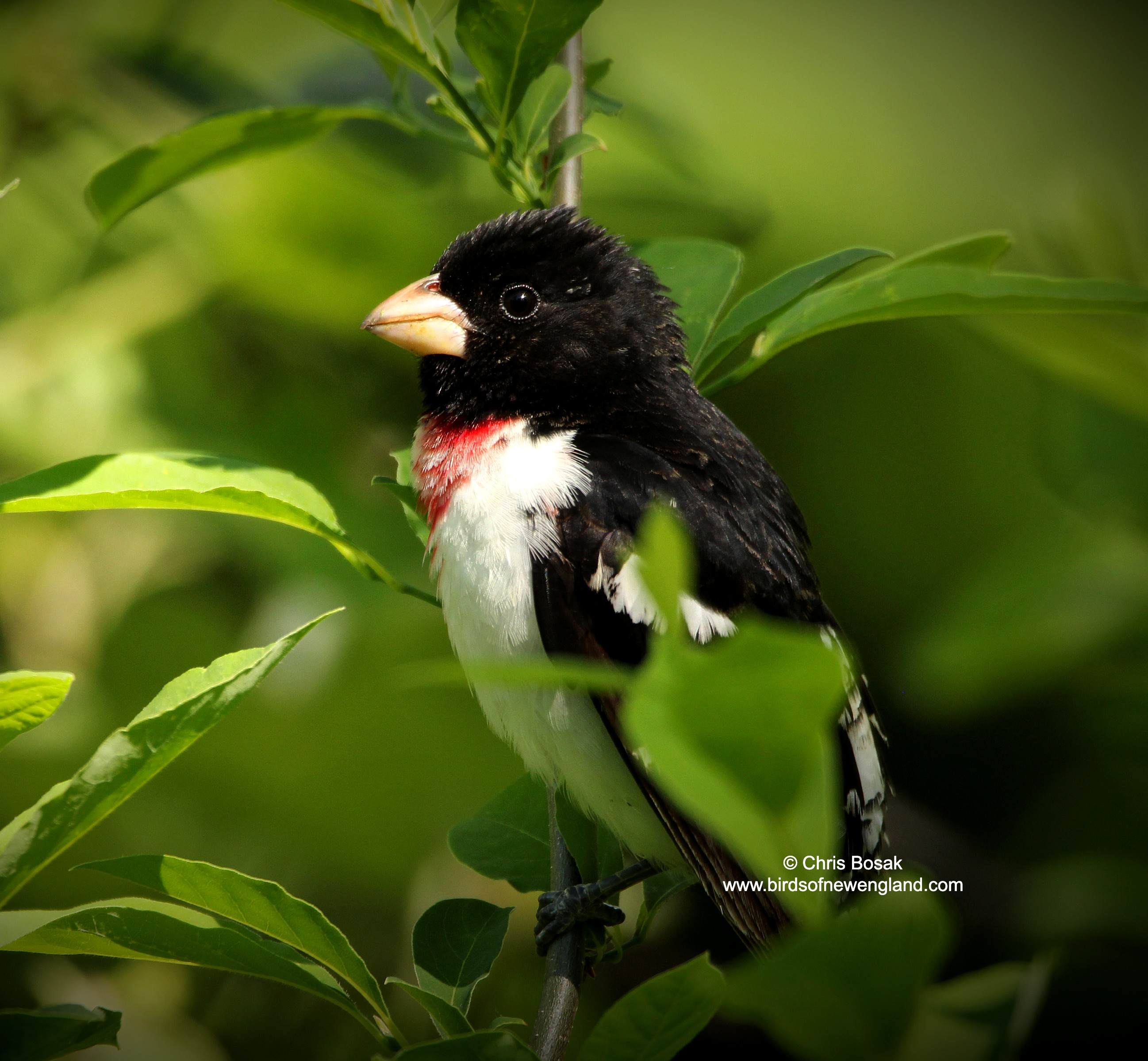
Here are a few male rose-breasted grosbeaks I met on a recent walk.
Photo by Chris Bosak A rose-breasted grosbeak perches in a bush at Huntington State Park in Redding, Connecticut, summer 2026.Photo by Chris Bosak A rose-breasted grosbeak perches in a bush at Huntington State Park in Redding, Connecticut, summer 2026.
Photo by Chris Bosak
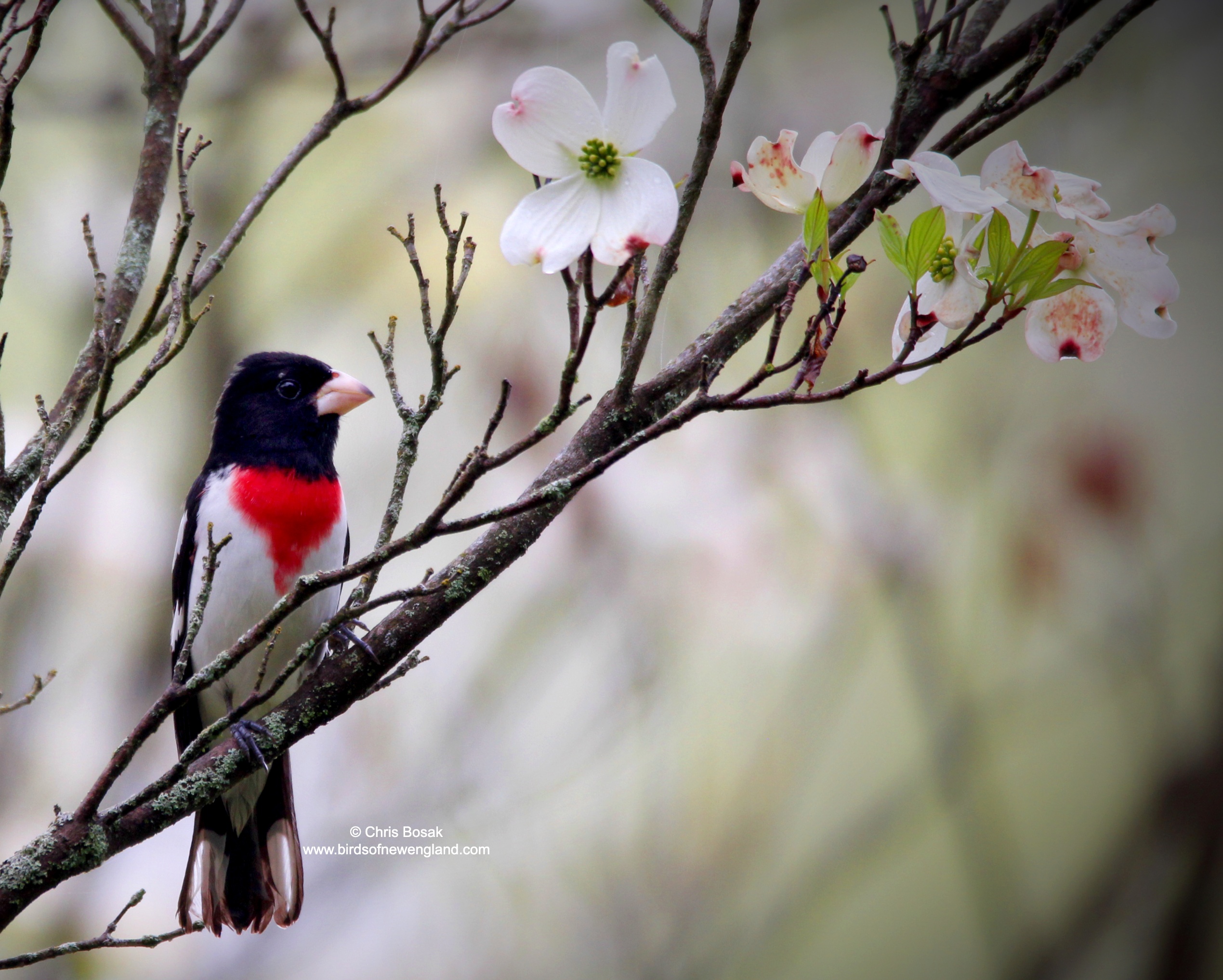
A rose-breasted grosbeak perches in a dogwood tree, New England, spring 2025.
Yesterday, I used a photo of a rose-breasted grosbeak for my Singing in the Spring series. Today, I’m including a few bonus shots of a male rose-breasted grosbeak. You gotta love spring migration.
Photo by Chris Bosak
Rose-breasted grosbeak, New England, spring 2025.Photo by Chris Bosak
A rose-breasted grosbeak perches in a dogwood tree, New England, spring 2025.
Where to begin? May is a firestorm of birding activity in New England.
I’ll recap a few of my recent highlights and then expand, where necessary or otherwise interesting, in subsequent columns.
A warbler by any other name: Many warblers actually have the name warbler in their name. Yellow warbler, chestnut-sided warbler, worm-eating warbler and so on. Many, however, don’t have warbler in their name. Common yellowthroat, American redstart to name a few.
A few warblers don’t have warbler in their name and look like they belong in the thrush family. The ovenbird and waterthrushes (northern and Louisiana) could easily pass for thrushes with their brown bodies and spotted chests. Heck, the waterthrushes even have thrush in their name. But they are all, indeed, warblers.
That warrants a column unto itself. I’ll dig into that in the coming weeks.
Dueling grosbeaks: I heard a rose-breasted grosbeak singing in a tree during the tail end of one of my recent walks. I paused enough to find its perch. As soon as I spotted the beautiful bird, another male rose-breasted grosbeak dive-bombed the original bird, and they started chasing each other through the woods. The action caught the eye of a third male grosbeak and that one joined in the chase as well. That was a first for me. Rose-breasted grosbeaks, with their white wing bars, are just as impressive-looking in flight as they are perched.