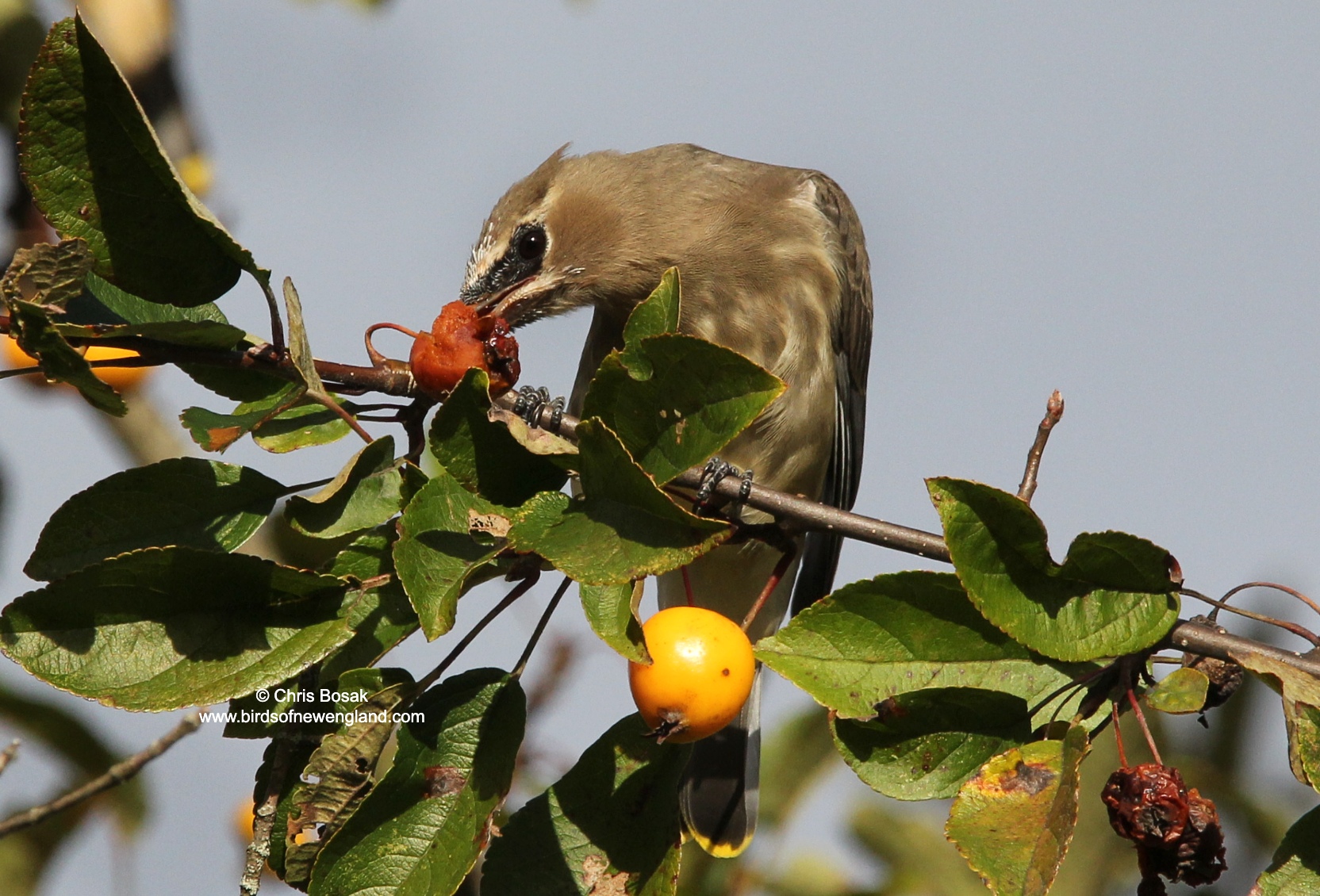
For the Birds: Cedar waxwings like these apples

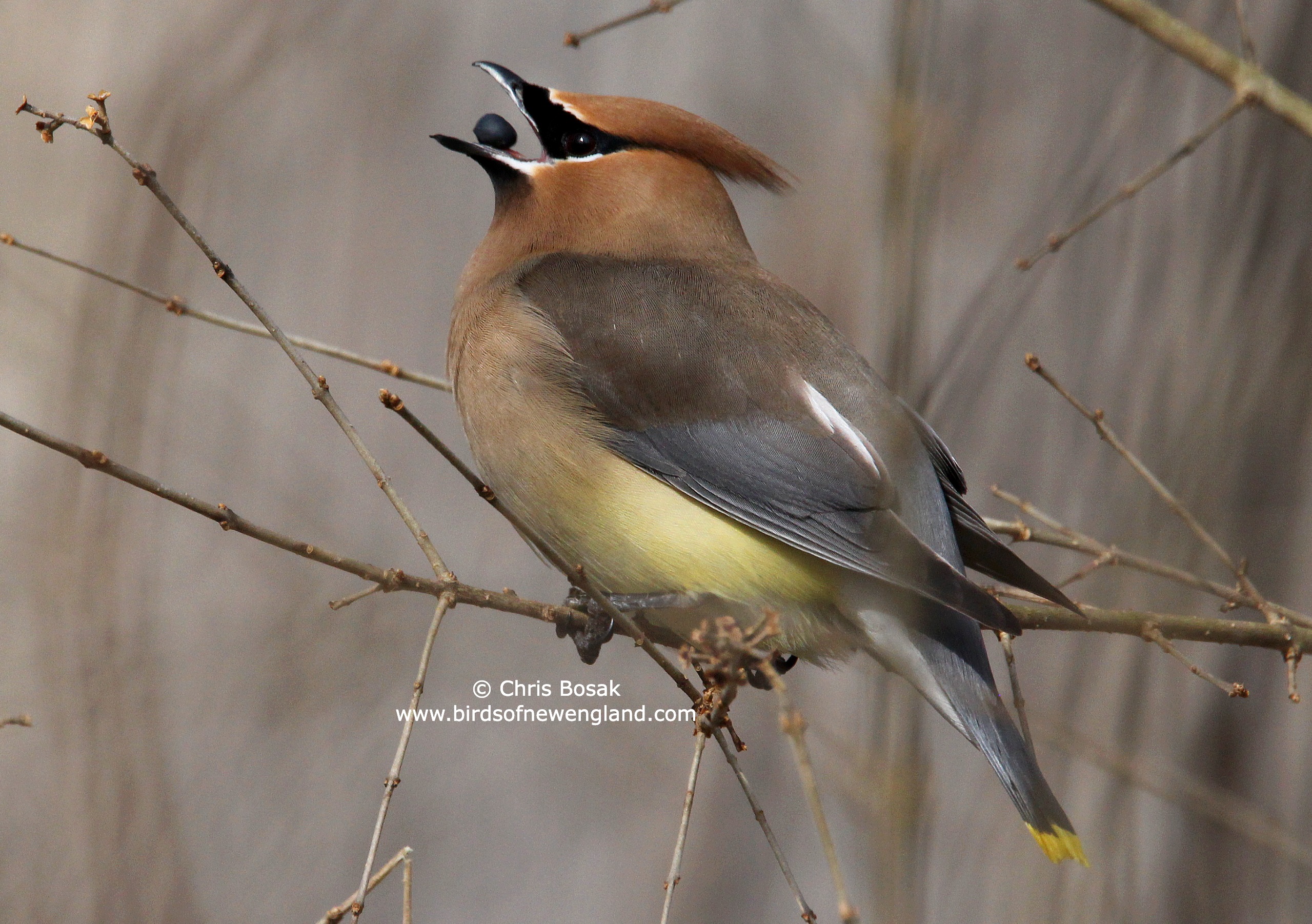
Cedar waxwing on crabapple tree, fall 2025, Huntington State Park, CT.

Sometimes, the path less traveled is the way to go. In fact, it almost always is when it comes to birdwatching.

The park I frequent in southern New England features a variety of habitats: ponds, woods, fields and marshlands. The fields are quite large and have a path running through the middle. In the spring and summer, visitors are restricted to the path to protect nesting birds such as bobolinks, field sparrows and red-winged blackbirds.

In fall and winter, however, after the fields have been cut, the restricted signs come down. Most people, in fact almost all people, still stick to the path as it’s the quickest and easiest way to get to the woods. They don’t see (or care about) the tremendous opportunities that exist along the brushy edges of the fields.

Fall is the best time to explore the edges as berries and shelter attract birds and other wildlife. Palm warblers are automatic sightings for a few weeks in October as they devour seeds from the grasses that remain standing. Yellow-rumped warblers are also reliable sightings as they chow down on poison ivy berries and the fruits of other plants.

Eastern bluebirds and eastern phoebes like to hang out around the edges as well. They use the overhanging branches to scan the field for insects.

The other day, I noticed a flock of birds in a distant bare tree. They were flying back and forth to a nearby tree. Assuming they were starlings, I raised my binoculars to confirm. Turns out, they were cedar waxwings. Lots of them.

As I got closer, I realized the tree they were flying to and from was a crabapple tree loaded with red, orange and yellow fruits. I climbed over a stone wall overgrown with all sorts of weeds and grasses for a closer look. I pulled a single deer tick off of my sweatshirt and closed the distance even more.

The waxwings paid me no mind, so I approached within camera range. Surrounded by goldenrod that had gone to fluffy seed, I took some photos and observed the flock. Many of the birds were youngsters, hatched a few months prior. Waxwings nest a bit later than most songbirds, so the immature birds were several weeks younger than the migrating first-year birds that passed through the area in September or early October.

Immature cedar waxwings lack the polished, silky look of the adults. They appear much duller and have streaked undersides. The black mask is not as obvious as in adults, and they lack the trademark waxy, red wingtips. (Not all adults have obvious wing tips either.) They do sport the yellow-tipped tail.

The waxwings feasted on the apples. The apples were small but still much too large for the birds to eat in one gulp. Rather, they contorted themselves and took meaty bites of the fruits until only the stem remained.

I came across an interesting tidbit while researching cedar waxwings recently. According to the Cornell Lab of Ornithology, waxwings specialize in eating fruit and can live on fruit alone for several months. Brown-headed cowbirds that are raised by waxwings often do not survive because of the all-fruit diet.

The remainder of the walk was filled with sightings of white-throated sparrows and ruby-crowned kinglets. They seemed to be around every corner. The highlight of the walk, however, was the waxwings feasting on the apples. Had I stuck to the trail, I would have missed it.

For the Birds: Blue jays chase owl into the woods

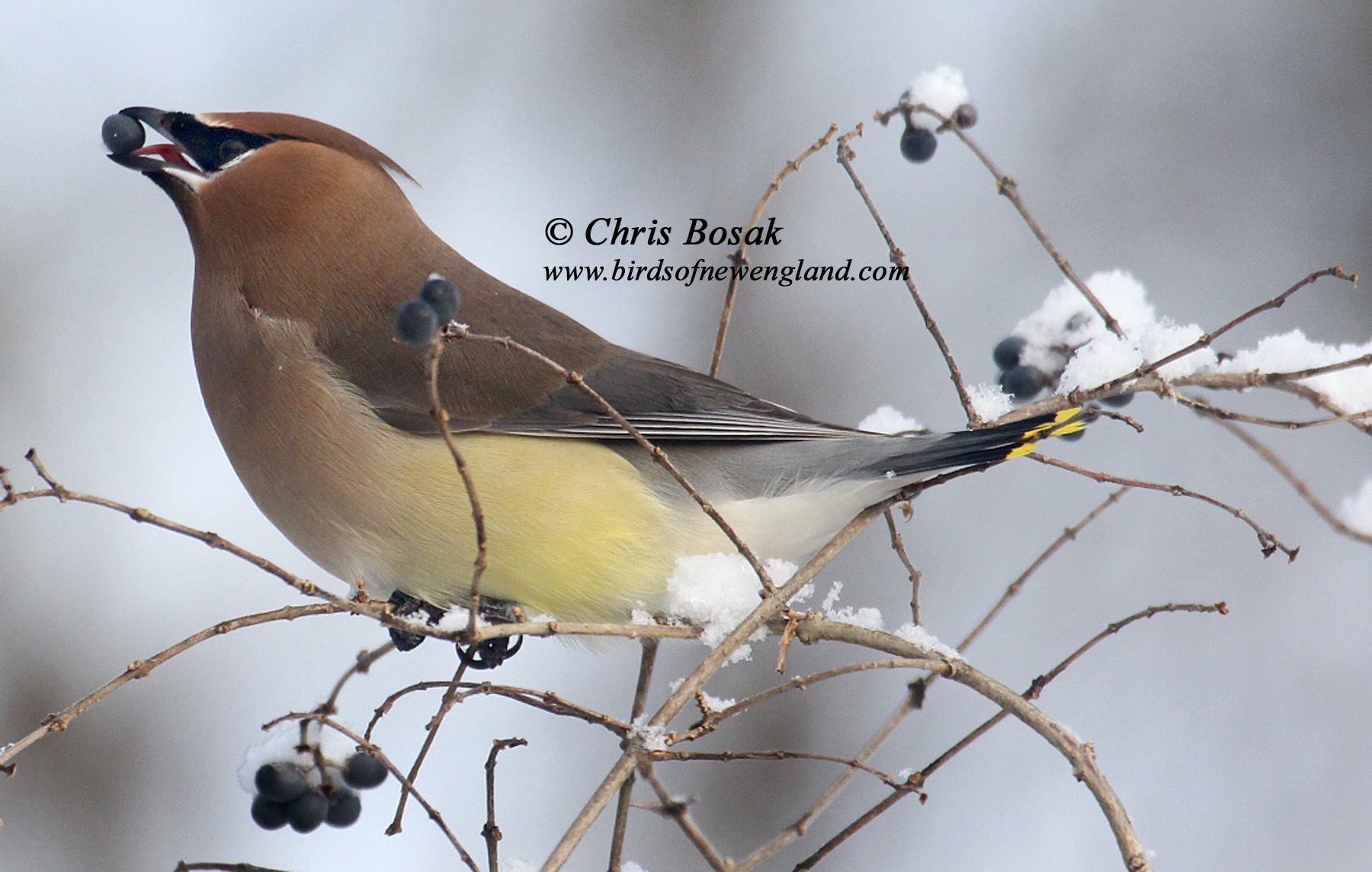
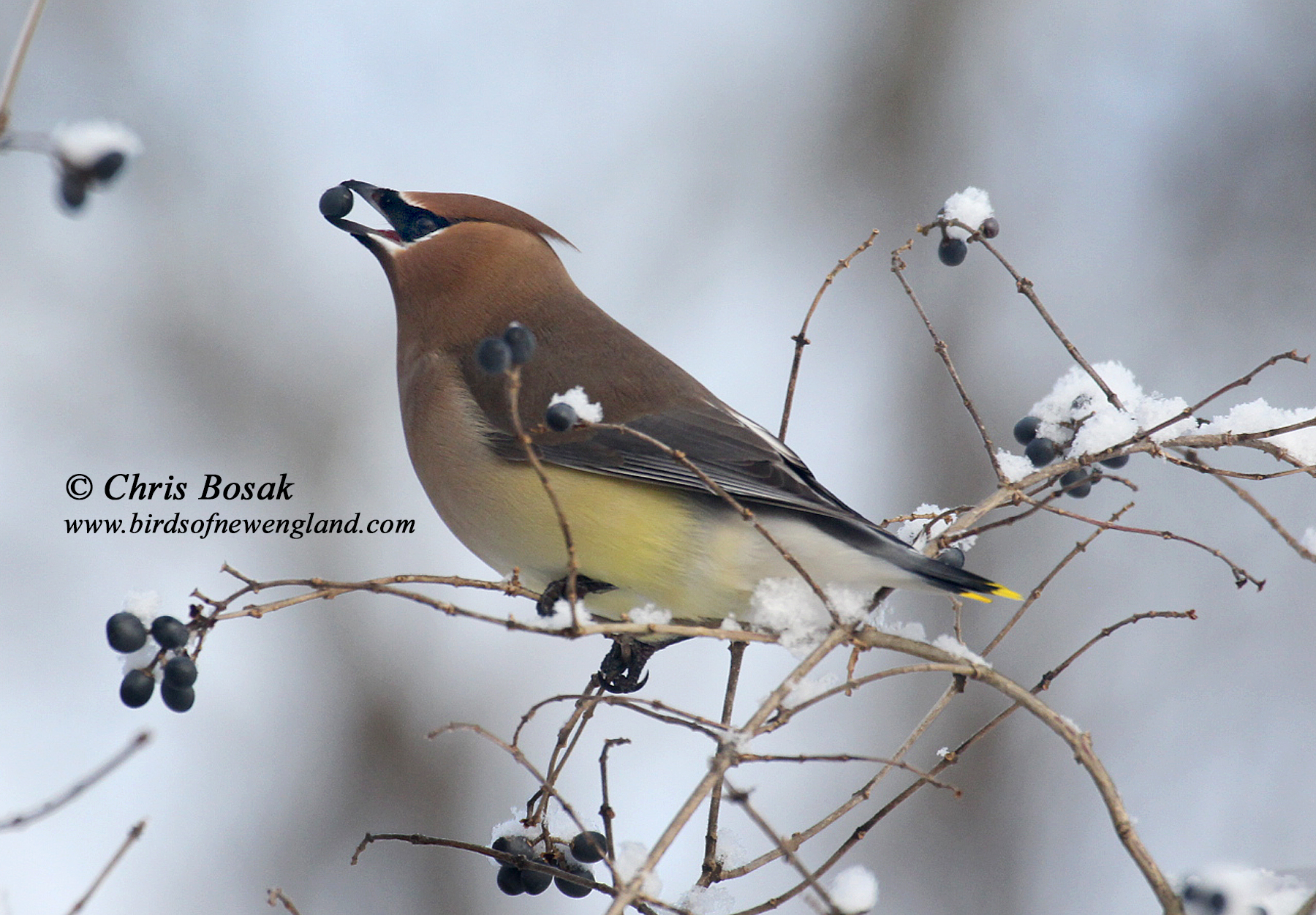
Photo by Chris Bosak A cedar waxwing eats border privet berries in New England, February 2025.

Blue jays give and blue jays take away.

During a walk in the woods the other day, I heard a bunch of blue jays squawking up a storm. It was too loud and frantic to be simple alarm calls for a potential threat. This threat had to be real. The calls and squawks reached a fever pitch as more and more blue jays appeared onto the scene from all directions.

I knew it had to be a hawk or owl that had the jays all riled up. I just had to find it.

After a minute or two of peering into the thick hemlock branches, I noticed a large bird being harassed. The blue jays may have been smaller, but it was at least 15 to 1 in their favor. From my angle, the larger bird was still well hidden. I took a few steps to change my perspective, and my suspicions were confirmed that it was a barred owl.

Continue reading

Cedar waxwings eating berries

Photo by Chris Bosak A cedar waxwing eats border privet berries in New England, February 2025.

A walk earlier this week yielded these beauties eating border privet berries. Cedar waxwings are one of my favorites.

Continue reading

For the Birds: Waxwings are always a welcomed sighting

Photo by Chris Bosak A cedar waxwing perches on a branch in New England, spring 2021.

I had hobbled almost all the way from the car to the entrance of work when I noticed a flock of cedar waxwings picking off leftover berries in a nearby tree.

Even with the persistent tendinitis in my feet acting up, I made my way back to the car to grab the camera. Usually, in situations like this the camera is sitting at home, but this time I was prepared for the unexpected. Cedar waxwings, in my experience anyway, are always unexpected. They are fairly nomadic, and it’s hard to go out looking specifically for them. But they appear now and then and it’s always a thrill to see them.

I retrieved the camera and hobbled back through the parking lot to the tree in question. Of course, the tree was empty when I got back as the waxwings had taken off for parts unknown.

Continue reading

For the Birds: Cedar waxwings’ timely appearance

Photo by Chris Bosak A cedar waxwing looks for berries in a park in New England, January 2021.

With the tendinitis in my foot acting up again, I wasn’t sure how long of a walk I would be able to bear. I had to give it a shot, however, as a few inches of light, fluffy snow had fallen overnight and made the landscape irresistible for anyone with a camera.

As luck would have it, I didn’t have to go very far to get some nice bird photos. I started down a path bordered by thick brush on both sides when I saw a swarm of birds land in a nearby leafless tree. My initial thought was that they were starlings as this flock rivaled in number the large groups of starlings you often see. Something didn’t look quite right, however. They weren’t acting like starlings and they weren’t the right shape.

How cool would it be if they were cedar waxwings? I asked myself. About 10 seconds later Continue reading

A few more cedar waxwing shots

Photo by Chris Bosak A cedar waxwing looks for berries in a park in New England, January 2021.

Here are a few more shots of the cedar waxwings I found during an early morning walk yesterday.

Photo by Chris Bosak A cedar waxwing looks for berries in a park in New England, January 2021.

Snowy and lucky morning

My first bird walk of the new year proved to be a good one. A fresh but thin blanket of snow covered southern New England on Monday morning making for a quintessential winter scene. I got up with the sun and headed to the nearest park. As I walked along a trail, a large flock of small birds settled into the tall, leafless trees around me. Before I could lift my binoculars to see what they were, they descended upon the berry-covered brush on either side of the trail. Cedar waxwings, lots of them — at least 100. Usually when something like this happens, I don’t have my camera with me for whatever reason. I was prepared this time. A good start to 2021.

Photo by Chris Bosak
A cedar waxwing looks for berries in a park in New England, January 2021.

Latest For the Birds column: Cedar Waxwings on the scene

Photo by Chris Bosak A cedar waxwing perches on a branch in Brookfield, Conn., spring 2017.

Photo by Chris Bosak
A cedar waxwing perches on a branch in Brookfield, Conn., spring 2017.

Here is the latest For the Birds column, which runs in several newspapers in New England.

There I was, minding my own business photographing a song sparrow in the glowing morning light when out of nowhere a small flock of cedar waxwings appeared on the scene.

Cedar waxwings, in my opinion anyway, are one of the most attractive songbirds we have in New England. They have a nice blend of light browns, tans and grays to go along with their trademark red-tipped wings and yellow-tipped tails. Their thin black eye masks make them look a bit mischievous.

Cedar waxwings are not uncommon, and they can be fairly tame, but quality opportunities to photograph them over the years have been somewhat scarce for me. I see regularly the classic photos of cedar waxwings eating berries. The only time I got a good, close look at waxwings eating berries was years ago on a dark, gloomy day. The photos I took were even more dark and gloomy.

Continue reading

Cedar waxwing on the hunt

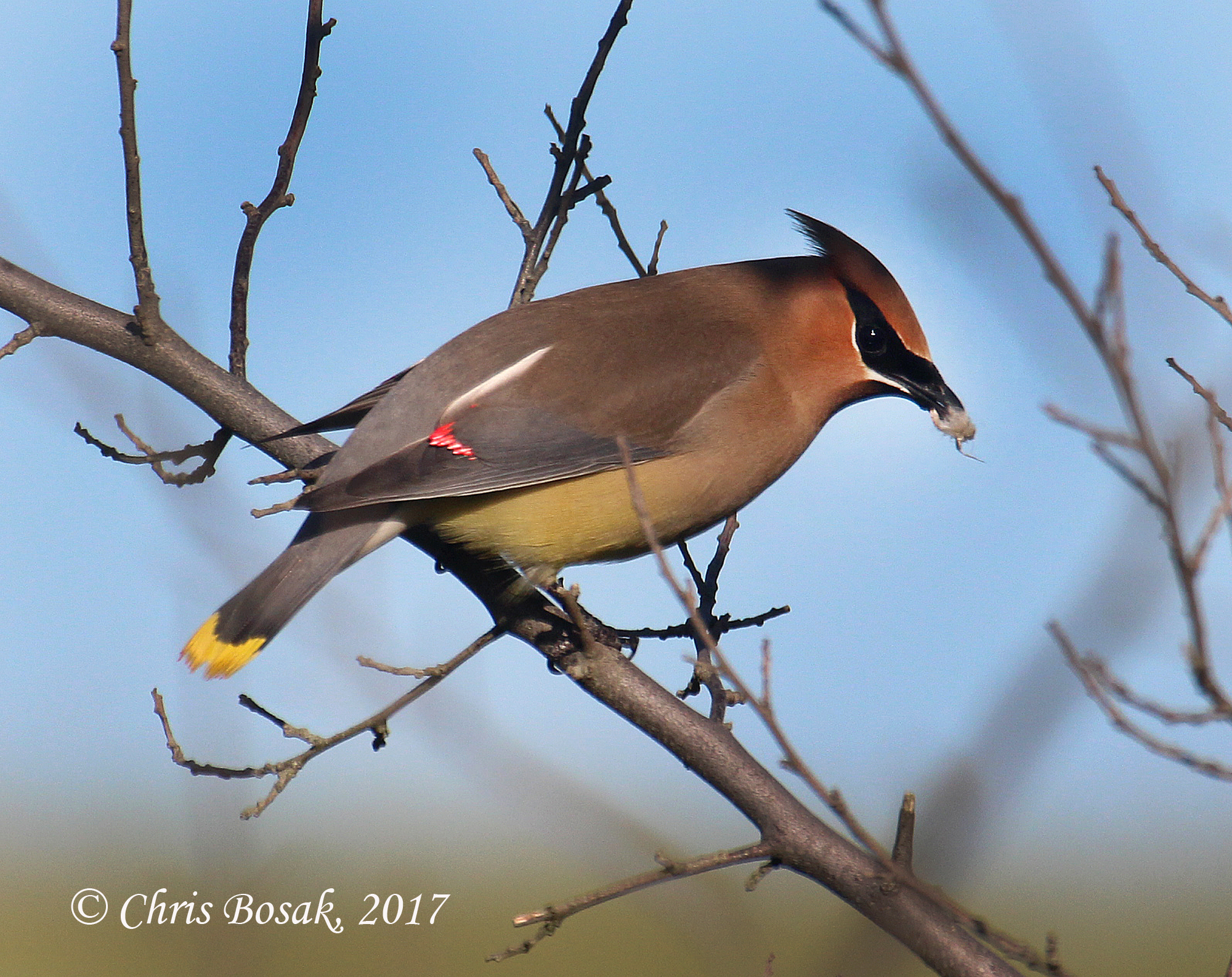
Photo by Chris Bosak  A cedar waxwing eats an insect on a branch in Brookfield, Conn., spring 2017.

Photo by Chris Bosak
A cedar waxwing eats an insect on a branch in Brookfield, Conn., spring 2017.

Most photos of cedar waxwings eating are of the handsome birds chowing down on berries of some sort or another. I got this guy (or girl) eating a white insect. As long as they are eating, it’s all good, I guess.