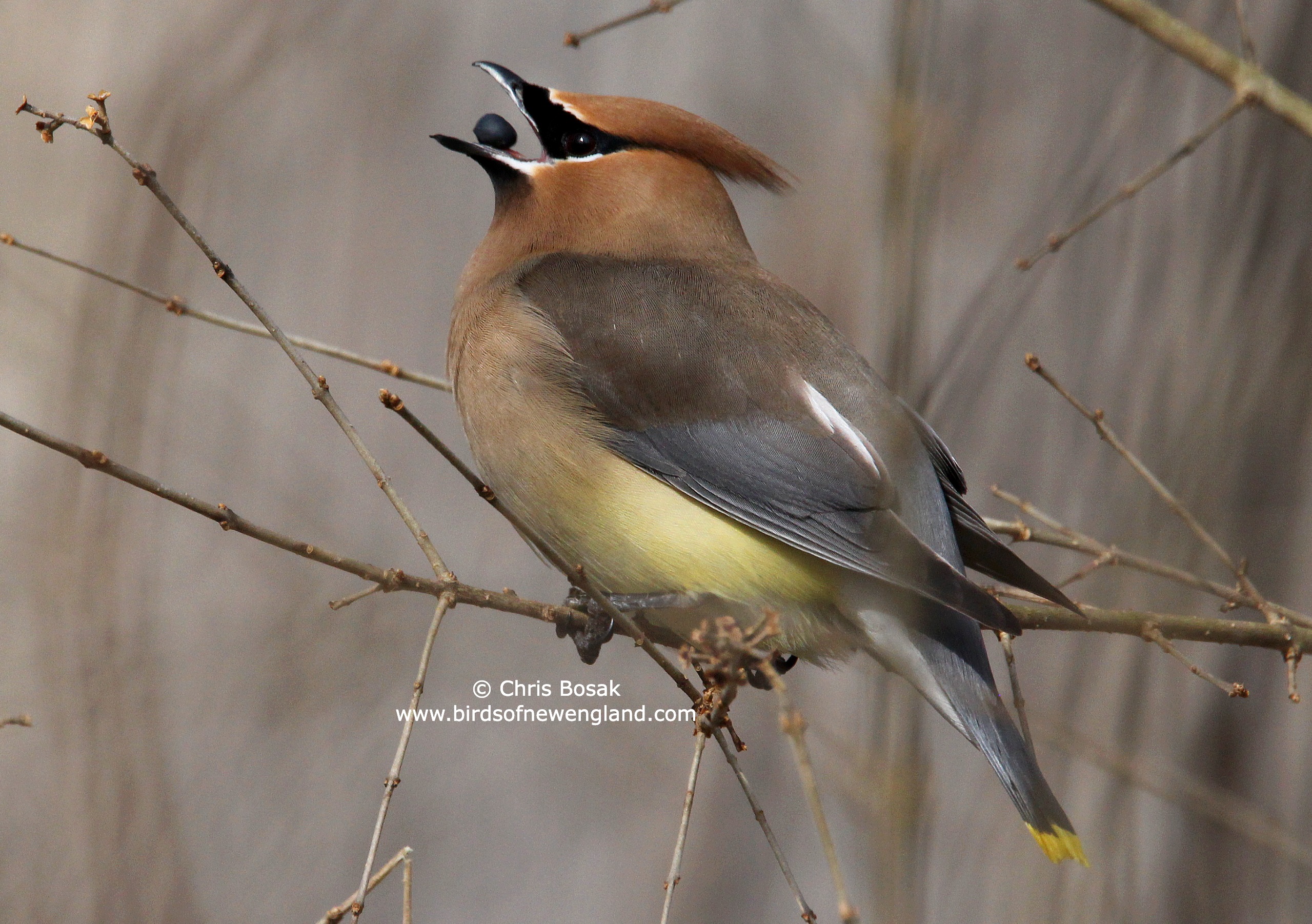
A walk earlier this week yielded these beauties eating border privet berries. Cedar waxwings are one of my favorites.
Continue reading
A walk earlier this week yielded these beauties eating border privet berries. Cedar waxwings are one of my favorites.
Continue reading
This guy showed up at my feeder a few days ago, marking the first time I’ve seen a red-winged blackbird at my feeder in many years. Today, during a walk, I saw dozens and dozens of male red-winged blackbirds, mostly flying overhead. Males show up a few weeks before females to scout out territories. The familiar sounds of red-winged blackbirds are back. The spring migration is under way.
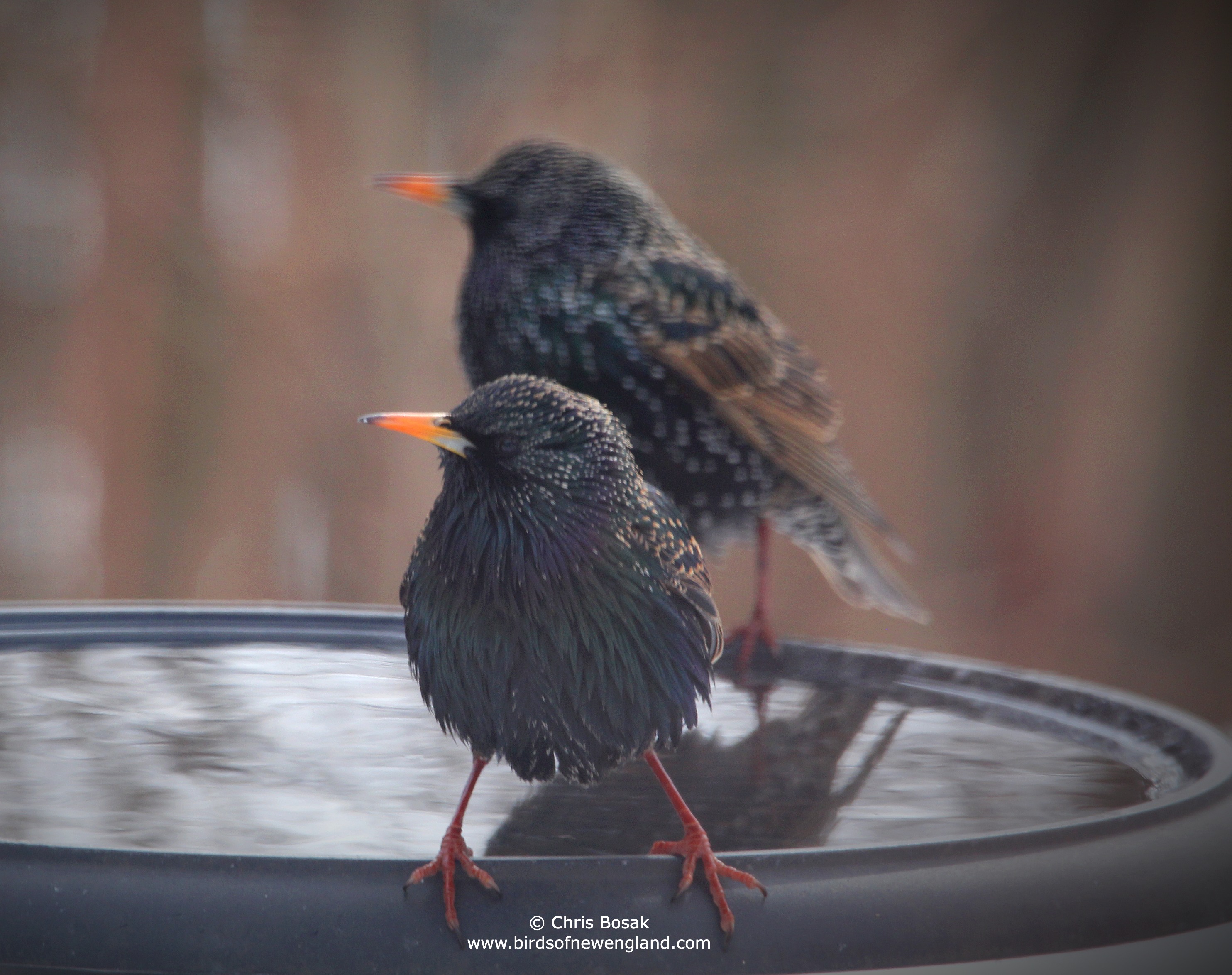
These starlings look like they are looking for trouble.

You have to mix it up every once in a while. This goes for most things in life, but certainly for birdwatching.
The other day, I pulled into the parking lot of the state park where I do the majority of my walking and birding. I never got out of the car this time. I had a rare several-hour block to myself, and, as I pondered my options, the siren song of water kept calling me.
While I love walking at my local patch, and I know just where to look and what I might find, I was craving something different on this day. My patch is mostly woods with a few fields, like much of New England. It does have a large pond, but it has been frozen solid since December.
I backed out of the parking lot and headed to a reservoir a relatively short distance away. I knew at least some of the water would be unfrozen and undoubtedly holding some ducks. Open freshwater has been hard to come by this winter.
The reservoir, as it turned out, was mostly frozen as well. A small area near the dam was open, and that’s it. This oasis of unfrozen water was, however, a gathering place for a lot of waterfowl. Canada geese were, by far, the dominant species, along with mallards and mute swans. There were also a few buffleheads and ring-necked ducks, along with a lone male wood duck in his splendid breeding plumage. It had been a while since I had seen a wood duck, so that was the highlight of my visit to the reservoir.
Since I had gone that far already and still had time to spare, I figured I’d keep going and pay a visit to Long Island Sound. It wasn’t terribly far and, even though it’s almost always cold and windy in the winter, I knew a lot of ducks and other fowl would be there.
I arrived at the Connecticut state park, and Long Island Sound did not disappoint. I immediately spotted a huge raft of greater scaup and a few small groups of common goldeneye. The odd common loon popped up here and there as well. Common loons are a blend of dull whites and grays in their winter plumage, unlike their iconic black-and-white spotted summer plumage.
Canada geese were there in large numbers, of course, but a massive flock of brant flew past as well. There were also smaller groups of brant hugging the shoreline.
The highlight for me was the long-tailed ducks. Formerly called oldsquaw, long-tailed ducks are another species that look completely different in the winter than in the summer. Not that I’ve ever seen a long-tailed duck in the summer, as they breed well north of New England, but I’ve seen pictures. The male’s winter plumage is a mix of bright white, black and different shades of brown. The bill is dark with a pink patch in the middle. The female’s plumage is more modest with white and brown.
Many of the long-tailed ducks were relatively close to the shore, offering decent photo opportunities. Unfortunately, it wasn’t a great day for photos as it was very gray. Of course, gray can be good for photography as it eliminates harsh shadows, but this was a dull, dark, color-robbing gray. I did my best with the long-tailed ducks nonetheless.
The inland part of the park was good too, with Savannah sparrows, a northern harrier, fox sparrows and a large group of American tree sparrows.
The next day, I was right back at my patch enjoying a walk in the woods. I guess I needed a little change of pace, if only for one day.
The Atlantic coast is not terribly far for a day trip, and Long Island Sound is not that much farther. If the sea is calling your name and you have the time, pack up and go. Let me know what you see.
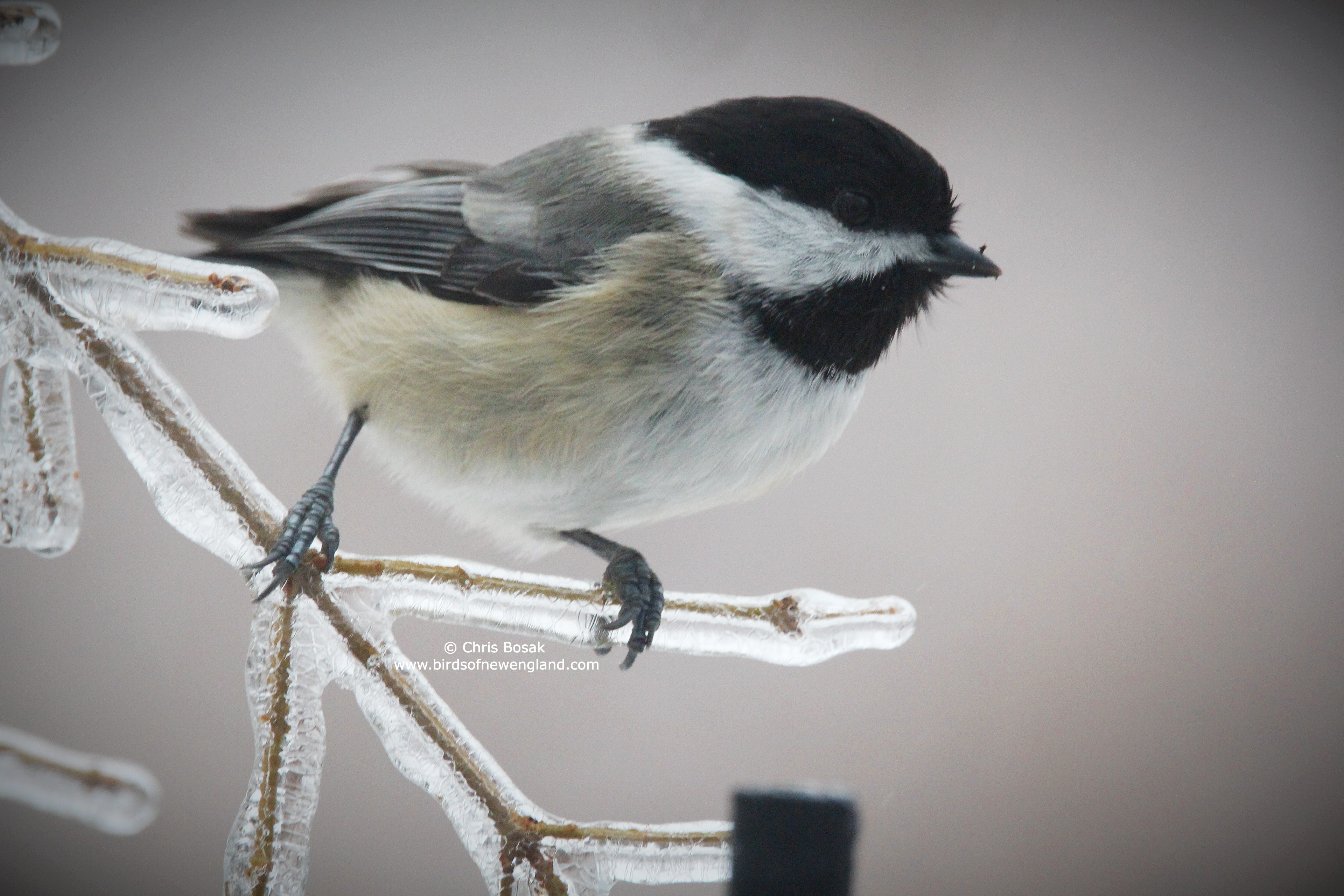
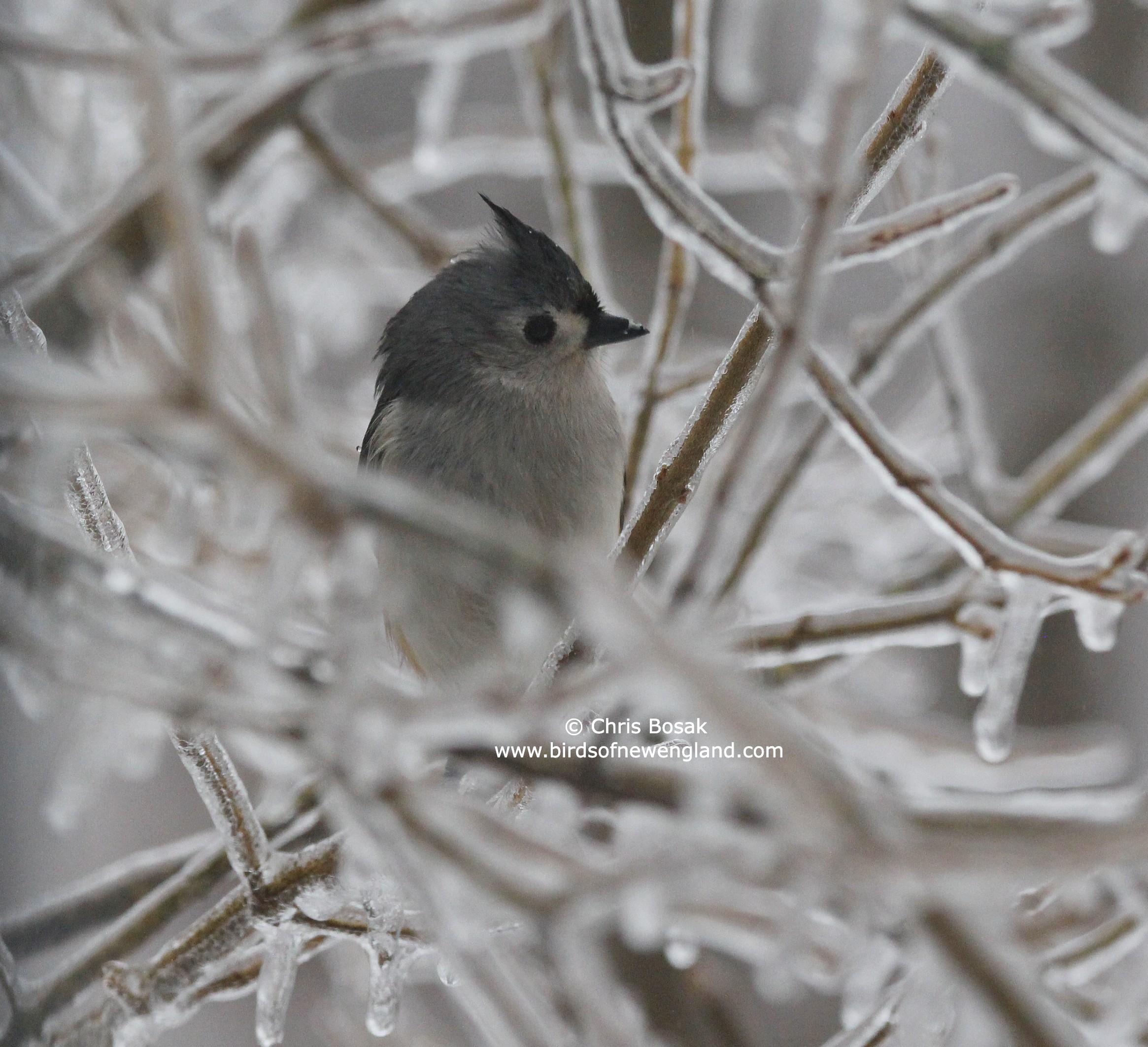
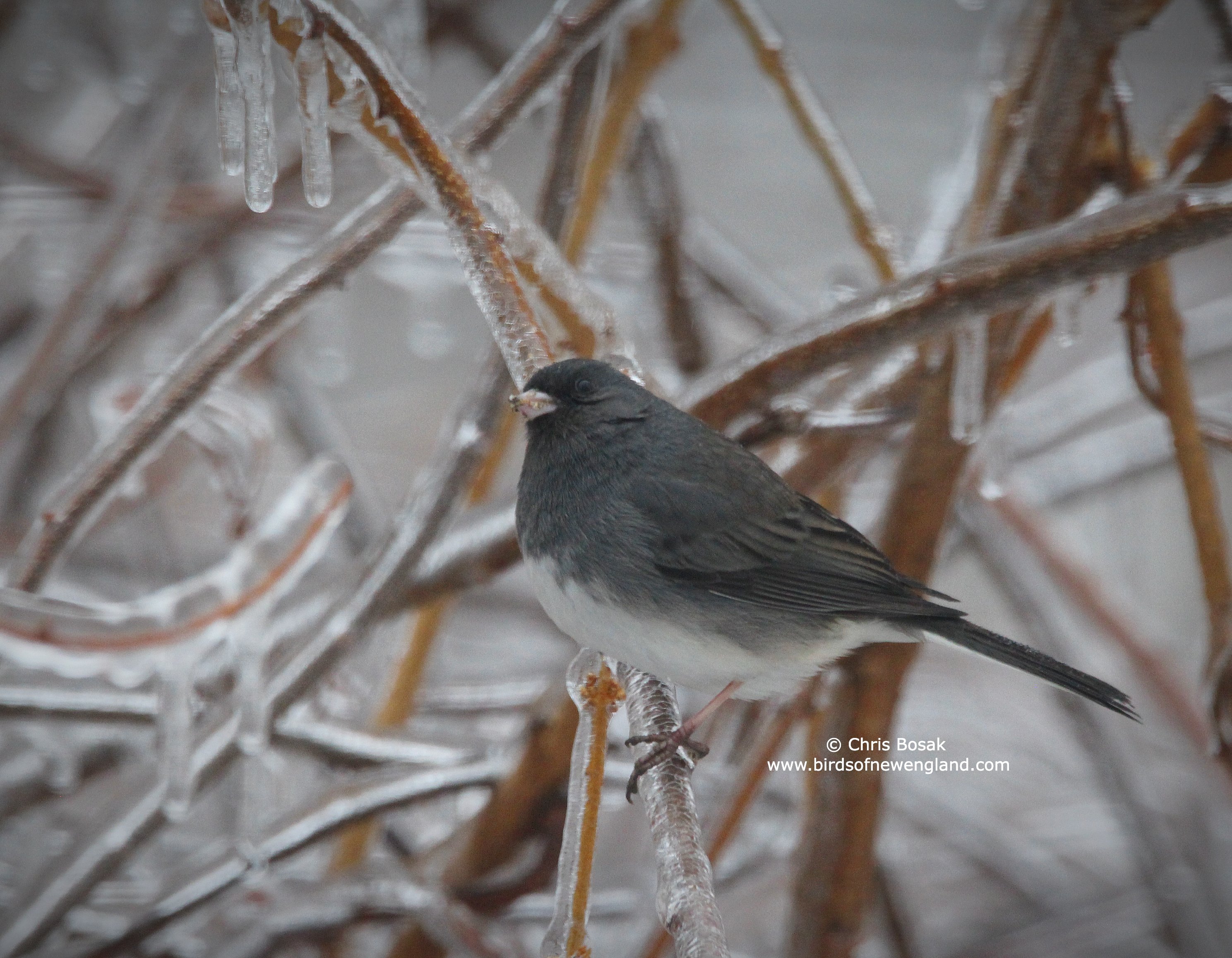
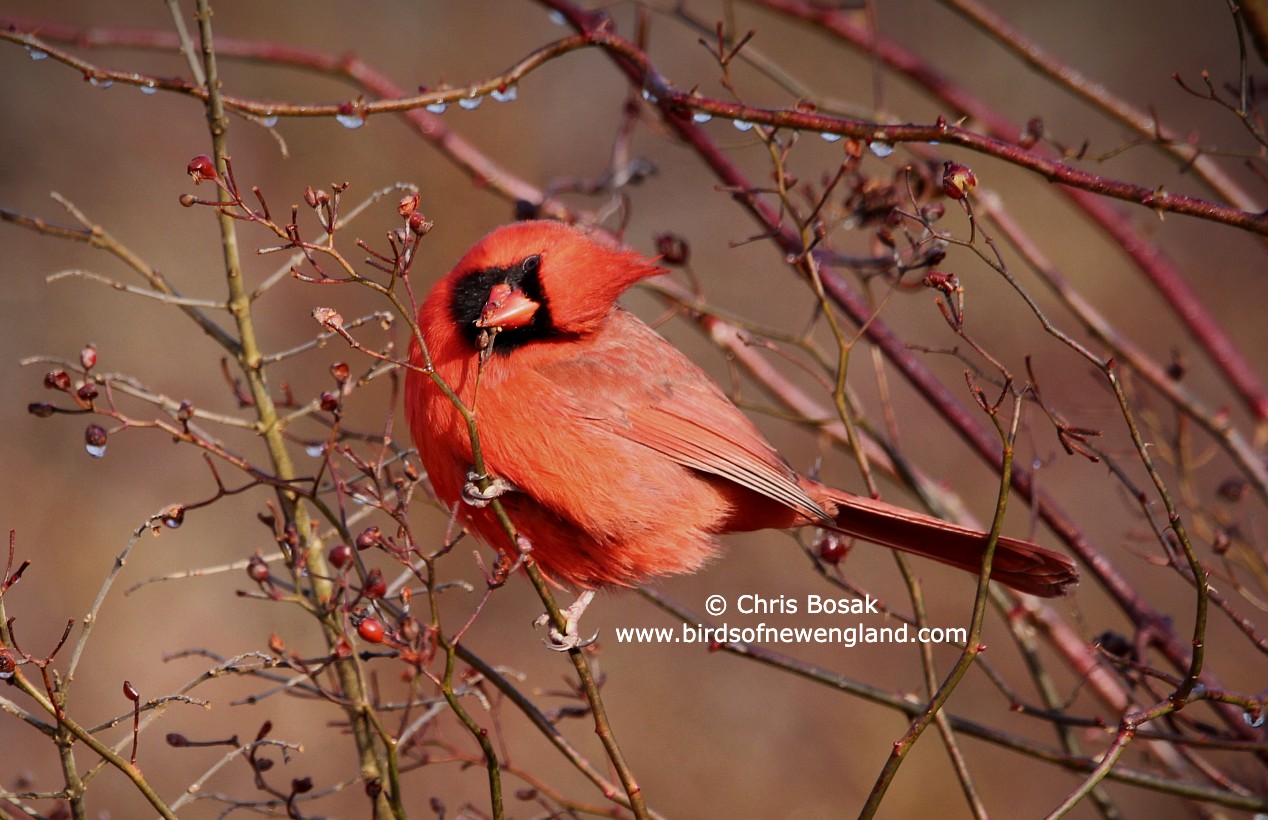
A snowy mix covered much of New England this weekend. It started as snow, then changed to freezing rain, and finally just plain, old rain. The freezing rain formed a hard covering over the snow and sheathed every branch in ice. While walking or driving in these conditions is not advised, it’s always fun to look out the window and see how the birds are handling it. As the photos suggest, they are doing just fine. (Sorry for the grainy photos. Not a whole lot of light to work with.)

I’ve seen a ton of robins this winter. On several occasions, I’ve seen them in big numbers attacking bushes and trees and stripping them of fruit.
I’ll always remember the first time I saw this spectacle. It was more than 20 years ago, and I was a relatively new birder. I walked into the woods and the trees were alive with bird life. Birds were darting from tree to tree all around me.
I was finally able to focus on a few and discovered that they were all robins. I was surprised because, at the time, I still thought of robins as spring and summer birds in New England. They are the harbinger of spring, aren’t they?
Continue reading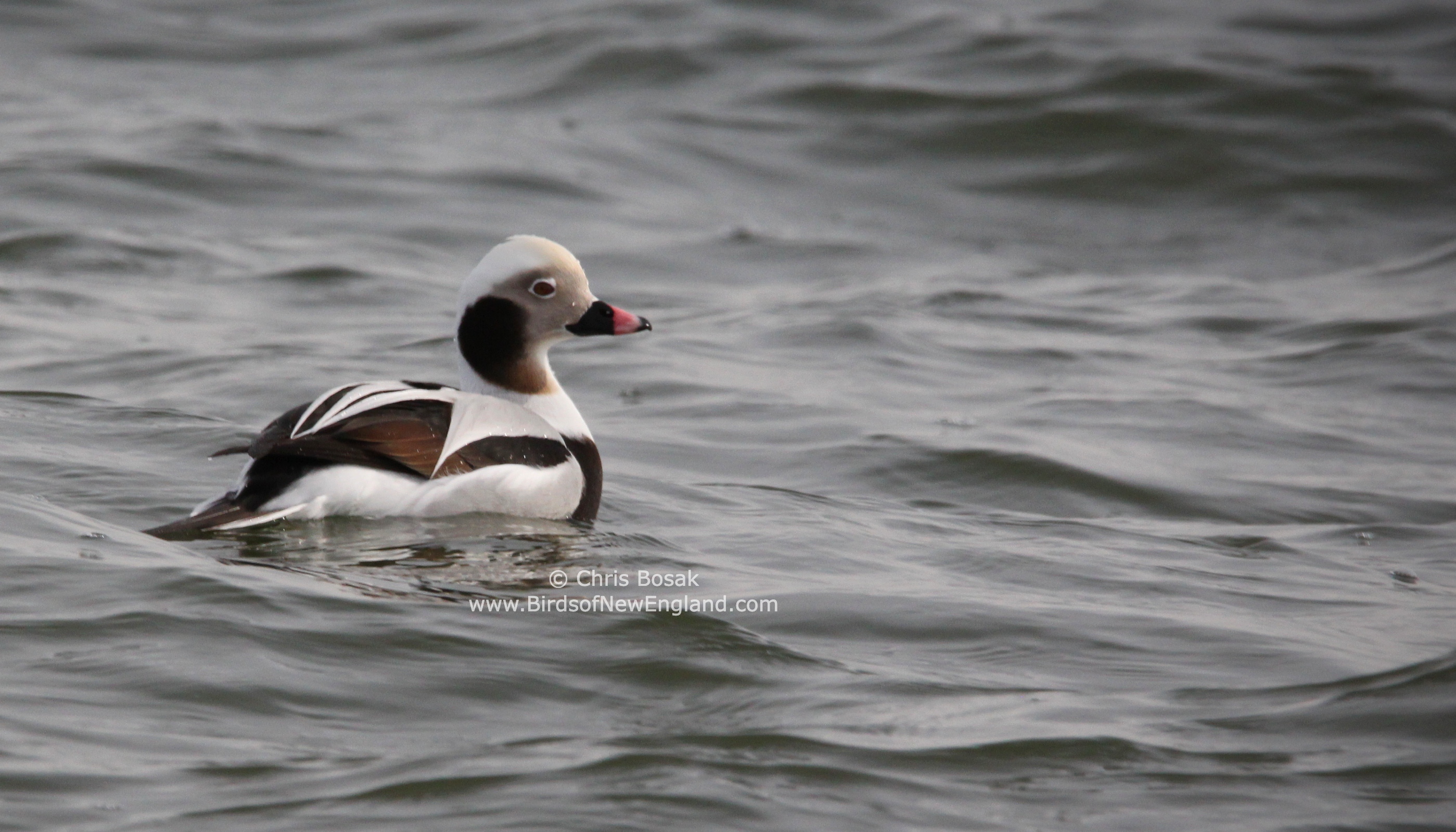
I took a trip to the coast this morning to check out Sherwood Island State Park in southern Connecticut. I have birded there a lot in the past, but it has been several years since I’ve been to the large park on Long Island Sound. I finished the day with 32 species with a good mix of water and land birds. A few photos from the walk are included below.
Continue reading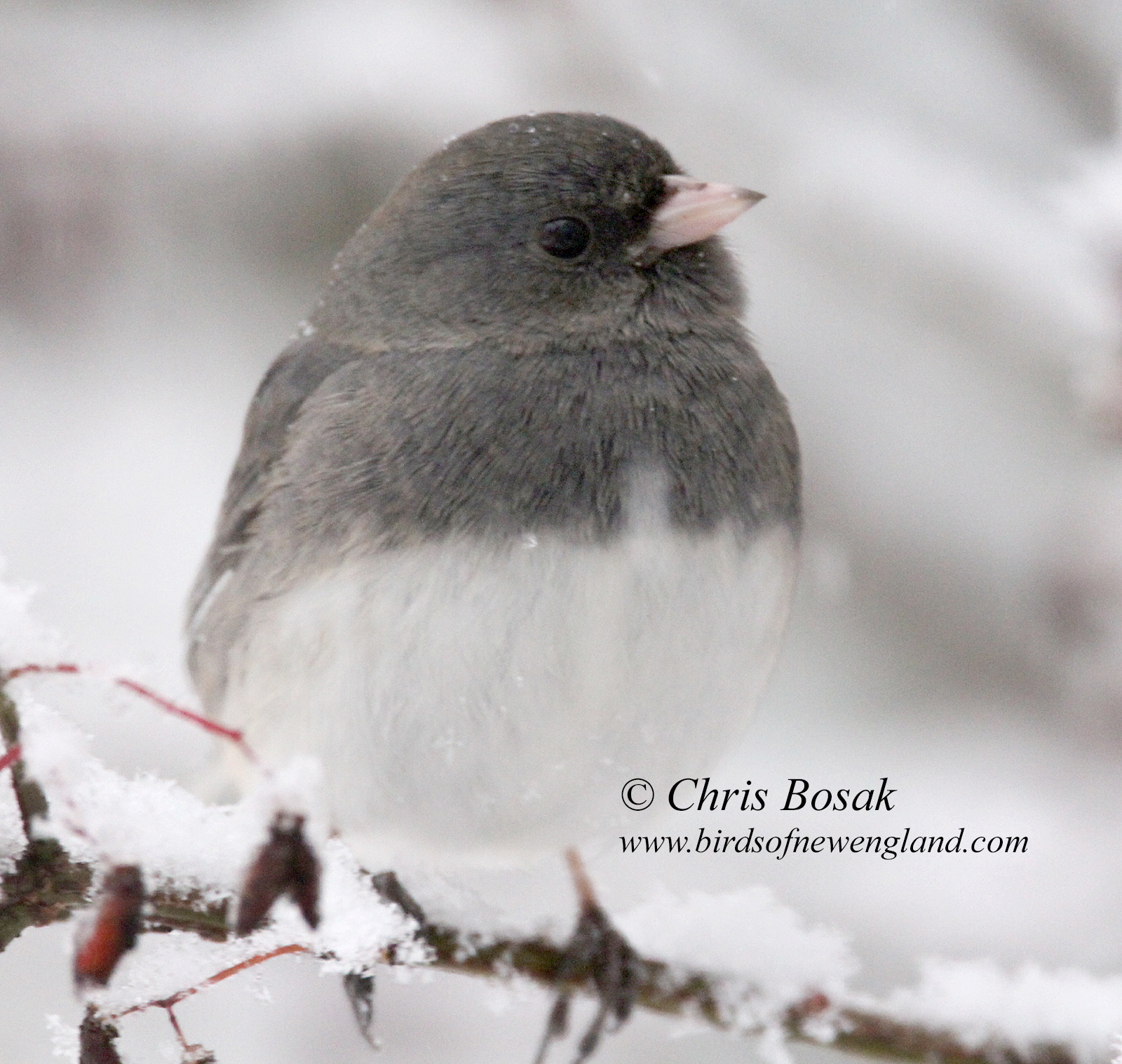
If it weren’t for the American robin running away with the Bird of Winter title, the dark-eyed junco would be a serious contender.
The Bird of Winter is my very unofficial contest for the bird species seen in unusually high numbers during the winter. As I wrote a few weeks ago, the American robin is far and away the leader this winter, and I continue to see great numbers of robins nearly everywhere I go these days.
The dark-eyed junco, which has won the Bird of Winter title in years past, is making a strong case for honorable mention this year. I see them in my yard, at work, on my walks and all along the roadsides.
Continue reading
As birdwatchers, we are trained to look for things out of the ordinary. That blot in a tree or movement in the brush just may be a bird. Often the thing that grabs your attention is nothing but a discarded balloon or wind-swept plastic bag, but very often it is, indeed, a bird.
Autumn can be tricky with falling leaves capturing our attention and tricking us into thinking birds are near. The other day, a different sort of falling object caught my attention. While it wasn’t a bird, it did lead me to an interesting bird sighting.
I was walking on a trail when something about the size of a leaf floated down in front of me. It somewhat resembled a leaf but was shaped and colored differently. It even floated down from the trees with a different kind of motion.
Continue reading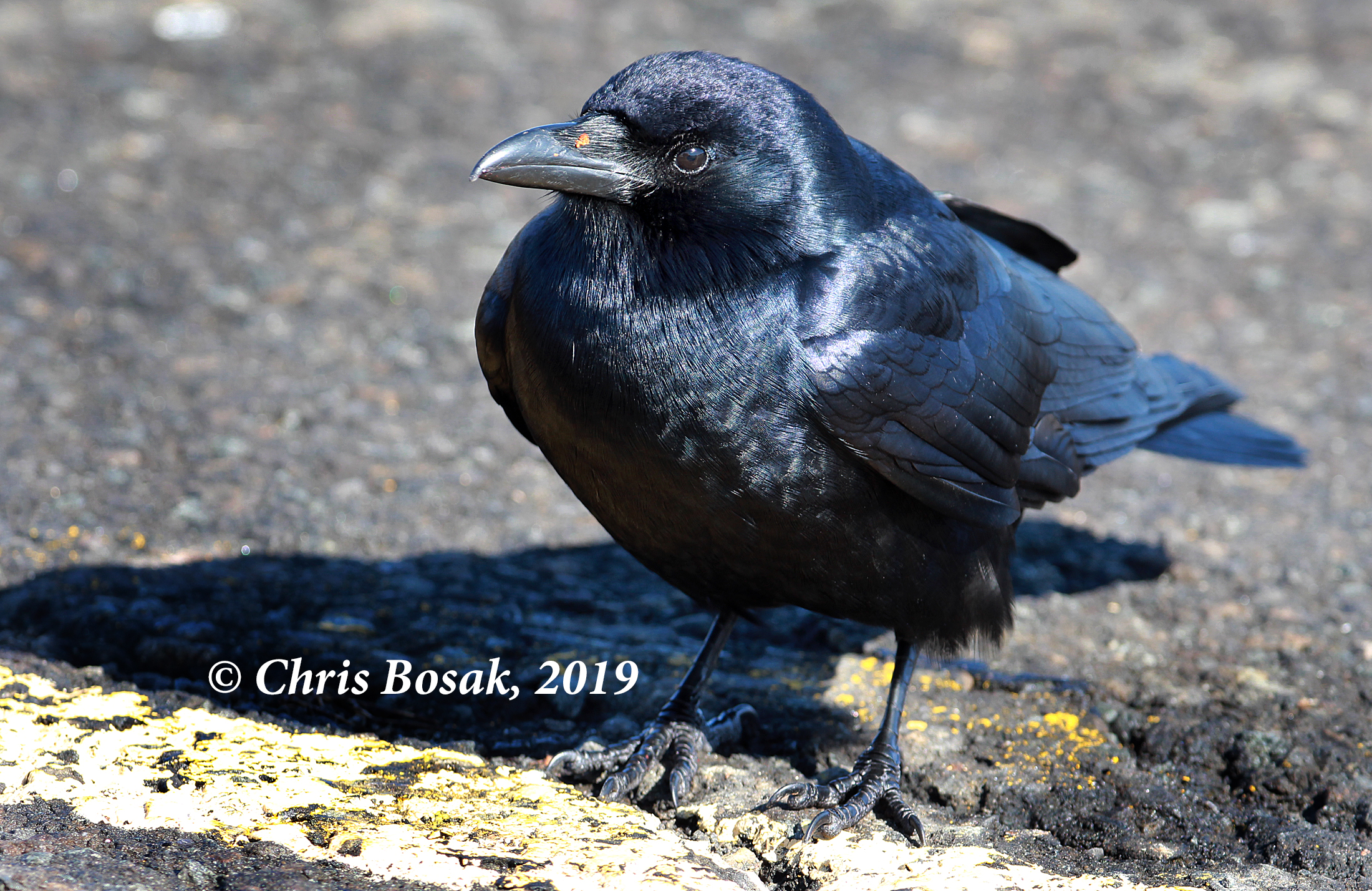
Crows are exceedingly smart, timberdoodles are back and cardinals just may be nesting already. Those are some of the interesting email topics I have received recently.
Don from Laconia wrote to say he has observed some interesting behavior from crows that hang around his yard. When the crows find a piece of food that is too big or hard, they carry the food to a nearby puddle and dip the food into the water to soften it and make it more manageable.
It has long been known that crows and other corvids, such as ravens and blue jays, have a high degree of intelligence. There is a video on YouTube with close to 10 million views that shows an experiment with a crow figuring out how to access food from tubes using water displacement. The pieces of food are floating on water in a tube just out of reach of the crow’s beak. In a series of tests, the crow has to figure out how to raise the level of water enough to reach the food. The crow eventually aces all of the tests and gets to the food each time.
Continue reading Birds of New England.com